

Benefits of a Pool Water Monitoring System
As someone who has tested a range of pool water monitoring systems, I can confidently say they can completely transform the way you manage your pool. Here’s a deep dive into the many benefits they offer:
Consistent Water Quality
A pool monitoring system takes the guesswork out of balancing your water chemistry. By continuously testing your pool’s pH, chlorine, and other critical levels, it helps ensure your pool water is always in top shape.
Improved Safety and Comfort
When your pool’s chemical levels are balanced, it’s safer and more comfortable to swim in. You avoid those all-too-common irritants like itchy skin, red eyes, and strong chemical smells, which often arise from poorly balanced water.
Reduced Chemical Waste and Costs
With automated monitoring, you’re only adding the chemicals you need — no more, no less. This reduces waste and helps lower your chemical costs, saving you money and cutting down on environmental impact.
Extended Pool Equipment Lifespan
Balanced water isn’t just good for swimmers; it’s also great for your pool equipment. Proper water chemistry can prevent corrosion and buildup that lead to costly repairs, helping your pumps, filters, and heaters last longer.
Real-Time Monitoring and Alerts
One of the standout features of modern pool monitors is real-time monitoring. When something is off, you’re instantly notified, so you can act before a small imbalance becomes a big problem.
Instant Alerts for Optimal Levels
These systems keep you in the loop by sending alerts when levels go out of the ideal range. That way, you can adjust things right away, avoiding potential issues down the line.
Prevention of Costly Repairs
By staying proactive, you’re less likely to face equipment failure or algae blooms, both of which can lead to expensive repairs and lengthy cleanup.
Remote Access for Convenience
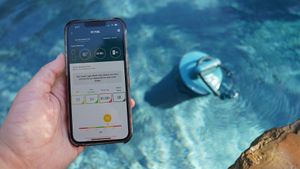
Many systems allow you to check your pool's status remotely through a mobile app. Whether you’re away for the weekend or simply indoors, you’ll have peace of mind knowing your pool is in top shape.
Data Logging and Historical Insights
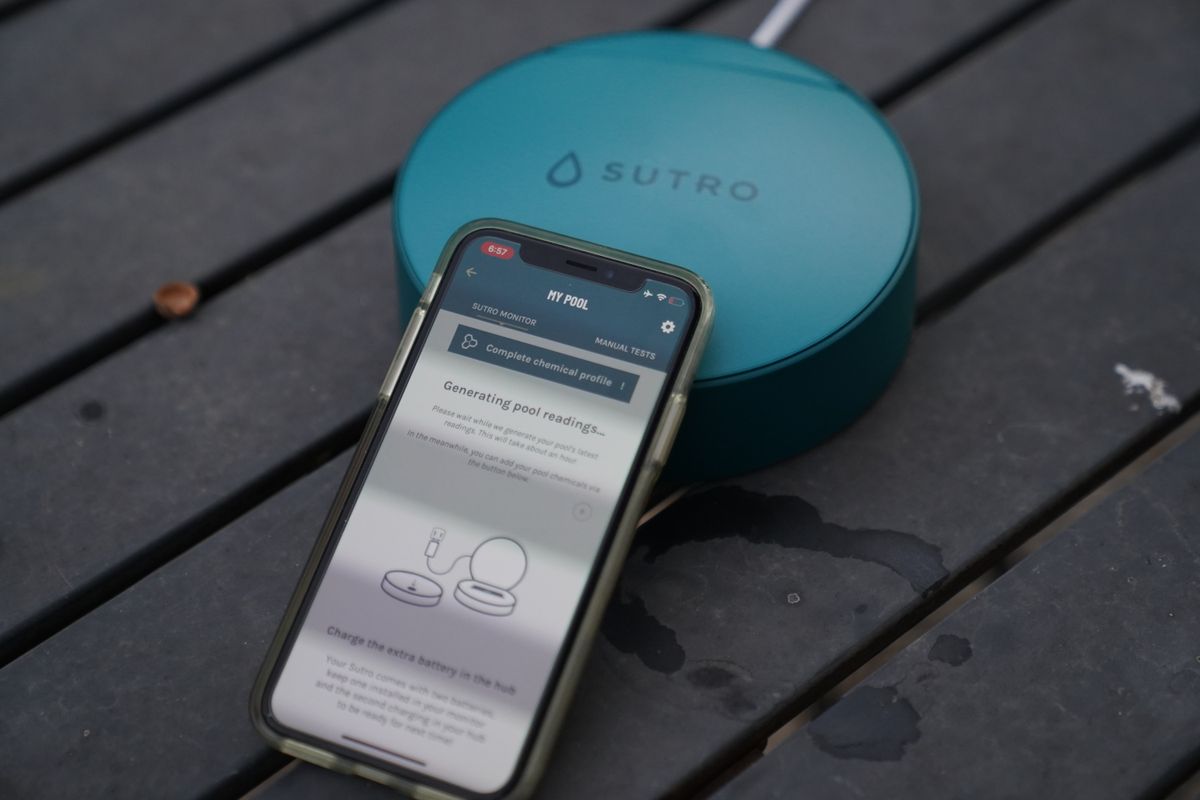
A unique advantage of pool monitors is their ability to log data over time, giving you insights into how your pool behaves throughout different seasons and usage patterns.
Seasonal and Usage Pattern Tracking
Track your pool’s data seasonally to see when specific issues tend to arise. With this information, you can proactively adjust your maintenance routine for optimal results.
Smart Pool Maintenance Recommendations
Using historical data, some systems even provide maintenance recommendations, helping you make informed decisions that keep your pool in its best condition.
Integration with Pool Automation Systems
The best pool monitoring systems can integrate with your smart home setup, turning your pool into a hands-free experience that’s easy to manage.
Compatibility with Smart Home Devices
Many of these systems work seamlessly with other smart home devices, so you can control pool functions through voice commands or your smart home app.
Hands-Free Monitoring and Adjustments
With automated adjustments, your pool can maintain itself without constant supervision, allowing you to focus on enjoying it rather than managing it.
Drawbacks of a Pool Water Monitoring System
While pool water monitoring systems offer many benefits, there are some potential drawbacks to keep in mind. Here’s an honest look at some of the challenges based on experience using different models:
Initial Cost and Installation
One of the biggest hurdles for pool owners is the upfront cost and complexity of installation.
Price Range for Different Models
Prices can vary widely depending on the brand and feature set. High-end models with advanced sensors and real-time alerts can be a significant investment, making it essential to compare options and consider your specific needs before choosing a system.
Setup Complexity for Some Systems
While some systems are relatively straightforward, others may require a more complex setup, sometimes involving professional installation. Advanced systems might need a bit of technical knowledge, which can be a barrier for those looking for a more plug-and-play solution.
Ongoing Maintenance Requirements
Like any piece of tech, pool monitoring systems need regular upkeep to function at their best.
Calibration and Cleaning
To ensure accuracy, many systems require periodic calibration, as well as cleaning of the sensors to prevent buildup that can interfere with readings. For some owners, this regular maintenance may feel like more hassle than it’s worth.
Consumable Parts and Replacement Costs
Some models require consumable parts, like test reagents or disposable sensors, which add to ongoing costs. It’s worth checking what, if any, consumable parts your model requires and factoring that into the overall expense.
Reliability Concerns
While the idea of hands-free monitoring is appealing, some systems can experience reliability issues over time.
Connectivity Issues and App Stability
Several systems rely on Wi-Fi or Bluetooth for app connectivity, and interruptions in signal can lead to missed alerts or delays in data syncing. Additionally, app stability can vary, with some users reporting occasional crashes or glitches, which can be frustrating.
Accuracy Variability Over Time
Accuracy is critical for a pool monitoring system, but sensors can drift over time, especially without regular calibration. For users relying on precise data, any inaccuracy can be a significant downside.
Buyer’s Guide to Pool Water Monitors
Ok – so you want a pool water monitor. And not just any, but the best. Here’s what to look for to make sure you get the perfect system for your pool.
Types of Pool Water Monitors
Pool water monitors come in various forms, each with unique installation styles and features. Understanding these types can help you pick the one that best suits your setup and monitoring preferences.
Floating Monitors
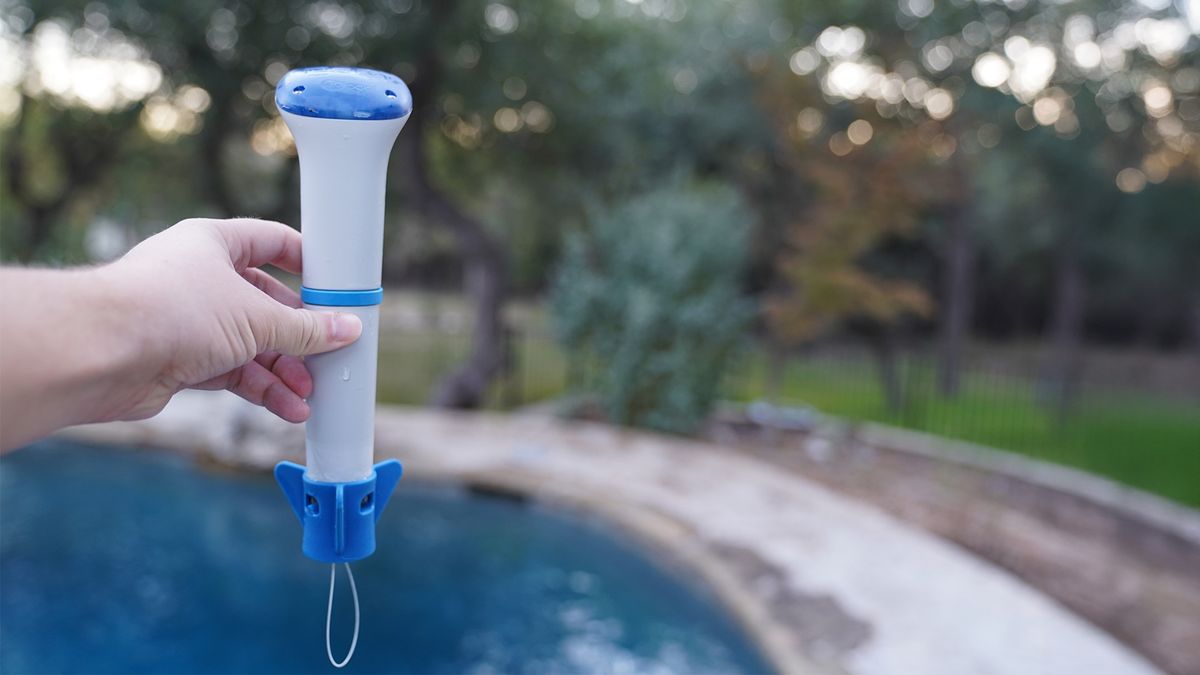
Floating monitors are simple and convenient, sitting directly on the water’s surface. These devices continuously test water chemistry as they float, offering a low-maintenance way to monitor pH and chlorine levels. They’re especially popular for above-ground pools and hot tubs but work just as well in inground pools.
Skimmer Monitors
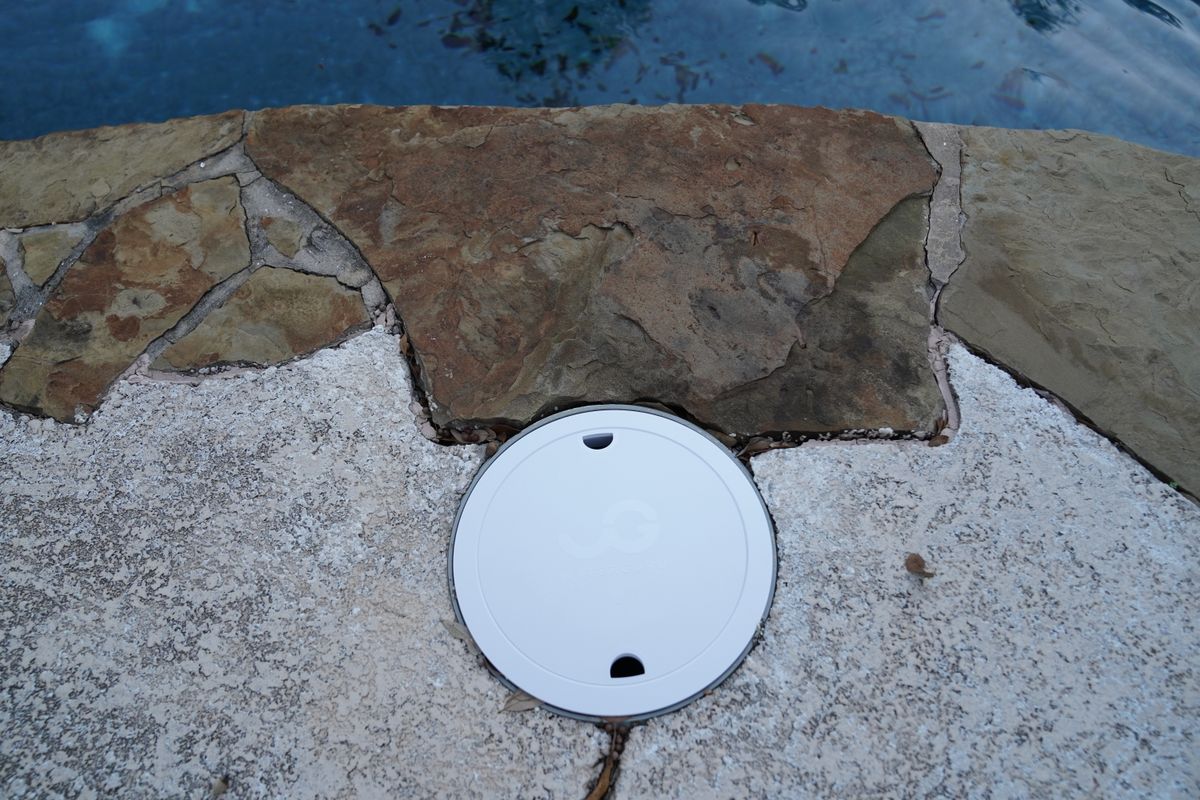
Skimmer monitors are designed to fit inside the pool’s skimmer, measuring water quality as it passes through. These monitors are great for those who want a more discreet option that doesn’t visibly float in the pool, although they may require adjustments to fit various skimmer sizes.
Hang on the Pool Monitors
Hang-on models attach to the side of the pool and dip into the water to perform readings. These monitors are typically larger and may offer more advanced features than floating monitors, making them ideal for pool owners who want both convenience and comprehensive monitoring.
Rechargeable Batteries
Battery life is a crucial consideration, especially if you want a low-maintenance device. Many modern pool monitors now come with rechargeable batteries, saving you money on replacements and making it easier to keep the system running continuously. Look for models with long battery life and an easy charging setup.
Compatibility with Pool Type
Not all monitors work with every type of pool. Some are designed specifically for above-ground pools or saltwater systems, while others may only be compatible with traditional chlorine pools. Be sure to check if the model you’re considering is designed for your pool type to avoid compatibility issues.
Budget
Choosing the best pool monitor also involves balancing upfront and ongoing costs. Here’s what to consider to stay within budget while still getting a high-quality device.
Initial Cost
Pool monitors range from affordable basic models to high-end systems with advanced sensors and connectivity features. Setting a budget will help narrow your options, but remember that spending a bit more on quality can save money in the long run by reducing chemical and maintenance costs.
Monthly Membership
Some pool monitors come with a monthly membership fee to access data logging, alerts, or other premium features via a mobile app. If you prefer to avoid recurring fees, look for models that offer one-time payment options or free app access. Just keep in mind that monthly memberships can add a lot of value if they come with real-time monitoring and advanced analytics.
Top Pool Water Monitoring Systems
Here’s a list of some of the top-rated pool water monitoring systems on the market today, each offering unique features for hassle-free pool maintenance.
1. iopool Smart Water Monitor - Works for Chlorine & Bromine Pools, Hot Tubs, & Swim Spas
The iopool Smart Water Monitor is designed to work seamlessly in chlorine and bromine pools, as well as hot tubs and swim spas. This device provides precise chemical dosage recommendations, helping you maintain the perfect balance with minimal effort.
Key Features
- Compatibility: Works with chlorine and bromine pools, hot tubs, and swim spas.
- Precision Dosing: Provides exact dosage recommendations for pH, chlorine, and bromine levels, making it easy to keep water balanced.
- Mobile App Integration: Connects to an app that tracks your pool’s chemical levels in real-time, allowing you to monitor your pool from anywhere.
Pros
- Easy setup with clear instructions.
- Real-time monitoring and precise chemical suggestions.
Cons
- Subscription needed for advanced features.
- May require regular calibration for accuracy.
2. Crystal Smart Water Monitor for Chlorine & Bromine Pools, Hot Tubs & Swim Spas
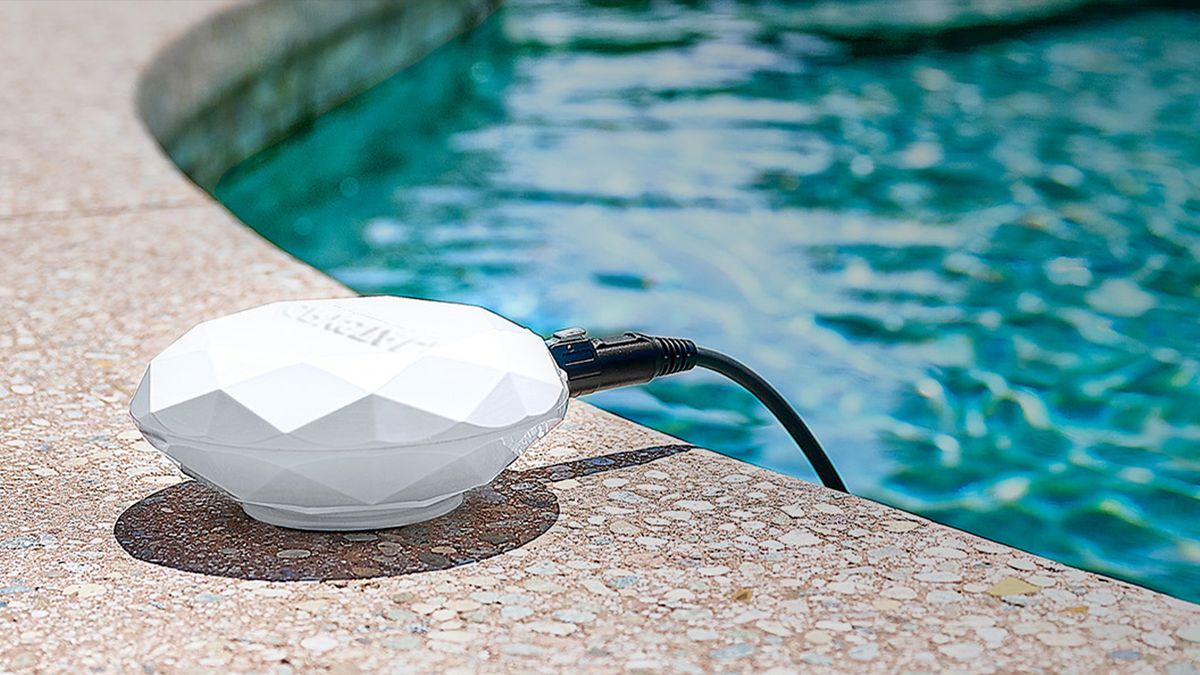
The Crystal Smart Water Monitor offers continuous 24/7 water testing with app notifications, keeping you informed about your pool’s water quality at all times. It also provides customized chemical dosing recommendations, making it easy to maintain balanced water chemistry.
Key Features
- 24/7 Digital Testing: Continuously measures water quality, providing real-time updates.
- App Notifications: Sends instant notifications for any chemical imbalances, allowing quick adjustments.
- Customized Chemical Dosing: Provides specific dosing recommendations tailored to your pool or spa’s needs.
Pros
- Continuous monitoring ensures that you always know the water quality.
- Customized dosing recommendations save on chemical costs.
Cons
- Higher initial cost compared to basic models.
- Some users report that app notifications can be frequent and require attention.
3. Ondillo Ico
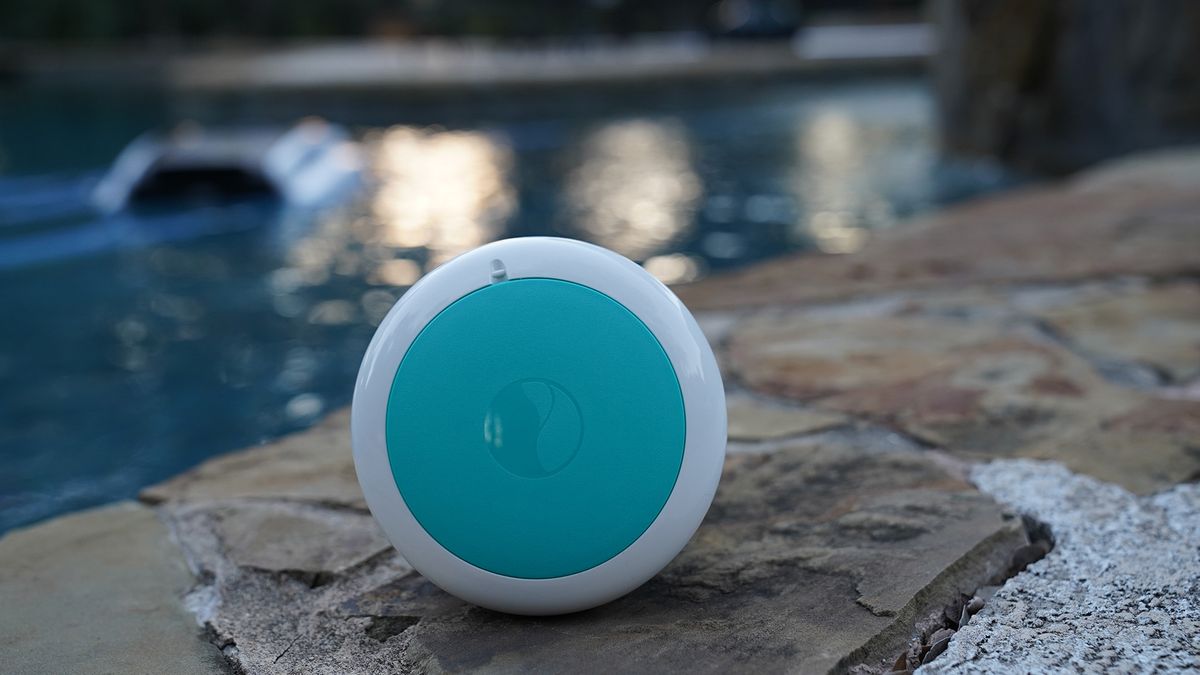
The Ondillo Ico is a popular choice for those who want a user-friendly and visually appealing water monitor. This floating device offers real-time data and sends regular updates to your smartphone, so you always know the state of your pool.
Key Features
- Floating Design: Sits directly in the pool, testing water quality without the need for mounting.
- Real-Time Monitoring: Continuously monitors chemical levels, temperature, and more.
- Mobile App Compatibility: Syncs with an app for easy remote access and detailed water quality insights.
Pros
- Easy setup with no installation required.
- Visual, intuitive app interface makes it user-friendly.
Cons
- Battery life could be improved for longer usage periods.
- Only compatible with specific water types (chlorine and bromine).
4. WaterGuru Sense S2
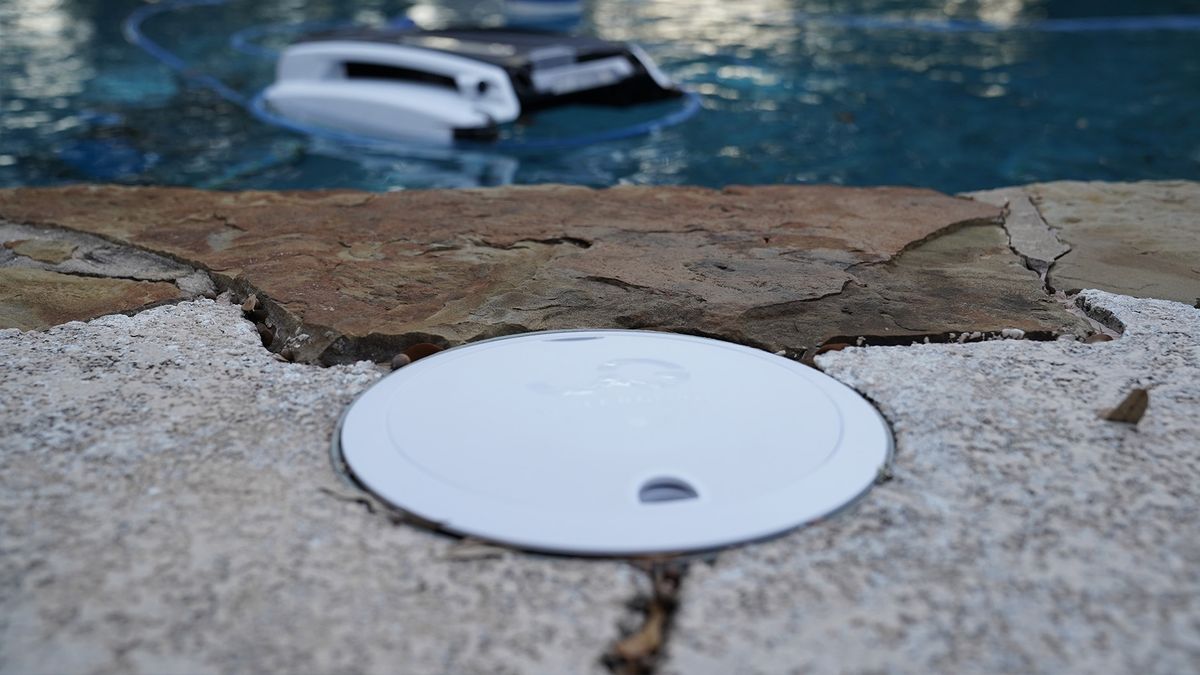
The WaterGuru Sense S2 is a skimmer-based monitor that takes a more integrated approach to water testing. It offers accurate water quality readings and is compatible with both chlorine and saltwater pools, making it highly versatile.
Key Features
- Skimmer Design: Fits neatly in the pool’s skimmer, taking readings as water passes through.
- Chlorine and Saltwater Compatibility: Works well for both types, providing accurate measurements for each.
- App-Based Notifications: Sends readings to an app, keeping you updated on chemical levels and temperature.
Pros
- Discreet design that’s hidden within the skimmer.
- Accurate measurements, especially in saltwater pools.
Cons
- Requires periodic removal for battery charging.
- May need frequent calibration to maintain accuracy.
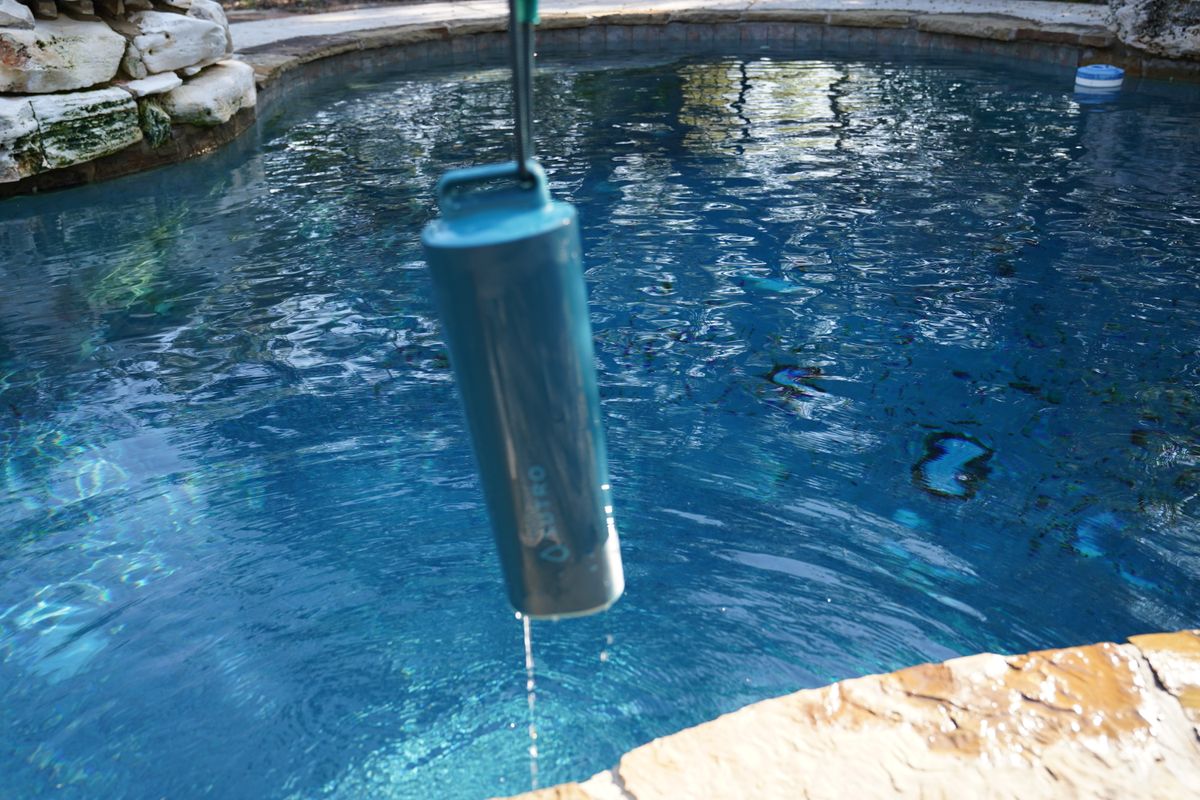
5. Sutro Pool Water Monitor
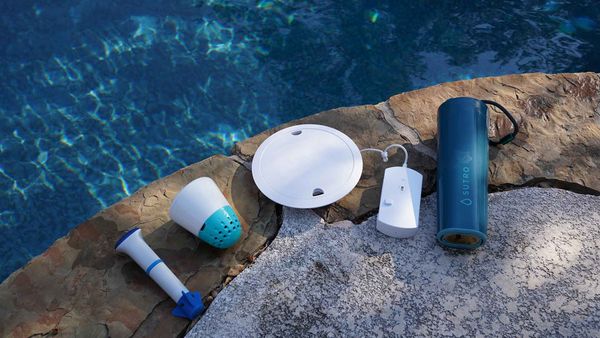
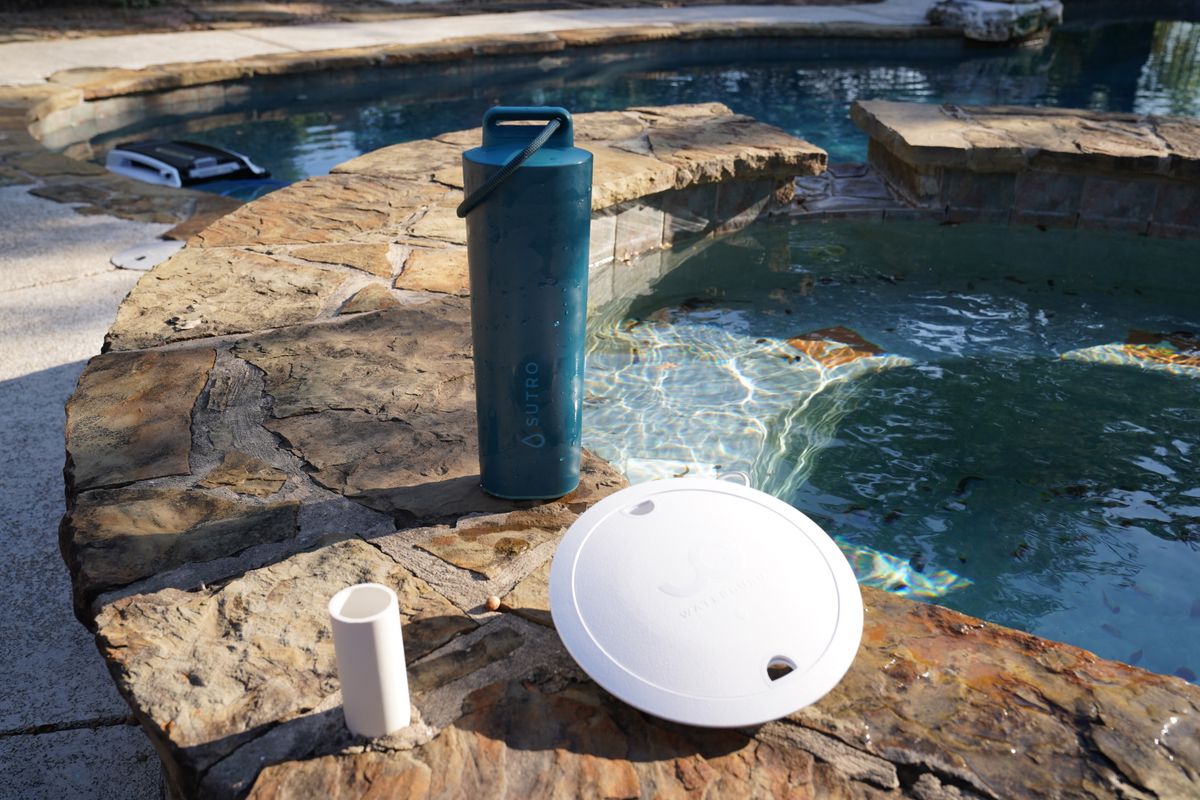
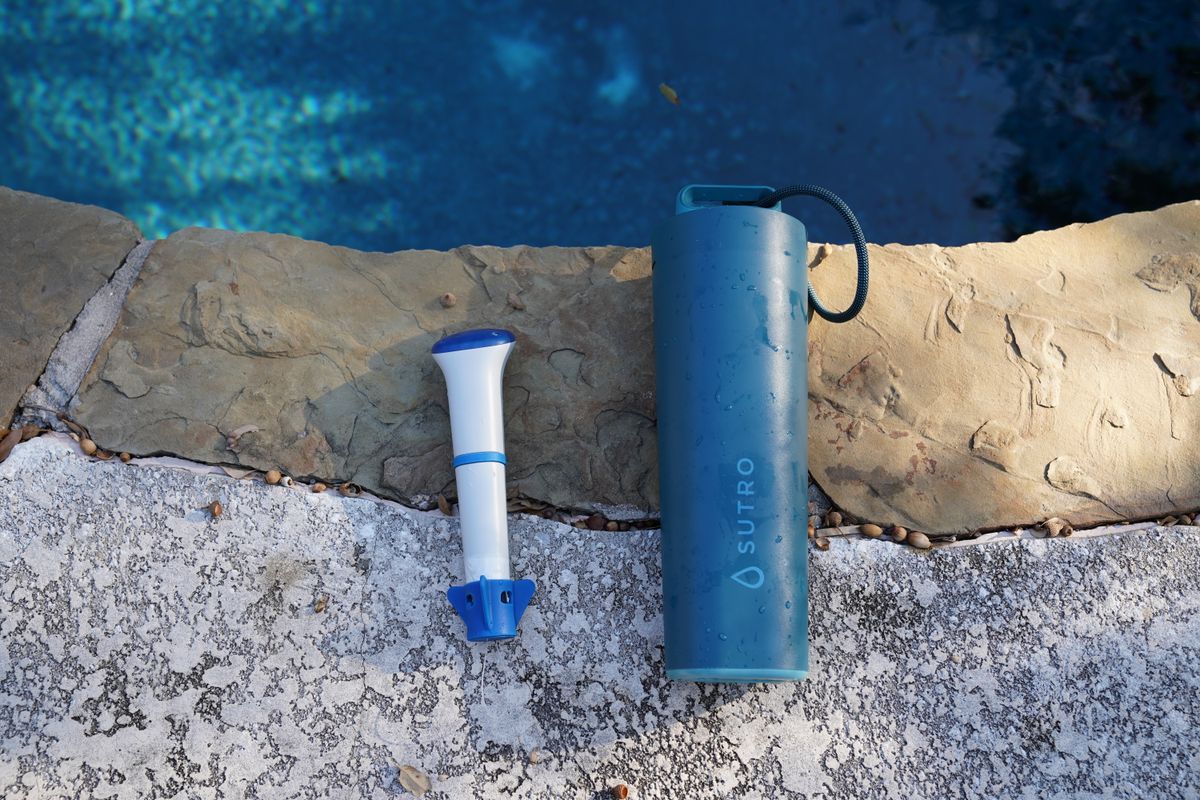
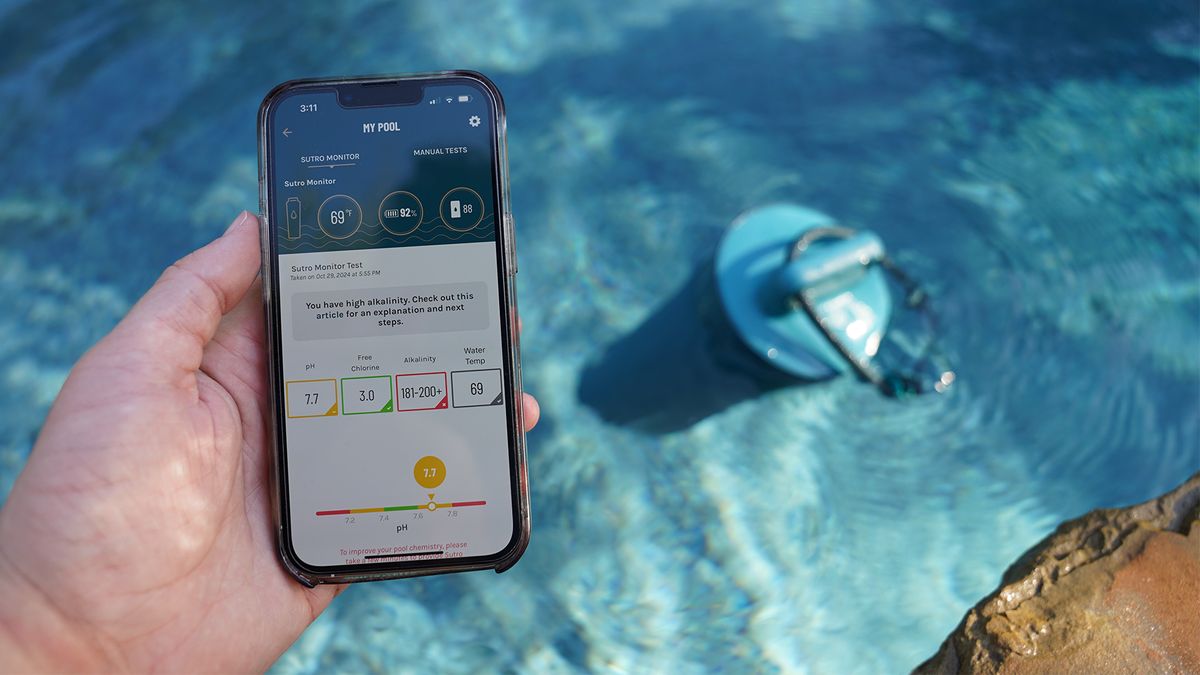
The Sutro Pool Water Monitor is a premium option known for its robust design and reliable accuracy. It provides in-depth chemical readings and integrates with a highly detailed mobile app, giving pool owners peace of mind about their water quality.
Key Features
- Detailed Chemical Readings: Provides in-depth data on pH, chlorine, and other critical levels.
- Durable Build: Made for continuous outdoor use, withstanding varied weather conditions.
- Advanced App Integration: The app provides detailed insights, historical data, and usage trends for more effective maintenance.
Pros
- Durable and reliable for long-term use.
- App provides detailed data for those who like to track water trends.
Cons
- Higher price point may not fit all budgets.
- Ongoing subscription required for advanced features and data logging.
Alternatives
If you’re still on the fence about investing in a pool water monitoring system, there are other ways to keep your pool water balanced. Here are some alternatives to consider.
Do You Need a Pool Water Monitor System?
A pool water monitor system can be a game-changer for maintaining water quality with minimal effort. However, if you’re comfortable doing regular checks yourself or have a smaller pool that doesn’t require constant monitoring, a system might not be essential. Consider your pool size, maintenance routine, and comfort with testing to decide if a full system is necessary.
Handheld Digital Water Sensor
Handheld digital water sensors offer a convenient middle ground. These devices allow you to measure specific factors like pH, chlorine, and salinity with a quick dip test, giving you accurate readings without the need for continuous monitoring. While they don’t provide 24/7 monitoring, they’re great for regular checks and cost far less than a full monitoring system.
Test Kit
Traditional liquid test kits are a reliable option that many pool owners swear by. They come with reagents and color-coded charts, allowing you to test a variety of levels accurately. While using a test kit requires some patience and a bit of chemistry knowledge, they’re often more precise than test strips and don’t require batteries or internet connectivity.
Test Strips
Test strips are the simplest and quickest way to check your pool water. You simply dip the strip into the water, wait a few seconds, and compare the colors to a chart. Although less accurate than digital sensors or liquid test kits, test strips are ideal for quick checks and can be useful for spotting major imbalances that need attention.
How We Tested
To provide an accurate and in-depth review of pool water monitors, we put a variety of models through rigorous testing. Here’s a breakdown of our testing process and criteria.
Selection of Monitors for Testing
We selected monitors across a wide range of brands, ensuring a good mix of features, price points, and compatibility with different pool types. This way, we could assess options that cater to various needs and budgets.
Range of Brands and Features Evaluated
Our selection included everything from entry-level models to premium options with advanced analytics and smart home integration. We focused on monitors that offered unique features, such as remote monitoring, automatic alerts, and multi-sensor technology.
Criteria for Choosing Monitors
Monitors were chosen based on their popularity, user reviews, and functionality. We prioritized devices with strong reputations for accuracy, reliability, and ease of use, so our findings would reflect what pool owners could expect from top-rated models.
Testing Environment and Conditions
We tested these monitors in a variety of water types and weather conditions to see how they performed in real-world scenarios.
Water Types and Weather Conditions
To simulate diverse pool environments, we tested monitors in both saltwater and chlorine pools, as well as in various weather conditions. From intense sun to rainy days, we observed how each monitor held up and maintained accuracy.
Installation and Setup Testing
Ease of installation can make a big difference, so we documented the setup process for each model. We evaluated whether the devices required professional installation or if they were simple enough for most pool owners to set up on their own.
Are Pool Water Monitors Accurate?
Throughout our testing, we kept a close eye on the monitors’ accuracy, regularly comparing their readings to trusted manual testing methods.
Measurement Accuracy Testing
Accuracy is one of the most critical factors for a pool monitor, so we conducted extensive testing to measure how reliable each device was in various scenarios.
Comparison to Manual Water Testing Kits
We compared monitor readings to manual test kits, recording any discrepancies. This helped us evaluate each monitor’s precision and determine which models provided the closest match to manual testing results.
Repeated Tests for Consistency
To assess consistency, we conducted repeated tests on each monitor, checking whether they delivered stable readings over time. Consistency was a key factor in determining a monitor’s reliability.
Usability and App Functionality
The usability of the monitor and its companion app is just as important as accuracy. A monitor can’t provide peace of mind if its app is difficult to navigate or unreliable.
Ease of Use for Pool Owners
We evaluated how intuitive each monitor and app were for pool owners, noting any steps or instructions that might be confusing. Our goal was to see how easy it would be for an average user to interpret the data and manage their pool’s chemistry.
App Responsiveness and Alert Accuracy
The responsiveness of each app — including notification speed and accuracy — was tested rigorously. We made sure each app could promptly send alerts when levels were off, so pool owners could act quickly if needed.
Long-Term Reliability Testing
To simulate regular pool usage, we conducted durability testing by leaving monitors in pools for extended periods, tracking performance over weeks or even months.
Durability in Varied Weather
We exposed each device to various weather conditions, such as extreme heat and rain, to see how well they held up. Durability was crucial in determining whether each monitor could handle continuous outdoor use.
Battery Life and Maintenance Needs
Battery life was monitored closely, along with any required maintenance like sensor cleaning or recalibration. This allowed us to identify which monitors were truly low-maintenance and long-lasting.
Value for Money Assessment
Ultimately, value for money was a significant factor in our evaluation, as we aimed to help readers find the best features for their budget.
Feature-to-Price Comparison
We analyzed the features each monitor offered relative to its price, noting any standouts that delivered great functionality without breaking the bank.
Performance Relative to Cost
By comparing overall performance to cost, we identified which monitors delivered the best bang for the buck. Our goal was to help readers make an informed choice based on both quality and budget.
FAQ
1. What is a pool water monitor, and how does it work?
A pool water monitor is a device that automatically tests your pool’s water chemistry. It usually measures pH, chlorine, and other levels, and sends updates to your phone or a dedicated app, so you always know your water's quality.
2. Do I need a pool water monitor for my pool?
While not essential, a pool water monitor can make pool maintenance easier and more consistent. If you struggle with manual testing or have a busy schedule, a monitor can save time and help keep your pool safe and clean.
3. How accurate are pool water monitors?
Accuracy can vary by brand and model, but high-quality monitors are generally quite accurate, especially if calibrated regularly. Many offer similar accuracy to manual testing kits.
4. How often do I need to recalibrate a pool water monitor?
Most pool monitors need calibration every few months to maintain accuracy. Specific calibration needs depend on the model, so it’s best to follow the manufacturer’s instructions.
5. Can a pool water monitor replace manual testing completely?
While pool water monitors are highly convenient, occasional manual testing is recommended to verify readings, especially if you notice any discrepancies.
6. What happens if my monitor shows an imbalance?
If your monitor detects an imbalance, it will usually send an alert to your app, advising you to add the necessary chemicals or adjust settings to bring your pool back into balance.
7. Are pool water monitors compatible with both saltwater and chlorine pools?
Yes, most pool water monitors are designed to work with both saltwater and chlorine pools, but it's always best to check compatibility before purchasing.
8. How much do pool water monitors cost?
Prices vary widely, ranging from around $100 for basic models to over $500 for advanced systems with Wi-Fi connectivity, data logging, and real-time alerts.
9. Do pool water monitors require a monthly subscription?
Some models offer premium app features, data logging, or advanced analytics that require a monthly subscription. However, many basic monitors work without any recurring fees.
10. How long does the battery last in a pool water monitor?
Battery life depends on the model and usage, but many rechargeable pool monitors can last several weeks to months on a single charge.
11. Will a pool water monitor work in all weather conditions?
Most pool water monitors are designed to be weather-resistant, but exposure to extreme weather can affect performance over time. For durability, check each model's weatherproofing specs.
12. Can I monitor my pool remotely with a water monitor?
Yes, many pool water monitors connect to Wi-Fi or Bluetooth, allowing you to check water quality remotely via an app. This can be especially useful if you travel or own a second property with a pool.
13. Are there privacy concerns with pool water monitors?
Some monitors store data in the cloud, which could raise privacy concerns. Check each device’s data storage and sharing policies to ensure it aligns with your preferences.
14. Do I need to clean or maintain the sensors on my pool monitor?
Yes, regular cleaning is usually recommended to prevent algae or mineral buildup on sensors, which can affect accuracy. Refer to the manufacturer’s instructions for cleaning frequency.
15. How do I choose the best pool water monitor for my pool?
Consider factors like budget, compatibility with your pool type, battery life, app features, and accuracy. Reading reviews and comparing models based on your needs will help you make an informed choice.