



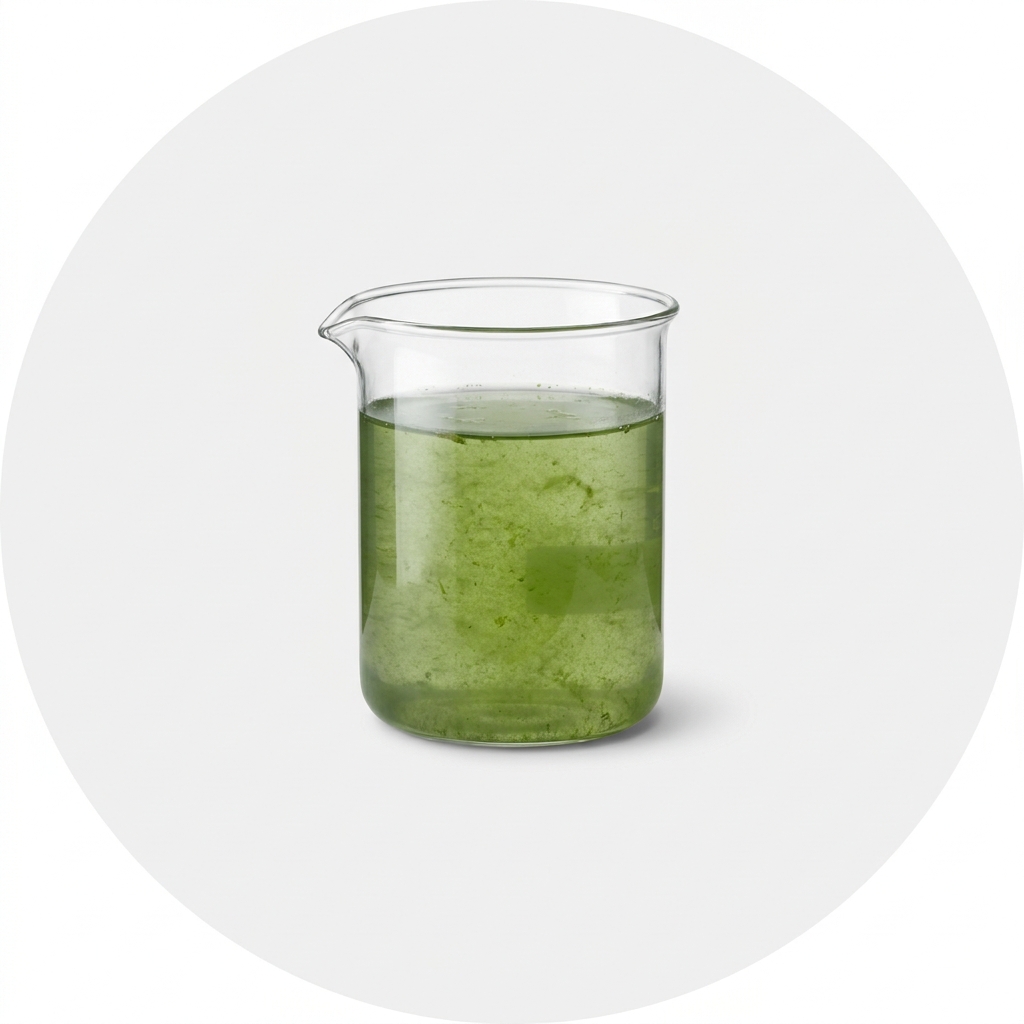

The sun's out, you're ready for a dip, and your pool looks more like a swamp than clear water. Every pool owner knows the feeling: cloudy water that shrugs off everything you throw at it. Maybe your chemicals are off, maybe tiny particles are floating everywhere. Either way, a small annoyance turns into a real headache fast. The good news is that clear water in about two days is completely doable with the right plan.
Years ago I was in the same spot. My kids were counting down to a pool party, and our water was anything but inviting. Out of desperation I started testing fixes and landed on a simple plan that cleared the water overnight.
It comes down to two things: careful chemical balancing and steady filtration. It looks intimidating at first, but broken into small steps it's easier than you'd think. With a little patience and basic supplies, you can have your pool ready for a swim fast.
Below you'll find practical tips and a step-by-step plan to clear your water in under 48 hours.
Your Action Plan
- Run your filter 8 to 12 hours a day and clean or backwash it.
- Test and adjust pH, total alkalinity, and calcium hardness.
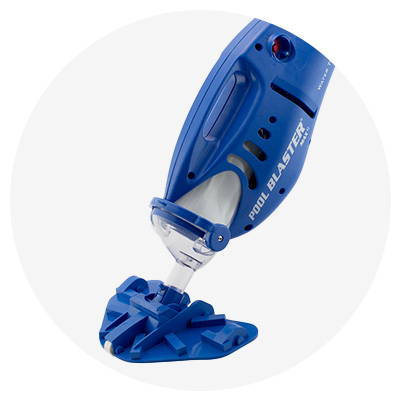
- Brush and vacuum to clear algae and debris.
- Shock the pool at dusk to kill contaminants.
- Add a clarifier or flocculant to clump up fine particles.
- Retest after 24 to 48 hours and rebalance as needed.
Troubleshoot Filtration Issues
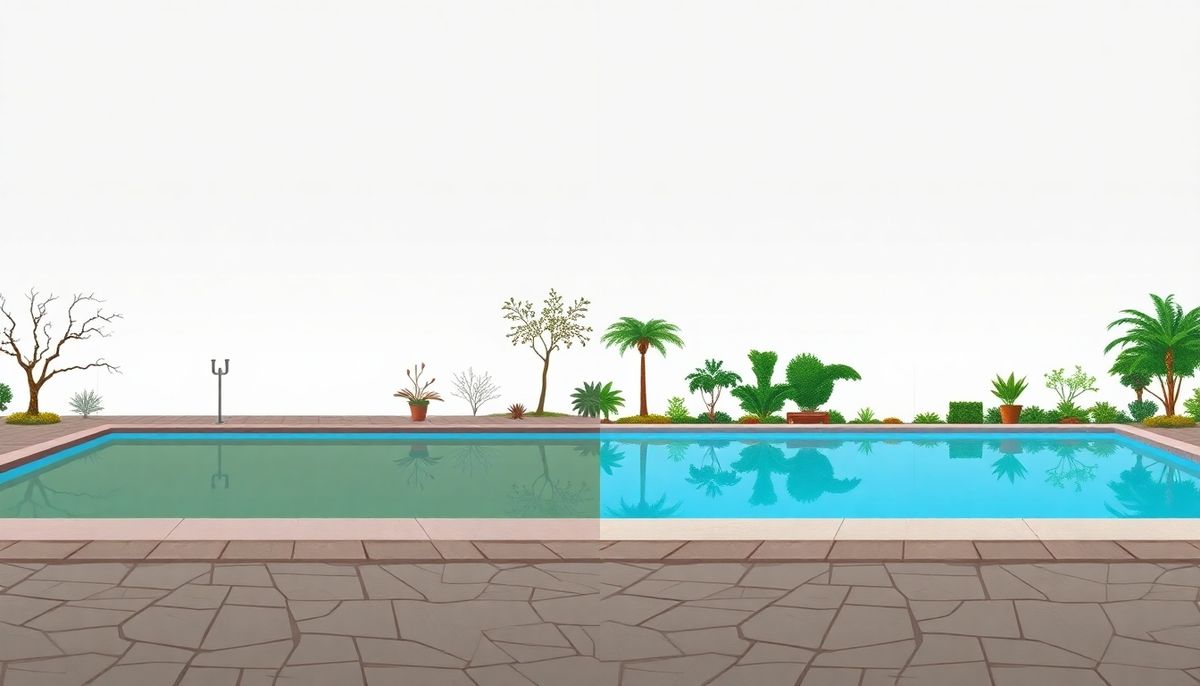
Filtration trouble can feel like chasing shadows. The water stays murky no matter what you try. Your filter is the heart of the pool's circulation, and if it's not doing its job, the water pays for it.
Give the filter enough run time
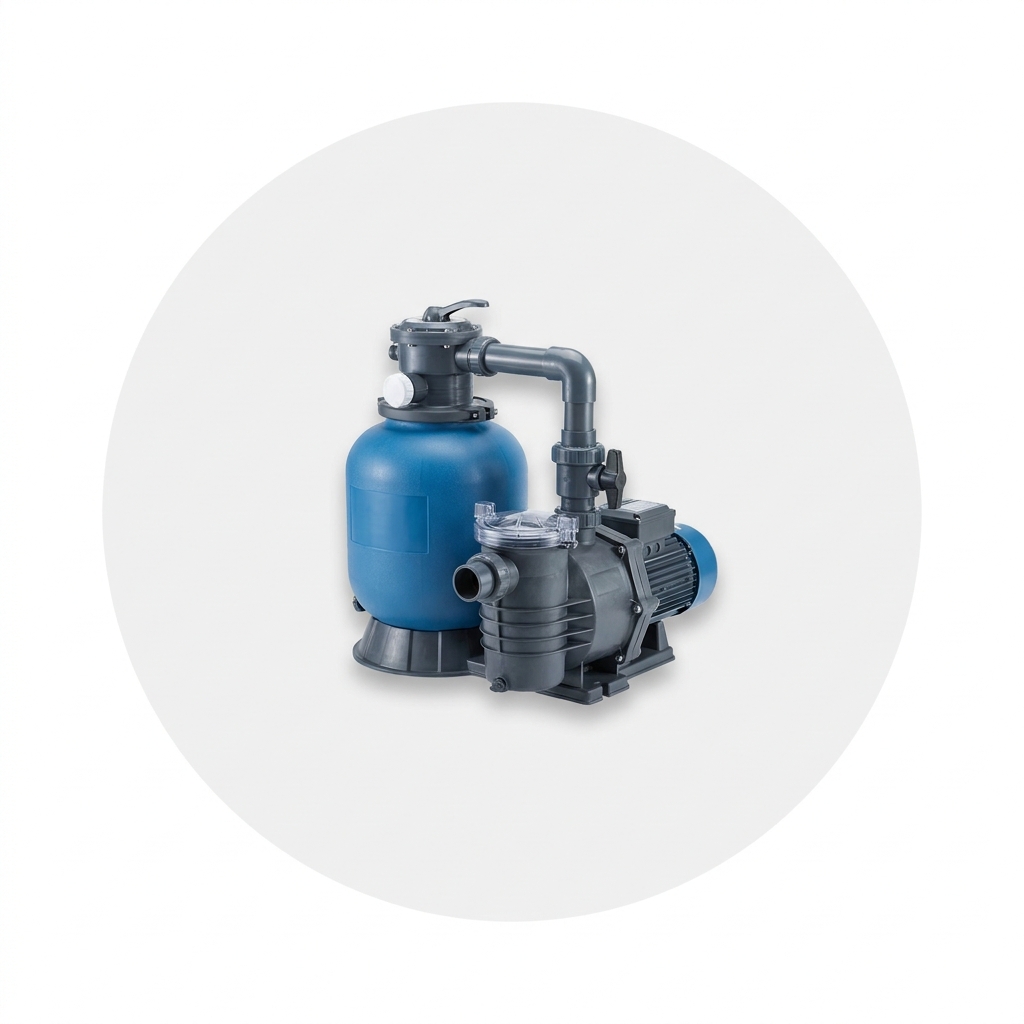
Make sure your filter runs the recommended hours each day. A common slip-up is not giving it long enough to move all the water through. If you're hitting 8 to 12 hours a day and the water's still cloudy, the filter media itself might be the problem. Cartridge filters need regular cleaning or replacement, sand filters need backwashing, and D.E. filters (which use diatomaceous earth, a fine powder that catches debris) do best with a thorough rinse and a fresh coat of powder.
Check settings, leaks, and blockages
Sometimes a small tweak boosts efficiency. Switching a multiport valve to "recirculate" can bypass filtration issues for a bit while you sort out other things. Watch for leaks or blockages too, since even a small obstruction can badly cut your filter's effectiveness. Clear these hiccups and your water can go from hazy to clean in short order.
Optimize Filtration Performance
Good filtration is the foundation of clear water. Your filter runs nonstop to trap the tiny particles that cloud the pool, so keeping it healthy matters more than almost anything else.
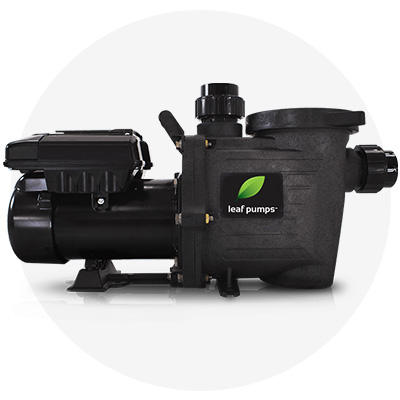
Figure out your filter type and what it needs. My cartridge filter, for example, needs a regular rinse under high-pressure water. Watch the pressure gauge: a low reading can mean a clogged filter, while a high reading tells you it's time to clean or backwash.
Run the pump long enough to move all the water through, usually at least 8 to 12 hours a day. That single change made a huge difference for me; once I bumped up the run time, the water cleared noticeably. Clean your skimmer baskets and pump traps regularly so nothing chokes the flow.
Running your pump 8 to 12 hours a day is the single biggest thing you can do to keep water clear.
Enhance Water Chemistry Balance
Balancing your water chemistry keeps things stable so your chlorine can do its job. Three numbers matter most: pH, total alkalinity, and calcium hardness. If one is off, the others stop working properly, so you need all three in range at once.
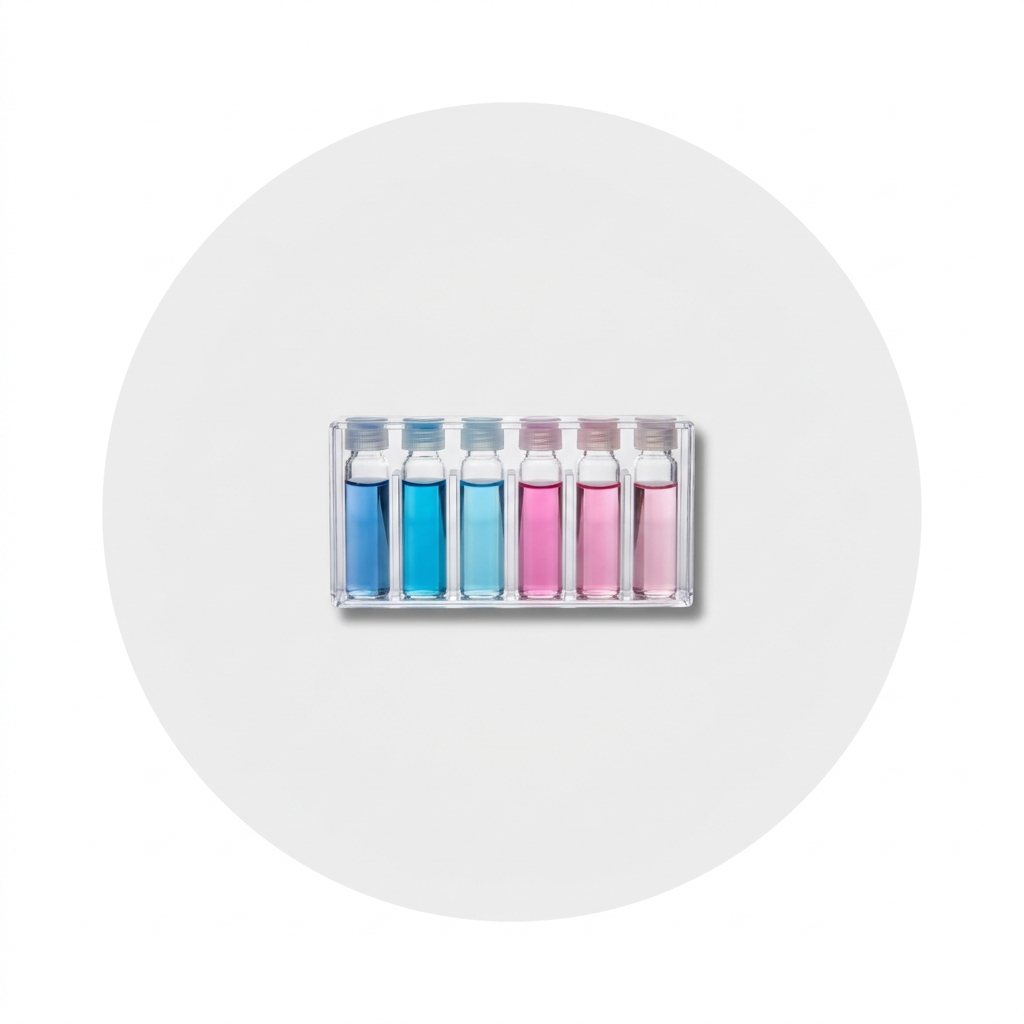
Start with a good test kit. Test strips are quick but often miss the finer details. Liquid kits take more attention, but they show you the nuances. If your pH is bouncing around, adjust it with a pH increaser or decreaser. Too high or too low and the water turns unstable, which leads to scaling or corrosion.
Total alkalinity acts as a buffer for your pH; aim for 80 to 120 ppm. Then keep an eye on calcium hardness. Too much causes ugly scaling, while too little can corrode your equipment. Keep these steady and your water rewards you with a clear, comfortable swim.
Combat Algae and Debris
Algae and debris can turn clean water into a mess, and they usually need more than a quick surface sweep.
Catch algae early
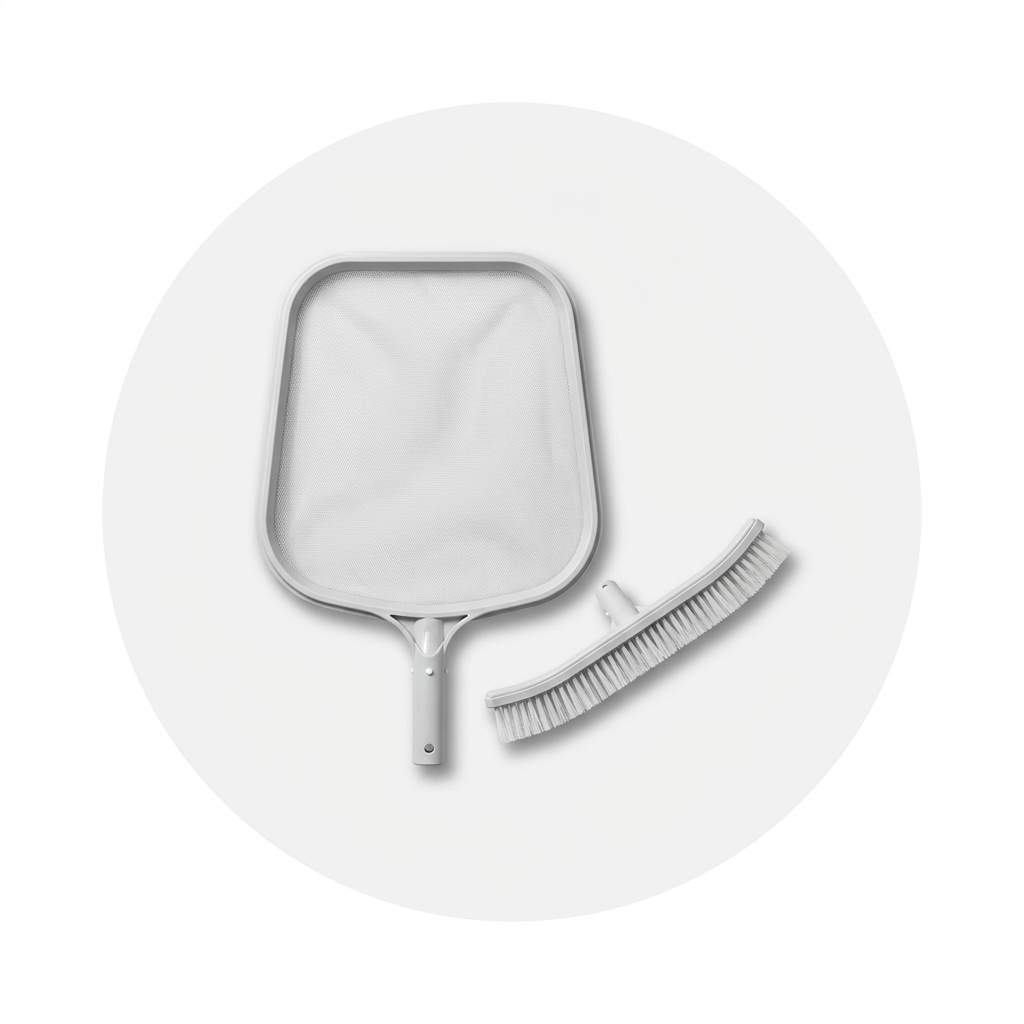
With algae, a fast response matters. Early-stage algae shows up as a slippery film. Run your fingers along the waterline and you can feel it. Once you spot it, scrub hard with a stiff pool brush and follow up with a chlorine shock. That kills the algae and helps keep it from bouncing back. Shock at dusk, since sunlight weakens chlorine and cuts its punch.
Stay ahead of debris
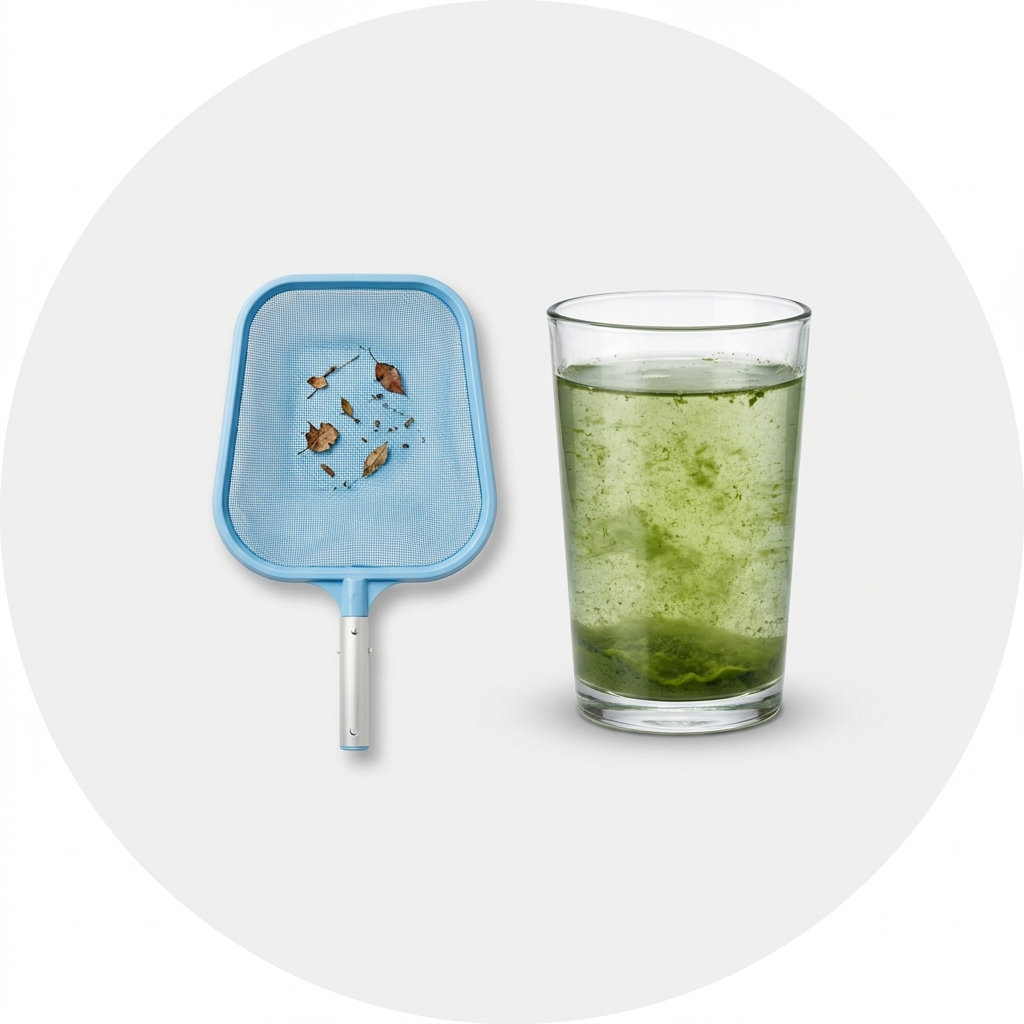
Debris is a constant companion, especially during windy stretches or after storms. Leaves, twigs, and pollen can overload your skimmer, so keep a leaf net handy for quick clean-ups. A manual vacuum is your best friend for the fine particles that slip past the skimmer. I learned the hard way that skipping cleanup leads to clogged filters and ruined weekends.
Balance Water Chemistry
Pool chemistry sounds intimidating, but getting the balance right is what gives you clear water. Another pool owner once told me about his endless cloudiness, only to find unbalanced chemistry was the cause. pH, total alkalinity, and calcium hardness work as a trio, each one shaping how well your chlorine works and how clear your water stays.
When pH climbs too high, chlorine loses its strength, and bacteria and particles cloud the pool. When pH drops too low, the water turns corrosive and can damage your equipment. Keep pH between 7.2 and 7.6. Total alkalinity should sit between 80 and 120 ppm, holding your pH steady. Calcium hardness over 400 ppm causes scaling, while too little leads to erosion, so aim for 200 to 400 ppm.
Test regularly, ideally with liquid kits. Fine-tune pH with increasers or decreasers, nudge alkalinity with baking soda, and bring calcium into line with a dedicated hardness increaser.
Chlorine can't sanitize properly if your pH is out of range, so balance the water first.
Optimize Filtration Efficiency
A clear pool comes down in large part to how well your filtration runs. Filters are the pool's kidneys, pulling out the impurities that cloud the water. A little extra care goes a long way.
Clean and backwash your filter regularly. Sand filters need routine backwashing, cartridge filters need a thorough rinse, and D.E. filters need careful handling when you replace the powder. I still remember the first time I skipped a backwash; before long my clear water had turned murky.
Runtime matters too. Running the filter at least 8 to 12 hours a day, especially after heavy use or a storm, makes a real difference. My neighbor swears by a timer to keep it consistent. And check that the pump and skimmer are clear of blockages; a quick look can reveal leaves choking the flow. Tuning up your filtration clears the water and extends the life of your equipment.
Maintain Proper Chlorine Levels
Chlorine is your main defense against the bacteria and algae that cloud a pool. Too little and it can't keep up; too much and it's harsh on swimmers. My neighbor found this out after a weekend away and came home to water that looked like a pond.
Test your chlorine regularly to check both free and combined chlorine. Free chlorine is your active sanitizer, while combined chlorine is the used-up portion you want to keep as low as possible. If your chlorine is low, shock the pool with a big dose to wipe out contaminants hiding in the water.
Account for the sun, too. UV rays burn off chlorine fast, so adding cyanuric acid stabilizes it, especially in sun-drenched pools. Think of it as sunscreen for your sanitizer. Keep tabs on the chemistry and your water stays clear and ready.
Manage pH and Alkalinity
Balancing pH and alkalinity keeps the water stable so everything else works. I remember when my own pool turned milky simply because I ignored these two numbers.
The ideal pH sits between 7.2 and 7.8. That range keeps chlorine working while keeping swimmers comfortable. Total alkalinity acts as a buffer that stops sudden pH swings; aim for 80 to 120 parts per million. Together they head off the corrosion and scaling that chew up surfaces and equipment.
Check both often with a reliable kit. If pH creeps too high, a pH decreaser (an acid) brings it down. If it dips too low, a pH increaser does the trick. For alkalinity, bicarbonate-based products raise it, while a dose of acid lowers it when needed.
Shock to Clear Contaminants
When cloudy water strikes, shocking is one of your strongest tools. It's an intense burst of chlorine built to wipe out stubborn contaminants and chloramines, the used-up chlorine that causes that strong pool smell. I still recall my first shock treatment; it felt daunting, but it was satisfying to watch the clarity come back.
Choose your shock and time it right
Pick a good shock product. Calcium hypochlorite, standard powdered pool shock, is a popular choice. Add it at dusk, since sunlight breaks down chlorine and nighttime gives it time to work. Work out the dose for your pool size, aiming for a chlorine level double or even triple your current reading, especially if algae is in the mix.
Let the filter finish the job
Once the shock is in, be patient. Run the filter without stopping, ideally overnight, so the chlorine has plenty of time. A clean, well-kept filter catches the loosened debris and makes the treatment more effective. Test again in the morning, and if stubborn cloudiness lingers, consider a second shock. Every pool is different, and sometimes it takes an extra push.
Ensure Effective Filtration
Filtration is your first line of defense against murky water. A filter has to be in top shape to catch the tiny particles that cause cloudiness. Our first summer, cloudy water was a frustrating loop until we realized the filter was clogged. Clean it regularly: pull and rinse cartridges, backwash sand filters, or refresh D.E. grids as needed.
Circulation matters just as much. Run your pump at least eight hours a day so the water keeps moving and the filter gets its best shot at the contaminants. I learned the hard way that cutting pump time to save on electricity leads to stagnant, cloudy water.
Check the pressure gauge regularly, too. A spike means the filter is straining and needs attention. The upkeep can feel tedious, but staying on top of these small tasks heads off problems before they start.
A pool is a place to relax, and when the water turns cloudy, poor chemistry is often the reason. Getting the balance right isn't only about looks; it's about health and safety. Three numbers do the heavy lifting: pH, total alkalinity, and calcium hardness.
Testing comes first. A reliable liquid kit, or a quick check with strips, reveals any imbalances. Start with pH, which should land between 7.2 and 7.6. Stray outside that range and you invite irritation and weak sanitizing. Next, look at total alkalinity, which should sit between 80 and 120 ppm to buffer pH swings. Don't forget calcium hardness; keep it between 200 and 400 ppm to avoid scale or water that feels too soft.
Last summer I let these slide and ended up with a milky, uninviting pool. A full rebalance brought the clarity back in less than 48 hours.
Utilize Pool Clarifiers
Cloudy water is common after a heavy storm or a busy weekend of pool parties. Before you resign yourself to endless skimming and chemical tweaks, there's a simple helper worth trying: a pool clarifier.
Clarifiers pull smaller particles together into larger clumps your filter can grab more easily. Using one is simple: follow the dosage instructions, pour it in, and let your filtration system do the rest. It's a gentle, effective way to deal with mild cloudiness without vacuuming over and over.
The secret is patience. A clarifier won't clear things instantly; it might take a few days. Filters work best when clean, so keep yours well maintained to get the most from it.
Use Clarifier for Quick Fix
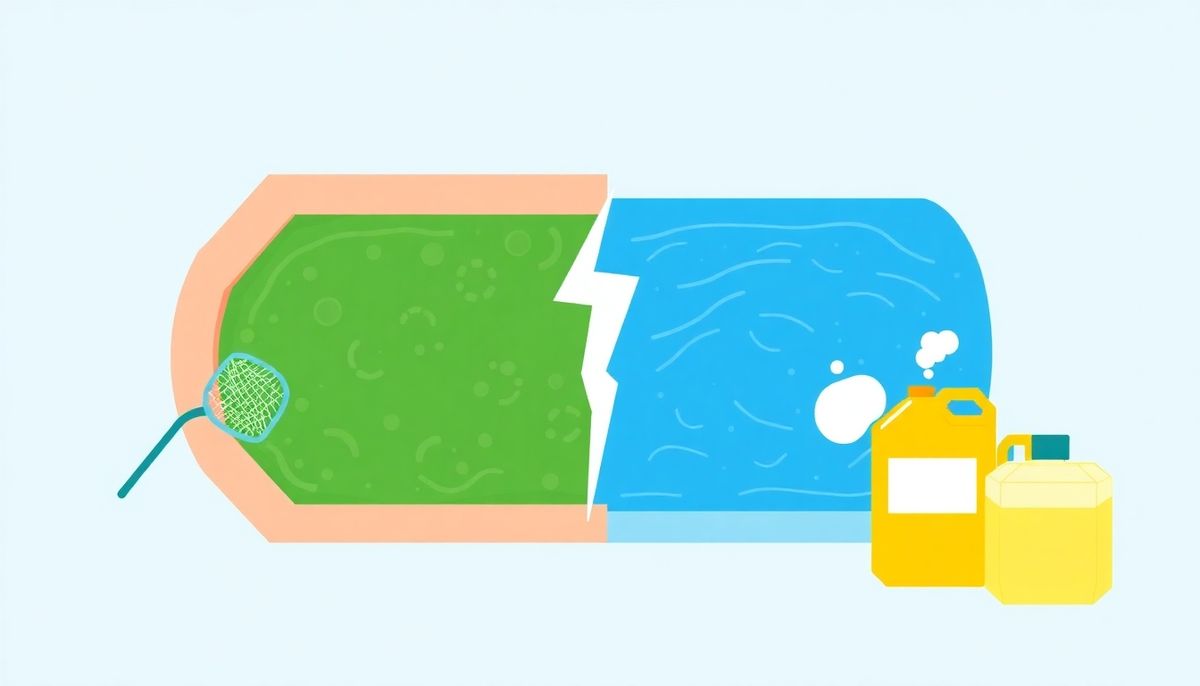
When time is tight, a clarifier might be your best ally. Unlike a flocculant, which gathers debris into heavy clumps you have to remove by hand, a clarifier makes cleanup easier by pulling tiny particles into larger clusters your filter can handle.
Clarity comes quickly and with little effort from you. Test and balance your chemistry first so pH, alkalinity, and chlorine sit in range; that sets the clarifier up to work. Then add it per the directions. This isn't a "more is better" situation; overuse can backfire and make the water cloudier.
The clarifier pulls those annoying particles together so your filter can trap them. Run your filtration nonstop for the next 24 to 48 hours. A high-power filter like a D.E. unit may show results sooner. Backwash regularly during this stretch to prevent clogs. In my case, a clarifier took my pool from a cloudy mess to clear water in under two days.
Clear water can feel like a luxury, especially when the filter acts up. The filtration system is your pool's backbone, catching the tiny particles that cloud the water. When it stumbles, so does your clarity.
Your first move should be inspecting the filter. Check whether it's clogged or whether the sand, cartridges, or D.E. powder need replacing. Filters, like car engines, need regular maintenance. A friend of mine once found a family of frogs living in his filter, and his pool suffered for it. Clean it per the directions, and backwash if you have a sand or D.E. system.
Then watch how the pump behaves. Is it running 8 to 12 hours a day during the busy season? If not, adjust the run times. I once thought my pump was dead, only to find the timer set to a shorter cycle. Look for leaks or air bubbles too, since leaks drop the pressure and hurt filtration. Make sure every connection is snug and the pump basket lid is sealed tight.
Balance Chlorine Levels
Let's talk chlorine again. It's your primary defense against the pathogens and bacteria that love to move in. When water starts to cloud, low chlorine is a usual suspect, often because leaves and debris drift in, or a sunny day sends swimmers in with sunscreen that adds to the load.
Test your chlorine levels; it's basic maintenance, like checking the oil in your car. Use a reliable kit to measure both free chlorine (what's actively sanitizing) and combined chlorine (what's already been used up). If the numbers are low, it's time for a shock.
Shocking sounds intense, but it's simple: a concentrated hit of chlorine to knock out contaminants in one move. Do it after sunset, since the sun degrades chlorine, then let your filter run overnight to clear out what the shock kills. If your chlorine is right, you're halfway to clear water.
Eliminate Contaminants Effectively
Poor filtration, low chlorine, and off chemistry usually get the blame for cloudy water, but the real culprits are often the tiny, sneaky ones: debris, pollen, and algae spores.
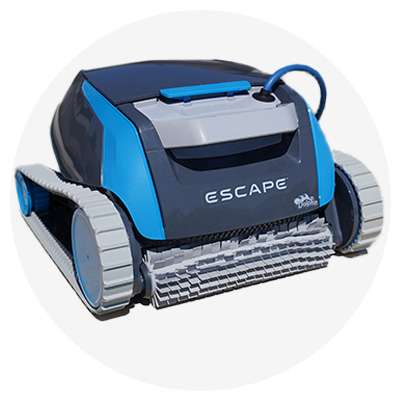
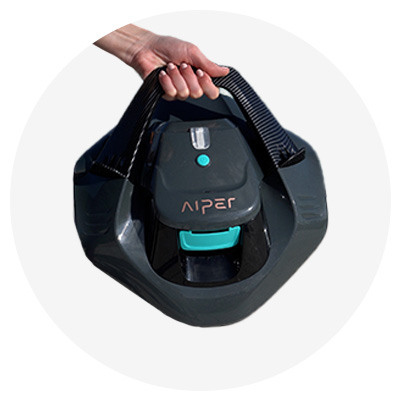
Start by skimming the surface with a sturdy net to clear floating leaves and bugs. Once the big stuff is out, grab a manual vacuum to hunt down the smaller particles resting on the bottom. It's like sweeping dust bunnies from under the couch: out of sight, but never really gone.
Now bring in the chemistry. Shocking your pool with a high dose of chlorine wipes out stubborn contaminants and chloramines. Let it soak overnight so the chlorine can work away from the sun. Then do the fine work with a clarifier, which pulls elusive particles into clusters your filter can catch. Add it while the filter runs, and keep your chemistry balanced so it doesn't happen again.
Vacuum with Pool Flocculant

When regular clarifiers aren't cutting it, flocculants are the heavy hitters. They're fast and effective, though they take more elbow grease. The idea is simple: flocculants clump the tiny particles causing the cloudiness into larger, heavier lumps that sink straight to the bottom.
Add it and let it settle
Test and adjust your pH first so the flocculant works efficiently. After adding the right amount for your pool size, run your filter on "recirculate" for about two hours. That moves the flocculant around without pushing it through the filter media. Then turn the filter off and let the pool rest for 8 to 12 hours so the particles settle.
Vacuum out the debris
The next morning you'll find a thick cloud of debris on the pool floor. Now the real work begins. Use a manual vacuum, and set your filter to "waste" if you have a multiport valve. The "waste" setting shoots the clumped-up debris straight out of your pool system instead of pushing it through and clogging your filter. Move the vacuum slowly; go too fast and you'll stir the particles back up. Be ready to refill and rebalance afterward, since you'll lose a fair amount of water.
A flocculant clears severe cloudiness fast, but you have to vacuum the settled debris out to waste yourself.
Identify Cloudy-Water Causes
Tracking down the cause of cloudy water can feel like detective work, but knowing the usual suspects makes it easier. One summer I battled murky water only to find the filter was the saboteur. Filters catch debris and keep water clear, and when they're clogged they can't strain out the fine particles. Regular upkeep and the occasional professional check-up keep them in shape.
Chlorine plays a big part too. Low levels can follow a flood of organic matter, think leaves or sweat, after an enthusiastic weekend party. Test regularly and adjust to keep pathogens from taking over. I learned this after a family barbecue left the pool looking like a pond.
Water chemistry is often the quiet disruptor: balance pH, total alkalinity, and calcium hardness or you invite scale and weaker chlorine. And natural contaminants like pollen or early-stage algae can quietly turn water hazy, especially with seasonal changes, as I found out one pollen-heavy spring. Clear debris quickly and treat algae fast.
Implement Pool Maintenance Solutions
Keeping a clear pool comes down to a steady routine that, done consistently, keeps murky water away for good.
Start with the filter. It works nonstop to catch the invisible particles that cloud the water, so inspect and clean it regularly, whether it's sand, cartridge, or D.E. I learned the hard way that neglecting this leaves you with opaque water even after a thorough cleaning.
Balancing chemistry matters just as much. Check and adjust your levels routinely to prevent scale and keep chlorine working. My routine includes a weekly check of pH, alkalinity, and calcium hardness, which spares me surprise cloudy spells after a rainstorm or a busy weekend.
Don't skip the little things. A quick sweep with the skimmer clears surface debris before it sinks, and regular brushing and vacuuming keep algae from taking hold. Build these habits in, and you'll enjoy a pool that's always ready for a swim.
Conclusion
Getting your pool back in shape takes a little effort, but clear, safe water is worth it. Stick with the steps here and you'll spend less time fighting the water and more time enjoying it.
Want to go further? Our free Pool School course covers everything about pool care, from basic maintenance to advanced troubleshooting. You'll learn how to:
- Save thousands on pool repairs and chemicals
- Keep your water clear year-round
- Prevent and solve common pool problems
- Master water chemistry with confidence
Join over 10,000 pool owners who have already transformed their pool care routine. Get started with our free Pool School course today!
What you need
Grab a reliable liquid test kit, chlorine shock, a clarifier or flocculant, and a stiff brush with a manual vacuum, then work through the steps above to clear your water in 48 hours.