
Start with the score and tradeoffs, then check current pricing at the available retailers. Prices move, so compare before checking out.
Occasional emails when a cleaner we've tested drops in price, plus pool tips and new reviews. Free, and you don't need an account.
Free. No spam, unsubscribe anytime. Privacy Policy
Each card pulls the strongest point and main drawback from our full review
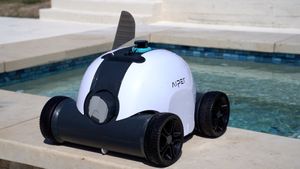
Its cordless, lightweight design kept setup and retrieval straightforward.
Without an active brush or mapped route, it missed floor debris; the flat mesh filter, 90-minute runtime, and repeated charging further restricted cleaning.
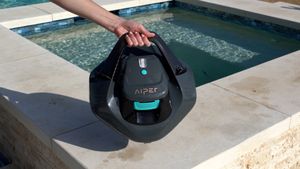
Its lower price and cordless body reduced initial setup to charging and placing the unit in the pool.
Static brushes, random flat-floor coverage, and a flat mesh filter left debris behind, while every cycle required retrieval and charging.
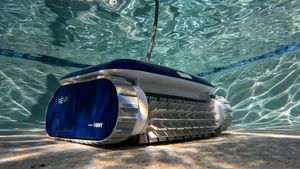
The REVA covered the floor, walls, and waterline with tracked drive, a gyroscope, scrubbing brush, and app-based schedules.
Its dual-layer basket held less debris with both layers installed and did not match the fine-particle capture of a dedicated NanoFilter.
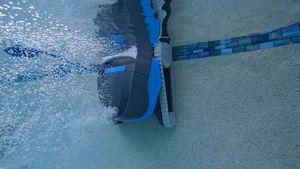
The Cayman combined mapped floor and wall coverage with a HyperBrush, MaxBin, and weekly timer.
It did not clean the waterline, and NanoFilters were sold separately rather than included.
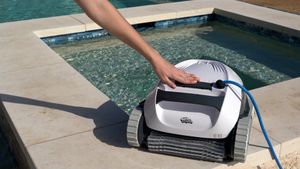
The E10's active brush, tracked navigation, and top-load basket handled routine floor debris in above-ground and small in-ground pools.
It did not cover walls or the waterline, include NanoFilters, or provide a weekly timer, so each cycle required a manual start.
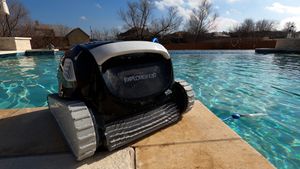
The E30 covered the floor, walls, and waterline with tracked navigation, a 4,000 GPH flow rate, Wi-Fi, and scheduled cycles.
Its basket included only standard mesh filtration, and its two-year warranty was shorter than the three-year coverage on the compared models.
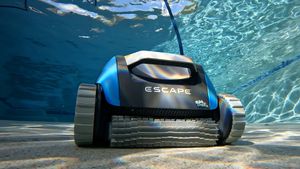
The HyperBrush, tracks, Smart Nav 2.0, 4,000 GPH flow, and MaxBin produced consistent floor cleaning in above-ground and small in-ground pools.
Its rated coverage stops at the floor, NanoFilters cost extra, and the power supply has no weekly scheduler.
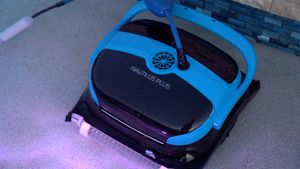
Dual brushes and tracks covered the floor and walls, while the weekly timer handled recurring cleaning cycles.
It did not clean the waterline or include NanoFilters, and the current model carries a one-year warranty.
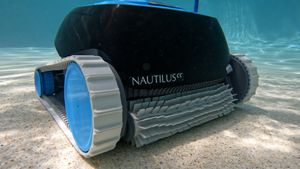
The compact Nautilus CC used tracks and an active brush to cover floors and walls in pools up to 33 feet.
The current model omits the weekly timer, waterline cleaning, and NanoFilters, and carries a one-year warranty.
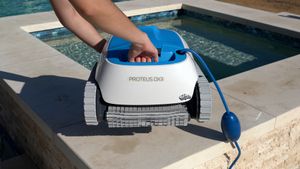
The DX3 used tracked navigation and a weekly timer to clean pool floors and walls on a recurring schedule.
It lacked waterline cleaning and NanoFilters, had an awkward retrieval handle, and some sellers charged restocking fees on used returns.
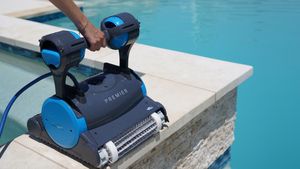
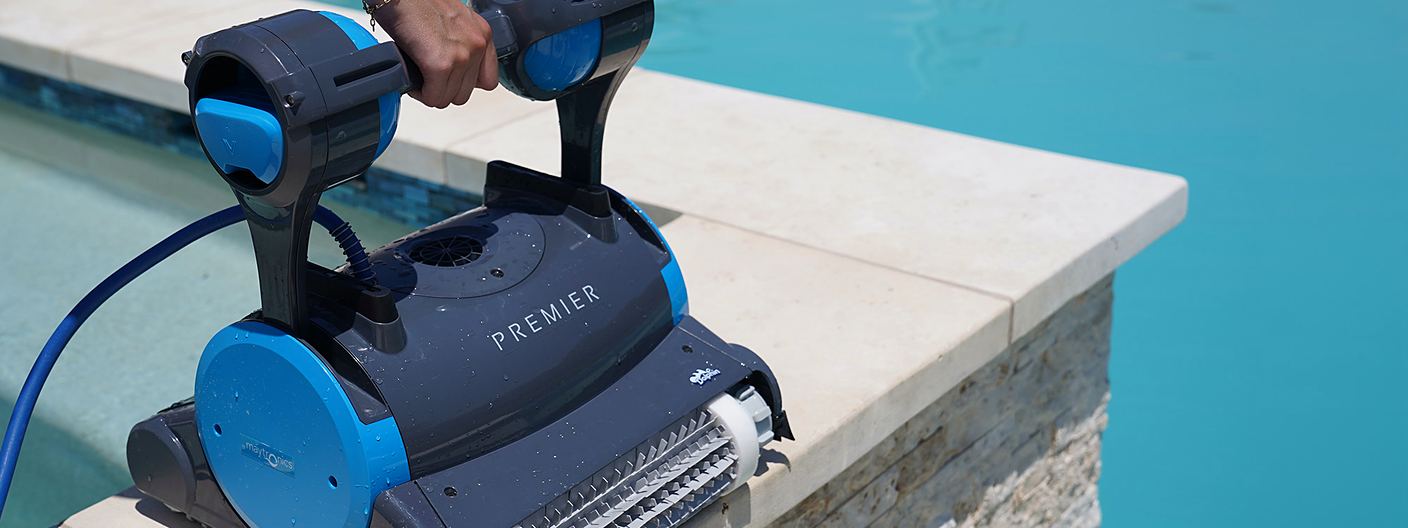
The Premier pairs standard filters, NanoFilters, and an oversized leaf bag with dual brushes, waterline coverage, and a three-year warranty.
It carries a high price and lacks smartphone controls, though schedules can be set from the power supply.
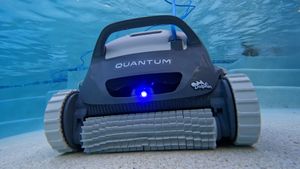
The XXL MaxBin, standard and NanoFilter sets, dual brushes, PowerJet mobility, and weekly timer supported cleaning from the floor through the waterline.
It has no leaf bag for pools with frequent leaves, and its warranty is two years rather than the three years offered on some models.
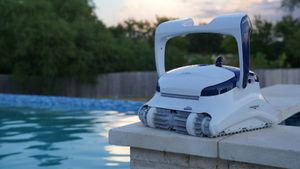
Three commercial-grade motors, a gyroscope, dual brushes, two filter sets, app controls, and a three-year warranty supported floor-to-waterline cleaning.
Its high price includes Wi-Fi and app features that some buyers may not use.
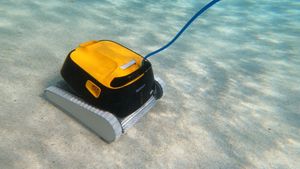
The Triton PS cleaned from floor to waterline and included a weekly timer and top-load basket.
Only standard mesh filters were included; its 4,000 GPH flow trailed the compared ProLine models' 4,500 GPH, and the warranty lasted two years.
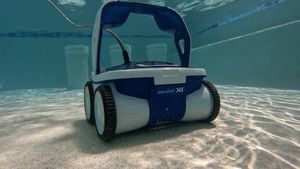
The X4 covered the floor and walls with four-wheel drive, while its dual fine baskets and programmable power supply supported scheduled cleaning.
It did not clean the waterline, and its included filters missed the smallest debris that an ultrafine option would target.
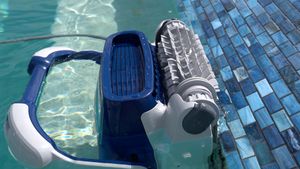
The gyroscope, stabilizer, dual brushes, and app controls supported floor-to-waterline cleaning, and the warranty lasted three years.
It included one filter medium, limiting fine-particle and heavy-debris options compared with models that include multiple filter types.
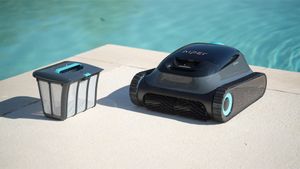
Tracks, a scrubbing brush, and a top-load basket let the Scuba S1 cover the floor, walls, and waterline.
Its suction weakened during battery cycles, navigation missed complex areas, and basic filtration plus frequent charging made it less suited to larger or debris-heavy pools.
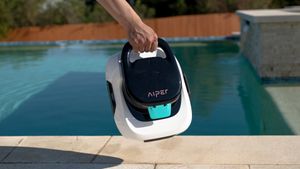
Its lightweight body was simple to retrieve, and setup required only charging before the first cycle.
A 1,200 GPH flow rate, flat mesh filter, and random floor-only path left debris behind, while each 90-minute cycle required about three hours of charging.
Each listed cleaner has an in-pool review with coverage, filtration, and feature scores.
Brands cannot buy a spot or move a product higher on the page.
The overall score sets the order, and each card links back to the supporting test notes.
Open more than one retailer when links are available; inventory and prices can change.