



Pool Volume Formulas
Use these formulas to manually calculate your pool volume:
| Pool Shape | Formula |
|---|---|
| Rectangle | Length × Width × Avg Depth × 7.48 |
| Circle | Diameter × Diameter × Avg Depth × 5.9 |
| Oval | Length × Width × Avg Depth × 5.9 |
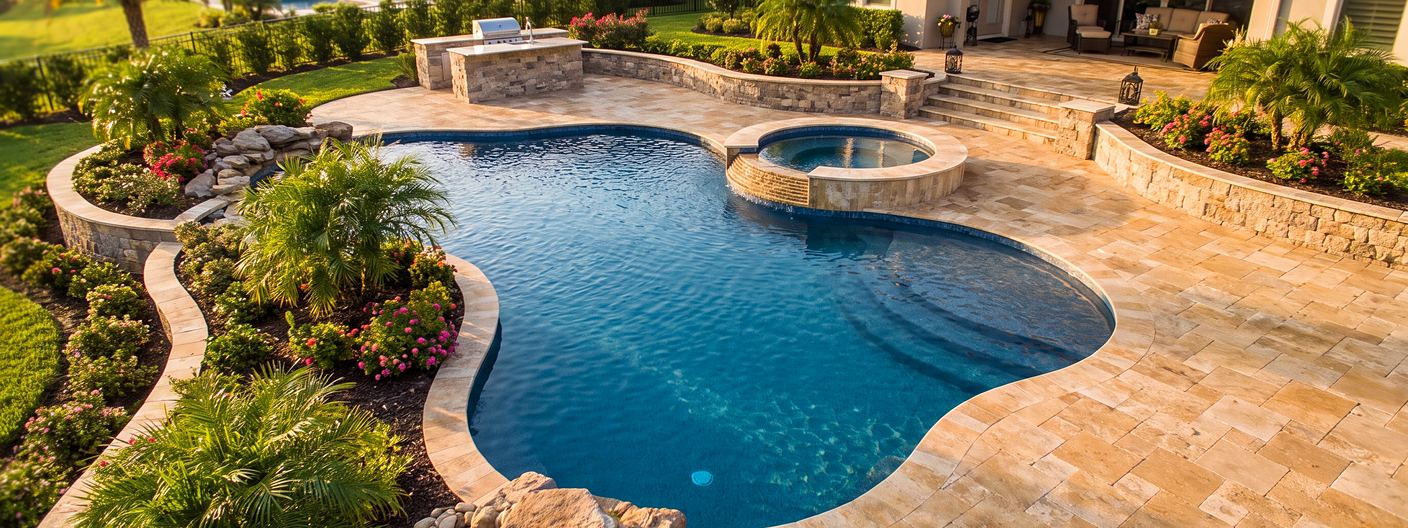
| Kidney | Length × Avg Width × Avg Depth × 7.48 × 0.85 |
Note: Results are in gallons. One cubic foot = 7.48 gallons.
Common Pool Sizes
Inground Pools
| Size (ft) | Avg Depth | Gallons |
|---|---|---|
| 12 × 24 | 5 ft | 10,800 |
| 15 × 30 | 5.5 ft | 18,500 |
| 16 × 32 | 5.5 ft | 21,000 |
| 18 × 36 | 6 ft | 29,000 |
| 20 × 40 | 6 ft | 36,000 |
Above Ground Pools
| Size | Depth | Gallons |
|---|---|---|
| 15 ft round | 48 in | 4,978 |
| 18 ft round | 52 in | 7,646 |
| 24 ft round | 52 in | 13,594 |
| 12 × 24 oval | 52 in | 6,797 |
| 15 × 30 oval | 52 in | 10,620 |
Why Pool Volume Matters
- Chemical dosing - All pool chemicals are dosed based on gallons
- Equipment sizing - Pumps, filters, and heaters need to match your pool size
- Fill time - Know how long it takes to fill or top off your pool
- Water costs - Estimate your water bill for filling
How to Measure for a Useful Estimate
Average depth has a large effect on the gallon estimate. Measure the shallow and deep ends with a tape or marked pole, add those depths, and divide by two. Do not substitute the wall height or a remembered plan dimension for the current water depth.
For a pool without plans, measure the water surface rather than the outside edge of the coping. Record the estimated gallons with your maintenance notes because you will reuse the number for chemical dosing and equipment sizing.
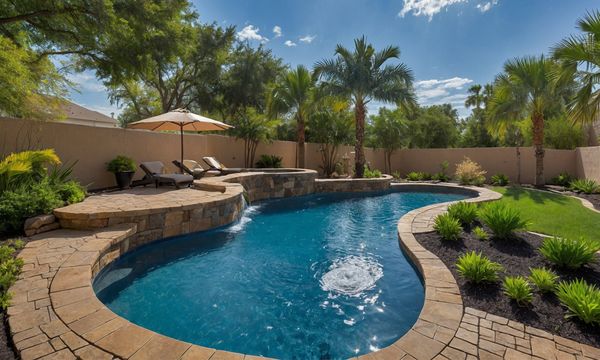
For an irregular pool, treat the result as an estimate. Divide the surface into simple rectangles, circles, or ovals, calculate each section, and add the results. Start chemical corrections in stages and retest if the shape or depth measurements are approximate.