



Waking up to a bright green pool is a terrible surprise. One morning my water had turned cloudy and green, and it happens more often than you'd think. Algae move in, and if you don't deal with them fast, your backyard turns into a swamp. The usual causes are a skipped cleaning, wild weather, or a cover you forgot to pull off.
When my own pool went green, I skipped the panic and grabbed the real tools of the trade — a test kit, algaecide, and a pool vacuum. That day taught me to act quickly, because the longer you wait, the tighter algae grab hold.
This guide comes from my own hands-on work and advice from pool pros. Within 24 hours, that green mess can be behind you. It comes down to understanding the chemistry, moving fast, and using the right tools. Whether you've got a weekend party coming up or you just want a quiet swim, let's turn that murky water clear with steps that actually work.
Your Action Plan
- Test your pH and alkalinity and adjust them to the target range.
- Brush every surface to loosen the algae into the water.
- Add calcium hypochlorite shock after dark, doubling or tripling the dose.
- Run the filter nonstop for a full 24 hours.
- Use a clarifier and backwash to clear the last of the haze.
- Keep chlorine steady and test weekly so it doesn't happen again.
Eradicate Algae Fast
Start by brushing, then shock
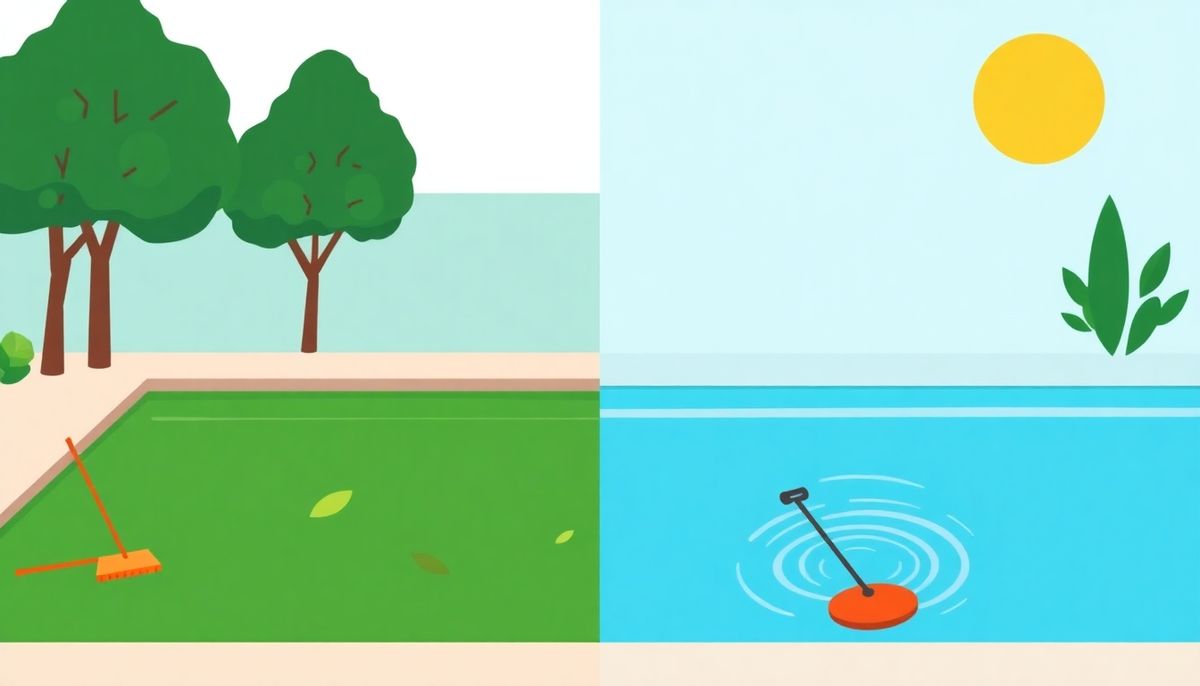
Green water is ugly, but you can beat it fast. Grab a good pool brush and scrub every inch — walls, steps, and floor. It's dull work, but it loosens the algae and floats it right where the chlorine can reach it. Before you chlorinate, test your water with strips or a liquid kit and check the pH and alkalinity. Getting those right is the difference between a shock that works and a weekend spent wading through cloudy water.
Then bring out the calcium hypochlorite shock — that's a strong, granular chlorine. My own pool holds 20,000 gallons, and a triple dose cleared the deep green. Dose it, run the filter overnight, and by morning you should see cloudy blue, the sign the algae is dead. Keep filtering, backwash often, and soon you'll be ready to swim.
Eliminate Algae with Proper Brushing
Why brushing isn't optional
Your brush is your best friend against green water. Algae cling to walls, steps, and every surface they can reach, and they're stubborn. If you want them gone, you have to brush.
A wide brush with a 360-degree reach gets into the corners and cracks where algae like to hide. For a concrete pool, use a heavy-duty algae brush with stiff bristles that knock loose even the toughest patches. Fix the brush to a telescopic pole and work over every inch, lifting the algae and floating it so chlorine can hit it. Do this alongside the right chemicals and your pool clears much faster.
Skipping the brushing is the single biggest reason a shock treatment fails.
Balance Water Chemistry Effectively
Test before you treat
When your pool goes green, reach for your test kit before anything else. Checking pH and alkalinity shows what you're dealing with. Aim for a pH between 7.4 and 7.6, and alkalinity between 80 and 120 parts per million (ppm), which is just a measure of how much buffer is in the water.
If alkalinity runs high, it throws off your pH and weakens the chlorine's grip on algae. Lower it with the right buffer, which often pulls the pH back in line too. Treating a pool is a lot like baking: measure right and you get good results. On one hot day I carefully adjusted the alkalinity and pH on a murky pool, and overnight it shifted from sickly green to a hopeful cloudy blue. Test, adjust, and test again.
Balance your pH and alkalinity before you shock, or the chlorine won't have the power to clear the algae.
Intensify Chlorine Shock Treatment
Pick the right shock and dose
A strong chlorine shock is the star of the recovery. Pick one with at least 70% available chlorine — calcium hypochlorite handles stubborn blooms well. A normal shock uses one pound per 10,000 gallons, but a green pool needs more muscle. For a bad bloom, double or even triple that dose.
Timing matters, so add the shock after the sun goes down, since chlorine burns off fast in daylight. Then run your filter nonstop for 24 hours so the water keeps moving. If the morning still shows green, do another round. You're aiming for a shift to cloudy blue, which tells you the algae has met its match.
Always add pool shock after sunset, because direct sunlight burns off chlorine before it can kill the algae.
Brush Away Algae
Work every surface
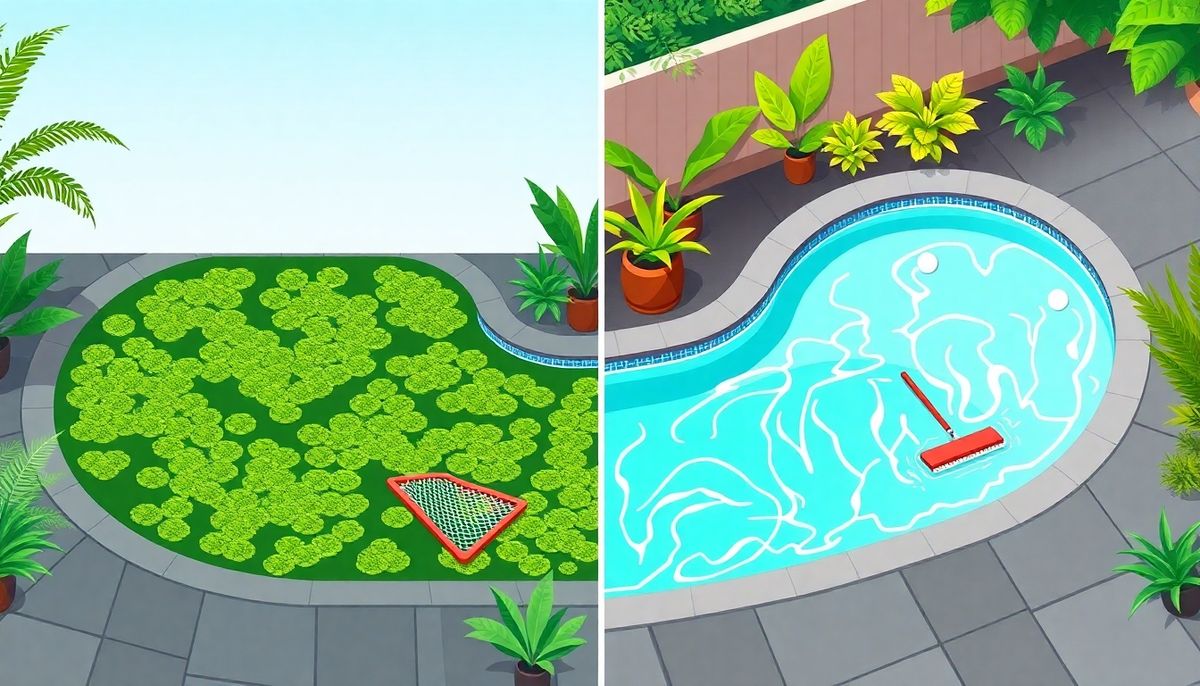
Algae cling to every surface, so start with a telescopic pole and a wide brush that gives you a 360-degree reach. Every stroke lifts algae off the walls and floor and into the water, where chlorine gets the upper hand. Hit the steps, the cracks, and the corners people usually miss. A brush made for concrete pools makes this far easier.
I used to shrug this step off because the algae looked harmless, just a faint green tint. Skipping it only led to longer, harder days. A little elbow grease now saves a lot of trouble later.
Prepare Your Pool Tools
Gather your gear first
The right gear turns what looks like a huge job into something you can knock out in a day. A little prep makes the whole thing much easier.
Start with a sturdy telescopic pole and a wide pool brush, ideally one that swivels a full 360 degrees. If you have a concrete pool, add an algae brush with stiff bristles for the most stubborn growth. Next, get a reliable test kit — strips or liquid — to guide your pH and alkalinity adjustments. Finally, stock up on pool shock, with calcium hypochlorite at 70% or more available chlorine being ideal. Having all of it ready also gives you a base for ongoing care.
Adjust Water Chemistry
Adjust alkalinity, then pH
Think of your pool as a small ecosystem where every chemical has a job. Start by testing. Your pH should sit between 7.2 and 7.6, which lets chlorine work at its best.
Fix any problems right away, starting with alkalinity since it buffers the pH. Lower it with muriatic acid or sodium bisulfate if it's too high, or raise it with baking soda if it's too low. Once alkalinity is set, fine-tune the pH — though the alkalinity fix often handles it for you. Good chemistry doesn't just clear the algae; it guards against the next round.
Apply Effective Shock Treatment
Turn green to blue overnight
Clearing a green pool in 24 hours is real if you get the chemistry and timing right. Pick calcium hypochlorite with at least 70% available chlorine, and add it as the sun goes down so sunlight doesn't weaken it.
Don't go light. A standard dose won't cut it for a green pool — double or triple it depending on the bloom. A 20,000-gallon pool that looks like a woodland pond might need six bags instead of the usual two. Once it's in, run the filter around the clock to clear out the wreckage. By morning the water should move from green to a promising cloudy blue.
Shock Your Pool Effectively
Match the dose to the shade of green
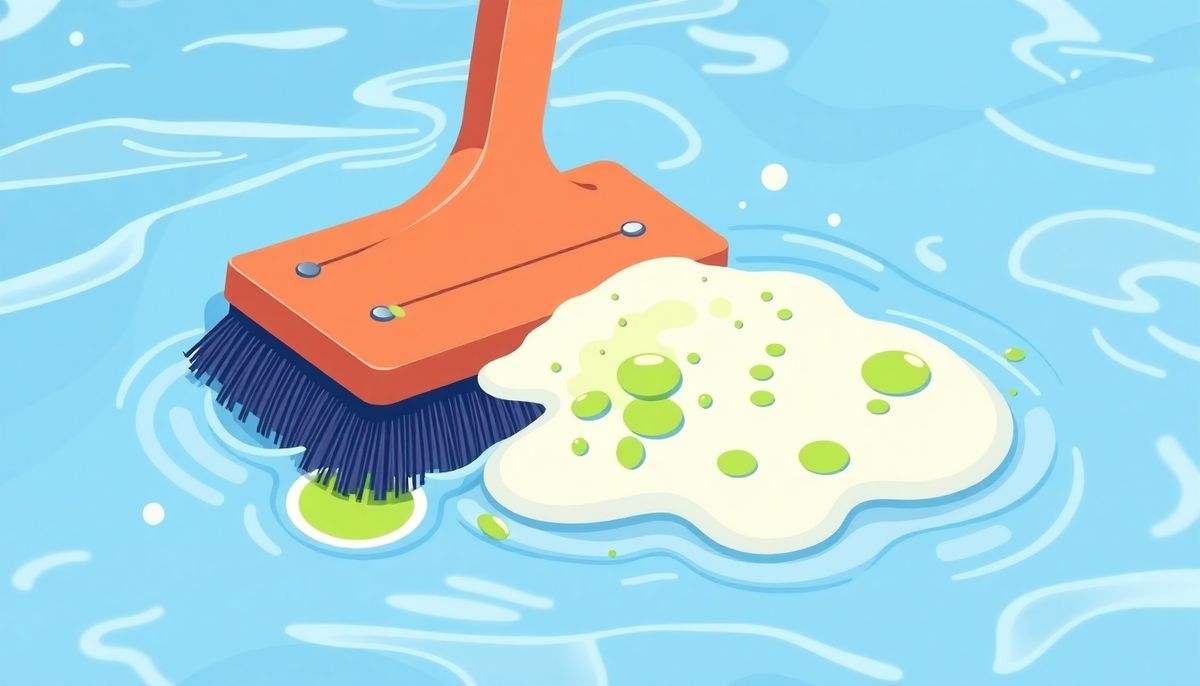
Size up the green first. A light pea green is an easier fight, while a deep, dark green calls for more force. Use a shock with at least 70% available chlorine, ideally calcium hypochlorite. A 20,000-gallon pool with a deep green tint needs about a triple dose — roughly six pounds of the strong stuff.
Timing is on your side. Shock at night, spread it evenly across the surface, and let the filter run a full 24 hours. If the morning shows stubborn patches, shock again. Stay patient, and when that cloudy blue finally shows up, the algae's beaten and poolside days are back.
Combat Pool Algae
The full 24-hour plan
You don't need to drain the pool and start over. Algae thrive when chlorine runs low, and with the right tools you can win in a day.
First, put a brush on a telescopic pole and scrub every surface, from walls to steps, to loosen the algae's grip. Then dose with a high-chlorine shock, doubling or tripling based on size and how deep the green goes. Shock at night, and run the filter nonstop to sift out the dead algae. By morning you should see cloudy blue.
Through all of this, keep an eye on pH and alkalinity, and balance them before you shock so the chemicals work at their peak. Follow these steps and your pool goes from a green eyesore to a sparkling centerpiece.
Check the vitals before you shock
Balancing the water chemistry is what brings your pool back. Grab a test kit or strips and read the pH and alkalinity. Aim for pH between 7.2 and 7.6 and alkalinity from 80 to 120 ppm, since these numbers set up the chlorine to do its job.
If your pH is too high, the chlorine gets weaker; add a pH decreaser and follow the label carefully. I once skipped this step, figuring the shock would handle everything, and ended up with water as clear as mud. Adjust alkalinity first, using sodium bicarbonate to raise it or muriatic acid to bring it down, then let the shock wipe out the algae.
Maintain Clear Water
Build steady habits
A few steady habits keep your water clear long after the cleanup. I once left my pool for a week during vacation and came back to a murky green mess. Prevention is always easier than the cure.
Test regularly, at least once a week and ideally every few days, checking pH, alkalinity, and chlorine. This catches small imbalances before they become a full bloom. Keep your chlorine steady, since a drop gives algae their opening — a chlorine dispenser helps if you tend to forget. A copper-free algaecide adds a little insurance now and then. And keep the pool clean: skim, vacuum, and brush often to clear debris that holds algae spores.
Prevention is far cheaper and easier than clearing a green pool, so test your water at least once a week.
Balance Pool Chemistry
Get the readings in sync
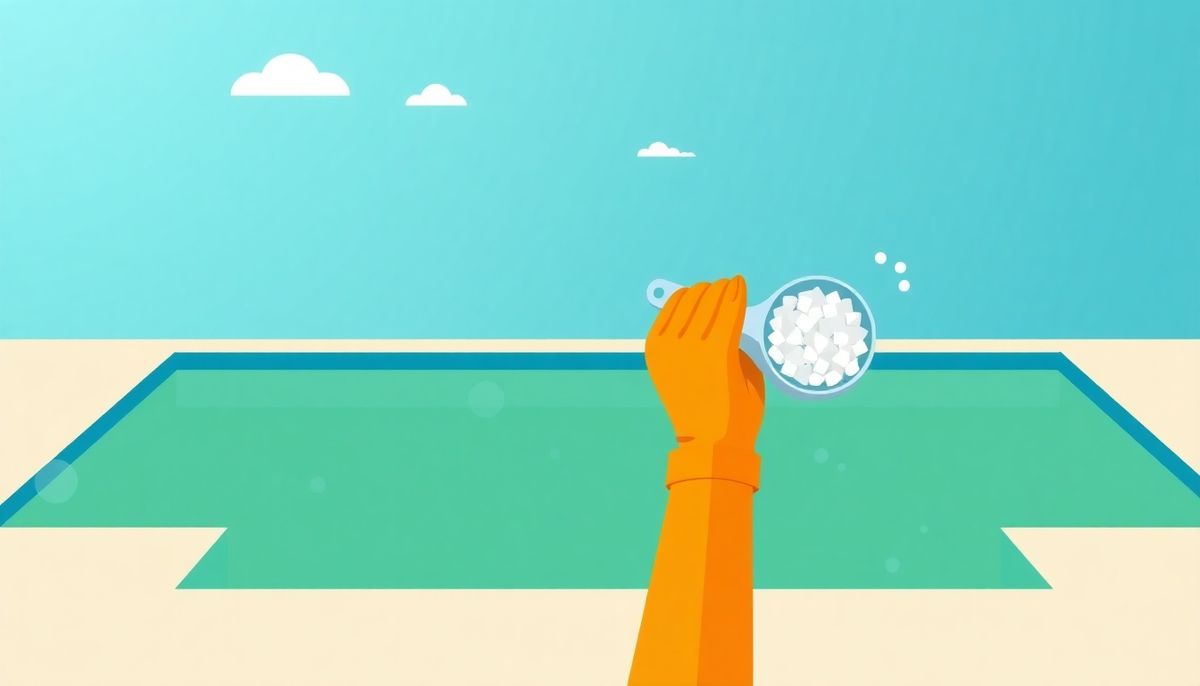
Good algae treatment starts with testing. Check the pH and alkalinity with strips or a kit. If they're out of balance, bring high levels down so your shock works at full strength. When your pH and alkalinity are out of sync, the chlorine simply won't fire up against the algae.
Adjust alkalinity first, which often brings the pH in line, then nudge the pH if it stays stubborn. The patience you put in here pays off. Balanced chemistry beats the algae now and sets you up for long-term clarity and easier upkeep.
Combat Algae Effectively
A real 24-hour turnaround
To beat algae, hit hard and fast with a shock of at least 70% available chlorine, like calcium hypochlorite. It raises chlorine sharply and wipes out blooms.
I once helped a friend clear a murky green pool days before a backyard party. We scrubbed every surface with an algae brush, no corner left untouched, which loosened the algae and made it easier for the chlorine to work. Then we balanced the pH and alkalinity so the shock would hit at full strength. The pool went from deep green to cloudy blue overnight, with the filter running a solid 24 hours to catch the dead algae. A pool clarifier cleared the last of the haze. Now regular testing keeps the green from coming back.
Optimize Chlorine Levels
Get your chlorine right
Chlorine is your pool's quiet workhorse, always fighting bacteria and algae to keep the water clean. When algae take over, it usually means chlorine got pushed aside. Test your water with strips or a liquid kit to see where your chlorine sits. If it's low, it's time to act.
Load the pool with a strong dose of calcium hypochlorite shock, your best bet against algae. Depending on how green it is, you may need to double or even triple your usual amount — a deep green pool might need three times the normal dose to break the algae's grip. Add it at night, since UV rays weaken chlorine during the day, and run the filter the whole time. You'll wake up to a pool shedding its green.
Maintain Balanced Water Chemistry
Watch pH, alkalinity, and calcium
Three numbers matter most. Keep pH between 7.2 and 7.6 — too high and chlorine struggles, too low and the water turns corrosive enough to damage your equipment. I constantly see owners let their pH creep up and then fight algae they could have avoided.
Alkalinity is the backbone of your chemistry; keep it between 80 and 120 ppm to buffer the pH and stop sudden swings. Calcium hardness matters too. Hold it between 200 and 400 ppm to keep your pool surfaces smooth and intact. Ignore it and tiles can start to break down, which is a pricey mistake. Get a reliable test kit and make weekly testing a habit.
Maintain Crystal-Clear Water
Keep it clear for good
Once your pool is gleaming again, the real work is keeping it that way, and it comes down to steady care. Check the chlorine every couple of days so the water stays unwelcoming to algae. I once let a pool go green because I skipped a week — never again.
Watch for any drift in pH or alkalinity, the quiet troublemakers that undercut your chlorine, and fix them at the first sign. A copper-free algaecide gives an extra layer of defense, but keep your main focus on steady sanitizer levels. Don't bother chasing phosphates; that's a distraction better left to the myths. Steady sanitizing and balance are what keep you swimming instead of scrubbing.
Combat Pool Algae Effectively
One night's recovery, step by step
One summer my own backyard went swampy overnight after a power outage stopped the filter. It was a jarring wake-up call, but it didn't last long. First I grabbed a sturdy brush and hit every corner and edge to knock the algae loose, which freed those particles so the chlorine could work better.
Next I tested, found my pH slightly off, and fixed the alkalinity and pH so the shock would hit hard. I tripled the usual dose of calcium hypochlorite and added it after dark so the sun wouldn't burn off the chlorine. The filter ran around the clock, and by morning the pool had turned cloudy blue. A pool clarifier finished the job.
Optimize Water Chemistry
Balance first, then shock
Getting the chemistry right is the secret to clearing a green pool. Use a reliable test kit to check pH and alkalinity. You want pH between 7.2 and 7.6, which gives chlorine the right conditions to work.
If your alkalinity is high, it can throw off your pH. Adjust it with sodium bicarbonate or an alkalinity increaser, then retest. Once alkalinity is steady, any pH changes you need become easy. Don't rush the balancing — take the time to get both right, then move on to shocking the pool. The right chemistry clears the green you've got now and hardens your pool against the next bloom.
Conclusion
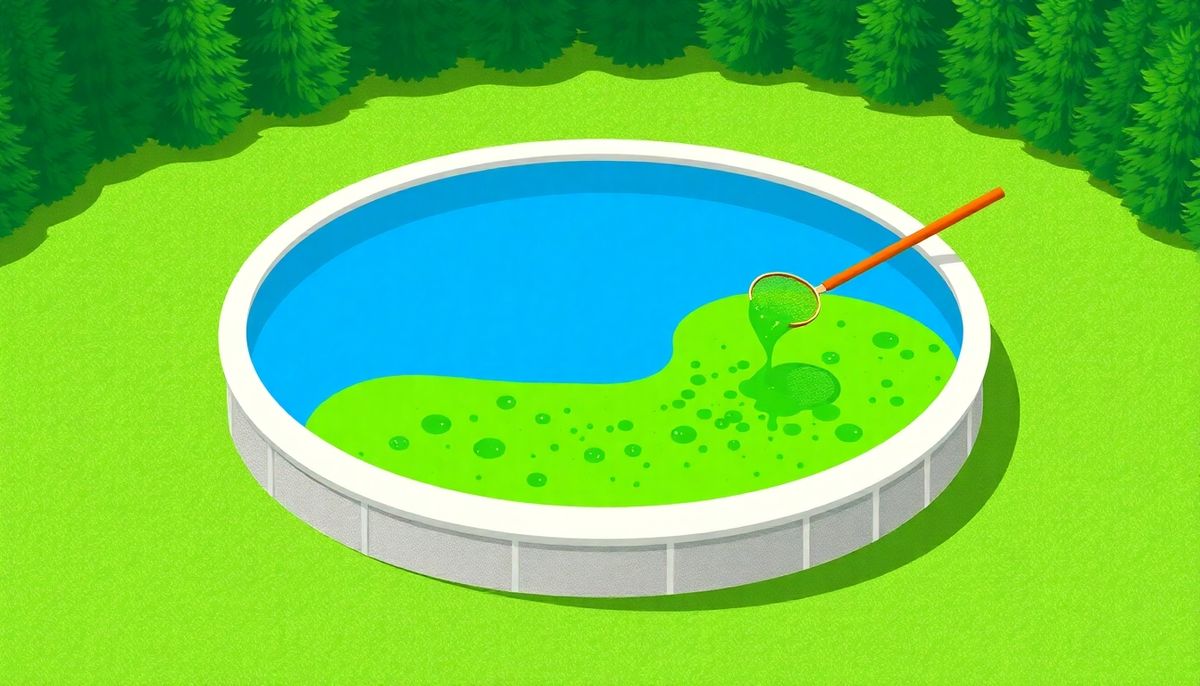
Now that you know the exact steps, clearing up that swampy water is just a matter of putting in the work.
Want to get better at pool care? Our free Pool School course covers everything you need to know, from basic maintenance to advanced troubleshooting. You'll learn how to:
- Save thousands on pool repairs and chemicals
- Keep your water crystal clear year-round
- Prevent and solve common pool problems
- Master water chemistry with confidence
Join over 10,000 pool owners who have already transformed their pool care routine. Get started with our free Pool School course today!
What you need
Stock up on a telescopic pole with a wide algae brush, a reliable test kit, and calcium hypochlorite shock with at least 70% available chlorine, then work through the steps above tonight.