

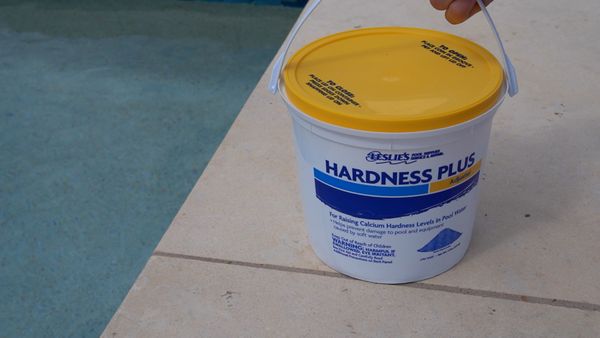
Looking to increase your pool's pH quickily and easily? With just a few simple steps, here's how.
What should my pool's pH level be?
For ideal water chemistry for swimming, the pH of your swimming pool should be around 6.9-7.2. You want to keep your pH here because a human's eyes are around 7-7.2, so this will help reduce any irritation to the eyes and skin.
However, if you are not using your pool and just trying to maintain your pool water, try to keep your pH around 6.4-7 to maximize your chlorine's effectiveness. This will maximize your chlorine's efficiency. By keeping your pH in check, your chlorine will work better and help keep your pool clean.
Why pH is important in a pool
Your pool's pH is one of the most important things in your pool. It helps maintain proper sanitation and makes your chlroine effective. Keeping your pH high ensures your swimmer's eyes and skin don't get irriated, help make sanitizer more effective, and helps maintain water clarity.
Step-by-step guide
1. Test your pool's pH
The first step is to find your pool's pH level. This can be done from a variety of ways. Use a reliable test kit or test strips to measure the pH.
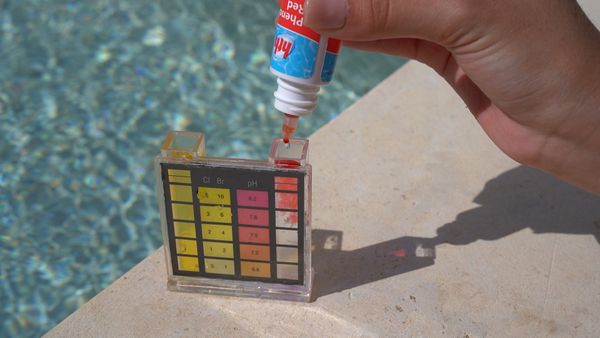
Make sure to follow the instructions carefully. We always recommend having two different methods to verify your pool's pH.
2. Determine how much you need to increase your pH
Based upon your pool's pH, you will need to calculate how much pH increaser to use. There are two main forms of pH increasers in a swimming pool:
- Sodium Bicarbonate (Baking Soda): Baking soda will raise the pH and alkalinity of your pool.
- Sodium Carbonate (Soda Ash): Soda ash will primarily raise pH and has less of an effect on alkalinity.
This will help raise the pH to the desired level. Refer to instructions for how much to add in dosage. If you want to use baking soda or sodium bicarbonate, use this simple chart:
How much sodium bicarbonate (baking soda) to raise your pool's pH
| Pool Volume | |||||
|---|---|---|---|---|---|
| Increase By (Parts Per Million) | 5,000 Gallons (18,927 Liters) | 10,000 Gallons (37,854 Liters) | 15,000 Gallons (56,781 Liters) | 20,000 Gallons (75,708 Liters) | |
| 10 ppm | 0.75 lbs (340 g) | 1.5 lbs (680 g) | 2.25 lbs (1.02 kg) | 3.0 lbs (1.36 kg) | |
| 20 ppm | 1.5 lbs (680 g) | 3.0 lbs (1.36 kg) | 4.5 lbs (2.04 kg) | 6.0 lbs (2.72 kg) | |
| 30 ppm | 2.25 lbs (1.02 kg) | 4.5 lbs (2.04 kg) | 6.75 lbs (3.06 kg) | 9.0 lbs (4.08 kg) | |
| 40 ppm | 3.0 lbs (1.36 kg) | 6.0 lbs (2.72 kg) | 9.0 lbs (4.08 kg) | 12.0 lbs (5.44 kg) | |
| 50 ppm | 3.75 lbs (1.70 kg) | 7.5 lbs (3.40 kg) | 11.25 lbs (5.10 kg) | 15.0 lbs (6.80 kg) | |
| 60 ppm | 4.5 lbs (2.04 kg) | 9.0 lbs (4.08 kg) | 13.0 lbs (5.89 kg) | 18.0 lbs (8.16 kg) | |
| 70 ppm | 5.25 lbs (2.38 kg) | 10.5 lbs (4.76 kg) | 15.75 lbs (7.14 kg) | 21.0 lbs (9.52 kg) | |
| 80 ppm | 6.0 lbs (2.72 kg) | 12.0 lbs (5.44 kg) | 18.0 lbs (8.16 kg) | 24.0 lbs (10.88 kg) | |
| 90 ppm | 6.75 lbs (3.06 kg) | 13.5 lbs (6.12 kg) | 20.25 lbs (9.18 kg) | 27.0 lbs (12.24 kg) | |
| 100 ppm | 7.5 lbs (3.40 kg) | 15.0 lbs (6.80 kg) | 22.5 lbs (10.20 kg) | 30.0 lbs (13.60 kg) | |
3. Add the pH increaser
Now is the easy part, add the pH increase. Try to spread evenly throughout the whole pool and add slowly. This will help ensure it gets mixed throughout the pool quickly.
Pro Tip: Add the pH increaser at night if possible. It will be more effective.
4. Circulate your pool water
Make sure your pool water is being circulated. If not, it will not be mixed properly and may lead to the pH increaser not working properly.
5. Monitor As Needed
Monitor the pool as needed. Try to test at least 4-6 hours after or even the next day. Repeat steps 1-4 as needed for optimal water chemistry.
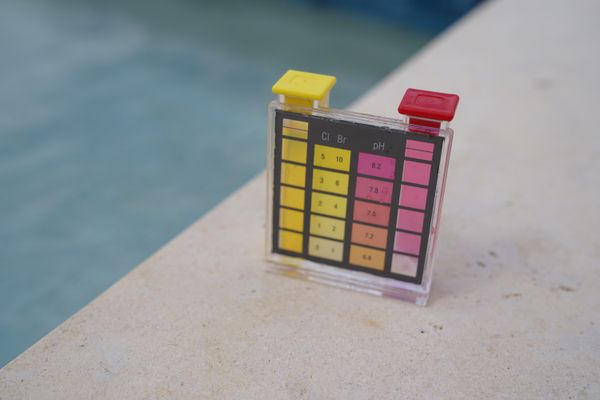
Test as needed to ensure your water stays crystal clear.
Frequently Asked Questions
What should my pool's pH level be?
The ideal pH level for swimming pools is between 7.0 and 7.6.
Why is pH important in a pool?
pH is crucial for maintaining proper sanitation, ensuring chlorine effectiveness, and preventing irritation to swimmers' eyes and skin.
How do I test my pool's pH?
You can test your pool's pH using reliable test kits or test strips.
What are the main types of pH increasers?
The main types of pH increasers are Sodium Bicarbonate (Baking Soda) and Sodium Carbonate (Soda Ash).
How often should I test my pool's pH?
You should test your pool's pH regularly, especially after adding any chemicals. Testing 4-6 hours after adding a pH increaser is recommended.
Can I add pH increaser during the day?
It's recommended to add pH increaser at night for better effectiveness.
How do I circulate my pool water?
Ensure your pool's filtration system is running to properly circulate the water.
Want to keep your pool clean?
Check out our Pool School where we go over all the tips, tricks, and more to keeping your pool clean and healthy.