

Sunny days have a way of pulling your thoughts toward the pool and that first cool plunge. Almost nobody thinks about the chemistry working behind the scenes to keep that water clear and safe. Cyanuric acid is a big part of it, and it's the unsung hero of pool care. This stabilizer isn't the first thing you picture when you imagine a swim, but it does a lot of heavy lifting.
Here's the short version: cyanuric acid (CYA) shields your chlorine from the sun's ultraviolet rays. That protection makes chlorine last longer, so it can keep killing bacteria and algae instead of burning off in a few hours. Without CYA, an outdoor pool in full sun can lose its chlorine before lunch.
Getting CYA right is a balancing act, a bit like seasoning a dish. Too little, and your chlorine vanishes too fast. Too much, and you hit "chlorine lock," where there's plenty of chlorine in the water but it barely works. Once you understand what CYA does and how to keep it in range, you'll save money, skip a lot of frustration, and keep your pool the kind of place people actually want to jump into.
Your Action Plan
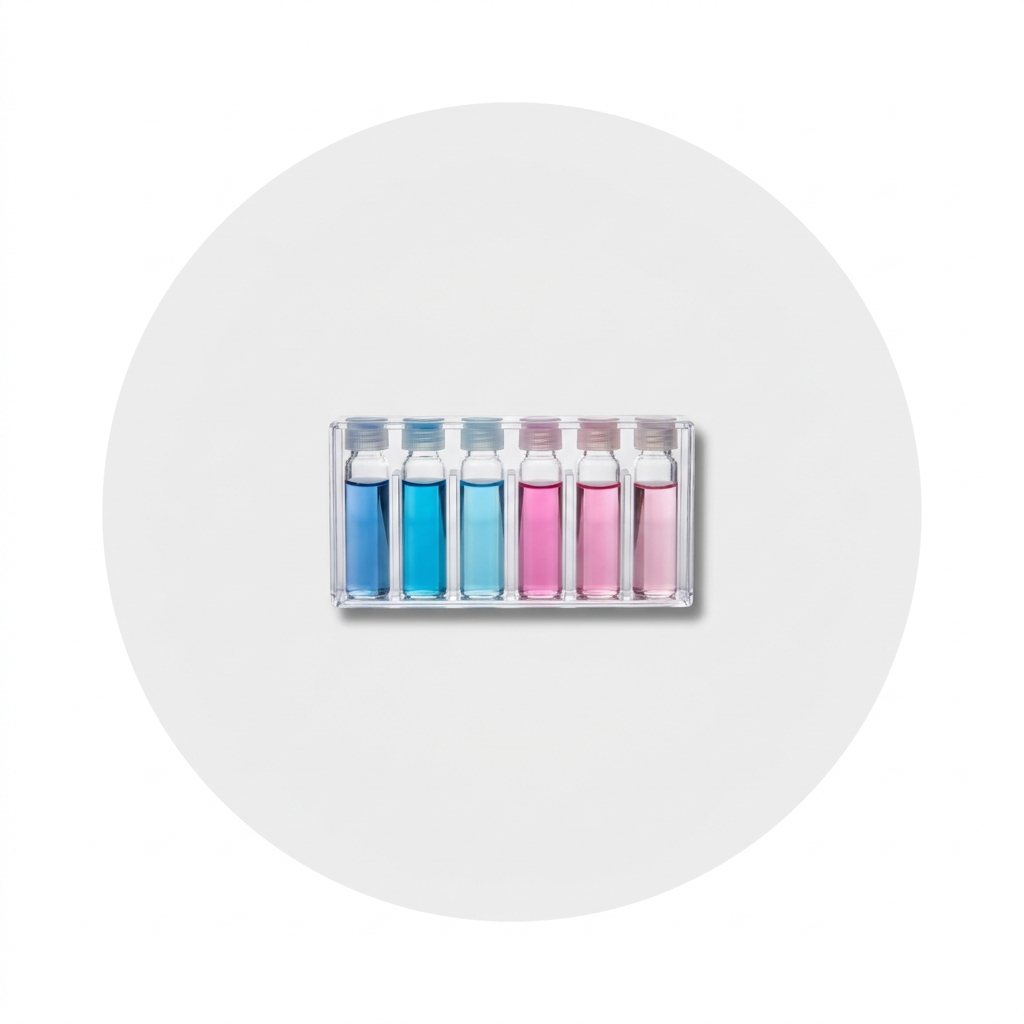
- Test your CYA level with a strip or liquid kit.
- Aim for 30-50 ppm, or 60-80 ppm for a saltwater pool.
- If it's low, add stabilizer dissolved in a bucket of water.
- If it's too high, partially drain and refill to dilute it.
- Match your chlorine type: stabilized adds CYA, unstabilized doesn't.
- Retest weekly and after heavy rain.
Stabilize Chlorine with Cyanuric Acid
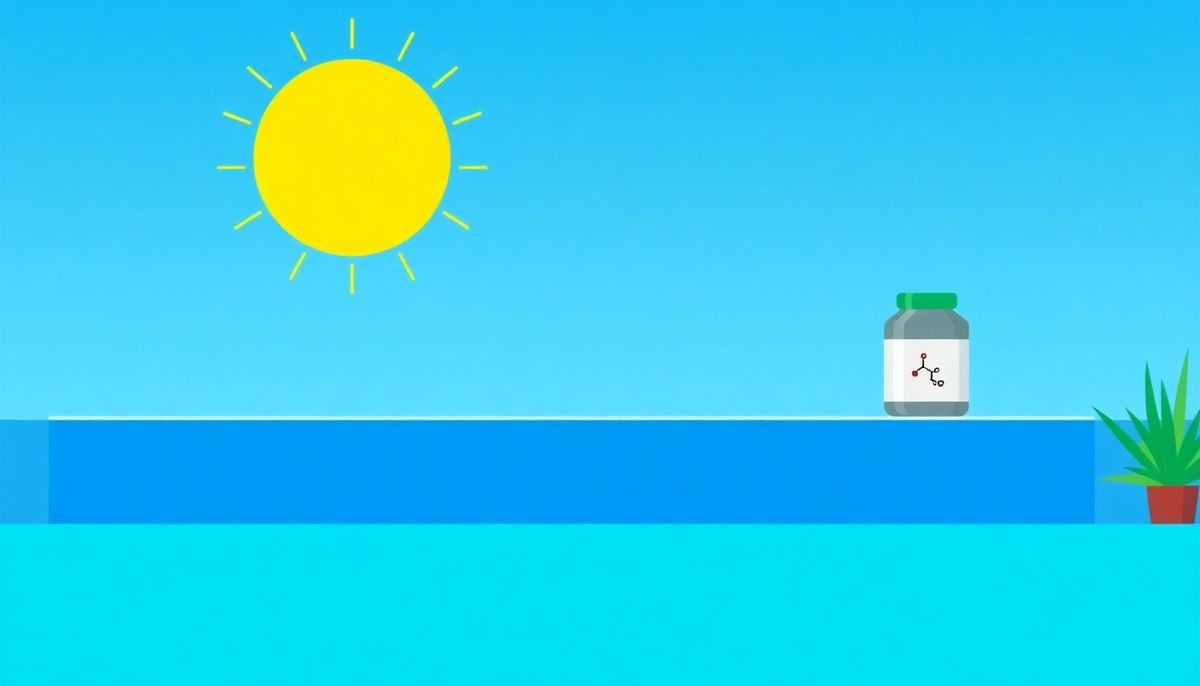
Chlorine is great at keeping a pool clean, but it has one real weakness: sunlight. Ultraviolet rays tear chlorine apart quickly, and that's the whole reason CYA exists. Think of it as sunscreen for your chlorine, letting it hold onto its power to sanitize.
The catch is that more isn't better. Add too much CYA and your chlorine turns sluggish, unable to fight contaminants. It's like handing your water a full suit of armor while dulling its sword. For a standard pool, aim for 30 to 50 ppm. That range lets chlorine work at full strength without the sun stealing it away.
Why saltwater pools want more
Saltwater pools run a little higher, around 60 to 80 ppm. A salt chlorine generator makes chlorine slowly and steadily at a lower concentration, so that thin, constant supply needs extra protection from the sun. More CYA shields that slow drip and keeps the generator from having to work overtime to keep up.
For most pools, keep cyanuric acid between 30 and 50 ppm; saltwater pools do best a bit higher, at 60 to 80 ppm.
Maintain Optimal CYA Levels
Keeping CYA in range comes down to testing and small corrections. Start with a test strip or a liquid kit made to read cyanuric acid, and check your water regularly.
If your reading is low, adding a stabilizer brings it back up. These products often show up on the shelf as "pool conditioner," and they rebuild that protective layer.
If your reading is climbing too high, there's no shortcut. CYA doesn't burn off the way chlorine does, so it just keeps building. The fix is dilution: drain part of the pool and refill with fresh water.
The only reliable way to bring down high cyanuric acid is to drain some water and refill—it won't evaporate or burn off on its own.
Prevent UV Chlorine Degradation
The daily battle in your pool is between CYA and the sun. Without enough stabilizer, UV breaks chlorine down so fast you're stuck topping it up constantly, which wastes both money and time. You might add chlorine on Monday and find almost none left by Thursday during a stretch of strong sun. That's UV doing its work, and the answer is enough CYA.
Indoor pools rarely need it, since they're shielded from direct sunlight. Outdoor pools are where CYA pays off most. Keep it in the ideal range, and you protect your chlorine without tipping into chlorine lock.
Handle Cyanuric Acid Safely
Because CYA does so much for your water, it's worth handling with a little care.
Gear up and go slow
Wear acid-resistant gloves and goggles when you open the container. Pouring the powder straight in kicks up dust you don't want to breathe or get in your eyes.
The safest way to add it is the bucket method: dissolve the powder in a large bucket of warm water and stir until it's fully gone, then pour the solution evenly around the pool. That keeps clumps from settling on and damaging surfaces, especially vinyl liners. Work in open air so fumes can clear, and if your pool is indoors, open the doors and windows first.
Weekly testing rounds it out. Regular checks keep you from over-stabilizing, which is the most common CYA mistake.
When your pool is the center of a summer afternoon, the last thing you want is a sudden algae bloom from CYA that drifted out of range. Make testing a habit, like glancing at the gas gauge before a long drive.
When levels do climb too high, the fix isn't a bottle, it's the garden hose. Partially draining and refilling resets things to a cleaner slate. It sounds like a chore, but it's a small price for clear water.
Adjust CYA Levels Safely
Knowing your numbers is the first step. Test regularly and keep a standard pool in the ideal range. You don't need fancy equipment; a simple kit works, or you can take a sample to a pool supply store for a read.
If CYA creeps up, dilution is your best friend. CYA reducers exist, but they can be hit or miss and often cost more than a refill from the hose. If CYA runs low, add a stabilizer, and read the label first: many chlorine tablets already contain CYA, so you may be adding it without realizing.
Test and Monitor Regularly
Checking your pool's chemistry takes regular attention and a bit of instinct. A quick weekly routine with a test kit tells you whether CYA still sits where you want it, and heads off bigger fixes later.
Weather shakes things up. A heavy summer rain can dilute your CYA, so it's worth a recheck afterward. A busy week of swimmers or a long stretch of strong sun is another good time to test and make sure your chlorine is keeping up.
Choose the Right Chlorine
The chlorine you buy changes how you manage CYA.
Stabilized chlorine
Trichlor and dichlor come with CYA already blended in. They're handy for outdoor pools because every dose tops up your chlorine and reinforces sun protection at the same time. That two-in-one action keeps care simple.
Unstabilized chlorine
Liquid chlorine adds no stabilizer, so it's your best tool when CYA is already high. It lets you keep sanitizing without pushing CYA any higher. Pick the right type for your situation and you'll keep the whole system in balance.
Prevent Chlorine Breakdown

Under a blazing sun, chlorine breaks down fast, and CYA is the invisible shield that slows that down. Skip the stabilizer and it's like putting on sunscreen once and never reapplying; the protection fades quickly.
You might notice endless algae despite steady chlorination. A CYA test that reads below 30 ppm often explains it, and bringing it up into range clears the cloudiness. Test after heavy rain or a water change, since both can shift your numbers.
Holding the right CYA level can feel like walking a tightrope, but it comes down to two habits: test weekly, and match your chlorine to your pool.
Your chlorine choice matters here. Stabilized tablets nudge CYA upward with every dose, so if yours is creeping high, switching to unstabilized liquid chlorine makes a real difference. And if CYA passes the ideal range, diluting with fresh water is still the most reliable fix.
Use Stabilized-Chlorine Products
Stabilized chlorine products like trichlor and dichlor granules come pre-loaded with CYA, so each dose sanitizes and builds sun protection in one step. For an outdoor pool in a sunny climate, that's a real time-saver, since unprotected chlorine would burn off and leave you refilling constantly.
The trade-off is that they keep adding CYA. Watch your levels so you don't over-stabilize into cloudy water and weak chlorine. Simple weekly testing keeps that in check.
Prevent Chlorine Loss in Pools
Getting the CYA-to-chlorine balance right is what keeps the fun going. Too much CYA and chlorine turns sluggish, letting algae and bacteria settle in. Keep it in the ideal range and chlorine does its job.
Saltwater pools shift the target up to that 60 to 80 ppm band. Since the generator drips chlorine out slowly, the extra stabilizer protects that steady supply from the sun and spares the unit from overworking. A reliable test kit and a regular check keep everything humming.
Balance CYA for Clean Water
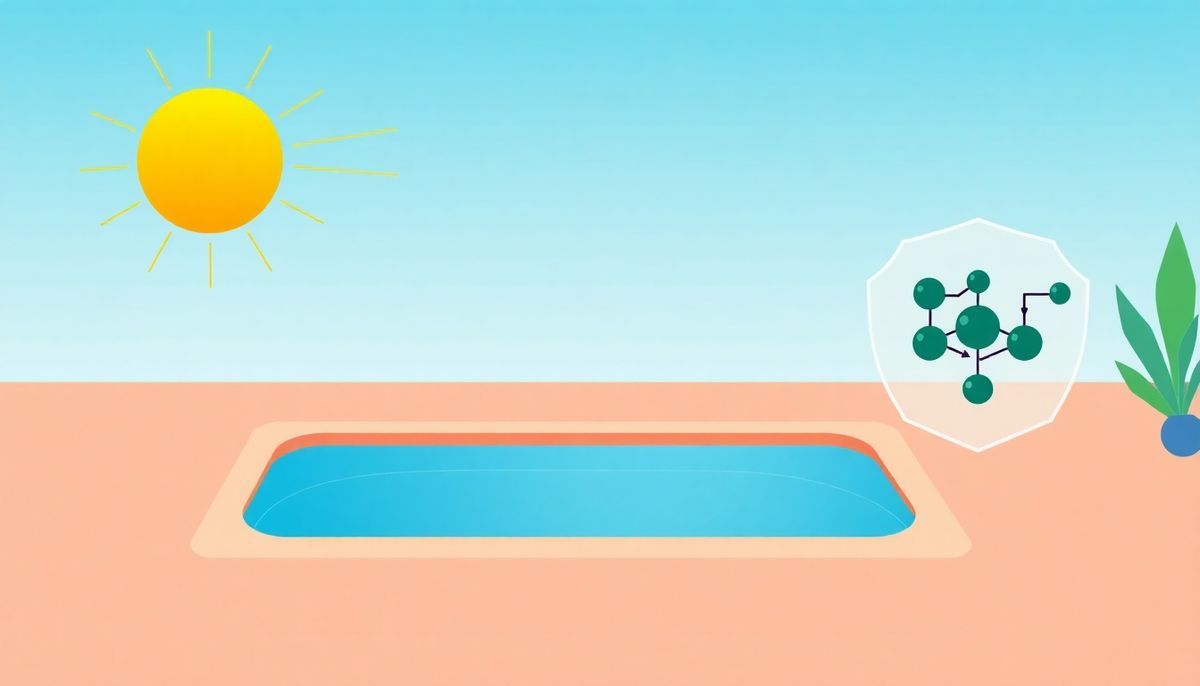
Balance is everything, and it's easy to tip too far the other way. High CYA makes chlorine less efficient, which shows up as cloudy water with a faint green tinge and, before long, algae. Overusing stabilized chlorine is the usual culprit.
Aim for the ideal range for your pool type, test regularly, and if levels climb too high, dilute by draining part of the pool and refilling.
Start by understanding your own pool. Outdoor pools lose chlorine fast to sunlight, so they lean on CYA. Push it too high, though, and chlorine can't sanitize, which brings on algae and cloudy water. That's why the ideal range is the target for most pools, with saltwater running higher.
Weekly testing turns this into a simple ritual. If a reading comes back over 100 ppm, a partial drain and refill resets the chemistry. It's less about complex science and more about steady care.
Adjust Chlorine-Stabilizer Balance
Balancing the chlorine-to-stabilizer ratio is a cornerstone of good pool care. When CYA climbs, chlorine's sanitizing power drops, and you can end up with chlorine that's present but useless, plus a surprise algae bloom.
Aim for the right ratio
A good rule of thumb: keep free chlorine at about 7.5% of your CYA level. So with CYA at 40 ppm, target roughly 3 ppm of free chlorine. Test both with a kit that reads them, switch to unstabilized chlorine if CYA creeps too high, and fall back on a drain-and-refill if it's truly out of control.
Keep free chlorine at about 7.5% of your CYA level—roughly 3 ppm of chlorine for every 40 ppm of stabilizer—and your water stays sanitized without a fight.
Prevent High CYA Accumulation
A little foresight beats fighting high CYA later. Test regularly, especially if you're using stabilized chlorine, and keep a standard pool in the ideal range. If it climbs, switch to unstabilized chlorine for a while so you can sanitize without adding more stabilizer.
The golden rule: more isn't better. Resist the urge to overdo CYA. When levels do run high, a partial water change brings them down. Rain and splash-out help too, quietly diluting your CYA over time.
Protect Pool from UV Rays
The sun's UV can break down chlorine in a flash, leaving your pool open to bacteria and algae, so think of CYA as your chlorine's sunscreen. With the right level, chlorine sticks around and keeps the water clean.
Overdo it, though, and you weaken your chlorine and cloud the water. The ideal range is the sweet spot. Keep an eye on it, and a balanced pool is only a few small adjustments away.
Use-Cyanuric Acid Wisely
Keep your CYA in the ideal range and chlorine can do its job while staying shielded from the sun. Saltwater pools want the higher band.
Test weekly; it's far easier to prevent a problem than to fix one, since the only cure for excess CYA is a partial drain. Remember that stabilized chlorine already contains CYA, so adjust how much you add, and recheck after heavy rain. When you do add CYA, dissolve it fully in a bucket of pool water before pouring it in slowly, or it can damage your filter.
Test and Adjust CYA Levels
Testing and adjusting CYA is a bit like tuning an instrument; it takes regular attention. Check with a reliable kit and aim for the ideal range for your pool type.
If your reading is high, partially drain and refill; that's the go-to fix for a stabilizer that won't evaporate. If it's low, add a pool conditioner slowly, since overshooting lands you right back in trouble. And always confirm which chlorine you're using, because stabilized types keep raising CYA on their own.
Conclusion
Once you get the hang of CYA, keeping your pool clear becomes second nature. A quick weekly test and the occasional small adjustment are really all it takes.
Want to become a pool maintenance expert? Our free Pool School course covers everything you need to know about pool care. From basic maintenance to advanced troubleshooting, you'll learn how to:
- Save thousands on pool repairs and chemicals
- Keep your water crystal clear year-round
- Prevent and solve common pool problems
- Master water chemistry with confidence
Join over 10,000 pool owners who have already transformed their pool care routine. Get started with our free Pool School course today!
What you need
Grab a CYA test kit and a bag of stabilizer (or a jug of unstabilized liquid chlorine if your levels are already high), then test your water this week and adjust from there.