



A backyard pool can be the center of your best summer memories: laughter across the yard, warm sun, and sparkling water below. But keeping that water inviting takes more than a quick splash. Getting the chemistry right is what keeps it beautiful and safe.
I learned how touchy that balance is while helping a friend with his pool. Too much chlorine and it felt like swimming in bleach; too little and we were rolling out the welcome mat for algae and bacteria. It takes a little care and a basic grasp of the chemistry.
Every pool is different, shaped by its size, where it sits, and how often people swim. Once you see how chlorine, pH, alkalinity, and stabilizers work together, your pool stops being a tank of water and becomes a place to relax. My goal is simple: clear up the confusion and give you doable steps so you can enjoy your pool without stress.
Your Action Plan
- Measure your pool's volume in gallons.
- Test pH, alkalinity, chlorine, CYA, and calcium hardness.
- Adjust alkalinity first with baking soda to hit 80-120 PPM.
- Fine-tune pH into the 7.4-7.6 range.
- Set chlorine to 1-3 PPM and protect it with stabilizer.
- Retest after a day and adjust in small steps.
Balance Your Pool Chemistry
Getting your pool chemistry right is a lot like following a good recipe. Too much salt wrecks a dish; the wrong chemical balance clouds your water and makes it unsafe. Three numbers do most of the work: pH, alkalinity, and calcium hardness.
Start with pH
pH tells you how acidic or basic your water is. You want it between 7.4 and 7.6, which is comfortable for swimmers and easy on your equipment. If it creeps too high, add pH decreaser; about 12 ounces fixes a small imbalance in a 10,000-gallon pool. If it drops too low, soda ash brings it back up. Small tweaks make a real difference.
Alkalinity and calcium hardness
Alkalinity keeps your pH steady so it doesn't swing around. Aim for 80 to 120 PPM (parts per million, a measure of how much of something is dissolved in the water). To raise it, reach for baking soda: roughly 1.5 pounds bumps a 10,000-gallon pool up by 10 PPM.
Calcium hardness protects your pool's surfaces and equipment. Depending on how your pool is built, you want 200 to 275 PPM, and about 5 pounds of increaser per 10,000 gallons raises it by 50 PPM.
Balance pH, alkalinity, and calcium hardness, and most of your other pool problems take care of themselves.
Determine Chemical Dosages
The right doses depend on your pool, not on whatever bottle is handy. You can't just dump in a gallon of liquid chlorine and hope; the amounts have to match your setup and your current readings.
For alkalinity, our baking soda rule holds: about 1.5 pounds per 10,000 gallons lifts it 10 PPM. For pH, half a pound of increaser moves a 10,000-gallon pool up by 0.2. If your pH is way off, add a pound at a time and retest so you don't overshoot. To bring a high pH down, use about 12 ounces of decreaser per 10,000 gallons; muriatic acid works too, but go slow with it.
Keep chlorine between 1 and 3 PPM, aiming for 3 for the best sanitizing. If you use bleach or liquid chlorine, add a stabilizer (CYA). For calcium hardness, 5 pounds of increaser per 10,000 gallons raises it 50 PPM. Get all of these in line and you'll have a clear pool that holds up for years.
Adjust pH and Alkalinity
Pool chemicals can feel like a code, especially pH and alkalinity. Here's the plain version. pH measures acidity; keep it 7.4 to 7.6. Alkalinity buffers pH, keeping it steady between 80 and 120 PPM.
To raise alkalinity, add that 1.5 pounds of baking soda or increaser per 10,000 gallons for each 10 PPM, so a 20,000-gallon pool needs 3 pounds. Bonus: as alkalinity climbs, your pH usually ticks up too, so you get two fixes in one.
pH calls for a different move. If it drops below 7, add about a pound of pH increaser per 10,000 gallons to lift it roughly 0.2, enough to stop itchy skin and stinging eyes. If it climbs past 7.8, 12 ounces of decreaser handles a 10,000-gallon pool. It feels like a lot at first, but with practice it becomes second nature.
Protect Chlorine with Stabilizers
Under a hot sun, your pool's chlorine can vanish faster than a popsicle on the sidewalk. That's where stabilizer, or cyanuric acid (CYA), comes in. Think of it as sunscreen for your chlorine, shielding it from UV rays so it keeps doing its job.
Without stabilizer, chlorine can burn off in just a few hours. That's why keeping CYA between 30 and 50 PPM matters. About 3 pounds in a 10,000-gallon pool brings you to around 30 PPM, giving solid protection against chlorine loss.
Stabilizer protects your chlorine from the sun, but add too much and the only fix is draining part of your pool.
Adjust Alkalinity Levels

Adjusting alkalinity lays the foundation for everything else. It's your water's buffer, keeping pH from swinging. When it's off, the water can feel harsh and your pH readings jump around no matter what you do.
Remember the baking soda rule: about 1.5 pounds per 10,000 gallons raises alkalinity 10 PPM, so double it for a 20,000-gallon pool. Figure your pool's capacity, decide how far to raise the level, and measure from there.
I once fought a stubborn case of low alkalinity that had my pH bouncing everywhere. Once I dialed in the right amount of baking soda, the water settled and stayed clear. Add it slowly so it spreads evenly, and recheck after a day. Since raising alkalinity nudges pH up too, you may need to fine-tune afterward.
Determine Pool Volume
Knowing how much water your pool holds is the first real step toward getting your chemistry right. When I started, I didn't realize how much this mattered. I added what I figured was the perfect amount of chlorine and had cloudy water a few days later.
Do the math for your shape
For rectangular pools, multiply length, width, and average depth for cubic feet, then multiply by 7.48 to get gallons. Round pools work differently: square the radius, multiply by pi (3.14), then by depth, then convert. For odd shapes, break the pool into simpler shapes, figure each, and add them up.
The type of pool matters too. An above-ground pool is often the same depth all the way across, while an in-ground pool has a shallow end and a deep end. Once I stopped guessing at my volume, recalculating fixed my chemical balance.
Every dose you add depends on one number, so nail down how many gallons your pool holds before anything else.
Measure Alkalinity Requirements
Working out how much alkalinity increaser you need is easy once you have the numbers. Your total alkalinity should sit between 80 and 120 PPM, which keeps pH steady and prevents the sharp swings that damage your pool and bother swimmers.
Say your 15,000-gallon pool reads 60 PPM and you want 100. Since 1.5 pounds raises 10 PPM per 10,000 gallons, you're looking at about 6 pounds. One weekend I tackled my own low alkalinity, adding baking soda a bit at a time and letting the pump mix it in. Watching the water clear was worth it. Just remember that raising alkalinity can push pH up, so watch both. Add slowly and retest so you don't overcorrect.
Adjust pH and Alkalinity Together
pH and alkalinity are closely linked, and adjusting one quietly changes the other. Try to raise your pH and you might find alkalinity has jumped, because alkalinity buffers pH.
For a 10,000-gallon pool, 1.5 pounds of baking soda lifts alkalinity 10 PPM, and it often nudges pH up too, a bonus if your pH was low. If pH stays stubbornly low, add soda ash: about half a pound for a 0.2 bump.
Keep pH between 7.4 and 7.6 and alkalinity between 80 and 120 PPM, and swimming feels easy. Test often, adjust in small steps, and maybe keep a logbook so you can spot patterns and simplify future upkeep.
Small, gradual changes with a retest after each one beat big corrections every time.
Boost Your Pools pH

Getting pH right protects both swimmers and equipment. Too high or too low means irritated eyes or corroded parts. The target zone is 7.4 to 7.6. For a typical 10,000-gallon pool, half a pound of pH increaser or soda ash raises pH by 0.2.
Doses scale with size. A 20,000-gallon pool needs about a pound; a small 5,000-gallon pool needs just 4 ounces. If your pH reads below 7, take it slow, adding a pound at a time and retesting so you don't overshoot. Your total alkalinity may rise as you work, but your focus stays on hitting that pH target. Getting this right makes swimming pleasant and protects your pool's structure and systems from wear.
Calculate Chemical Dosages
Here's a quick run-through, and it all starts with your pool's volume. Alkalinity: 1.5 pounds of increaser or baking soda per 10,000 gallons raises it 10 PPM, so a 40 PPM lift means about 6 pounds. pH: half a pound of increaser or soda ash moves a 10,000-gallon pool by 0.2, and if pH is noticeably low, use a pound and retest.
Sometimes you need to bring things down instead. That's 12 ounces of pH decreaser per 10,000 gallons, scaled up for bigger pools (about 1.5 pounds for 20,000 gallons). Check chlorine weekly, aiming for 1 to 3 PPM and leaning higher for good sanitizing. And protect that chlorine with CYA, especially with bleach or liquid chlorine: about 3 pounds per 10,000 gallons brings you to 30 PPM. Go slow, since fixing high CYA means a partial drain.
Adjust Alkalinity and pH Levels
Alkalinity and pH have to work together. Alkalinity buffers your pH; pH tells you how acidic the water is. Picture hosting a poolside barbecue and having guests jump into water that's too acidic. Not a great day.
Start by measuring your current alkalinity. For a 10,000-gallon pool, 1.5 pounds of increaser or baking soda raises it 10 PPM (double that for 20,000 gallons), with an ideal around 100 PPM. That adjustment often nudges pH up too. Then check pH, aiming for 7.4 to 7.6; about half a pound of increaser shifts a 10,000-gallon pool by 0.2. If pH dips below 7, start with a pound per 10,000 gallons and recheck. Small, gradual changes are best, giving the chemicals time to spread evenly.
Choose the Right Pool Chemicals
Each chemical has a job. pH is the big one; keep it between 7.4 and 7.6 for a refreshing dip without the sting. Many people reach for pH increaser or soda ash, often just 8 ounces to set a 10,000-gallon pool right.
Alkalinity buffers pH and stops sudden swings. Baking soda works well as an increaser, and it's remarkable how a couple of pounds can steady a large pool and keep the water gentle on your skin. Chlorine guards against bacteria; keep free chlorine between 1 and 3 PPM, using liquid or granules, and don't forget stabilizer if you're in a sunny spot. CYA shields chlorine from UV rays so it lasts longer. Finally, calcium hardness protects your pool's structure. Add the right amount and your pool looks good and lasts longer. Just add each chemical carefully and in order.
Lower pH with Precision
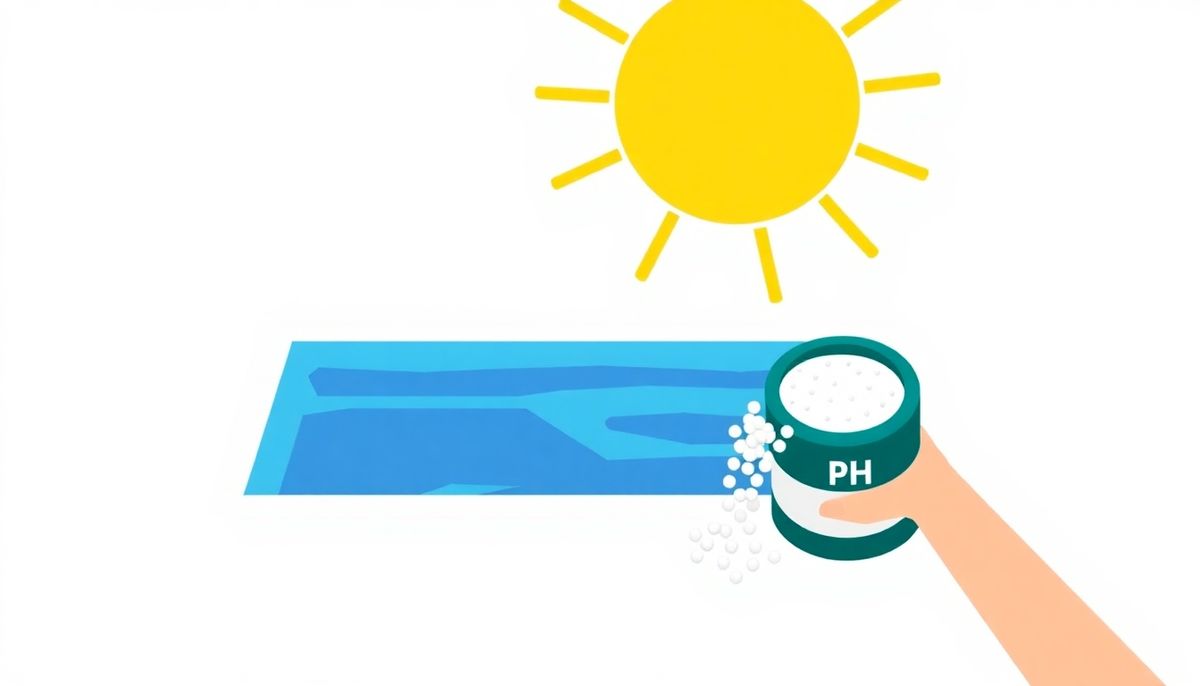
Managing pH keeps your water gentle on skin and unfriendly to bacteria, right in that 7.4 to 7.6 range. When pH climbs, often after heavy rain or from alkaline fill water, step in with pH decreaser. For a 10,000-gallon pool, roughly 12 ounces eases it down from around 8.0 to a comfortable level.
I once looked after a neighbor's pool while they were away. Their pH had climbed to 8.2, and the water looked about as inviting as a swamp. A careful 18 ounces of muriatic acid, spread over two days with plenty of testing, brought it back to sparkling. Every pool is its own thing, and the trick is small, measured changes and retesting as you go.
Determine Pool Volume Accurately
Working out your pool's volume can feel like a riddle with all the shapes and sizes out there. I've seen plenty of people guess at their capacity, add chemicals on hope alone, and end up with a cloudy mess. Skip that by knowing your real volume.
Match the formula to the shape
Rectangular pools are easiest: length times width times average depth, then convert cubic feet to gallons (one cubic foot is about 7.48). For round or oval pools, use the area of a circle (πr²) or an ellipse (πab), multiply by average depth, then convert. Irregular shapes? Measure them in sections like a jigsaw puzzle and add the parts. For changing depths, find the average by adding the shallow and deep ends and dividing by two. Nail down your volume and you can mix your chemicals with confidence.
Apply pH Decreaser Safely
Handling pool chemicals takes care, especially with pH. For a 10,000-gallon pool, about 12 ounces (¾ of a pound) of pH decreaser gently eases pH back to 7.4 to 7.6 if it's sitting between 7.8 and 8.0. Check the current reading first, since accurate dosing keeps you from see-sawing back the other way.
Pour it where the water circulates well so it spreads evenly. I once dumped chemicals too close to a metal fixture and ended up with some discoloration, so learn from my mistake. Wear gloves and goggles; splashes happen more often than you'd think. And keep swimmers out for about half an hour after adding chemicals so everything settles and mixes in fully.
Utilize Household Substitutes
There's something satisfying about solving pool problems with what's already in your pantry. Baking soda is the workhorse: about 1.5 pounds raises a 10,000-gallon pool's alkalinity by 10 PPM. It's surprising how a simple powder keeps your pool in balance.
Vinegar isn't just for salads. When pH runs high, it can stand in for harsher decreasers. It's not as strong, so it's slow, but a careful splash nudges pH down. Borax, usually for laundry, doubles as a pH increaser; a few cups fine-tune your chemistry while staying gentle on skin and eyes. These swaps take a light touch and frequent retesting, but they save money, and there's real satisfaction in handling more of your pool care yourself.
Maintain Clear Safe Water
Clear water is part art, part science, and it starts with knowing how the chemicals work together. Precise additions are the secret, and that begins with your pool's volume, your compass through the whole process.
Alkalinity is the backbone of stable water. Add about 1.5 pounds of increaser per 10,000 gallons to raise it 10 PPM; the effect is gradual but real, giving your pH a steady base. Scale the dose for a bigger pool. Chlorine sanitizes around the clock, so keep free chlorine between 1 and 3 PPM with a weekly dose. If sunlight is your problem, CYA shields chlorine from UV rays; just go easy, since too much means a partial drain and refill.
Determine Optimal Chemical Dosages
Pool care is a balancing act, and it rests on knowing your capacity. For most backyard pools, knowing you've got 10,000 gallons makes the math easy.
When alkalinity dips below 80 to 120 PPM, that same 1.5 pounds per 10,000 gallons raises it 10 PPM, so a 20,000-gallon pool needs double. Test, add, and retest until you hit the range. For pH, half a pound of increaser per 10,000 gallons moves it about 0.2; if you're fighting high pH, the same amount of decreaser does the job. A neighbor once rushed this and ended up with murky water, so precision pays off. Keep free chlorine between 1 and 3 PPM with weekly doses. Every pool has its own personality, and regular checks with small adjustments carry you from swim-ready to truly clear.
Utilize Household Alternatives Safely
Household alternatives can save you hassle and money. I was surprised the first time I learned baking soda doubles as an alkalinity increaser: that same 1.5 pounds per 10,000 gallons for a 10 PPM lift, and friendlier than a lot of pool chemicals.
Vinegar can help lower pH, an eco-friendly stand-in for muriatic acid, though you need to measure carefully; test a small section first and adjust from there. Bleach works as a chlorine substitute, but it lacks the stabilizers in pool-specific chlorine, so you may need to add CYA to protect it from the sun. The trick with any of these is understanding how they work, so you keep your water balanced without cutting corners on safety.
Conclusion
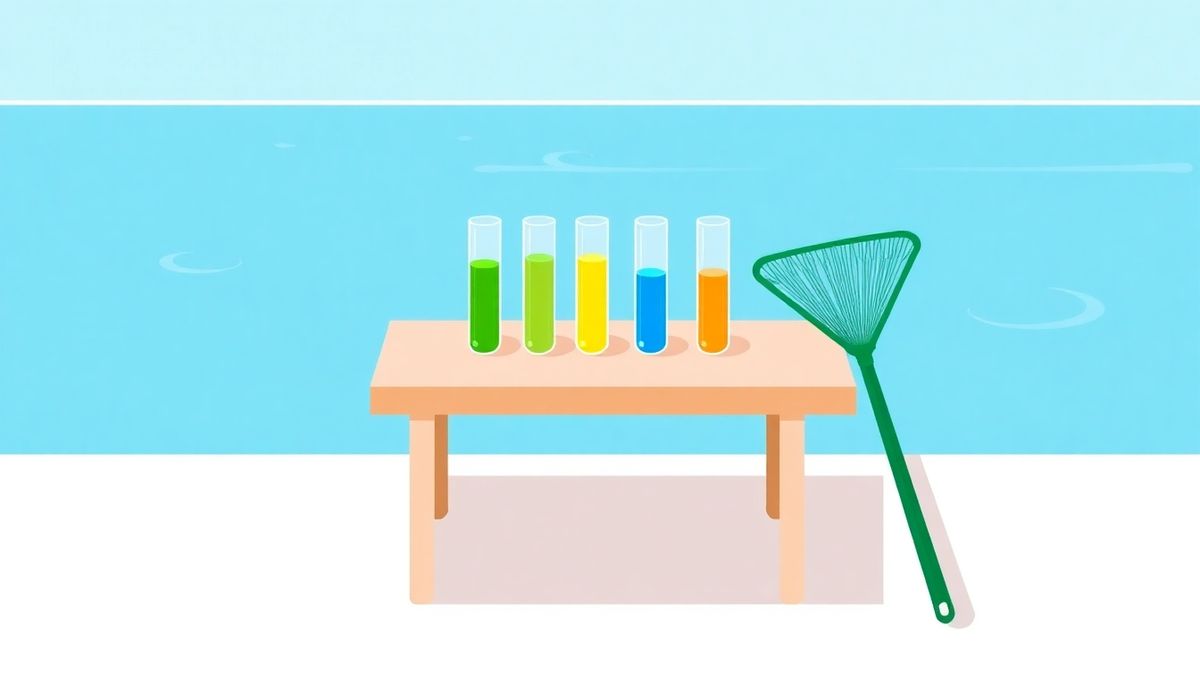
Now that you know the basics, balancing your water won't feel like a guessing game. Start with your pool's volume, test your levels, and make small adjustments. Your backyard will thank you.
Want to go deeper? Our free Pool School course covers everything from basic maintenance to advanced troubleshooting. You'll learn how to:
- Save thousands on pool repairs and chemicals
- Keep your water crystal clear year-round
- Prevent and solve common pool problems
- Master water chemistry with confidence
Join over 10,000 pool owners who have already transformed their pool care routine. Get started with our free Pool School course today!
What you need
Grab a reliable test kit, baking soda or alkalinity increaser, pH increaser and decreaser, chlorine, and cyanuric acid stabilizer, then adjust in small steps and retest.