

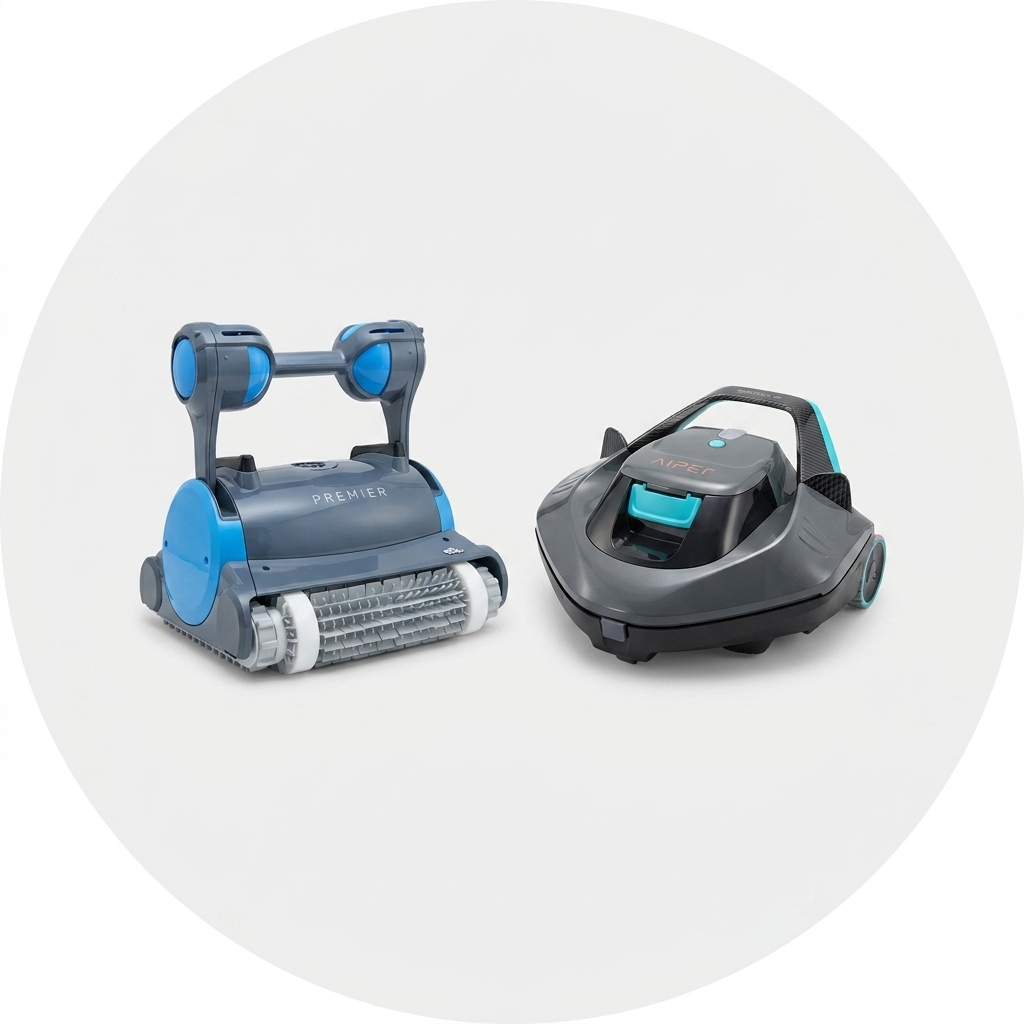
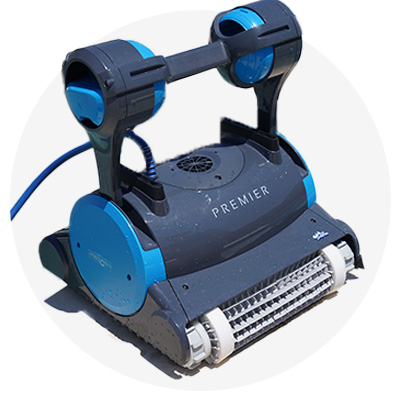
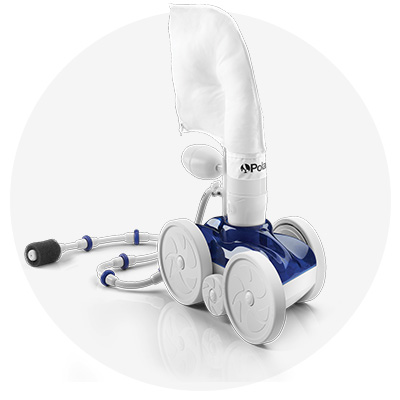
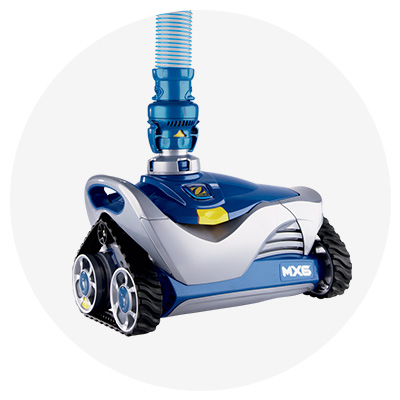
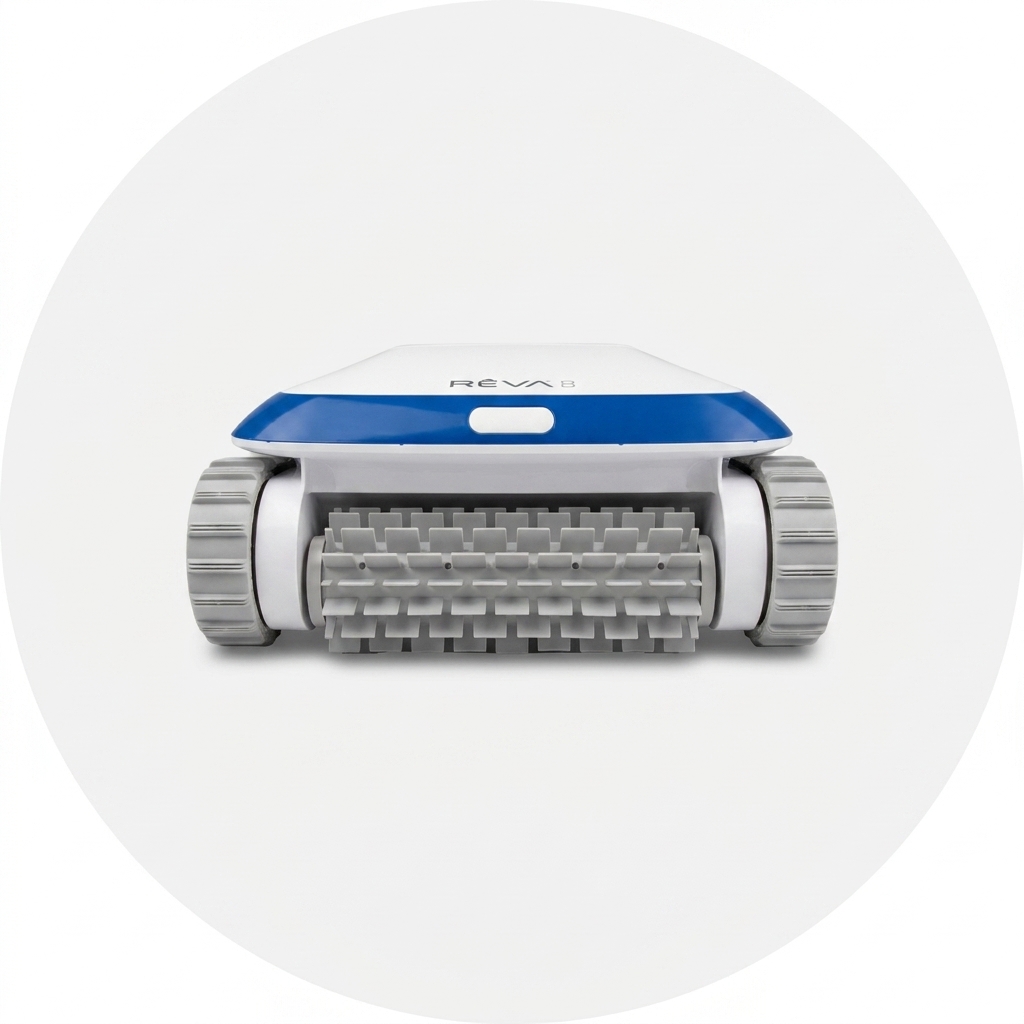




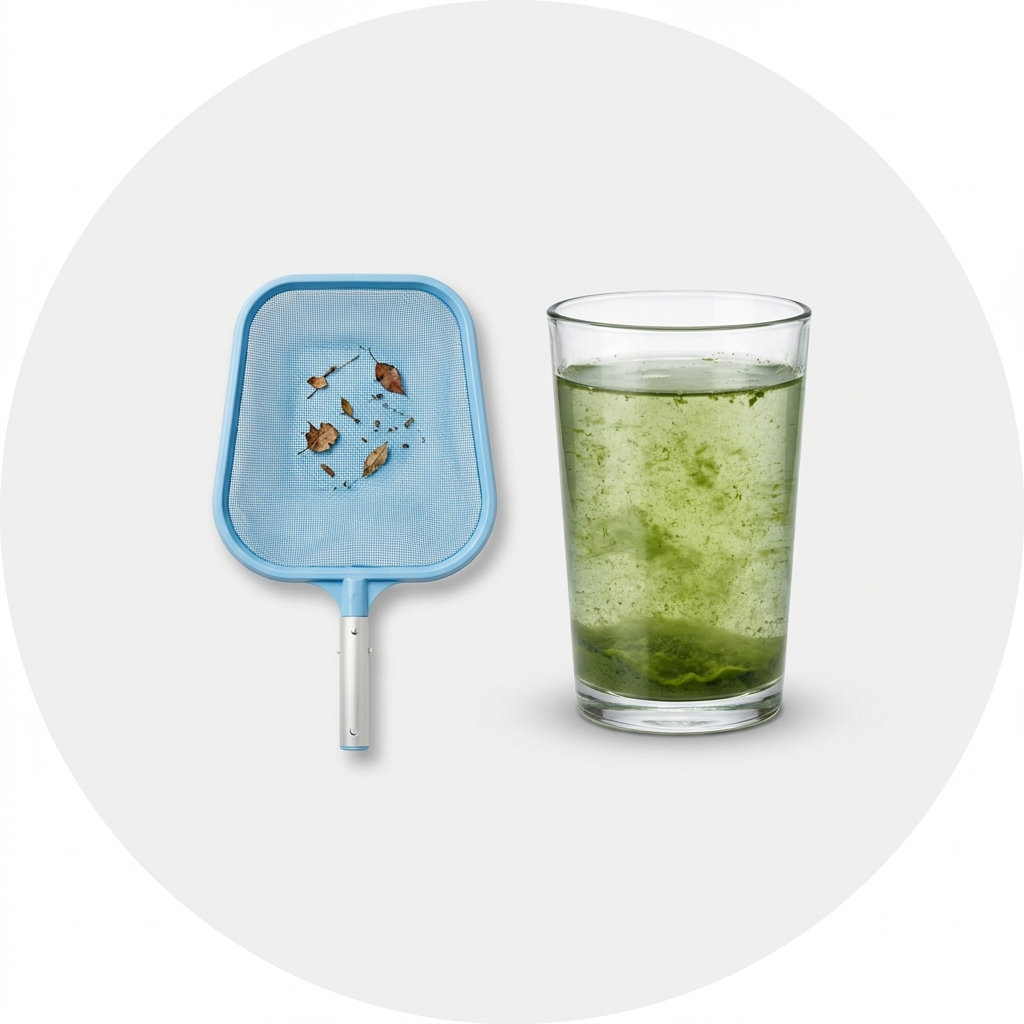



Sunshine, friends, and cool water—a pool is the center of a lot of good summer days. Few things ruin that faster than algae. Water that was clear blue can turn murky green almost overnight, and it's more than an eyesore. Green water isn't safe to swim in.
I grew up next to a pool that turned into a swamp every couple of weeks. The owners tried everything—dumping in chlorine, scrubbing until their arms ached, even talking about draining the whole thing. Algae kept winning. What they needed wasn't a bigger dose of anything, but a plan that went after the cause.
Algae feed on nutrients and love sunlight, and left alone they'll take over. The good news is that with the right steps you can clear them out fast and keep them gone. Here's how.
Your Action Plan
- Test and balance your water: pH 7.2 to 7.6, alkalinity 80 to 120 ppm.
- Brush the walls and floor, hitting corners and shady spots hard.
- Vacuum by hand with the filter set to "Waste."
- Shock the pool after dark with calcium hypochlorite.
- Run the filter nonstop, then give it a good clean.
- Keep testing weekly and running your pump to prevent regrowth.
Eliminate Algae With Precision

Stubborn algae needs a careful, step-by-step approach, because it slips right past your normal cleaning. First, accept that your usual chlorine dose won't cut it. Algae take hold when chlorine runs low and filtration is weak, and spores ride in on swim gear or blow in with wind and rain. Find those entry points and shut them down.
Scrub before you treat
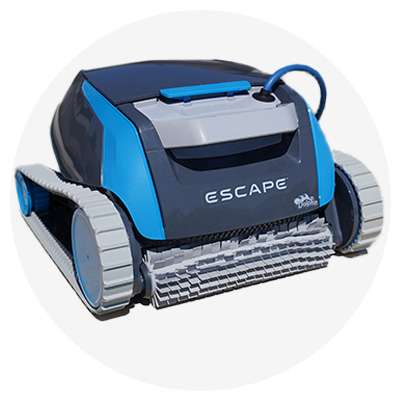
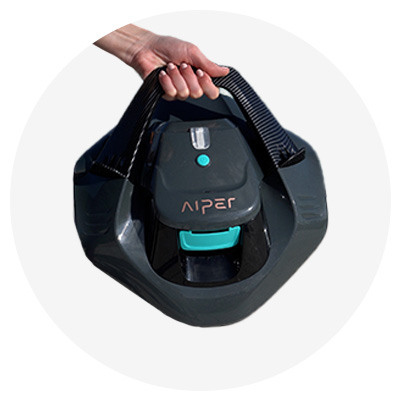
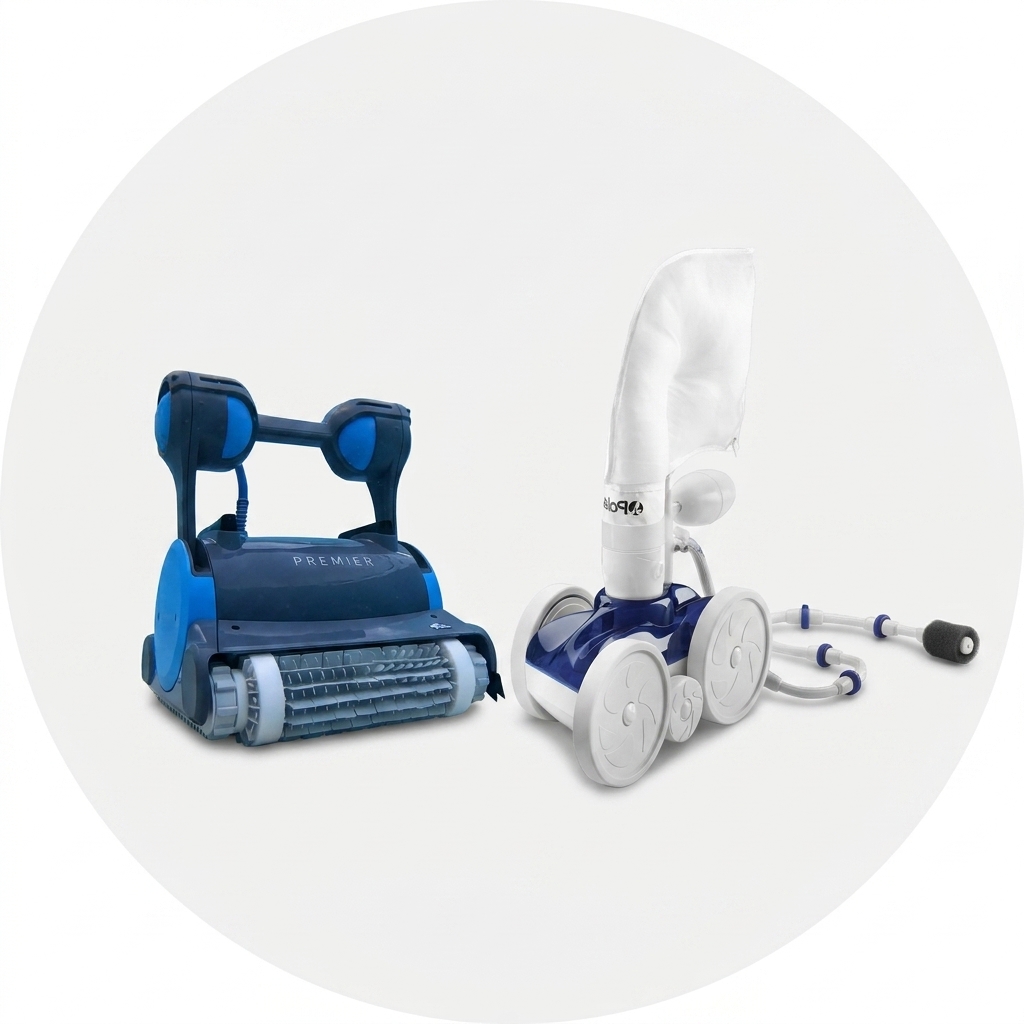
Start by vacuuming by hand and sending the water to waste, so you're not pushing dirty water back through the filter. Automatic cleaners save time but miss the algae hiding in corners and cracks. Grab a stiff pool brush and scrub the walls and floor, paying extra attention to shady spots. Scrubbing knocks the algae loose so the chlorine can reach it.
Balance, then shock
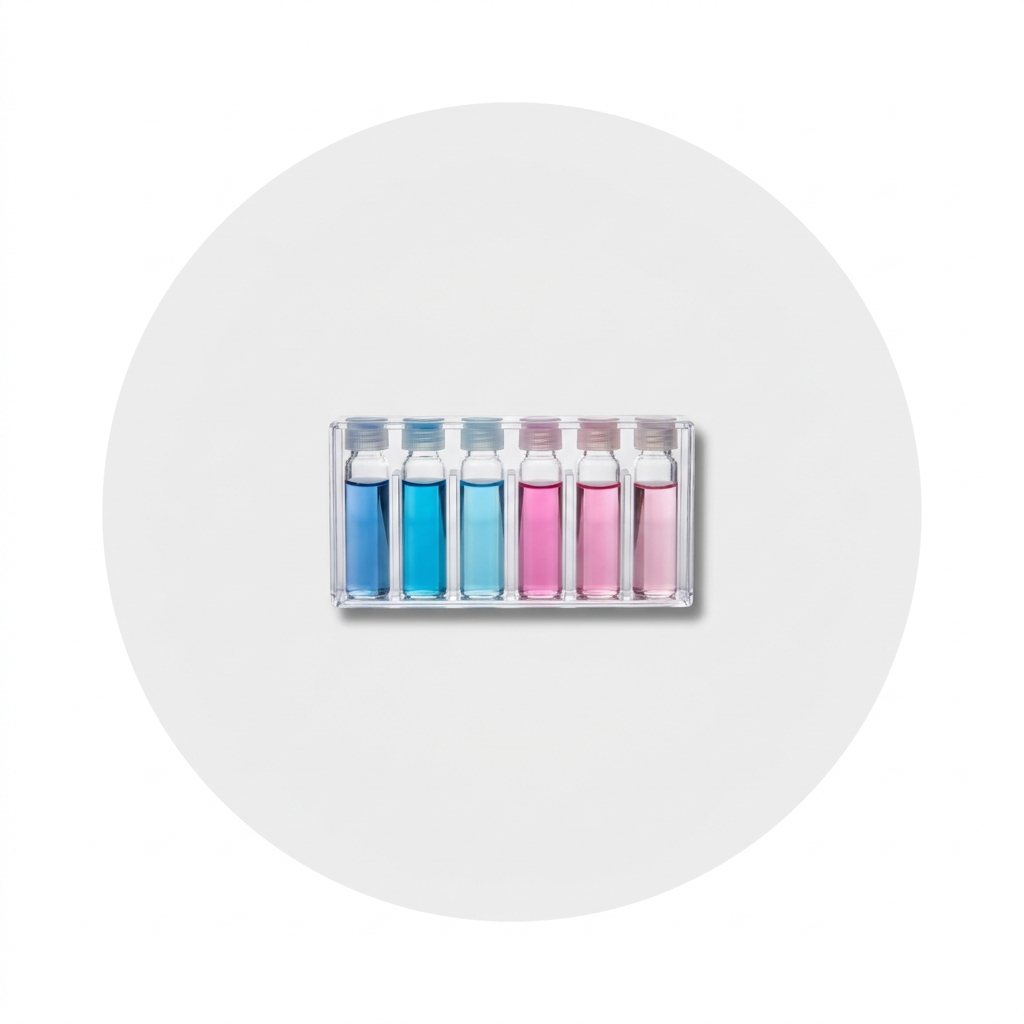
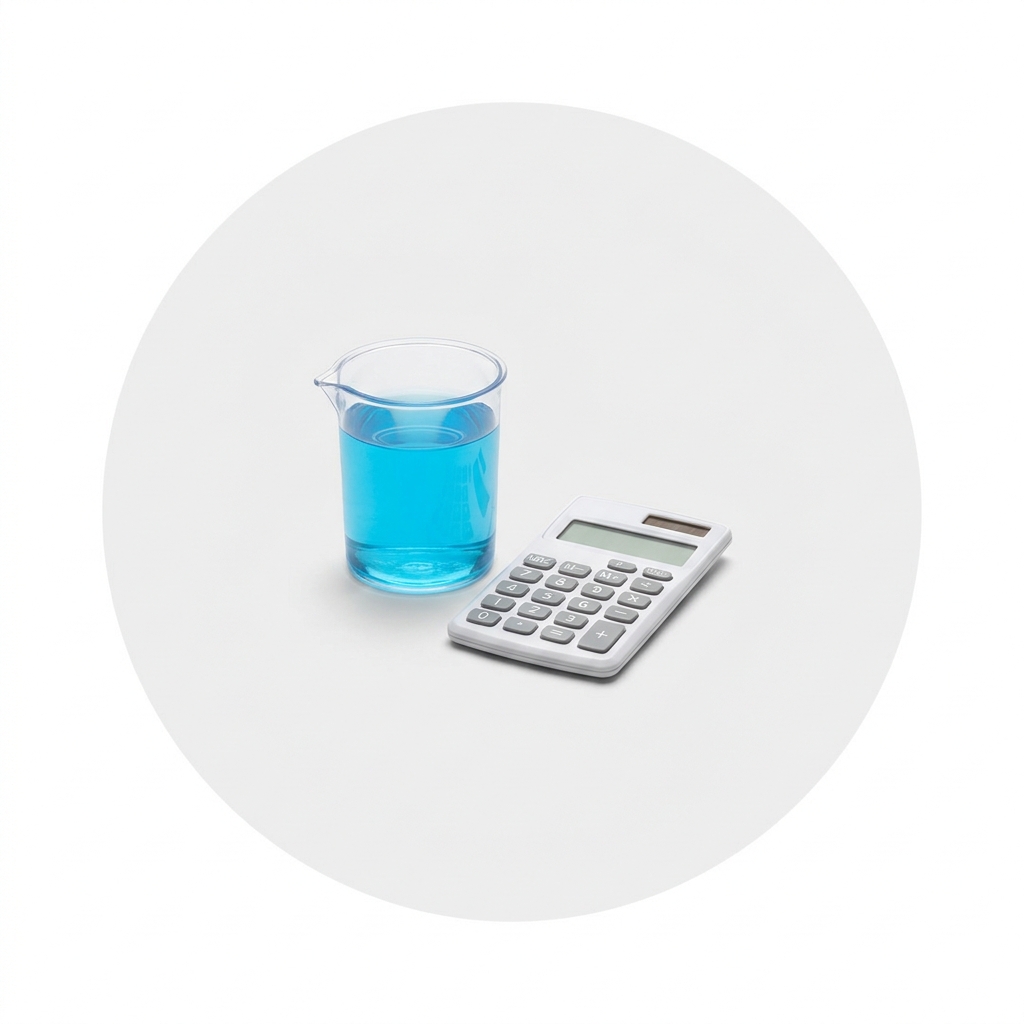
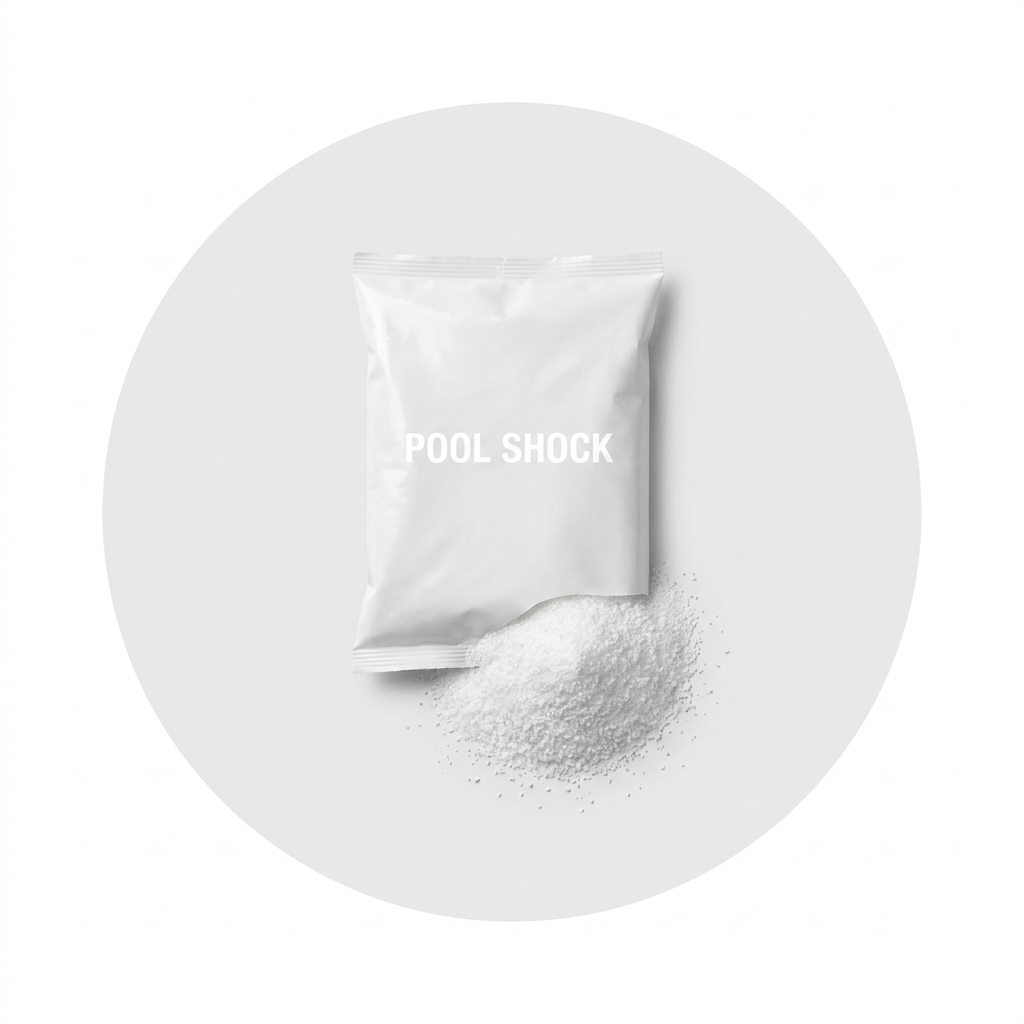
Next, get your chemistry back in line. Test your pH and alkalinity with strips or a digital kit so your shock works as hard as it can. Shock at night with calcium hypochlorite (cal-hypo for short)—it's strong enough to kill the algae, and the dark keeps the sun from burning it off first.
Then watch your filter. Run it nonstop after shocking to clear out the dead algae. Regular filter care stops the next outbreak before it starts.
Shock at night—daytime sun burns off chlorine before it can finish the job.
Implement Effective Algae-Control Methods
Algae show up when chlorine drops and your water chemistry slips. The moment you see green, murky patches, deal with it.
Start with a good vacuum and brush. Hit the spots that get ignored—corners, steps, and shaded zones—where algae hide. Scrubbing loosens them so your sanitizer can work.
Then test and balance your pH and alkalinity. Balanced water is a place algae struggle to survive. Once it's balanced, shock at dusk or after dark so the sun doesn't burn off the chlorine.
After the shock works, run your filter to pull the dead algae out. A clarifier speeds up the clearing if you want one. When the water's clear, clean your filter so leftover spores can't come back. Keeping algae away comes down to steady upkeep—a few regular checks keep your pool clear.
Optimize Water Chemistry for Algae Prevention
Getting your water chemistry right is your best defense against algae. A friend of mine kept fighting green water until he realized he'd been ignoring a few basic numbers. Keep those in check and algae never get a foothold.
Test your chlorine, pH, and alkalinity regularly. Chlorine should stay between 1 and 3 ppm, pH around 7.4 to 7.6, and alkalinity between 80 and 120 ppm—alkalinity is the quiet workhorse that keeps your pH steady. Let any of these slide and you open the door for spores riding in on rain or dust. High phosphate levels feed algae too, so check and manage them if you need to. And make sure your filter is up to the job: a good one keeps water moving, spreads sanitizer evenly, and clears out the still spots where algae grow.
My friend cleared his water once he dialed in his chemistry and stuck with it. That's the whole trick—precision and persistence.
Balanced water is the single biggest thing standing between you and an algae bloom.
Employ Manual Cleaning Techniques
A pool brush and a manual vacuum might feel old-fashioned next to automatic gear, but for algae they're your best tools. Cleaning by hand means careful attention, so no spot gets missed.
Brush every surface
Start with a thorough brushing. Use a stiff-bristle brush made for your pool's surface. Concrete pools handle stainless steel bristles well; vinyl and fiberglass need softer nylon. Focus on the spots people skip—corners, steps, and shaded areas. As you scrub, you're breaking up algae colonies so the chlorine can reach in and finish them off.
Vacuum to waste
Now vacuum by hand. Set your filter to "Waste" so the dirty water goes straight out instead of back through the system. Work the floor methodically, topping up the water level with fresh water as you go. It's a workout, but the payoff is water that's actually clean, not just clearer.
Master Pool Algae Prevention

That calm surface can fool you into thinking algae aren't a threat, but they're always looking for a way in. Preventing them isn't just about chemicals; it's about understanding how your pool works as a whole.
First, balanced chemistry is your main defense. Test and adjust your chlorine and pH regularly to keep the water hostile to algae. I learned this the hard way—one week of ignoring my pool turned it into a swampy mess.
Filtration matters just as much. Cleaning the filter on a schedule stops spores from settling in, especially after heavy rain or windy days when more spores blow in.
Last, watch what goes into the water. Toys and swimsuits used in a lake or the ocean can carry spores. A quick rinse before they touch your pool saves you a lot of trouble. Stick with these habits and you don't just prevent algae—you keep your pool clean all season.
Balance Water Chemistry
Balancing your water isn't as hard as it sounds. Start by checking your pH and alkalinity, which decide how well your chlorine works. High pH weakens chlorine, and low alkalinity lets your pH bounce around. With a good test kit, adjust these into range—pH between 7.2 and 7.6, alkalinity from 80 to 120 parts per million (ppm).
Calcium hardness matters too. Too little and you risk corroding your pool surfaces; too much and you get scaling. Keep it between 200 and 400 ppm. Don't skip the stabilizer either—usually cyanuric acid, which works like sunscreen for your chlorine. Without it, chlorine burns off fast and algae take over.
Keep an eye on these numbers and adjust as needed. It's not glamorous, but it's what keeps your chlorine ready to handle algae.
Implement Effective Filtration
Good filtration does a lot of quiet work to keep algae away. Without it, spores spread freely and you end up with a green bloom.
Match your care to your filter
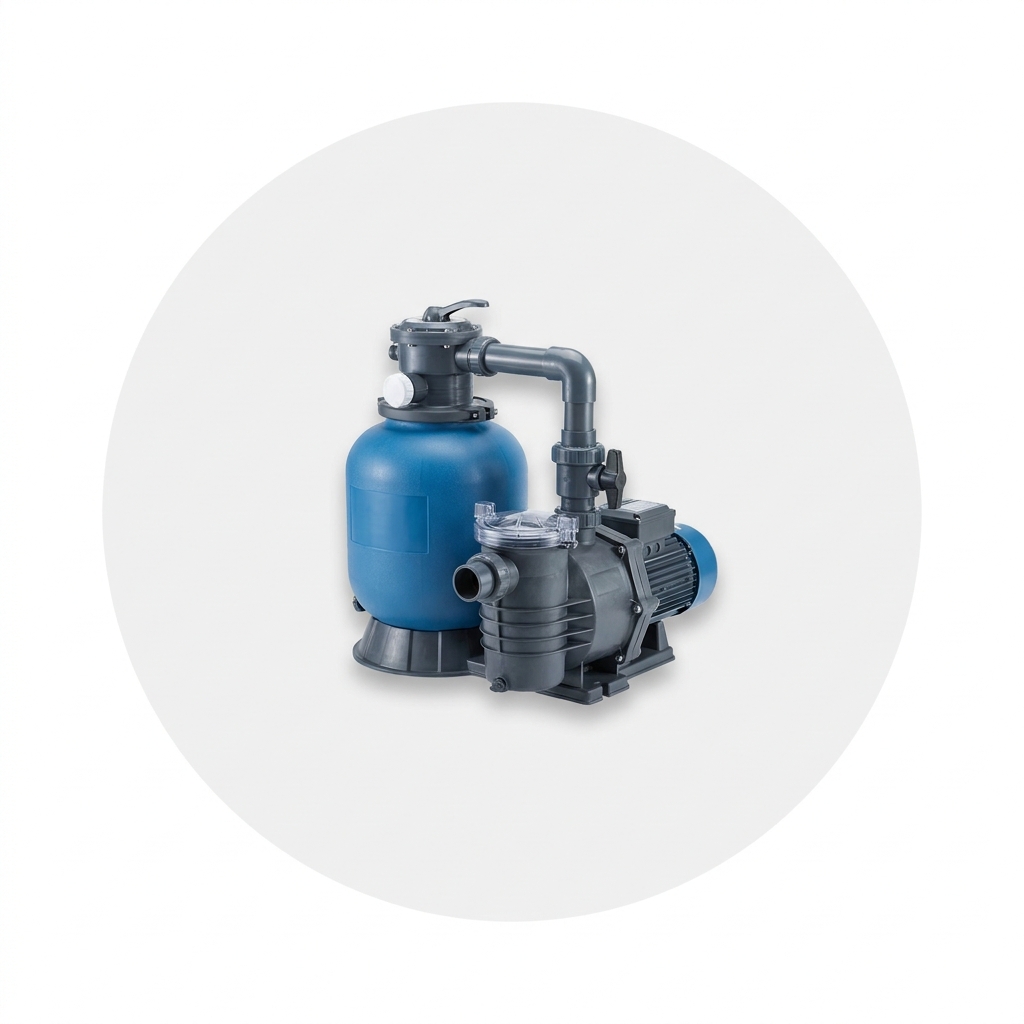
Whatever type you have, it needs regular attention. A cartridge filter might just need a rinse for routine cleaning, but a chemical soak brings it back to peak performance. Sand filters need backwashing to flush out trapped debris. Diatomaceous earth (DE) filters need regular grid checks and fresh DE powder.
Check the size
It's worth asking whether your filter is the right size for your pool. An undersized one struggles with the water volume and lets contaminants slip through. Upgrading could save you future headaches. A well-kept filter extends the life of your whole system and keeps algae from getting a foothold—think of it as an investment in clear water and peace of mind.
Use Targeted Algae Treatments
Different types of algae need different treatments. Once you know what you're dealing with—green, yellow, or black—you can match your approach to it.
Green algae grows fast and usually calls for a heavy dose of calcium hypochlorite shock. Yellow (or mustard) algae clings stubbornly to surfaces and often needs a specialized algaecide made for it. Black algae has tough outer layers, so it usually takes a mix of hard brushing and a strong algaecide built for its stubborn stains.
Matching the treatment to the type speeds up removal and saves you chemicals. Use the wrong one and you might waste your effort or even make things worse. Every pool deserves care built around what it actually needs.
Optimize Pool Water Chemistry

Fighting algae without checking your water chemistry is like baking without checking the oven. Algae thrive in poorly balanced pools, so routine testing is your first move. Get a reliable kit—digital or liquid—to keep tabs on pH and alkalinity.
A neighbor of mine once fought stubborn green algae, only to find his pH had shot way up. He brought it down with muriatic acid, and his chlorine started working again. Chlorine is your main tool against algae, but it loses its punch if pH and alkalinity are off. Aim for a pH between 7.2 and 7.6 and total alkalinity between 80 and 120 ppm.
Watch your stabilizer too—cyanuric acid protects chlorine from the sun, and 30 to 50 ppm is ideal. Hold these numbers steady and you keep algae from taking hold while making the water more pleasant to swim in.
If your chlorine seems useless, check your pH first—high pH quietly kills its ability to sanitize.
Implement Effective Algae Prevention
Preventing algae comes down to staying ahead of it. Keep your chlorine where it should be, since that's your main defense, and test and adjust your pH and alkalinity regularly so algae never get comfortable.
A solid filter isn't optional. Clean it on a schedule so it keeps trapping debris and spores. A better filter costs more upfront, but it's an investment in easy swimming.
Algae can hitch a ride on swimwear and pool toys, so rinse off any gear after a day at the beach or lake before it touches your pool. For extra protection, use an algaecide during the warm months when blooms are more common—go with a copper-free formula to avoid buildup. And don't ignore circulation. Keep your pump running so the water doesn't go stagnant, and you'll create conditions algae can't stand.
Enhance Filtration and Circulation
A clean pool depends on its filtration and circulation running smoothly. There's nothing better than a quiet afternoon by the pool, and that only happens when the filter is doing its job behind the scenes.
Keep the filter clean
Regular backwashing and cleaning are crucial. Backwash a sand filter once a week during heavy use. Check and rinse cartridge filters every two weeks, with a deep clean or replacement at least once a season. For a DE filter, replace the diatomaceous earth after each backwash. These steps keep spores from sneaking back in after you've captured them.
Keep the water moving
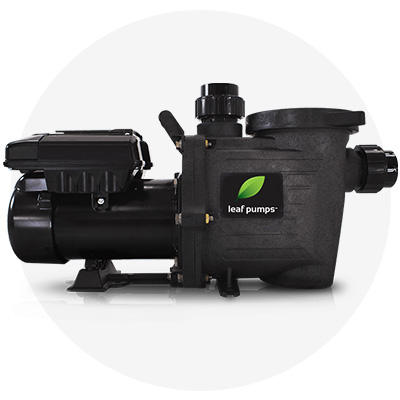
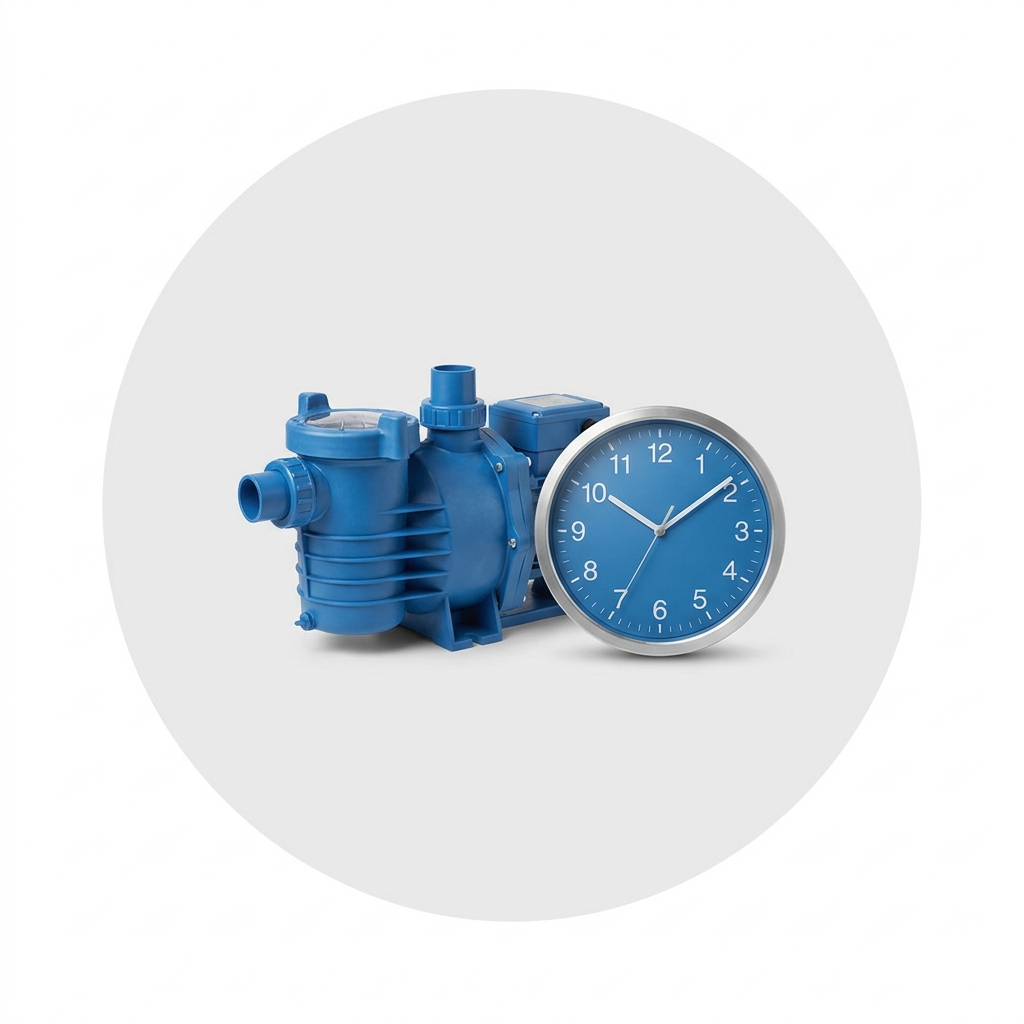
Your pump keeps water flowing and stops the stagnation algae love. Run it about 8 to 12 hours a day. Watch your turnover rate too—the pump should cycle your whole pool's volume every 8 hours. If you haven't already, think about a variable-speed pump. It's efficient, eco-friendly, and gives you more control over circulation.
Master Shock Treatment Techniques
When algae take over, shocking your pool is how you take back the water. It's not just dumping in chlorine and hoping. First, figure out what kind of algae you've got—green, yellow, or black—because that tells you whether to double, triple, or quadruple your shock dose.
Timing matters. Shock after sunset so the sun doesn't burn off the chlorine too soon. Dissolve the shock in a bucket of water first, then pour it evenly around the pool. That gives you a more even treatment and protects your liner.
While the chlorine works, run your filter all night so the shock reaches every corner. Don't be surprised if the water turns cloudy blue afterward—that's a good sign. It means the algae are dead, though you still need to filter them out.
My friend Jake fought a severe bloom one summer. The fix that finally worked was brushing his walls before shocking, so no algae could hide in the crevices. His pool came back crystal clear. Do it right and you clear the algae and keep it from coming back.
Always brush before you shock—algae hiding in cracks will survive a treatment aimed only at the open water.
Boost Chlorine Effectiveness
Getting the most out of your chlorine isn't about adding more; it's about creating conditions where it can work. Rain waters down your chemistry, and a hot spell invites algae, so keeping your levels right matters. Start with pH—chlorine gets weaker in high-pH water, so aim for 7.2 to 7.6.
Balanced alkalinity protects your chlorine too. Test your water regularly; making it a Sunday-morning habit with your coffee is an easy way to stay on top of it.
Circulation counts as well. Run your pump 8 to 12 hours a day to keep the chlorine moving and clear out stagnant spots. And clean your filter regularly—a clogged filter can't do its job, and everything downstream suffers.
Once you've cleared a bloom, shift your focus to keeping the next one out. Make your chemistry the priority: check your chlorine regularly so you catch the first signs early, and keep pH and alkalinity balanced since they decide how well your sanitizer works. Testing weekly gave me peace of mind and saved me plenty of headaches.
A clean filter is your pool's best defense, so backwash sand filters or clean cartridges regularly through peak season. And don't underestimate brushing and vacuuming—they stop algae from settling in the corners and shady spots.
Finally, watch what goes into your pool. Set up a rinse-off area for toys and swimwear, especially after they've been in natural water. Weave these habits into your routine and a clear pool becomes your normal.
Optimize Water Chemistry Balance
When algae keep coming back, solid water chemistry is your most reliable ally. Get the balance right and you set up a healthier pool that resists algae on its own.
Start by testing the key numbers regularly—pH, alkalinity, and chlorine—so you can act before algae take hold. A pH between 7.2 and 7.6 keeps chlorine sanitizing efficiently. Alkalinity between 80 and 120 ppm steadies your pH and makes the water a place algae don't like.
A friend once struggled with algae that wouldn't quit despite repeated shock treatments, until she found her high pH was undermining every attempt. Once she corrected it, her pool cleared. Treat the cause, not just the symptom.
Keep an eye on calcium hardness and cyanuric acid too. They protect your pool from problems beyond algae, like corrosion and scaling. Balance everything and you build a pool that naturally resists algae growth.
Enhance Cleaning Techniques
Good cleaning technique makes all the difference against algae. Every step—scrubbing, vacuuming, filtering—helps keep these visitors out. Start with brushing the walls and floor, giving extra attention to nooks, crannies, and shadowy corners where algae settle. A stiff-bristled brush is your best tool, especially on concrete or gunite.
Don't skip manual vacuuming. Automatic cleaners are convenient but don't handle algae well. Vacuum by hand with your filter set to "Waste" so the contaminated water goes straight out of the system. Keep an eye on the water level and top it up so you keep enough flow to protect your filter.
Then balance your chemistry. Regular pH and alkalinity testing keeps your sanitizer working, and a digital test kit takes the guesswork out. Once balanced, shock with calcium hypochlorite at night so the sun doesn't burn off the chlorine.
Last, clean the filter. After a heavy session, a thorough backwash or cartridge cleaning is a must—skip it and dead spores drift back into your pool, undoing your work.
Brush and Vacuum Thoroughly

When you're tackling algae, thorough brushing and vacuuming do the heavy lifting. Grab a sturdy brush and scrub hard—algae hide in shadowy corners, crevices, and along the floor, so don't be gentle. The goal is to knock them loose so the chlorine can reach deeper.
Then vacuum by hand using your filter's Waste setting, so the algae-filled water doesn't recirculate. You're getting it out of the pool, not just moving it around.
Keep the water level at least halfway up the skimmer so things keep running well. If the algae are especially stubborn, a vacuum head with brushes cleans better. The water may cloud up as you work—that's a sign you're on the right track. If you're unsure about manual vacuuming, a detailed guide can offer plenty of tips.
Eliminate Algae with Manual Vacuuming
Manual vacuuming is one of the most overlooked steps in the fight for clear water. Automated systems are handy, but vacuuming by hand puts you in charge and lets you target algae directly.
Switch your filter to the 'Waste' setting to bypass the filter and push the dirty water out to your yard, so spores can't come back. As you move the vacuum, focus on the shadowy corners and crevices where algae like to hide.
Keep an eye on your water level—holding it halfway up the skimmer keeps your filter running well. Patience pays off here; the more thorough you are, the fewer algae stick around.
The first time I did this it felt like a chore, but watching the water clear turned it into something almost satisfying. Stick with it and your pool rewards you with clean, green-free water.
Scrub Pool Walls Effectively
Scrubbing algae off your walls feels more like work than fun, but done right it's a key part of keeping your pool healthy. Start with a sturdy brush on a long pole so you can reach the hard-to-see spots. Corners, crevices, and shady areas are where algae collect, so hit those first.
Your wall material decides the brush. Concrete or gunite pools handle a stainless steel bristle brush, which scrapes off stubborn algae. For vinyl liners or fiberglass, use a nylon bristle brush—it's gentler and won't damage the finish.
As you scrub, the water may cloud up with loosened particles. That's a good sign; you're lifting the algae so it can be filtered out. Start with the toughest spots while you can still see them clearly. Once the brushing is done, your pool is ready for treatment and filtration, so those spores don't stand a chance.
Conclusion

Now that you know what to look for, you're ready to take your pool back. Clear water isn't luck—it's a routine you can actually keep up with.
Want to get even better at it? Our free Pool School course covers everything about pool care, from basic maintenance to tricky troubleshooting. You'll learn how to:
- Save thousands on pool repairs and chemicals
- Keep your water clear year-round
- Prevent and solve common pool problems
- Master water chemistry with confidence
Over 10,000 pool owners have already changed the way they care for their pools. Get started with our free Pool School course today!
What you need
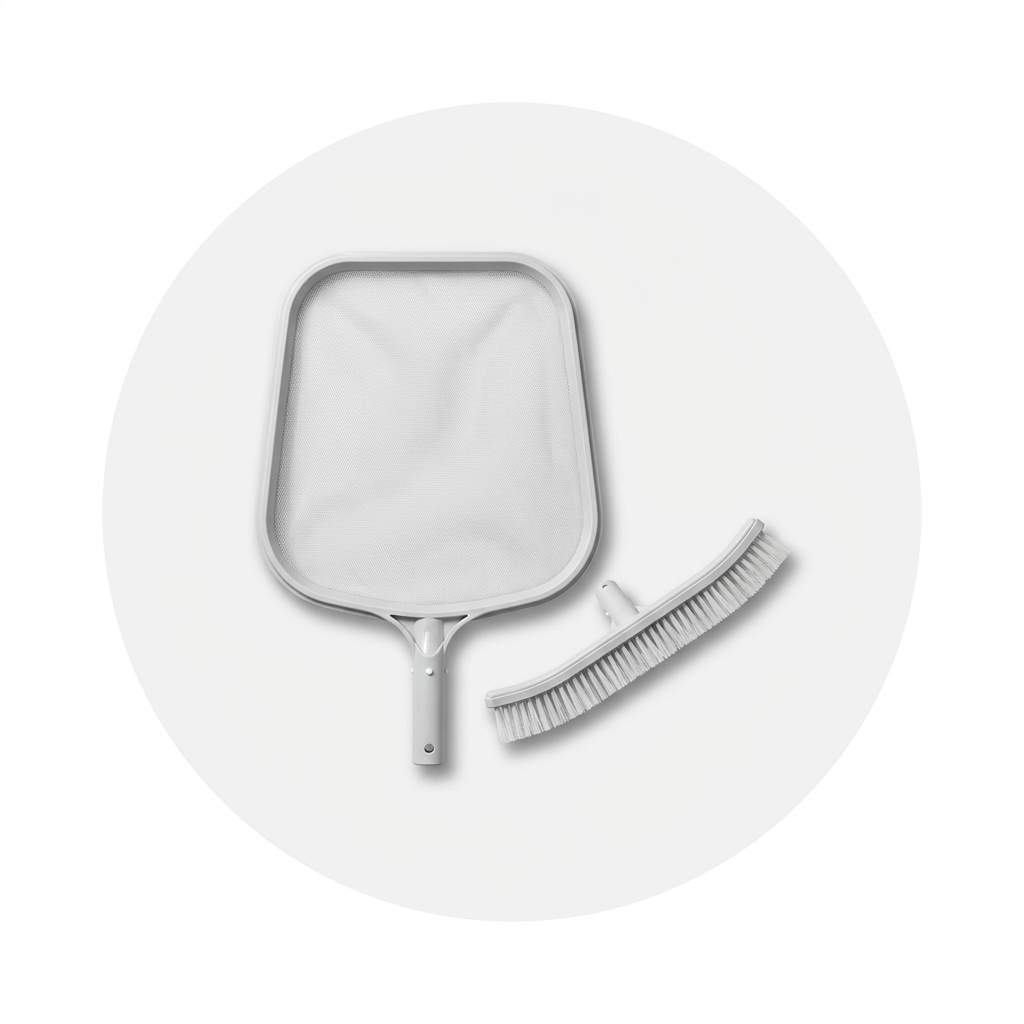
Grab a stiff pool brush, a manual vacuum, a reliable test kit, and calcium hypochlorite shock to clear a bloom and keep it from coming back.