



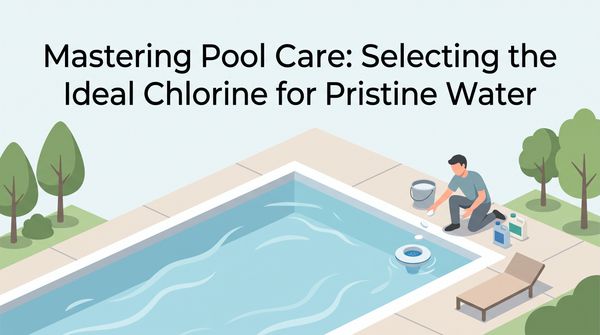
A cool, clear pool on a hot day is both a getaway and the heart of a summer party. But keeping that water clear takes more than a skimmer and some enthusiasm. Chlorine does the heavy lifting. It keeps the water safe by fighting off algae, bacteria, and other unwanted guests. Whether you've owned a pool for years or you're still finding your footing, it pays to understand the details of adding it.
When I first got into pool ownership, the number of chlorine options threw me. Tablets, granules, and liquid chlorine each have their own perks and quirks. Tablets release chlorine slowly, which is great for steady day-to-day upkeep. Granules give you a fast boost, so they're handy when a pool party is around the corner. Liquid chlorine is simple to spread through the water, but you have to handle it carefully and measure it right.
The right form depends on more than your type of pool. It comes down to your lifestyle and how you like to handle upkeep. You're really balancing convenience against how well something works. Like anything, you get better with practice, and before long you'll land on the method that fits your pool and your routine.
Your Action Plan
- Test your water weekly for alkalinity, pH, chlorine, and cyanuric acid.
- Balance total alkalinity first, then pH (7.2 to 7.8), then chlorine.
- Keep free chlorine between 1 and 3 PPM.
- Pick your form: tablets for steady upkeep, granules for quick fixes, liquid for fast dosing.
- Add chlorine with the pump running, and dilute granules in a bucket first.
- Store chlorine cool, dry, and away from other chemicals.
Master Chlorine-Adding Methods
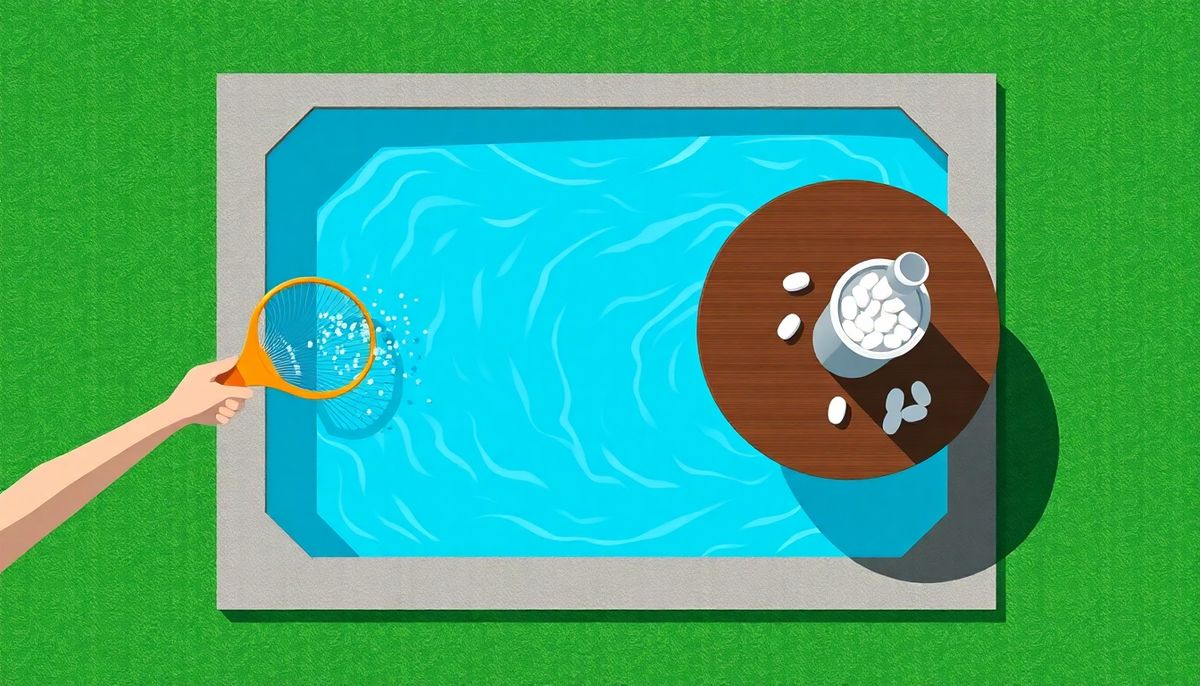
Getting the hang of adding chlorine makes all the difference, and each of the three forms does one job especially well.
Tablets: steady and slow
Tablets dissolve slowly, giving you a steady drip of chlorine over time. For the best results, use an automatic chlorinator, which spreads chlorine more evenly than a floating dispenser. Keep your pump running so they dissolve, and don't overload the feeder. Stick to the right amount for your pool size so you don't end up with too much chlorine.
Granules: a quick boost
Granules dissolve fast, so they're the way to go when you need results now. Mix them into a bucket of pool water first so they don't settle on the floor, stir with a wooden stick, then pour the mix evenly across the pool. Great for a fix when your chlorine drops out of nowhere.
Liquid: fast and strong
Liquid chlorine is a high-strength solution, so add it with care. Pour it in with the pump on, either right in front of the return jet or by walking around the edge. It has no stabilizer, so you'll need to add one separately to help it last in bright sun.
Choose the Right Chlorine Type
Picking the right chlorine is about knowing what your pool needs and matching it to what each form does best. Tablets dissolve slowly to keep your sanitizer levels steady. Your sanitizer here is chlorine, and tablets are great if you like minimal fuss. Watch out, though: they build up cyanuric acid, which can cloud your water over time. Granules dissolve faster, a big help when you need to raise chlorine quickly after a busy weekend, though they need topping up more often. Liquid chlorine is the heavy hitter for big pools or a visible algae outbreak. With no stabilizer, you'll go through more of it in a sunny pool, but it's ideal for shocking your pool fresh at the start of a season.
Optimize Chlorine Distribution
Getting chlorine to spread evenly can feel tricky, but nail it and you get a clean, pleasant swim.
Match the method to your pool
Tablets can pool in one spot if you skip the automatic chlorinator, and that can damage your liner. I found this out when my floater wedged behind the pool ladder. Since then I've stuck with the chlorinator, tweaking the settings to match how much chlorine the pool needs. Granules should go in a bucket of pool water first so they don't sink and leave stubborn bleach spots. Pour the mix around the edge with the pump running and it spreads nicely. Liquid chlorine is the fastest of the three. Pour it slowly near the return jet and let the moving water carry it. Since it has no stabilizer, add cyanuric acid if you want it to last in the sun.
Maintain Proper Chemical Balance
When you add chlorine, it's not just about the chlorine itself. Watch your free chlorine and keep it between 1 and 3 PPM (parts per million), with 3 being the sweet spot. That level can drop from heavy swimming, rain washing in contaminants, or off-balance cyanuric acid.
Regular testing keeps pH and total alkalinity working together. A balanced pH lets chlorine do its job, while steady alkalinity keeps pH from swinging around. And remember that tablets keep adding cyanuric acid. That stabilizer shields chlorine from the sun, but too much gets in the way of it, so test for it regularly.
Always test and adjust in this order: total alkalinity first, then pH, then chlorine.
Balance Pool Chemistry Effectively
Balancing pool chemistry is a lot like tuning an instrument. Small tweaks bring harmony; neglect brings chaos. Chlorine is just one player, and it does its best work when your pH and total alkalinity are where they should be. So when you test, don't stop at chlorine. Start with total alkalinity, which buffers your pH. Think of it as a house's foundation: if it's shaky, everything above it will be too. Once alkalinity is set, adjust your pH to around 7.4 to 7.6 so chlorine can kill bacteria and sanitize well.
Weekly testing is your best friend here. I once ignored my pool's alkalinity while fussing only over chlorine, and some swimmers got an itchy surprise. Check and adjust regularly, and your pool will pay you back with clear water all summer.
Choose the Right Chlorination Method
If convenience tops your list, tablets are your friend. They release slowly for a low-maintenance routine and work well in an automatic chlorinator. Just watch for pH drops and the slow buildup of cyanuric acid, which can chip away at how well your chlorine works. Granules are the quick fix when you need to raise chlorine fast, like after a rough weekend of pool parties. Dilute them in a bucket first so they don't leave residue on the bottom. Liquid chlorine is the go-to for immediate impact and bigger pools where you need to dose carefully. With no stabilizer, you'll need to add cyanuric acid separately so the sun doesn't burn through it.
Test and Balance Weekly
Testing your pool every week is your guard against surprises. Check chlorine, pH, and alkalinity together so your chlorine can fend off algae and bacteria the way it should. Weather and heavy use throw things off, so test after odd conditions too. Remember that rainstorm that wrecked last summer's balance? Adjust alkalinity first, then pH, to lay a solid base. And if your chlorine drops fast, dig deeper. It can point to a bigger problem, so check your cyanuric acid or a buildup of things like sweat, sunscreen, or leaves in the water.
Safely Handle and Store Chlorine
Handling chlorine safely matters, not just for your pool but for you too.
Gear up and store it right
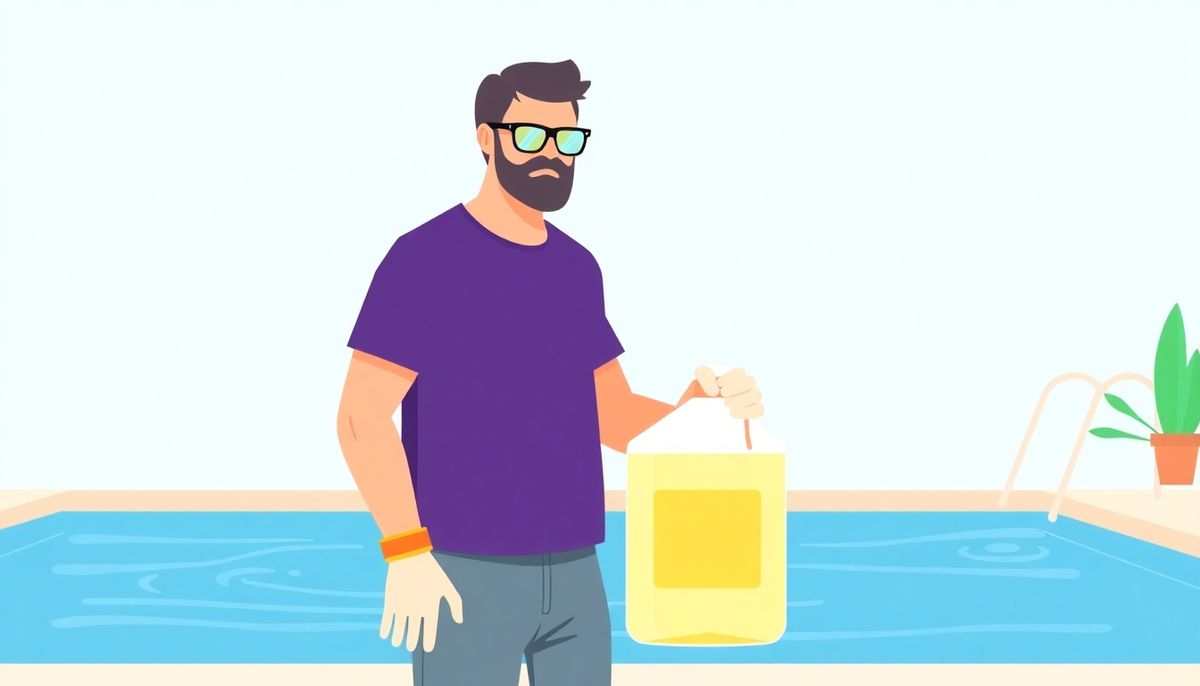
Whenever you handle chlorine, gear up. Gloves and goggles guard against splashes. As much as chlorine cleans your pool, it's corrosive and can hurt your skin and eyes. A coworker once brushed this off and ended up with a nasty skin irritation that a few simple precautions would have prevented.
Store it somewhere cool, dry, and well-ventilated, out of direct sun and away from moisture, so it doesn't weaken or turn into a hazard. Keep it away from organic materials and metals too, since chlorine is reactive and can cause corrosion or even fire.
When you mix chlorine, never add water to the chemical; always add the chemical to the water.
Choose the Right Dispenser
Picking a chlorine dispenser is a bit like choosing a good partner for keeping your pool clear.
Floating dispenser vs. automatic chlorinator
A floating dispenser is simple. It bobs around the pool, releasing tablets as they dissolve. The catch is uneven distribution, especially with strong currents or spots where the floater gets stuck. I saw this on a friend's pool, where a stubborn floater left a patch of liner slightly discolored. An automatic chlorinator is more hands-off. It fits into your circulation system, keeps chlorine flowing steadily, and you just turn a dial to match your pool's needs. Don't overload it with tablets, though. For a quick boost, granules still win. Dissolve them in water first so they don't leave residue on the bottom.
Select the Best Chlorine-Type
Think of tablets as the slow, steady option. They feed a consistent flow of chlorine and shine in automatic chlorinators, but they're not the pick for a quick boost, and they add cyanuric acid, so check it regularly. Granules are the sprinters. They dissolve fast for an immediate bump, which suits pools that get heavy use or run into contaminants often. Mix them in water before adding them for an even spread that won't damage your surfaces. Liquid chlorine is simple and effective, especially against algae or cloudy water. It spreads fast and evenly, but it's unstabilized, so you'll need extra steps to protect it from the sun.
Optimize Your Chlorine-Addition Method
Building a good chlorine routine takes a feel for how each form works with your pool. My friend Lisa found this when she switched from tablets to liquid chlorine. Her water stayed clearer and her upkeep got easier once she shaped her approach around her busy schedule. With tablets, an automatic chlorinator gave her more consistent results than a floater, without the risk of a damaged liner. With granules, she learned to mix them in a dedicated bucket with a wooden stick first so they wouldn't leave ugly residue on the floor. With liquid, she poured it slowly in front of a return jet and kept an eye on her stabilizer so it wouldn't burn off in the sun.
Ensure Effective Chlorine Distribution
Getting chlorine to spread evenly comes down to circulation. Run your pool pump so the water moves and chlorine doesn't clump in one spot. This matters most with slow-dissolving tablets. A pool brush helps too. When granules settle on the bottom, a quick brush around the pool mixes them in. For liquid chlorine, walk the perimeter and pour slowly with the pump running. And test weekly, since rain or heavy use burns through chlorine faster and may mean testing more often during those stretches.
Handle Chlorine Safely
Handling chlorine right keeps your pool safe, so treat it the way you'd treat a new grill: carefully and prepared. Gloves protect against skin irritation, goggles shield your eyes, and good airflow cuts down on fumes, so work in an open area. Chlorine has a bit of a temper. It reacts hard when it meets other chemicals, so store it away from household cleaners and other pool chemicals, somewhere dry and cool and out of direct sun. Finally, take a minute to read the directions for whatever form you're using. Tablets, granules, and liquid each have their own rules, and following the maker's guidelines keeps you out of trouble.
Ensure Proper Chlorine Levels
Keeping your chlorine levels right is like baking a good cake. Get the balance right and everything else falls into place. The sweet spot for free chlorine is 1 to 3 PPM, with 3 as the ideal target. That keeps your pool clean and safe, without the harsh smell or irritation you get from too much chlorine. Levels can dip after a weekend pool party or a rainstorm, or when your cyanuric acid is off and UV rays eat away at the chlorine. Test weekly. It's quick and it saves you headaches. If your chlorine keeps dropping to zero despite regular care, look into bigger issues like an algae bloom or faulty equipment.
The right dispenser makes upkeep easier and gets the job done. My neighbor spent last summer fighting a cloudy pool because she leaned on a tablet-stuffed floater and hoped it would sort itself out. Uneven chlorine led to algae blooms and a lot of frustration instead. An automatic chlorinator hooks into your filtration system and spreads chlorine evenly as the water moves. Turn a dial and you set the exact dissolve rate for your pool's size and use, which spares you the swings and the constant checking. With granules or liquid, the dispenser matters less, but technique still counts. Dissolve granules so they don't stain, and pour liquid slowly for an even spread.
Test and Balance Pool Chemistry
Weekly upkeep starts with testing, which goes fast with a multi-test kit. These read total hardness, free chlorine, pH, total alkalinity, and cyanuric acid, the vital signs of a healthy pool. I still remember a summer when my pool looked more like a swamp than an oasis. It turned out I'd skipped balancing pH and alkalinity, which left my chlorine useless. Start with alkalinity, since it steadies your pH, and a stable pH lets chlorine work at its peak. Then check your chlorine, aiming for 1 to 3 PPM. An odd drop can point to a deeper issue, like a buildup of sweat, sunscreen, and leaves, or too little stabilizer (CYA). Regular checks keep your water clear and save you trouble later.
Optimize Chlorine Circulation
Even chlorine coverage is a bit like following a good recipe. It takes timing, equipment, and patience.
Keep the water moving
Run your pump 8 to 12 hours a day, especially after you add chlorine, so the water doesn't go stagnant. If you have an automatic chlorinator, make sure it's working, and add liquid chlorine or dissolved granules right in front of the return jets so they push the chlorine through the pool. Clean filters matter too, since clogged ones slow the water down and weaken your chlorine. For dead zones like corners or behind steps, aim your return jets that way or stir the water by hand with a brush.
Good circulation is what turns a dose of chlorine into a pool that's evenly sanitized top to bottom.
Select the Right Chlorine Type
Your chlorine choice shapes how easy upkeep is and how good your water looks. Tablets are convenient, with a slow, steady release for a low-maintenance routine, but they nudge your pH and cyanuric acid around, so test weekly. Granules let you make quick adjustments after heavy use or rain. Dissolve them first so they don't pile up and discolor the bottom. Liquid chlorine packs a punch and is perfect for shock treatments, fixing chlorine shortfalls fast, and tackling algae blooms. Handle it carefully, and since it adds no cyanuric acid, watch your stabilizer so UV rays don't burn through it.
Balance pH and Alkalinity
Balancing your pool's pH and alkalinity is like setting the stage for a great pool party. Without the right backdrop, even the best chlorine can't deliver. A balanced pH, ideally 7.2 to 7.8, lets chlorine work, while total alkalinity, ideally 80 to 120 ppm, buffers against those frustrating pH swings. Think of alkalinity as the quiet hero. Too low and your pH bounces around like a rollercoaster; too high and every adjustment feels like rowing against the current. After one heavy rainstorm my pH crashed and my chlorine went nearly useless. A quick fix with an alkalinity increaser brought it back and showed me how connected these pieces are. So before your weekly chlorine treatment, check and adjust pH and alkalinity first.
Conclusion
Now that you know the basics of chlorine, you're ready to spend less time fussing and more time swimming.
Want to go further? Our free Pool School course covers everything about pool care, from basic maintenance to advanced troubleshooting. You'll learn how to:
- Save thousands on pool repairs and chemicals
- Keep your water clear year-round
- Prevent and solve common pool problems
- Master water chemistry with confidence
Join over 10,000 pool owners who have already transformed their pool care routine. Get started with our free Pool School course today!
What you need
Grab a reliable multi-test kit, your chlorine of choice (tablets, granules, or liquid), and a stabilizer, then set up an automatic chlorinator or a good floater to keep levels steady.