



Key Takeaways
- A lap pool is a long, narrow pool — typically 40–75 ft long and 8–10 ft wide — built for swimming laps, fitness, and clean modern lines.
- Add a swim jet and even a short 30-ft lap pool swims like an endless pool, which is how most tight lots get real fitness swimming.
- Lap pools are the ideal shape for narrow side yards where a conventional pool never fits.
The lap pool is the thinking swimmer's pool. It trades the wide, splash-around footprint of a conventional pool for a long, narrow lane built to do one thing beautifully: let you swim. That focus is also its design superpower — the same slim shape that delivers a real workout fits along a side yard, hugs the house line, and reads like a piece of modern architecture. If you want a pool that earns its keep, start here.
What is a lap pool?
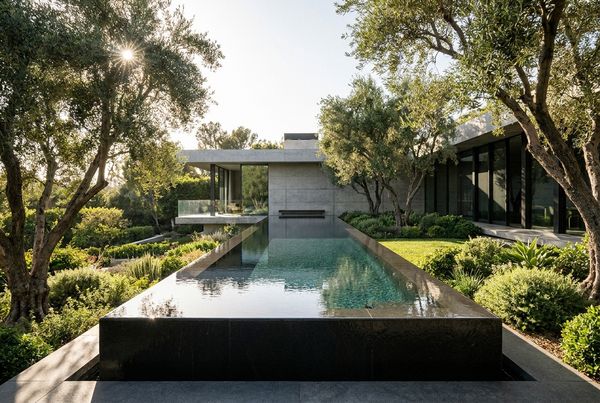
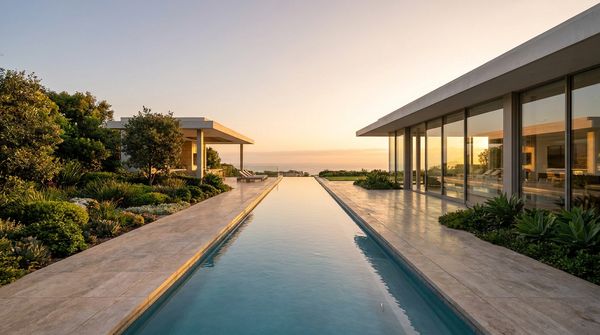
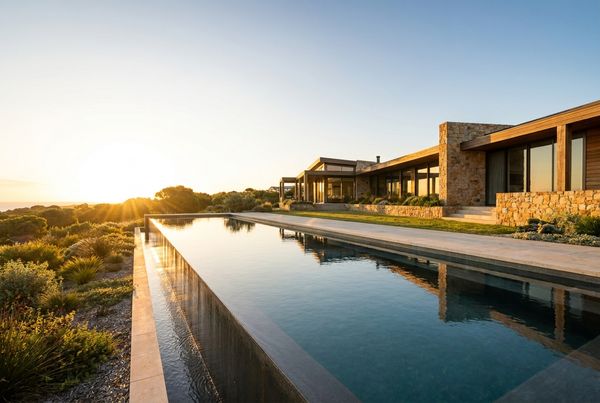
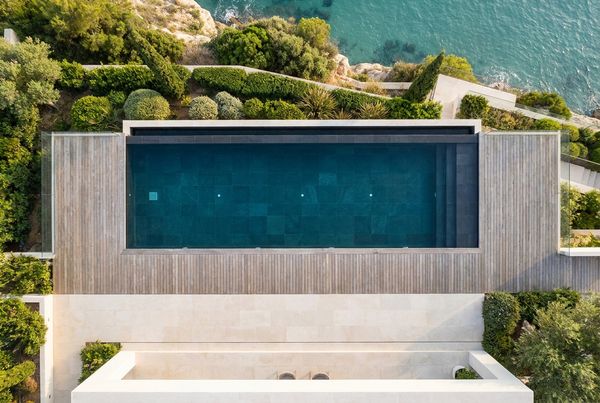
A lap pool is a long, narrow pool designed primarily for swimming laps and fitness rather than lounging or entertaining. Where a family pool is about surface area — room to splash, float, and gather — a lap pool is about length. It gives you an uninterrupted lane to stroke down, turn, and stroke back, at a uniform depth with no shallow-to-deep transition to interrupt the swim.
That single-minded shape is exactly why lap pools have become a favorite of modern designers. A narrow rectangle is one of the cleanest forms you can put in a backyard, and it slots into spaces a conventional pool can't touch — a side yard, a strip beside the house, the long axis of a courtyard. You get genuine fitness swimming, a striking architectural line, and a pool that flatters a tight or awkward lot instead of fighting it. If you're weighing the broader menu of forms first, our pool shapes guide sets the lap pool in context.
Lap pool dimensions that actually work
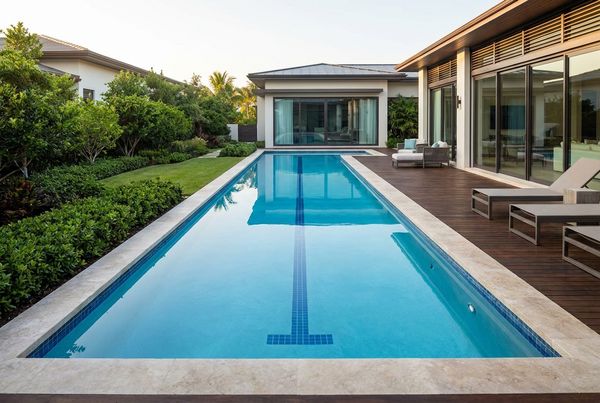
Getting the dimensions right is what separates a lap pool that gets used daily from one that frustrates every swim. Two numbers matter most: width and length.
Width is the one people underestimate. A true single-lane lap pool wants to be 8 to 10 feet wide so your stroke and your recovery don't clip the wall. Go much narrower and freestyle becomes cramped; a genuine two-lane pool needs closer to 16 to 18 feet. Length is more flexible and depends on how you swim. Depth is usually a uniform 3.5 to 5 feet — deep enough to swim cleanly, shallow enough to stand, with no diving to plan around.
| Length | Best for | Notes |
|---|---|---|
| 25–30 ft | Short lap pool + swim jet | Too short for real laps alone; pair with a current |
| 40–45 ft | Most backyards | The popular sweet spot — real laps, still fits many lots |
| 50 ft | Dedicated swimmers | Fewer turns, smoother rhythm; needs a longer yard |
| 75 ft / 25 m | Serious training | Approaches competition-style swimming; premium build |
Widths of 8–10 ft assume a single lane; add ~8 ft per additional lane.
The honest rule: if your yard can hold a 40-foot lane, you have a real lap pool. If it can't, a shorter pool plus a swim jet gets you there anyway — more on that below.
Lap pool cost in 2026
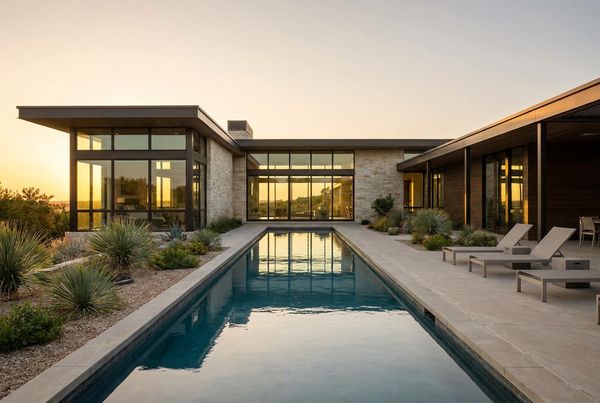
Here's the counterintuitive part of lap pool pricing: length costs money. A lap pool packs a lot of perimeter, wall, plumbing, and finish into a long shape, so it can actually run more than a compact rectangular pool with the same surface area. In 2026, most inground lap pools land between $45,000 and $110,000 installed, with a few key factors moving the number:
| Setup | Typical size | Installed cost* |
|---|---|---|
| Fiberglass lap pool | 30–40 ft x 8–9 ft | $45k–$70k |
| Gunite lap pool | 40–50 ft x 8–10 ft | $60k–$95k |
| Long training lap pool | 50–75 ft x 8–10 ft | $80k–$120k |
| Lap pool + attached spa | 40–50 ft + spa | $75k–$130k |
*Ballpark 2026 U.S. ranges; site access, region, materials, and length move the number. See the full cost guide.
The biggest levers are length, shell type, and finish. A shorter fiberglass lap pool keeps you at the value end; a 60-foot custom gunite lane with glass tile and a spa reaches the top. Running costs, on the other hand, are reasonable — a narrow pool holds less water than its length suggests, so heating and chemistry stay manageable. For the full breakdown of what drives every dollar, our inground pool cost guide goes deep.
What we think
Don't over-build the length. Most people picture a 50-foot Olympic fantasy and then swim short, easy sets in reality. A 40-foot lane handles genuine fitness swimming for the overwhelming majority of homeowners, costs meaningfully less, and leaves room in the yard for a deck and a spa. If you truly train, go long — otherwise put the money you'd spend on those extra feet into a swim jet, a dark tile interior, and good lighting. That combination gets used far more than an extra ten feet of concrete ever will.
Fiberglass vs. gunite lap pools
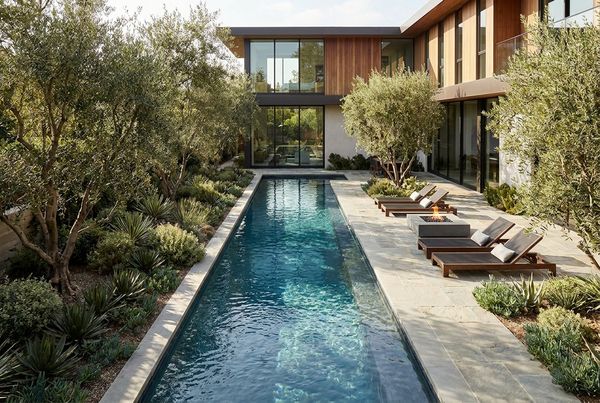
For a lap pool, the shell decision is bigger than usual because it's tied directly to length.
Fiberglass lap pools are factory-molded shells dropped into the excavation in one piece. They install fast — often a matter of weeks, not months — feel smooth and warm underfoot, resist algae, and cost less. The catch is length: manufacturers cap fiberglass shells at roughly 40 feet because a longer shell can't be trucked down the road. For a modern short-to-mid lap pool, that limit is no problem at all, and fiberglass is frequently the smarter value. Our fiberglass pools guide covers the tradeoffs in full.
Gunite (concrete) lap pools are built in place, so length and shape are effectively unlimited. If you want a 50-, 60-, or 75-foot lane, a custom width, an integrated spa, or an exact tile spec, gunite is the answer. It costs more and takes longer to build, but it's the only route to a truly bespoke lap pool. See our gunite pools guide for the details. The short version: if your dream lane is 40 feet or under, price a fiberglass shell first; if it's longer or fully custom, plan on gunite.
Swim jets & the endless-pool option
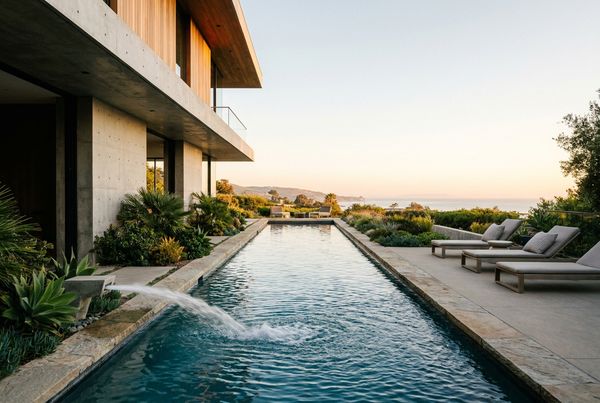
This is the upgrade that quietly rewrites the whole equation. A swim jet (or swim current) generates a steady, adjustable flow you swim against in place — so instead of counting on length for your workout, you count on the current. Add one and even a short 25 to 30-foot lap pool swims like an endless pool, because you never actually reach the far wall.
That opens the door for lots that could never hold a full lane. It's also how the lap pool and the endless pool / swim spa worlds overlap. A dedicated swim spa is a compact, self-contained unit built entirely around a current — great where there's almost no room. A lap pool with a swim jet, by contrast, gives you both a real lane to swim and an endless current for the days you want resistance. Two important caveats: a strong current takes practice to swim against smoothly, and the plumbing and equipment must go in during construction. Decide on your swim jet before you break ground — retrofitting one is expensive and disruptive.
Fitting a lap pool in a narrow yard
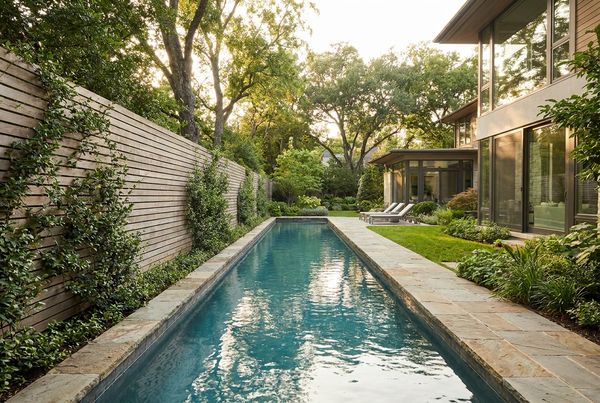
The lap pool's greatest trick is fitting where nothing else can. A conventional pool wants a wide, roughly square patch of yard; a lap pool wants a long, narrow strip — which is exactly the leftover space most homes actually have. We routinely build them down side yards, along fence lines, and against the long wall of a house. A few placement principles:
- Run it parallel to the longest straight line you've got — usually the house wall or the property fence. Alignment is what makes a lap pool read as intentional architecture rather than a leftover.
- Mind the setbacks. Long pools bump into side-yard setback rules fast; confirm the buildable strip before you fall in love with a length.
- Screen the far side. A slatted pool fence or a band of planting along the lane turns a narrow run into a private corridor rather than a gap between buildings.
- Consider a short lane plus a swim jet where the yard simply won't stretch — it's the narrow-lot escape hatch.
Because the shape is so efficient, a lap pool often frees up the rest of the yard for a deck, a lawn, or an outdoor kitchen. If your whole lot is tight, our small pool ideas guide pairs naturally with this one.
Design ideas that make a lap pool stunning
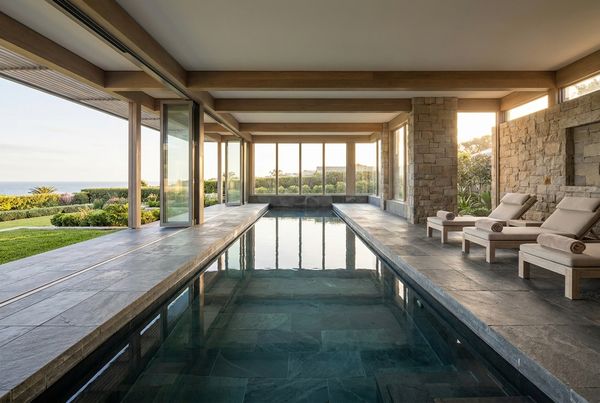
A lap pool's long, calm surface is a gift to designers — there's a lot of uninterrupted water to work with. The details that consistently elevate one:
- Dark tile interiors. Charcoal, midnight blue, and near-black finishes make a narrow lane look bottomless and turn the still surface into a mirror. At lap-pool scale it's the single highest-impact choice. See our dark bottom pool guide for the look.
- A single lane line. One black stripe down the floor signals purpose and helps you swim straight — quietly athletic without looking like a gym.
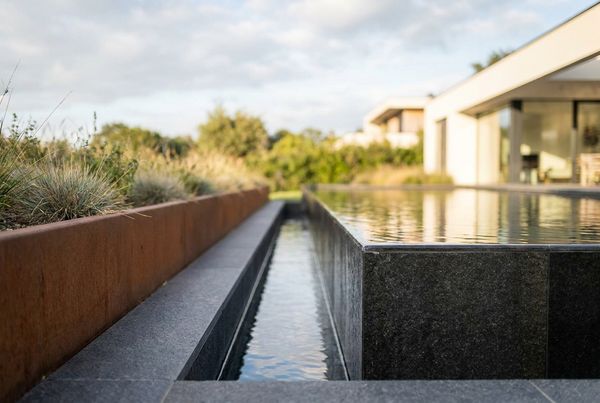
- A long water feature. A sheer-descent spout or a runnel down the side wall adds sound and movement along the length. Our pool water features guide covers what suits a long, narrow basin.
- Flush, continuous coping. Running one clean coping material the full length ties the pool to the house and amplifies the architectural line. Browse pool coping ideas for options.
- Full-length lighting. Waterline LEDs turn the lane into a ribbon of light after dark and make the pool the best part of the evening.
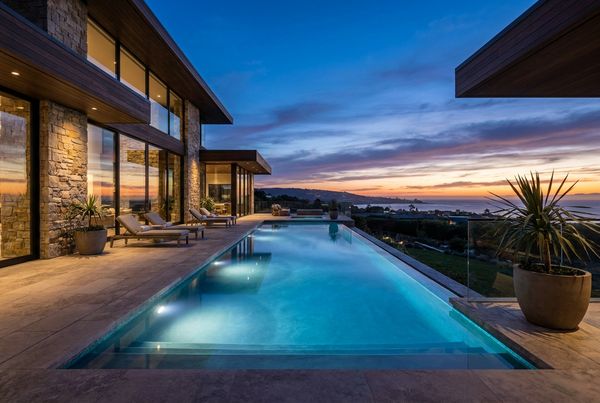
Because so much of a lap pool is one long, visible surface, the finishes read strongly — spend on the interior and the coping, since that's what you and every visitor actually see. For the wider design vocabulary, our modern pool designs guide is a great companion.
Combining a lap pool with a spa
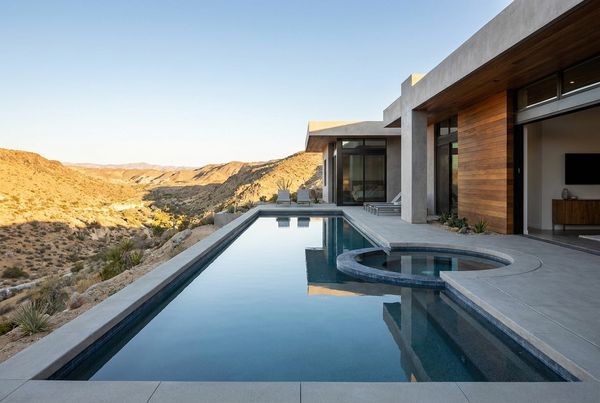
The lap pool and the spa are natural partners: you swim your set, then soak sore muscles a few feet away. The most popular configuration attaches a spa at one end — often raised slightly, so it spills over into the lane and doubles as a water feature. The spill creates gentle sound and movement down the length even when no one's swimming.
There are two easy ways to do it. A spillover spa shares the pool's water and equipment for a seamless, built-in look — see our spillover spa guide. Or you can set a standalone hot tub nearby for flexibility and a shorter build. Either way, the spa transforms a lap pool from a pure fitness tool into a full recovery ritual — swim, stretch, soak — which is a big part of why the pairing has become almost standard on new lap pool builds.
Running costs and upkeep
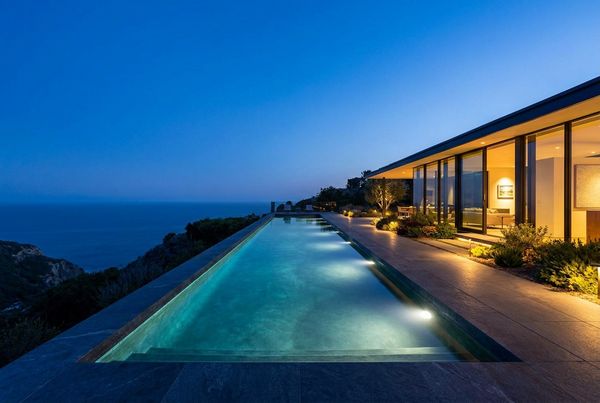
One of the lap pool's quiet advantages is how little it costs to run. A long, narrow lane looks like a lot of pool, but it holds far less water than a wide rectangle of the same length, so heating, chemistry, and evaporation all stay modest. If you want the exact number before you size a heater or buy chemicals, drop your dimensions into our pool volume calculator — that gallon figure drives everything from how much salt or chlorine you add to how long you run the pump.
Speaking of the pump: a lap pool with a swim jet is running two pieces of equipment, and a variable-speed pump on a sensible schedule is where the savings live. Our pump run-time calculator helps you find the shortest daily runtime that still turns the water over cleanly. For sanitation, plenty of lap-pool owners go saltwater for the softer feel on skin during a long swim; if that's you, size the system and dose it correctly with our pool salt calculator, and keep the maintenance simple by avoiding the traps in our salt water maintenance mistakes guide.
The one upkeep quirk of a lap pool is that dark interior everyone loves. It reads beautifully, but it shows scale and a dropped water line sooner than pale plaster, so chemistry has to stay tight. A quick weekly test with a decent test kit keeps the mirror finish looking its best.
Common lap pool mistakes to avoid
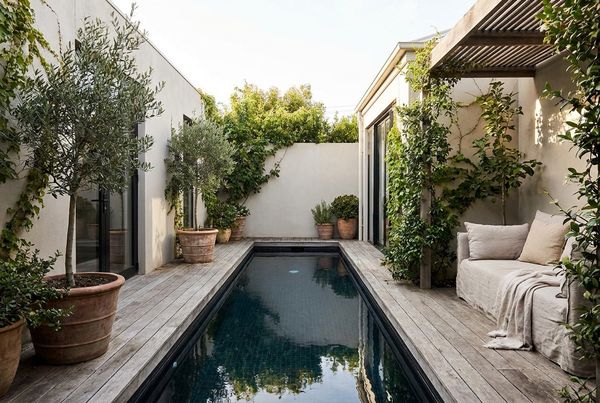
The mistakes I see on lap pools are almost all decisions made — or skipped — before construction. The first is building too narrow. People fixate on length and short the width, then discover their stroke clips the wall on every lap. Eight to ten feet is the floor for a real single lane; going narrower to save a bit of yard ruins the one thing the pool exists to do.
The second is deciding on a swim jet after the fact. A swim current transforms a short lane into an endless swim, but the plumbing and equipment have to be roughed in during the build — retrofitting one into a finished pool is expensive and disruptive. If there's any chance you'll want it, spec it now. And the third is misjudging setbacks. Long pools bump into side-yard setback rules fast, so confirm the buildable strip with your builder before you fall in love with a 50-foot lane. If your lot turns out tighter than hoped, a shorter lane with a jet, or a dedicated swim spa, gets you real fitness swimming in a fraction of the space. When you're ready to build, our pool builder near me guide helps you find someone who's done a few.
2026 lap pool trends
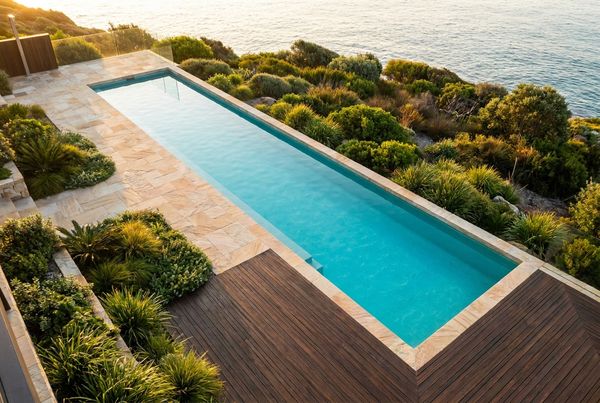
A few directions are defining the lap pool right now, and all of them lean into what the shape does best:
- Wellness-driven builds. The fitness-and-recovery mindset that powered the cold-plunge boom now shapes lap pools too — swim jets, attached spas, and even a cold plunge at one end for contrast therapy after a swim.
- Dark, minimal lanes. Near-black interiors, flush coping, and a single lane line — the pool as quiet architecture rather than a splashy centerpiece.
- Short lane + swim current. As lots shrink, more owners choose a compact lane with a swim jet over a long pool, getting an endless swim in a fraction of the footprint.
- Integrated, whole-yard design. The lap pool set tight against the house so the rest of the yard opens up for a deck, an outdoor kitchen, and planting — the pool as one element of a considered backyard, not the whole thing.
The through-line is discipline. The 2026 lap pool is longer on purpose, cleaner on purpose, and built around how you'll actually use it. Decide on your swim jet and spa up front, spend your finish budget on the interior and coping since they read at full length, and align the lane with your best straight line. Then find a builder who has done a few — start with our pool builder near me guide, and browse the full pool design ideas hub before you commit.
Design Gallery
6 more ideas to save — tap any photo to view full screen.
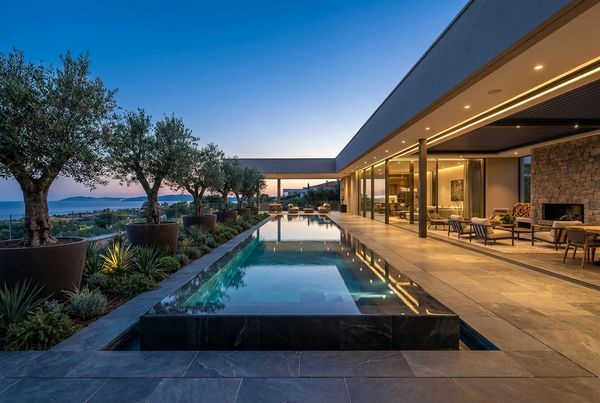
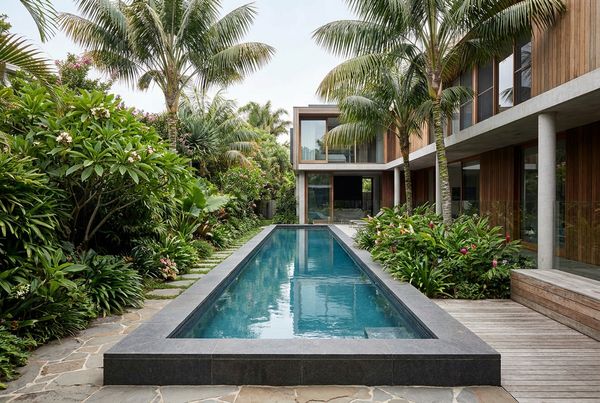
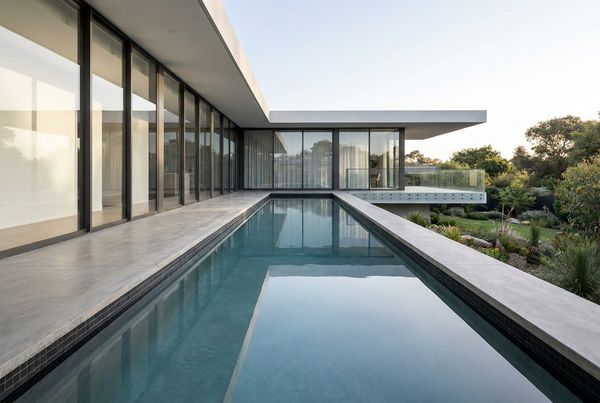
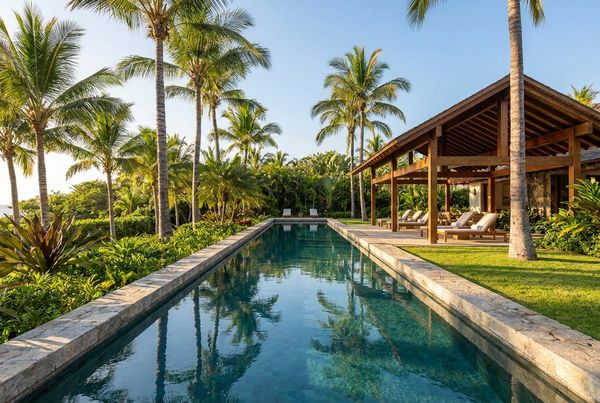

Kelly E.
Pool Design Editor, PoolPad
Kelly has spent 10+ years around residential pools — planning projects, testing gear, and documenting backyard builds for PoolPad. Each design guide is checked against current construction methods and material pricing.
Frequently Asked Questions
What is a lap pool?
What are standard lap pool dimensions?
How much does a lap pool cost in 2026?
Can you add a swim jet to a lap pool?
What is the difference between a lap pool and an endless pool?
Are fiberglass or gunite better for a lap pool?
Are lap pools expensive to maintain?
How deep should a lap pool be?
Can I make a lap pool a saltwater pool?
Ready to build your dream backyard?
Compare local, vetted pool builders and get matched with pros who can bring these designs to life.
Find a Pool Builder Near You