



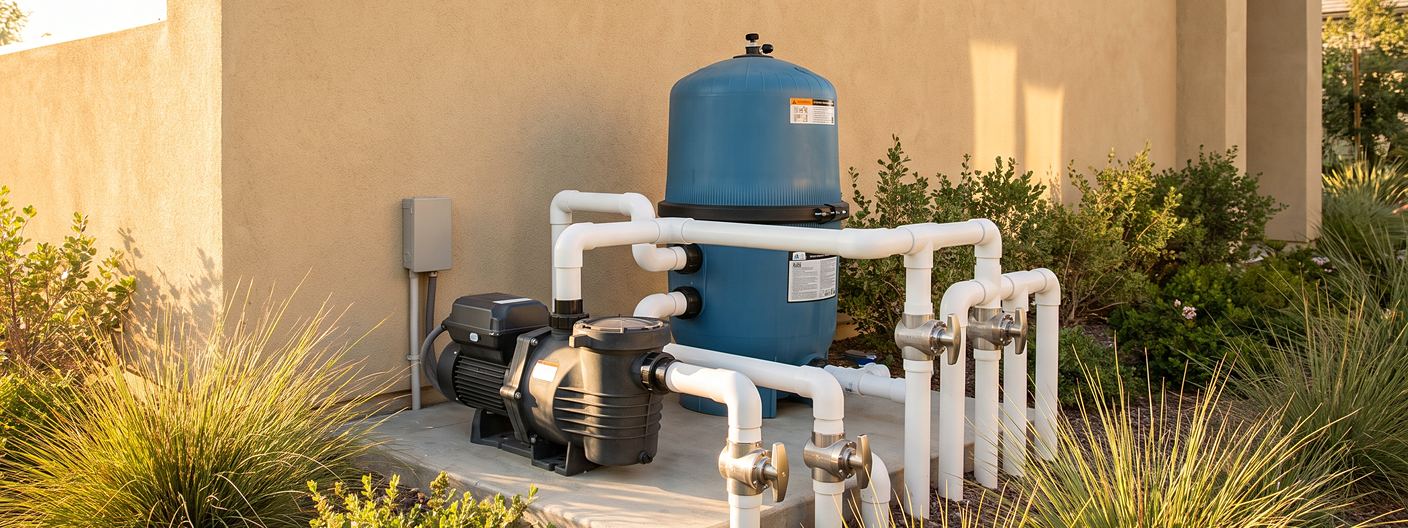
How Long Should a Pool Pump Run?
The goal is not a fixed number of hours; it is enough circulation for the pool's filtration and equipment. One turnover per day is a common starting point. Two pools that both run for eight hours can move very different amounts of water, so the calculator uses pool volume and flow rate.
The math is simple: multiply your pool volume by the number of daily turnovers you want, then divide by your pump's flow in gallons per hour (GPM × 60). If you don't know your volume, start with the Pool Volume Calculator.
Typical Run Times by Pool Size (1 turnover, ~50 GPM pump)
| Pool Size (gallons) | Run Time (1 turnover) |
|---|---|
| 10,000 | ~3.3 hrs |
| 15,000 | ~5 hrs |
| 20,000 | ~6.7 hrs |
| 25,000 | ~8.3 hrs |
| 30,000 | ~10 hrs |
Use the calculated time as a starting schedule. Increase or reduce it based on water tests, debris, temperature, bather load, and the minimum run time required by heaters, salt systems, or other equipment.
Saving Money on Pump Run Time
- Split the schedule into two shorter runs when debris or sanitizer demand is spread across the day.
- Run a variable-speed pump on low. Halving the speed can cut energy use by up to 75% while still turning the water over.
- Shift to off-peak hours if your utility has time-of-use rates.
- Keep the filter and baskets clean — a clogged filter drops flow and forces longer run times.
Related Calculators
Frequently Asked Questions
How long should I run my pool pump each day?
A common starting point is enough run time for one turnover per day. The hours depend on pool volume and the flow rate at the selected pump speed, so two pools can need different schedules. Use the calculator for a turnover estimate, then adjust for sanitizer demand, debris, weather, and local requirements.
What is a pool turnover?
A turnover is the time it takes your pump and filter to circulate a volume of water equal to your entire pool. Turning the water over once a day is the minimum for good filtration and even chemical distribution.
Is it cheaper to run a pool pump at night?
Often yes — many utilities charge less during off-peak overnight hours. Running a variable-speed pump on a lower speed for longer also moves the same water using dramatically less electricity than a single-speed pump on high.
Do I have to run the pump 24/7?
No. Most pools only need single-digit hours a day. Running 24/7 wastes power and adds wear — you just need enough run time to turn the water over and keep chlorine circulating.