



Key Takeaways
- You have three real paths: a portable spa (cheapest, fastest), an in-ground hot tub (built-in, custom), or a spillover spa tied to a pool.
- The look lives in the details — a deck or surround, planting, a shelter and good lighting are what separate a built-in retreat from a bolt-on box.
- Budget for running cost, not just install; a well-insulated, well-covered spa is the difference between using it weekly and letting it sit cold.
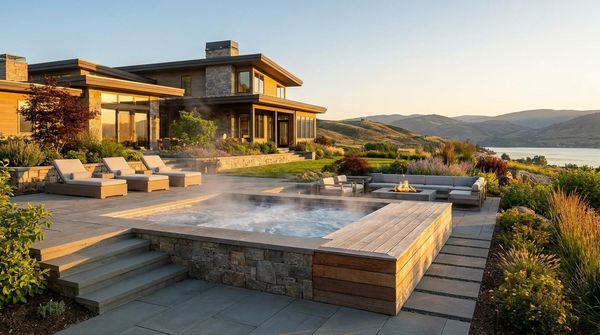
A hot tub is the single easiest way to turn a backyard into a place you actually use after dark and after summer ends. The catch is that most of them look like a plastic box parked on a slab. The good ones don't — they're set into a deck, wrapped in stone, tucked under a shelter and lit like they belong. Get the surround, the placement and the privacy right, and a spa stops looking bolted-on and starts feeling built-in.
In-ground vs portable vs spillover spa
Before you think about tile or lighting, settle the big fork in the road: how the spa is built. There are three real answers, and they lead to very different budgets and looks.
A portable hot tub is a self-contained acrylic shell with the pump, heater and jets built into the cabinet. You set it on a level pad, plug it in (or wire a dedicated circuit), and fill it. It's the cheapest and fastest route, it moves if you move, and modern portables run remarkably efficiently. The downside is the look — left bare, it reads as a box. That's fixable, and most of this guide is about how.
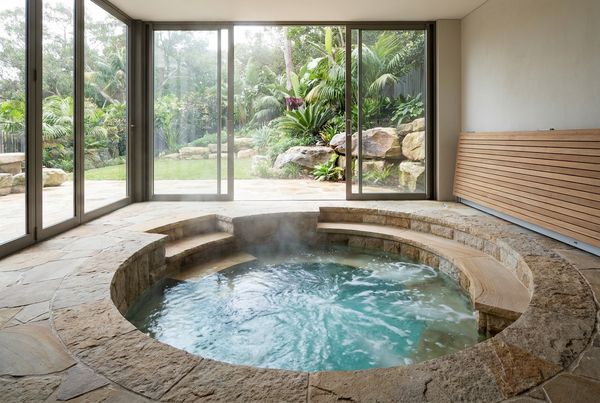
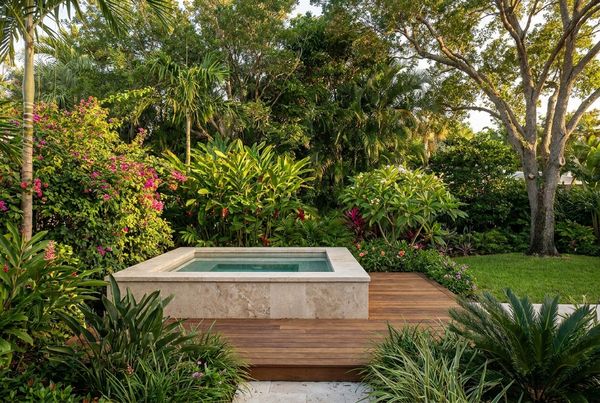
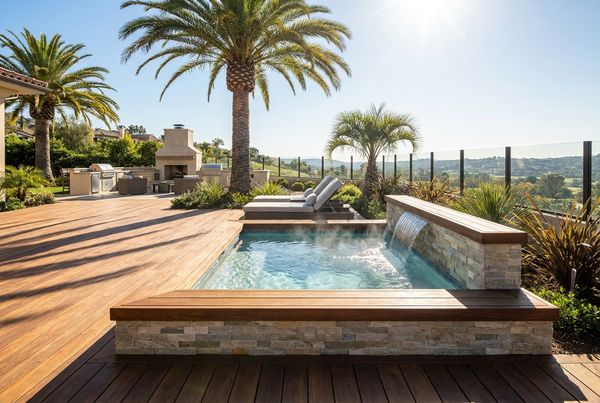
An in-ground hot tub is built into the ground like a miniature pool, in concrete (gunite) or fiberglass, with the equipment hidden in a nearby pad or pool-equipment area. It costs more and it doesn't move, but it looks permanent, it can be any shape, and you can finish it in the same tile and coping as the rest of the yard. This is the sunken, flush-to-the-patio look that photographs so well.
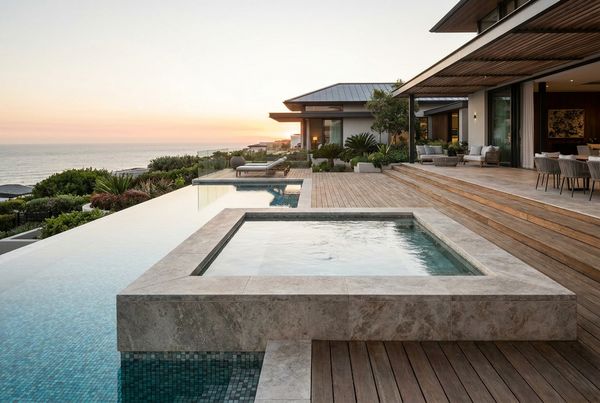
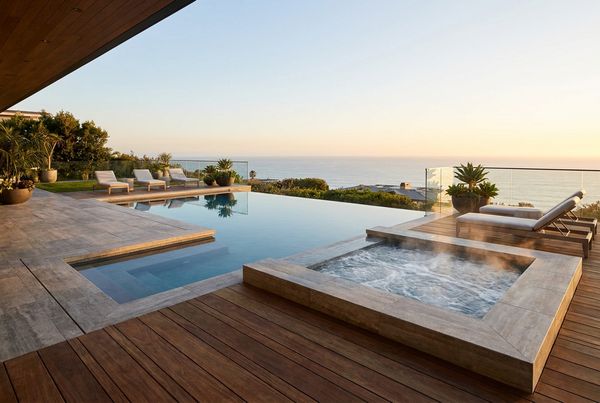
A spillover spa is the third path: a raised spa built alongside a pool that overflows — spills over — into the pool. It shares the pool's plumbing and equipment, ties the two bodies of water into one design, and gives you the sound of moving water. If you already have or plan a pool, this is often the most elegant option. Our dedicated spillover spa guide covers it in full, and the swim spa guide covers the fitness-focused cousin.
| Portable spa | In-ground spa | Spillover spa | |
|---|---|---|---|
| Typical cost* | $6k–$16k | $15k–$35k+ | $10k–$25k added to pool |
| Look | Freestanding box | Built-in, permanent | Part of the pool |
| Moveable | Yes | No | No |
| Shares pool equipment | No | Sometimes | Yes |
| Best for | Fast, flexible, budget | Standalone luxury | Pool owners |
*Ballpark 2026 U.S. ranges; region, access and finishes move the number.
Where to put a hot tub
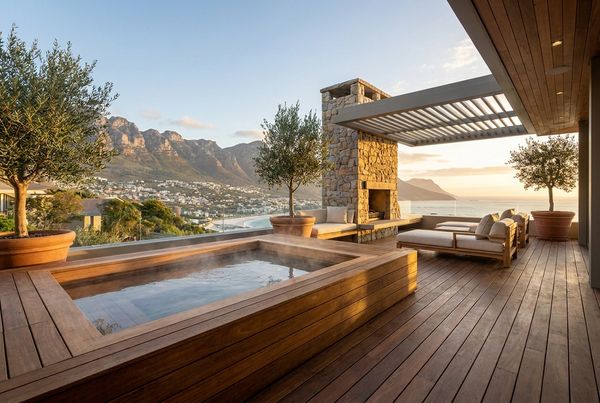
Placement decides whether you use the spa weekly or twice a summer. The single best rule: put it close to the house. On a cold night, the difference between a short step off the patio and a long walk across a dark yard is the difference between a habit and a regret. A spot off a back door, a covered patio, or the edge of an existing terrace almost always wins.
Beyond proximity, three things matter. First, a solid, level base — a full spa with water and bathers is heavy, so you need a proper reinforced pad, a rated deck, or in-ground footings, never bare soil or pavers over dirt. Second, shelter from wind, which strips heat and comfort faster than cold air does; a wall, a fence, or planting on the windward side pays off every soak. Third, privacy, which we'll come back to — a spa you feel exposed in is a spa you skip.
If you already have a pool, placing the spa beside it is the natural move: share the coping, echo the finish, and the two read as one design. Our pool deck ideas guide covers how to lay out the surrounding hardscape so the spa sits in it rather than beside it.
Decks & surrounds that make it look built-in
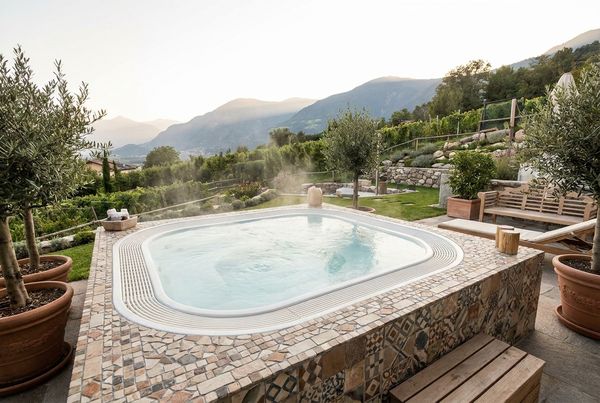
This is where a plain portable becomes a design feature. The trick is to hide the cabinet and give the spa a context — a frame it sits inside rather than a box sitting on top of the ground.
- Recess it into a deck. Dropping a portable spa so the rim sits flush with (or one step down from) a raised deck is the highest-impact move you can make. Suddenly it reads as in-ground even though it isn't. Leave an access hatch for the equipment.
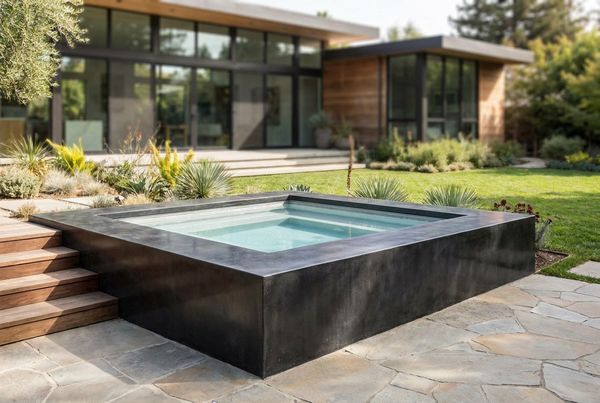
- Wrap it in a surround. A bench of stone, tile, or hardwood around two or three sides hides the cabinet, adds seating, and gives you a place to set drinks, towels and a phone. A tiled surround in a dark, current finish looks genuinely custom.
- Match the materials to the yard. Echo the coping, decking or paving you already have. Continuity is what makes a spa look planned rather than purchased.
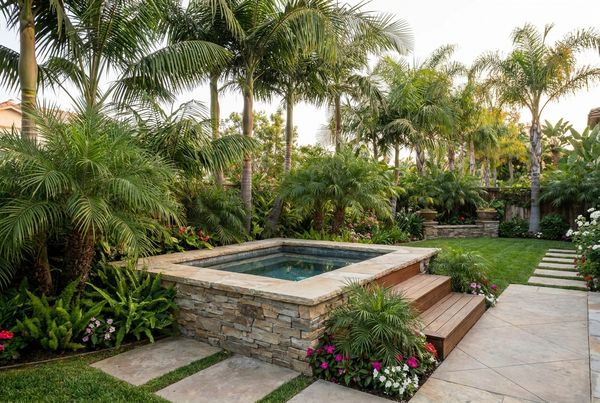
- Add wide steps. Broad entry steps double as casual seating and make getting in and out gracious rather than a clamber.
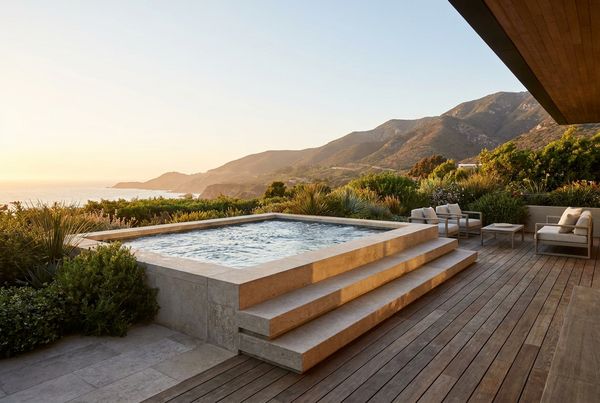
The 2026 look leans into softened geometry, dark tiled interiors and flush, sunken installs — the same design language driving pools right now. A dark surround with warm light is calm, expensive-looking and forgiving. For tile direction that suits a small water surface, our pool tile ideas guide is a good starting point.
Landscaping to integrate the hot tub
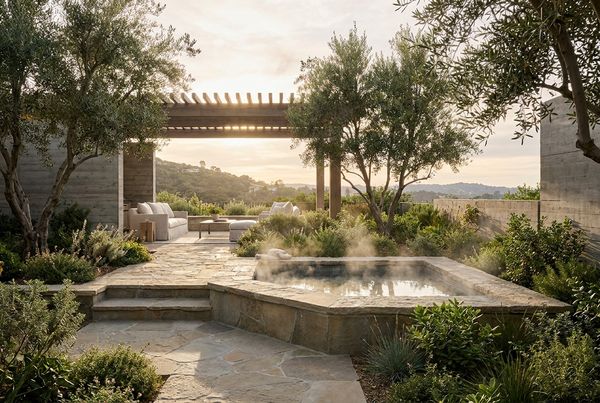
Hardscape makes a spa look built; planting makes it feel like it belongs. The goal is to soften the edges so the tub reads as part of the garden rather than an appliance dropped into it.
- Screen with planting. A band of tall grasses, bamboo, or columnar evergreens along the exposed side gives privacy and shelter at once, and moves gently in the breeze — a huge part of the atmosphere.
- Layer around the base. Low, dense planting that laps up to the surround hides the transition from spa to ground and kills the "parked on a slab" look instantly.
- Choose the right plants. Avoid anything that sheds heavily into the water — messy deciduous trees, needle-dropping conifers overhead. Favor evergreen structure, ornamental grasses, and tidy shrubs near the water.
- Think about the view out. You'll spend your soak looking at something — orient the spa toward the nicest planting bed, a specimen tree, or a feature wall, and away from the fence and the neighbors.
Good spa landscaping borrows directly from pool landscaping, so our pool landscaping ideas guide applies almost wholesale here — the same principles of layering, screening and evergreen structure carry straight over to a spa setting.
Pergolas, shelters & privacy
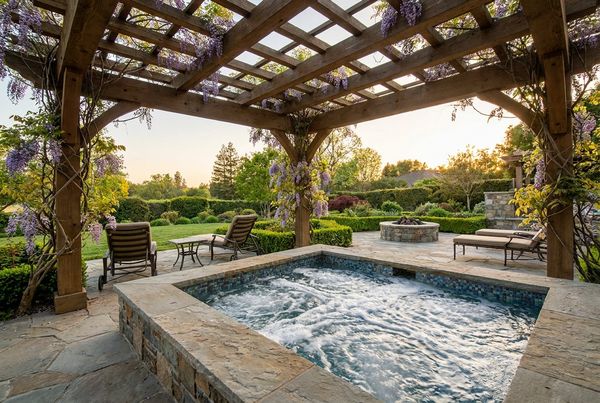
Two things make a spa usable year-round: shelter overhead and screening around the sides. Both also make it look like a designed room rather than an object.
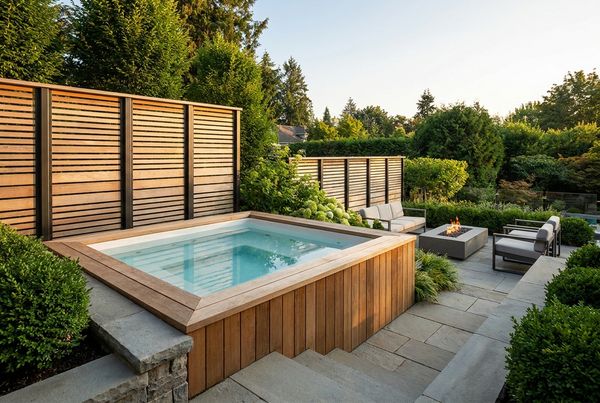
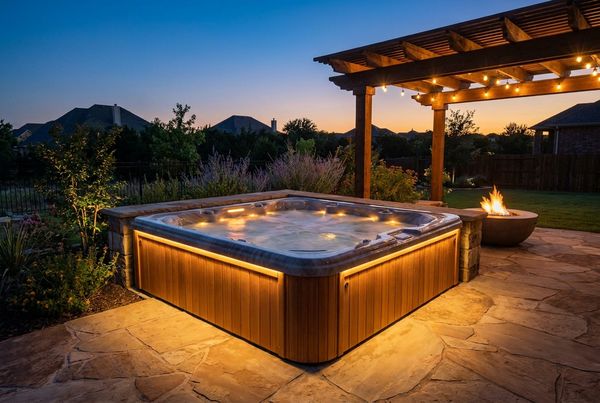
A pergola or shelter over the spa does real work. It gives dappled shade in summer, blocks light rain and leaf-fall, cuts the wind, and — crucially — defines the space so the spa feels like an outdoor room instead of a tub in the open. A slatted pergola is the popular choice; a solid roof or louvered pergola extends usability into wet weather. Our pergola ideas guide walks through styles, materials and sizing.
Privacy is non-negotiable for a spa — you're sitting still, in swimwear, often at night, and any sense of being watched kills the relaxation. The good news is a spa needs only a small screened zone, not a fortress. A single slatted fence, a glass privacy panel, a living wall, or a well-placed pergola with side screening is usually enough. Aim to block the specific sightlines that bother you — a neighbor's upstairs window, the street — rather than walling off the whole yard. Our pool privacy ideas guide covers screens, fences and planting in depth.
What we think
If you want the best-looking result for the least money, buy a good portable spa and spend the savings on the setting: recess it into a deck, wrap it in a dark tiled surround, put a pergola with one privacy screen over it, and light it well. That combination looks like a $40k in-ground spa for a fraction of the cost, and if you move, the spa moves with you. Splurge on insulation and a tight, well-fitting cover — that's what keeps running costs sane. Skip oversized 8-person tubs unless you truly entertain; a well-placed 4–6 seat spa gets used far more.
Lighting your hot tub
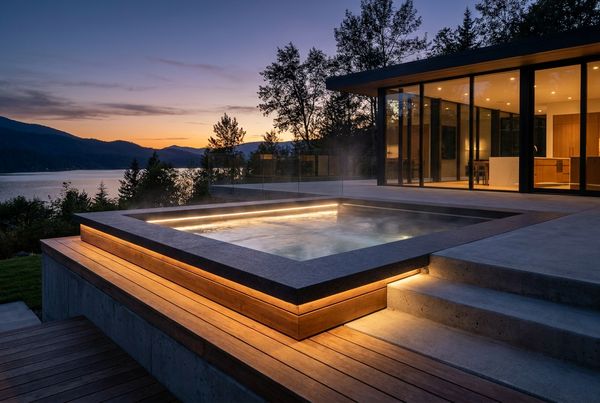
Nobody soaks at noon. A spa lives at night, which makes lighting one of the highest-return details in the whole project — and one of the cheapest. The goal is warm, low, layered light, never a single bright floodlight.
- In-water LEDs. Built-in spa lights (or added ones on custom builds) make the water glow and set the whole mood. Warm white reads calm; color-changing is fun but use it sparingly.
- Low path and step lighting. A few small fixtures on the steps and surround make entry safe and add a second, lower layer of light.
- Overhead ambiance. String lights across a pergola, a downlight or two, or a lantern give you gentle light from above without glare.
- Dimmable and automated. Smart controls let you set a soft evening scene and warm the spa from your phone before you walk out — small luxuries you'll use constantly.
Layered, warm, dimmable light is the whole game. Our pool lighting ideas and outdoor lighting ideas guides go deeper on fixtures, color temperature and layering.
Hot tub cost & running cost
Two numbers matter: what it costs to install, and what it costs to keep hot. People obsess over the first and get burned by the second.
Install depends entirely on which path you chose. A quality portable spa lands around $6,000–$16,000 installed including the pad and electrical. An in-ground concrete or fiberglass spa typically runs $15,000–$35,000+ depending on size, finish and site work. A spillover spa built with a pool usually adds $10,000–$25,000 to the pool. Then budget for the setting — a deck, surround, pergola, planting and lighting can add anywhere from a modest sum to as much as the spa itself, and it's the part that determines how good it looks.
| Type | Install cost* | Running cost/mo* |
|---|---|---|
| Portable spa | $6k–$16k | $30–$60 |
| In-ground concrete / fiberglass | $15k–$35k+ | $40–$70 |
| Spillover spa (added to pool) | $10k–$25k | $40–$80 |
*Ballpark 2026 U.S. ranges; climate, size, cover quality and usage move the number.
Running cost is where a good spa quietly pays you back. A well-insulated modern spa with a tight cover typically costs $30–$70 a month to keep hot. The single biggest lever is the cover — a worn, waterlogged or ill-fitting cover can double your bill overnight, so treat it as a wear item and replace it when it sags. Better insulation, a few degrees lower setpoint, saltwater or energy-efficient equipment, and keeping it covered between soaks all keep the number down. If you're pricing a full pool-and-spa build, our inground pool cost guide breaks down the combined figure.
Small-yard hot tub ideas
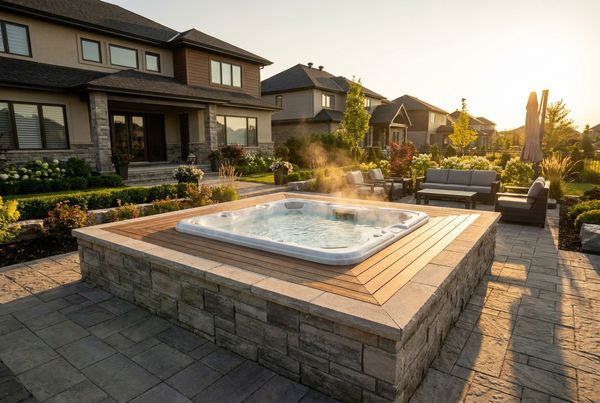
A hot tub is the ultimate small-yard water feature — it delivers the soak, the sound and the ritual of a pool in a footprint the size of a dining table. If your yard is tight, a few moves make it sing.
- Tuck it into a corner or side yard. A spa needs little room and no open swimming space, so the leftover corners a pool can't use are perfect.
- Build up, not out. A raised deck or platform with the spa recessed into it uses vertical space and hides the equipment in the void below.
- Use one screen and one shelter. In a small yard, a single privacy panel and a compact pergola do all the framing you need without crowding.
- Consider a spool instead. If you want to lounge and cool off as well as soak, a compact spa-pool hybrid may be the smarter buy — our spool pool guide compares the two, and the small pool ideas guide covers tight-yard water options in general.
For wellness-minded owners, the small-yard spa also pairs naturally with cold-water immersion — a hot soak followed by a cold plunge is the ritual driving a lot of 2026 backyard design. Our cold plunge pool guide covers the cold half of that routine.
Choosing the right size and features
The most common regret I hear isn't about the setting — it's about the spa itself. People buy the biggest tub the deck will hold, imagining crowds, and then soak alone or in pairs 90% of the time in a spa that costs more to heat and takes longer to warm. My advice runs the other way: a 4-to-6-seat spa is the sweet spot for most households. It heats faster, costs less to run, fits more yards, and still handles the occasional guest. Reserve the 8-seat monsters for people who genuinely entertain in the water.
Beyond seat count, look at the things you'll actually feel. Jet placement matters more than jet quantity — a well-designed dozen beats a poorly aimed forty. Sit in a wet-test model if you can, because ergonomics vary wildly between brands. Prioritize a lounger seat if you like to recline, good insulation and a quality cover because that's what controls running cost, and efficient equipment. If you're torn between a soaking spa and something you can also cool off and move in, our spool pool and swim spa guides compare the hybrids that split the difference.
Year-round use and winter care
The whole argument for a hot tub is that it earns its keep in the months a pool sits idle, so a little winter planning pays off enormously. A spa is genuinely a cold-weather machine — there's nothing better than a hot soak with snow falling — but it depends on two things: keeping the water hot efficiently and never letting it freeze. In cold climates, the counterintuitive rule is to keep the spa running through winter, not drain it, because circulating heated water is what protects the plumbing from freeze damage. If you do close it down, it has to be done thoroughly.
Day to day, the cover is everything. A tight, well-fitting cover holds heat, keeps out snow and debris, and is the single biggest factor in your winter bill — treat it as a wear item and replace it when it sags or waterlogs. A pergola or shelter overhead cuts wind and keeps snow off the cover, extending how comfortably you use the spa in rough weather. And for the wellness crowd, winter is peak season for the hot-soak-then-cold-plunge ritual — our cold plunge pool guide covers the cold half if you want to build the full contrast routine.
Is a backyard hot tub worth it?
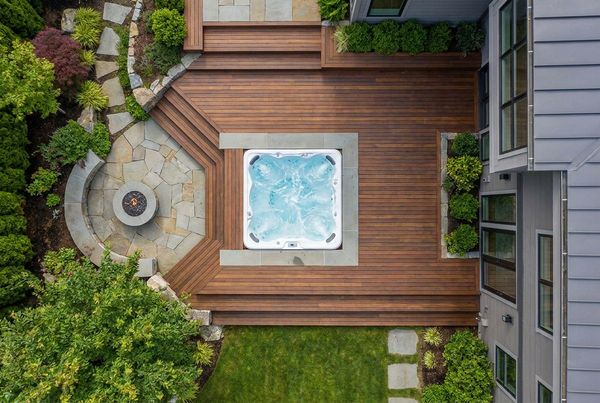
For most yards, yes — and it's one of the highest-satisfaction dollars in backyard design because you use it in the seasons a pool sits idle. The honest trade-offs: a portable left bare looks cheap, running costs are real if you neglect the cover, and a badly placed spa gets abandoned. Every one of those is a design and planning problem, not a reason to skip it.
Our advice is simple. Decide your path first — portable for value and flexibility, in-ground for permanence, spillover if you have a pool. Then spend real attention on the setting: get it close to the house, give it a deck or surround, screen it for privacy, put something overhead, and light it warmly. Insulate well and buy a good cover. Do those things and a spa stops being a plastic box and becomes the spot everyone gravitates to after dark. When you're ready to build, our pool builder near me guide helps you find someone who's done spas well, and the full spillover spa guide is the next stop if yours will tie into a pool.
Design Gallery
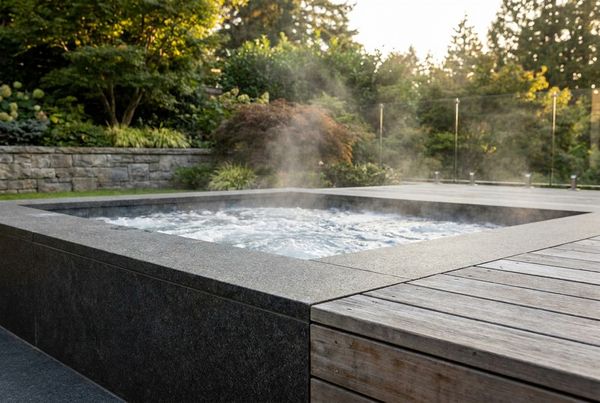
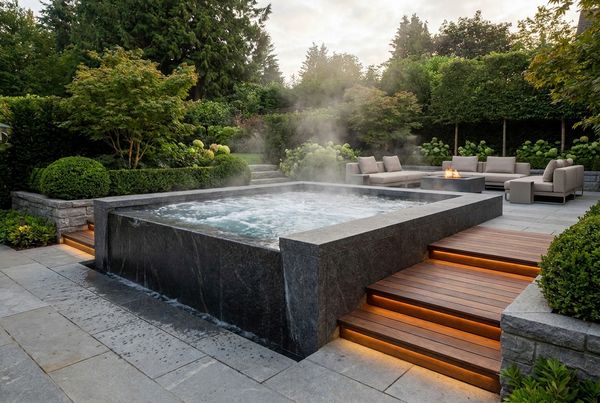
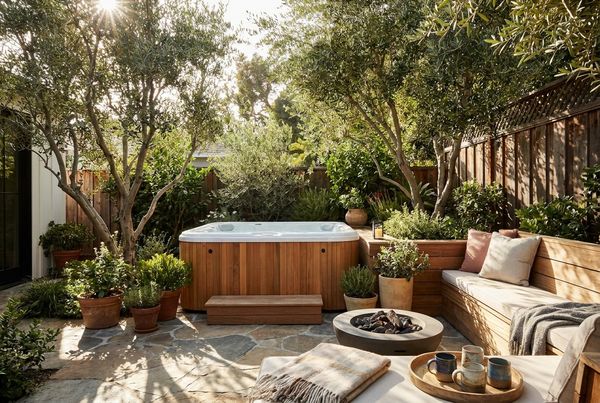
8 more ideas to save — tap any photo to view full screen.

Kelly E.
Pool Design Editor, PoolPad
Kelly has spent 10+ years around residential pools — planning projects, testing gear, and documenting backyard builds for PoolPad. Each design guide is checked against current construction methods and material pricing.
Frequently Asked Questions
What is the difference between an in-ground hot tub and a portable one?
How much does a backyard hot tub cost?
How much does it cost to run a hot tub?
Where should I put a hot tub in my backyard?
Do I need a deck or surround for a hot tub?
Can I put a hot tub next to my pool?
How do I keep hot tub water clean and balanced?
Is a saltwater hot tub worth it?
How do I keep running costs down in winter?
Do I need a fence or barrier around a hot tub?
Ready to build your dream backyard?
Compare local, vetted pool builders and get matched with pros who can bring these designs to life.
Find a Pool Builder Near You