



Key Takeaways
- Waterline tile is where nearly every pool spends its tile budget — a 6-inch band that reads as the pool's whole finish from a lounge chair.
- Glass tile is the premium pick for depth and shimmer; porcelain and stone deliver most of the look for far less.
- Color drives the water effect — lean darker and richer than you think, because water and sky wash everything lighter.
Tile is the piece of jewelry on a pool — a thin band or a full skin that decides whether the water looks *expensive* or ordinary. The best **pool tile ideas** aren't about covering the most surface; they're about putting the right material, color, and pattern exactly where the eye lands. Get the waterline right and a modest pool punches well above its budget.
Waterline, accent, or full-tile: where tile goes
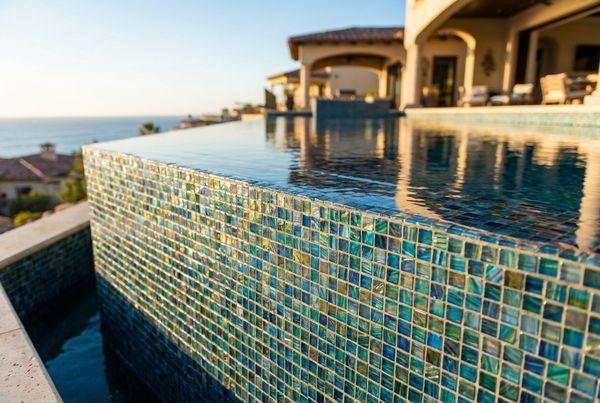
Before you fall in love with a tile, decide where it's going — because that choice drives everything else. There are really three levels of pool tile, and they cost wildly different amounts.
The waterline tile is the default and, for most pools, the only tile they'll ever have. It's a band, usually about six inches tall, that runs around the entire perimeter right at the water's surface. It does real work — it protects the plaster or pebble finish from the scale, sunscreen, and body oils that collect at the waterline, and it's dramatically easier to scrub than a plaster wall. But it's also the most visible finish on the whole pool. From a lounge chair, that six-inch stripe is the pool. Spend your money here.
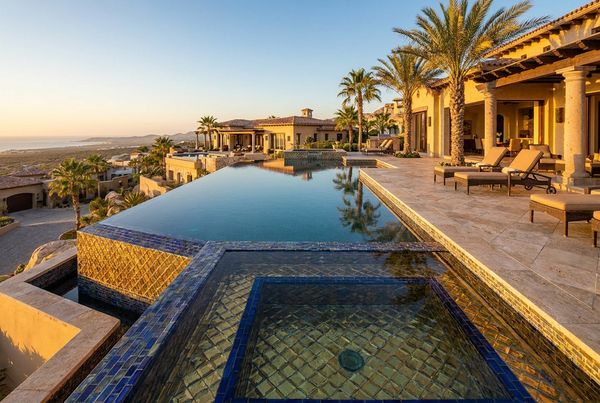
Accent tile goes a step further: tiled steps, a tiled spa, a tiled tanning ledge, a mosaic on the pool floor, or a tiled raised bond beam or spillway. These are the moments that photograph well and give a pool character without tiling the entire interior. A tiled spa that spills into the pool, in particular, is one of the highest-impact accents you can do. Full-tile pools — where the entire interior is clad in tile rather than plaster or pebble — are the luxury tier, most often done in glass, and they're stunning and expensive in equal measure. We'll get into when that's worth it below. If you're weighing tile against a plaster or aggregate interior, our pebble pool finish guide covers the alternative most owners choose for the interior itself.
Tile materials compared: glass, porcelain, stone, mosaic
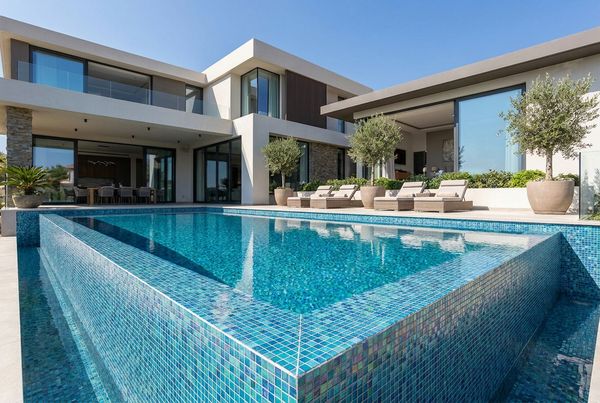
Material is where the look and the budget both live. Four families cover almost every pool.
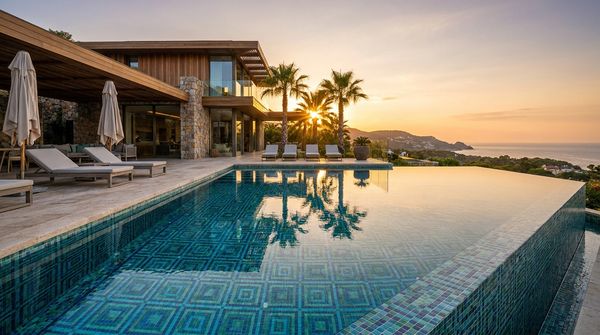
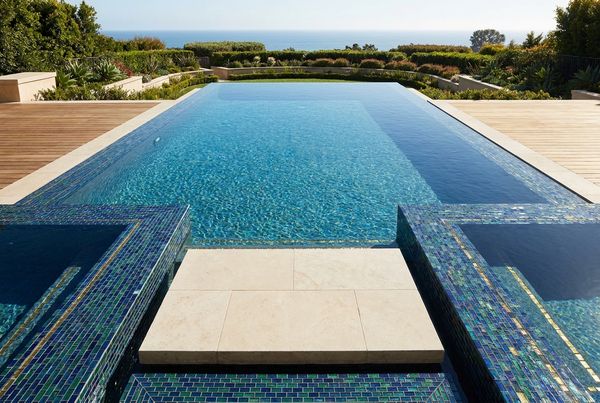
Glass tile is the premium choice, and for good reason. Light passes into it and bounces back, so it has a depth and shimmer — an almost liquid quality — that nothing else replicates. It's non-porous, resists staining and chemicals beautifully, and comes in jewel-tone blues, greens, and iridescent finishes that look incredible underwater. The catch is price and installation: glass demands a skilled installer and the right setting materials, and it's the most expensive family by a wide margin. Our dedicated glass tile pool guide goes deep on it.
Porcelain and ceramic are the workhorses and where most pools land. Frost-rated (freeze-proof) porcelain is dense, tough, and available in an enormous range of colors, patterns, and even convincing stone- and wood-look finishes. It gives you most of the look of pricier materials at a fraction of the cost. Natural stone — travertine, quartzite, and specialty pebble tiles — brings organic warmth that suits Mediterranean, desert, and tropical designs; it needs sealing and careful selection for freeze resistance, but nothing else reads quite as earthy. Mosaic tile isn't a material so much as a format — small tiles (glass, porcelain, or stone) mesh-mounted in sheets — and it's how you get penny-rounds, blends, and intricate patterns. Here's the quick comparison:
| Material | Look | Durability | Relative cost |
|---|---|---|---|
| Glass | Deep, shimmering, jewel-like | Excellent; non-porous | $$$$ |
| Porcelain / ceramic | Versatile; any color or pattern | Excellent; dense & hard | $$ |
| Natural stone | Organic, earthy, textured | Good; needs sealing | $$$ |
| Mosaic (mixed) | Detailed, patterned, blended | Varies by material | $$–$$$$ |
Color and the water effect
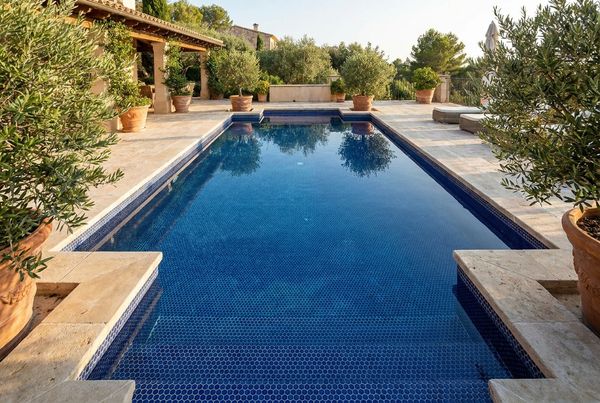
The single biggest mistake people make with pool tile is choosing color from a sample held in their hand, in a showroom, in daylight. Underwater and under an open sky, that tile will behave completely differently. This is the water effect, and understanding it is the whole game.
Two things happen once tile is submerged and surrounded by water. First, water and reflected sky wash everything lighter and shift it bluer — a tile that looks like a rich teal on the counter can read as a washed-out pale blue in the pool. Second, the interior finish behind and around the tile stacks with the tile color: a dark plaster or dark pebble interior deepens and saturates everything, while a white interior brightens it. The practical rule we give every client: choose a shade or two richer and darker than feels right in the store. People almost never regret going deeper; they frequently regret going too light.
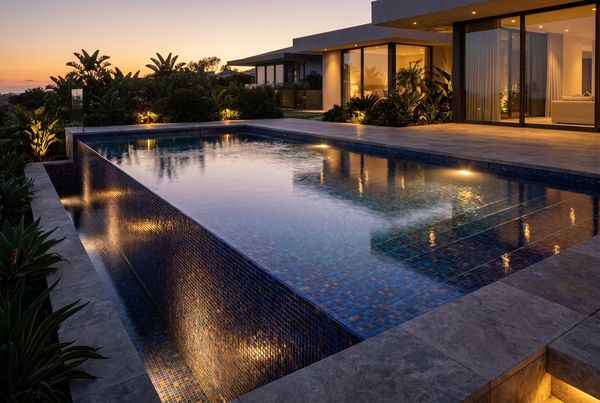
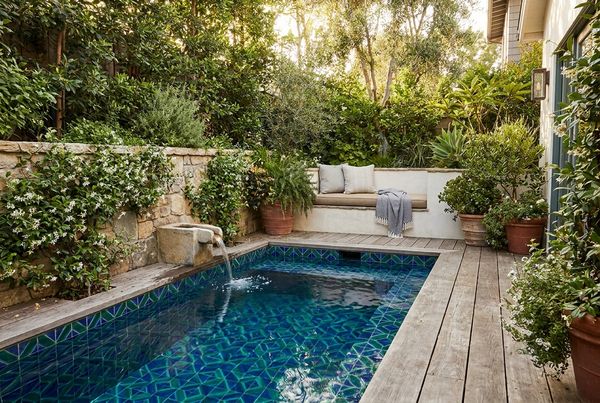
For the color itself, blues, teals, and turquoise reinforce the classic postcard-blue pool. Whites and pale grays read crisp, modern, and architectural but lean on the sky to do the coloring, so they can look flat on gray days. Greens push tropical and lagoon. And dark tile — charcoal, deep navy, near-black — is having a real moment, especially paired with a dark-bottom finish for a mirror-like, reflective surface. If a bold, modern water color is the goal, our modern pool designs guide shows how tile choice ties into the whole aesthetic.
What we think
If we were spending our own money, we'd put every extra tile dollar into a glass waterline band and a fully tiled spa, then keep the pool interior a good dark pebble finish. That combination gives you the shimmer and jewelry-box detail where people actually look — the waterline and the spa spillover — without the five-figure cost of tiling the entire interior. It's the highest-impact way to make a pool look custom.
Patterns, mosaics, and shapes
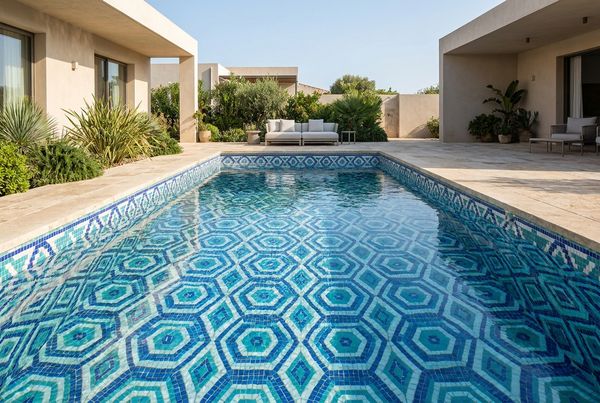
Once material and color are settled, pattern is where personality comes in. The classic 1x1 or 2x2 square mosaic in a solid or blended color is the timeless default — endlessly flexible and it never looks dated. Penny-round tile (small circles) has surged back into fashion for a soft, tactile, slightly retro waterline that catches light beautifully.
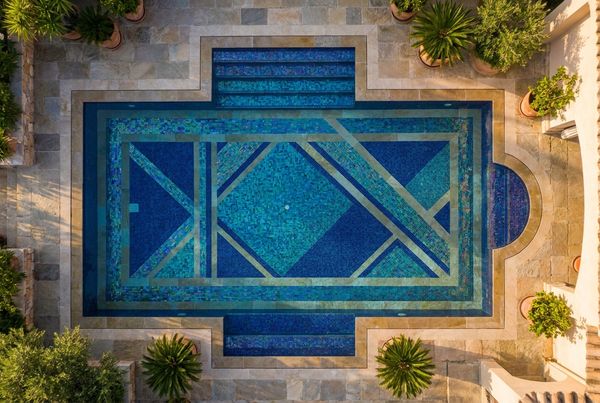
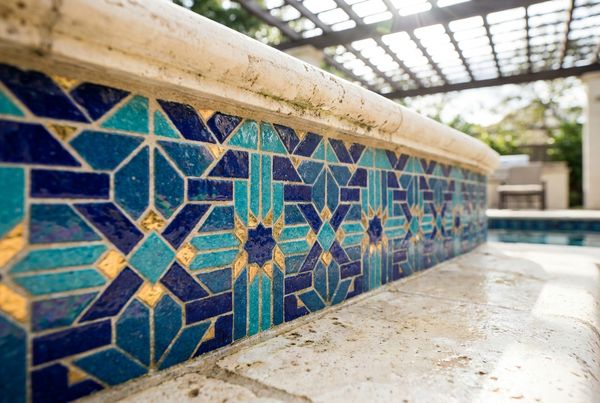
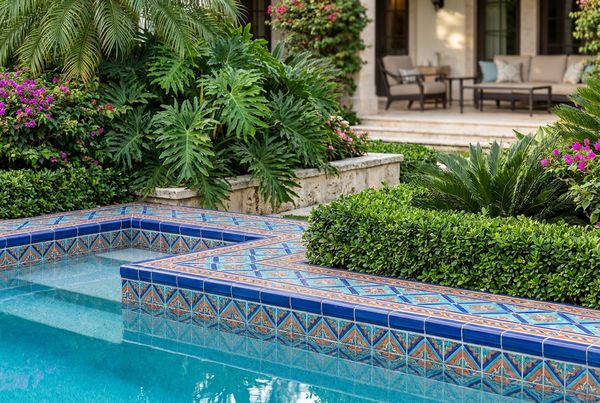
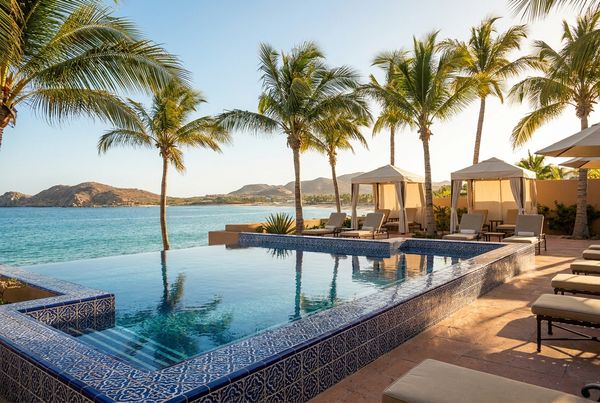
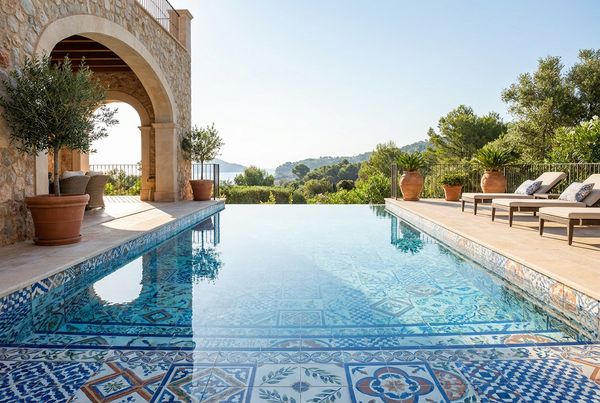
For more character, geometric and patterned tiles — chevrons, hexagons, fish-scale, and Moroccan-inspired shapes — turn a waterline or a spa wall into a design feature. These read best in modern and contemporary designs. Mediterranean and Spanish patterned tile, with hand-painted-look motifs in blue and white, is a whole aesthetic of its own and pairs perfectly with a Mediterranean backyard of stucco, terracotta, and arches. And don't overlook blends — mesh sheets that mix two or three tones of the same family — which give a waterline subtle movement and depth that a single flat color can't.
A word of restraint: pattern is powerful, so use it in one or two places, not everywhere. A bold patterned waterline with a busy mosaic floor and a patterned spa competes with itself. Pick the hero — usually the waterline or the spa — and let the rest stay quiet.
Pool tile cost per square foot
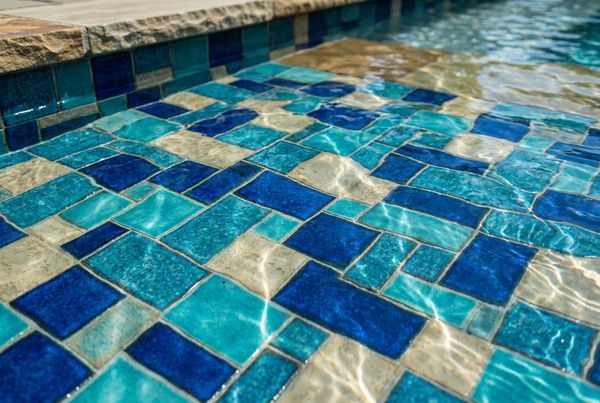
Tile cost is best understood two ways: the price per square foot of the material, and the total for the area you're tiling. Both matter, because the waterline is a genuinely small area — which is exactly what makes a premium tile affordable there.
For materials, expect rough 2026 US ballparks of about $5 to $15 per square foot for ceramic and porcelain, $20 to $60-plus for glass, and $10 to $40 for natural stone depending on type and finish. Installation — labor, setting materials, and grout — commonly adds another $10 to $30 per square foot, and glass and intricate mosaics sit at the high end because they demand more skill.
Now the totals. A standard waterline band on a typical residential pool is only around 40 to 70 square feet, so even a $30-per-square-foot glass tile keeps the whole waterline in the low-to-mid four figures installed. Tiling a spa, steps, and a spillway adds accents in the low four figures. Tiling an entire pool interior in glass, by contrast, can run well into five figures, because you're now covering hundreds of square feet with the priciest material and the most demanding install. For where tile fits in the overall budget, our inground pool cost guide has the full breakdown.
| Scope | Typical area | Ballpark installed (2026 US) |
|---|---|---|
| Waterline band (porcelain) | ~40–70 sq ft | Low four figures |
| Waterline band (glass) | ~40–70 sq ft | Mid four figures |
| Waterline + tiled spa & steps | Add ~80–150 sq ft | Mid-to-high four figures |
| Full glass-tile interior | 300–600+ sq ft | Five figures |
Durability and maintenance
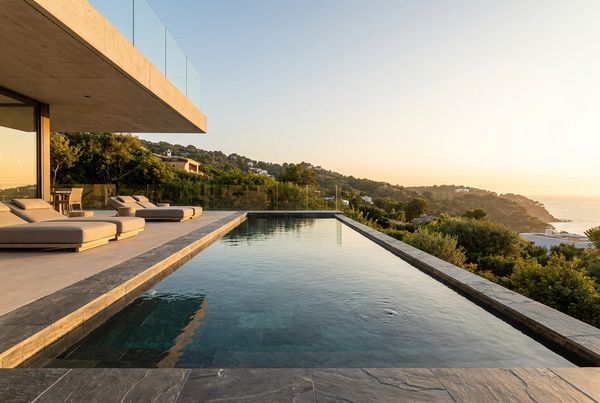
Pool tile lives a hard life — permanently submerged or splashed, exposed to chemicals, sun, and in much of the country, winter freeze-thaw cycles. The good news is that quality tile is one of the most durable finishes in the whole pool, easily outlasting plaster.
The non-negotiables: use frost-rated (freeze-proof) tile rated for pools anywhere winters drop below freezing, and use the correct setting materials and grout designed for constant submersion. Glass and porcelain are non-porous and shrug off staining and chemical exposure; natural stone is porous and needs periodic sealing to resist etching and staining. The real long-term wear point on any mosaic isn't the tile — it's the grout, which over many years can loosen or discolor and occasionally needs re-pointing.
Day to day, waterline tile is the easiest part of the pool to keep clean. That scale and oil line that would etch permanently into plaster simply scrubs off tile with a soft brush and a tile cleaner. The best prevention is balanced water chemistry — keeping calcium hardness and pH in range stops most scale from forming in the first place. A saltwater system is gentle on tile and grout; if you're going that route, our saltwater pool guide is worth a read.
Where to splurge and where to save
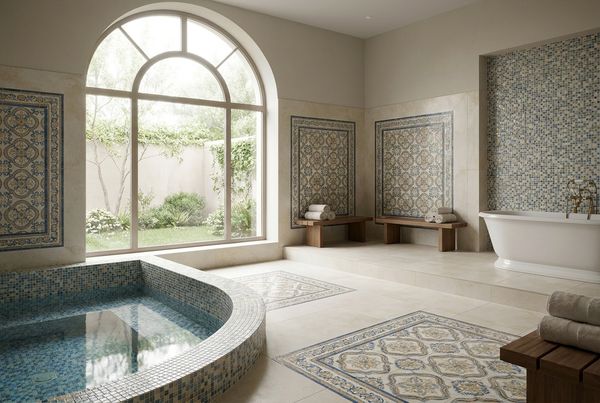
Not every square foot deserves the same budget, and knowing where to spend is what separates a smart tile plan from an expensive one. Our advice: splurge where people look and touch, save where they don't.
Splurge on the waterline — it's small, it's the most visible finish on the pool, and a premium glass or blended mosaic here transforms the whole look for a manageable sum. Splurge on the spa, especially any spillway, because that's a focal point people gather around and photograph. And splurge on a single hero accent if your design calls for one — a mosaic on a raised wall or a patterned spillway. Save by keeping the pool interior a good plaster or pebble finish rather than full tile; the interior is seen through moving water and the return on full-tile is largely for luxury builds. Save by choosing porcelain that mimics stone or high-end glass for secondary areas. And save by resisting the urge to pattern everything — restraint is free and usually looks better.
One more place tile choice pays off: coordinate it with the coping. The band of coping at the pool's edge and the tile just below it are seen together, and getting them to complement each other does more for the finished look than any single splurge. Our pool coping ideas guide covers how to pair the two.
2026 pool tile trends
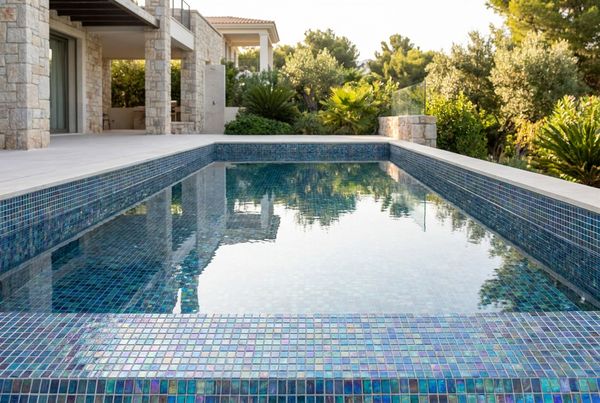
Tile taste moves slowly, but a few clear directions define 2026. The biggest is full glass-tile pools at the luxury end — as installation techniques improve and jewel-tone glass becomes more available, more high-end builds are cladding the entire interior in glass for that unmistakable shimmering, resort-grade water.
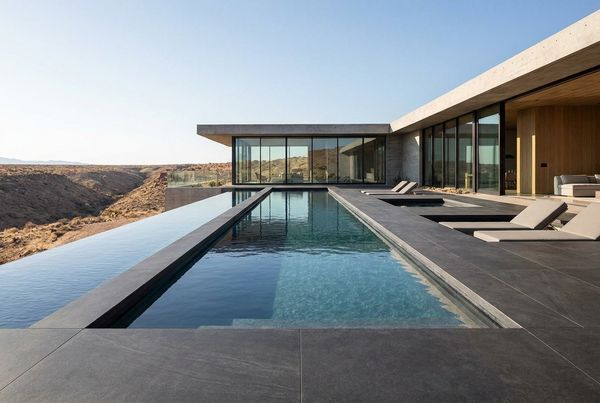
Right behind it: iridescent tile. Finishes that shift color as light and water move across them — pearlescent blues, greens, and even neutrals — add a living, changing quality that owners love, and they pair especially well with bold LED lighting after dark (see our pool lighting ideas). The third major direction is dark tile — charcoal, deep navy, and near-black waterlines and interiors that create a sleek, reflective, mirror-like surface. It's the natural companion to the softened-geometric shapes, dark finishes, and clean modern lines defining backyards right now, and it looks razor-sharp against light coping and a minimalist deck.
Beyond those three, we're seeing natural, textured looks — stone and pebble-effect tile for organic and desert designs — and oversized-format and blended waterlines that trade fussy tiny mosaics for calmer, more architectural bands. Whichever way you lean, tile is increasingly treated as a deliberate design choice rather than an afterthought, tied into the whole scene of lighting, water features, and coping.
What we think
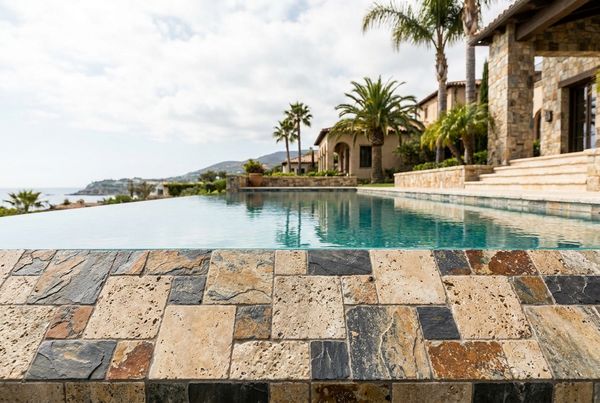
If we had to distill it: spend your tile budget on the waterline and the spa, choose a shade richer than you think, and coordinate it with the coping. A beautiful glass or blended-mosaic waterline over a dark pebble interior will out-class a fully tiled pool done in a timid, washed-out color every time — for a fraction of the cost.
The 2026 trend line is clear: full glass tile at the top, iridescent and dark finishes everywhere, and tile treated as intentional jewelry rather than a plain protective band. Start with the waterline, add the spa, pick one hero accent, and let the rest stay quiet. For how tile fits alongside every other finish and feature, browse the full pool design ideas hub — it ties the waterline to the water, the light, and the deck.
Should you install pool tile yourself?
Pool tile is one of those jobs that looks DIY-able and usually shouldn't be. A short stretch of above-water waterline tile on a small pool is within reach for a genuinely skilled tiler who's done submerged work — but everything that makes pool tile different from a kitchen backsplash is where beginners come undone. It has to be set with the right waterproof thinset and grout rated for constant submersion, the surface prep has to be right or the tile pops loose within a season, and glass and mosaics in particular are unforgiving of an uneven hand. A failed waterline that has to be redone costs far more than doing it once, properly.
My honest take: for a waterline refresh on an existing pool, hire a pool-tile specialist rather than a general tiler, because the setting materials, the freeze-rating, and the underwater conditions are a specialty. If tile is going in as part of a new build or a remodel, it's already part of the crew's scope and the pool is drained anyway — the ideal time to do it and the cheapest, since the setup cost is shared with the resurface. The one place DIY makes real sense is choosing the tile: bring samples home, look at them wet, and hold them against your coping before you commit.
Repairing and replacing pool tile
Even good tile eventually needs attention, and knowing what's normal saves you from over-reacting. The most common issue isn't the tile at all — it's the grout, which over many years can discolor, loosen, or wash out and need re-pointing. That's routine maintenance, not failure. A single cracked or popped tile is usually a straightforward fix too: pull it, clean the substrate, and reset a matching piece, which is exactly why ordering a few extra tiles at install and boxing them away is one of the smartest cheap things you can do.
Widespread tile loss is a different signal. When tiles are letting go all along the waterline, it often points to a bigger cause — freeze-thaw damage from tile that wasn't freeze-rated, chronically unbalanced water etching the grout, or movement in the shell. In that case you're looking at re-tiling the whole band rather than spot repairs, which is best folded into a resurface while the pool's drained. Scale buildup that looks like damage is frequently just hard-water deposit that a proper tile cleaning lifts right off, and the way to stop it recurring is balanced chemistry — keeping calcium hardness and pH in range. If you're fighting persistent scale or staining at the waterline, get your numbers dialed with our pool calculator before you assume the tile itself has a problem.
Design Gallery
7 more ideas to save — tap any photo to view full screen.

Kelly E.
Pool Design Editor, PoolPad
Kelly has spent 10+ years around residential pools — planning projects, testing gear, and documenting backyard builds for PoolPad. Each design guide is checked against current construction methods and material pricing.
Frequently Asked Questions
What is the best tile for a pool?
Do all pools need waterline tile?
How much does pool tile cost?
Is glass tile worth it for a pool?
What color pool tile makes water look blue?
Does pool tile require a lot of maintenance?
Can I install pool tile myself?
How do I fix cracked or falling pool tile?
Why does my pool tile keep getting a white scale line?
What's the cheapest way to update the look of my pool tile?
Ready to build your dream backyard?
Compare local, vetted pool builders and get matched with pros who can bring these designs to life.
Find a Pool Builder Near You