



Key Takeaways
- A swim spa is a compact, self-contained unit — roughly 12–19 ft long — with a powerful current you swim against in place, so it fits where a full pool never could.
- Most swim spas run $15,000–$45,000 installed in 2026, plus real running costs — budget for heating a body of water you use year-round.
- The killer feature is dual use: swim against the current, then move to the seated end and it's a hot tub — real fitness and a soak in one small footprint.
A swim spa is the ultimate backyard compromise — in the best possible sense. It swims like an endless pool, soaks like a hot tub, and does both in a footprint smaller than a single parking space. For the growing number of homeowners who want real exercise and real recovery but don't have the yard, the budget, or the appetite for a full pool build, it's often the smartest water you can buy. Here's how it works, what it costs, and whether one belongs in your yard.
What is a swim spa?
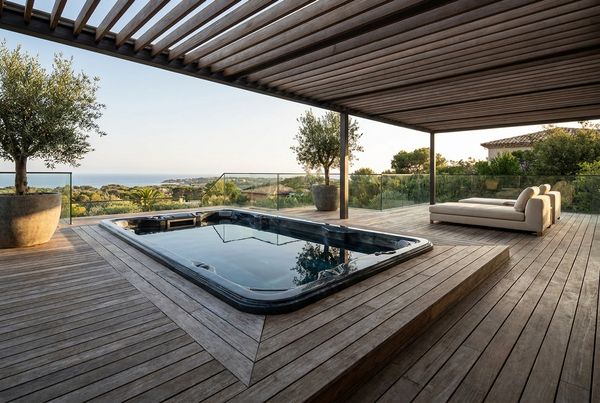
A swim spa is a compact, self-contained water unit built around one clever idea: instead of swimming across a long pool, you swim against a current in a short one. A powerful propulsion system pushes a steady stream of water toward you, and you swim into it, staying in place — an endless swim in a body of water only 12 to 19 feet long. Most units add heated benches and massage jets at one end, so the same shell doubles as a hot tub.
That combination is why swim spas have moved from a niche fitness gadget to a mainstream backyard feature. You get genuine lap-style exercise, a warm soak for recovery, and a heated body of water you can use year-round — all in a footprint that fits a courtyard, a deck, or a corner of a small yard. It's the closest thing to a lap pool and a hot tub rolled into a single, pre-built unit, which is exactly the appeal for anyone short on space or patience for a construction project.
How the swim current works
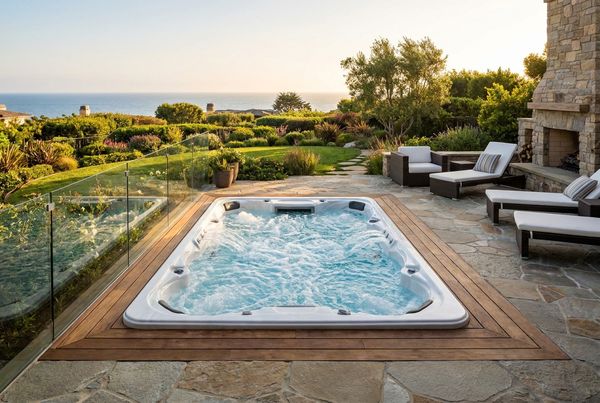
The current is the whole point of a swim spa, and the quality of that current is what separates a great unit from a frustrating one. There are two main ways brands generate it, and the difference matters more than any other spec.
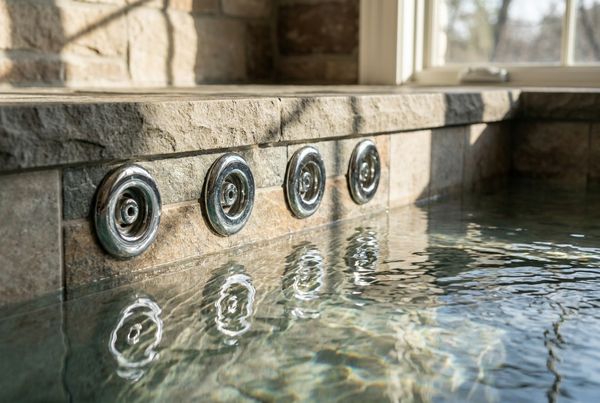
Jetted systems use one or more high-flow jets to push water toward the swimmer. They're common and affordable, but a narrow jet stream can feel turbulent — a fast, bubbly channel you have to fight to stay centered in. Propeller (or "gyro") systems move a much larger volume of water more slowly, creating a wide, smooth, river-like flow that feels far more natural to swim against. Propeller units cost more, and they're worth it if you plan to swim seriously.
| Current type | Feel | Best for |
|---|---|---|
| Single jet | Fast, narrow, turbulent | Budget builds, casual use |
| Multi-jet | Stronger, wider flow | Regular swimmers on a budget |
| Propeller / gyro | Wide, smooth, river-like | Serious daily swimmers |
Current is adjustable on almost every unit — the speed dials up or down for your pace.
Two honest caveats. First, swimming against a current takes practice — expect a few sessions before your stroke and the flow sync up. Second, current quality varies enormously between brands, and it's nearly impossible to judge from a spec sheet. Try before you buy if there's any way to do it; a test swim tells you more than any brochure.
Swim spa vs. lap pool vs. pool
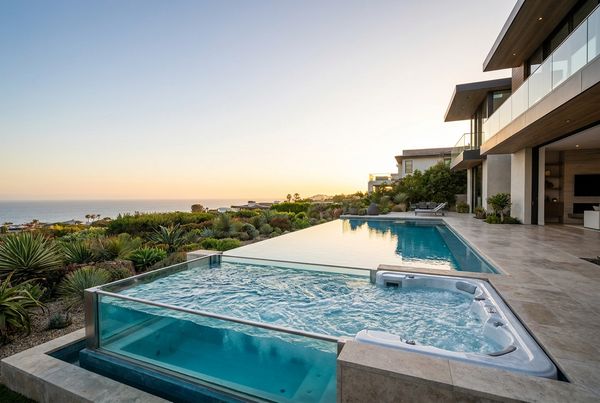
The most useful way to place a swim spa is against its two closest rivals: the lap pool and the conventional pool. Each is right for a different yard and a different goal.
| Swim spa | Lap pool | Conventional pool | |
|---|---|---|---|
| Footprint | 12–19 ft unit | 40–75 ft lane | Large, roughly square |
| Installed cost* | $15k–$45k | $45k–$110k | $60k–$150k+ |
| Install time | Days | Weeks–months | Months |
| Year-round use | Yes (heated) | Seasonal unless heated | Seasonal unless heated |
| Doubles as hot tub | Yes | No | No |
| Room to lounge / play | Limited | Limited | Excellent |
*Ballpark 2026 U.S. ranges; see the full cost guide.
The pattern is clear. If your priority is fitness plus recovery in a small, year-round package, the swim spa is unbeatable. If you have the room and want a longer, more natural swim, a lap pool gives you a real lane — and a short lap pool with a swim jet is essentially a hybrid of the two. And if you want a place to gather, splash, and lounge, nothing replaces a full pool. A swim spa is a specialist, and it's superb at what it specializes in.
What we think
Spend your money on the current, not the cabinetry. Buyers get seduced by touchscreens and speaker systems and then discover the swim feels like fighting a fire hose. A propeller-driven current is the one upgrade that determines whether you actually use the thing every day or let it become a very expensive hot tub. Splurge on flow quality, get a good insulated cover to tame the running cost, and skip the gimmicks. If you're only ever going to soak, buy a hot tub instead and save thousands.
Swim spa cost in 2026
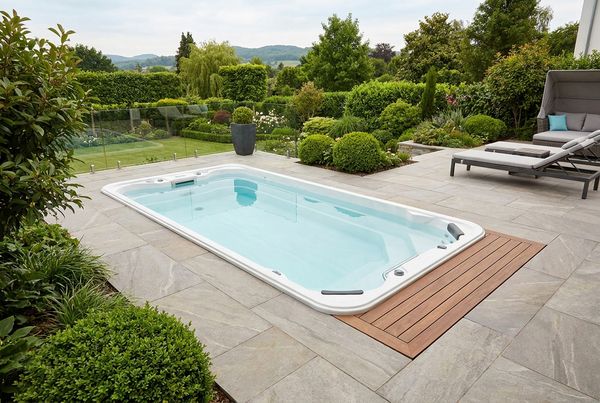
In 2026, most swim spas land between $15,000 and $45,000 installed, and the spread comes down to three things: the unit itself, the current system, and how you install it.
| Setup | Typical spec | Installed cost* |
|---|---|---|
| Entry portable | Single/multi-jet, above ground | $15k–$22k |
| Mid-range | Strong current, dual seating | $22k–$32k |
| Premium / propeller | Gyro current, dual-zone | $30k–$45k |
| Fully in-ground install | Any unit + excavation | Add $8k–$20k |
*Ballpark 2026 U.S. ranges; delivery, site access, pad/decking, and electrical move the number.
Beyond the unit price, budget for the things people forget: a reinforced pad or reinforced deck (a full swim spa can weigh several tons filled), a 240V electrical hookup, delivery and crane placement, and any surround or decking. Those extras routinely add a few thousand dollars even on an above-ground install. Compared with building a pool, though, a swim spa is still dramatically cheaper and faster — our inground pool cost guide shows just how wide that gap can be.
Running costs & energy use
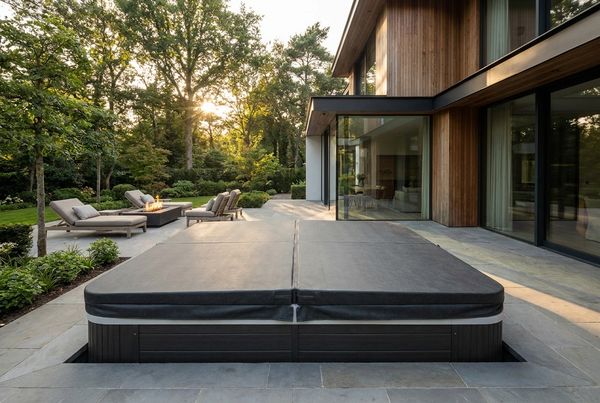
Here's the part buyers most often underestimate: a swim spa is a heated body of water you keep warm year-round, so it has a real ongoing cost. Expect a monthly electricity impact somewhere in the range of $30 to $100+, depending on your climate, how warm you keep it, how much you swim, and — crucially — how well the unit is insulated.
The biggest lever by far is the cover. A thick, well-fitted insulated cover keeps heat in when the unit isn't in use, which is most of the time. A cheap or worn cover can double your heating bill. After that, look for full-foam insulation in the cabinet, an energy-efficient heat pump rather than a basic element, and a location sheltered from wind. Add routine water care — a swim spa uses less chemical than a pool simply because it holds less water — and the ownership math stays reasonable. Just go in with eyes open: this is not a "fill it and forget it" purchase.
Above-ground vs. in-ground install
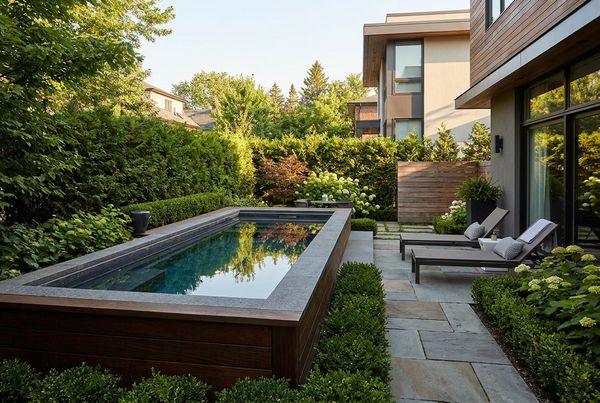
One of the swim spa's best features is install flexibility, and the choice mostly comes down to budget versus looks.
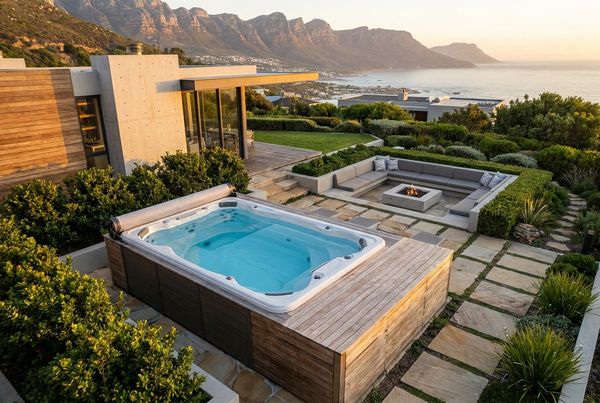
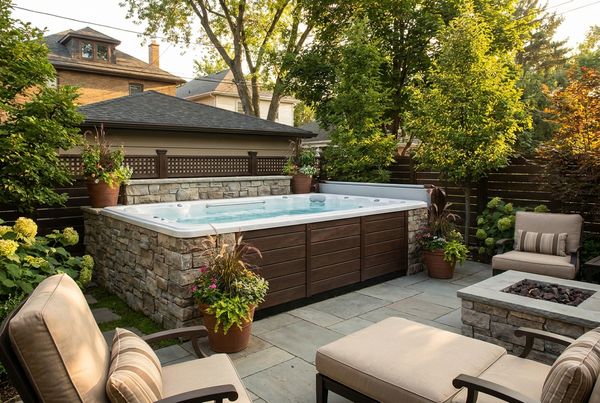
Above-ground is the fast, affordable default. The unit sits on a level, reinforced pad or a purpose-built deck — no excavation, no engineering, no permits in many areas beyond the electrical. You can be swimming within days of delivery, and if you move, some owners even take it with them. The tradeoff is the look: a raised box needs thoughtful surround, decking, or a cabinet to keep it from reading as an appliance in the yard.
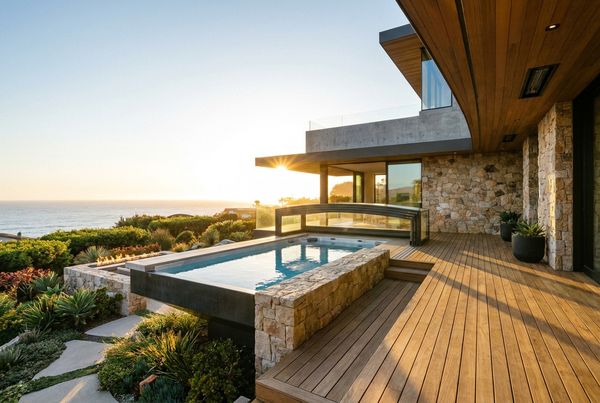
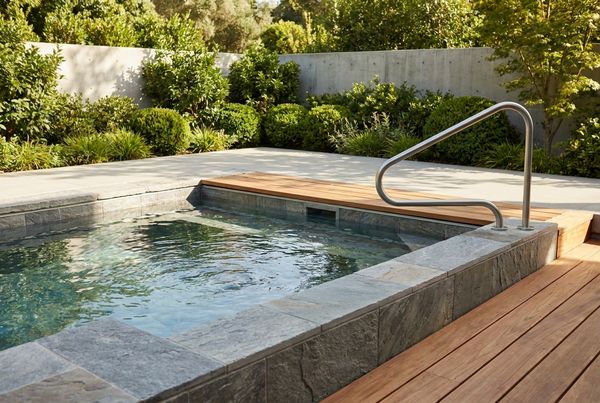
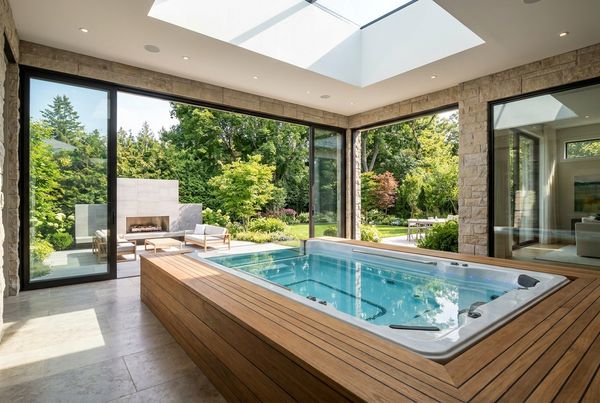
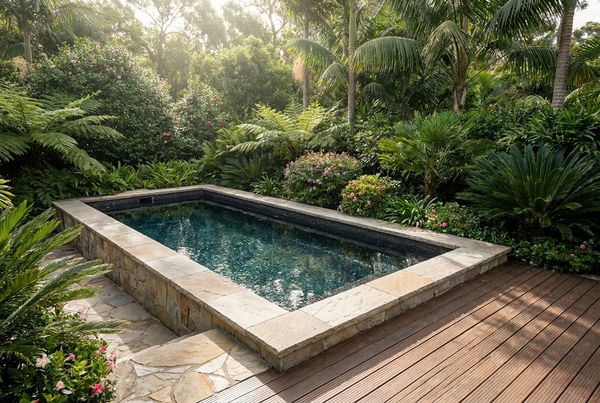
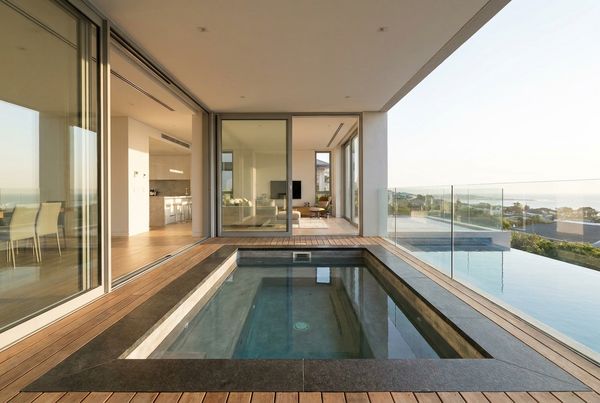
In-ground drops the unit into an excavated, engineered pit so it sits flush with the deck, looking every bit as built-in as a pool. It's far more attractive and integrates beautifully with a patio, but you're adding excavation, structural support, drainage, and often permits — typically $8,000 to $20,000 on top of the unit. A popular middle path is partially recessed: dropping the unit a foot or two so you step in naturally and it looks lower-profile, without the cost of a full in-ground build. Whatever the depth, pairing the surround with good pool deck ideas is what makes a swim spa look intentional.
Dual-zone swim + hot tub options
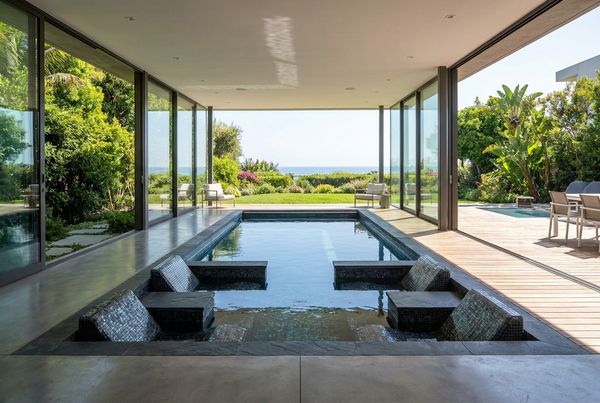
For a lot of buyers, this is the feature that seals the deal. Nearly every swim spa includes a seated zone at one end with heated benches and massage jets, so you swim your set against the current and then slide over to soak sore muscles — a full workout-and-recovery ritual in one unit. It's why a swim spa can genuinely replace a separate hot tub.
Dual-zone (or "dual-temp") models take it further with two physically separate sections and independent heating: a swim channel kept at a cooler, comfortable swimming temperature, and a hot-tub section held at a proper 100–104°F soak. You get both at once, without compromising either. There's even a wellness angle here — some owners run the swim zone cool for a mild cold-water dip after a warm soak, a light take on contrast therapy. For the full cold-water version, our cold plunge pool and plunge pool ideas guides go deeper. Dual-zone units cost more and use more energy running two temperatures, but for anyone who wants swim, soak, and recovery in a single footprint, they're the sweet spot.
Small yards & year-round swimming
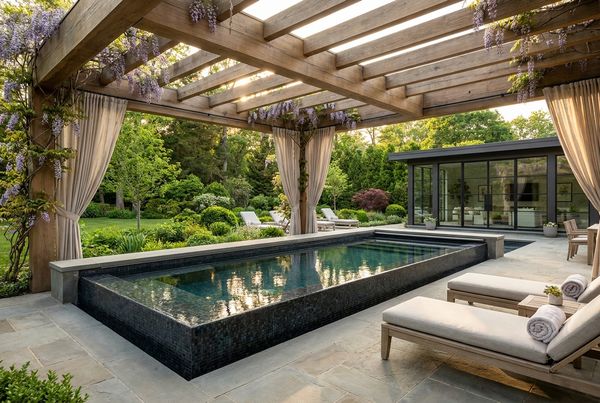
The two arguments that win most swim spa buyers over are space and season.
On space: a swim spa delivers real swimming in a footprint where a pool is simply impossible — a small courtyard, a corner of a modest yard, a rooftop deck. It's the answer for the homeowner who wants fitness swimming but has 200 square feet, not 2,000. If a full pool won't fit but you still want to swim, the swim spa is often the only realistic route.
On season: because it's compact and heated, a swim spa is genuinely a four-season water. While a pool sits covered and cold half the year, a swim spa stays swim-ready in January. A few moves stretch that even further — a pergola or partial enclosure adds shelter, a windbreak of planting cuts heat loss, and a well-lit surround makes a dark winter evening feel inviting. Used year-round, the running cost stops feeling like an expense and starts feeling like a membership you actually use.
Water care and upkeep
A swim spa is easier to maintain than a pool for one reason — it holds far less water — but that same small, warm volume swings chemistry faster, so the routine is different rather than lighter. Warm water burns through sanitizer more quickly than cool pool water, and a swim spa gets concentrated body oils and sunscreen from regular use, so you'll test more often even though you're dosing less. The habit that keeps it painless is knowing your exact gallons and dosing to that number; a reliable test kit and a couple of checks a week is really all it takes.
Filtration and circulation matter more than people expect. Run the pump enough to turn the water over fully each day, rinse or replace the cartridge on schedule, and the current jets stay strong and the water stays clear. Many owners run a salt or mineral sanitizer for gentler water on daily-swim skin — a saltwater system trickles chlorine in steadily instead of in big manual swings, which suits a small warm volume well. And because you keep it heated year-round, a periodic drain-and-refill (rather than a seasonal closing) is the rhythm to plan around.
Planning the site: pad, power and delivery
The unit price is only part of the story — where and how you set a swim spa down drives real cost and hassle, and it's the part first-time buyers most often underestimate. A filled swim spa can weigh several tons, so it needs a reinforced, dead-level pad or an engineered deck rated for that load; a standard patio slab usually isn't enough. Get the base right before delivery day, because correcting it afterward means draining and moving several tons of spa.
Two more essentials to line up early. First, power: most swim spas need a dedicated 240V circuit run by an electrician, and that hookup is a line item people forget until the unit is sitting in the driveway. Second, delivery and placement: these units are large, and getting one into a fenced or elevated backyard can mean a crane lift over the house — confirm access before you buy. If you're recessing it or building a surround, pairing the install with thoughtful pool deck ideas is what turns a raised box into something that reads as built-in. Sort the pad, the power, and the access up front and the actual install is often just a day.
2026 swim spa & wellness trends
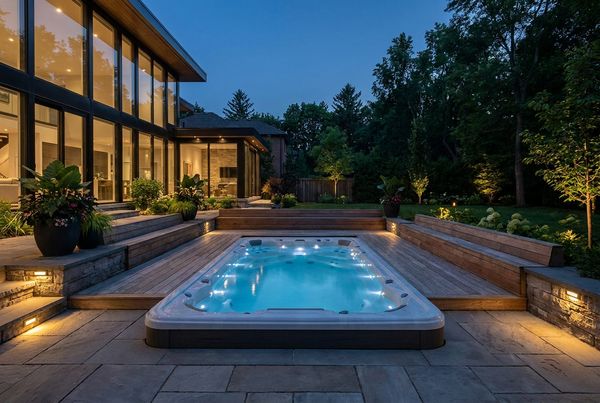
The swim spa sits right in the middle of the biggest backyard story of the moment — the shift toward wellness and year-round outdoor living. A few directions are shaping what people are buying and building in 2026:
- Wellness-driven dual-zone units. The same fitness-and-recovery mindset behind the cold-plunge boom is pushing buyers toward swim-plus-hot-tub combos, and increasingly toward contrast-therapy setups that pair a warm soak with a cool dip.
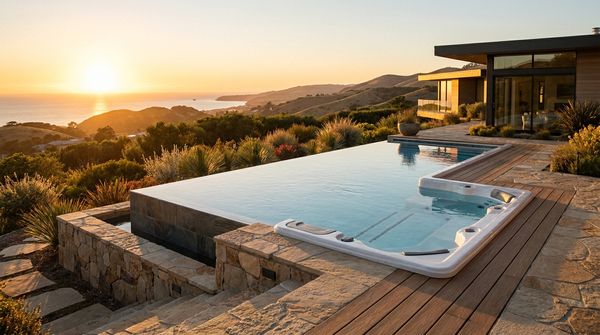
- Flush, built-in installs. In-ground and partially recessed swim spas with tidy decking and cabinetry are winning out over the raised-box look — the goal is a unit that reads as architecture, not an appliance.
- Energy-efficient heating. With running cost front of mind, efficient heat pumps, full-foam insulation, and heavy insulated covers are now selling points rather than afterthoughts.
- Bold lighting and dark shells. LED-lit water and darker shell colors turn a swim spa into an evening focal point — the same design cues that make a modern pool look premium.
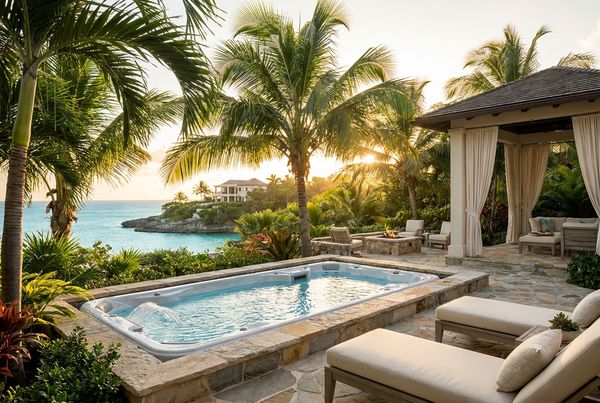
- Small-yard, resort-style corners. Owners are wrapping swim spas in pergolas, planting, and lighting to build a compact wellness zone — a whole retreat in the space a hot tub used to occupy.
The through-line is that the swim spa has grown up. It's no longer a compromise you settle for — it's a considered wellness choice, chosen on purpose by people who want to swim and soak every day of the year without giving up the whole backyard to a pool. If you're weighing it against a built swim solution, read our lap pool ideas guide alongside this one, then browse the full pool design ideas hub before you decide.
Design Gallery
6 more ideas to save — tap any photo to view full screen.

Kelly E.
Pool Design Editor, PoolPad
Kelly has spent 10+ years around residential pools — planning projects, testing gear, and documenting backyard builds for PoolPad. Each design guide is checked against current construction methods and material pricing.
Frequently Asked Questions
What is a swim spa?
How much does a swim spa cost in 2026?
What is the difference between a swim spa and a pool?
Can you install a swim spa above ground or in ground?
Are swim spas hard to swim in?
Can a swim spa replace a hot tub?
How much does it cost to heat a swim spa?
Is a swim spa a spool or a hot tub?
Do swim spas use a lot of chemicals?
Can you use a swim spa as a cold plunge?
Ready to build your dream backyard?
Compare local, vetted pool builders and get matched with pros who can bring these designs to life.
Find a Pool Builder Near You