



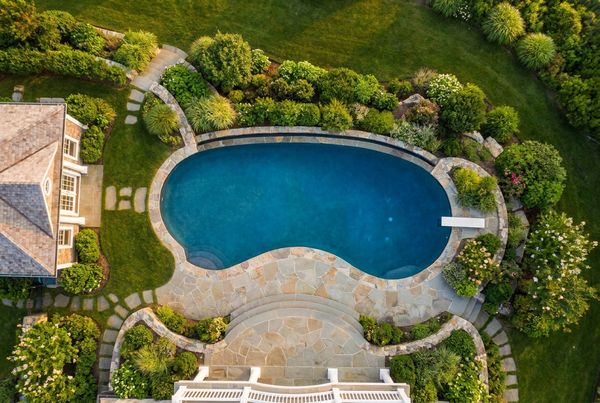
Key Takeaways
- Rectangular and geometric shapes dominate modern design — and they're the most compatible with automatic safety covers and tanning ledges.
- Freeform is resurging for natural, garden-style yards; L-shapes are the smart pick when you want to swim laps and lounge.
- Shape drives cost: simple geometric shells are cheaper to build than heavily curved custom freeforms.
Shape is the first real decision in any pool design — it sets the mood, the budget, and how the whole backyard flows before you've picked a single tile. The good news: there are only a handful of shapes worth knowing, and once you see them side by side from above, the right one for your yard usually becomes obvious. Here's every major pool shape, our honest pros and cons for each, and the ones we'd actually build.
Rectangle — the modern default
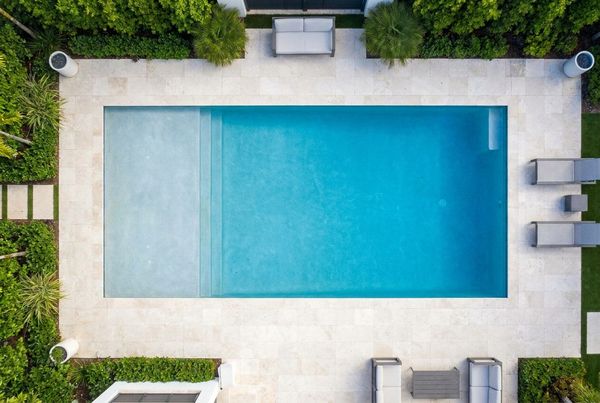
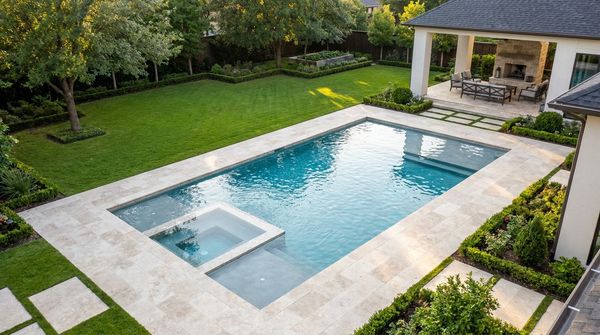
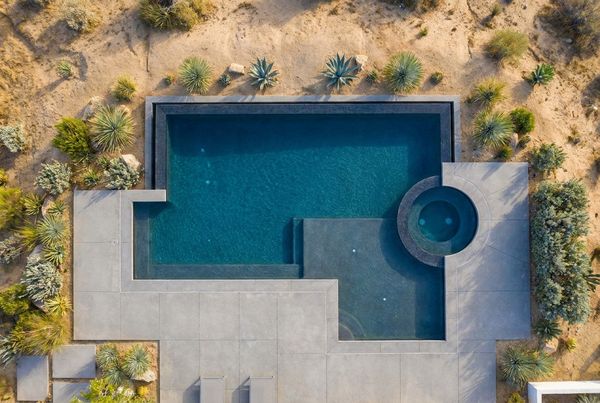
Straight lines, sharp corners, symmetry. The rectangle pool is the backbone of contemporary design, and for good reason — it photographs beautifully, pairs with clean architecture, and is the friendliest shape on earth for the things people actually want: automatic safety covers, lap lanes, and full-width tanning ledges. Nothing else gives you that much usable water per square foot of yard.
Pros: maximum swimmable area, cover-compatible, easy to add a matching square or linear spa, works in nearly any material. Cons: it can read cold or utilitarian if you stop at the shell and skip the details — coping, ledge, and lighting are what make a rectangle sing.
Who it's for: modern and transitional homes, anyone who wants to swim laps, and small or narrow yards where every straight inch counts. It's also the safest resale bet.
The 2026 twist we're seeing everywhere is the softened rectangle — the same crisp footprint but with gently rounded interior corners, a sun shelf, or an offset spa. You keep the clean geometry and lose the hard, boxy feel.
Freeform — the natural, garden look
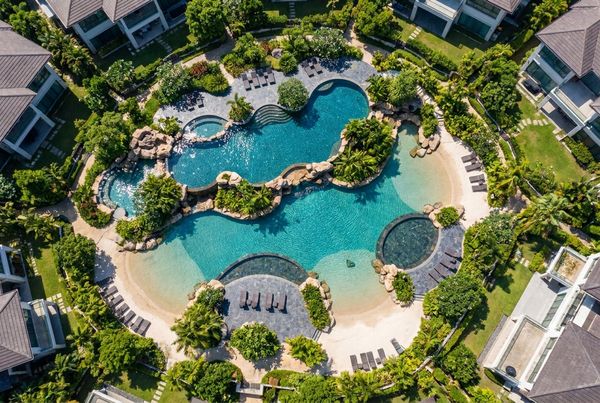
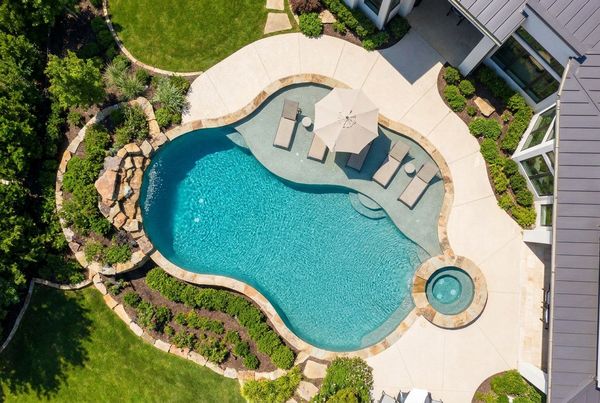
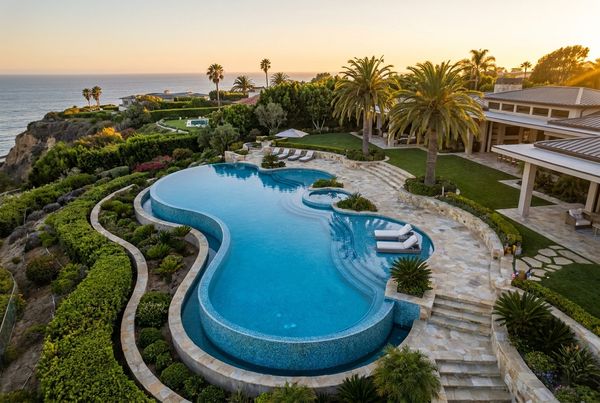
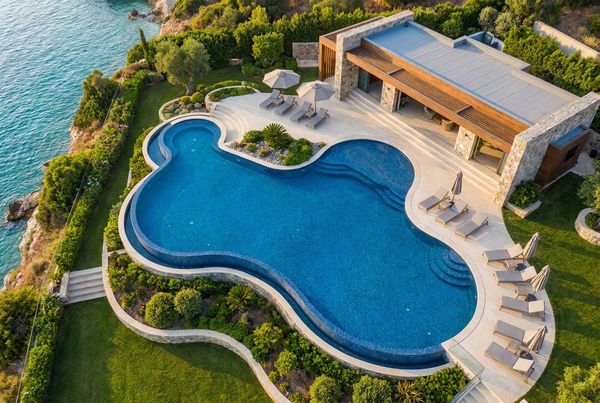
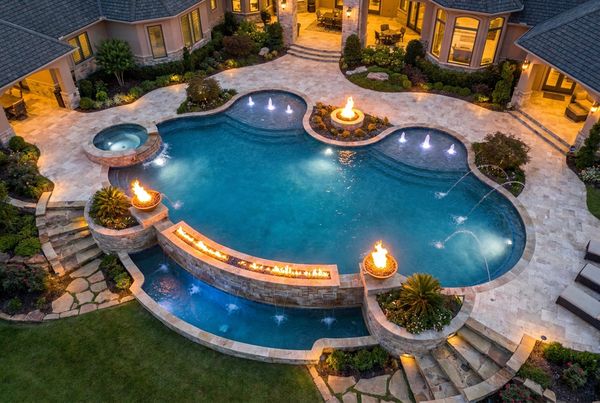
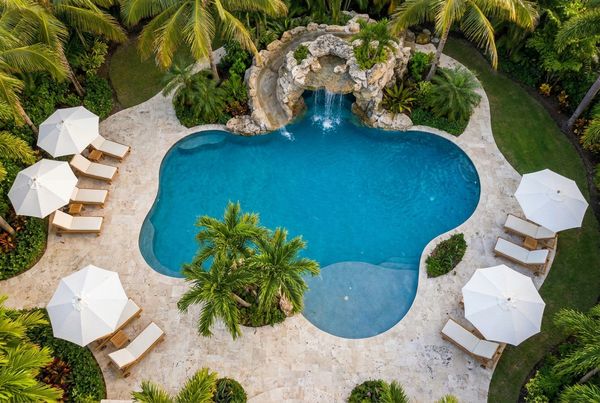
Curving, organic edges that mimic a natural pond or lagoon. Freeform pools are having a genuine revival on properties that lean garden-driven — they pair perfectly with boulders, waterfalls, beach entries, and heavy planting. Done well, they feel relaxed and timeless, like the water was always there.
Pros: soft, natural, hides irregular lot lines, ideal for rock features and tropical landscaping. Cons: the curves cost more to build, they eat swimmable area, and they almost never take an automatic cover. A lone freeform on a flat, bare lot can look dated fast.
Who it's for: wooded or sloped lots, resort-style backyards, and homeowners who want the pool to disappear into the landscape rather than announce itself. Freeform is nearly always gunite, because concrete is the only material that forms any curve you can draw.
L-shaped — have it both ways
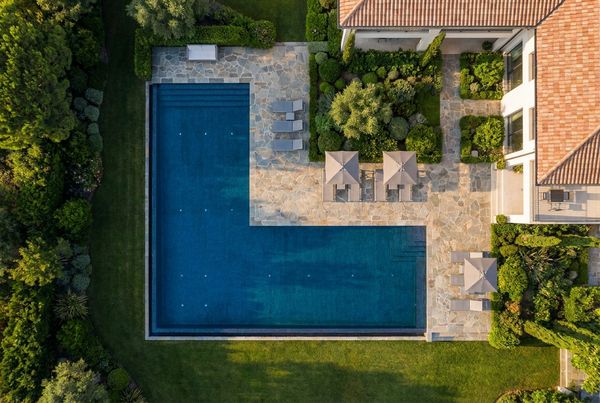
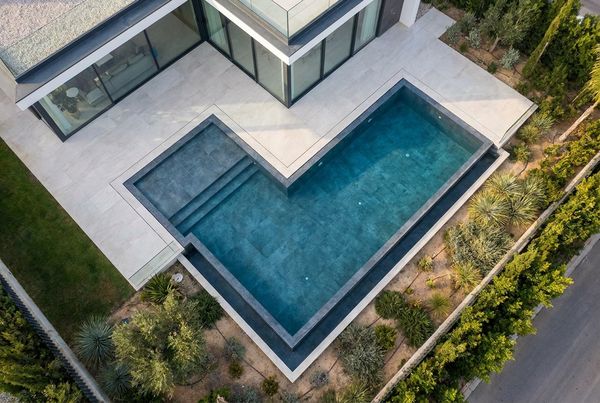
An L-shaped pool gives you a dedicated shallow lounging area on one leg and a long straight run for lap swimming or a deep end on the other. It's the shape we recommend most for families who can't decide between "fun pool" and "fitness pool" — because you genuinely don't have to.
Pros: two zones in one pool, keeps swimmers and splashers out of each other's way, and the inside corner is a natural home for steps or a bench. Cons: it needs more square footage than a plain rectangle, and the corner reduces the length of your uninterrupted lap lane unless you plan the long leg carefully.
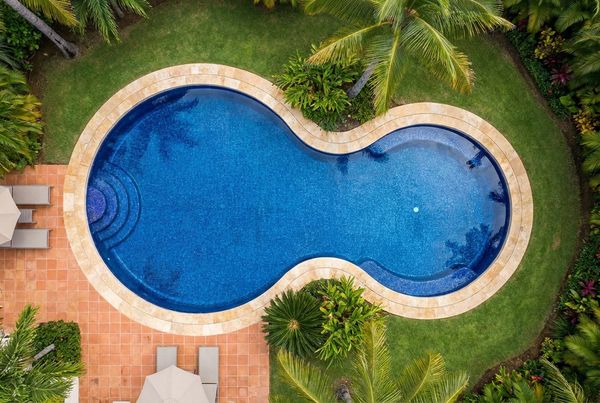
Who it's for: active families, corner lots, and yards where the pool needs to wrap around a patio or the house itself. A close relative worth knowing is the figure-eight — two rounded basins pinched in the middle — which delivers the same two-zone idea with a softer, retro personality that suits vintage and mid-century homes.
Kidney & Grecian — the classics
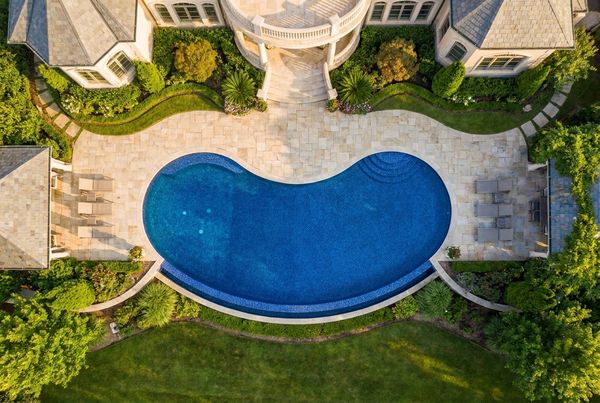
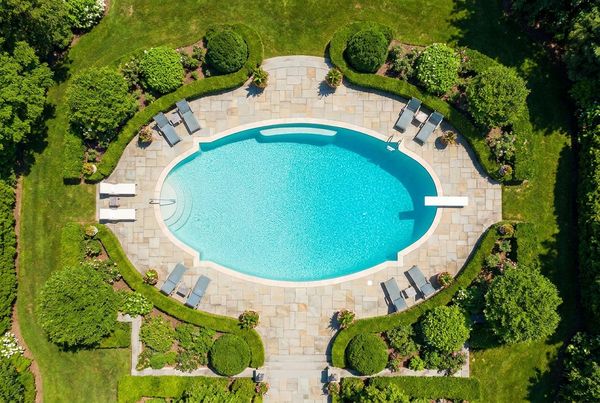
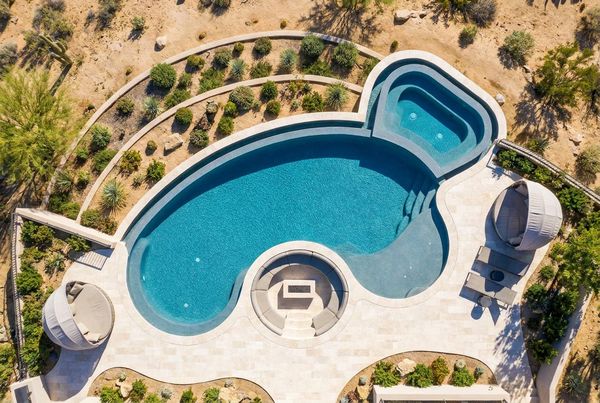
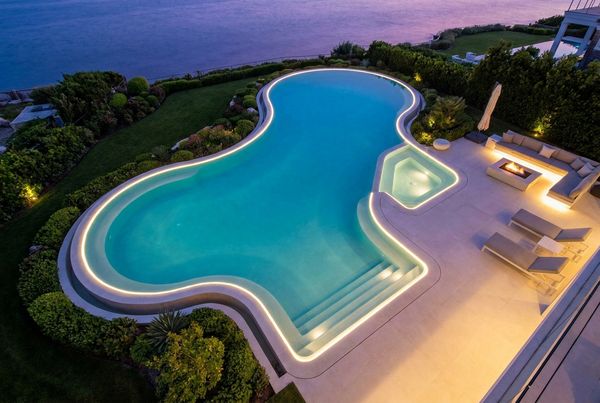
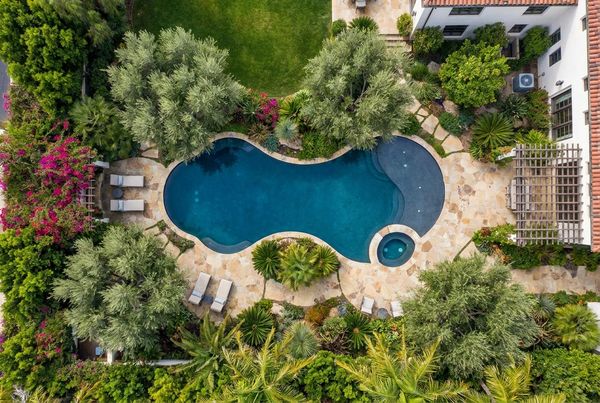
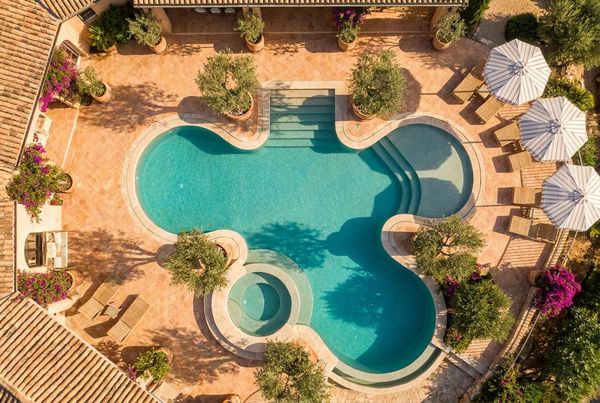
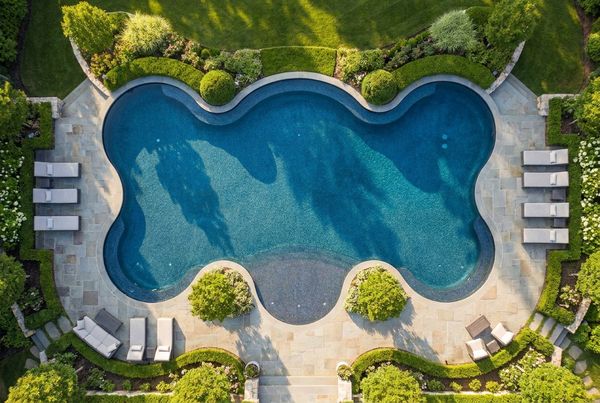
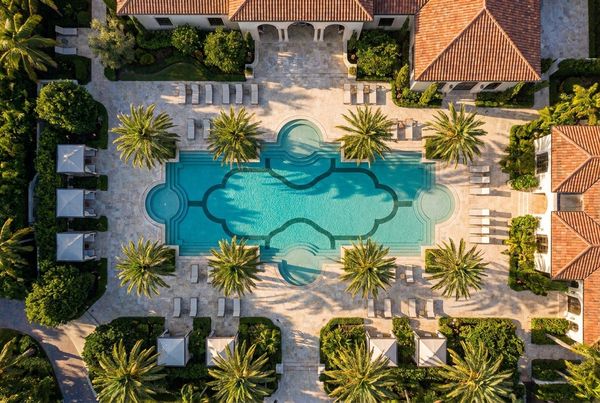
The kidney pool — a soft curve with a gentle inward notch, often cradling a spa — is a retro shape that's quietly returned. It's forgiving, friendly, and fits organically into a curved deck. Grecian and Roman shapes are its formal cousins: rectangles with cut corners (Grecian) or rounded short ends (Roman), bringing traditional, symmetrical elegance to Mediterranean and classic homes.
Pros: softer and more inviting than a hard rectangle, the kidney notch is a tidy spot for a spa, and Grecian/Roman shapes suit formal architecture beautifully. Cons: the curves cost a little more, and like most curved shapes they don't play well with automatic covers.
Who it's for: traditional and Mediterranean-style homes, and anyone who wants a warmer, less clinical look without going full freeform.
What we'd build
For most homes, a softened rectangle with a tanning ledge and an offset spa is the sweet spot — it's the most livable, the most cover-compatible, and it ages the best. Go freeform only if your yard and landscaping genuinely lean natural; a lone freeform pool on a flat lot with no planting looks dated within a decade. And if you swim for exercise, the L-shape earns its keep every single day.
Geometric & modern — the architect's shape
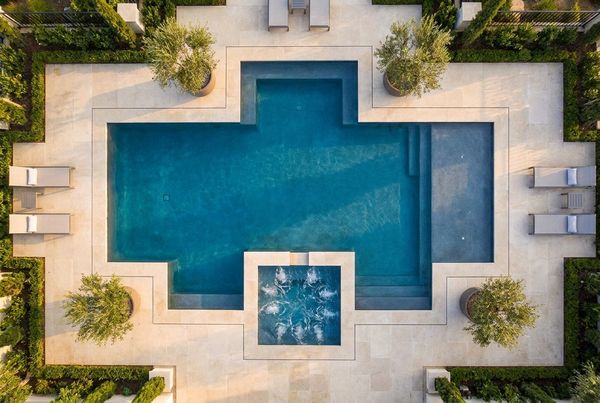
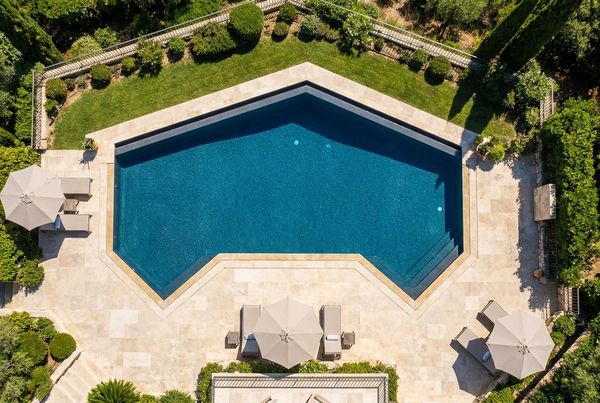
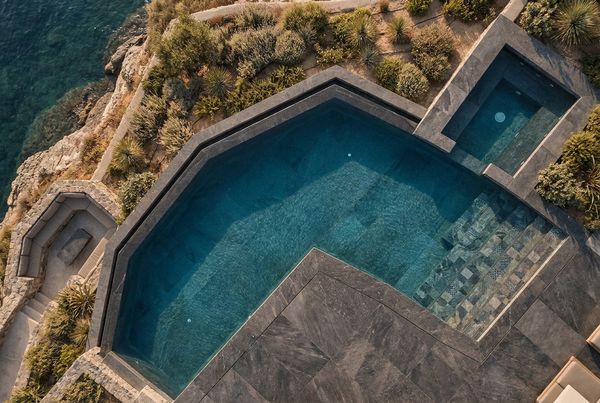
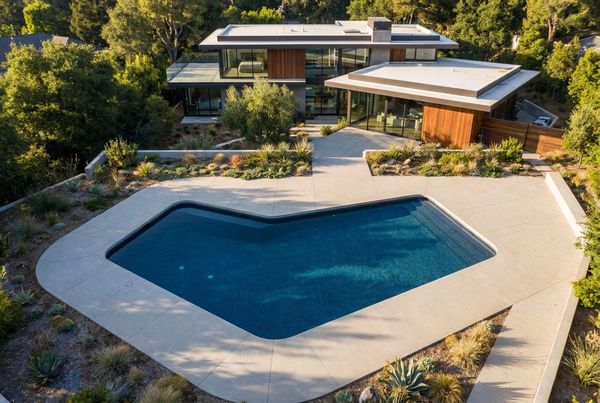
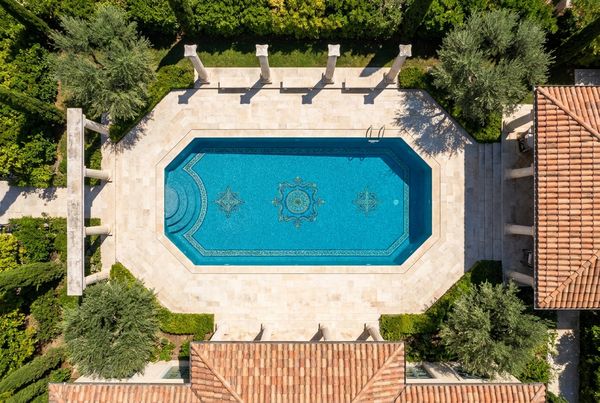
Geometric pools take the rectangle's crisp language and push it further — squares, offset rectangles, angular forms, and hard right angles that echo modern architecture. Add a raised square spa, a linear spillover, or a perimeter-overflow edge and the pool becomes a piece of the building rather than an afterthought in the yard.
Pros: dramatic, tailored, and perfect for contemporary homes; every straight edge is cover- and tile-friendly. Cons: it's unforgiving — sharp geometry demands precise construction and a landscape design that matches, or it can feel severe.
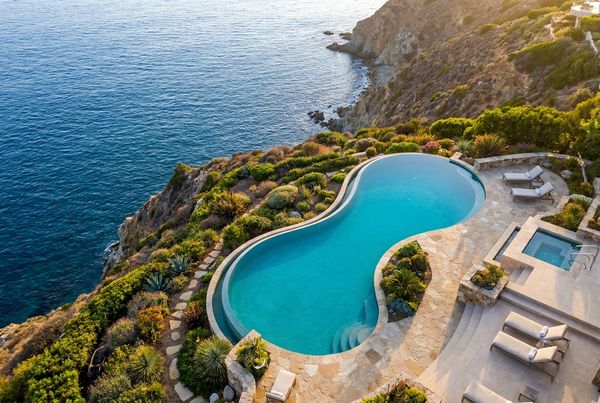
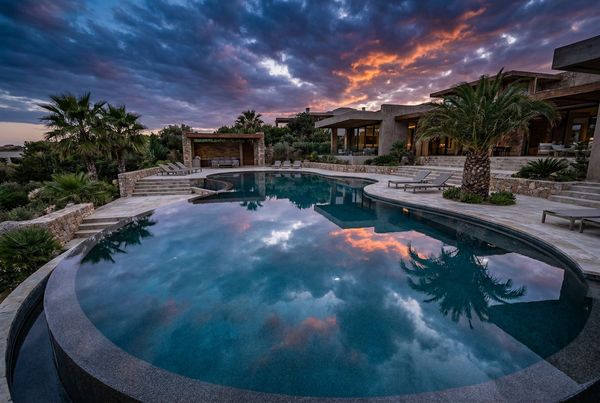
Who it's for: modern and minimalist homes, sloped lots that suit a vanishing edge, and homeowners who want the pool to be the architectural centerpiece. Explore more at our infinity pool ideas.
The reason geometric shapes have taken over high-end design isn't just fashion — it's that hard lines let a builder integrate a spa, a raised bond beam, a sun shelf, and a spillway on a single visual axis. Everything lines up, so the finished pool feels designed rather than assembled. That discipline is also why geometric shells are so forgiving of automatic covers and tile: straight, parallel runs are the easiest thing in the world to seal, track, and trim.
Lap pools — shape built for swimming
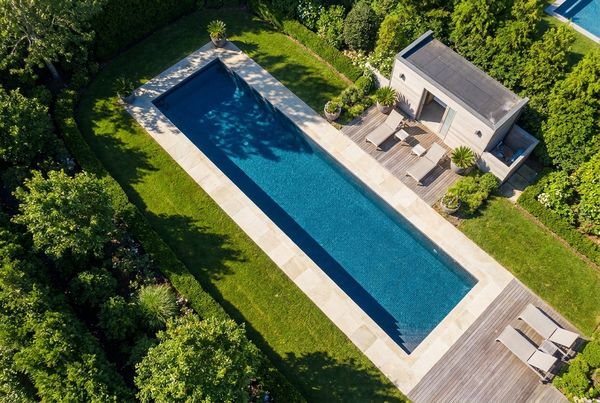
A lap pool is a shape defined by its job: a long, narrow rectangle — typically 8 to 10 feet wide and 40 feet or more long — sized for uninterrupted swimming. It's the fitness swimmer's pool, and it happens to be one of the best answers for a long, skinny side yard where nothing else fits.
Pros: unbeatable for exercise, slots into narrow spaces, and looks strikingly clean alongside a house. Cons: it's a specialist — great for laps, less social for a crowd, and the long run means more linear coping and tile.
Who it's for: serious swimmers, narrow lots, and modern homes where a sleek ribbon of water is exactly the look. Tight on space? See our small pool ideas.
How pool shape affects cost & material
Shape isn't just aesthetic — it drives which material makes sense and what you'll pay. Curves, corners, and negative edges all add labor, and the material you can use is partly dictated by the shape you want.
- Fiberglass arrives as a pre-molded shell, so you choose from a catalog of shapes — excellent value, but limited to what the mold makers offer and capped in size. See fiberglass pools.
- Gunite/concrete can be built in any shape, which is why every wild custom freeform you've saved is almost certainly gunite. See gunite pools.
- Simpler shapes = lower cost. Every added curve, radius, and vanishing edge adds forming and finishing labor.
| Shape | Best for | Relative cost |
|---|---|---|
| Rectangle | Laps, covers, modern homes | $ (lowest) |
| Lap | Fitness, narrow yards | $–$$ |
| L-shaped | Families, dual-use yards | $$ |
| Kidney / Grecian | Traditional, softer look | $$ |
| Geometric / modern | Architectural statement | $$–$$$ |
| Freeform | Natural, garden yards | $$$ (highest) |
For real numbers by shape, material, and region, dig into our inground pool cost guide.
What we'd pick for your yard
After hundreds of builds, our shortlist is simple. Modern home, any budget: a softened rectangle with a tanning ledge — it's the highest-livability, best-resale shape there is. Fitness first: a lap pool or a long-legged L-shape. Garden or wooded lot: freeform, but commit to it with rock, planting, and a beach entry so it never reads accidental. Traditional home: a kidney or Grecian to match the architecture's warmth.
The 2026 details worth building in regardless of shape: an oversized tanning ledge, an offset spa rather than a symmetrical one, and gently softened geometric corners. Whatever silhouette you land on, the shell is only the start — layer in the finishes and features next, then browse the full pool design ideas hub. And when you're ready to price it out for real, find a vetted pool builder near me who's built your shape before.
Match the shape to how you'll actually use it
Shape is really a decision about behavior — how you and your family will spend time in the water — dressed up as a decision about looks. Before you fall for a silhouette, run through who's using the pool and for what. If someone swims for exercise, a straight run of at least 40 feet is non-negotiable, which points hard at a rectangle, a lap pool, or an L-shape with one long, uninterrupted leg. If it's mostly lounging, splashing, and entertaining, swimmable length matters less than shallow shelf space, and a freeform or a rectangle with a full-width tanning ledge earns its keep.
Two features quietly shape the shape more than most people expect. The first is the tanning ledge: if you want one — and in 2026 almost everyone does — a straight edge along the shallow end makes it far easier to build and to fit lounge chairs onto. The second is the spa. A square or rectangular pool takes a matching geometric spa cleanly; a kidney's inward notch practically cradles a round one; a freeform can absorb a boulder-set spa into its curves. Decide on the spa and the ledge before you lock the outline, because retrofitting either into the wrong shape is the kind of expensive lesson that shows up in our inground pool cost guide.
How shape affects cleaning and maintenance
Nobody chooses a pool shape for its cleaning schedule, but shape absolutely affects how much work the pool asks of you. Straight lines and simple geometry are the easiest to keep clean: water circulates predictably, a robotic pool cleaner can run methodical straight passes without getting hung up, and there are no tight radii for debris to collect in. It's one more quiet reason rectangles and clean geometric shapes have taken over — they're low-drama to own, not just to look at.
Heavily curved freeforms, figure-eights, and shapes with pinch points and nooks are more forgiving of an irregular lot but harder on your cleaning routine — dead spots where circulation stalls let debris settle and can give algae a foothold if the water isn't kept balanced. None of that is a dealbreaker; it just means paying a little more attention to circulation and staying on top of your chemistry. Wherever you land, dialing in the right filter run time keeps any shape clear — our pump run-time calculator takes the guesswork out of how long to run the pump for your pool's volume.
Design Gallery
17 more ideas to save — tap any photo to view full screen.

Kelly E.
Pool Design Editor, PoolPad
Kelly has spent 10+ years around residential pools — planning projects, testing gear, and documenting backyard builds for PoolPad. Each design guide is checked against current construction methods and material pricing.
Frequently Asked Questions
What is the most popular pool shape?
What is the best pool shape for a small yard?
Are freeform pools more expensive than rectangular pools?
What pool shape is best for lap swimming?
Which pool shape works best with an automatic safety cover?
Do curved pool shapes cost more than straight ones?
Which pool shape is easiest to keep clean?
What shape is best for a pool with a tanning ledge?
Does pool shape affect which cleaner I can use?
Ready to build your dream backyard?
Compare local, vetted pool builders and get matched with pros who can bring these designs to life.
Find a Pool Builder Near You