



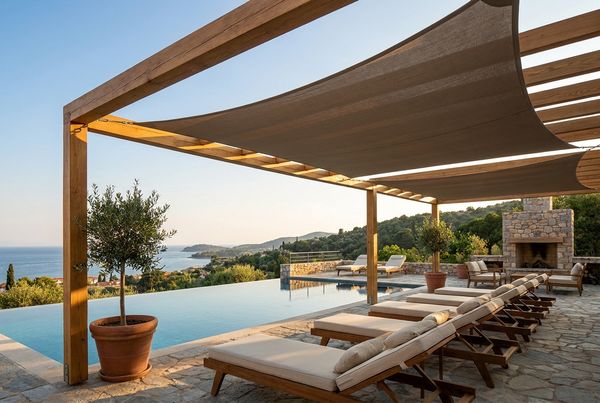
Key Takeaways
- Louvered (adjustable) pergolas are the modern upgrade — angle the blades for shade or open them to the sky, and many are rain-tight when closed.
- Position a pergola to shade the seating and dining zone, not the pool itself, so you keep sun on the water.
- A pergola is the fastest way to turn a bare patio into a genuine outdoor room.
A pool gives you water; a pergola gives you a place to actually live next to it. Shade, structure, and a spot to lounge or dine turn a patio from "nice on a mild evening" into a room you use all summer. And with modern louvered systems, you finally get to control the sun instead of guessing at it. The best pergola ideas start with one question: where does the shade need to land?
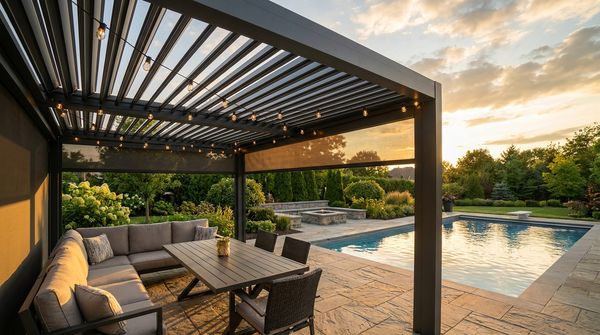
Modern louvered pergolas
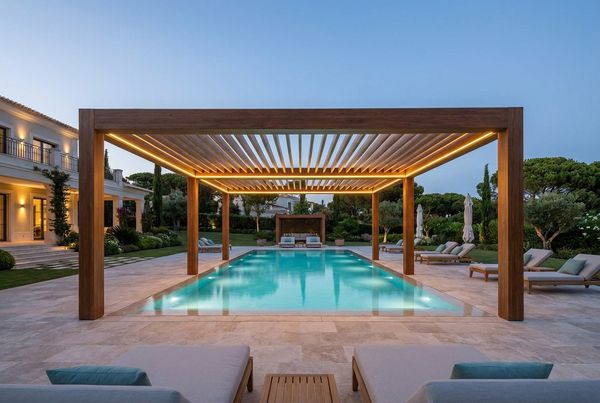
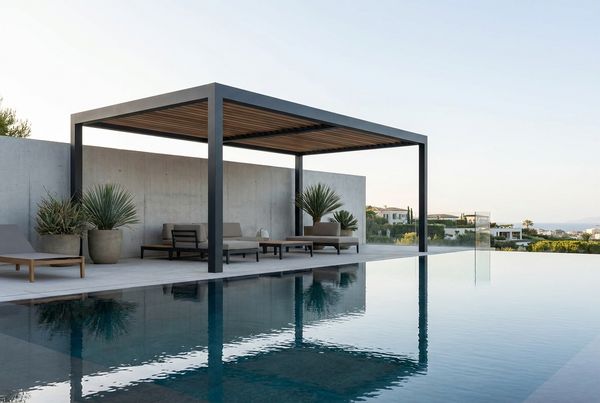
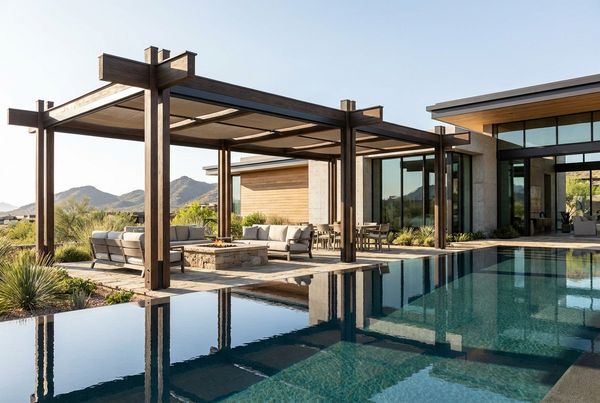
The biggest shift in outdoor living is the adjustable-louver pergola. Rotate the aluminum blades for full shade, angle them for dappled light, or open them to clear sky — then close them tight when a storm rolls through. Most quality louvered pergolas are powder-coated aluminum, which shrugs off pool chemicals and coastal salt air, and the better systems are rated to shed rain through an integrated gutter built into the posts.
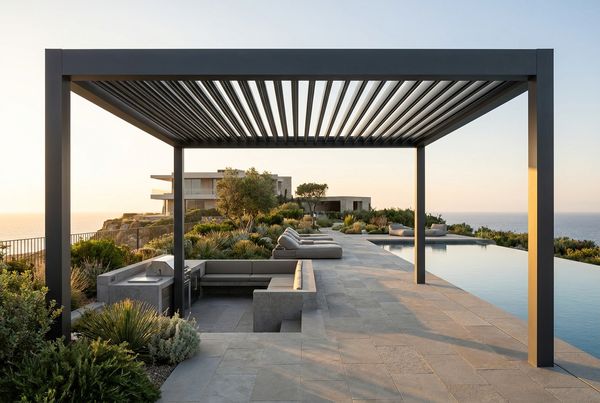
What makes them worth the premium is control. A fixed structure commits you to one condition; a louvered pergola adapts hour by hour. Add a motor and a rain/wind sensor and the roof manages itself — opening for morning sun, closing at the first drops. This is the single most requested upgrade we see in poolside builds right now, and for good reason.
The louvers themselves come in a few profiles. Wider blades let more light through when open and read cleaner from below; narrower ones seal tighter and handle heavier rain. Look at the closed-position drainage before you buy — the good systems channel water down through the posts into a hidden gutter, so a closed roof actually keeps the seating dry rather than sheeting water off one edge. That single detail separates a true convertible roof from a fancy sunshade.
Classic wood pergolas
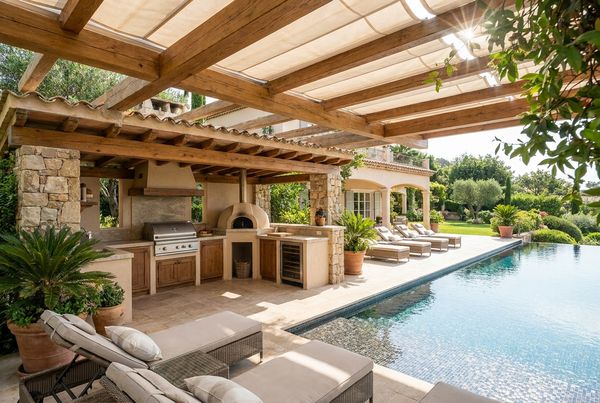
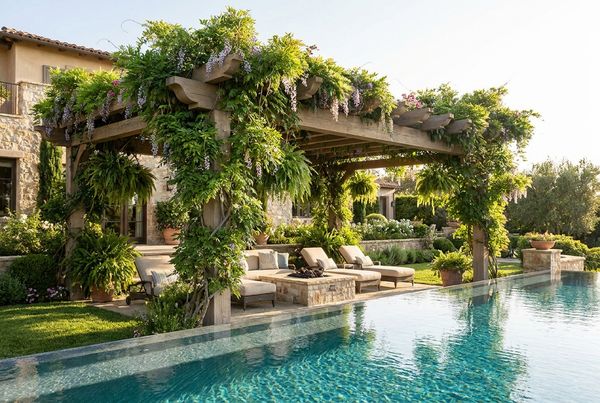
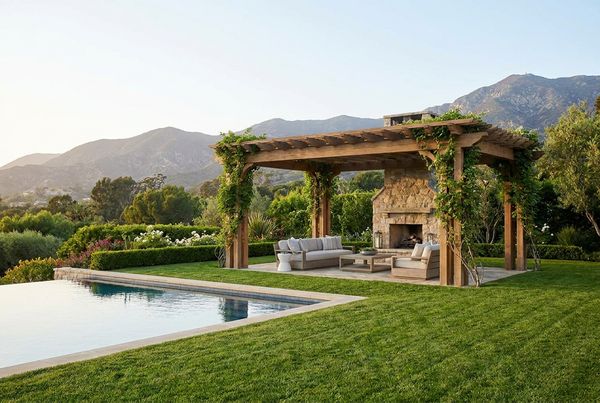
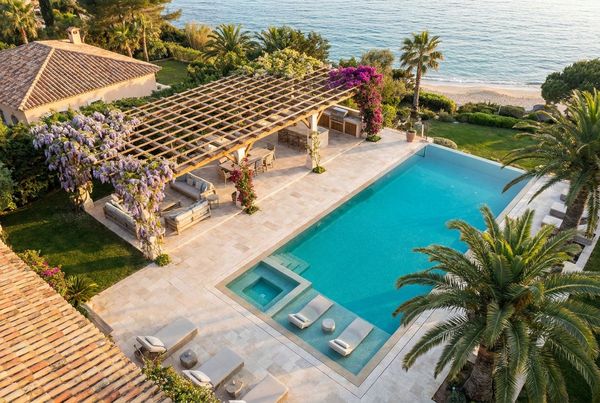
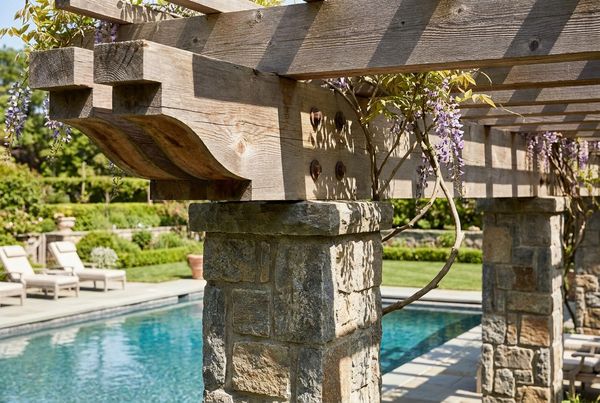
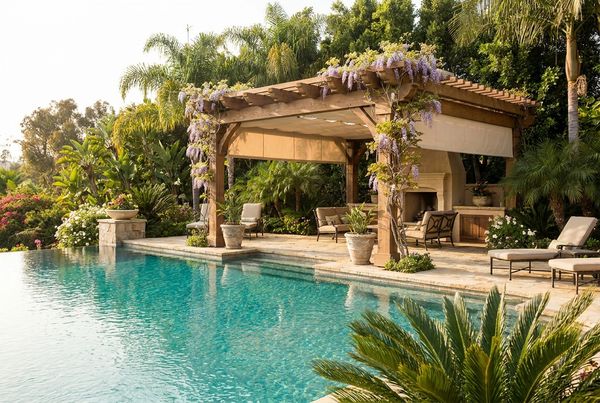
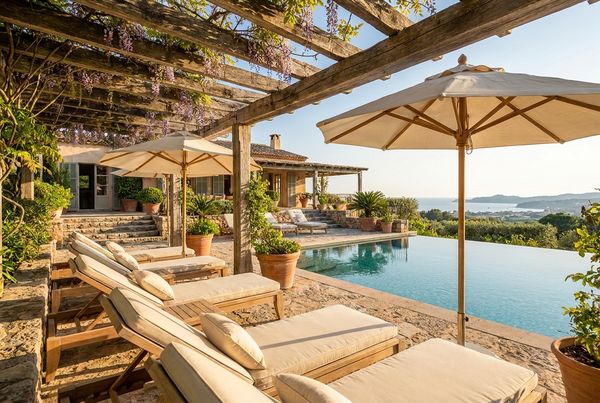
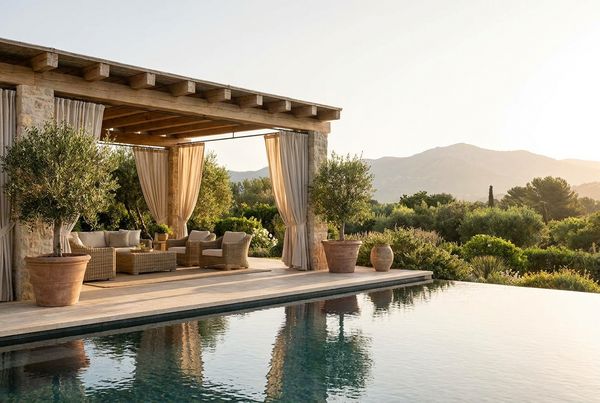
A cedar or timber pergola brings a warmth that aluminum can't fake. Draped in wisteria, grapevine, or star jasmine, the fixed rafters throw a soft, moving pattern of light across the deck, and the whole thing settles into a garden the way a metal frame never quite does. This is the look people picture when they imagine a poolside pergola with a Mediterranean or cottage feel.
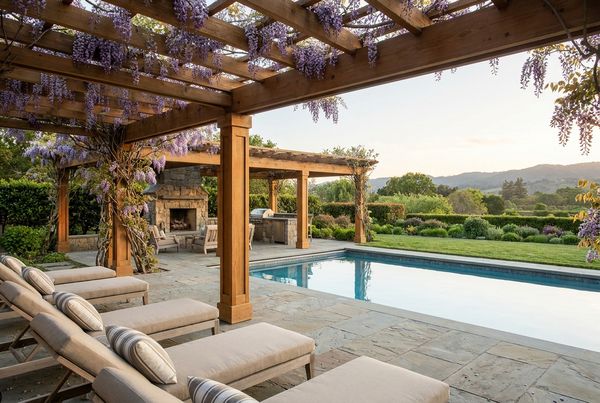
The trade-off is maintenance. Wood wants a fresh coat of stain or sealer every couple of years, and the chlorine-and-sun combination near a pool is unforgiving. Western red cedar and pressure-treated pine hold up best; for real longevity, look at composite-clad or aluminum posts wearing a wood-tone finish. You keep the look and lose most of the sanding.
If you go with climbing plants, choose deliberately. Wisteria is stunning but heavy and aggressive — it needs a beefy frame and yearly pruning or it'll pull rafters out of line. Star jasmine and evergreen clematis are gentler, stay green longer, and won't drop a mess of petals into the pool skimmer. And remember that a vine takes a couple of seasons to fill in, so plan the pergola's shade for its mature coverage, not the first summer.
Poolside cabanas
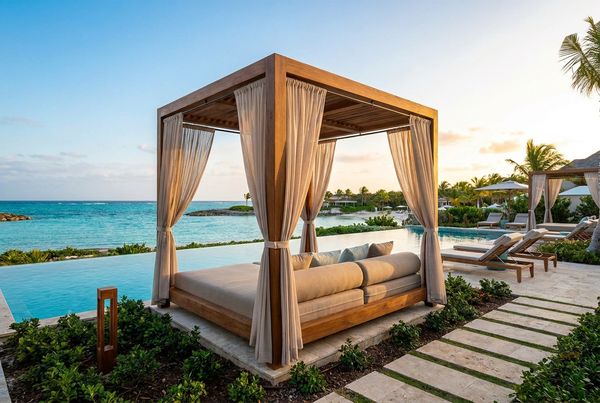
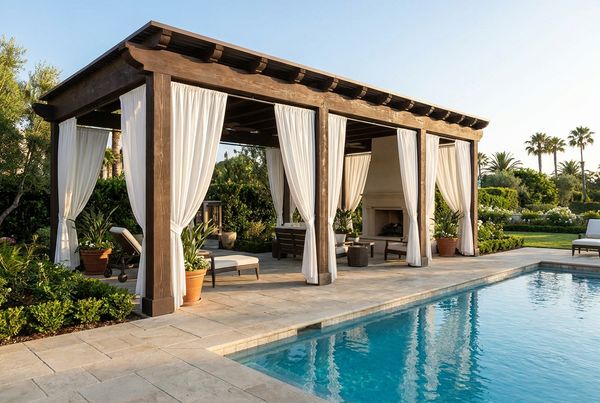
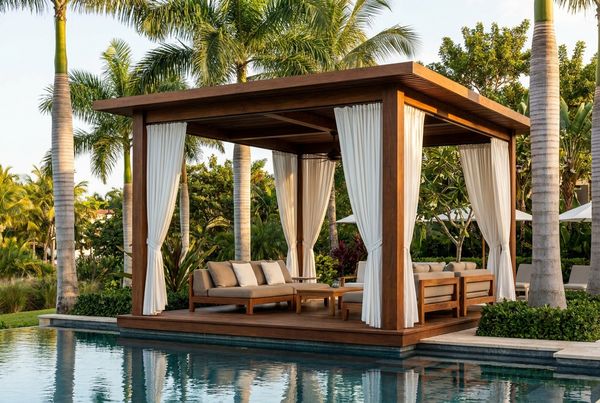
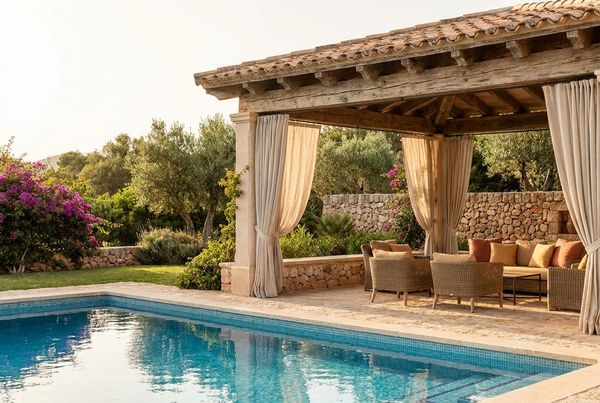
At the far end of the pool, a cabana pergola with flowing curtains, a daybed, and a slow-turning fan is pure resort. It reads as a destination across the water, doubles as a shaded changing and lounge spot, and gives kids a place to escape the midday sun. Sheer white drapes on a track let you close it down for privacy or pull them back for the view.
What we think
A cabana only works if it earns its footprint. Skip it if your yard is tight — a good cabana needs room to breathe and a clear sightline back to the house. But if you have the space at one end of the pool, a curtained cabana pergola is the detail that makes guests feel like they've checked into somewhere. Add outdoor-rated fabric, a ceiling fan, and one weatherproof outlet, and it becomes a spot you'll use daily, not just when company comes.
Pergola materials compared
Material choice drives cost, look, and how much of your weekend it eats. Near a pool, durability against chlorine and salt matters more than it does in a dry garden. Here's how the three common options stack up.
| Material | Durability | Maintenance | Look & feel |
|---|---|---|---|
| Powder-coated aluminum | Excellent — rust-proof, salt-safe | Very low — occasional rinse | Clean, modern, engineered |
| Cedar / timber | Good with care | Higher — reseal every 1–3 yrs | Warm, natural, garden-like |
| Vinyl / composite | Very good | Low — wash only | Uniform, tidy, less premium |
Aluminum is the default for modern louvered pergolas because it handles the pool environment and carries motorized hardware without warping. Cedar wins on character if you'll keep up with it. Vinyl and composite sit in the middle — low fuss, but the look can read a touch plasticky up close. Match the material to how much maintenance you'll realistically do.
Where to place a poolside pergola
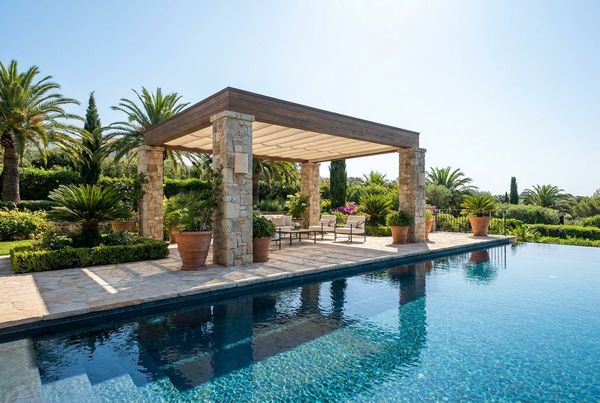
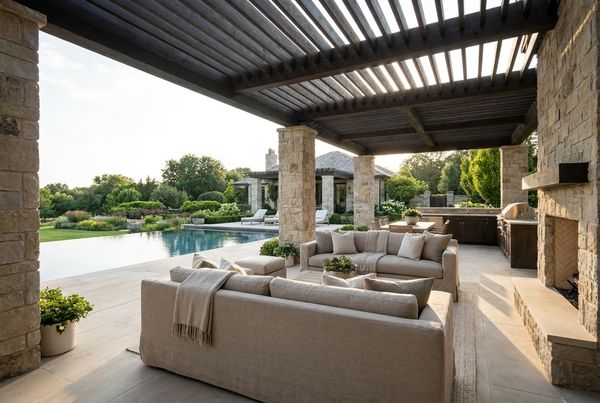
Placement is where most people get it wrong. The instinct is to shade the pool — but you want sun on the water to keep it warm and inviting, and shade on the people. So position the pergola over the dining and lounge zone, typically along the house-facing edge of the patio or as a standalone cabana at one end of the pool.
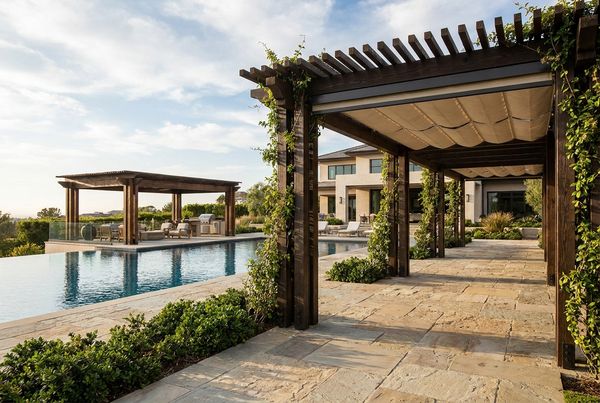
Track the sun before you commit. An attached pergola on the west or south side blocks the harshest afternoon heat right where you sit; a freestanding one lets you chase shade anywhere in the yard. Spend a full day watching where the shadows actually fall in mid-summer — the angle that shades your dinner table in June is very different from the one that does it in September. Mind the setbacks, too — pool-barrier codes and property lines dictate how close you can build, and a fire feature needs clearance from any overhead structure. Get the footprint right on paper first; it's a lot cheaper than moving posts later.
Scale matters as much as position. A pergola that's too small looks like an afterthought perched over a bistro table, while one sized to the seating group anchors the whole patio. As a rough guide, give a four-person dining set a footprint of at least 12 by 12 feet, and a lounge grouping more. Leave circulation room around the furniture so nobody has to squeeze past a post to reach the water.
Lighting, fans and screen add-ons
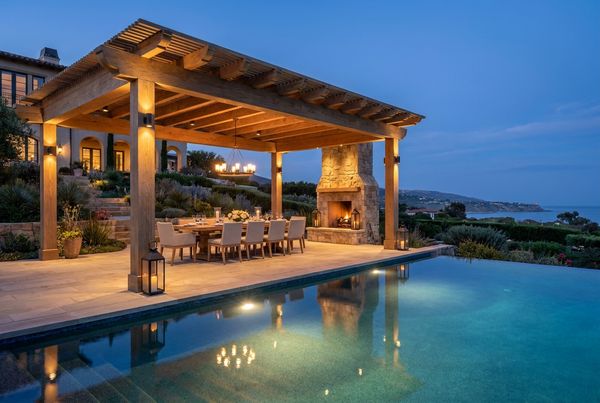
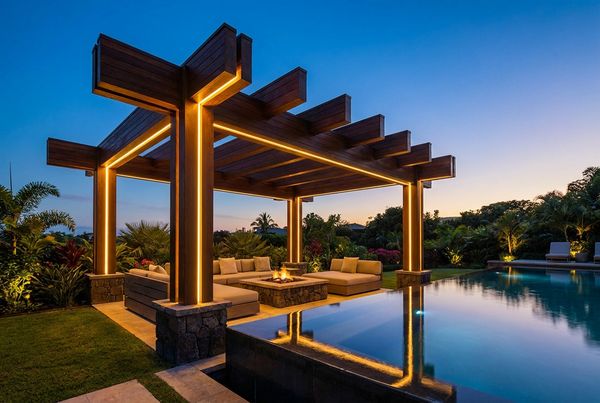
The add-ons are what turn a pergola from a shade structure into an all-day, all-evening room. Integrated downlighting tucked into the beams gives you soft, even light for dinner without a single glare bomb overhead. A ceiling fan moves air on still nights and keeps mosquitoes off — worth it in almost any climate.
Retractable side screens — mesh for bugs or solar fabric for low-angle sun — close off a pergola on demand and add real privacy. Motorized screens roll away out of sight when you don't need them, and on a windy or west-facing patio they're the difference between using the space at sunset and abandoning it. Radiant patio heaters and a discreet outdoor speaker or two round out the shoulder-season setup. The critical move is to rough in wiring during the build: retrofitting lights, fans, and outlets means opening up beams later, and it rarely looks as clean. Coordinate the pergola electrics with your broader pool lighting plan so the whole yard reads as one design.
What a pergola costs
Budget swings hard with material, size, and whether the roof moves. A basic fixed wood pergola kit can land around $3,000–$6,000 installed for a modest footprint. A quality fixed aluminum structure runs roughly $6,000–$12,000. A motorized louvered aluminum pergola — the convertible-roof kind — typically starts near $12,000 and climbs to $30,000 or more once you add lighting, fans, screens, and a larger span.
Those are ballpark ranges, not quotes — footings, engineering, permits, and site access all move the number. If you're building the pergola alongside a new pool or a wider patio project, fold it into one scope so the trades, wiring, and drainage get coordinated. A good pool builder can price the pergola as part of the outdoor room rather than a bolt-on.
Sizing, wind, and snow: build it to stand
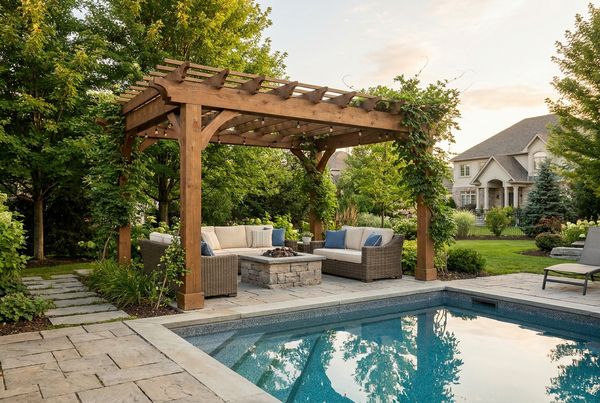
A pergola is a real structure, not a piece of furniture, and the two things people underestimate are size and loads. On size, match the footprint to what goes under it: give a four-person dining set at least a 12-by-12-foot cover, a lounge grouping more, and leave circulation room so nobody squeezes past a post to reach the water. A pergola scaled to a bistro table looks like an afterthought perched over the patio; one sized to the whole seating group anchors it.
The loads are what turn a design into an engineered structure. A motorized louvered pergola carries real wind and snow loads — the closed roof becomes a sail in a gust and a shelf under snow — so it needs engineered footings and, in most places, a permit and inspection. Freestanding structures above a certain size and anything attached to the house usually trip the permit threshold too. This is genuinely not a corner to cut: an under-footed pergola racks, leans, or worse in the first real storm.
Climate should also steer the roof choice. In a snowy region, confirm the louver system is rated to shed or bear your snow load, and look hard at the closed-position drainage — the good systems channel water down through the posts into a hidden gutter rather than sheeting it off one edge onto your guests. In a hot, sunny climate you may not need the rain-tight close at all and a well-oriented fixed structure does the job for less. Track where the shadows actually fall across a full mid-summer day before you set the posts.
DIY kit or custom build?
There's a real spread between a weekend kit and a custom build, and both have their place. A fixed wood or aluminum kit is a legitimate way to get shade for the least money, and a handy homeowner can set one over an existing patio in a weekend or two. The catch near a pool is twofold: the footings still need to be done properly so the thing doesn't shift, and the hardware needs to survive chlorine and salt, so favor powder-coated aluminum or stainless fasteners over anything that'll rust and streak.
A custom or motorized louvered pergola is where I'd bring in a pro every time. You're dealing with engineered footings, permits, a heavier structure, and often electrical for lights and a fan — the kind of work that's cheaper to do right once than to fix. It's also the moment to rough in the wiring, because retrofitting downlights and a fan into finished beams later rarely looks clean. Coordinate those electrics with your wider pool lighting plan so the whole yard reads as one design.
If the pergola is going up alongside a new pool or a bigger patio project, fold it into a single scope. A pool builder can price and sequence it with the rest of the trades — sharing the footing work, the trenching, and the drainage — and budget it inside your overall project cost rather than treating it as a bolt-on after the concrete's already down.
What we think
If you can swing it, a louvered aluminum pergola over the dining and lounge zone is the outdoor-living upgrade with the least regret. The sun control means you'll use the space on days a fixed structure would be too hot or too exposed, and the rain-tight close lets you leave furniture out through the season.
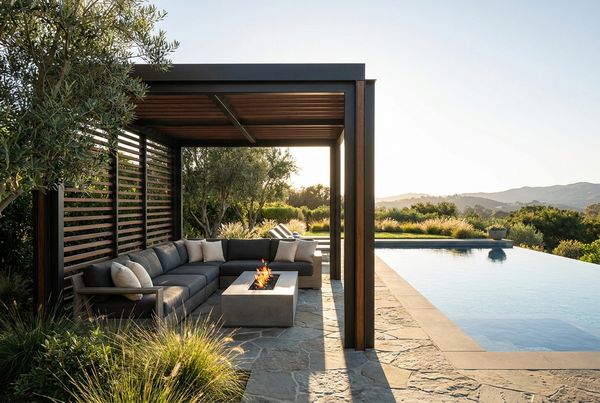
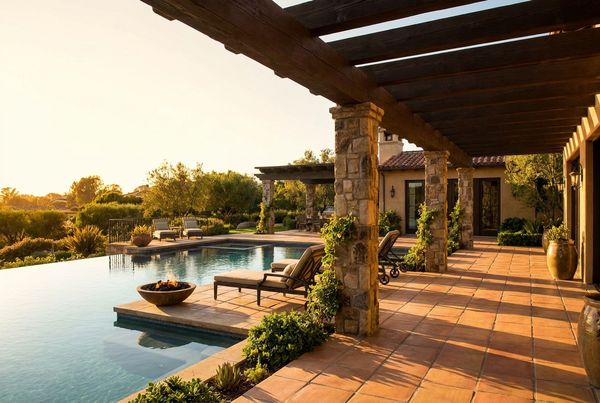
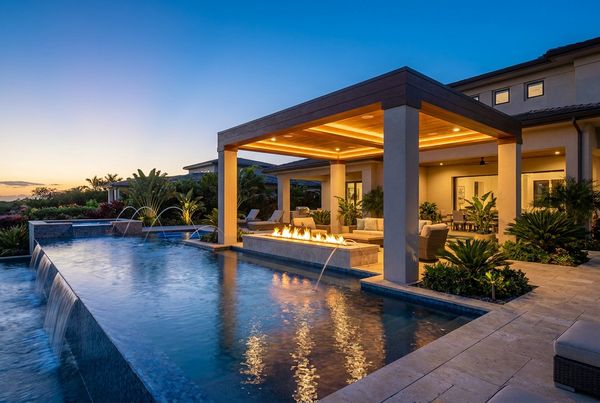
Whatever you build, follow three rules: shade the seating, not the pool; rough in the lighting and fan up front; and match the material to the maintenance you'll actually do. Pair the pergola with an outdoor kitchen and a fire feature, tie it to your pool deck, and you've got a genuine outdoor room. More inspiration lives in the design ideas hub.
Design Gallery
15 more ideas to save — tap any photo to view full screen.

Kelly E.
Pool Design Editor, PoolPad
Kelly has spent 10+ years around residential pools — planning projects, testing gear, and documenting backyard builds for PoolPad. Each design guide is checked against current construction methods and material pricing.
Frequently Asked Questions
What is the difference between a pergola and a louvered pergola?
Where should I put a pergola near a pool?
What is the best material for a poolside pergola?
Do I need a permit or footings for a pergola?
Are louvered pergolas worth the extra cost?
Can I add lights and a fan to a pergola later?
How big should a poolside pergola be?
Can a pergola handle wind and snow?
Is a DIY pergola kit worth it near a pool?
Ready to build your dream backyard?
Compare local, vetted pool builders and get matched with pros who can bring these designs to life.
Find a Pool Builder Near You