



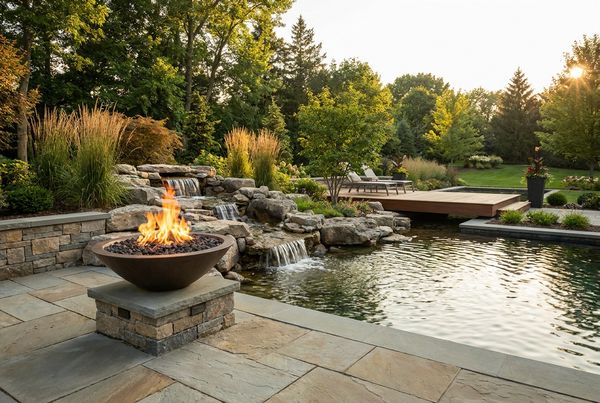
Key Takeaways
- Fire features extend your backyard into cooler evenings and shoulder seasons — one of the highest-use upgrades you can add.
- Gas (natural gas or propane) is the modern default: instant on/off, no smoke, no wood. Fire bowls and linear fire tables lead the trends.
- Fire-and-water — flames above a waterfall or on a raised pool wall — is the ultimate showpiece.
Fire is what keeps a backyard alive after the sun drops and the temperature falls. A well-placed fire feature pulls people together, throws gorgeous light across the water, and buys you months of extra evenings outside. Of all the upgrades we recommend, a fire pit gets used far more than anyone expects — and the best fire pit ideas today are cleaner, lower, and more sculptural than the ring of stones you grew up with.
The modern fire pit menu
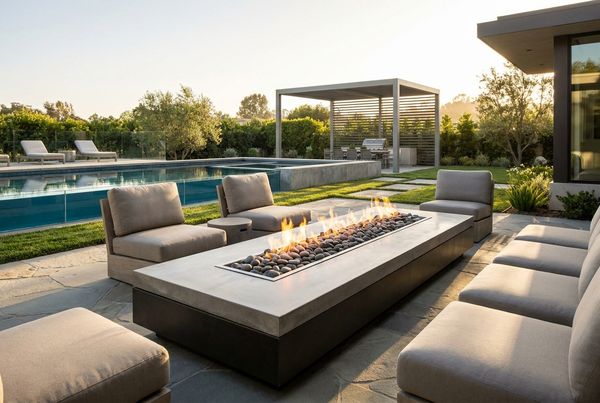
Before you pick a look, it helps to see the whole menu. Today's fire features fall into a handful of families, and each one solves a slightly different problem. Linear tables want to be furniture. Fire bowls want to be sculpture. Round pits want to gather a crowd. Sunken lounges want to be an event. And fire-and-water features want to steal the show.
The single most important decision isn't shape — it's gas versus wood, because that choice drives placement, clearance, cost, and how often you'll actually light it. We'll get there. First, the shapes, because the right form for your yard depends on how you live in it: do you host big groups, or is this a two-people-and-a-nightcap situation? Do you want a design object that reads well unlit, or a working campfire? Match the feature to the ritual and you'll never regret it.
Linear fire tables: the contemporary default
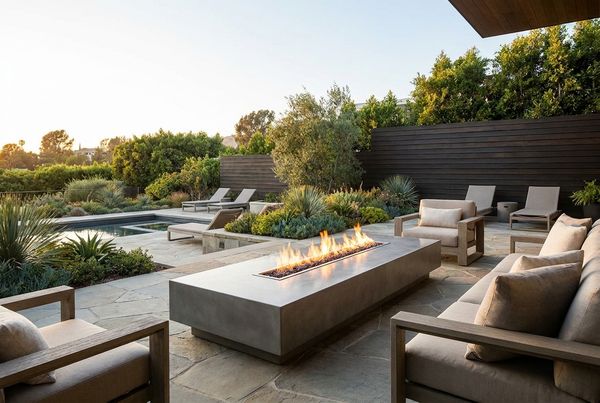
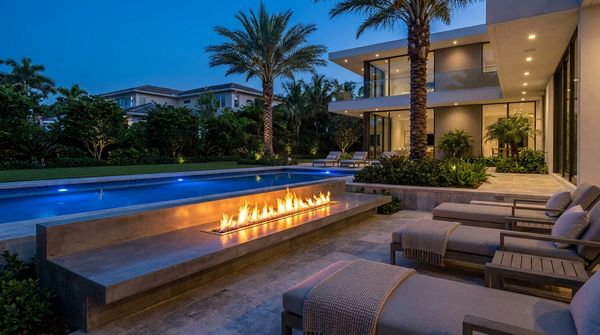
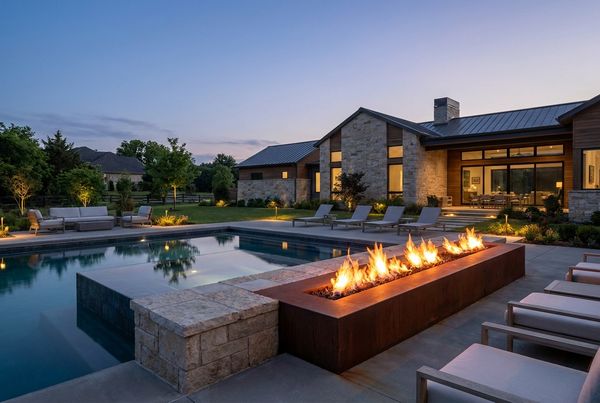
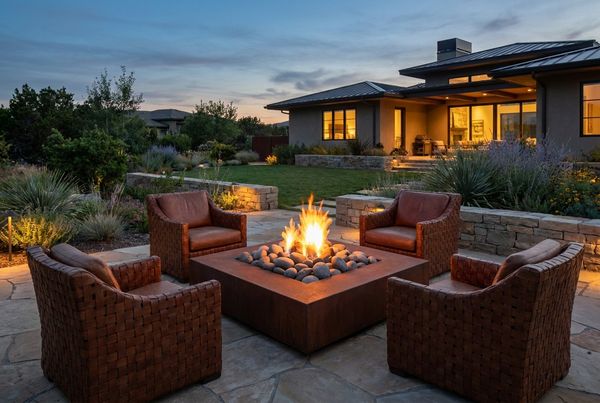
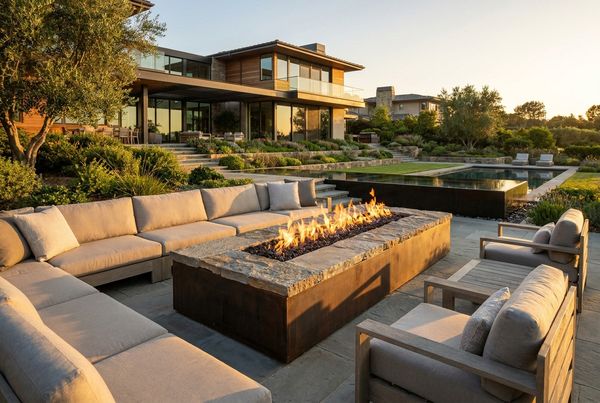
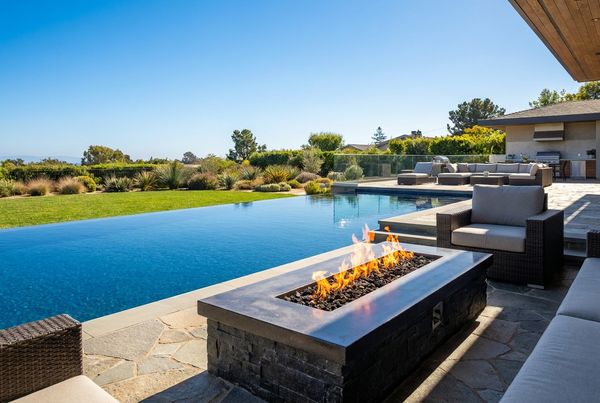
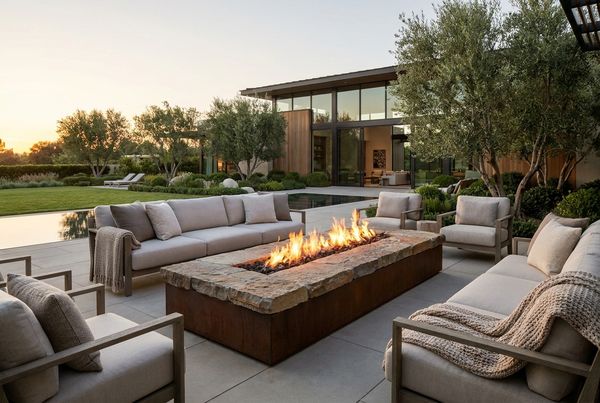
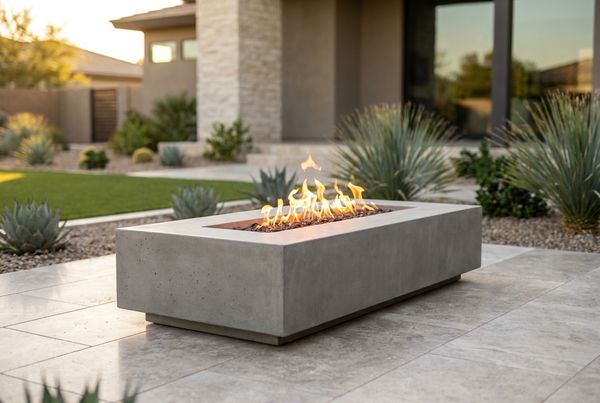
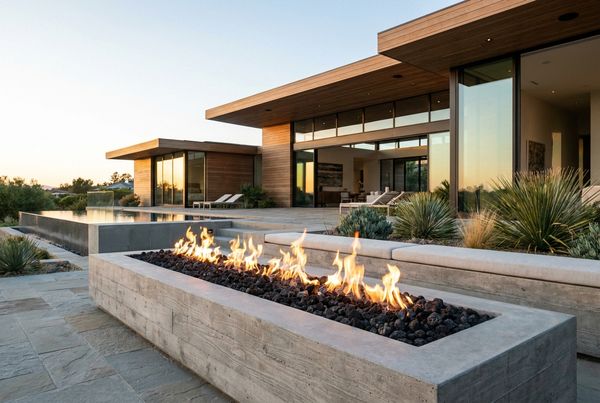
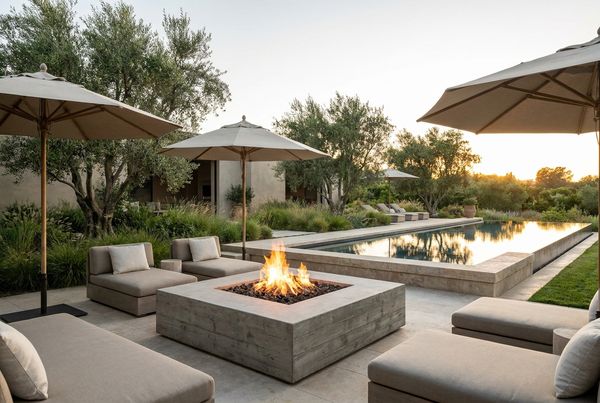
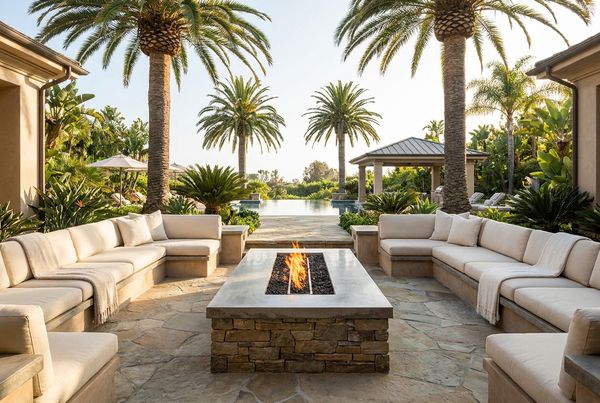
If you want the cleanest, most modern move for the money, it's a linear fire table — a long, low gas trough that reads as contemporary furniture. It anchors a seating group the way a coffee table does, gives everyone a warm edge to face, and doubles as a place to set a drink. In concrete, steel, or clad in porcelain and stone, it disappears into a modern palette instead of shouting for attention.
This is the format we recommend most often, and it's not close. It lights at the turn of a key, produces no smoke to chase your guests around the patio, and shuts off the instant you're done. On a lounge deck it's the natural centerpiece; along a raised edge it becomes a glowing ribbon. If you're building a modern pool, a linear table is the safe, stylish, high-use choice.
Fire bowls: sculpture that happens to burn
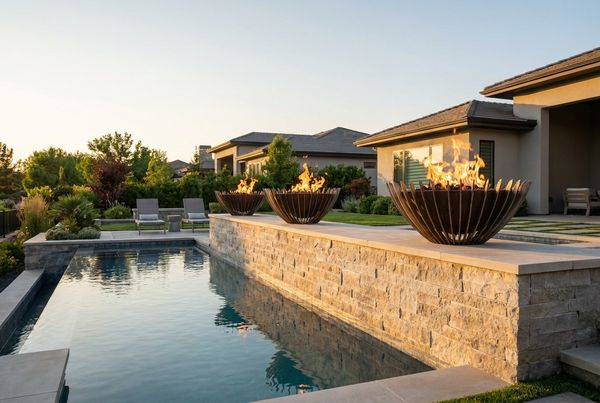
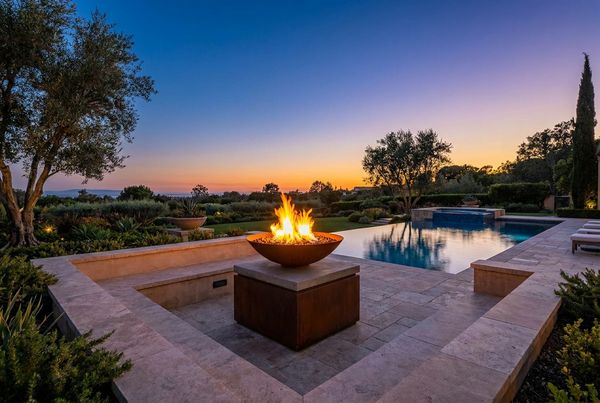
Fire bowls are the design darling of the moment, and for good reason: they're sculptural objects that look intentional even when they're cold. Mounted on slender pedestals, set in pairs to frame steps, or lined up along a raised pool wall, they add rhythm and symmetry that a single central pit can't. Concrete, copper, corten steel, and glass-fiber-reinforced finishes all read beautifully.
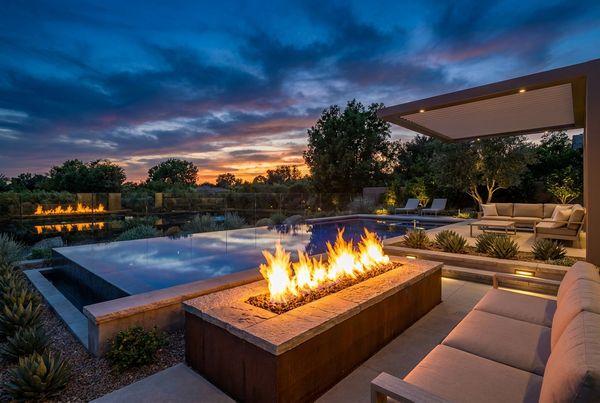
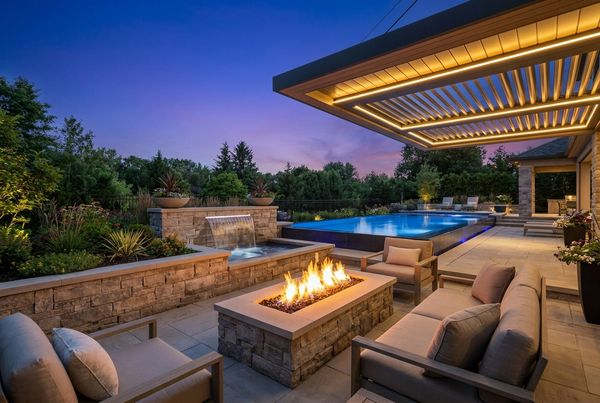
Where fire bowls truly earn their keep is on the water. Perched on a raised spa or pool wall, they mirror in the surface below and effectively double the flame. The catch: this placement is engineered into the structure. Deciding you want fire bowls after the pool is poured is a far harder, costlier conversation, so if there's any chance you want them, commit while the walls are going up.
Round fire pits with built-in seating
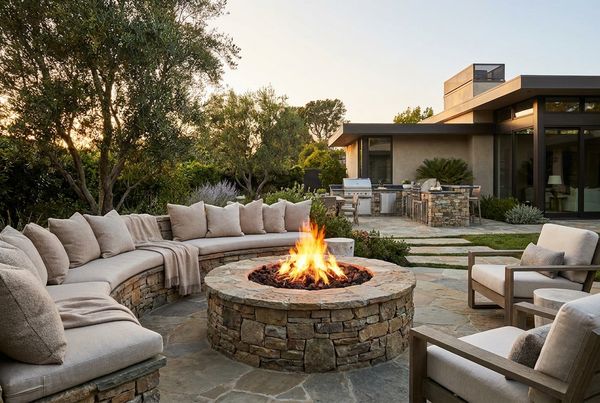
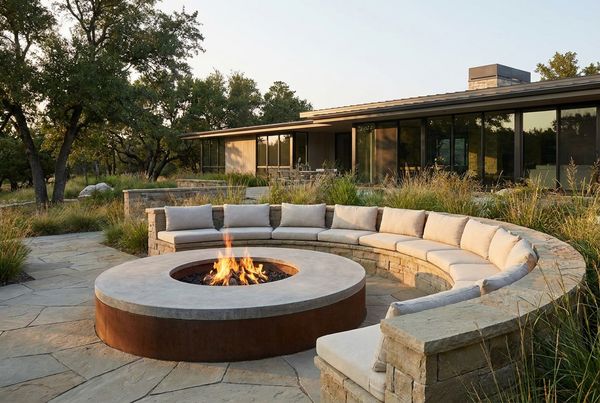
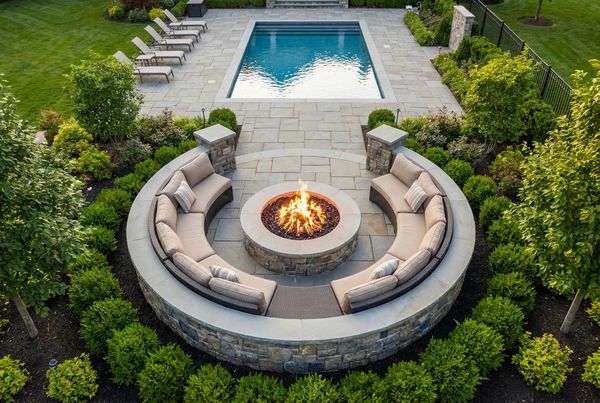
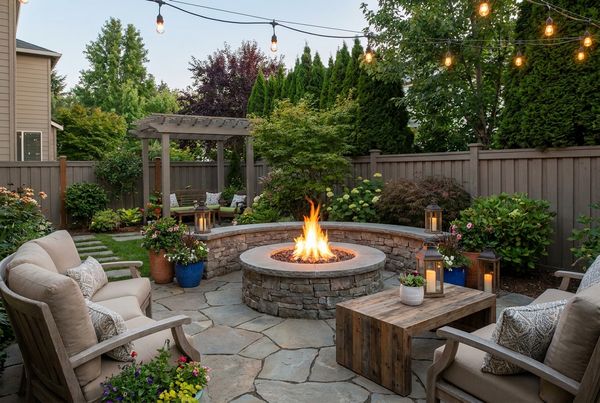
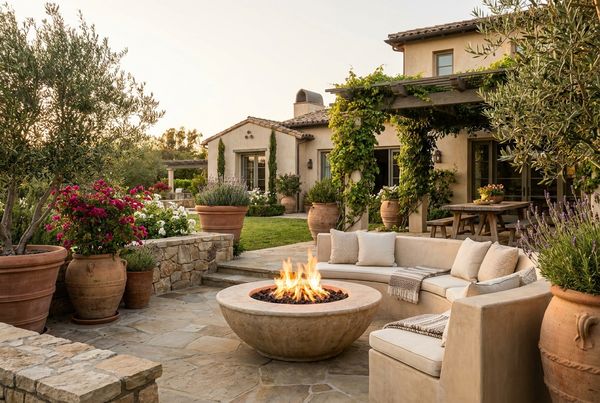
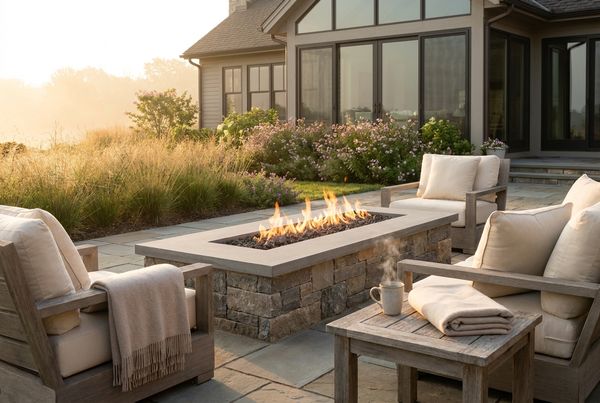
The round fire pit with built-in seating is the timeless one. There's a reason humans have circled fire for a hundred thousand years: a ring pulls a group into face-to-face conversation in a way no straight bench does. Wrap a curved masonry bench or a low seat wall around a stone pit and you've built the gravitational center of the whole yard.
What we'd build
For a family that hosts, we'd set a round gas pit inside a curved built-in bench, sized so nobody's knees touch and there's still room to walk behind. Add loose stools for overflow, run soft step and path lighting so people can find their way in the dark, and you have a spot that gets used three nights a week instead of three nights a year.
Sunken fire lounges
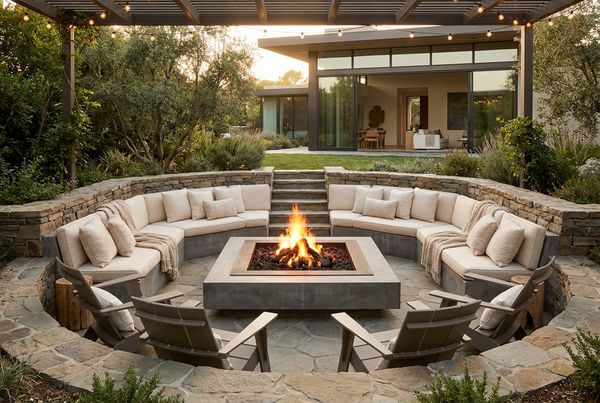
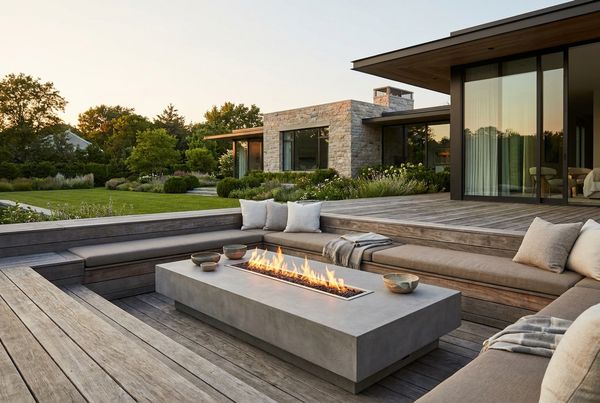
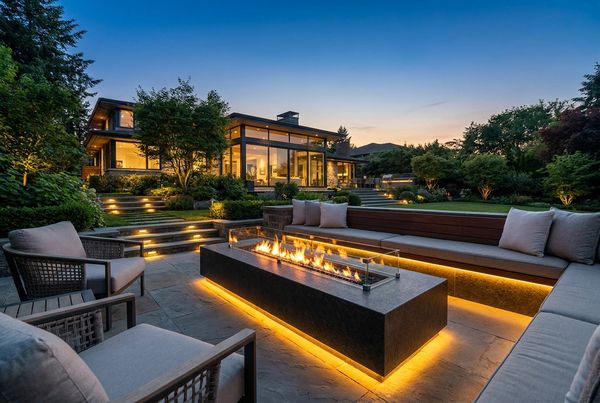
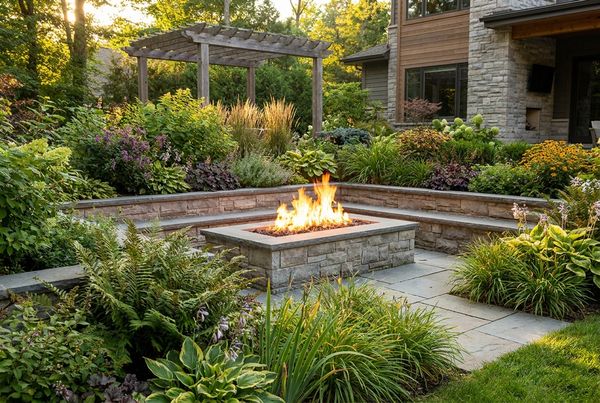
Want the magazine-cover moment? A sunken fire lounge — a recessed conversation pit stepped down below grade with a fire feature at its heart — is the most cinematic thing on this list. Dropping the seating creates instant intimacy and shelter from wind, and the change in elevation makes the space feel like a discovered room rather than a corner of the patio.
It's the most involved build here: you're grading, retaining, drainage-proofing, and detailing a whole outdoor room, so it belongs in the master plan from day one. But when it's done right — cushioned banquettes, a low linear flame, the pool glowing just beyond the rim — nothing else in the yard competes.
Fire-and-water: the ultimate showpiece
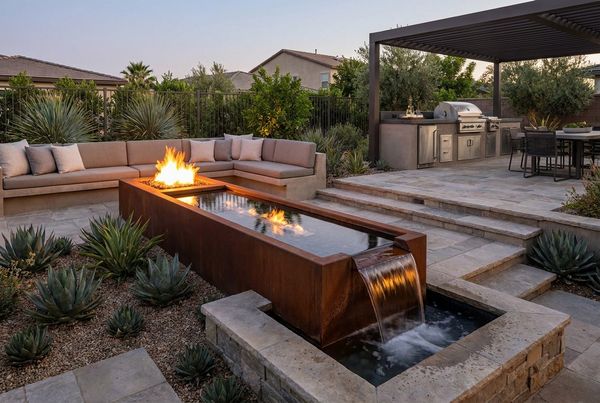
Pairing flame with moving water is the most dramatic thing you can do in a backyard, full stop. Fire bowls on a raised pool wall with water spilling beneath them, or flames above a sheer descent, create a mirror-and-fire effect that stops conversation the first time guests see it lit at night. The two elements should never work together, and that's exactly why they're spectacular.
This is where fire pit ideas cross into pure showpiece territory. Because the flame and the water share one structure, it's engineered as a single system — plumbing, gas, and ignition all coordinated. If you're already investing in water features, layering fire on top is the splurge that earns the most gasps per dollar. Reflected in a dark pool, one flame does the work of two.
Gas vs. wood: how to choose
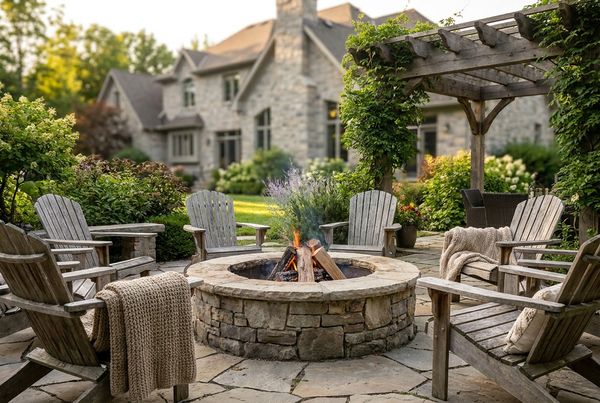
Here's the decision that shapes everything else. Gas — natural gas or propane — is the modern default for most backyards: instant ignition, no smoke, no ash, effortless shut-off, and it's frequently permitted where open wood fires are restricted. Wood-burning pits deliver crackle, scent, and campfire nostalgia that gas can't fake, but they demand more room, more cleanup, and more distance from the house.
| Factor | Gas (natural gas / propane) | Wood-burning |
|---|---|---|
| Ignition | Instant, key or switch | Build and light a fire |
| Smoke & ash | None | Smoke, ash, cleanup |
| Ambiance | Clean, controlled flame | Crackle, scent, nostalgia |
| Local codes | Often allowed in burn bans | Frequently restricted |
| Clearance from structures | Moderate | Larger buffer needed |
| Ongoing effort | Very low | Higher (fuel, cleaning) |
| Best for | Modern, high-use, poolside | Rustic, campfire ritual |
Between the two gas options: natural gas is the most convenient if you can run a line — no tanks, ever. Propane is flexible when a line isn't practical, at the cost of managing refills. Our rule of thumb: if you're pouring concrete anyway, stub a gas line in now. It's cheap while the ground is open and painful to add later.
Placement, clearance & safety near pools and pergolas
Fire is wonderful and it is also fire, so placement matters. Keep a comfortable buffer between the flame and the pool coping, the seating, the house, and anything overhead. Fire bowls engineered onto raised pool walls are the exception that proves the rule — they're designed for that exact spot. Everything else wants breathing room, good footing underneath, and an eye on prevailing wind so smoke and heat don't blow into faces.
The one pairing that trips people up is fire under a pergola. A flame under a low or combustible cover is a real hazard, so never place a fire feature beneath a structure without proper overhead clearance and the right materials — and check what your pergola design allows before you commit. We won't quote numbers here because they vary: always follow your local codes and the manufacturer's listed clearances, which are the figures that actually govern your build. When in doubt, ask the pro doing the install.
Materials & fuel: what it's actually made of
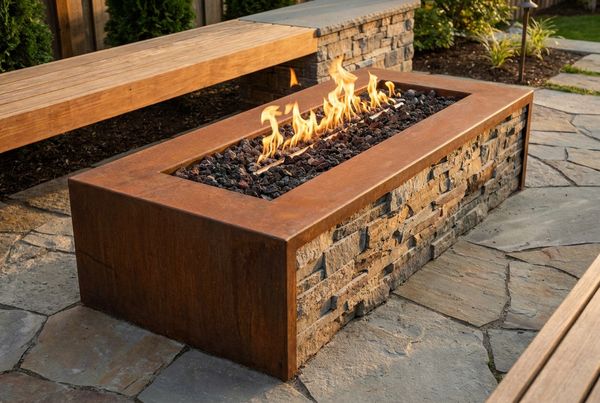
The material a fire feature is built from decides how it ages outdoors, so it's worth a minute before you fall for a look. Cast concrete and GFRC (glass-fiber-reinforced concrete) are the modern default — clean-lined, heavy, weatherproof, and available in the muted grays and taupes that suit a contemporary yard. Steel, especially Corten with its rust-patina finish, reads sculptural and warms up fast. Copper is gorgeous and develops a living patina, at a price. And natural stone or masonry is what you want for a rustic, built-in pit that looks like it grew out of the patio.
Then there's what actually burns. Gas burners are topped with a non-combustible media that's purely cosmetic: tumbled fire glass reflects the flame and looks crisp and modern, lava rock reads natural and hides the burner, and ceramic logs fake a wood fire convincingly. Whatever you pick, match the metal and media to the rest of the hardscape — the fire feature should look related to your coping, decking, and water features, not like it wandered in from a different yard. If you're still shaping the whole look, our pool design ideas hub is the place to pull it together.
What a fire feature really costs
Let's talk money, because the range is enormous and the number that matters is the installed one. An off-the-shelf gas fire table or bowl you set on an existing patio can run from a few hundred dollars to a couple thousand — genuinely the easiest, cheapest way to get flame in the yard tonight. A custom masonry pit with a built-in seat wall, proper footing, and a run natural-gas line climbs well into the thousands, because you're paying for real construction, not a product. And fire-and-water features — bowls engineered onto a raised pool wall — are priced as part of the pool itself, not as an add-on you bolt on later.
The two line items people forget are the gas line and the shut-off. Running a natural-gas line is cheap while the ground is already open for the pool or patio and painful to trench in afterward, so I always tell owners to stub one in during construction even if the fire feature comes later. If you're budgeting a whole backyard, fold the fire feature into the bigger picture with our inground pool cost guide rather than pricing it in isolation — it's usually a small slice of the total that buys an outsized amount of use.
What we'd build
What we'd build
On a tight budget, a linear gas fire table next to the lounge seating gives you 90% of the payoff for a modest price and gets lit constantly. If you're building the pool now and want the "wow," add fire bowls to a raised spa or pool wall while the structure is going in — retrofitting fire onto a finished wall is far harder. Chasing the showpiece? Go fire-and-water. Whatever you choose, plan the gas line during construction and pair the flame with layered lighting.
The trends worth chasing are the ones that see the most use: linear gas tables for everyday modern living, fire bowls for sculptural drama on and around the water, fire-and-water features for the unforgettable showpiece, and above all, extending the season — the whole point of adding fire is buying more nights outside. If a fire pit belongs in your plan, it usually belongs in the plan before the concrete is poured. Round out the vision with an outdoor kitchen, browse the full design ideas hub, and when you're ready to build, find a trusted pool builder near you.
Design Gallery
16 more ideas to save — tap any photo to view full screen.

Kelly E.
Pool Design Editor, PoolPad
Kelly has spent 10+ years around residential pools — planning projects, testing gear, and documenting backyard builds for PoolPad. Each design guide is checked against current construction methods and material pricing.
Frequently Asked Questions
Gas or wood-burning fire pit — which is better?
How far should a fire pit be from a pool?
What is a fire-and-water feature?
Do I need a gas line, or can I use propane?
Can a fire pit be used year-round?
Are fire pits safe near kids and pets?
How much does a backyard fire pit cost?
Can I add fire bowls to a pool I already have?
What burns in a gas fire pit — logs, glass, or lava rock?
Do fire features add resale value?
Ready to build your dream backyard?
Compare local, vetted pool builders and get matched with pros who can bring these designs to life.
Find a Pool Builder Near You