



Key Takeaways
- Fiberglass pools are pre-molded shells dropped into place — installs take weeks, not months, and the smooth gelcoat resists algae.
- Typically $55,000–$90,000 installed, with lower long-term maintenance and chemical use than other types.
- The trade-off: you pick from manufactured shapes and sizes — no fully custom curves, and there's a width limit for road transport.
If you want a pool in the ground fast, with less maintenance for the next 20 years, fiberglass deserves a serious look. These pre-molded shells arrive finished, drop in by crane, and can be swimmable in a fraction of the time a concrete build takes. They're not for everyone — but for the right yard, they're the smartest value in the pool world.
How fiberglass pools work
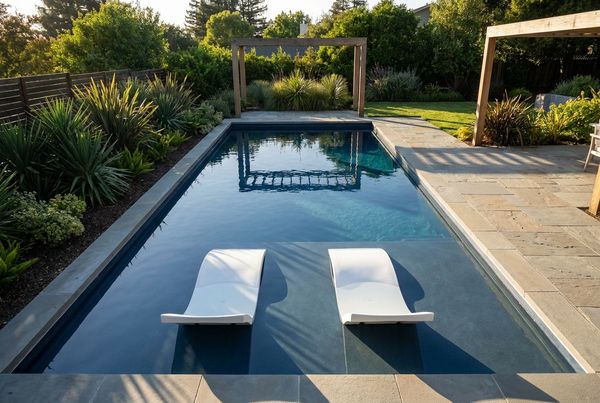
A fiberglass pool is a single, factory-built shell. It's molded off-site over a form, coated in a smooth, non-porous gelcoat finish, cured, and then trucked to your home as one finished piece. On site, a crew excavates the hole, sets the shell, levels it, plumbs the returns and skimmer, and backfills around it while the pool fills with water. Because the shape is manufactured, the tanning ledge, benches, steps, and even splash pads are already part of the shell before it ever reaches your yard.
That gelcoat surface is the whole story of why fiberglass owners spend less time on upkeep. It's slick and non-porous, so algae struggles to get a foothold the way it does on rough plaster. There's no liner to wear out and replace, and no shell surface to re-plaster every decade. You trade some design freedom — you're choosing from a catalog of molds rather than sketching your own curve — for a pool that's quick to install and genuinely low-hassle to live with.
The real pros and cons
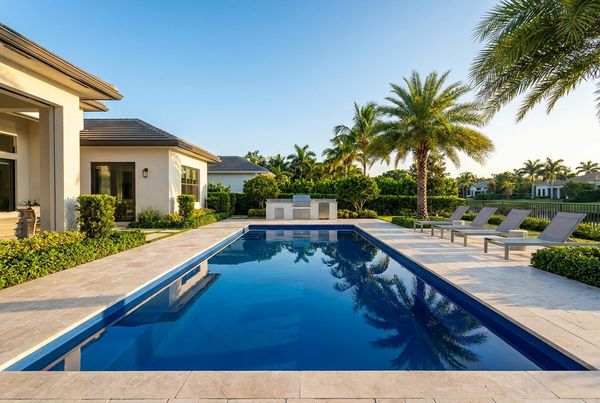
No pool type is perfect, and being honest about the trade-offs is the fastest way to know whether fiberglass fits your yard and your goals. Here's the balanced picture we give clients.
Pros
- Fast install — often 2–4 weeks of on-site work versus months for gunite.
- Smooth gelcoat resists algae → fewer chemicals, easier brushing, and a surface that's gentle on feet and swimsuits.
- Low lifetime maintenance — no liner to replace and no re-plastering cycle.
- Molded features included — tanning ledges, benches, and steps come built into the shell.
- Predictable pricing — because the shell is a known product, quotes tend to hold fewer surprises.
Cons
- Limited to manufactured shapes and sizes — no fully custom curves or freeform designs.
- A maximum width (typically around 16 feet) because the shell has to travel by road.
- Higher upfront cost than a basic vinyl-liner pool.
- Access matters — you need room for a delivery truck and crane.
- Gelcoat can dull and may need refinishing after many years of service.
What a fiberglass pool costs
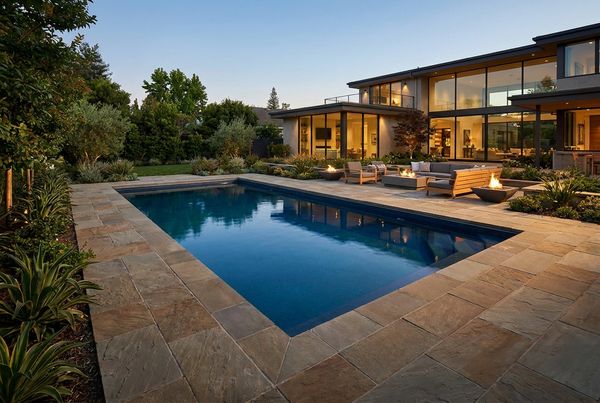
Most fiberglass pools land between $55,000 and $90,000 installed in 2026. The shell is a big chunk of that, but the price you actually sign for depends heavily on what surrounds it — decking, coping, fencing, a heater, lighting, and site conditions such as access, soil, and grade. A small fiberglass plunge shell can come in well below the range; a large shell with a spa, extensive paver decking, and automation can climb past it.
| Item | Typical 2026 range |
|---|---|
| Fiberglass pool, installed | $55,000–$90,000 |
| Small fiberglass plunge | $25,000–$45,000 |
| Paver or concrete decking | $8,000–$25,000 |
| Attached spa spillover | $10,000–$20,000 |
| Heater + LED lighting | $3,000–$8,000 |
| Build time | 2–4 weeks |
Ballpark 2026 U.S. ranges; access, soil, and region move the number. See the full breakdown in our inground pool cost guide.
Where fiberglass really earns its keep is the cost of ownership, not the sticker. Fewer chemicals, no liner replacement, and no re-plastering add up over 20 years. When you compare pools, weigh the lifetime number, not just the day-one quote.
Installation, timeline & crane access
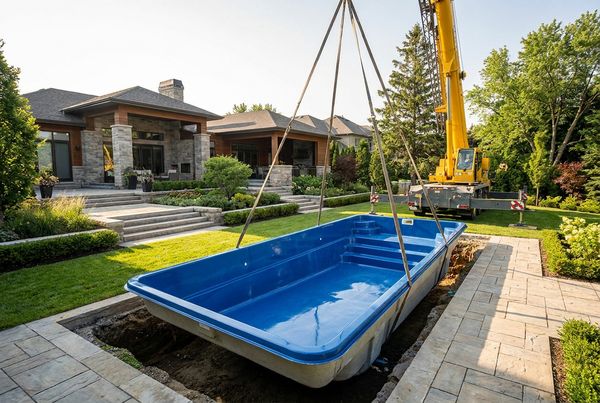
Speed is fiberglass's headline advantage, and it comes from the shell arriving finished. A typical sequence runs: excavate the hole, prepare a level gravel base, crane the shell into position, set and level it, plumb the returns and skimmer, then backfill and fill the pool with water in tandem so the pressures stay balanced. Decking and coping follow. Most of that on-site work wraps in 2–4 weeks, weather and inspections permitting — a fraction of the months a gunite build can run.
The one logistics hurdle unique to fiberglass is access. The shell is delivered in a single piece on a long trailer and lowered by crane, so your yard needs a clear path for both the truck and the lift. Tight lots, overhead power lines, narrow side yards, or a home on a steep slope can complicate — or occasionally rule out — a fiberglass drop-in. This is the first thing to settle with your builder: walk the delivery route before you fall in love with a shell.
What we think
For most families who want a standard shape and years of low-hassle ownership, fiberglass is the best-value pool you can buy — the time and chemical savings are real and they compound. Only rule it out if your design demands a fully custom shape, extreme size, or vanishing edge — that's gunite territory. And confirm crane and truck access before anything else; delivery of the shell is the one variable that can turn an easy install into a headache.
Maintenance & chemicals
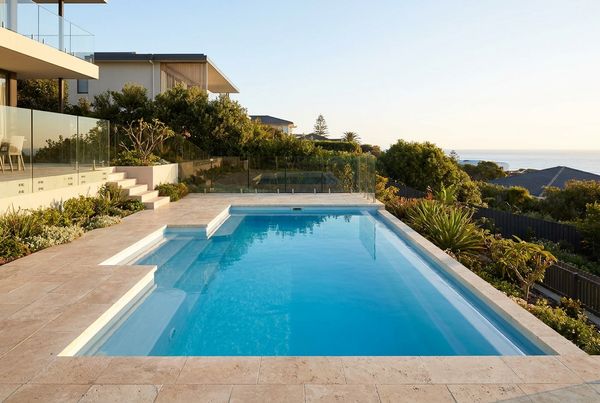
This is where fiberglass owners quietly win back their weekends. The gelcoat surface is non-porous, so it gives algae far less to cling to than rough plaster does. In practice that usually means fewer chemicals, less brushing, and easier balancing — the water tends to stay clear with less intervention. There's no liner to inspect and replace, and no re-plastering cycle to budget for every decade.
None of that makes a fiberglass pool maintenance-free. You still run a filter, keep the water chemistry balanced, skim debris, and clean the waterline. But the baseline workload is lower, which pairs beautifully with modern automation. A good robotic pool cleaner glides over the smooth interior and handles most of the routine vacuuming, cutting your hands-on time even further. Over 20 years, that lighter touch is a real part of the fiberglass value case.
Shapes, sizes & their limits
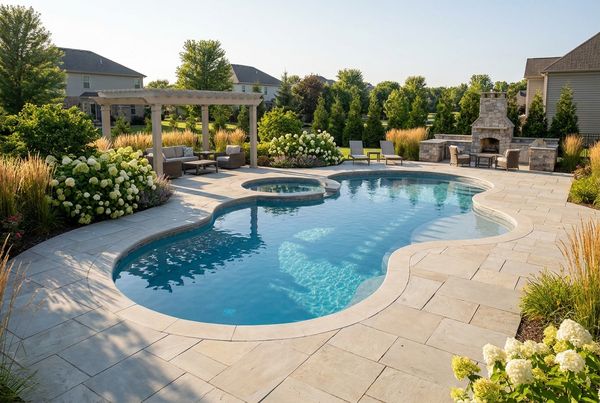
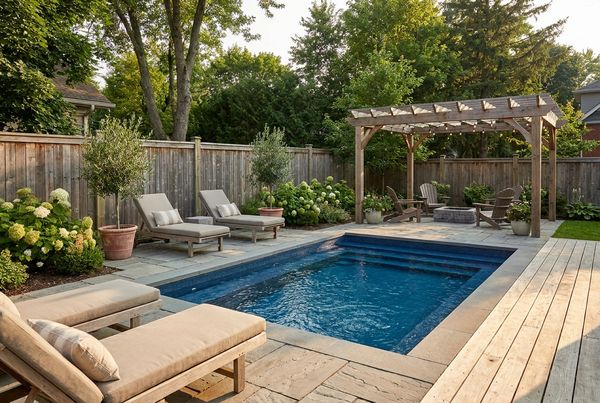
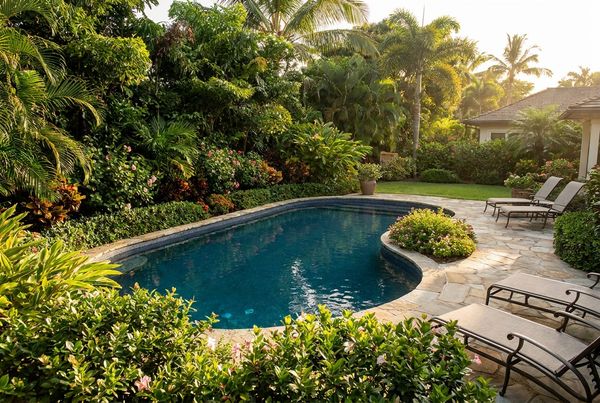
Because each shell is molded from a form, you're choosing from a manufacturer's catalog of shapes and sizes rather than designing from scratch. That catalog is wider than most people expect — rectangles, kidney shapes, freeform curves, lap-oriented shells, and compact plunge sizes all exist. But it is a finite menu. If your heart is set on a one-of-a-kind curve, a vanishing edge that wraps a hillside, or a footprint that exactly fits an odd lot, that's a job for concrete, not fiberglass.
The hard ceiling is width. Since the shell travels by road, most top out around 16 feet wide to stay within transport limits. Length and depth have more room, but very large or very deep custom pools push you toward gunite. For most backyards, though, the catalog covers it — and the plunge-size shells in particular are a superb value for tight lots. If a compact pool is your goal, our plunge pool ideas guide pairs naturally with a fiberglass shell.
Fiberglass vs. gunite vs. vinyl
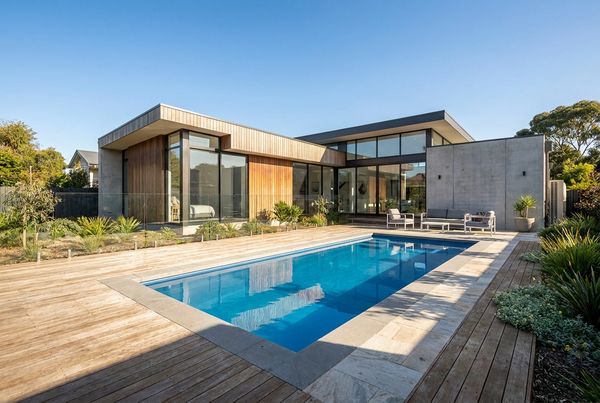
The three main inground pool types each have a clear lane. Fiberglass is the value-and-convenience choice; gunite (concrete) is the fully custom choice; vinyl-liner is the lowest-upfront-cost choice with an ongoing liner-replacement trade-off. Here's how they compare on the factors that matter most.
| Factor | Fiberglass | Gunite (concrete) | Vinyl liner |
|---|---|---|---|
| Upfront cost | $55k–$90k | $60k–$120k+ | $40k–$70k |
| Build time | 2–4 weeks | 2–4 months | 4–8 weeks |
| Maintenance | Lowest | Highest | Moderate |
| Customization | Catalog shapes | Fully custom | Semi-custom |
| Surface life | Refinish after many years | Re-plaster ~10–15 yrs | Liner ~7–12 yrs |
Ranges are 2026 ballparks; see the full comparison in our inground pool cost guide.
The short version: choose fiberglass for the best balance of speed, low upkeep, and value on a standard shape. Choose gunite when the design has to be one of a kind, oversized, or feature-heavy — full details in our gunite pools guide. Choose vinyl when the lowest possible upfront price is the priority and you're comfortable replacing the liner periodically.
Popular features & 2026 trends
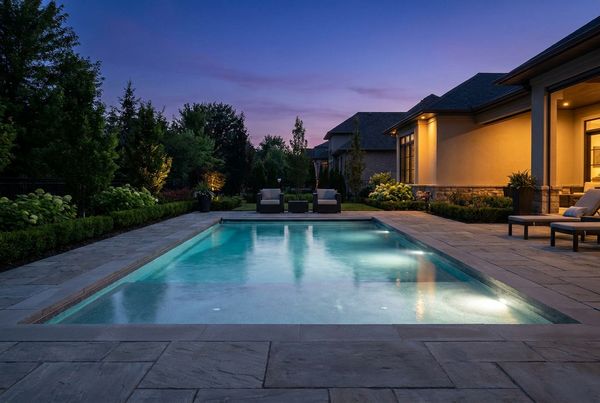
The 2026 fiberglass conversation is dominated by three moves. First, fast installs are the whole selling point, and manufacturers have leaned in — streamlined delivery, tighter tolerances, and shells engineered to be swimmable in weeks. Second, low-maintenance gelcoat finishes keep improving, with richer colors, better UV resistance, and surfaces that hold their shine longer. Third — and most visibly — molded tanning ledges have become the feature buyers ask for by name.
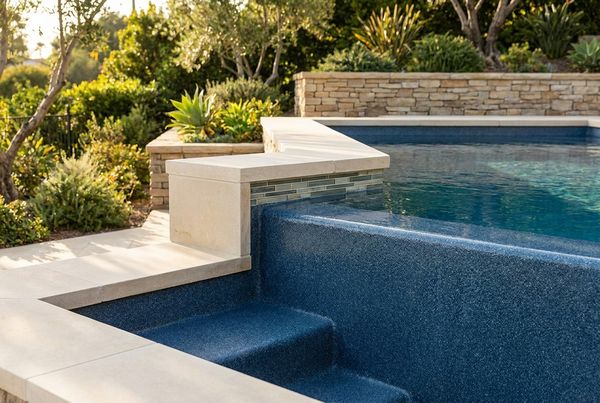
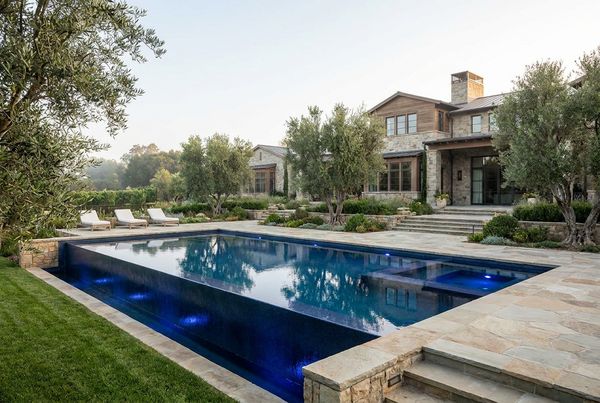
A tanning ledge (a shallow shelf a few inches deep) is where fiberglass shines, because it's molded right into the shell rather than formed on site. Add bubblers on the ledge, waterline LEDs, and a spa spillover and you have a resort look on a catalog shell. Other favorites: dark gelcoat interiors that read as a reflecting pool, molded benches and swim-outs, and a single sheer-descent water feature for sound. Browse the full menu in our pool design ideas hub before you settle on a shell.
Climate, soil & water table
One question I get less often than I should is how a fiberglass shell behaves in a tough site — and the honest answer is that ground conditions matter more with fiberglass than most buyers expect. Because the shell is rigid and relatively lightweight, it depends on being properly backfilled and, in wet ground, anchored against hydrostatic pressure. In areas with a high water table, groundwater can push on the shell if the pool is ever drained, which is exactly why I tell owners a fiberglass pool should almost never be fully emptied without a pro managing it. On a good site with normal soil, none of this is a worry; on a boggy or high-water lot, it's a conversation to have with your builder before anything is dug.
Climate itself actually favors fiberglass in a lot of places. The shell flexes slightly with ground movement, so it tends to handle freeze-thaw cycles well when it's closed correctly for winter — the smooth surface also gives ice less to grab. In hot, sunny regions the gelcoat holds its color better than it used to, and a fiberglass pool heats efficiently because there's no porous plaster wicking warmth away. If you run a heater, pair it with a cover and check your ideal daily filtration with our pump run time calculator so you're not paying to circulate water you don't need to.
Fiberglass and resale value
Buyers ask whether a fiberglass pool "counts" the same as concrete when it's time to sell, and in most markets the answer is that a well-installed inground pool is an inground pool — appraisers and buyers rarely dock you for the material. What actually moves resale is condition and fit: a clean, modern shell that suits the yard reads as an asset, while any pool that looks tired or oversized for the lot reads as a chore. Fiberglass has a quiet edge here because the low-maintenance surface tends to still look sharp years later, and there's no aging plaster to betray the pool's real age.
Where fiberglass genuinely helps a sale is the ownership story you can hand the next buyer: no liner replacement on the horizon, fewer chemicals, and a durable finish. That said, a pool is a lifestyle purchase first and an investment second — it rarely returns 100% of its cost. If you're weighing the numbers, I'd read our inground pool cost guide for the full resale picture, and lean on a good local builder to keep the install clean, because a botched set is the one thing that does hurt value.
Is a fiberglass pool right for you?
For most backyards, fiberglass is the smartest-value inground pool you can buy — and the case is simple. You get a real, permanent pool in weeks instead of months, with lower chemical and maintenance costs for the next two decades, and a smooth finish that's easy on feet and easy to keep clear. The honest trade-off is design freedom: you're choosing from a catalog of molded shapes, capped around 16 feet wide, rather than sketching a custom curve. If that catalog has a shell you love, fiberglass is hard to beat.
Rule it out only if your design demands a fully custom shape, an oversized or extra-deep pool, a vanishing edge, or if your lot can't accommodate crane and truck access. In those cases, gunite is the answer. Otherwise, the path is straightforward: confirm access, pick a shell whose shape and features fit your yard, and find a builder who installs fiberglass regularly — the drop-in is quick, but a botched set is expensive to fix. Start with our pool builder near me guide, and browse the full pool design ideas hub before you commit.
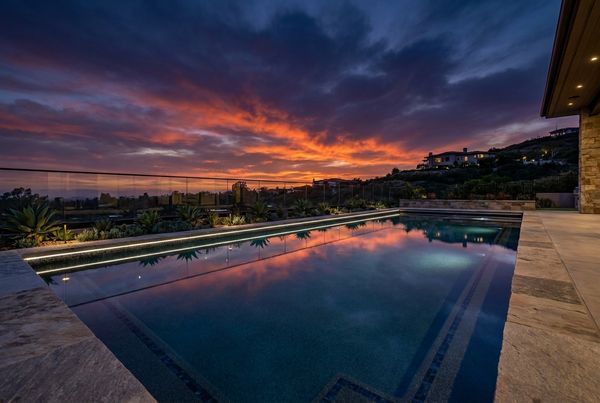
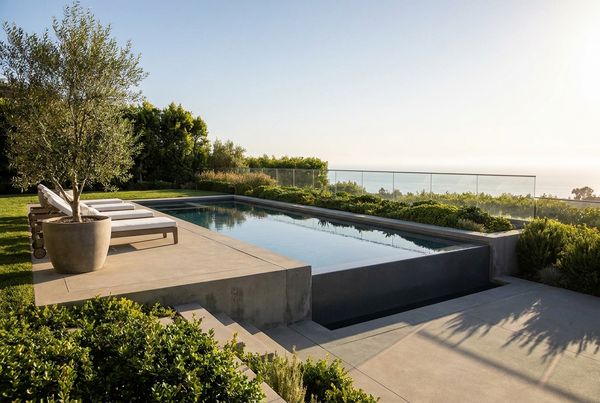
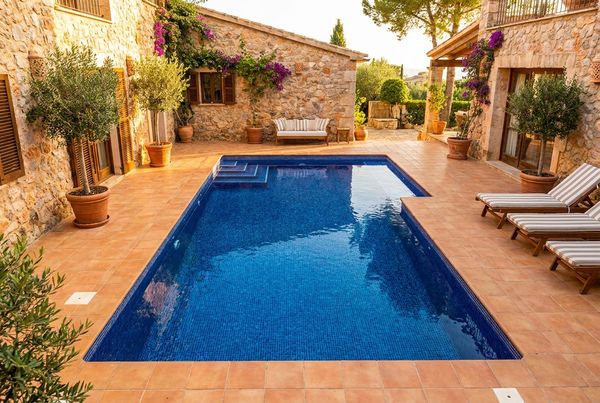
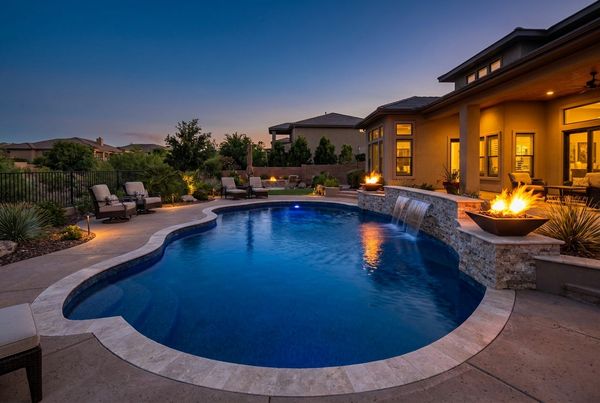
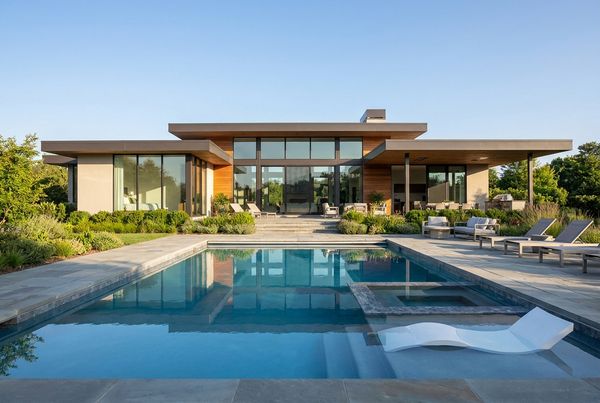
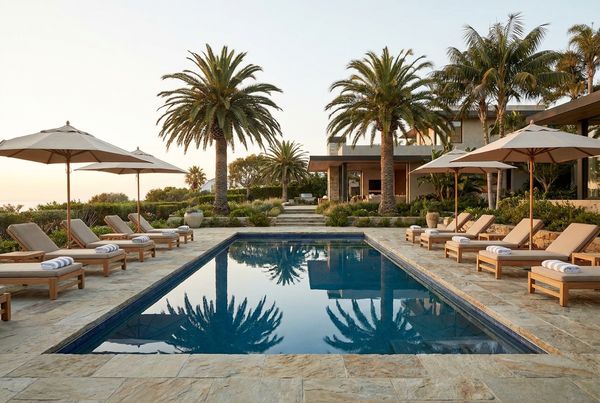
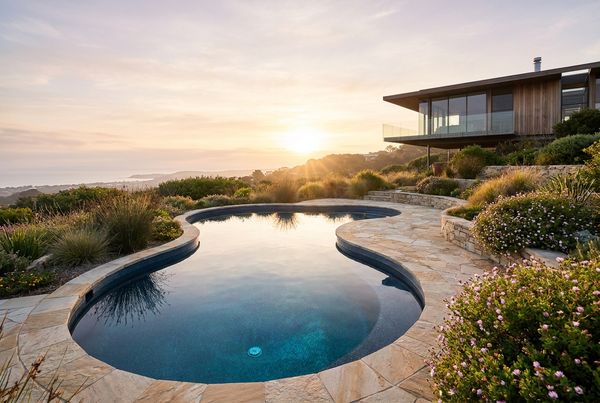
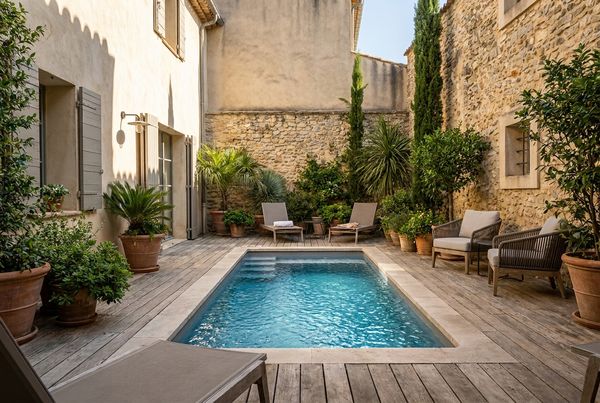
Design Gallery
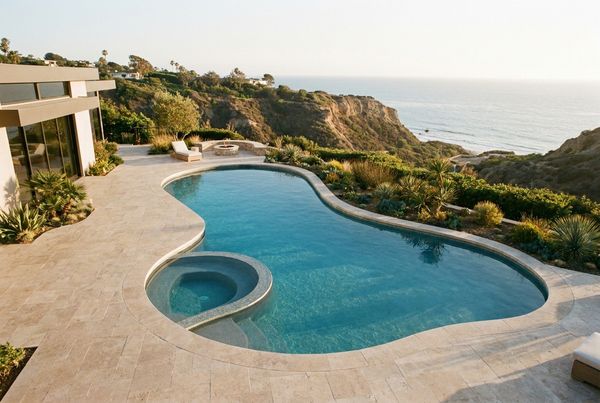
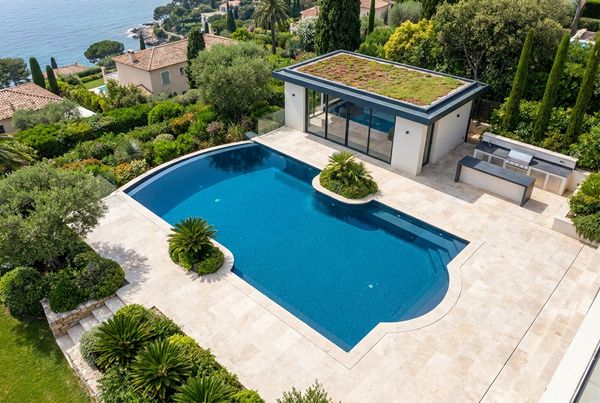
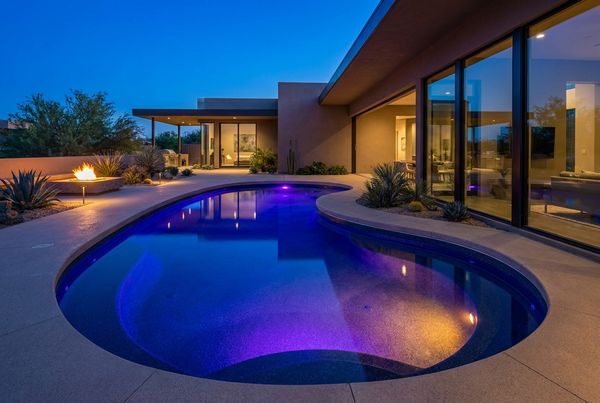
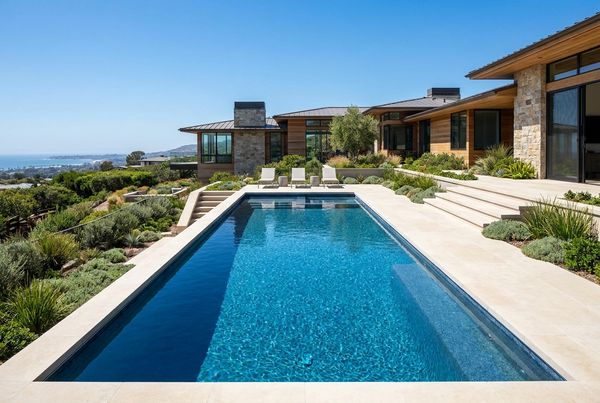
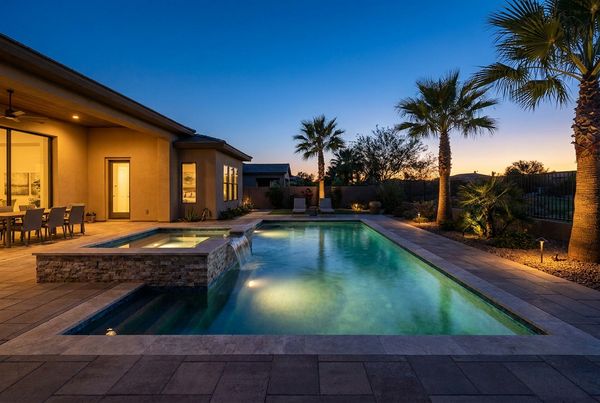
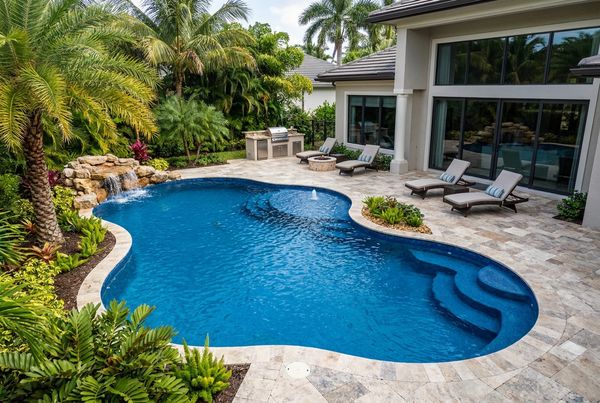
18 more ideas to save — tap any photo to view full screen.

Kelly E.
Pool Design Editor, PoolPad
Kelly has spent 10+ years around residential pools — planning projects, testing gear, and documenting backyard builds for PoolPad. Each design guide is checked against current construction methods and material pricing.
Frequently Asked Questions
How much does a fiberglass pool cost?
What are the pros and cons of a fiberglass pool?
Fiberglass vs. gunite — which is better?
How long does a fiberglass pool last?
How long does it take to install a fiberglass pool?
Do fiberglass pools need a crane?
Are fiberglass pools cheaper to maintain than concrete?
Can you have a saltwater fiberglass pool?
How does fiberglass compare to vinyl on price?
Ready to build your dream backyard?
Compare local, vetted pool builders and get matched with pros who can bring these designs to life.
Find a Pool Builder Near You