



Key Takeaways
- Travertine and porcelain pavers stay coolest underfoot and look high-end; concrete is the most budget-friendly.
- Prioritize a slip-resistant, low-heat surface — the deck is the surface bare feet touch most.
- Coordinate the deck tone with your home and coping; the deck is the largest visual surface in the whole design.
Your pool deck is the surface your bare feet actually touch — and the single largest visual element in the whole design. Get it right and the whole backyard looks finished; get it wrong and you've got a deck that's too hot to walk on, slick when wet, or clashing with the house. After decades around hardscape, here's how the popular pool deck ideas really compare — and where we'd spend and save.
The material comparison
Before the pretty pictures, get the fundamentals straight. Every pool decking material is a trade-off between four things: how it looks, how hot it gets underfoot, how well it grips wet feet, and what it costs installed. Here's the honest breakdown.
| Material | Look | Heat underfoot | Slip resistance | Cost / sq ft* |
|---|---|---|---|---|
| Broom-finish concrete | Simple, clean | Warm | Good | $8–$12 |
| Stamped concrete | Mimics stone/wood | Warm–hot | Fair–good | $12–$20 |
| Concrete pavers | Versatile, modular | Moderate | Very good | $14–$22 |
| Travertine | High-end, natural | Cool | Very good | $16–$26 |
| Porcelain pavers | Modern, uniform | Cool–moderate | Very good | $18–$28 |
| Wood-look composite | Warm, contemporary | Moderate | Very good | $20–$32 |
*Approximate 2026 U.S. installed ranges. Site prep, demolition, patterns, and borders push the final number up.
How to choose your pool deck
Start with climate. In hot, sunny regions, surface temperature matters more than anything — light travertine and porcelain stay walkable when dark stamped concrete is genuinely scorching by 2 p.m. If you already have concrete, a "cool deck" acrylic coating can drop the surface temp meaningfully without a rip-out.
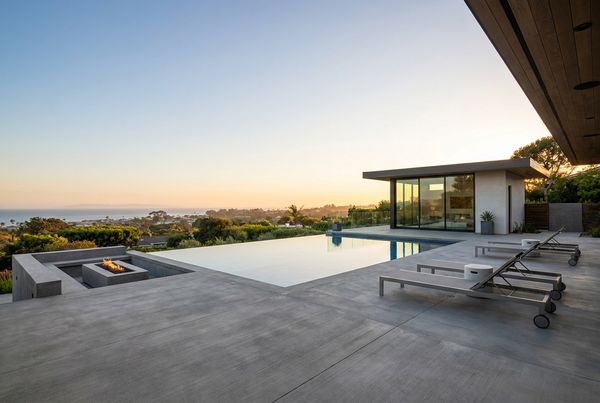
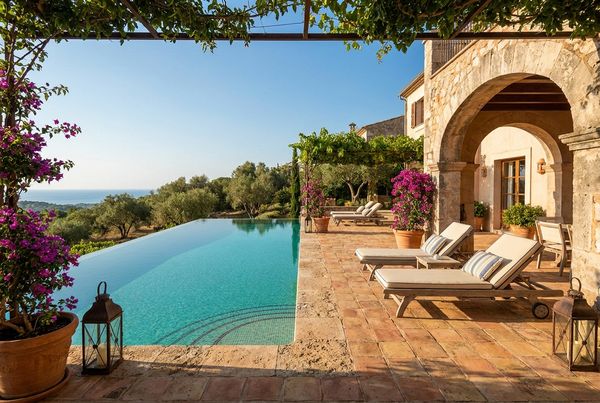
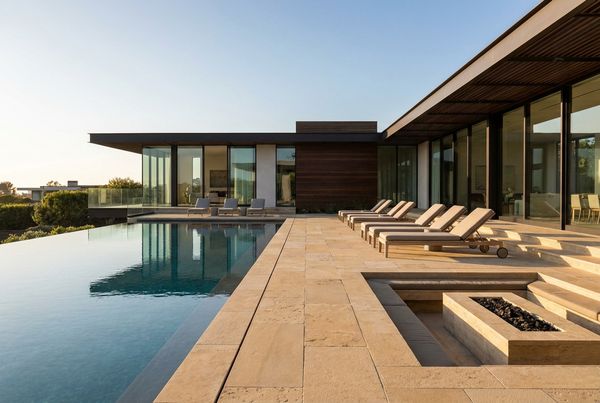
Then match the house. The deck is a huge surface, so its tone should echo your home's stone, stucco, or brick. Cool grays suit modern and contemporary homes; warm creams and tans suit Mediterranean, ranch, and traditional styles. Fight this and the backyard always looks a little off.
Then think about safety and upkeep. Choose a textured, slip-resistant finish at the water's edge, and remember that pavers can be lifted and reset individually if the ground shifts — a real advantage over a monolithic concrete slab that cracks in one ugly line. Think about drainage too: the deck should slope away from the pool so water sheets toward the yard, not back into the coping. Browse the full range of layouts in our pool design ideas hub.
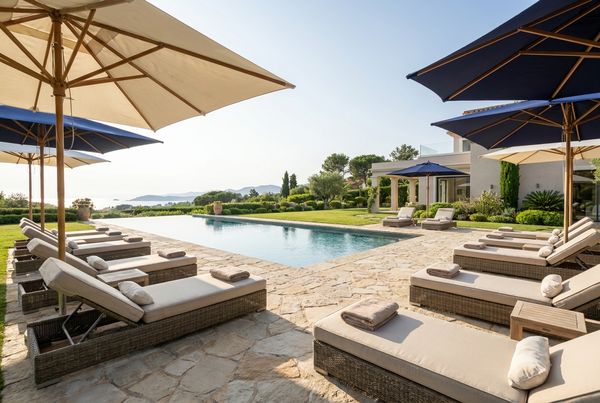
Finally, size it generously. The single most common regret we hear is a deck that's too narrow. Give yourself at least 3 to 4 feet of walking room all the way around, and 8 to 12 feet on the side you'll furnish with loungers or a dining set. Extra square footage is cheap now and painful to add later.
What we think
In hot, sunny climates, travertine or light porcelain pavers are worth every penny — cool underfoot, timeless, and individually resettable if the ground moves. On a tighter budget, a broom-finished or lightly textured concrete in a light color beats dark stamped concrete that bakes in the sun and telegraphs every crack. Whatever you pick, obsess over the coping — it frames the water and is where cheap builds show first.
Travertine & porcelain: the cool-underfoot favorites
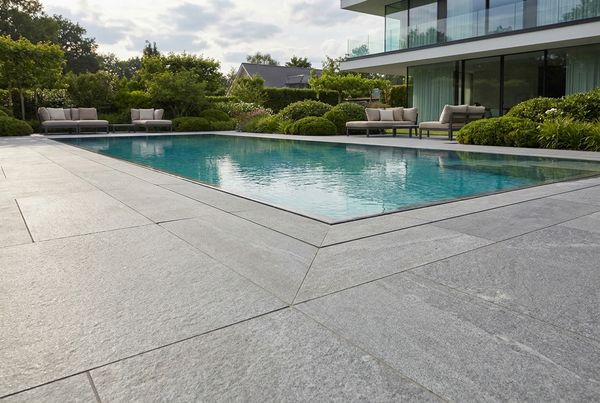
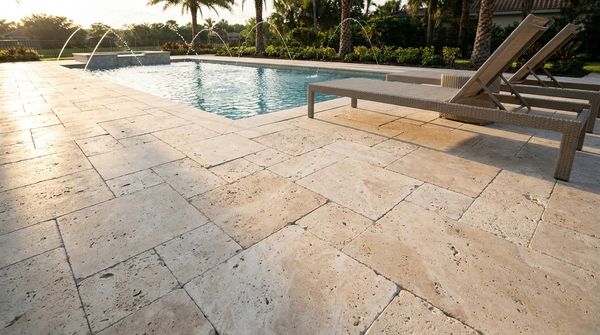
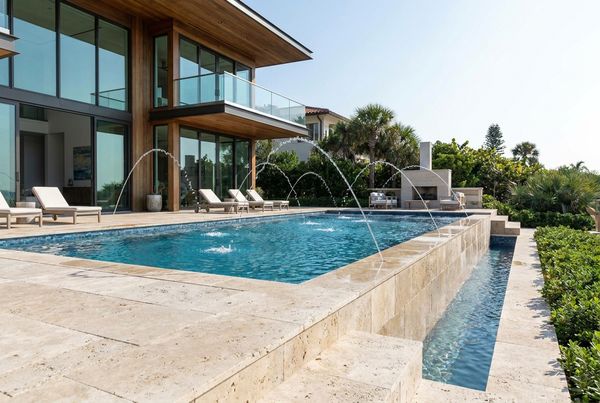
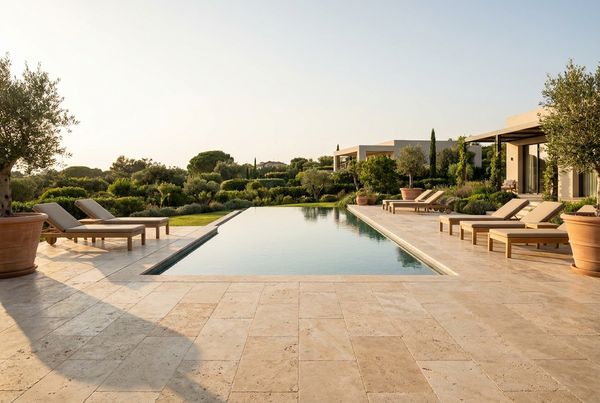
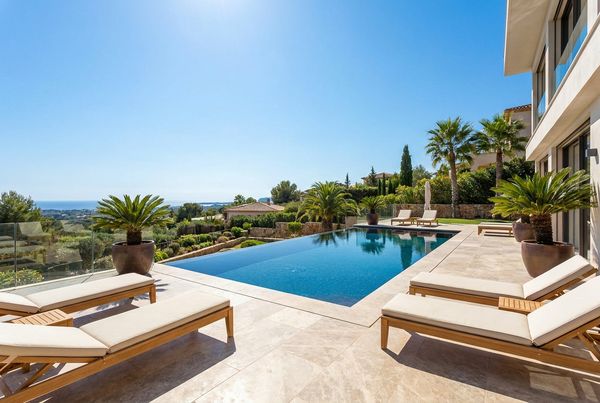
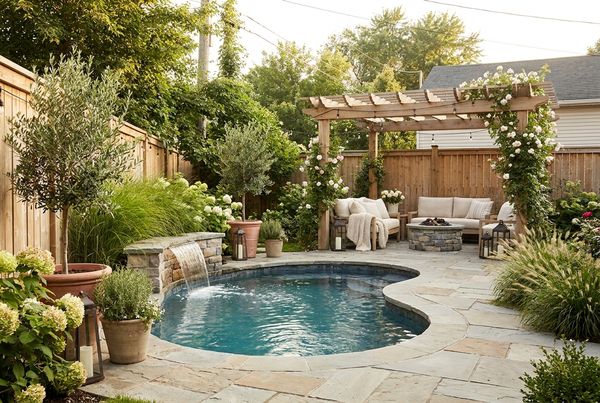
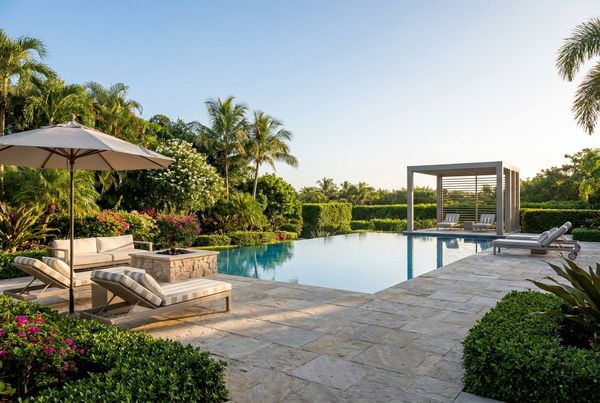
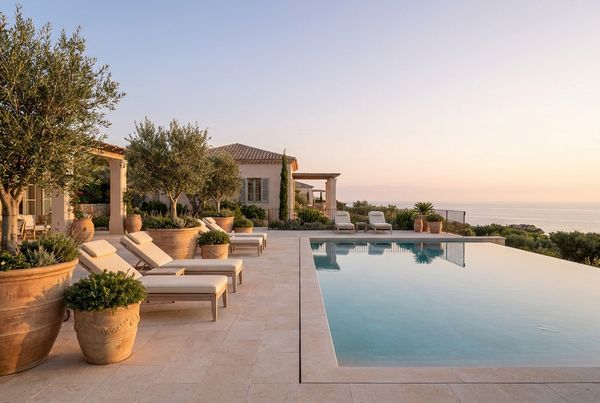
If we had to name the two materials that have quietly taken over premium pool decks, it's these. Travertine is a natural limestone with a naturally porous, light-colored surface that stays cooler than almost anything else and grips wet feet without feeling harsh. A tumbled, filled-and-honed travertine deck reads instantly high-end and ages gracefully — the ivory and walnut tones only look better with a little patina.
Porcelain pavers are the engineered answer: dead-uniform color, near-zero water absorption, and enormous format sizes (24×24 and 24×48 are everywhere in 2026). They resist stains, fading, and freeze-thaw damage, and they rarely need sealing. Manufacturers also sell matched coping and bullnose pieces, so the whole edge detail stays consistent. The catch is installation — porcelain wants a precise, well-drained base and careful cutting, so it's not the material to hand a bargain crew. Done right, though, a porcelain deck is the closest thing to maintenance-free decking money can buy.
One honest note on cost: both of these sit at the top of the range, and the labor to set individual pavers on a proper base is real. If your budget is tight, it's often smarter to run a light concrete field and spend the savings on a beautiful travertine or porcelain coping — you get the premium look exactly where the eye lands.
Concrete: budget-friendly and endlessly versatile
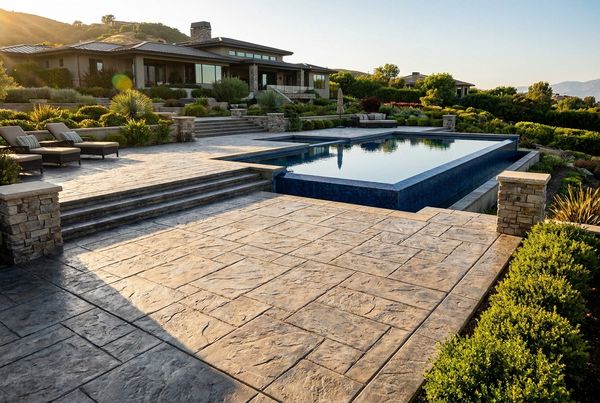
Concrete is still the workhorse of pool decking, and for good reason: it's the most affordable way to cover a lot of square footage. A simple broom-finish deck in a light integral color is clean, slip-resistant, and honest — there's nothing wrong with it, and it pairs beautifully with a nicer coping.
Stamped concrete is the crowd-pleaser, pressing stone, slate, or wood-plank textures into a poured slab for a custom look on a mid-range budget. Two cautions from experience: keep the color light so it doesn't cook in the sun, and accept that a slab will eventually crack somewhere — control joints hide it, but they don't prevent it. For a gunite-and-concrete package, factor decking into the whole build, which we cover in our gunite pools guide.
Coping: the detail that frames the water
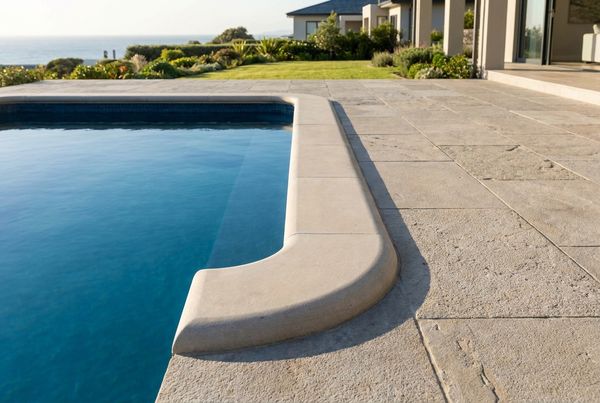
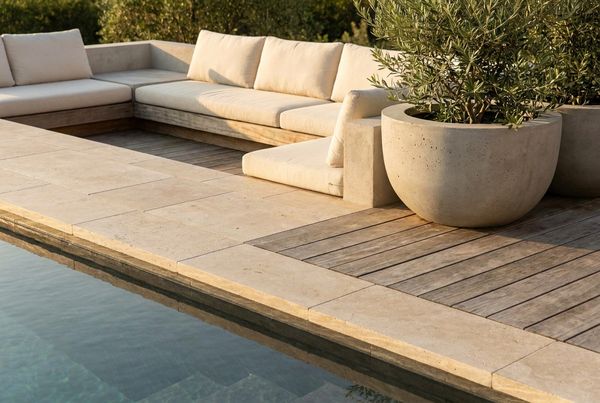
Coping is the cap that runs around the pool's edge, and it's the highest-impact detail on the entire deck. It's the transition your hands grab and your feet cross a hundred times a swim, so it needs to be comfortable, safe, and beautiful. A contrasting coping — say, a warm travertine cap against a cooler grey deck — instantly makes an ordinary deck look designed.
Bullnose (rounded) coping is the classic for a reason: soft on elbows, easy on toes. A flat, square-edge coping in porcelain or stone reads sharper and more modern. Whatever profile you choose, this is not the place to save money — sloppy coping is the first tell of a cut-rate job, and it's expensive to redo later.
Borders, banding & large-format layouts
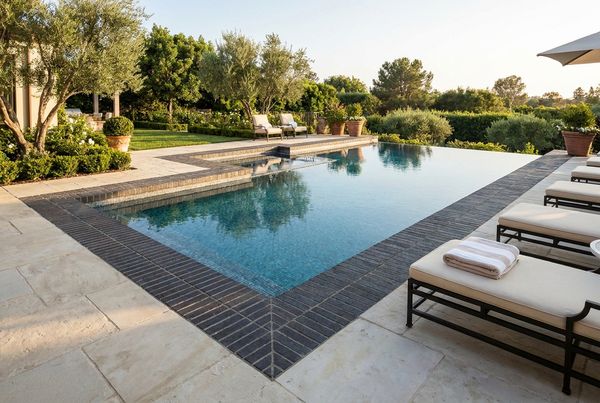
Layout is where a deck earns its keep. A soldier-course border — a single row of pavers turned on end to frame the field — defines the deck's edges, hides messy cuts at walls and beds, and gives the eye a clean line to follow. It's a small upcharge with an outsized payoff.
Meanwhile, the biggest visual shift of the last few years is large-format. Bigger units mean fewer joints, which means a calmer, more contemporary surface that photographs beautifully.
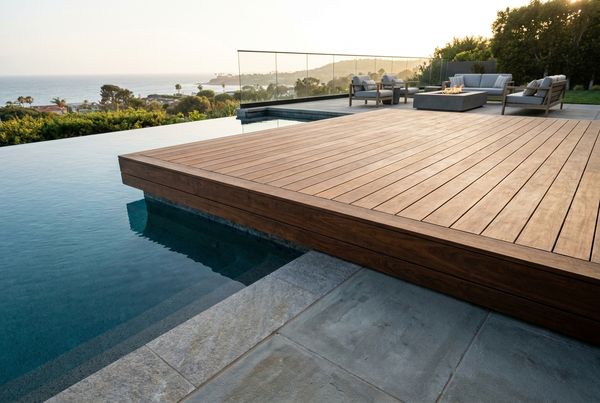
Pair large-format pavers with tight, sanded joints and you get that seamless, almost monolithic look without giving up the crack-resetting advantage of a modular deck. For compact yards, big pavers also make a small deck feel bigger — more on that in our small pool ideas.
Dark vs. light: getting the deck color right
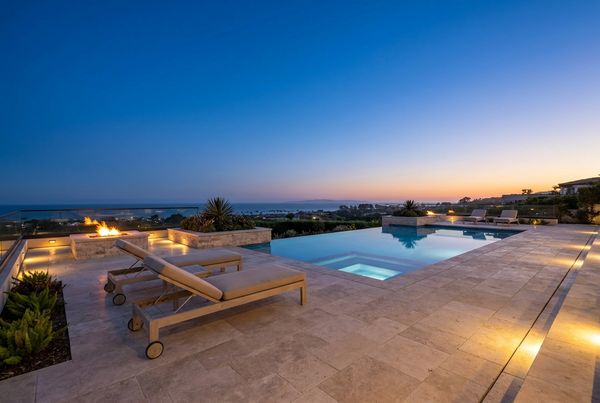
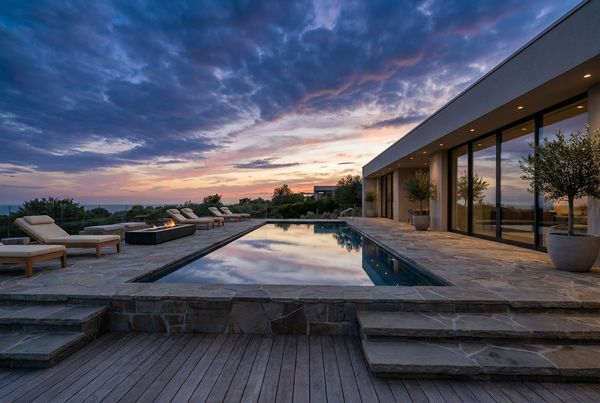
Color is not just aesthetics — it's a comfort decision. Dark decks (charcoal porcelain, deep-stained concrete) look dramatic and modern, hide dirt, and make blue water pop. But they absorb heat, and in Phoenix or Dallas a dark deck in July can be too hot for bare feet. Light decks (ivory travertine, sand-tone pavers, light concrete) stay meaningfully cooler, brighten the whole yard, and never go out of style — the trade-off is they show leaf stains and need occasional cleaning.
Our rule of thumb: the hotter and sunnier your climate, the lighter your deck should be. Save the dark, dramatic surfaces for shaded areas, covered lounges, and cooler regions where heat underfoot isn't a daily reality.
Deck features worth building in
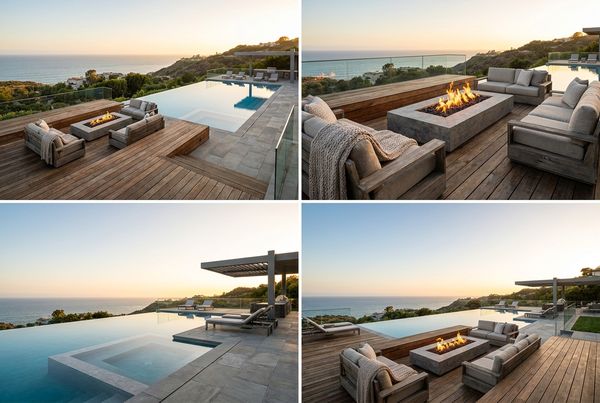
The best decks do more than surround water. A few features are far cheaper to build during construction than to retrofit:
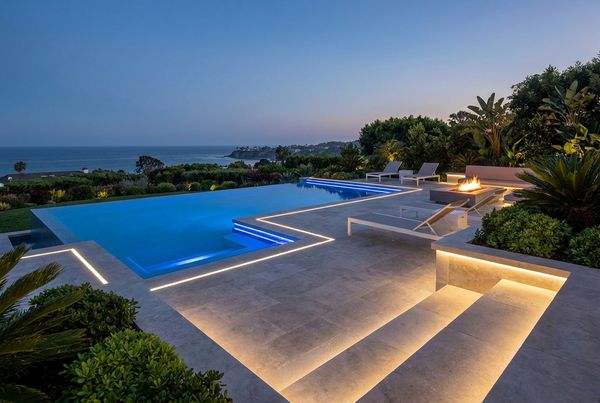
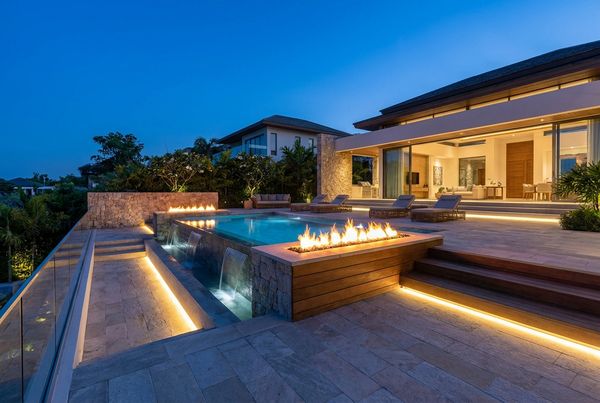
- Deck jets & lighting. Laminar deck jets and low-voltage lighting turn an ordinary deck into a nighttime feature — motion, sound, and glow for a modest cost.
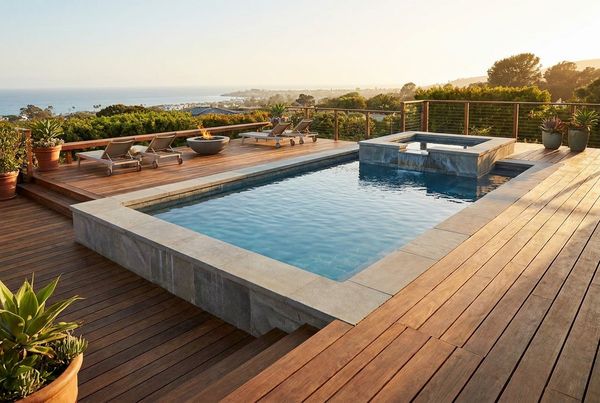
- A fire pit or fire bowl. A sunken or built-in fire feature extends the season and gives the deck a gathering point that isn't the water.
- Built-in loungers & shelves. In-water tanning shelves and integrated seating blur the line between deck and pool.
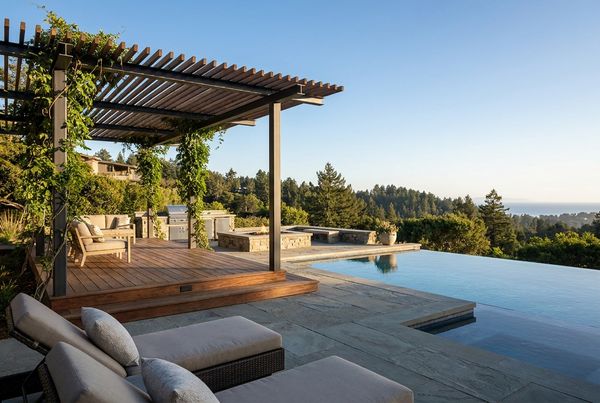
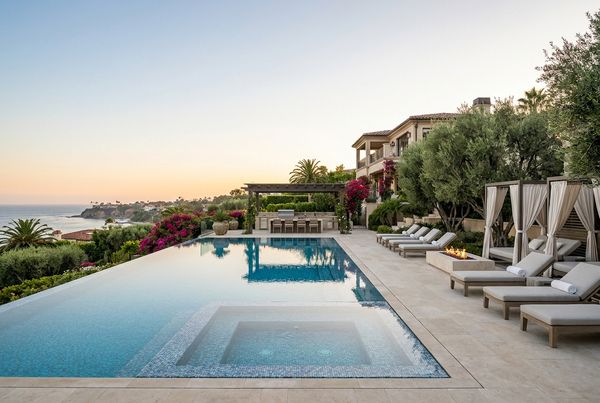
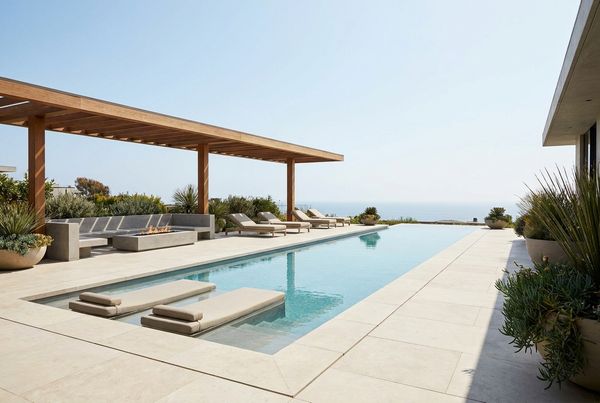
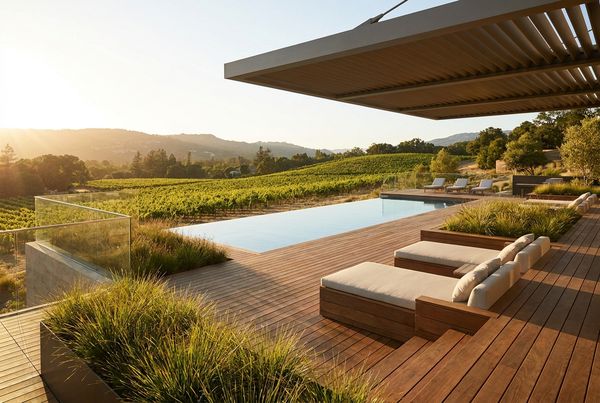
- Shade structure. A pergola or cantilevered shade sail makes a hot deck usable at midday and adds architecture the eye can hold onto.
Drainage and base prep: the invisible half of a deck
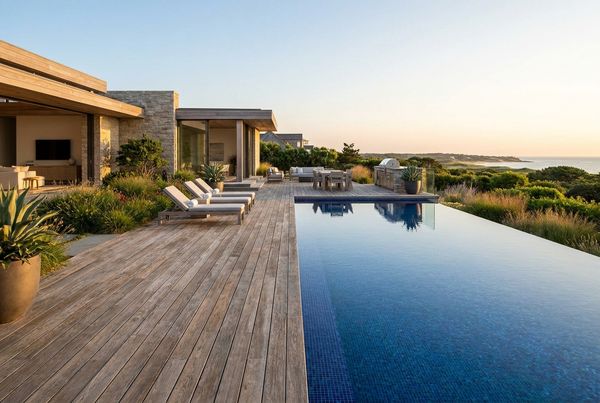
Every deck failure I've been called out to look at traces back to the same thing: the part nobody sees. A gorgeous travertine surface set on a poor base will heave, settle, and open joints within a couple of seasons, while a humble broom-finish slab on a properly compacted, well-drained base will look fine for decades. When you're getting quotes, ask each installer as much about base prep and drainage as you do about the surface — the good ones will have a lot to say.
Two things matter most. First, the deck has to slope away from the pool, ideally around a quarter-inch per foot, so rain and splash-out sheet toward the yard instead of pooling at the coping or running back into the water. Water that sits against the coping is what stains it, undermines it, and eventually lifts it. Second, in areas with real rainfall, plan where that water goes — a channel drain across the low edge or a few strip drains keep the deck from turning into a shallow lake after a storm and stop runoff from carrying mulch and soil from your planting beds into the skimmer.
If you're routing storm runoff off the deck, keep it away from the shell and coordinate it with the grading around the whole build. A deck that drains well also keeps your water chemistry steadier, because you're not constantly washing deck grime and landscape overspray into the pool.
Resurfacing vs. replacing an aging deck
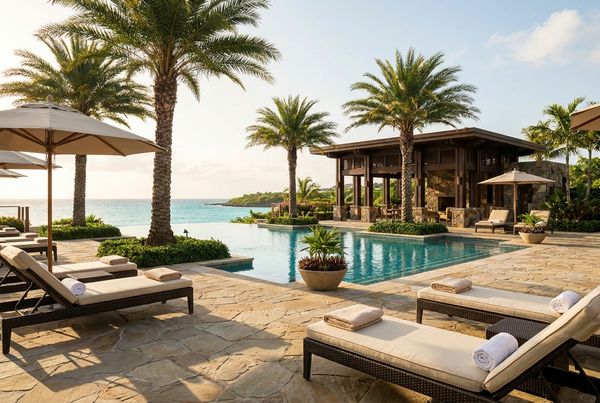
If you've inherited a dated or cracked concrete deck, you have more options than a full tear-out. A structurally sound slab can often be resurfaced — a thin overlay, a spray-texture coat, or a stain-and-seal treatment goes right over the old concrete and buys you a fresh look for a fraction of replacement cost. Overlays can even mimic stone or add a cool-deck texture, and they're a favorite move in a pool remodel when the budget is going mostly to the interior finish.
The catch is that resurfacing only works on a slab that's fundamentally healthy. If the concrete has deep structural cracks, has heaved from a bad base, or is settling unevenly, an overlay just cracks along with it — you're papering over the real problem. In that case, tearing out and starting fresh with pavers is the smarter long-game call, because pavers can be individually reset if the ground moves again.
A middle path worth knowing: you can re-do just the coping and a border while leaving the field intact. Swapping tired coping for travertine or porcelain and adding a contrasting soldier-course border reframes the whole deck for far less than a full replacement, and it's the highest-impact upgrade dollar-for-dollar — the eye lands on the edge, so that's where a refresh shows most. Whatever route you take, get real numbers for both repair and replacement before deciding, and weigh it against your wider pool budget.
Don't forget the whole backyard
Decking usually accounts for a meaningful slice of a pool budget — plan it alongside your landscaping and factor it into your total pool cost from day one, not as an afterthought when the shell is already in. A cohesive deck, coping, and planting plan is what makes a backyard read as one designed space rather than a pool with a patio bolted around it.
When you're ready to price it out, get real numbers from installers who do this every week — a good local pro will steer you on base prep and drainage, which matter as much as the surface you see. Start with a pool builder near me and bring this comparison to the conversation.
Design Gallery
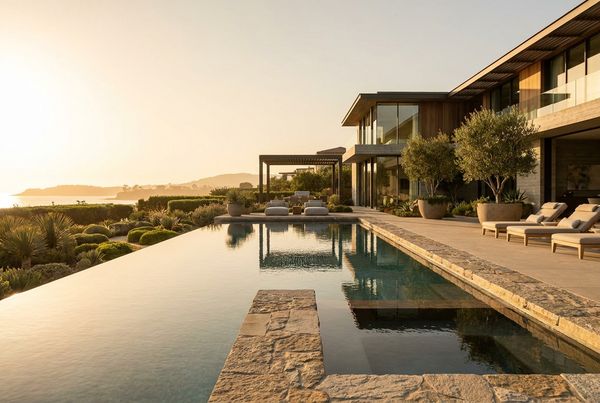
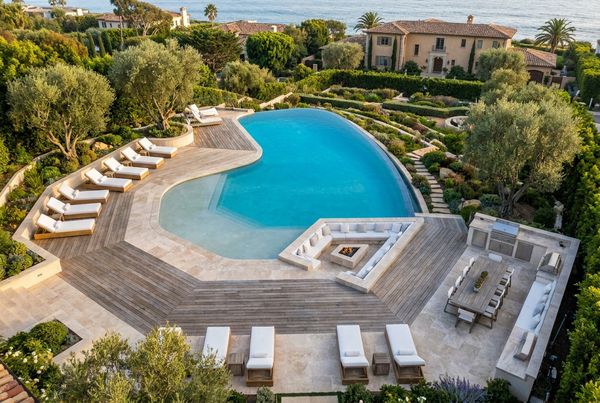
19 more ideas to save — tap any photo to view full screen.

Kelly E.
Pool Design Editor, PoolPad
Kelly has spent 10+ years around residential pools — planning projects, testing gear, and documenting backyard builds for PoolPad. Each design guide is checked against current construction methods and material pricing.
Frequently Asked Questions
What is the best material for a pool deck?
What is the coolest pool deck material for hot climates?
How much does a pool deck cost?
What is the most slip-resistant pool deck?
How wide should a pool deck be?
Do paver pool decks need sealing?
How do I keep my pool deck cool underfoot?
Should the pool deck match the coping?
How do I stop my pool deck from cracking?
What's the best low-maintenance pool deck?
Ready to build your dream backyard?
Compare local, vetted pool builders and get matched with pros who can bring these designs to life.
Find a Pool Builder Near You