



Key Takeaways
- An infinity (vanishing/negative) edge works by letting water spill over a lowered wall into a hidden catch basin, then recirculating it — creating the illusion the water has no edge.
- They only make sense when you have a view or a drop to disappear into — a slope, a hillside, a lake, or a skyline.
- Expect a meaningful premium over a standard pool for the extra structure, catch basin, and larger pump.
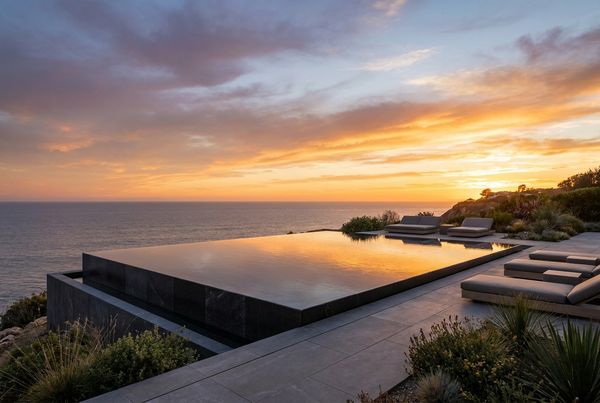
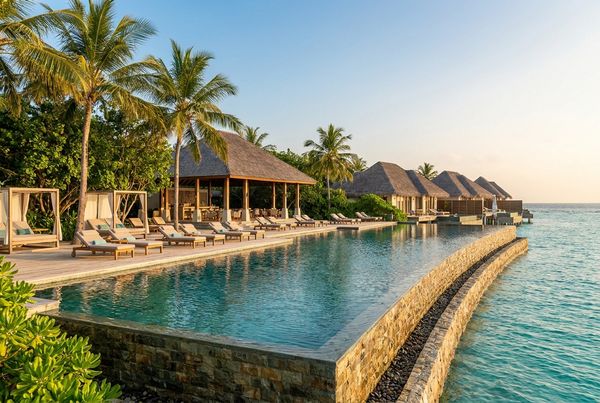
Nothing else in a backyard delivers drama like a vanishing edge. Done right, an infinity pool erases the line between water and view — the surface seems to pour straight into the ocean, the valley, or the city lights. It's the single most photographed pool feature there is, and after designing dozens of them, we can tell you exactly when it's a masterpiece and when it's an expensive mistake.
How a vanishing edge actually works
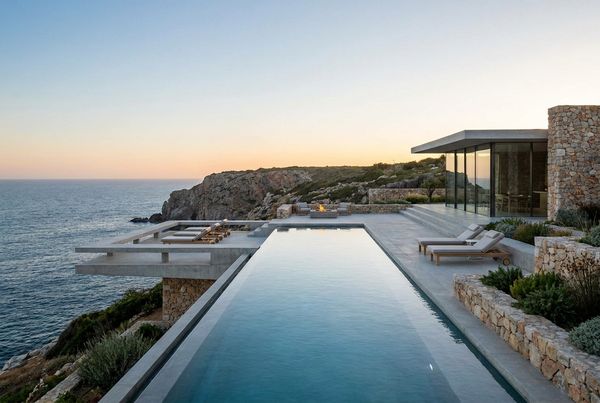
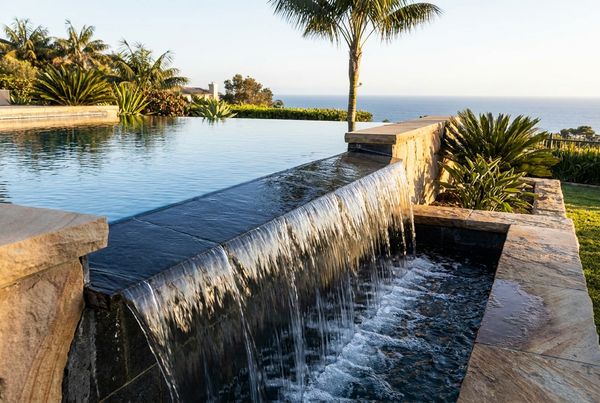
The trick is simple in concept and demanding in execution. One wall of the pool — the vanishing wall — is built a fraction of an inch below the waterline, so water constantly sheets over it in a thin, silent film. Instead of being lost, that water falls into a hidden catch basin below the edge, where it's collected and pumped straight back up into the main pool. The circulation never stops.
That's why an infinity pool is more machine than a standard pool. It needs a larger, dedicated pump to keep the film moving, an oversized surge line and basin sized to hold the water that's in transit, and above all a spillover lip that is dead level across its entire length. A lip that's off by even an eighth of an inch will sheet unevenly — heavy on one end, dry on the other — and the illusion falls apart. This is precision concrete work, and it's the single biggest reason vanishing edges live and die on the quality of the builder.
What we think
The edge is only as good as the concrete under it. We'd rather have a modest 12-foot vanishing edge poured perfectly level by a crew that has built a hundred of them than a 40-foot showpiece from a builder learning on your dime. Ask any prospective builder for photos of their own finished vanishing edges — running, not empty — before you sign.
When you actually need a view or a slope
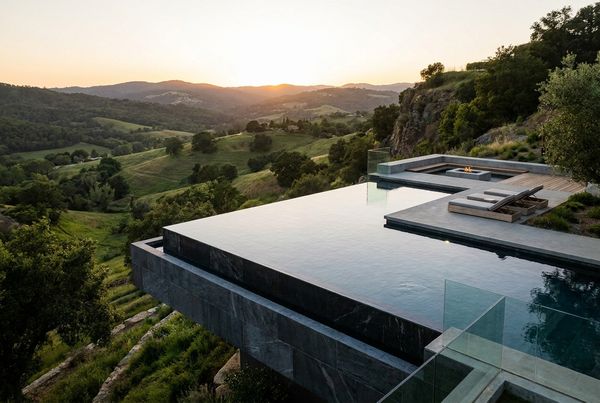
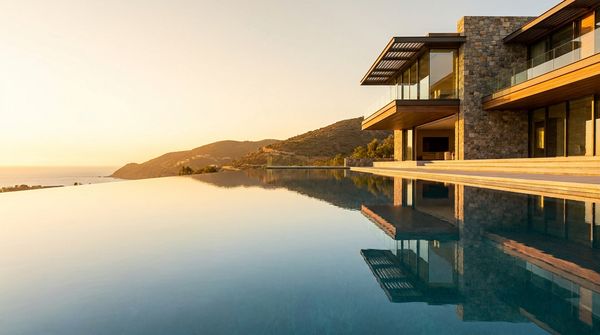
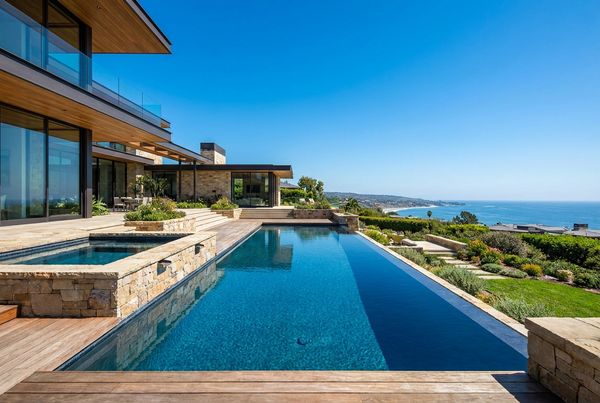
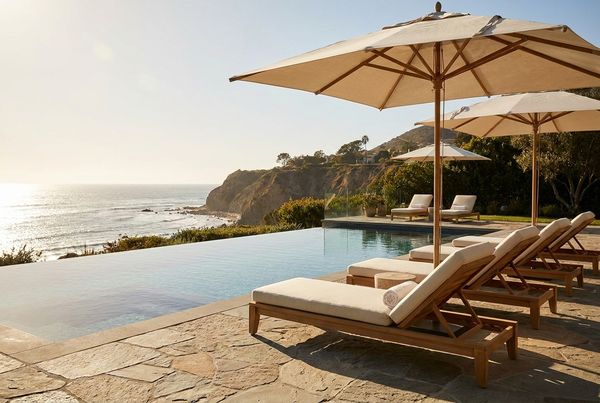
Here's the hard truth every honest designer will tell you: an infinity edge needs somewhere to disappear to. The illusion works because your eye reads the water as merging with something beyond it — the sea, a valley, a lake, a skyline. That requires either a genuine view on the horizon or a grade change that drops the land away behind the pool so the far edge is elevated above what's behind it.
On a flat lot with a privacy fence six feet behind the pool, there is nothing for the water to fall into and nothing behind it to merge with. You'll have paid a premium for a wall of water that spills into a slot you can't see and a fence you can. The magic simply doesn't happen. If your site has a hillside, a downslope, or an unobstructed distance view, you're a candidate. If it doesn't, be honest with yourself early — before the plans are drawn.
Design variations worth stealing
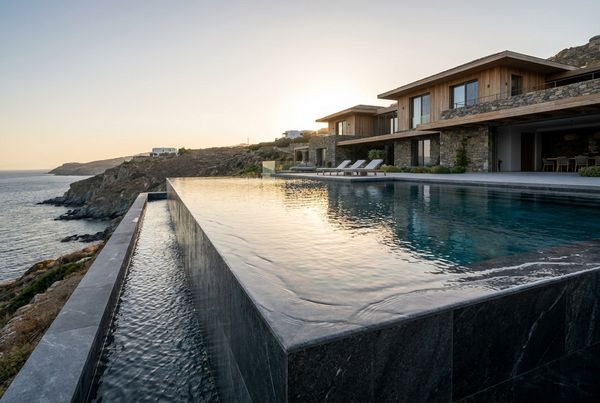
"Infinity pool" is a category, not a single design. The best builds pick the variation that fits the site instead of defaulting to the postcard version.
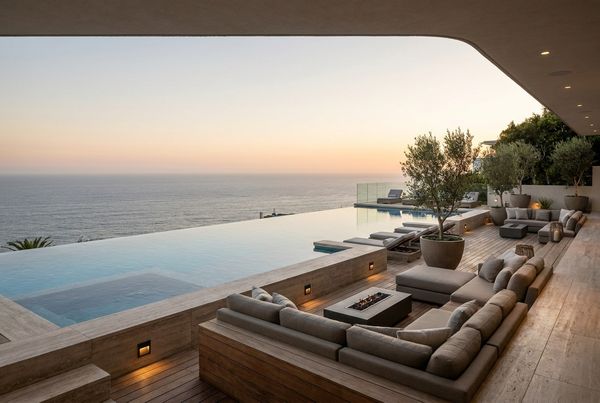
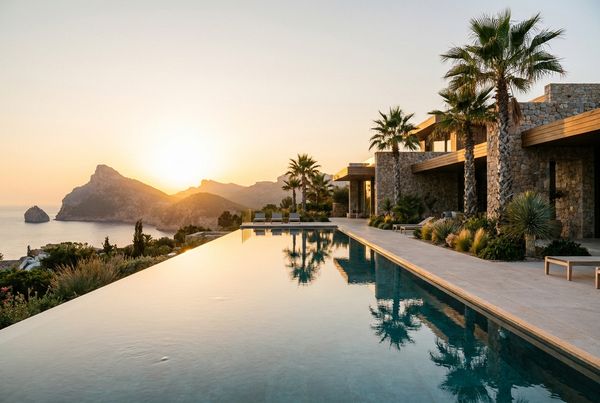
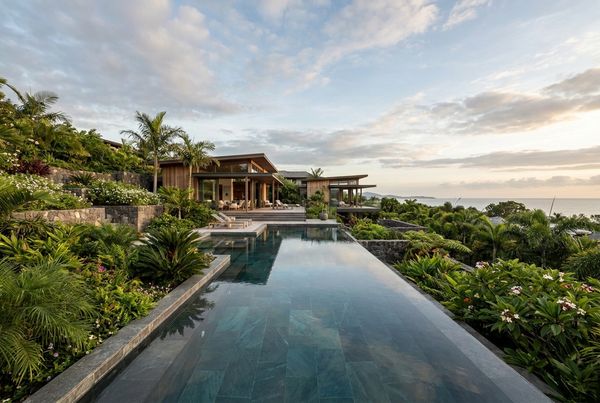
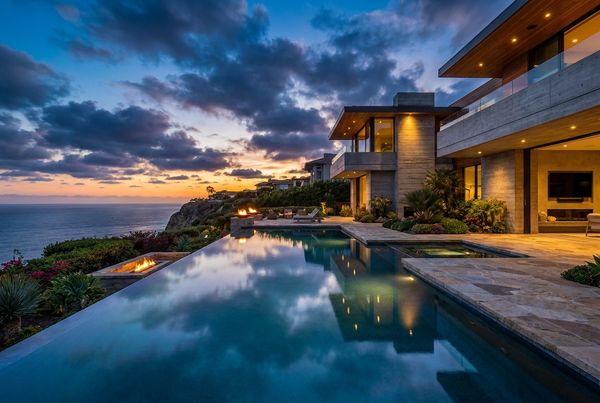
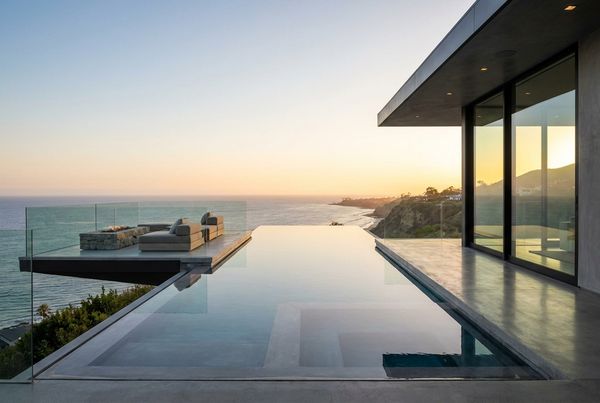
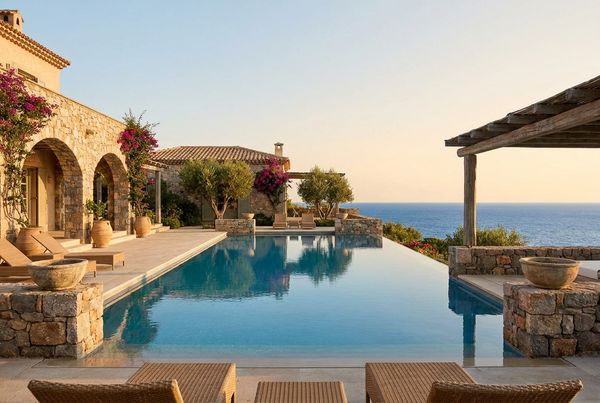
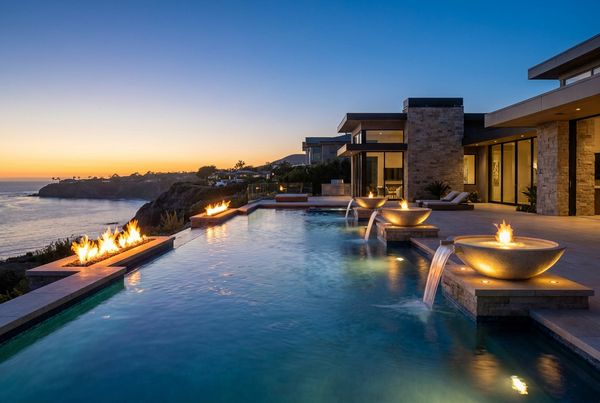
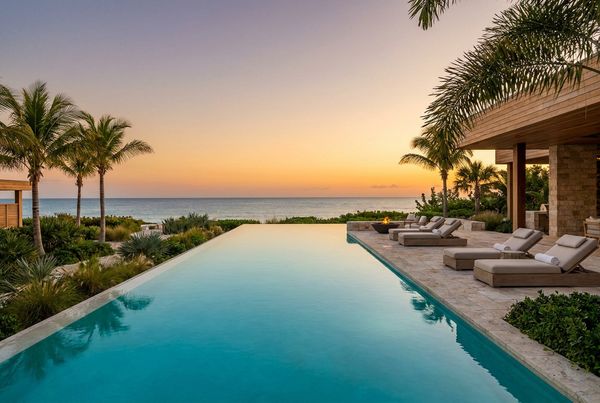
- Ocean & hillside overlook — the classic single vanishing edge aimed at open water or a drop-off. Nothing beats it when the site cooperates.
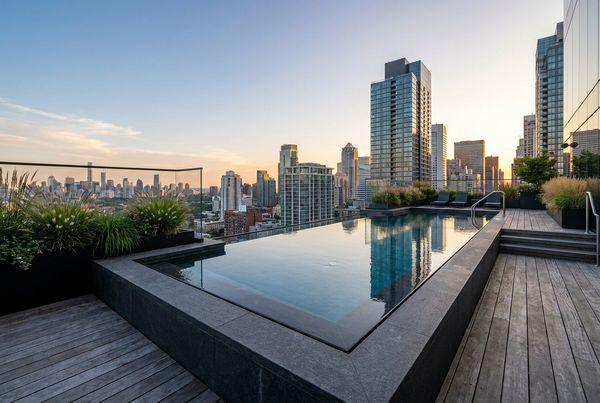
- Rooftop & skyline — an urban infinity pool that merges with the city, best experienced at night when the lights become the horizon.
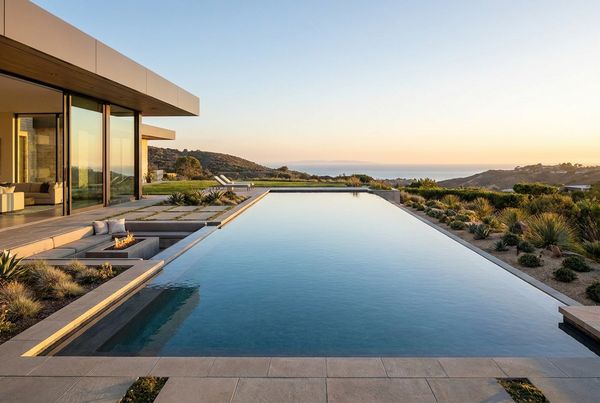
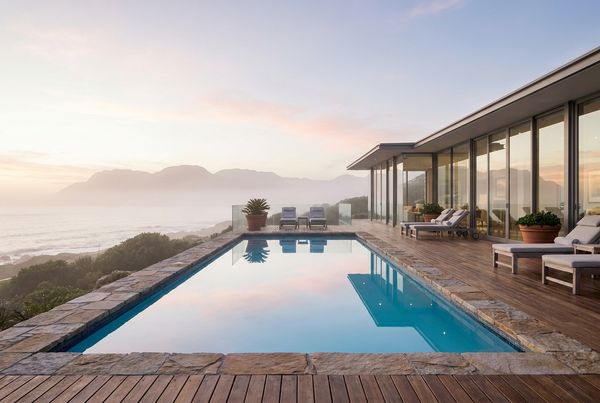
- Valley view — a downslope lot where the edge pours toward layered hills; often the most affordable serious infinity build because the grade does the work.
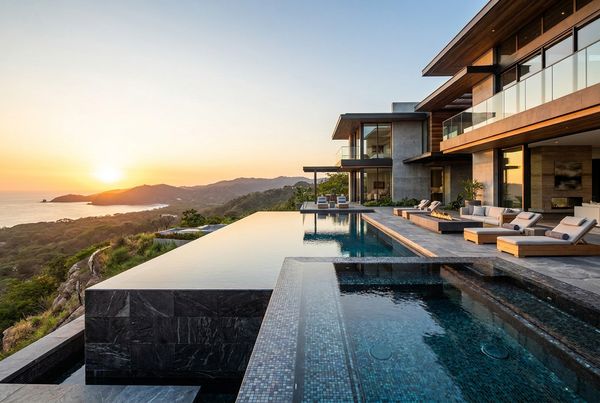
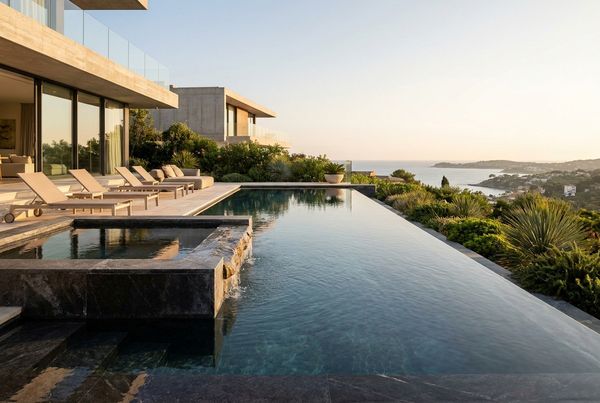
- Spa spillover + infinity — a raised spa spills into the pool, which then spills over the vanishing edge: two layers of moving water on the same axis.
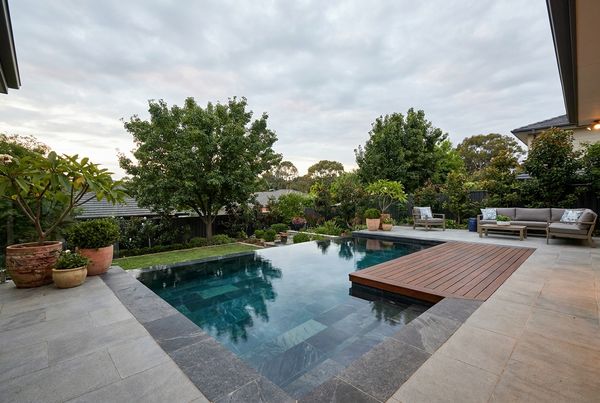
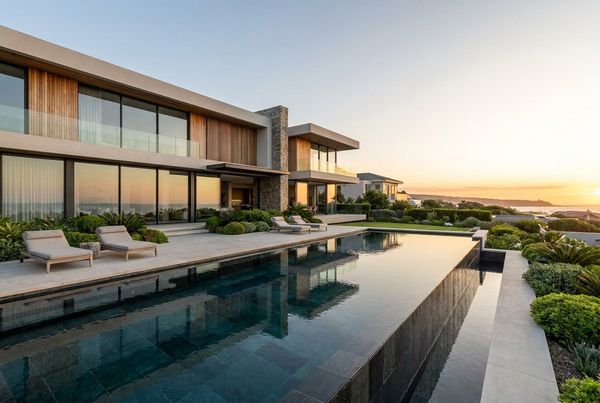
- Perimeter overflow (wet edge) — the water vanishes on all four sides into a narrow slot, leaving a surface flush with the deck and flat as glass. It's the most refined and the most expensive, and it works even without a distant view because the effect is the reflection itself.
| Variation | Needs a view? | Relative cost | Signature effect |
|---|---|---|---|
| Single vanishing edge | Yes | $$ | Water merges with the horizon |
| Valley / downslope | Yes | $$ | Pours toward layered hills |
| Spa spillover + infinity | Helps | $$$ | Two stacked moving-water layers |
| Perimeter overflow | No | $$$$ | Glass-flat mirror, flush deck |
The case for dark, reflective interiors
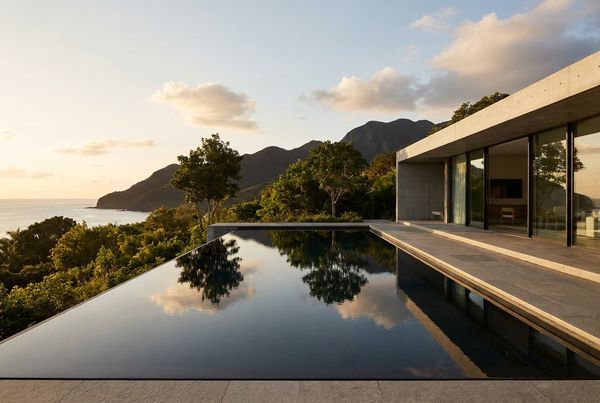
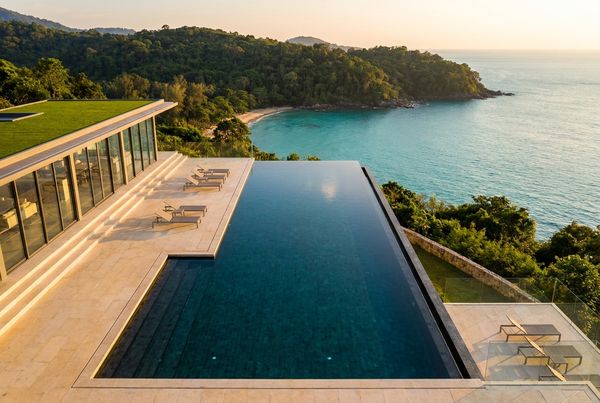
If the vanishing edge is the star, the interior finish is the lighting director. A pale plaster reads as bright, cheerful, tropical — beautiful, but it scatters light and reduces reflection. A dark finish — charcoal, graphite, midnight blue, or a black-quartz plaster — does the opposite: it turns the surface into a mirror. The water goes still and glassy, doubling the sky, the mountains, and the sunset back at you.
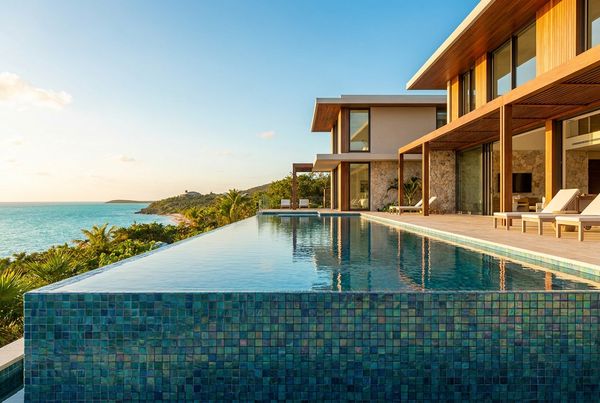
This is where a lot of the current best work is happening. Pair a dark interior with a perimeter-overflow edge and you get a sheet of black glass that reflects everything and hides its own machinery. Glass tile pushes it further, adding a jewel-like shimmer where light does catch. The trade-off is real but manageable: dark surfaces absorb solar heat (a nice bonus in most climates) and show mineral scale or a dropped water line more readily than pale plaster, so water chemistry has to stay tight.
Cost and engineering trade-offs
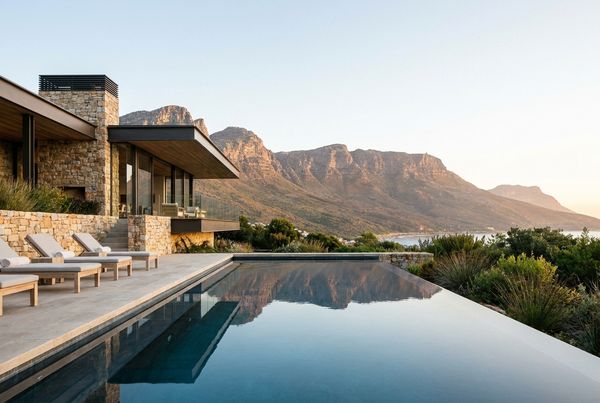
There's no way around it: a vanishing edge is a premium feature, and it stacks premiums. You're paying for extra structural engineering (the elevated vanishing wall and its footings often need to be designed by an engineer, especially on a slope), the catch basin as a second concrete vessel, an upsized pump and plumbing to sustain the film, and the precision labor to get the lip perfectly level. On a hillside site you may also be paying for retaining walls, deeper footings, and access challenges that have nothing to do with the pool itself and everything to do with where it sits.
Because they're fully custom and structural, vanishing edges are almost always built in gunite — you can't get this shape or this precision from a drop-in shell. A perimeter-overflow build sits at the top of the range because every side is a working edge. We won't quote you a number here because the honest answer is that edge length and site conditions swing it enormously; get a real bid and sanity-check it against our inground pool cost guide. And whatever you do, hire for this specifically — a builder with a real vanishing-edge portfolio is not optional.
Living with an infinity pool: maintenance
An infinity pool asks a bit more of you day to day, though nothing exotic. There are two bodies of water to keep balanced — the pool and the catch basin — and the basin needs to be checked so it doesn't run low and starve the pump. The larger pump runs to sustain the edge, so you'll notice it on the energy bill, and turning the edge off when the pool isn't in use is a common, sensible way to save.
The spillover lip is the sensitive part. Because it has to stay dead level, any settling of the structure or debris caught on the edge shows up immediately as an uneven sheet — so leaves, algae film, and mineral buildup on the lip get cleaned more often than you'd fuss over a standard coping. Good news: the constant surface skimming that the edge itself provides means the main body of water often stays cleaner than a conventional pool, because the top film — where oils and fine debris collect — is perpetually being carried off.
Making the edge perform after dark
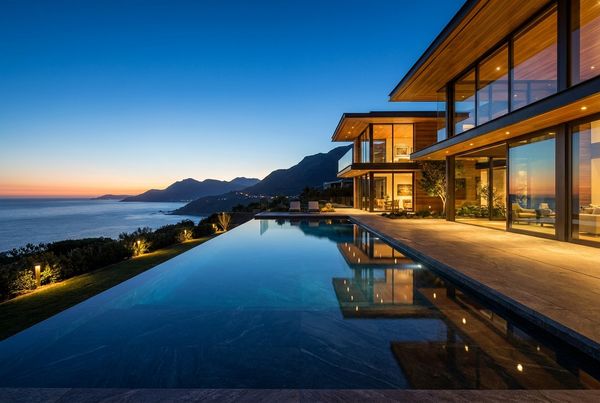
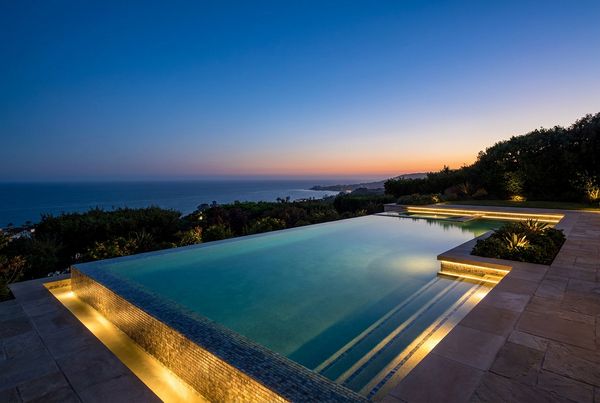
A vanishing edge you only enjoy in daylight is half a pool. The best builds are designed so the drama survives sunset, and that takes deliberate lighting — because at night, without help, the water and the view both go black and the illusion disappears. The move I push hardest is lighting the catch basin and the vanishing wall from below, so the sheeting water glows and the edge reads as a bright line hovering over the dark. In-water LEDs in the main pool turn the whole surface luminous, and a dark reflective finish then mirrors whatever lights sit beyond — a skyline, landscape uplighting, the moon.
The trap is over-lighting. A single harsh floodlight flattens everything and kills the reflection that makes an infinity pool magical. Keep it warm, low, and layered: glow in the water, a wash on the vanishing wall, and restrained uplights on the trees or structures that frame the view. Our pool lighting ideas guide covers fixture choices and color temperature, and it pairs naturally with the reflective-finish approach — the darker and stiller the water, the more your night lighting does the work.
Wind, weather & the level lip
The single most fragile part of an infinity pool is also its whole point: that spillover lip has to stay dead level across its entire length, and the environment conspires against it. Wind is the quiet enemy — a stiff breeze can push the thin sheet of water around, drying one section of the lip and overloading another, so on exposed or high sites the edge performs best when it's sheltered from the prevailing wind. It's worth walking your lot on a windy day before you commit to which wall vanishes.
Then there's the ground and the seasons. Because the lip's level is unforgiving, any settling of the structure shows up immediately as an uneven sheet, which is why the footings and engineering matter so much on a slope — and why this is not a place to save money on the builder. In freeze-prone climates, the exposed edge and the extra plumbing need careful winterizing so nothing cracks; our closing an inground pool guide covers the process, and you'll want a builder who has closed vanishing-edge pools before. On the right, sheltered, well-built site, none of this is a burden — but it's exactly why the site and the crew decide whether an infinity pool delights or disappoints.
So is an infinity pool worth it?
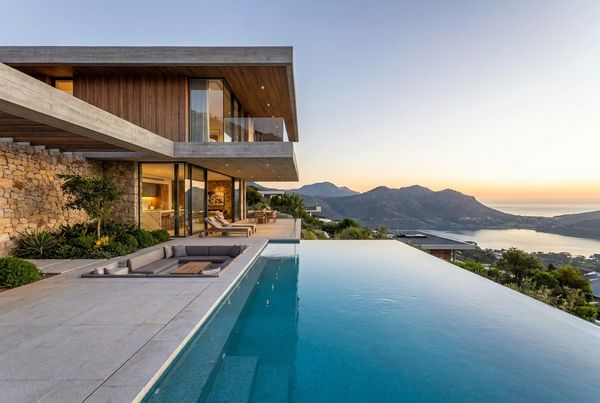
If your lot has a real view or a genuine downhill slope, a vanishing edge is one of the very few luxury splurges that pays off in daily wow-factor rather than just resale talk. Every morning coffee, every sunset, every time a guest walks out back — it delivers. On the right site, we'd build it every time.
If you're on a flat, enclosed lot, resist the pull. The illusion collapses without something for the water to fall into, and you'll get far more joy from a dramatic water feature, a dark interior, or a plunge pool that fits the space — for a fraction of the cost. Whichever way your site points you, start with the whole picture in our design hub, then layer in lighting so the edge keeps performing after dark.
What we think
Three trends are converging on the best infinity builds right now: the clean single horizon-merge on view lots, the flush perimeter-overflow wet edge for sites without a view, and dark reflective finishes that turn either one into a mirror. Pick the one your site can actually pull off — the site decides, not the Pinterest board.
Design Gallery
18 more ideas to save — tap any photo to view full screen.

Kelly E.
Pool Design Editor, PoolPad
Kelly has spent 10+ years around residential pools — planning projects, testing gear, and documenting backyard builds for PoolPad. Each design guide is checked against current construction methods and material pricing.
Frequently Asked Questions
How does an infinity pool work?
How much more does an infinity pool cost?
Do you need a view for an infinity pool?
What's the difference between an infinity pool and a perimeter-overflow pool?
Are infinity pools harder to maintain?
Can you add an infinity edge to an existing pool?
Are infinity pools built from gunite or fiberglass?
How much extra energy does an infinity pool use?
What finish is best for an infinity pool?
Do infinity pools splash or lose a lot of water?
Ready to build your dream backyard?
Compare local, vetted pool builders and get matched with pros who can bring these designs to life.
Find a Pool Builder Near You