



Key Takeaways
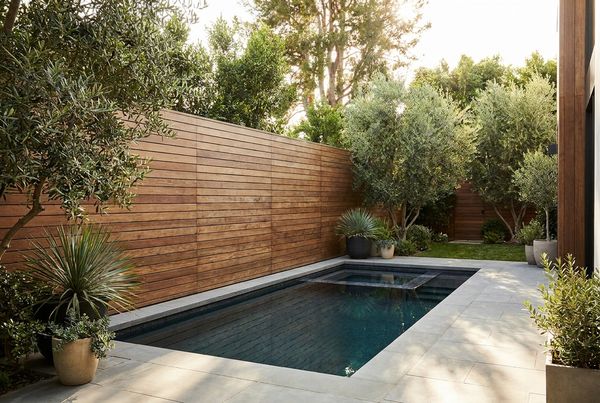
- A plunge pool is a compact pool — usually 10–16 ft long, 3.5–5 ft deep — built for cooling off, lounging, and hydrotherapy rather than laps.
- Small water volume means fast heating and low running costs; add swim jets for exercise or run it cold for recovery.
- It's the best-value way to get a real pool into a small or sloped yard.
The plunge pool is the quiet star of modern backyard design. It fits where a full pool can't, costs a fraction to build and run, and — thanks to the wellness boom — it's suddenly one of the most-requested pools we see. If you have a small yard and thought a pool was off the table, start here.
What is a plunge pool?
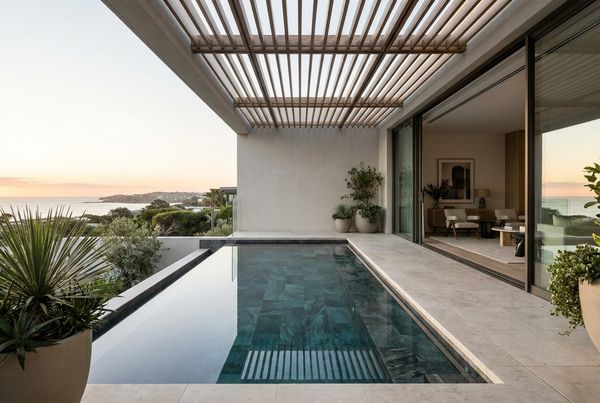
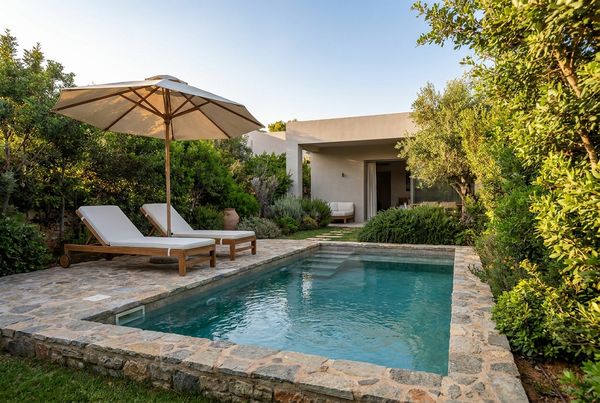
A plunge pool is a small, deep-enough pool built for cooling off, lounging, and hydrotherapy rather than swimming laps. Think of it as the difference between a soaking tub and a swimming lane — the plunge is about immersion, not distance. Most run 10 to 16 feet long and 3.5 to 5 feet deep, often at a single uniform depth since there's no diving and no shallow end to walk into.
That compact footprint changes everything. A plunge pool is small enough to slot into a courtyard, a side yard, or the flat pad you can carve out of a sloped lot. You'll hear the same idea called a cocktail pool or a spool (spa + pool) — the terms overlap almost completely, with "cocktail pool" leaning toward entertaining and "plunge" leaning toward cooling off and recovery. Whatever the label, the appeal is identical: a real, permanent, in-ground body of water without the space, cost, or upkeep of a full-size pool.
Why plunge pools are booming
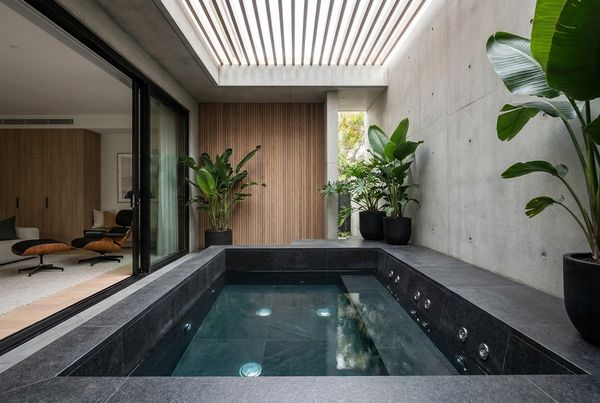
Two trends collided and the plunge pool sat right at the intersection. First, backyards shrank. New-build lots are tighter than they were a generation ago, and homeowners renovating older properties are unwilling to give the whole yard to a pool that gets used three months a year. Second, wellness went fully mainstream. Cold-water immersion, contrast therapy, and daily recovery routines moved from athlete circles to ordinary backyards — and the plunge pool is the perfect vessel for all of it.
Add the practical math and the demand makes sense. A plunge holds a small fraction of the water of a full pool, so it heats fast, holds temperature cheaply, and needs a fraction of the chemicals. You can run it warm as a year-round spa-like soak or run it cold for morning plunges. It's the rare pool that flatters a small yard instead of overwhelming it, and it delivers resort-style living at a price that doesn't require a second mortgage.
What we think
For small yards, a plunge pool is the smartest money in this entire guide. You get most of the lifestyle of a big pool — cooling off, lounging, entertaining, recovery — at roughly half the build cost and a fraction of the running cost. If there's any chance you'll want to swim for fitness, spend the extra on a swim jet now; retrofitting one later is a genuine pain. And don't skip the bench: a plunge you can sit in comfortably gets used every single day.
Design ideas that actually work
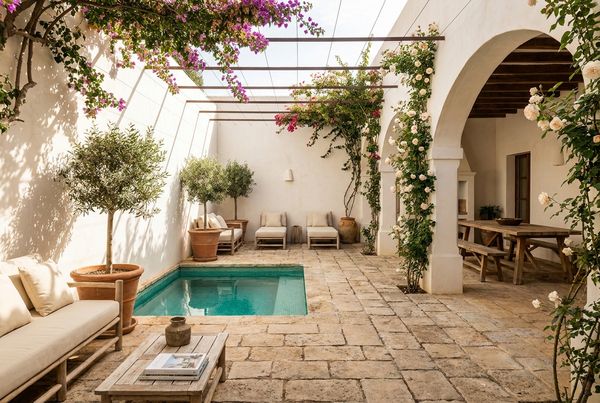
The best plunge pools earn their footprint with smart details. A few that consistently deliver:
- Bench + bubblers. A built-in bench running the length of the pool doubles as a shallow lounge, and bubblers along it add gentle motion, sound, and a cool spot to perch on hot days. This is the single most-requested combination we build.
- Spa jets. Hydrotherapy jets turn the plunge into a mini-spa. Pair them with a heater and you'll use the pool three seasons or more.
- Swim jet. A powerful counter-current lets you swim in place against a steady flow — effectively an endless pool inside a plunge footprint. It's the one upgrade you want to decide on before you build.
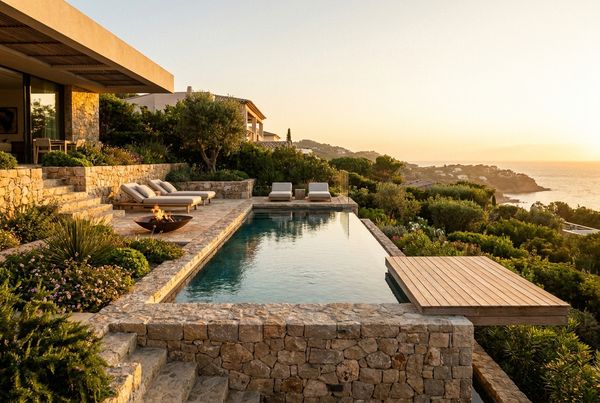
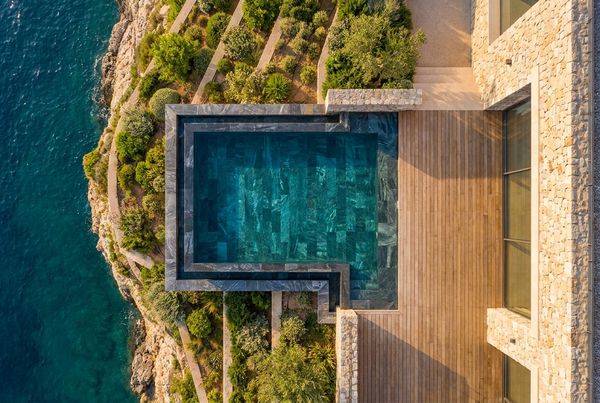
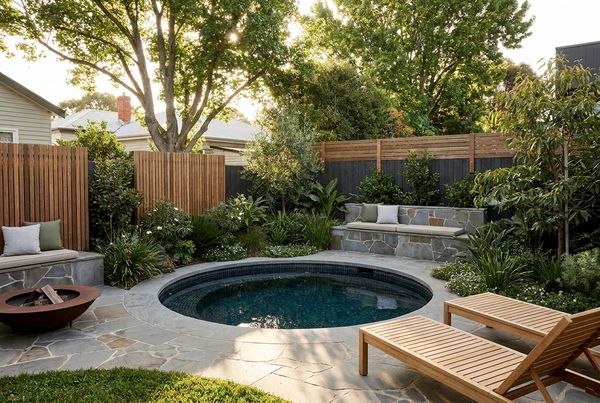
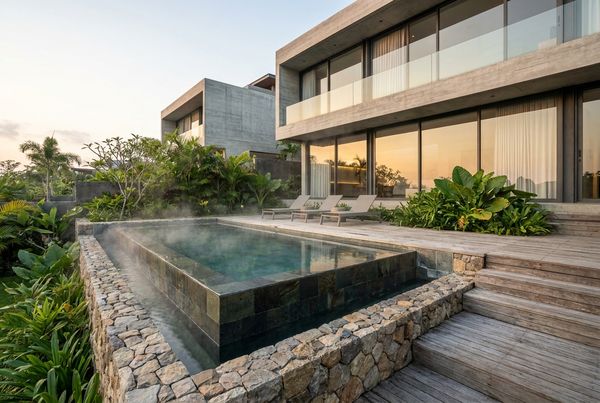
- Dark interiors. Charcoal, midnight blue, and near-black finishes look expensive and read as a reflecting pool at rest. At plunge scale, a dark interior is one of the highest-impact, lowest-cost choices you can make.
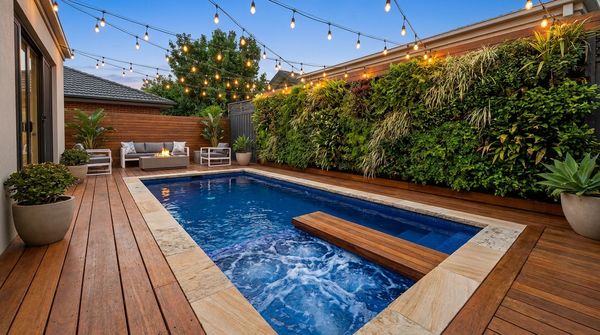
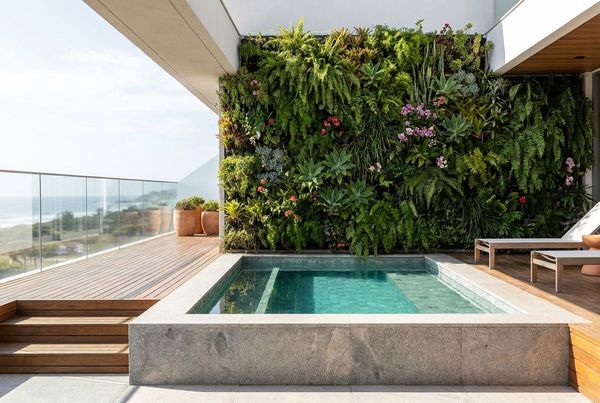
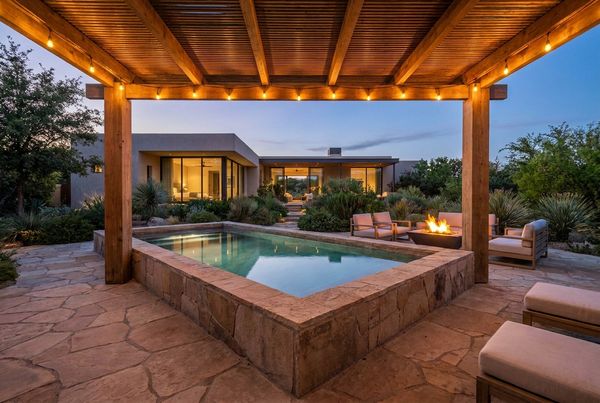
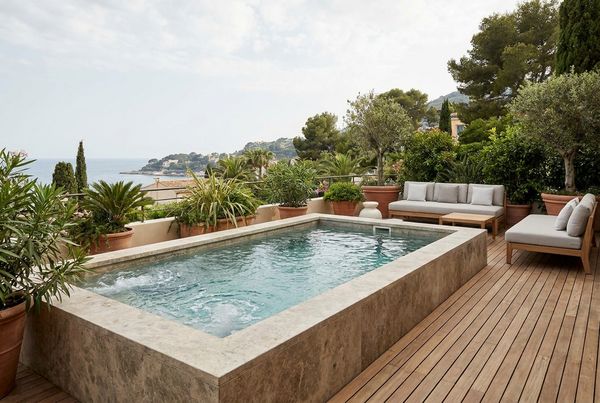
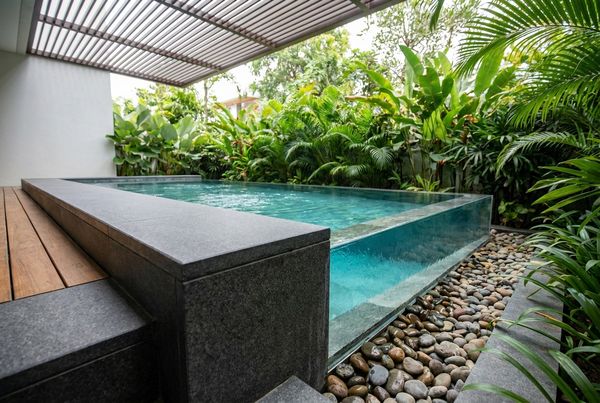
- Raised or deck-integrated shells. Setting a plunge into a raised wood deck — or raising the shell partway out of grade — creates a spa-like, architectural moment and solves drainage on sloped lots.
- A single water feature. A sheer-descent wall spout or a row of bubblers adds the sound of moving water without eating any real estate.
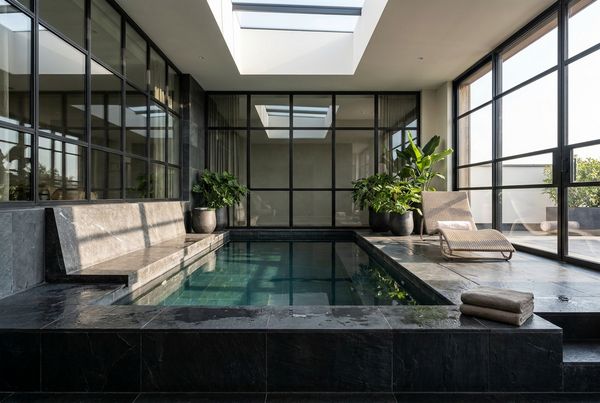
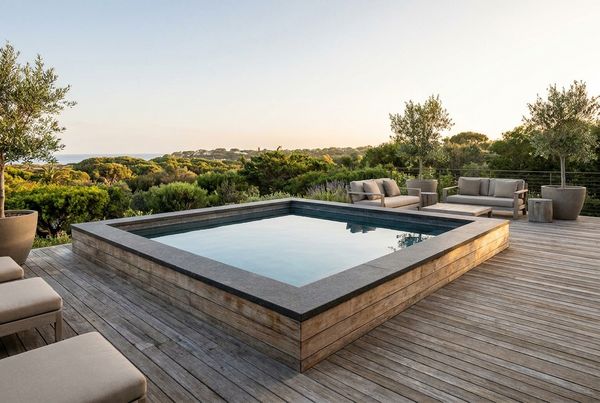
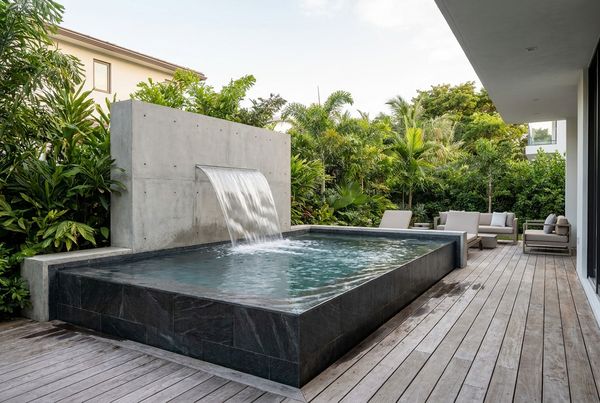
Because a plunge is small, every finish reads at close range — the tile, the coping, the waterline, the lighting. That's an advantage: you can afford premium materials on a small surface area that would blow the budget across a full pool. Spend where you'll see it. For more feature options, our pool water features guide walks through what suits a compact basin.
Sizes & rough costs
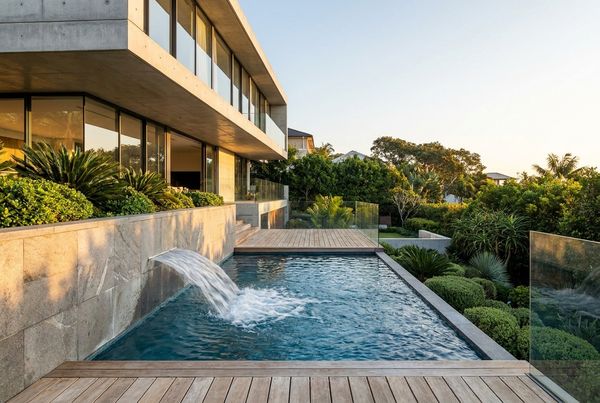
Plunge pools are refreshingly predictable to price because there's less pool to build. Most inground plunge pools land between $25,000 and $50,000 installed, with the biggest swings coming from the shell type, the finish, and the add-ons you choose. Here's how the common setups stack up:
| Setup | Typical size | Installed cost* |
|---|---|---|
| Basic plunge | 10–14 ft x 7–9 ft | $25k–$40k |
| Plunge + spa jets | 12–16 ft x 8–10 ft | $32k–$48k |
| Plunge + swim jet | 14–16 ft x 8–10 ft | $38k–$55k |
| Cold-plunge / wellness setup | 8–12 ft x 6–8 ft | $28k–$50k |
*Ballpark 2026 U.S. ranges; site access, materials, and region move the number. See the full cost guide.
Shell choice matters. Fiberglass plunge shells are the value champion — factory-built, dropped in fast, smooth to the touch, and low-maintenance. Concrete (gunite) costs more but lets you shape a fully custom size and finish. Whichever you pick, the running costs stay low: a plunge's small volume means heating and chemistry cost a fraction of what a full pool demands. If you're weighing shell types, start with our fiberglass pools guide.
Cold plunge & the wellness angle
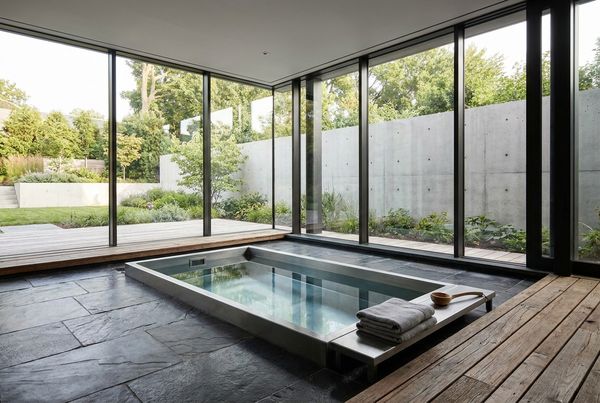
This is the part that turned a niche pool into a phenomenon. Cold-water immersion — a few minutes in cold water for recovery, alertness, and the sheer jolt of it — went mainstream, and the plunge pool is the ideal backyard vessel. The small volume that keeps heating cheap also makes chilling practical: pair the plunge with a chiller and you can hold cold-plunge temperatures on demand.
The most ambitious setups run contrast therapy — a warm spa or heated plunge right beside a cold plunge, so you can move hot-to-cold in one session. You don't need the full stainless-tub, spa-adjacent build to get there; plenty of owners simply add a chiller to a standard plunge and run it cold in the mornings, warm in the evenings. The flexibility is the point. One compact basin, two completely different rituals — a hot-day cool-off and a cold-morning reset — from the same small pool.
Fitting a plunge pool in a small yard
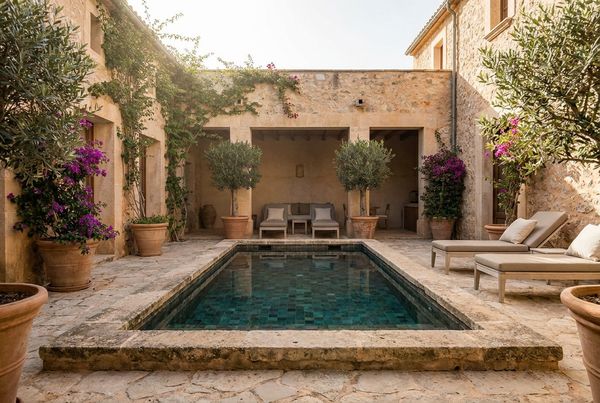
This is where the plunge pool truly separates itself. A full pool needs open, roughly level yard; a plunge needs surprisingly little. We've dropped them into side yards barely wider than the shell, tucked them against retaining walls on sloped lots, and built them into courtyards where a conventional pool was never an option. A few placement principles:
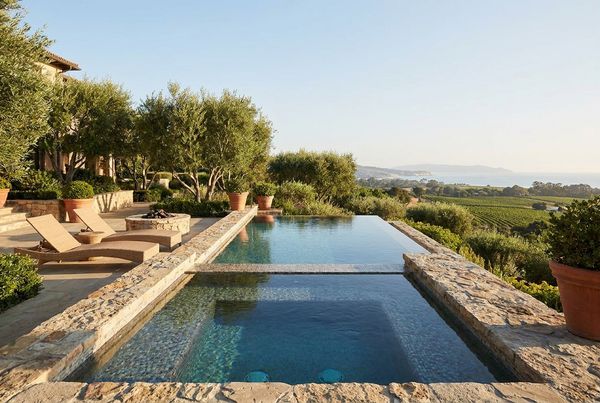
- Line it up with your best view or your privacy wall. At this size, the pool becomes a focal point — orient it accordingly.
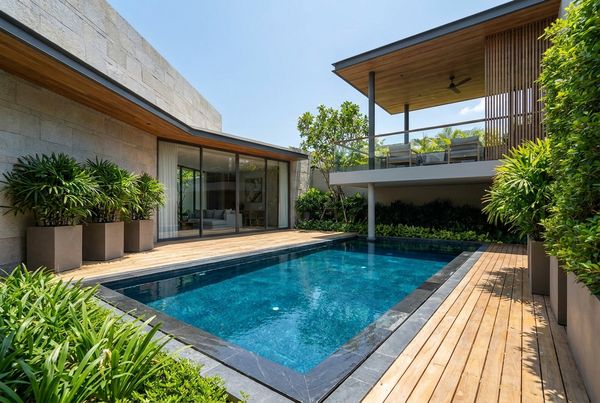
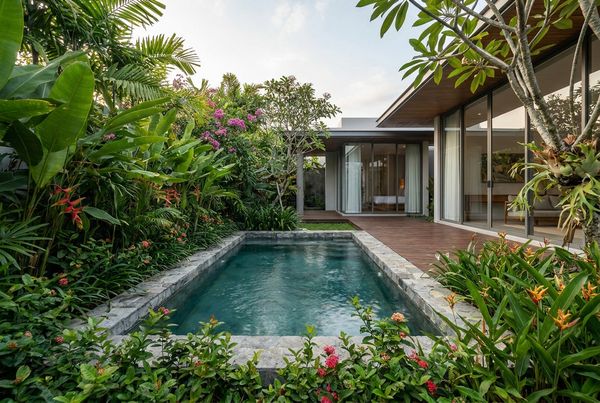
- Use vertical planting and screens. A living wall, a slatted privacy fence, or a band of tropical planting hides the fence line and makes a tight lot feel like a retreat.
- Let raised decking solve the slope. On grade changes, a raised shell with a wood or stone deck around it is often cleaner and cheaper than excavating flat.
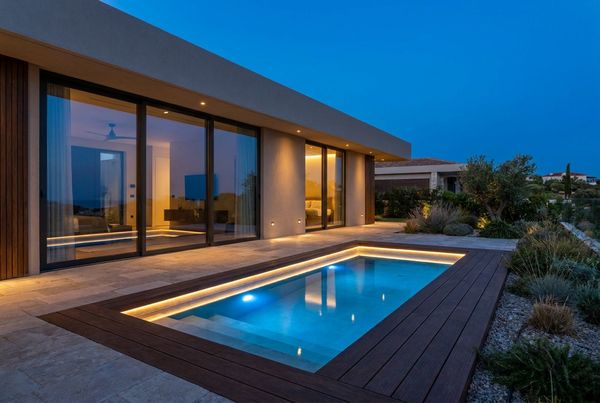
- Light it well. Waterline LEDs and a few string lights overhead do more for a small yard's atmosphere than almost anything else — dusk becomes the best hour.
For a broader look at compact layouts and how they compare, our small pool ideas guide is the natural next stop.
Running costs and upkeep: the quiet advantage
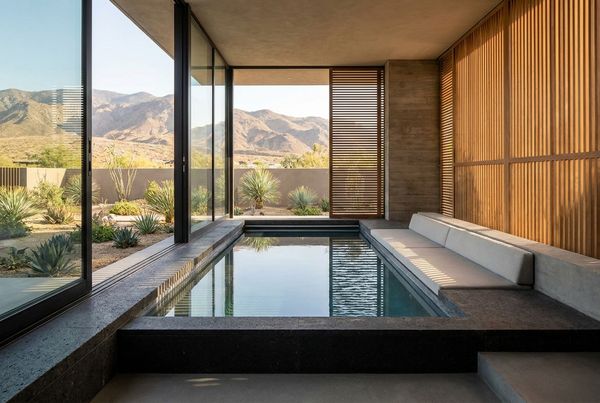
The part that sells people once they run the numbers isn't the build price — it's the running cost. A plunge holds a small fraction of the water of a full-size pool, and almost every ongoing expense scales with water volume. That means a smaller heater brings it to temperature quickly, it holds heat cheaply, and it needs a fraction of the chemicals to stay balanced. A full pool can be a real utility line item; a plunge barely registers by comparison.
Maintenance is proportionally lighter too, but it isn't zero — and the small volume cuts both ways. Because there's so little water, the chemistry swings faster than a big pool's, so a missed week shows up more quickly. The fix is simple: test on a routine rather than reacting to cloudy water, and keep a good test kit handy. If you go saltwater, our salt water pool maintenance guide covers the small-pool rhythm. A robotic or handheld vacuum handles the floor in minutes given the footprint.
One planning note that saves money: because the volume is small, dialing in chemistry is fast but easy to overshoot. Add chemicals in small measured doses and let them circulate before retesting — with this little water, a heavy hand swings the numbers hard. A short daily filtration cycle is usually plenty; you can figure the right runtime with our pump run-time calculator rather than running the pump longer than a basin this size needs.
Planning the equipment: heater, chiller, and jets
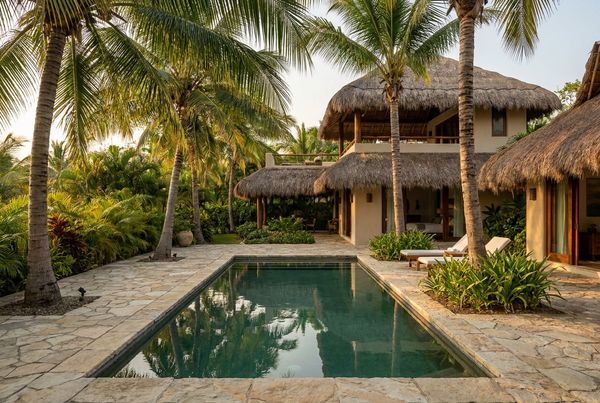
The equipment decisions are the ones you want to lock in before the shell goes in, because retrofitting is where the regret lives. A heater lets you stretch the plunge into a three-season, spa-warm soak — and thanks to the small volume, a modest unit does it fast and cheap to run. A chiller is the flip side that makes the cold-plunge ritual practical, holding cold-immersion temperatures on demand instead of dumping in ice. Plenty of owners fit both and run the same basin warm in the evening and cold in the morning.
The swim jet is the one I push people hardest to decide up front. A powerful counter-current turns a plunge into a compact fitness pool you swim against — effectively an endless pool in a plunge footprint — but adding one after the fact means opening up the shell and plumbing, which is genuinely painful and expensive. If there's any chance you'll want to swim for exercise, plumb for it now even if you install the jet later.
Finally, plan the small stuff that reads big at this scale. A bench with spa jets is the difference between a plunge you look at and one you sit in every day, and it's near-impossible to add later. Waterline LEDs and a single water feature — a sheer descent or a row of bubblers — cost little on a small surface and do most of the atmospheric work. Get these into the plan before the pour and the finished plunge feels custom rather than compromised.
Is a plunge pool worth it?
For the right yard, it's one of the best-value moves in backyard design. You get a real, permanent, in-ground pool — cooling off, lounging, entertaining, and recovery — for roughly half what a full pool costs to build and a fraction to run. The trade-off is honest: you can't swim laps without a swim jet, and a big family that wants room to splash around will feel the size. But for couples, small families, urban lots, and anyone chasing the wellness routine, the plunge delivers nearly all of the lifestyle with almost none of the compromise.
Our advice: decide on your swim jet and your bench up front, spend your finish budget on the interior since it reads at close range, and don't under-light it. Then find a builder who has actually done a few — a plunge is small, but the details are unforgiving. Start with our pool builder near me guide, and browse the full pool design ideas hub for inspiration before you commit.
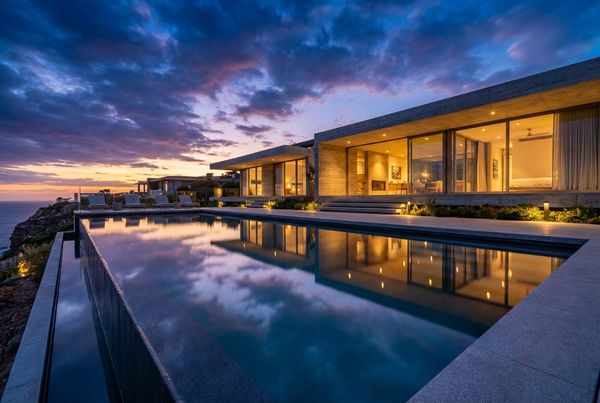
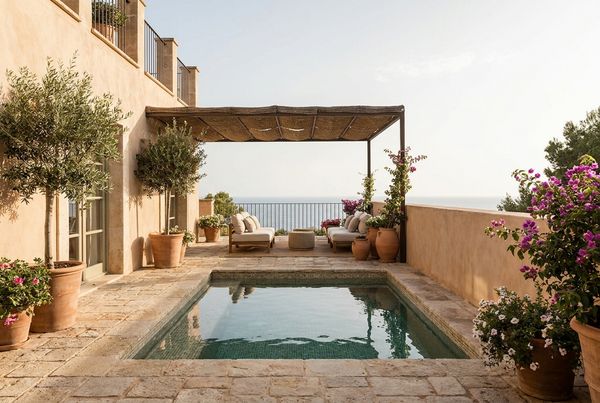
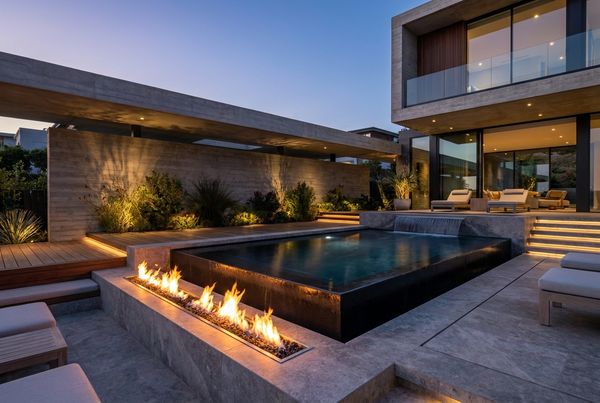
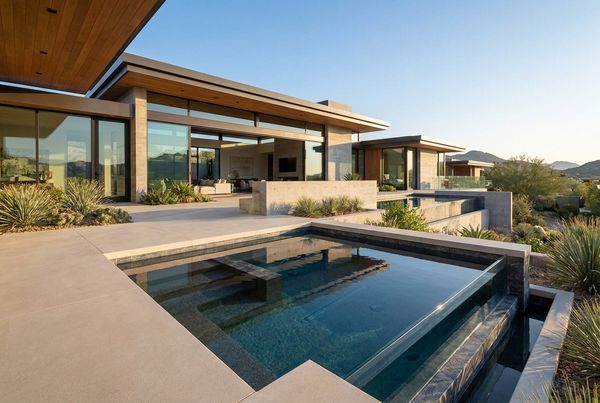
Design Gallery
15 more ideas to save — tap any photo to view full screen.

Kelly E.
Pool Design Editor, PoolPad
Kelly has spent 10+ years around residential pools — planning projects, testing gear, and documenting backyard builds for PoolPad. Each design guide is checked against current construction methods and material pricing.
Frequently Asked Questions
What is a plunge pool?
How much does a plunge pool cost?
Can you exercise in a plunge pool?
How deep is a plunge pool?
Is a plunge pool cheaper to run than a regular pool?
What's the difference between a plunge pool and a cocktail pool?
How much maintenance does a plunge pool need?
Do I need a heater or a chiller for a plunge pool?
How long should I run the pump on a plunge pool?
Ready to build your dream backyard?
Compare local, vetted pool builders and get matched with pros who can bring these designs to life.
Find a Pool Builder Near You