



Key Takeaways
- A plunge pool (roughly 10–16 ft long) fits most small yards and costs far less to run than a full-size pool.
- Cocktail pools under ~400 sq ft often skip permitting hurdles and heat quickly — great for lounging and entertaining.
- Vertical landscaping, a single water feature, and continuous decking make a small pool feel intentional, not cramped.
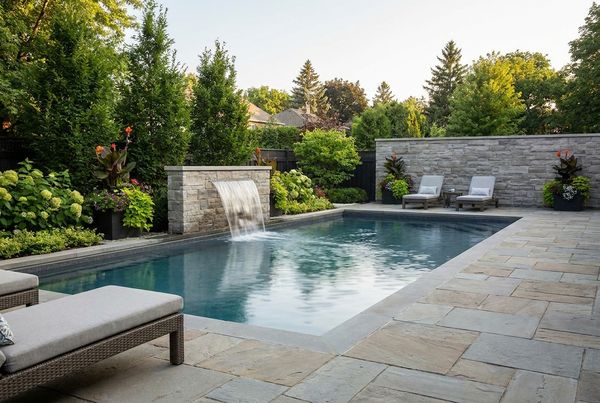
A small backyard is not a compromise — it's a design brief. Some of the most striking pools we've built and photographed are tucked into side yards, courtyards, and lots barely bigger than the pool itself. The trick is to stop shrinking a big-pool layout and instead lean into what small pools do best: intimacy, efficiency, and a single, well-executed idea.
Below are the small pool ideas that consistently work when space is tight — the layouts, the features worth paying for, and the real dimensions and costs behind each one.
The plunge pool: the workhorse of small yards
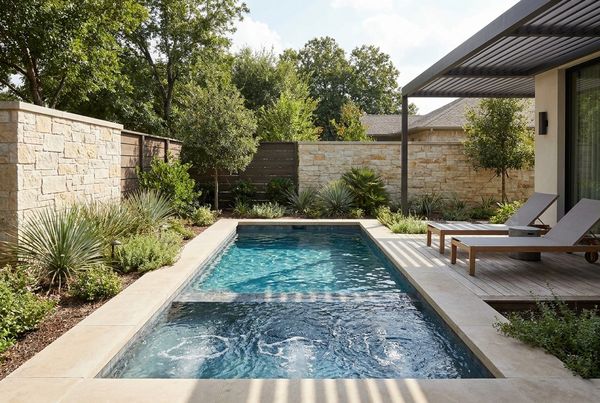
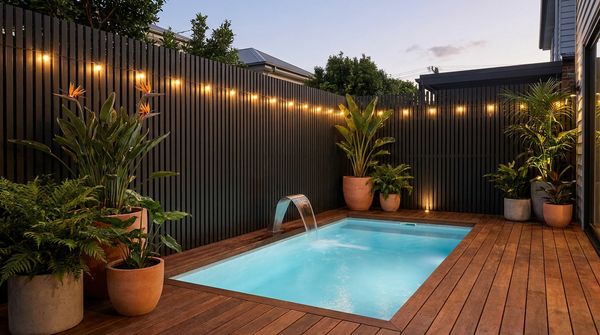
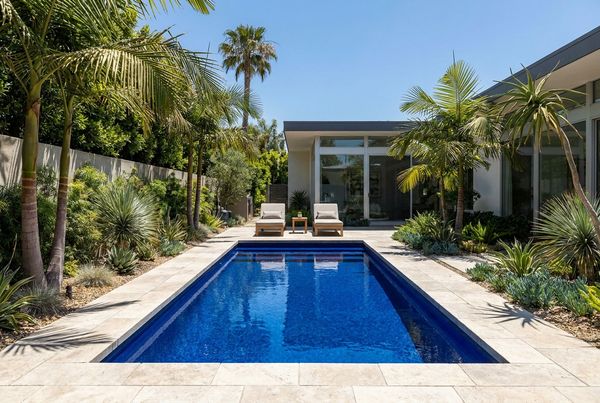
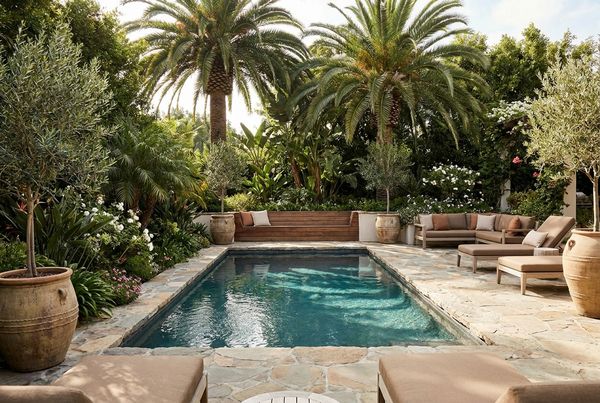
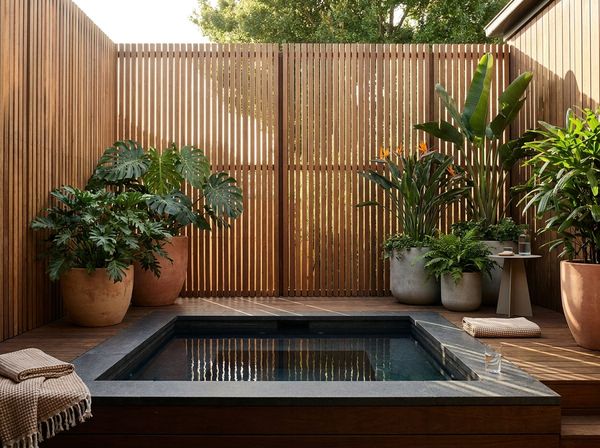
The plunge pool is the single most useful idea in small-space design — usually 10 to 16 feet long and 3.5 to 5 feet deep. It's built for cooling off, perching on a bench, and unwinding rather than swimming laps. Because the water volume is a fraction of a full pool's, it heats fast, sips chemicals, and can flip to a cold plunge in the off-season — which is exactly why plunge and cold-plunge pools are the runaway trend of 2026.
Do not underestimate how much lifestyle a plunge delivers. A well-placed plunge with a couple of bubblers and a bench does 90% of what a big pool does for a family that mostly wants to get wet, hang out, and look at water. It also solves the two problems that kill big pools in small yards: it doesn't swallow the whole lot, and it doesn't dominate the utility bill. A plunge holds maybe a third of the water of a standard pool, so the heater is smaller, the pump runs less, and a bag of chemicals lasts the season instead of the month.
There's a wellness angle too, and it's the reason plunges are booming. Drop a chiller onto the same shell and you've got a cold plunge for morning recovery; run the heater instead and it's a warm soak at night. That dual use — hot in the evening, icy at dawn — is a big part of why this is the small-pool idea we recommend most often. We dive deeper into shells, jets, and layouts in our dedicated plunge pool ideas guide.
The cocktail pool (spool) for entertaining
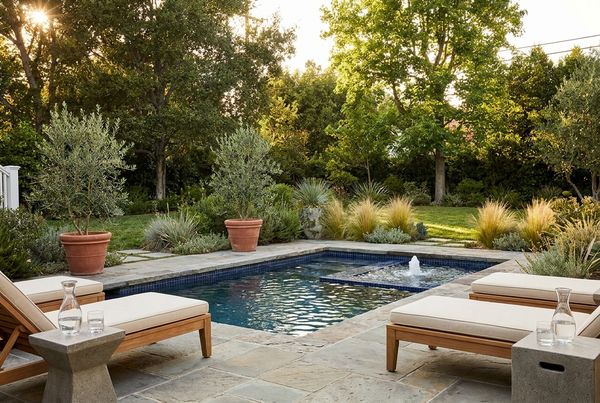
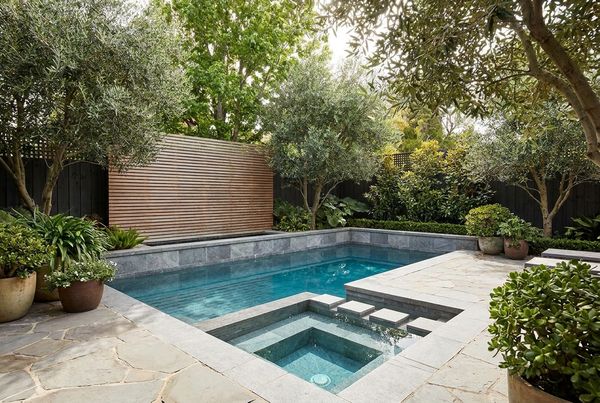
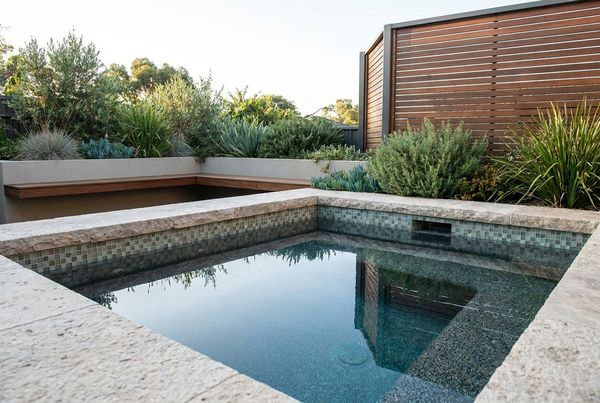
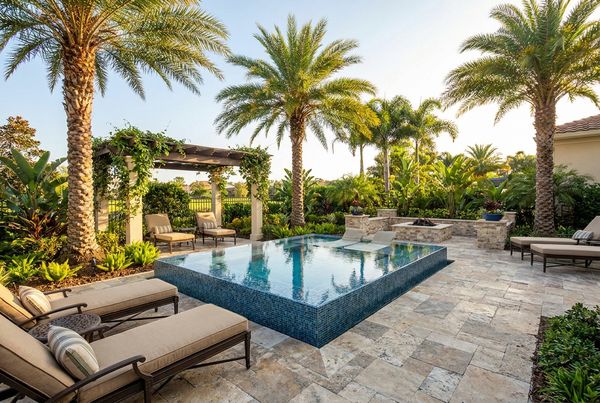
A "cocktail" pool or "spool" (spa + pool) is a compact vessel — typically under 400 square feet — often with a built-in bench, bubblers, and integrated spa jets. Keeping it under that size threshold can simplify permitting in many jurisdictions and keeps heating cheap enough to enjoy for most of the year in warm climates.
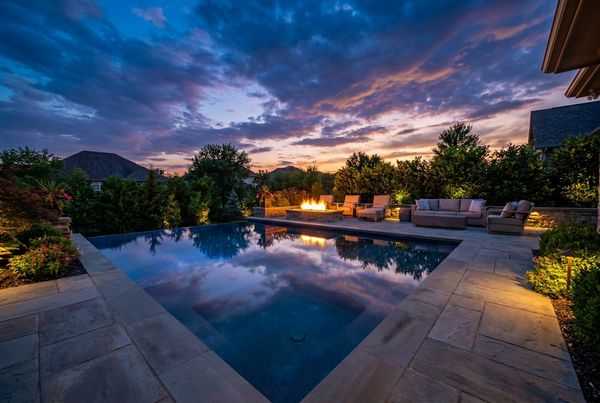
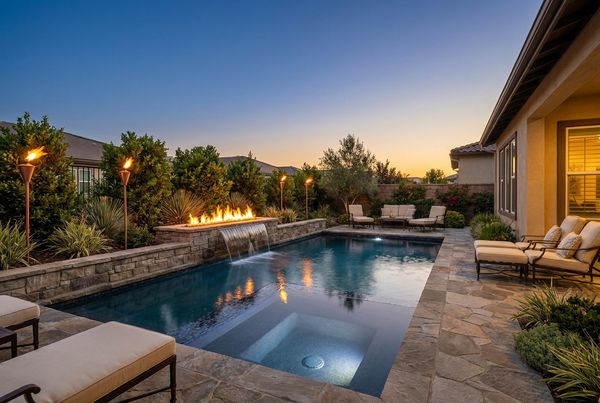
This is the entertainer's pool. It's shallow enough to stand and talk in, warm enough to linger after dark, and small enough that one heater keeps the whole thing at hot-tub temperature. Pair it with perimeter seating and a fire feature and a 350-square-foot spool becomes the busiest square footage in the yard.
The spool also solves a problem a lot of couples wrestle with: one person wants a spa, the other wants a pool, and the yard can't hold both. A spool splits the difference honestly rather than badly — you get real swimming room when it's warm and a jetted soak when it's not, from a single vessel and a single equipment pad. If your climate is mild, keep the finish light and the seating generous; if you run it hot much of the year, invest in a good cover to hold the heat overnight, because the small water volume that heats fast also cools fast.
The narrow lap pool for fitness
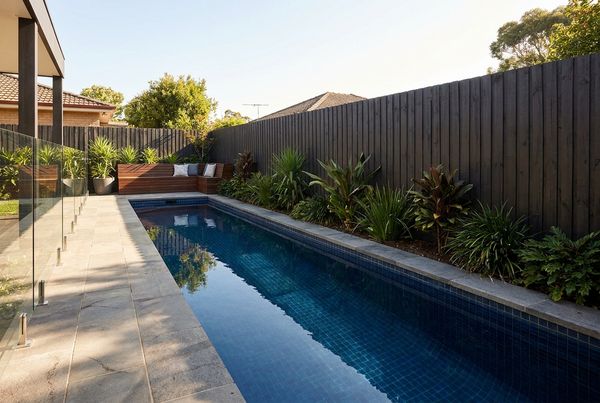
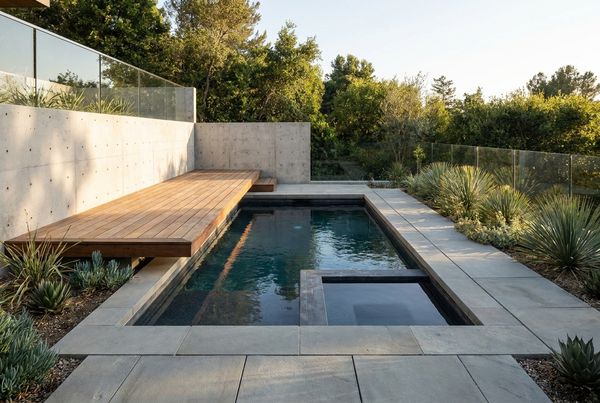
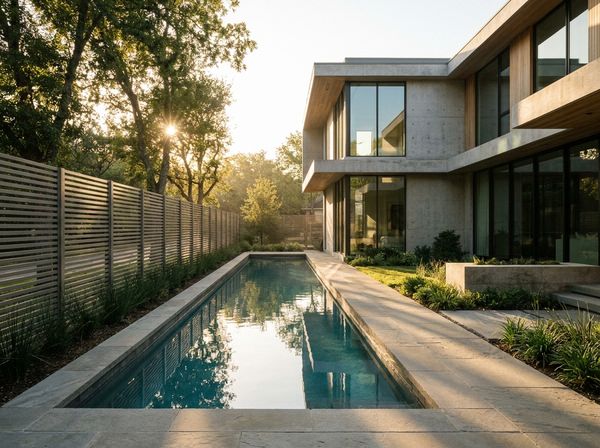
If fitness drives the project, a lap pool as narrow as 7–8 feet wide can run along a fence line or the flank of the house — space most people write off entirely. At 30 to 40 feet it gives you a genuine lane; at 12 to 16 feet paired with a swim jet, it gives you an endless current to swim against. That side-yard strip between the house and the fence, the one currently growing weeds and holding trash cans, is often exactly the shape a lap pool wants.
The honest trade-off: a true lap pool is the most expensive small pool per square foot of enjoyment, because much of its length is only ever used for swimming, not lounging. Before you commit to 40 feet, ask whether a swim jet in a 14-foot pool would actually scratch the same itch. For most swimmers it does, and it frees up the rest of the yard for a deck and a couple of chairs — the parts of the pool you'll use every single evening, not just on workout days.
What we think
Don't shrink a big-pool plan to fit — design for the small footprint on purpose. A plunge pushed to the property line, one good water feature, and vertical privacy planting will out-class a cramped "mini standard pool" every time. And be honest about the swimming: most people who think they want a lap pool are happier with a plunge and a swim jet at half the footprint and cost.
Tanning ledges, spas and the features worth it
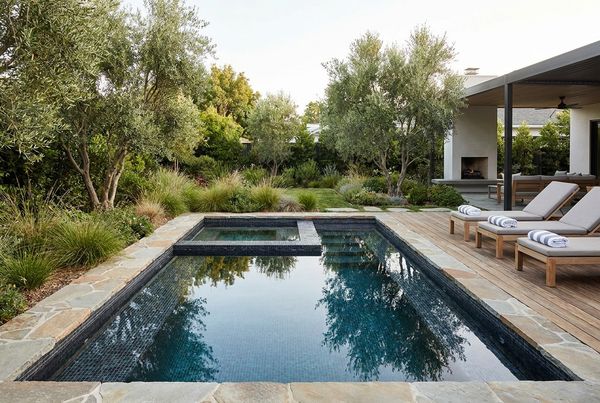
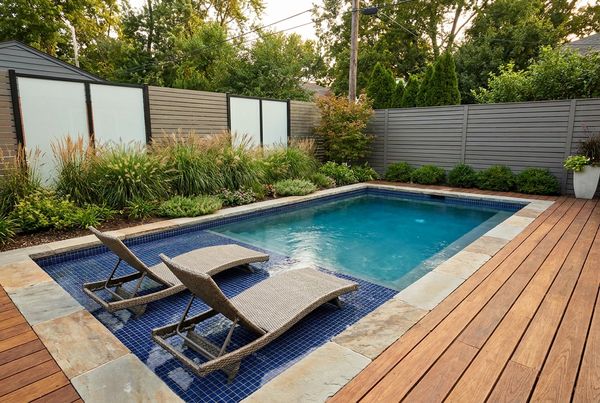
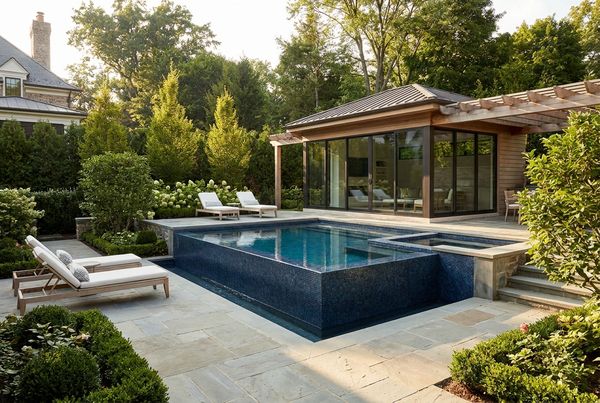
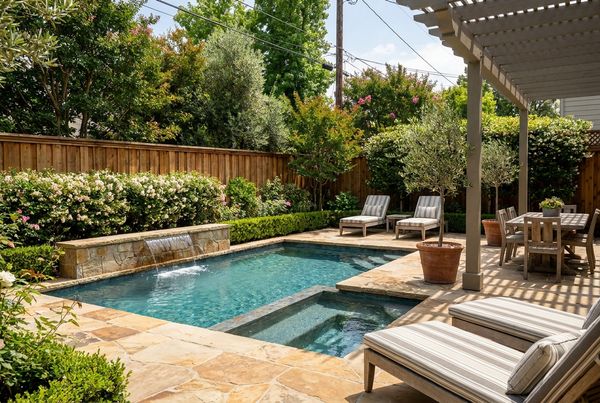
In a small pool, every feature has to earn its footprint. Two nearly always do. A tanning ledge (Baja shelf) — a 6-to-12-inch-deep shelf — is the most-loved upgrade of the past few years: it holds a lounge chair half-submerged, doubles as a toddler splash zone, and makes the pool feel wider than it is. And an attached spa turns a summer pool into a three-season one, spilling warm water and the sound of moving water into the main vessel.
Everything else, restrain yourself. A single bubbler, one sheer descent, or one fire bowl reads as intentional; three features in 300 square feet reads as clutter. Pick the one that matches how you'll actually use the space.
Dark interiors and the 2026 finish trends
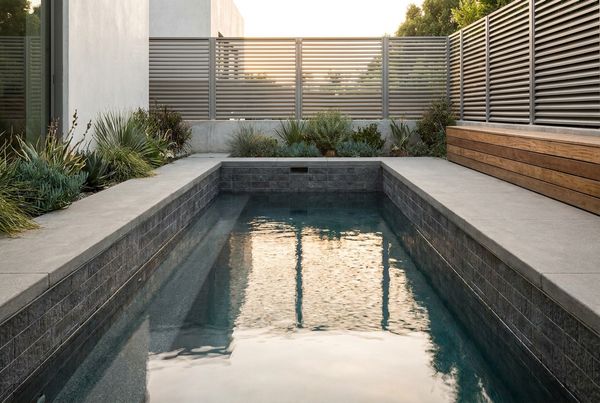
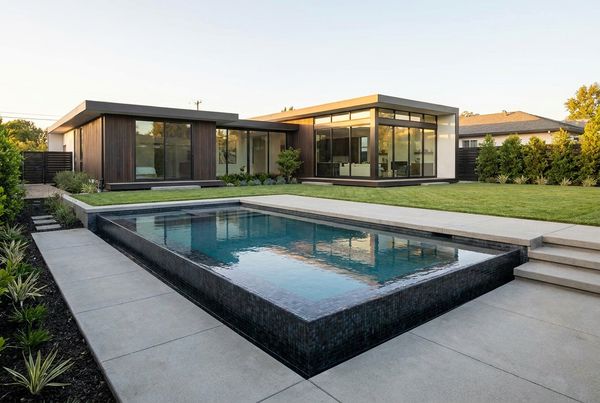
The biggest visual shift we're seeing in 2026 is finish color. Dark interiors — charcoal plaster, deep-blue and near-black pebble, dark glass tile — are everywhere, and they're a gift to small pools. A dark finish makes the surface mirror the sky, trees, and architecture, so a 12-foot pool borrows the whole yard's worth of reflection and reads as a serene, bottomless pond.
Light finishes still have their place: they make water look bright and shallow-friendly, which suits families. The point is to choose for mood, not by default. Small-space smart design — automated heating, lighting, and cleaning you run from your phone — is also standard now, and it matters more on a small pool where a single well-lit water feature carries the whole evening scene. Weigh the look against your climate and browse our broader pool design ideas for finish inspiration.
Layout tricks that make a small pool feel bigger
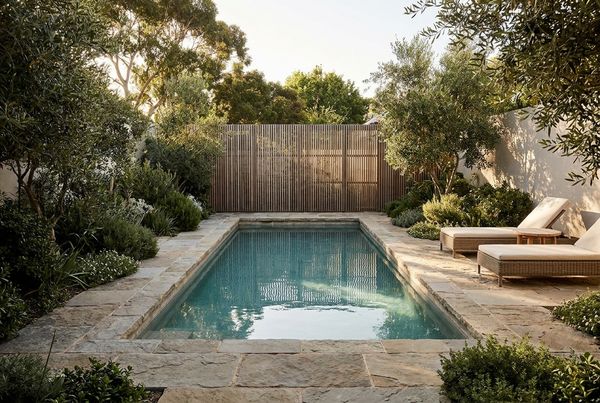
Where you put the pool matters more than how big it is. A few moves reliably buy back the sense of space:
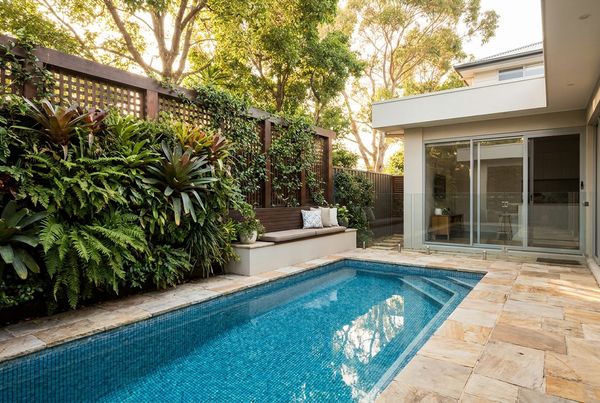
- Push the pool to the edge. Placing it against a property line frees up one usable deck zone instead of a thin ring of concrete no one enjoys.
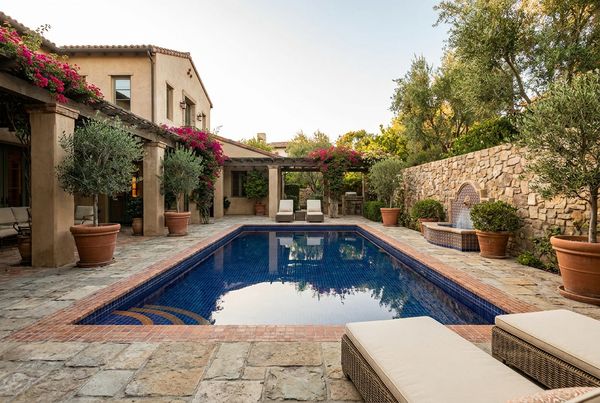
- Go vertical for privacy. Slat fences, tall planters, and climbing greenery add seclusion without eating floor space. Our pool landscaping guide covers the best privacy plants.
- Use one continuous deck material. A single surface flowing from the house out to the coping visually stretches the yard — see pool deck ideas for material picks.
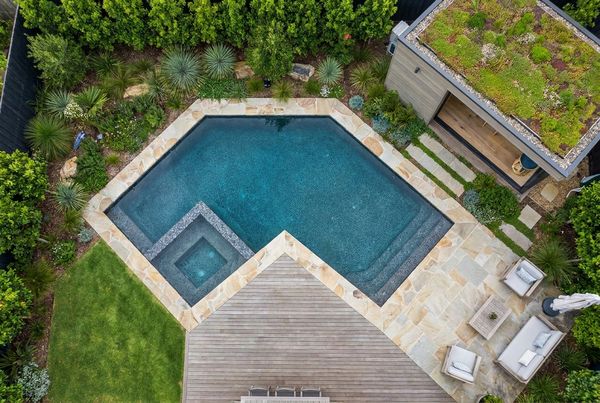
- Borrow the corner. An L-shape tucks into the angle most rectangular yards waste, gaining lounging depth without lengthening the pool.
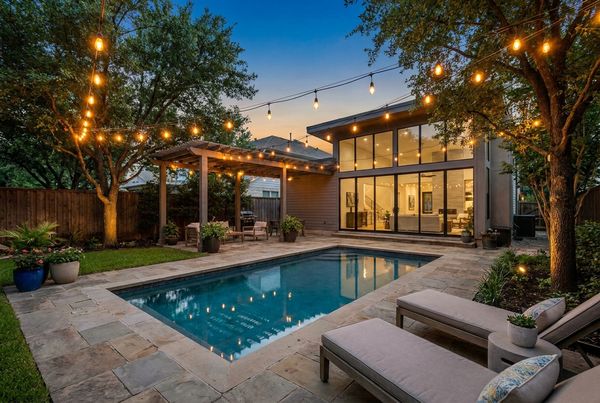
- Frame it from indoors. Line the pool up with a big window or glass door and it becomes living-room art even when no one's swimming.
Small pool sizes and rough costs
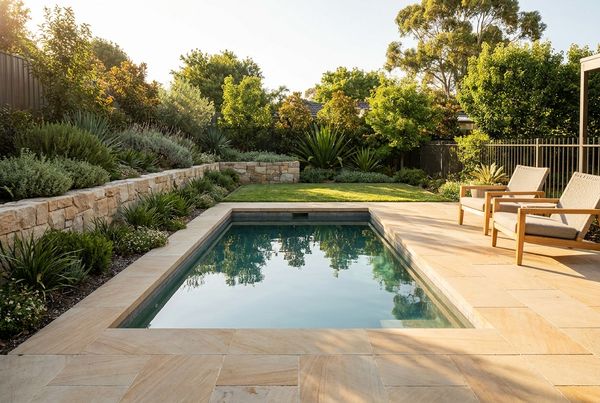
Small doesn't automatically mean cheap — features, access, and finish drive the number as much as size does — but small pools do start lower and cost far less to run. Here's where the common types land in 2026 U.S. dollars:
| Pool type | Typical size | Depth | Installed cost* |
|---|---|---|---|
| Plunge pool | 10–16 ft x 7–10 ft | 3.5–5 ft | $25k–$45k |
| Cocktail pool / spool | 12–16 ft x 10–12 ft | 3.5–5 ft | $30k–$50k |
| Small L-shaped pool | 16–22 ft (each leg) | 3.5–6 ft | $40k–$65k |
| Narrow lap pool | 30–40 ft x 7–8 ft | 4–5 ft | $45k–$75k |
*Ballpark 2026 U.S. ranges for gunite/fiberglass installs; add a spa, tanning ledge, or automation and expect the top of each range. See our full cost guide for what drives the number up or down.
The upside (and catch) of a small water volume
The best thing about a small pool is the same thing that occasionally trips owners up: there just isn't much water in it. On the plus side, a plunge or spool holds maybe a third of a standard pool's volume, so heating is fast and cheap, a bag of chemicals lasts the season, and a small heater keeps up easily. When people ask why running costs are so much lower, this is the whole answer — you're conditioning far less water.
The catch is that a small volume swings chemistry quickly. A dose that would barely move a big pool can overshoot a plunge, and a hot week with heavy use can drop chlorine faster than you'd expect. The fix is simple: know your exact gallons and dose to that number rather than by habit. Run your dimensions through our pool volume calculator once, then lean on the pool chemical calculator for right-sized doses. A saltwater system suits small pools especially well here, since it trickles chlorine in steadily instead of in big manual swings, and a good cover holds both heat and chemistry overnight on that fast-reacting little body of water.
Access, drainage and small-pool build realities
Small pools go into small yards, and small yards usually mean tight access — which is the single biggest thing that separates a smooth build from a painful one. If a full-size excavator can't reach the dig, your builder is working with mini equipment, hand digging, or even craning a fiberglass shell over the house. None of that is a dealbreaker, but it changes the price and the timeline, so raise it in the first site visit rather than discovering it mid-project.
Drainage deserves the same early attention. A compact yard packed with a pool, a deck, and privacy planting can shed a lot of water in a storm, and you don't want it all running toward the house or pooling on the coping. Plan grading and a drain line before the deck goes in. And don't skip the paperwork optimism check: while keeping a pool under roughly 400 square feet can simplify approvals in many areas, setbacks and barrier rules still apply, so confirm the specifics with your jurisdiction. Get a few real quotes from a pool builder near you and judge them partly on how carefully they read your access and drainage — the ones who bring it up unprompted are the ones who've done tight yards before.
Materials, permits and picking a builder
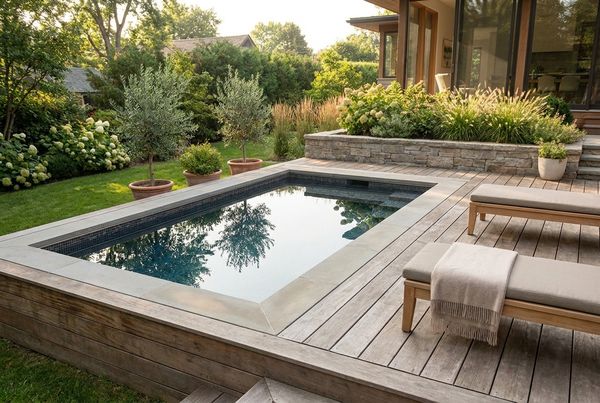
For pools this size, fiberglass shells are outstanding value. They arrive pre-formed, install in days rather than weeks, come with a built-in bench and sometimes a tanning ledge molded in, and their smooth surface fights algae — which matters in a small volume that can swing chemistry fast. If your dream shape is unusual or you want a true dark-tile finish, gunite is still the way, but for a rectangle or spool, compare a fiberglass pool first.
Two practical notes before you build. First, permitting: keeping a pool under roughly 400 square feet or below certain water-depth thresholds can simplify approvals in many areas — always confirm with your local jurisdiction, because setbacks and barrier rules still apply. Second, get real quotes. Small pools reward experienced installers who understand tight-access excavation and drainage, so line up a few options through a pool builder near you and compare not just price but how carefully each one reads your specific yard.
Ready to see what fits your space? Compare local builders below, or keep browsing the rest of our pool design ideas.
Design Gallery
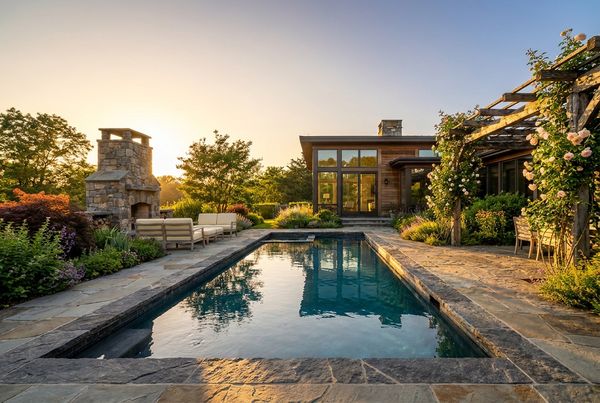
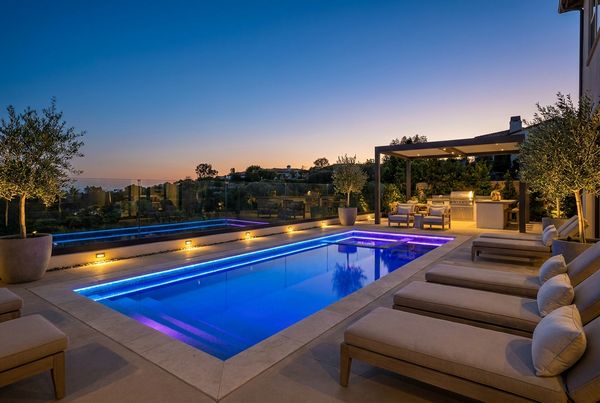
19 more ideas to save — tap any photo to view full screen.

Kelly E.
Pool Design Editor, PoolPad
Kelly has spent 10+ years around residential pools — planning projects, testing gear, and documenting backyard builds for PoolPad. Each design guide is checked against current construction methods and material pricing.
Frequently Asked Questions
What is the smallest practical inground pool size?
How much does a small pool cost?
Is a plunge pool worth it?
Can you swim laps in a small pool?
What pool shape works best in a tiny backyard?
Do small pools add value to a home?
Are small pools cheaper to maintain?
How do I figure out how many gallons a small pool holds?
Is a small pool cheaper to heat?
Can I finance a small pool?
Ready to build your dream backyard?
Compare local, vetted pool builders and get matched with pros who can bring these designs to life.
Find a Pool Builder Near You