



Key Takeaways
- Pavers and travertine give the best mix of looks, comfort and durability; poured concrete is the budget workhorse.
- Design in zones — a dining area, a lounge, and a fire feature — so the patio actually gets used all evening.
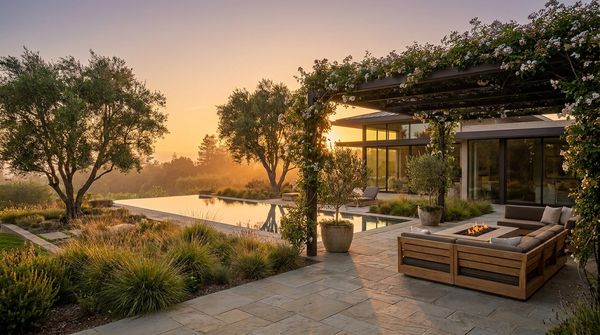
- Define the space with a pergola, planters, and an outdoor rug; that's what turns a slab into an outdoor room.
A great patio is the most-used square footage in the whole backyard — it's where dinner happens, where people gather after a swim, and where a summer evening actually stretches out. Get the material, the size, and the zones right and you've built an outdoor room; get them wrong and you've got a slab nobody lingers on. After decades designing backyards, here's how the best patio ideas really compare — and where we'd spend and save.
The material comparison
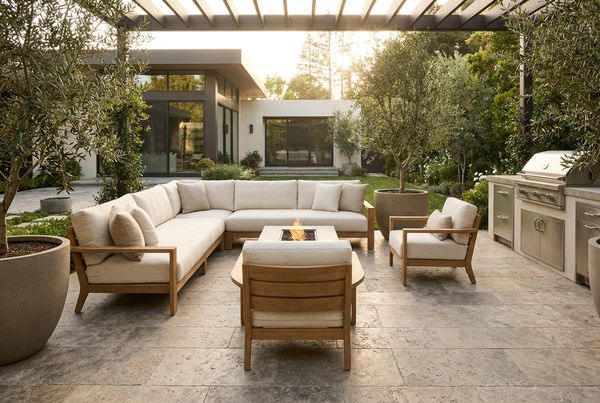
Before the pretty pictures, get the fundamentals straight. Every patio material is a trade-off between four things: how it looks, how it feels underfoot, how much upkeep it demands, and what it costs installed. Here's the honest breakdown for the four surfaces most homeowners actually choose between.
| Material | Look | Comfort / heat | Upkeep | Cost / sq ft* |
|---|---|---|---|---|
| Poured concrete | Simple, clean | Warm underfoot | Low (may crack) | $8–$15 |
| Concrete pavers | Versatile, modular | Moderate | Re-sand joints | $14–$24 |
| Flagstone | Natural, organic | Moderate | Weed joints, seal | $16–$28 |
| Travertine | High-end, natural | Cool, comfortable | Seal periodically | $16–$30 |
*Approximate 2026 U.S. installed ranges. Site prep, patterns, borders, and features push the final number up.
How to choose your patio material
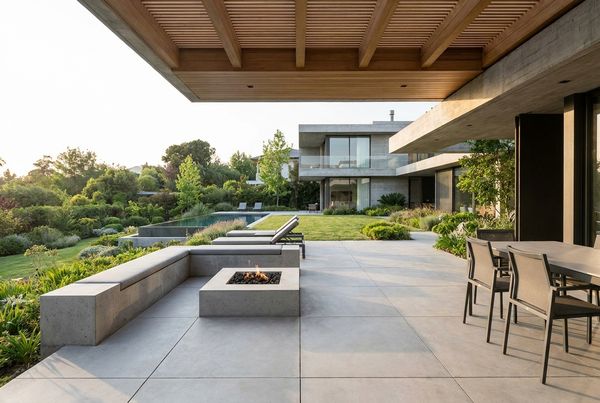
Start with how you'll use it. A patio built mostly for dining wants a flat, stable surface with tight joints so chairs and table legs sit level — pavers, travertine, or smooth concrete all excel. A relaxed, garden-style patio can carry the irregular charm of flagstone, where a little unevenness reads as character rather than a flaw.
Then match the house and climate. The patio is a big surface, so its tone should echo your home's stone, stucco, or brick. In hot, sunny regions, surface temperature matters — light travertine stays walkable when dark concrete is scorching by mid-afternoon. Cool grays suit modern homes; warm creams and tans suit Mediterranean, ranch, and traditional styles.
Then think about upkeep and movement. Pavers and flagstone can be lifted and reset individually if the ground shifts — a real advantage over a monolithic concrete slab that cracks in one ugly line. Flagstone and paver joints need occasional weeding and re-sanding; travertine and concrete pavers benefit from a sealer every few years. Poured concrete is the lowest-maintenance until the day it cracks.
Finally, size it generously. The single most common regret we hear is a patio that's too small once the furniture arrives. Plan for the table and the chairs pulled out, plus a walking path around it. Extra square footage is cheap now and painful to add later.
What we think
For most backyards, a large-format concrete paver or travertine patio is the sweet spot — comfortable underfoot, resettable if the ground moves, and timeless. On a tighter budget, a light broom-finish concrete slab beats dark stamped concrete that bakes in the sun and telegraphs every crack. Whatever the field material, spend on one defining upgrade — a pergola, a fire feature, or a contrasting border — because that's what turns a slab into a room.
Zones: dining, lounge & fire
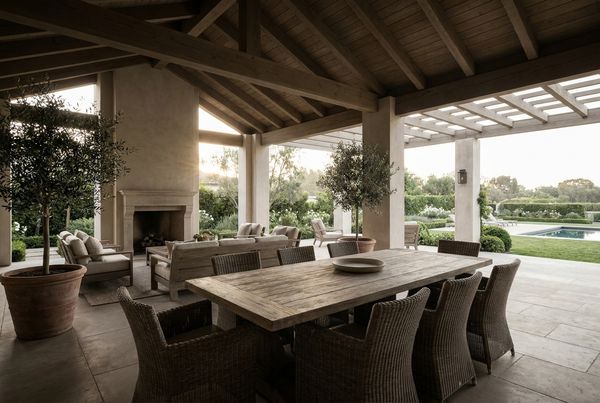
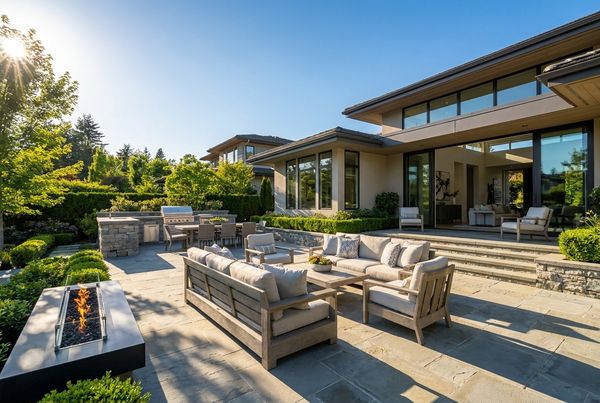
The difference between a patio that gets used and one that doesn't is zoning. Rather than one big open expanse of furniture, break the space into purposeful areas — even if it's all one continuous surface. The three zones nearly every great patio wants are dining, lounge, and fire.
The dining zone is anchored by a table and needs the most clearance: a table for six wants roughly a 12x12-foot footprint so chairs can pull out. Put it near the kitchen or grill, and cover it if you can — a shaded or covered dining area gets used far more often. Our covered patio ideas go deeper on roofing that dining zone.
The lounge zone is where people actually relax — a sofa or a pair of deep chairs around a low coffee table, roughly a 10x10-foot grouping. This is where good outdoor furniture earns its keep; comfort here is what makes people stay after dinner.
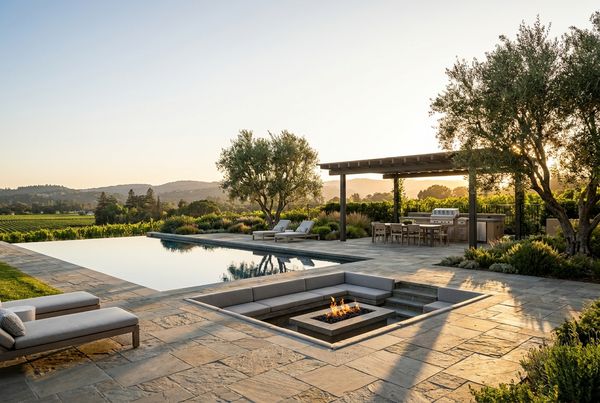
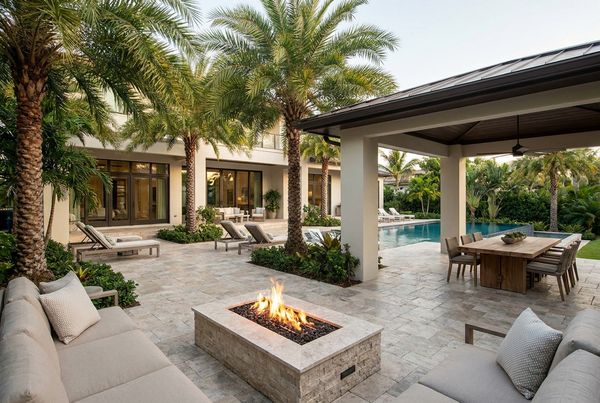
The fire zone gives the patio a gathering point that isn't the table. A fire pit or a built-in outdoor fireplace extends the season and pulls the evening past sunset. Keep it a few steps away from seating and clear of any pergola beams above.
Size, shape & multi-level patios
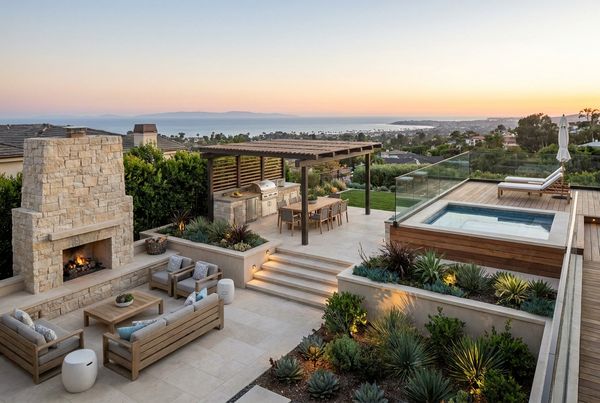
Get the size right first: for a single dining or lounge area, 150–200 sq ft is a workable minimum, but if you want both zones plus a fire feature, aim for 300–400 sq ft or more so nothing feels cramped. It's cheaper to pour or set a generous patio once than to extend a tight one later.
Shape is where you can add personality. Rectilinear patios read clean and modern and pair naturally with straight paver courses. Softer, curved edges feel more organic and suit flagstone and garden-style yards — and the softened-geometric look, all rounded corners and gentle curves, is having a real moment in 2026.
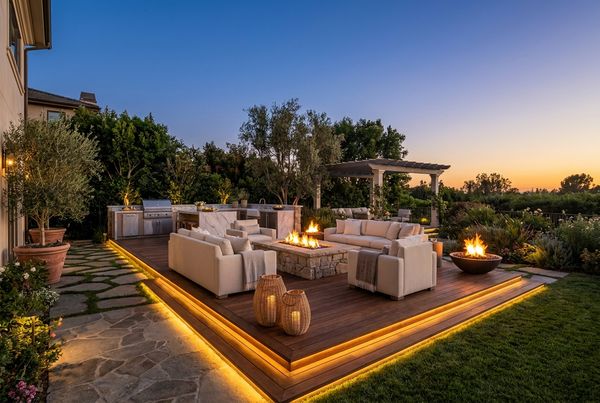
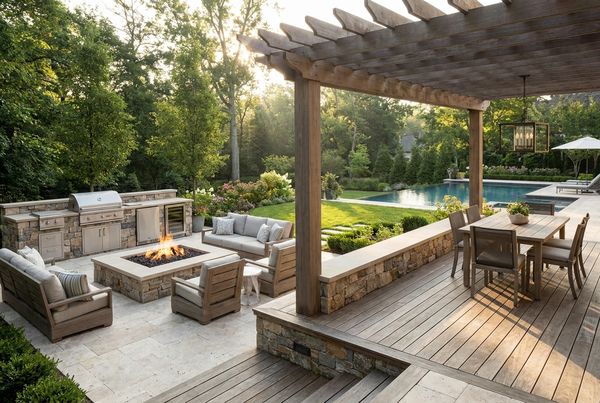
Multi-level patios are the answer to a sloped yard and one of the best ways to create instant zoning. Dropping the lounge or fire area a step or two below the dining level naturally separates the two spaces, adds architectural interest, and can double as retaining structure on a grade. Wide, generous steps between levels feel intentional; narrow, steep ones feel like an afterthought. Just plan lighting into every step edge for safety after dark.
Defining the space: rugs, planters & pergolas
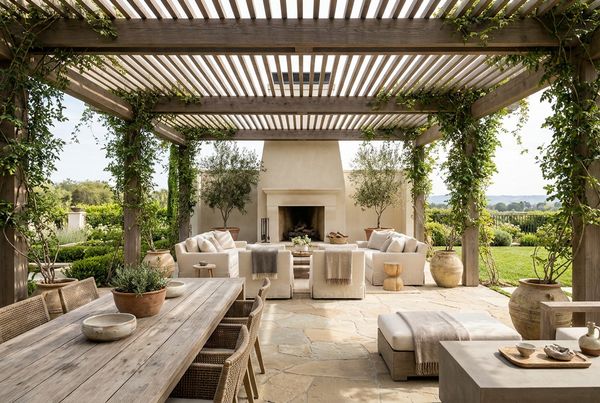
A bare slab feels like a slab until you give it walls and a ceiling — so borrow tricks from indoor rooms. The three most effective tools are a pergola, planters, and an outdoor rug.
A pergola is the single biggest upgrade for a patio: it delivers shade, defines the space overhead, and gives the eye architecture to hold onto. It also creates the perfect frame for string lights and climbing plants. Our pergola ideas cover styles from classic timber to sleek modern louvered roofs.
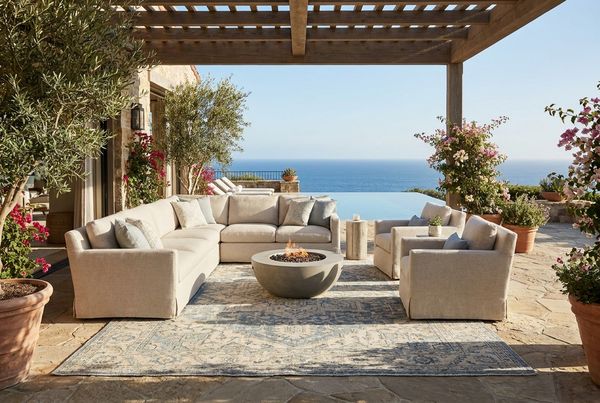
Planters soften hard edges, screen sightlines, and can wall off a zone without blocking it — a row of tall planters does the work of a partition while staying flexible. And a large outdoor rug under the lounge grouping instantly reads as a defined room, adding color and softness underfoot that hardscape alone can't. These three moves, together, are what separate a designed patio from a poured one.
Budget vs. premium builds
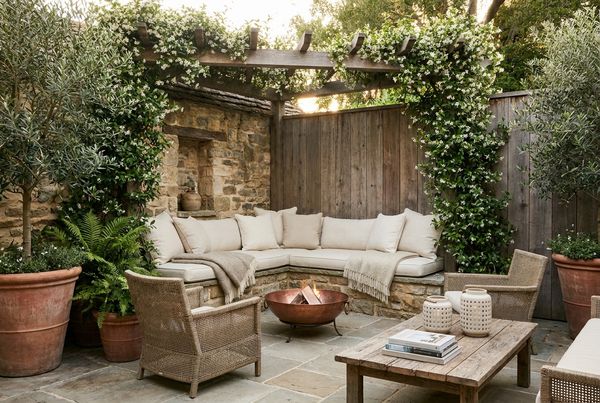
You can build a genuinely great patio at very different price points — the trick is knowing where to save and where to spend. Here's how a budget build and a premium build typically differ.
| Element | Budget build | Premium build |
|---|---|---|
| Surface | Broom-finish concrete | Travertine or large-format pavers |
| Shade | Umbrella or shade sail | Built pergola or roofed cover |
| Fire | Portable fire pit | Built-in fireplace or gas fire pit |
| Lighting | Plug-in string lights | Low-voltage landscape + step lighting |
| Furniture | Mid-range aluminum sets | Deep-seat teak or all-weather wicker |
Our honest advice: don't try to make every element premium on a stretched budget. A light concrete field with one standout feature — a real pergola, or a beautiful built-in fire feature — looks far more considered than a fully paved patio with a wobbly umbrella and plastic chairs. Spend where people touch and gather; save on the raw square footage.
Connecting the patio to your pool
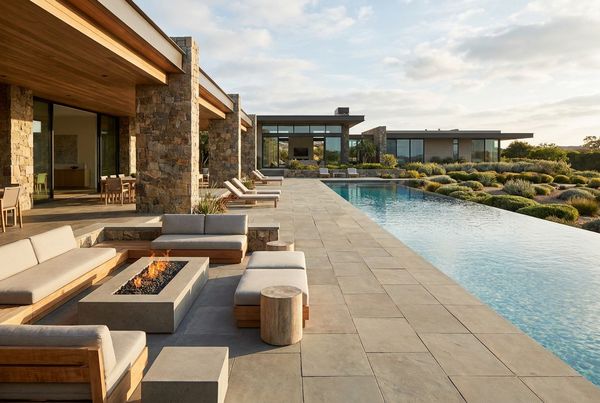
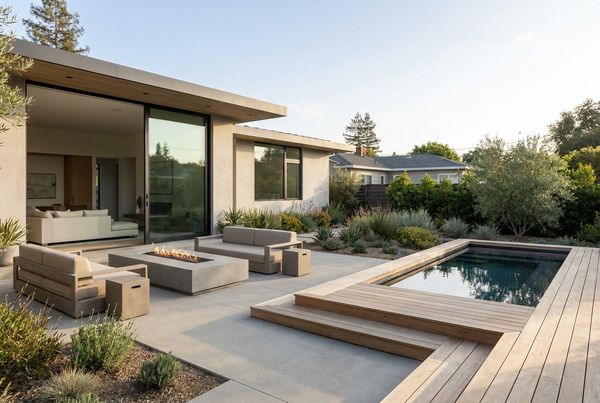
If your patio shares a backyard with a pool, the two spaces should read as one designed environment, not a pool with a patio bolted on beside it. The easiest way to achieve that is a shared or complementary material: run the same paver or travertine from the pool deck onto the patio, or at minimum echo the coping tone so the eye flows uninterrupted.
Keep the two surfaces close to level and let one flow into the other without a hard step or a jarring change in color. A continuous paving pattern, a shared border detail, or a repeated planting line all stitch the spaces together. If you're planning both at once, treat the patio, deck, and coping as a single palette from day one — it's what makes a backyard feel finished. Browse the wider hardscape playbook in our pool deck ideas and coordinate the two before either is poured.
Drainage and base prep: the part nobody photographs
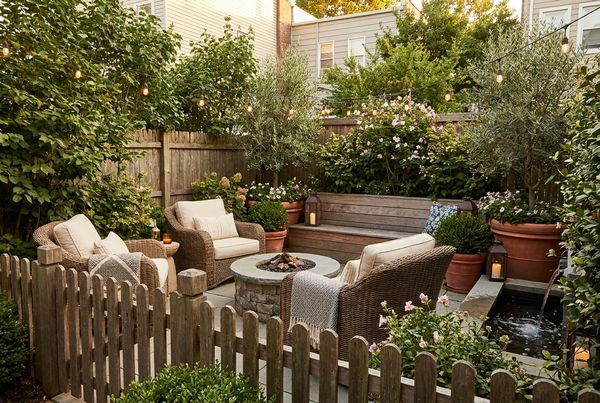
The prettiest patio material in the world fails if the ground under it wasn't done right. Nearly every patio problem I get called back to look at — heaving pavers, cracked slabs, a puddle that never dries, water sheeting toward the house — traces to base prep or drainage, not the surface. This is the boring line item that quietly determines whether your patio looks great in ten years or gets torn out in three.
Two things matter most. First, the base: a compacted gravel sub-base topped with the right bedding layer gives pavers and stone a stable, well-draining foundation, while poured concrete needs proper subgrade prep and control joints so it cracks where you want it to, not randomly across the middle. Skimp here and no material survives a few freeze-thaw cycles or a wet season. Second, the slope: a patio should fall away from the house at roughly a quarter-inch per foot so water runs off instead of pooling or draining back toward your foundation.
If the patio sits beside a pool, drainage gets extra important — splash-out, deck runoff, and backwash water all need somewhere to go that isn't a slick, algae-prone low spot. Plan channel drains or a deliberate grade before anything is poured, and coordinate it with the pool deck so the two surfaces shed water as one system. It's cheap to get right on paper and miserable to fix after the concrete is down.
Climate fit and long-term upkeep
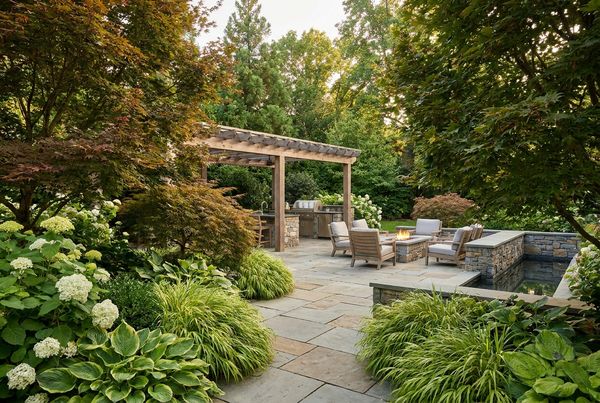
Where you live should steer the material as much as your taste does. In hot, sunny regions, surface temperature is a real comfort issue — light travertine and pale pavers stay walkable barefoot when dark stamped concrete becomes a griddle by mid-afternoon. In cold, freeze-thaw climates, the resettable nature of pavers and flagstone is a genuine advantage: individual units flex and can be lifted and relaid, where a monolithic slab cracks in one ugly line and stays that way.
Upkeep varies more than people expect. Poured concrete is the lowest-maintenance surface right up until it cracks or the sealer wears and it needs resealing. Pavers want their joints re-sanded every few years and the odd unit reset if the ground shifts. Flagstone joints need occasional weeding, and both travertine and concrete pavers benefit from a periodic sealer to fight staining. None of it is heavy work, but knowing the rhythm before you buy keeps you from being surprised.
One honest note on chlorine and salt if the patio is poolside: splash-out and salt spray are hard on some sealers and can etch or discolor unsealed stone over time. Keeping your water balanced helps — an unbalanced pool is harder on everything it touches — and a quick check with a test kit now and then protects the hardscape as much as the swimmers. Rinsing the deck occasionally to knock salt off the surface goes a long way too.
2026 patio trends worth stealing
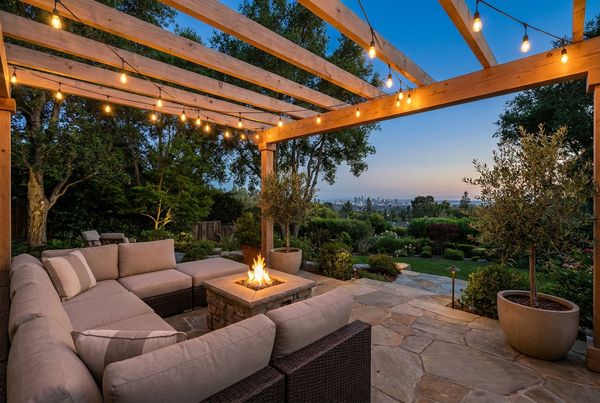
A few directions are genuinely worth following this year. Large-format pavers — 24x24 and up — keep taking over, with fewer joints for a calmer, more contemporary surface. Softened-geometric shapes bring gentle curves and rounded corners back into otherwise clean layouts. Resort-style outdoor living is the through-line: full outdoor kitchens, real lounge furniture, and shade structures that make the patio a genuine second living room.
On the details, bold, layered lighting is everywhere — warm string lights overhead, low-voltage fixtures washing planters and steps, and glow built into the risers of multi-level patios. Fire features remain the highest-return upgrade for extending the season. And energy-conscious choices, from light heat-reflective surfaces to LED lighting, quietly shape the smart builds. Pull a few of these together and you don't just have a patio — you have the room the whole backyard revolves around.
Design Gallery
6 more ideas to save — tap any photo to view full screen.

Kelly E.
Pool Design Editor, PoolPad
Kelly has spent 10+ years around residential pools — planning projects, testing gear, and documenting backyard builds for PoolPad. Each design guide is checked against current construction methods and material pricing.
Frequently Asked Questions
What is the best material for a patio?
How much does a backyard patio cost?
What is the cheapest way to build a patio?
How big should a patio be?
How do I connect my patio to my pool?
Do paver patios need a lot of maintenance?
How important is drainage and base prep for a patio?
What patio material is best for a hot climate?
Does a poolside patio need special care against chlorine and salt?
Ready to build your dream backyard?
Compare local, vetted pool builders and get matched with pros who can bring these designs to life.
Find a Pool Builder Near You