



Key Takeaways
- Choose low-litter, non-invasive plants — avoid trees that constantly drop leaves, flowers, or seed pods into the water.
- Layer heights (groundcover → shrubs → trees) and use vertical screening for privacy without crowding the deck.
- Keep planting beds and irrigation a safe distance from the shell so roots and overspray don't damage decking or chemistry.
Landscaping is what separates a pool from a backyard resort. It softens the hardscape, buys you privacy, and frames the water so every photo looks intentional. But poolside planting has rules — the wrong tree in the wrong spot means a lifetime of skimming leaves and clogged filters. After decades designing pools and the gardens around them, we can tell you the difference between a plan that looks incredible on day one and one that still looks incredible on year ten. Here's how to get the resort look without the maintenance regret.
Start with low-litter plants
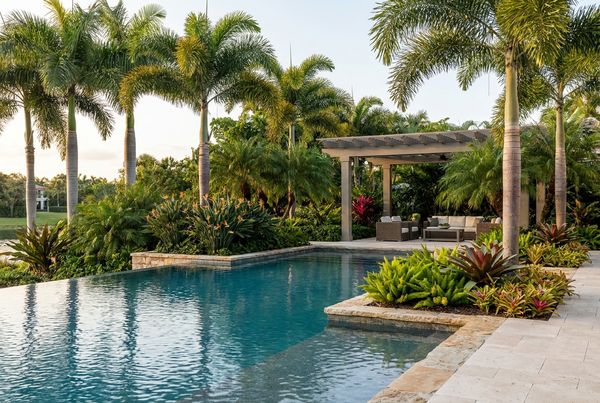
The single most important rule in pool landscaping ideas: choose plants that don't constantly drop debris into the water. Every falling leaf, spent flower, and seed pod becomes something you skim, something that stains your coping, or something your robotic cleaner has to chase down. The plants around a pool live a harder life than the rest of your garden — sun glare off the water, chlorinated splash-out, and reflected heat off the deck — so we favor tidy, evergreen, splash-tolerant species that shrug all of that off:
- Ornamental grasses — movement, texture, and almost no litter.
- Agave, yucca & succulents — sculptural, drought-tough, and clean.
- Dwarf and clumping palms — a tropical feel without the coconut mess.
- Boxwood & podocarpus — clippable evergreen structure and screening.
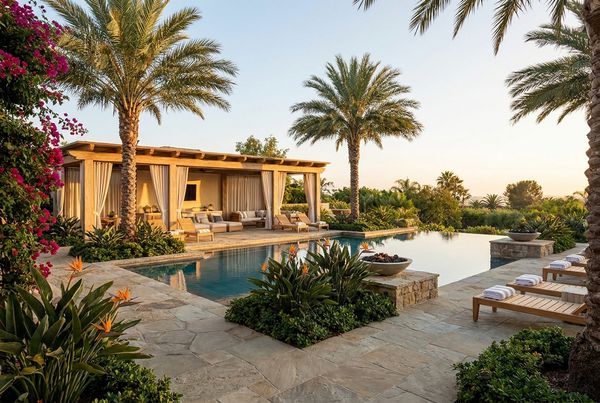
- Bird of paradise & canna lily — bold color that reads "resort."
Avoid the high-litter offenders near the water: fruitless mulberry, most flowering fruit trees, cottonwood, jacaranda, bottlebrush, and anything with berries or aggressive surface roots. A single messy tree at the coping can undo an otherwise flawless design. If you love a particular blooming tree, plant it downwind and well back from the pool so the mess lands on lawn or mulch instead of in the skimmer.
Layer heights for a designed look
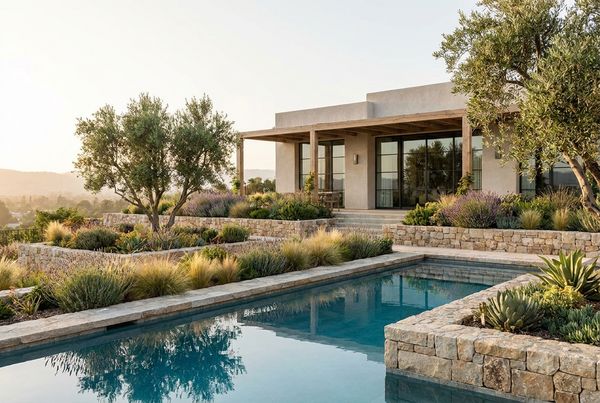
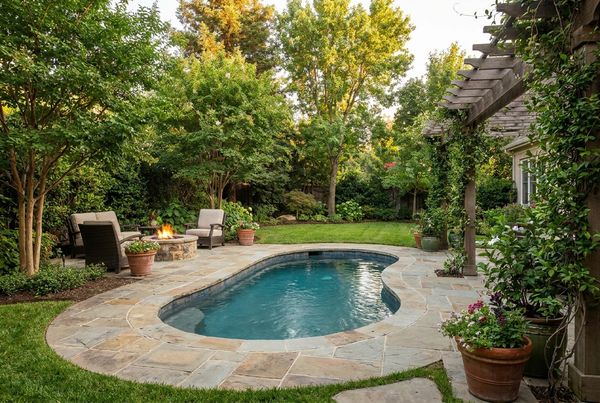
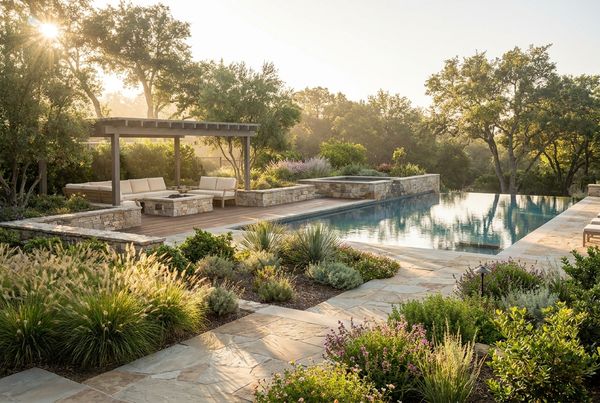
Resort landscaping almost always works in three layers: low groundcover or grasses at the coping, mid-height shrubs behind them, and taller trees or screening at the perimeter. This staircase of heights draws the eye upward, hides fences, and makes even a small yard feel lush and enclosed. It's the same trick a florist uses in an arrangement — nothing floats alone.
The other half of a "designed" look is restraint. Repeat two or three plant types in generous drifts rather than collecting one of everything. Repetition reads as intentional; a plant-of-the-month collection reads as chaotic. Set the tallest anchors first (a specimen palm, an olive, a cluster of clumping bamboo), fill the middle with repeating shrubs, then knit it together at the ground with grasses or groundcover. If you're working with a compact yard, our small pool ideas guide shows how tight planting and vertical layers make a modest space feel like a retreat.
Privacy without crowding the deck
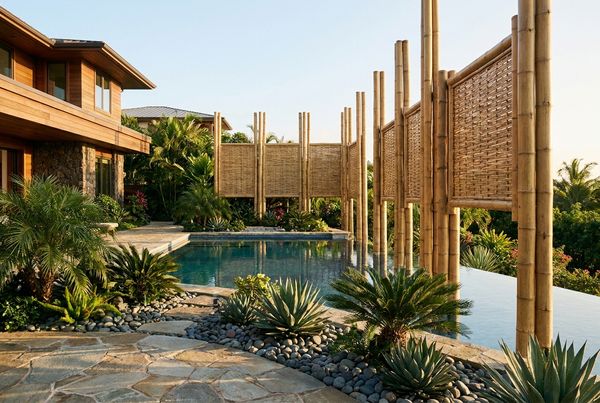
Privacy is usually the number-one request we hear, and the best answer is almost never plants alone — it's a combination of greenery and structure. Living screens take a season or two to fill in; a built element gives you privacy on day one while the plants catch up.
- Vertical screening plants — clumping (non-running) bamboo, arborvitae, Italian cypress, or podocarpus hedges give height without eating deck space.
- Slat fences & planters — a horizontal-slat fence with a planter at its base reads modern and screens instantly.
- Pergolas & cabanas — overhead structure blocks second-story sightlines and adds shade; see our pergola ideas for styles that suit a poolside.
The key is choosing screening that grows up, not out — you want privacy at eye level without a hedge that swallows the walkway. And always confirm your bamboo is a clumping species; running bamboo is one of the few plants that can genuinely become a decades-long regret.
Tropical, modern or desert: pick a language
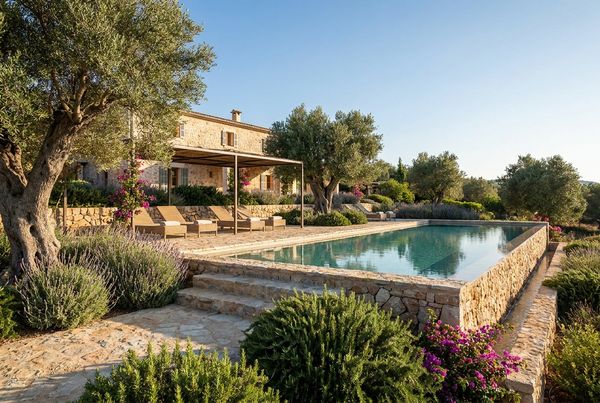
The fastest way to a cohesive garden is to commit to one design language and stay disciplined about it. Three dominate poolside design right now:
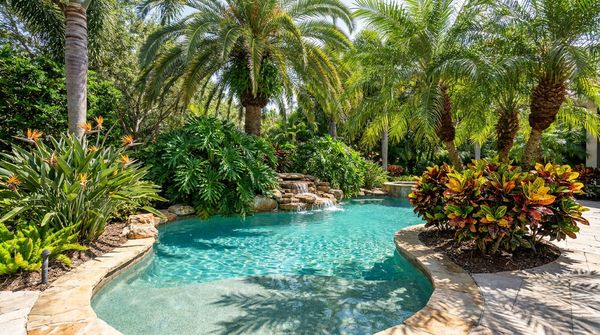
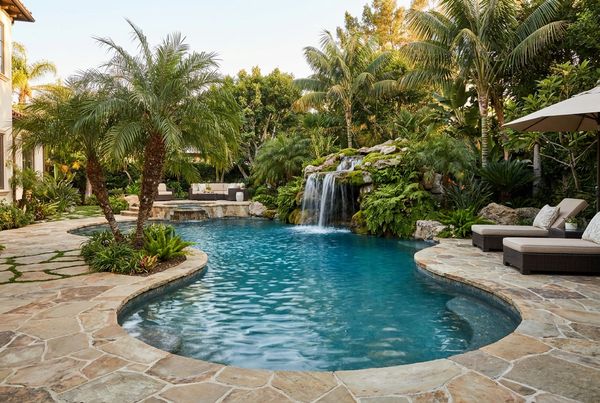
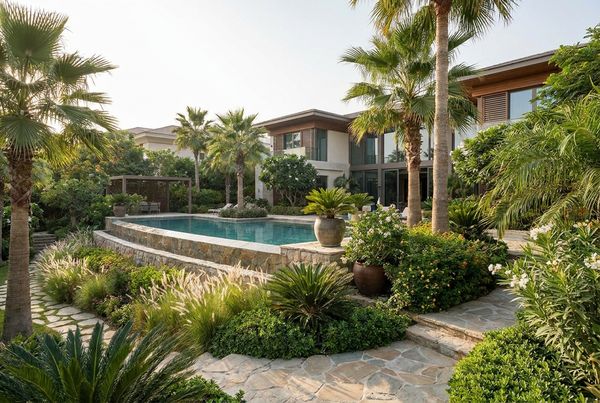
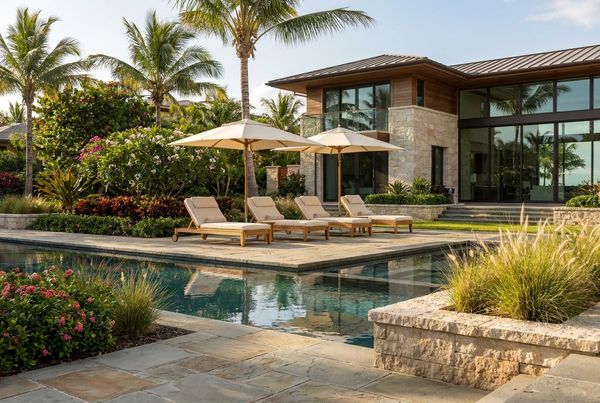
- Tropical / resort: palms, philodendron, bird of paradise, crotons, and a boulder waterfall. Lush, green, and humid-climate friendly — the classic resort look.
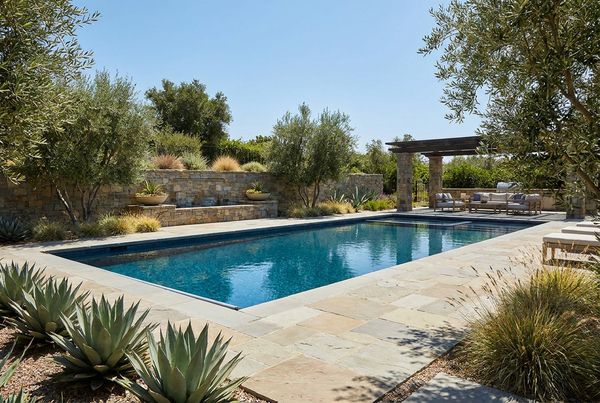
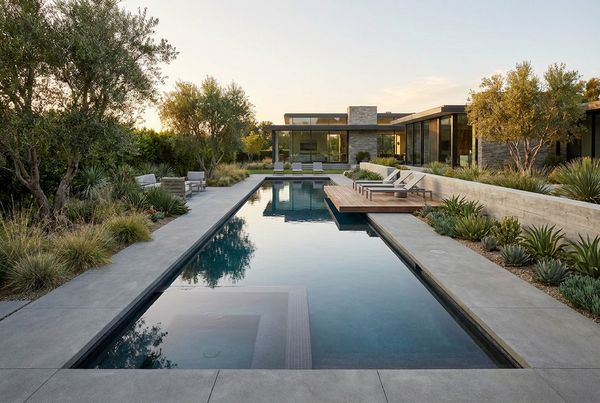
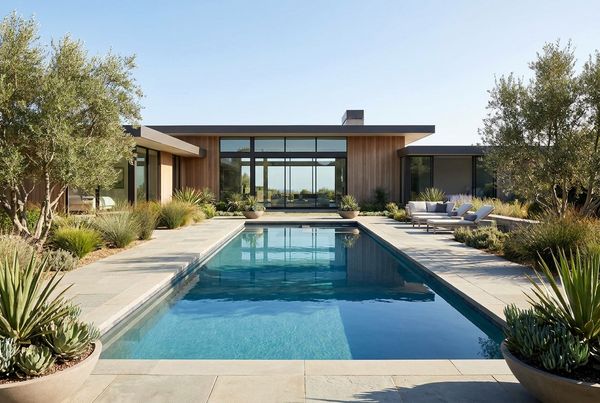
- Modern: a restrained palette of ornamental grasses, agave, olive or citrus trees, and crisp planting beds with clean steel or concrete edges. Fewer species, sharper geometry.
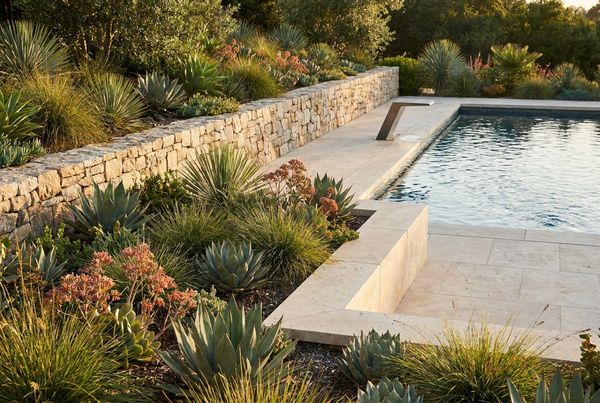
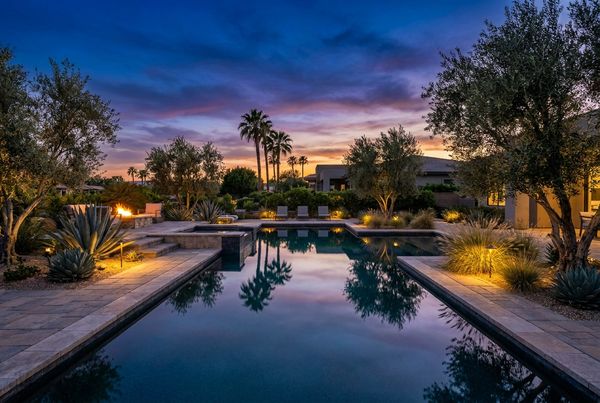
- Desert / xeriscape: succulents, cacti, red yucca, decomposed granite, and boulders. Low water, high drama, and almost no upkeep — ideal for the arid Southwest.
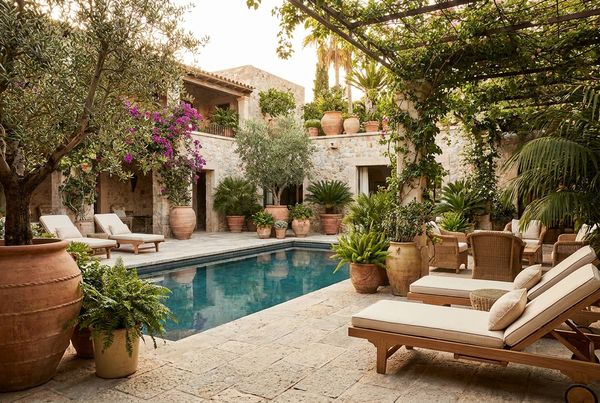
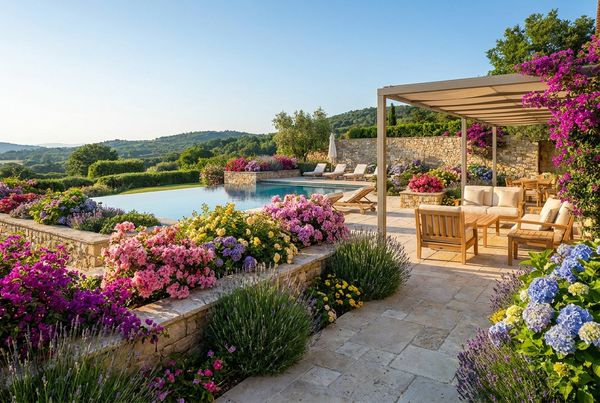
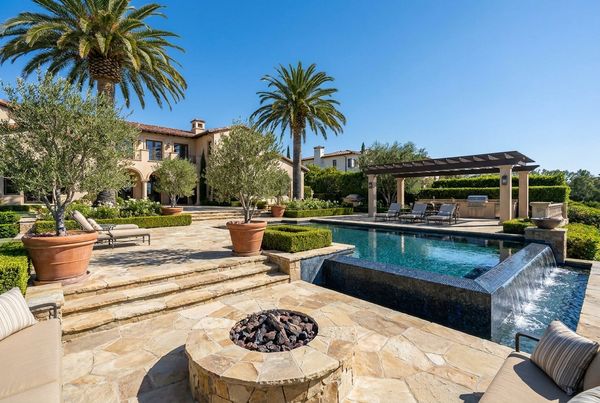
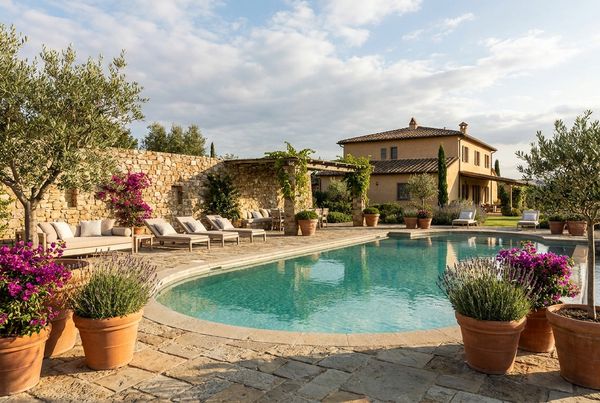
Mediterranean sits comfortably between modern and desert: olive trees, lavender, rosemary, and gravel courtyards that sip water and age beautifully. Whichever you choose, let your architecture and climate lead. A tropical jungle looks wrong hugging a mid-century modern home, and thirsty tropicals struggle in Phoenix. Match the plants to both the house and the hardiness zone and the whole yard clicks into place.
What we think
The mistake we see most: beautiful, high-litter trees planted right at the coping. Six months later it's a full-time skimming job. Buy low-litter, buy fewer species, and repeat them — three well-chosen plants repeated in drifts read more "designer" than a dozen one-offs, and your robot cleaner will thank you. When in doubt, spend the plant budget on fewer, larger specimens rather than lots of small pots; instant scale is worth more than variety.
Best poolside plants by style and zone
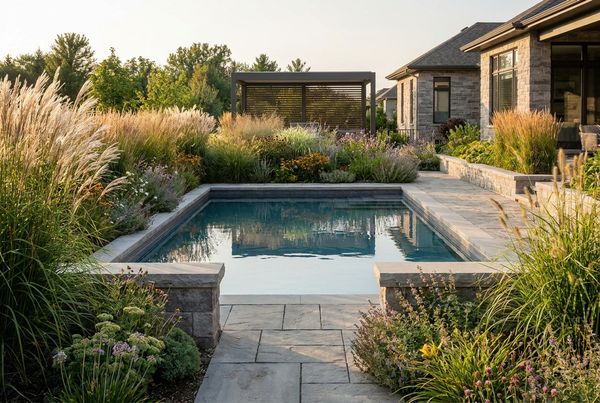
Not every plant belongs in every climate. Use the table below as a starting shortlist — all of these are relatively low-litter and pool-friendly when kept a few feet off the coping. Match your USDA hardiness zone first, then choose within the style you picked above.
| Style | Signature plants | Best USDA zones | Litter / upkeep |
|---|---|---|---|
| Tropical / resort | Queen & pygmy date palm, bird of paradise, philodendron, canna lily | 9–11 | Low–moderate |
| Modern minimalist | Ornamental grasses, agave, olive, dwarf mondo grass | 8–11 | Very low |
| Desert / xeriscape | Agave, red yucca, barrel cactus, ocotillo, aloe | 8–11 | Very low |
| Mediterranean | Olive, lavender, rosemary, dwarf citrus, Italian cypress | 8–10 | Low |
| Cool-climate / temperate | Boxwood, arborvitae, hosta, feather reed grass, hydrangea* | 4–8 | Low–moderate |
*Keep flowering shrubs like hydrangea back from the coping — spent blooms are litter. Confirm choices with a local nursery for your exact zone and microclimate.
Two universal winners: ornamental grasses thrive from zone 4 to 11 and drop almost nothing, and agave anchors modern and desert schemes with zero fuss. When a plant appears in more than one style column, it's usually a safe bet.
Softscape meets hardscape
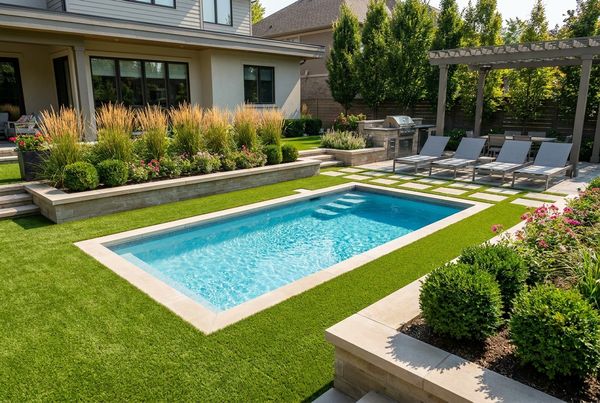
Great pool landscaping ideas are really a conversation between plants (softscape) and paving, walls, and water (hardscape). The planting should frame and soften the built elements, never fight them. A few moves that consistently work:
- Artificial turf stays green year-round, drops no litter, drains fast, and needs no mowing — a favorite for tidy modern beds and play space, kept back from splash-out.
- Stone mulch and clean bed edges stop soil and bark from washing onto the deck and into the water.
- Boulders and dry-stack walls give planting instant structure and a place for cascading groundcover to spill.
This is also where your deck material and your planting palette need to agree on a color story — warm travertine loves olive and lavender; cool grey porcelain loves grasses and agave. Get the two coordinated up front by reading our pool deck ideas alongside your planting plan, and if you want the planting to hug a waterfall or spillway, our guide to pool water features shows how ferns and tropicals dress natural rock.
Lighting, paths and the after-dark garden
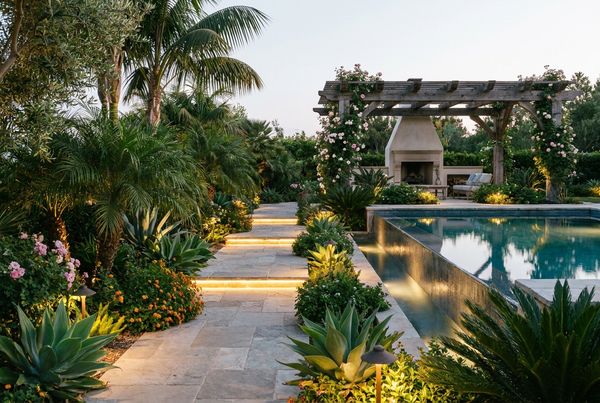
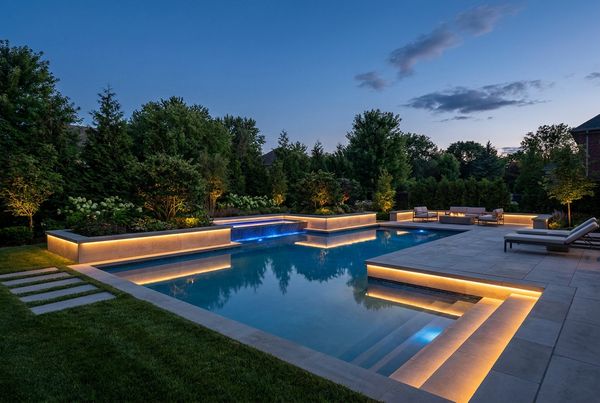
A garden you can only enjoy in daylight is a garden you use half as much. Low-voltage landscape lighting is, dollar for dollar, the highest-impact upgrade in the whole plan. You don't need much — a handful of well-placed fixtures does more than a runway of them:
- Uplight two or three specimen plants (a palm, an agave, a sculptural tree) to create silhouettes and depth.
- Wash a privacy hedge or fence to push the boundary back and make the yard feel larger.
- Path-light walkways low and warm so guests move safely without glare bouncing off the water.
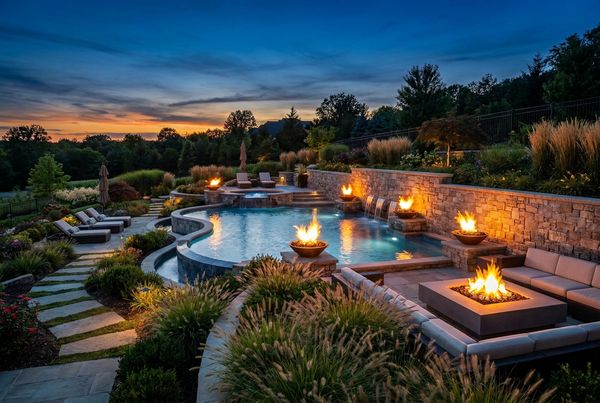
Aim for warm 2700K light and hide the fixtures behind foliage so you see the effect, not the source. Done well, the garden at night feels more like a resort than it does at noon — and it makes evening swims genuinely magical.
Protect the pool (and the plants)
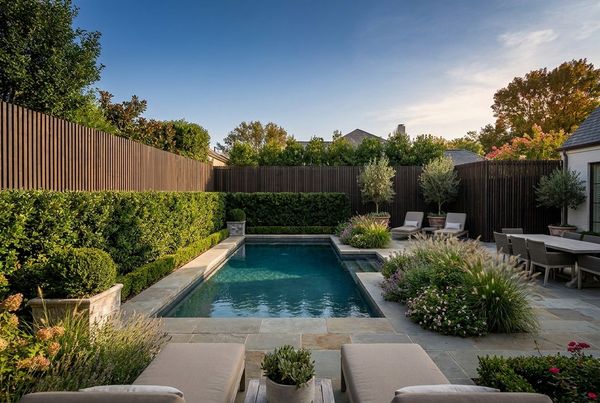
The most beautiful planting plan will disappoint if it damages the thing it's meant to frame. A few non-negotiables from the field:
- Keep planting beds and drip irrigation a few feet off the coping so overspray doesn't upset your water chemistry or stain the deck. Sprinkler mist carrying minerals and fertilizer into the pool is a recipe for scale and cloudy water.
- Choose root-safe distances for anything large — 3–4 feet minimum, more for vigorous species — so roots don't crack decking, lift coping, or invade plumbing.
- Mulch with stone rather than bark near the water; bark floats, blows in, and clogs skimmers.
- Route drainage away from the shell and deck so beds don't turn into standing water after a storm.
Get these basics right and your landscaping protects your investment instead of quietly undermining it. If you're at the planning stage, a good installer will coordinate planting, irrigation, and the pool shell together — our pool builder directory helps you find one who does.
Budgeting your poolside planting
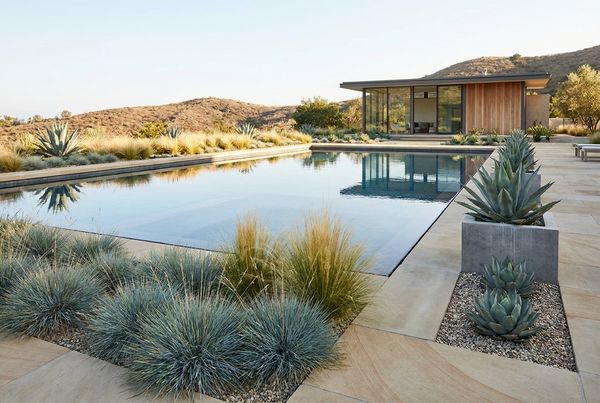
Landscaping is the line item that quietly balloons, because it spans everything from a weekend of planting to a fully designed garden with mature trees, irrigation, lighting, and hardscape. There's no single number, but a useful way to think about it: the plants themselves are often the smallest part of the cost. Irrigation, soil prep, lighting, edging, and — most of all — the size of the specimens you buy drive the total far more than the species you pick.
The biggest budget lever is specimen size versus quantity. A dozen small one-gallon shrubs cost less up front than three large ones, but the large ones give you instant scale and a finished look on day one, while the small ones take two or three seasons to fill in. My advice almost always: buy fewer, larger anchors and let cheaper filler plants grow in around them. Instant scale is worth more than variety, and a restrained palette of repeated plants reads more expensive than a scattered collection anyway.
Where you can save without it showing: skip the mature trees in favor of fast growers, phase the far beds for later, and lean on structure and hardscape you're already building to do some of the framing. Where I wouldn't cut corners: irrigation and drainage, which protect everything else, and the lighting layer, which delivers more enjoyment per dollar than any plant. Fold the planting number into your overall pool budget from the start so it isn't the thing that gets cut to zero when the shell runs over.
Seasonal upkeep and the first two years
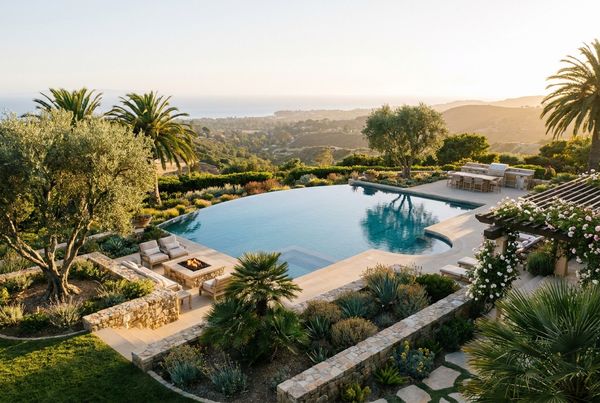
A poolside garden isn't set-and-forget, but the right plant choices make the difference between a few tidy hours a season and a weekly chore. The plants I keep recommending — grasses, agave, olive, boxwood, dwarf palms — earn their place precisely because they're clean and low-effort once established. The high-litter trees I warn against aren't just an eyesore; they're the reason some homeowners spend every weekend skimming instead of swimming, and why a robotic cleaner ends up chasing debris it shouldn't have to.
The first two years matter most. New plantings need consistent water to establish their roots, even the drought-tolerant ones — "low-water" describes a mature plant, not a freshly installed one. Set the drip irrigation to water deeply and less often to push roots down, mulch to hold moisture (stone near the water, not floating bark), and resist the urge to overwater the tough species just because they're on the same line as the thirsty ones. Grouping plants by water need — hydrozoning — is what lets you dial this in instead of compromising.
After establishment, the rhythm is simple: cut grasses back once a year, prune shrubs to keep screening dense without swallowing the walkway, refresh mulch, and stay on top of leaf litter before it stains the coping or clouds the water. Keep an eye on overspray, too — sprinkler mist drifting into the pool carries minerals and fertilizer that throw off balance and can leave you fighting cloudy water. A little seasonal attention keeps the garden looking as good in year ten as it did on install day, which is the whole point of choosing the right plants up front.
Sustainable, low-water planting that lasts
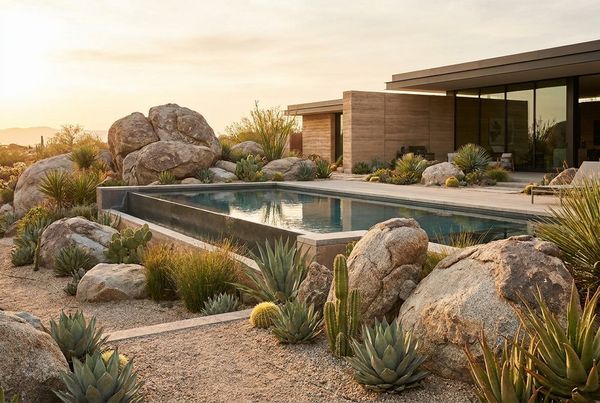
The clearest trend across the country is planting that asks for less — less water, less chemistry, less weekly labor. It's driven partly by drought and water restrictions and partly by homeowners who simply want to spend weekends in the pool, not tending the edges of it. The sustainable playbook is straightforward:
- Plant native and regionally adapted species. They're built for your rainfall and soil, need little supplemental water once established, and support local pollinators.
- Group plants by water need (hydrozoning) so drip irrigation runs efficiently instead of overwatering the tough plants to keep the thirsty ones alive.
- Lean on drought-tolerant structure — agave, grasses, olive, and succulents — that looks intentional year-round without babysitting.
- Xeriscape the far beds with decomposed granite and boulders where you want zero upkeep.
Low-water doesn't mean low-impact. A xeriscape of agave and boulders against clean paving can look every bit as luxurious as a jungle — often more so, because it stays crisp through the seasons. When you're ready to see how planting ties into the whole backyard, browse the rest of our pool design ideas and start matching a planting language to your pool.
Design Gallery
17 more ideas to save — tap any photo to view full screen.

Kelly E.
Pool Design Editor, PoolPad
Kelly has spent 10+ years around residential pools — planning projects, testing gear, and documenting backyard builds for PoolPad. Each design guide is checked against current construction methods and material pricing.
Frequently Asked Questions
What are the best plants to put around a pool?
How do I create privacy around my pool?
How far should plants be from a pool?
What plants give the best tropical pool look?
Is artificial turf a good idea around a pool?
What low-water plants work for a desert pool?
How much does pool landscaping cost?
Can landscaping affect my pool water chemistry?
What plants provide the fastest privacy around a pool?
Do I need to worry about roots damaging my pool?
Ready to build your dream backyard?
Compare local, vetted pool builders and get matched with pros who can bring these designs to life.
Find a Pool Builder Near You