



Key Takeaways
- A pebble finish blends small natural stones into the plaster, giving a tougher, longer-lasting interior than standard white plaster — typically 15–20+ years versus 7–12.
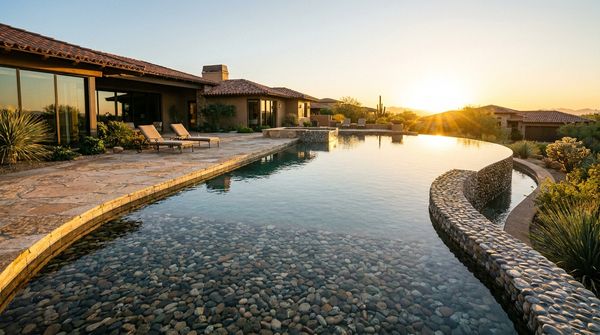
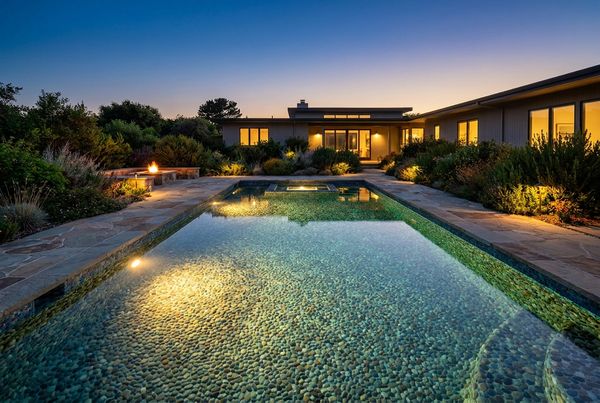
- Pebble color sets your water color: light blends read bright and tropical, tans read lagoon-natural, and dark charcoal or black blends read deep and reflective — the look driving 2026.
- It costs more than plaster up front, but the longer lifespan and fewer resurfacings usually make pebble the better value over the life of the pool.
The finish is the one part of your pool you actually touch, look at, and swim against every single day — and yet it's the decision most people rush. A pebble finish is our default answer for a reason: it lasts longer than plaster, it hides the little flaws that make white plaster look tired, and it sets the entire color of your water. After troweling and resurfacing plenty of them, here's where pebble earns its price and where a cheaper option is fine.
What a pebble pool finish actually is
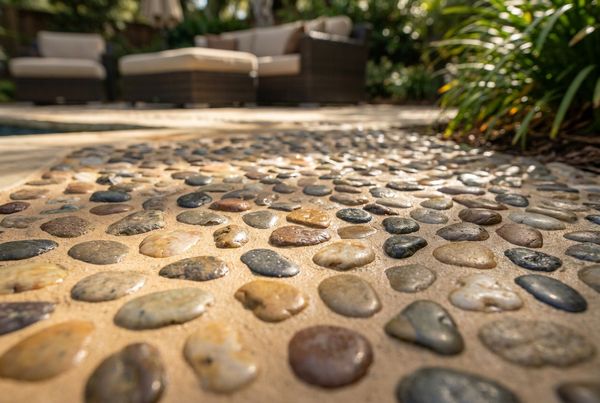
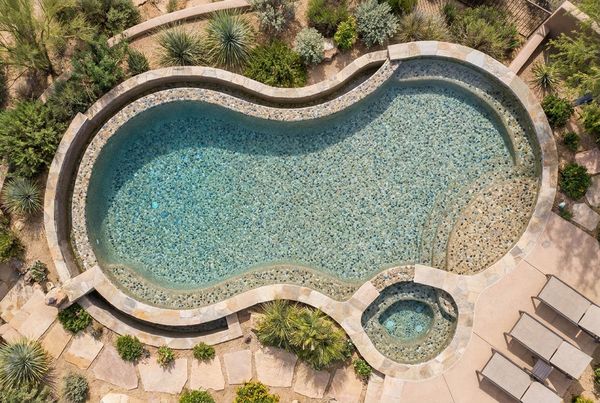
A pebble finish is, at heart, plaster with small natural stones mixed in. Instead of a smooth cement-and-marble-dust surface, the mix carries thousands of tiny pebbles or aggregate, and once it's troweled onto the shell the top layer of cement is washed back to expose the stone. What you're left with is a surface that's largely hard, natural rock rather than soft cement — and that single difference is what drives everything people love about it: the durability, the color depth, and the slightly textured, natural look.
You'll hear brand names thrown around, and they matter because they set the standard. Pebble Tec is the original large-pebble product; Pebble Sheen uses a smaller pebble polished to a smoother feel; and there are quartz-blended and glass-bead variants that push the finish smoother or more sparkly still. All of them are "pebble finishes" in the way people use the term. They're applied inside a gunite or concrete shell, which is what gives you the freedom to pick any color and texture you like — a drop-in fiberglass shell comes with its color baked in and can't be pebble-finished.
Pebble vs plaster vs quartz
Almost every interior finish decision comes down to three families: standard plaster, quartz, and pebble. Plaster is the cheapest and smoothest, but it's also the softest and shortest-lived — it etches, stains, and shows mottling, and it usually needs replacing first. Quartz sits in the middle: quartz aggregate is harder and more colorfast than plain plaster, giving a smoother surface than pebble with better longevity than plaster. Pebble is the toughest and longest-lasting of the three, at the cost of a bit more texture and a higher price.
Here's how the three stack up on the things that actually matter:
| Finish | Typical lifespan | Feel | Relative cost | Hides flaws |
|---|---|---|---|---|
| Standard plaster | 7–12 years | Smoothest | Lowest | Poor |
| Quartz | 10–15 years | Smooth | Middle | Good |
| Pebble | 15–20+ years | Textured | Highest | Best |
Our short version: if lowest possible price is the only thing that matters, plaster does the job. If you want a smoother feel with better life than plaster, quartz is a smart middle. But for most people building or remodeling a pool they intend to keep, pebble is the finish we recommend — you pay more once and skip a resurfacing cycle or two down the road.
What we think
Spend up on the finish and skip elsewhere if you have to. A pebble interior is the surface you live with for two decades — it's the wrong place to save a few thousand dollars. We'd choose a quality pebble over an upgraded plaster every time, and put any leftover budget toward lighting or coping rather than a cheaper interior you'll be redoing sooner.
Colors and how they change your water
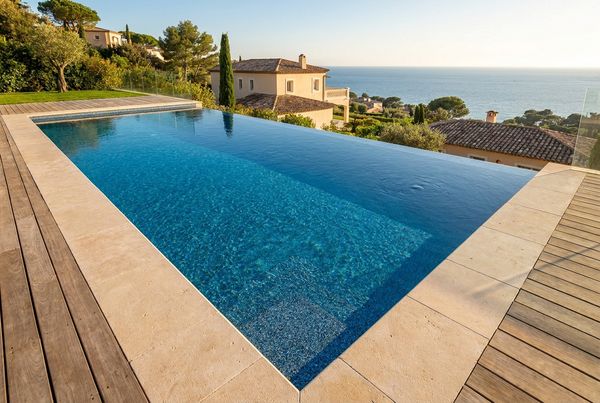
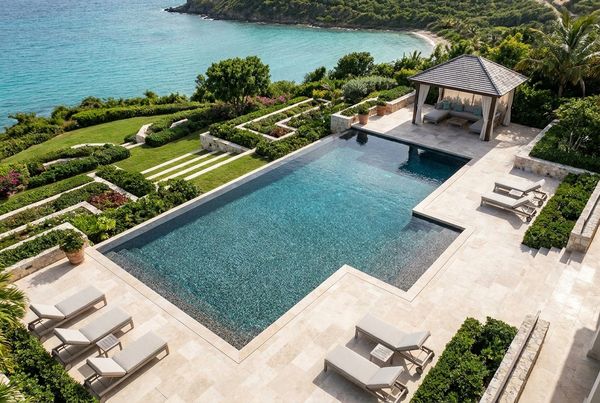
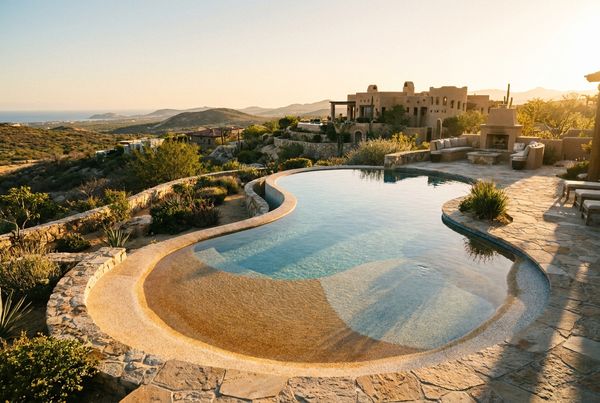
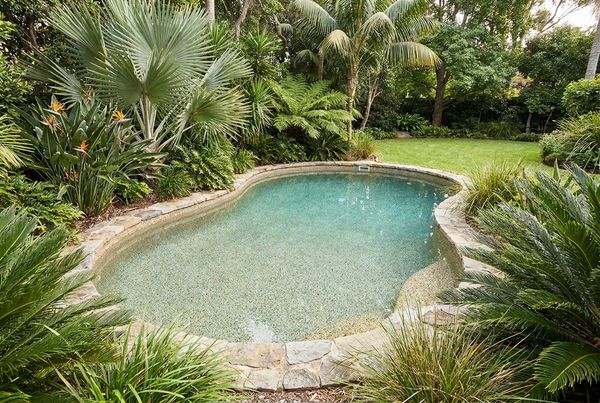
This is the part people underestimate: the finish color, not the water, is what sets the color of your pool. Clear, balanced water is essentially colorless — what you see is light bouncing off the surface underneath. So choosing a pebble color is really choosing your water color, and pebble comes in a huge palette. As a rough map: blue and blue-grey blends give you the classic bright, tropical turquoise; white and pale blends read light, crisp, and Caribbean; tan, gold, and green blends produce a natural, lagoon-like water that flatters planting and stone; and dark charcoal and black blends turn the water deep, moody, and reflective.
Two things trip people up. First, a small chip in a showroom lies — the same blend looks dramatically different wet, at full depth, under your own sky, so ask to see it in a finished pool or at least submerged. Second, the color shifts through the day: a tan pebble reads gold at noon and green in shade, and a charcoal pool reads steel-blue in sun and near-black at dusk. If you want that deep, mirror-like water specifically, that's the territory of a dark bottom pool, and pebble is the most popular way to get there.
Durability and how long pebble lasts
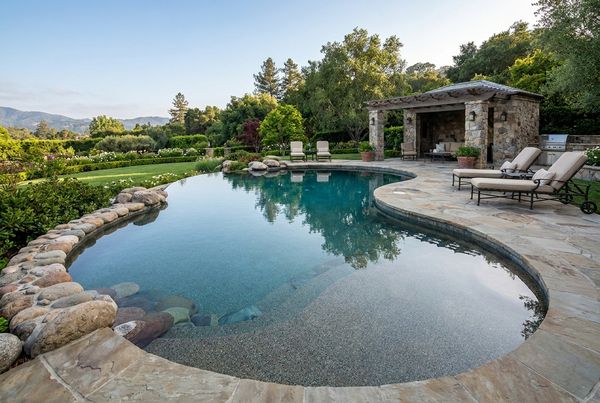
Durability is pebble's headline advantage, and it's a real one. Because the working surface is hard natural stone rather than soft cement, it resists the etching, scaling, and staining that slowly wear plaster down. A well-installed pebble finish with balanced water commonly lasts 15 to 20 years or more, where standard plaster often needs replacing at 7 to 12. Over the multi-decade life of a pool, that difference can mean one less full resurfacing — a meaningful saving in both money and disruption.
Pebble is also more forgiving day to day. Its texture and natural color variation hide the mottling, streaking, and minor blemishes that show up glaringly on flat white plaster, so it simply looks better for longer between services. That said, "durable" isn't "indestructible" — pebble still rewards steady water chemistry. Let calcium hardness, pH, and alkalinity drift and you can still get scaling or stone loss over time. The finish buys you a longer, more forgiving runway, not a free pass on maintenance.
What a pebble finish costs in 2026
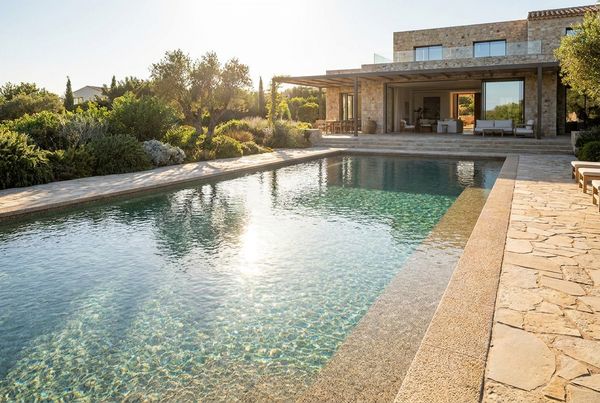
Let's talk money honestly, with the caveat that pricing swings hard by region, pool size, and color. On a new build, upgrading from standard plaster to a pebble finish typically adds a few thousand dollars — a modest slice of overall pool cost for a finish that outlasts the alternative. On a resurfacing job, redoing an average pool in pebble commonly lands somewhere in the mid four-figures to low five-figures, with dark and premium designer blends sitting at the top of the range.
The trap is judging pebble on sticker price alone. Yes, it costs more than plaster today — but if plaster needs replacing at year 10 and pebble runs to year 20, you're comparing one pebble job against nearly two plaster jobs over the same span. Factor in the resurfacings you don't have to do, and pebble is usually the cheaper finish over the life of the pool, not the pricier one. Always get a few local quotes, and ask each builder exactly which product and pebble size they're bidding, because "pebble" spans a wide price band.
Texture and feel underfoot
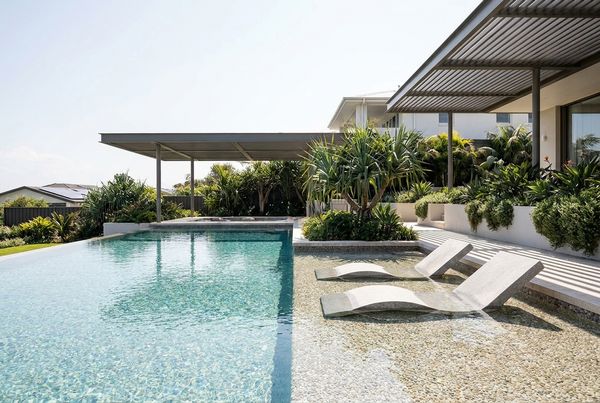
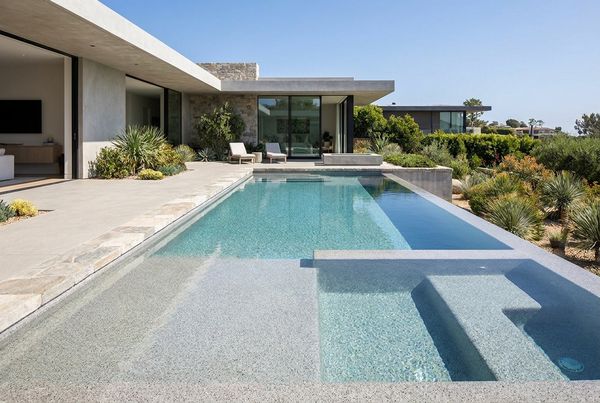
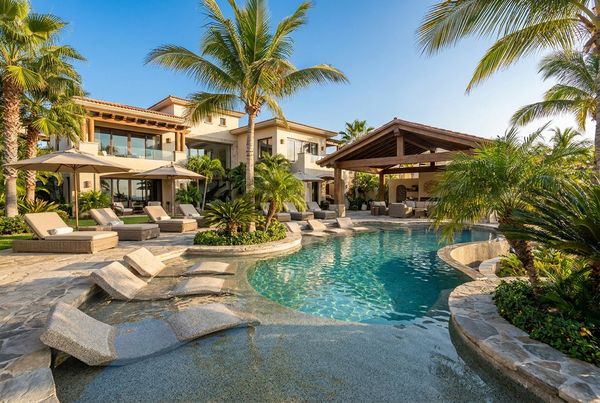
The one honest trade-off with pebble is texture. Because the surface is exposed stone, you can feel it underfoot in a way you never would on glass-smooth plaster. On a pool floor you barely notice, but on high-contact spots — a beach entry, a tanning ledge, steps, and benches where kids kneel and adults lounge — the texture is more apparent, and the original large-pebble products could feel genuinely rough.
The good news is this has improved enormously. Smaller-pebble and polished finishes like Pebble Sheen, and quartz-blended options, are troweled and polished to feel far smoother than the first-generation products while keeping most of the durability. If a silky feel matters to you, the move is simple: pick a fine, small-pebble or quartz-heavy blend, tell your builder that smoothness is a priority, and if you can, walk a finished pool with that exact product before you commit. Some people love the natural grip pebble gives on steps and slopes; others want it as smooth as possible — there's a pebble product for both.
Water chemistry: how to make a pebble finish go the distance
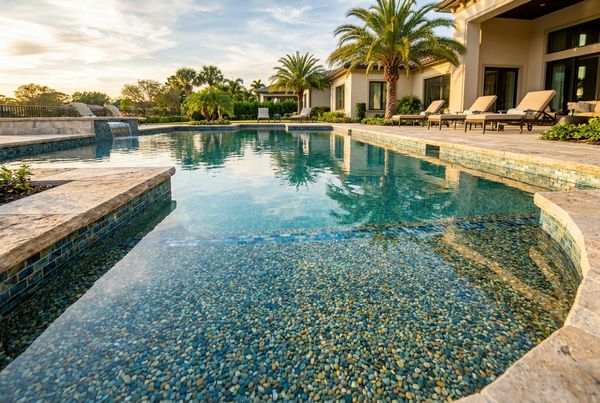
Pebble is tough, but the 15-to-20-year lifespan assumes balanced water, not neglect. The stone resists etching and staining far better than plaster, yet the cement binder holding those pebbles in place still answers to the same chemistry. Let the water swing acidic and it slowly dissolves that binder, and stones start to release; let calcium and pH run high and you get scale that dulls and crusts even a beautiful dark finish.
The three numbers to watch are pH, total alkalinity, and calcium hardness — the calcium balance especially, because both scaling and etching live at its extremes. I tell owners to test regularly with a decent test kit and keep readings in range rather than chasing them after something's already visible. If you want a deeper rundown of the targets and why they matter, our pool chemistry guide lays them out.
New pebble also needs a proper startup. The first few weeks after a fresh finish are when the surface cures and is most vulnerable, so follow the brushing and chemistry schedule your installer gives you to the letter — daily brushing early on, careful pH control, and no shortcuts. That startup period sets how the finish wears for the next two decades. A charcoal or dark blend rewards this care especially, since scale and mineral spotting show more against a dark surface than a light one.
Choosing a pebble finish (and the mistakes to avoid)
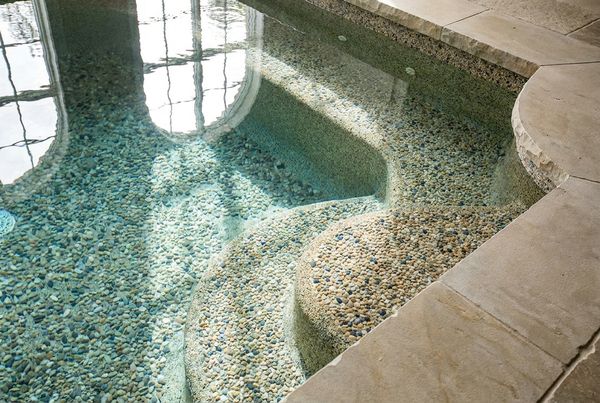
Most pebble regret comes down to a handful of avoidable missteps. The biggest is choosing color off a dry sample chip — the same blend looks dramatically different wet, at full depth, and under your own sky. Ask to see the exact product submerged in a finished pool before you sign, because that showroom chip is essentially lying to you about the water color you'll actually live with.
The second is ignoring texture on high-contact surfaces. On the pool floor you barely notice the exposed stone, but on a tanning ledge, steps, and benches where people kneel and lounge, a coarse large-aggregate finish can feel rough. If a silky feel matters, specify a fine small-pebble or quartz-blended product and tell your builder smoothness is a priority. The third is assuming all "pebble" is priced the same — it spans a wide band, so make every bid name the exact product and pebble size so you're comparing like with like.
A few practical tips I give every client: match the finish to the whole backyard, not just the pool in isolation — a dark pebble wants deliberate lighting and looks best coordinated with the coping and tile. Budget the finish as a meaningful line inside your overall pool cost rather than the place you trim to save a few dollars — it's the surface you touch every day for twenty years, and the wrong call is expensive to undo.
Resurfacing an old pool with pebble
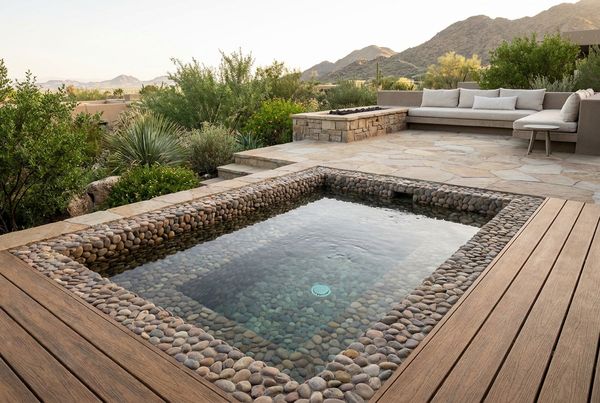
Plenty of pebble finishes go into existing pools, not just new ones — resurfacing is one of the most popular ways to get the look. When an old plaster surface is stained, etched, rough, or just dated, the crew preps or chips out the old finish, repairs the shell, and applies fresh pebble over it. In one project you modernize the color, upgrade the durability, and reset the clock on the interior for another 15 to 20 years. It's why swapping to pebble is such a common headline move in a pool remodel.
It's also the natural moment to change your whole look. Since the pool's already drained and the crew is on site, this is when people go darker, switch to a natural lagoon tone, or coordinate the finish with new tile and coping. Going from a tired white-plaster pool to a charcoal or deep-blue pebble is one of the single most transformative — and cost-effective — upgrades in the entire remodel playbook. If your interior is past its prime, resurfacing in pebble is rarely a decision people regret.
Best pairings and the dark-pebble trend
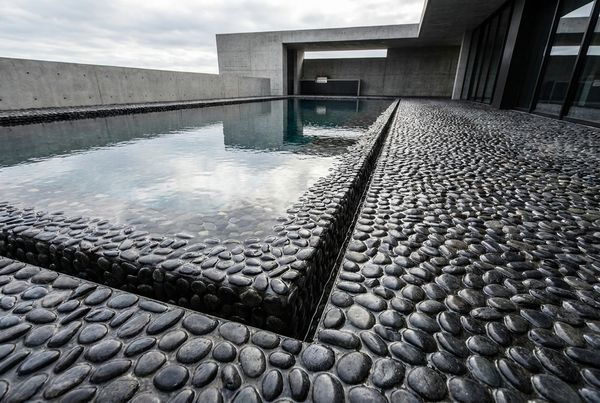
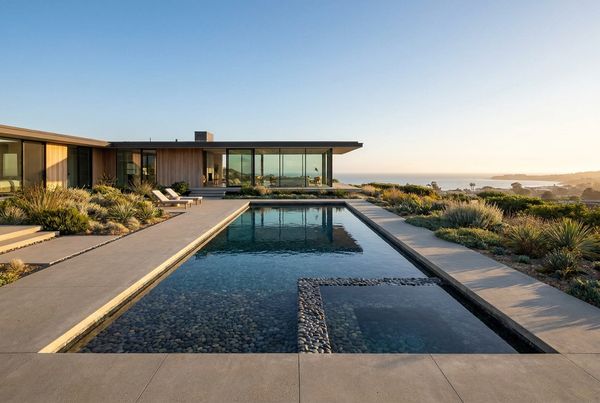
Where pebble is going in 2026 is unmistakably darker. As backyards move toward clean lines, muted palettes, and natural materials, the bright-turquoise pool reads dated and the deep, reflective one reads intentional. A charcoal or black pebble finish turns the water into a mirror that doubles the sky and the architecture — the defining look in nearly every modern pool design right now — and pebble is the most popular, most forgiving way to achieve it, since its natural texture hides imperfections a flat dark plaster would broadcast.
Dark pebble also plays beautifully with the rest of the 2026 toolkit: warm underwater and landscape lighting reads with real depth against a dark surface, fire features and water features pop harder over reflective water, and a tanning ledge finished in the same pebble ties the whole shallow zone together. For a softer take, a tan or green-grey pebble beside lush planting gives a natural, lagoon-style pool that feels organic rather than architectural. Whichever direction you lean, the finish is the foundation — get the pebble color right and everything you build around it looks better.
What we think
For most homeowners in 2026, a small-pebble finish in charcoal or deep blue is the sweet spot — you get the dark, reflective, high-end water everyone's chasing, a smoother feel than the old large-aggregate products, and two decades of durability. Splurge on the finish, sample it wet before you sign, and let it set the tone for the whole backyard.
Design Gallery
6 more ideas to save — tap any photo to view full screen.
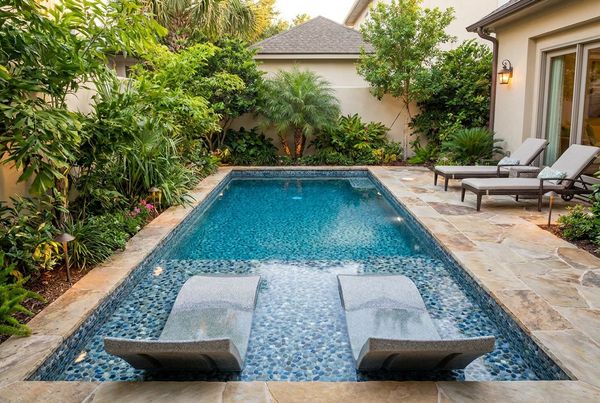

Kelly E.
Pool Design Editor, PoolPad
Kelly has spent 10+ years around residential pools — planning projects, testing gear, and documenting backyard builds for PoolPad. Each design guide is checked against current construction methods and material pricing.
Frequently Asked Questions
What is a pebble pool finish?
Is a pebble finish better than plaster?
How long does a pebble pool finish last?
Is a pebble finish rough on your feet?
How much does a pebble pool finish cost in 2026?
Can I resurface an old plaster pool with pebble?
How do I care for a pebble pool finish?
Does a new pebble finish need a special startup?
Does pebble color really change the water color?
Ready to build your dream backyard?
Compare local, vetted pool builders and get matched with pros who can bring these designs to life.
Find a Pool Builder Near You