



Polaris P39 Pressure Side Pool Cleaner Review: A Powerful Performer or Just Another Energy Hog?
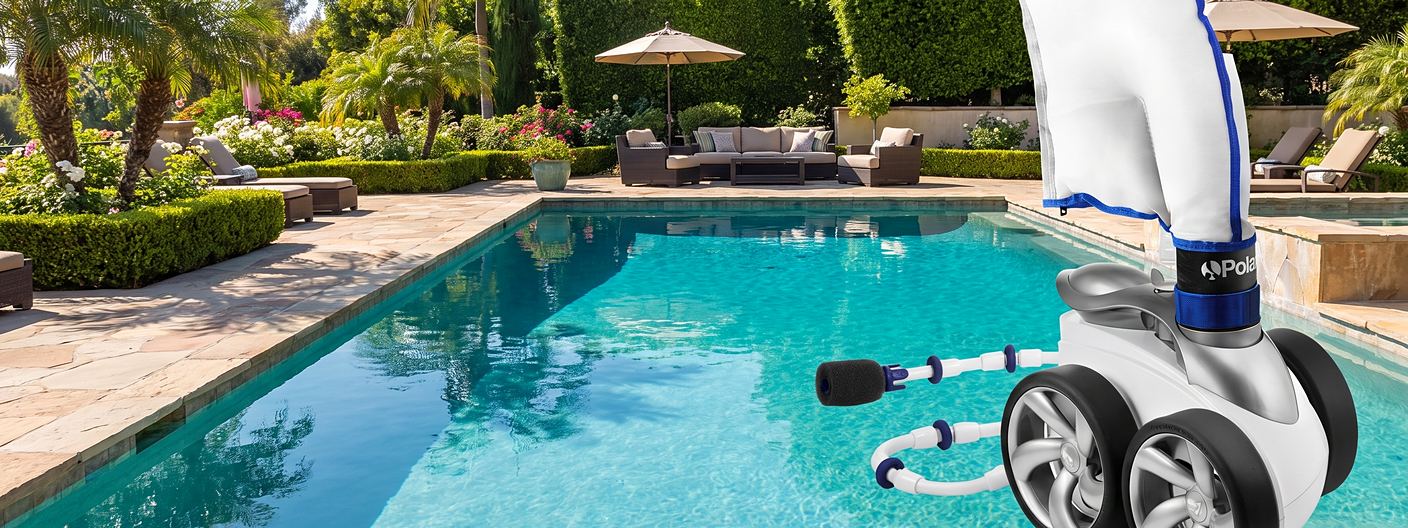
The Polaris P39 gets talked up as one of the nicer pressure-side cleaners you can buy, and on paper it has the goods, a triple-jet propulsion system, a big filter bag, and all-wheel drive. It's made for in-ground pools and promises to chew through everything from fine grit to leaves without much fuss. But here's my honest question going in: with robotic cleaners getting so good, does the P39 still earn its higher price and the extra electricity it burns? I ran it in my own pools to find out, and here's what I landed on.
Setup and Installation: Extra Effort Required
Like most pressure-side cleaners, the P39 is not a toss-it-in-and-go deal. It needs a dedicated booster pump, which bumps up both the cost and the effort. If you don't already have one plumbed in, that's more money and, honestly, probably a call to a pro unless you're comfortable with pool plumbing. I already had a booster on my setup, so I was ahead of the game, but plenty of folks won't be.
With the booster ready, getting the P39 going meant putting together its 31-foot hose, setting the floats, and dialing it in for the pool. None of it is hard exactly, but it does eat time, especially if you've never messed with pool gear before. The hose is sold as kink-resistant, and I'll say it's better than some, but it still tangled on me during setup while I was adjusting things.
Cleaning Performance: Strong Suction, But Uneven Results
The P39's headline feature is that triple-jet propulsion system, built for strong suction and full coverage. In my pool it did back that up on the open flat areas, it moved with real power and pulled debris well. The all-wheel drive and WideTrax tires also let it climb the walls and get around the floor without getting hung up much, which I appreciated.
It's not all wins, though. Big stuff like leaves and twigs, no problem. Fine stuff like sand, pollen, and dust is where it started to slip, and I watched the suction fade as the bag filled, which meant emptying it more often than I'd like to keep it pulling hard. It also kept skipping the waterline and the tight corners, and those are exactly the spots where my debris likes to pile up, so the results came out patchy.
The bigger issue is the random path. It doesn't plan its route the way a robotic cleaner with real navigation does. I'd catch it going over the same stretch again and again while a whole other section sat ignored. If you want a spotless pool without babysitting it, that inefficiency is going to bug you.
Debris Collection: High Capacity, But Maintenance-Heavy
The P39 uses a large filter bag meant to grab both big and small debris so you're not emptying it constantly. It does hold a lot, no argument there. But the mesh isn't fine enough to trap the small particles well, so I found more grit left behind in the pool than I expected. If you fight fine sand, dust, or algae, that's a real weakness.
The other thing is that when it's working through heavy, chunky debris, the bag fills up fast, which means stopping to empty it more than you'd want. And getting the bag off and back on isn't as smooth as it should be, it took a little wrestling every time. The bag also sits out in the sun and pool chemicals, so I'd expect it to wear down and need replacing sooner than you'd hope, which is one more running cost to factor in.
Energy Efficiency: A Significant Drawback
This is the P39's biggest knock in my book. Like all pressure-side cleaners, it leans hard on that dedicated booster pump, and running two pumps at once pushes your electricity use way up and puts extra load on your filtration system. With how much energy costs matter these days, that's tough to ignore.
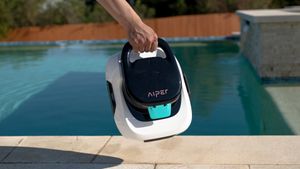
Robotic cleaners just win this one flat out. They run on their own, independent of your pool's filtration, and pull far less power. If you're trying to keep the monthly bill down or you care about running lean, the P39's booster-pump appetite is a genuine downside.
Durability and Maintenance: Sturdy Build, But High Upkeep
Build quality is a real strength here. The P39 feels solid in hand, and the pieces that take the abuse, the drive chains and the WideTrax tires, are made to keep taking it. The catch is the upkeep. The drive belts and chains want regular checking and the occasional swap to keep it running its best, and that's time and money over the life of the cleaner if you'd rather not fuss with it.
The moving parts, the wheels and the hose swivels especially, wear down over time too. Keeping everything working right means checking in on it regularly and replacing a part now and then. The P39 is built to last, I don't doubt that, but the amount of hands-on care it asks for might turn off anyone hoping for a set-and-forget cleaner.
Usability: Lacking Modern Convenience
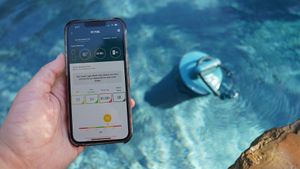
Power and debris capacity are one thing, but convenience is where the P39 shows its age. Plenty of robotic cleaners now come with app control, programmable cycles, and remotes. The P39 has none of that. You're running it by hand, with no way to set a schedule or fine-tune how it cleans.
Emptying the bag and adjusting the hose are both manual jobs too, and that adds up. If you're used to a robotic cleaner that basically runs itself, the P39 is going to feel dated and a little high-maintenance by comparison.
How We Tested the Polaris P39
I ran the P39 for four weeks across two of my in-ground pools and filmed it for the channel. One has a concrete surface, the other a vinyl liner, so I could see how it handled both. I let a normal mix of debris build up in each, leaves, twigs, bugs, and fine dirt, to keep it honest and close to real-world conditions.
Here's what I focused on:
-
Ease of Installation: How involved and how long the setup ran, including the booster pump and putting together the hose and debris bag.
-
Cleaning Performance: How it covered different surfaces, handled the different kinds of debris, and got around steps and ladders.
-
Energy Consumption: I tracked the power draw from both the main pump and the booster during cleaning runs and stacked it against comparable robotic cleaners.
-
Durability and Maintenance: How well it was built, how often it needed attention, and how easy worn parts were to replace.
After four weeks my read was pretty clear. The P39 is strong in some areas but has a hard time keeping up with the better robotic cleaners. It's got the power and the bag capacity, but it loses ground on efficiency, ease of use, and energy draw.
Comparison: Polaris P39 vs. Other Polaris Pressure-Side Models
To put the P39 in context, it helps to line it up against a few of Polaris's other pressure-side models:
Polaris Quattro P40 vs. Polaris P39
The Quattro P40 and the P39 share a lot of DNA, but the P40 pulls ahead on features and performance. It runs a four-wheel drive system and better scrubbing brushes, so it maneuvers and covers ground more effectively. It also has a dual filtration system that separates the big debris from the fine stuff, which makes it better at handling a mix. The P39's triple-jet propulsion is powerful, but it doesn't match the P40's precision or cleaning efficiency.
Polaris Vac-Sweep 3900 Sport vs. Polaris P39
The Vac-Sweep 3900 Sport and the P39 both bring triple-jet propulsion and strong suction to the table. The 3900 Sport is a touch more versatile, though, with an all-wheel drive system and WideTrax tires that grip different surfaces better. It also uses a dual-chamber SuperBag that holds more than the P39's single-chamber bag, so you're emptying it less. Both share the same headaches, high energy use and regular maintenance, which is what makes them a harder sell than the robotic options.
Polaris Vac-Sweep 65 vs. Polaris P39
The Vac-Sweep 65 is a more basic cleaner built for above-ground vinyl pools, while the P39 is aimed at in-ground pools with heavier cleaning demands. The Vac-Sweep 65 is easier to install and skips the booster pump, which makes it the cheaper pick for smaller pools. But it doesn't have the P39's power or bag capacity, and it can't clean walls. For a bigger in-ground pool, the P39 is the stronger cleaner, though you're paying more up front and to run it.
Final Verdict: Is the Polaris P39 Worth It?
The Polaris P39 is a genuinely capable pressure-side cleaner. It's got strong suction, a big debris capacity, and a build that feels like it'll last. But the heavy energy use, the regular maintenance, and the total lack of modern features make it a tougher recommendation once you put a good robotic cleaner next to it.
If you already own a dedicated booster pump and you'd take raw suction over convenience and low running costs, the P39 can absolutely do the job for you. But for anyone looking for less upkeep, lower energy bills, and a cleaner that mostly runs itself, I'd steer you toward a robotic model instead.