



Polaris Quattro P40 Pressure Side Pool Cleaner Review: Is It Really Worth It?
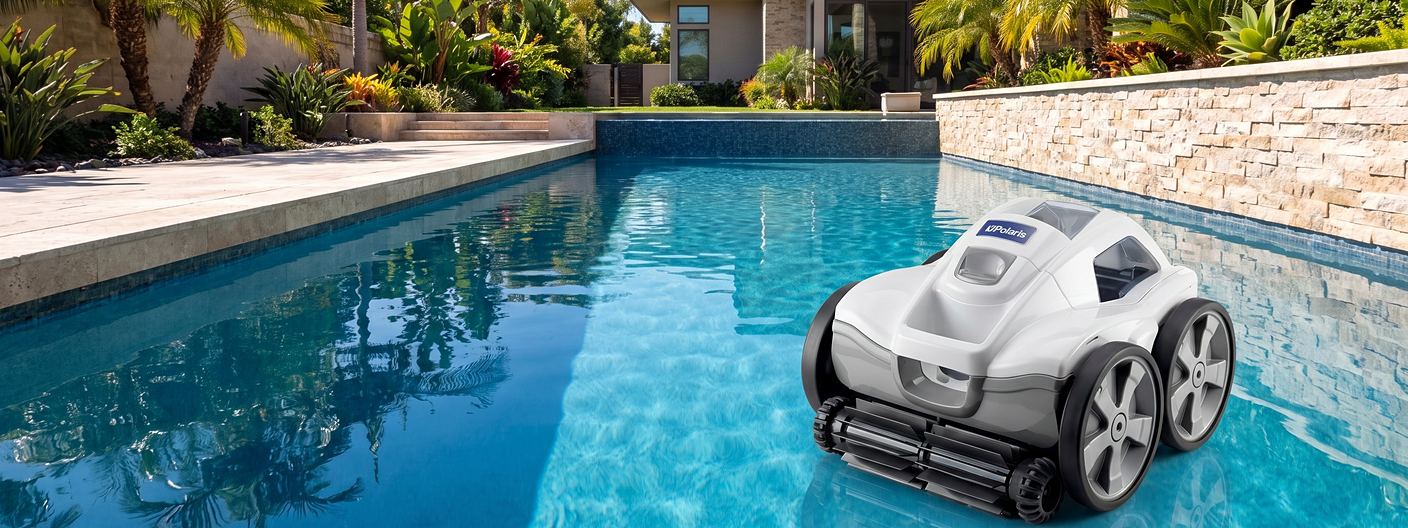
The Polaris Quattro P40 has a reputation as one of the strongest pressure-side cleaners you can buy for an in-ground pool, so I brought one home and put it through its paces on camera and in my own pool. It promises to clean every pool surface, and it comes with a big dual filtration canister, a 31-foot hose, and a clear lid so you can eyeball the debris inside. At a glance, it looks like a lot of cleaner for the money. The real question I wanted to answer is whether it still makes sense for a pool owner today, when robotic cleaners keep getting better and cheaper. Here's what I found.
Setup and Installation: A Complicated Start
The first thing I ran into is that the Quattro P40 is not plug-and-play. A robot goes in the water and you're done. This one needs a dedicated booster pump to run, and Polaris points you to the Polaris PB4-60.
That adds a whole layer to getting started. My pool already had a Polaris PB4-60, which I reviewed, so I was set. Yours might not.
If you don't have one, you're buying it separately, and that pushes the total cost up. Installing the booster pump is a job in itself, especially if you're not used to pool equipment or don't have the right tools sitting in the garage. In some states you'll need a licensed electrician to do it, and that only inflates what you're spending before day one.
The 31-foot hose was fine for a medium-sized pool, but if yours is big, you'll want an extension and it isn't in the box. Getting the hose laid out so it didn't tangle mid-cycle took some fiddling too. And there's no app, no remote, nothing like that. The Quattro P40 just runs off the booster pump and does what it does.
Performance on Pool Surfaces: Good, But Not Great
Polaris says the Quattro P40 handles every in-ground surface, and for the most part it held up in my pool. The four-wheel drive and AquaTrax tires got it across plaster, vinyl, and fiberglass without much drama. It worked the floor, the walls, and the waterline, using its dual scrubbers to knock dirt and debris loose.
The scrubbing brush is my favorite thing here. It's a real step up from the Polaris Vac-Sweep 280 and Polaris Vac-Sweep 360, neither of which has one. It reminded me of what my robotic cleaners do, and honestly it impressed me more than I expected from a pressure-side unit.
Stack it against a good robot, though, and the Quattro P40 cleans less efficiently. It missed spots for me, mostly on the walls and along the waterline, which is exactly where grime likes to build up. Fine debris like sand and silt gave it trouble, and I'd still find some on the floor after a full cycle. If you're the type who wants a spotless pool every single time, that's going to nag at you.
Dual Filtration Canister: Large Capacity, But Lacking Finesse
The dual filtration canister is one of the big selling points, and it does hold a ton, but it's got quirks. Emptying it was more of a hassle than it should be, especially when fine debris caked itself to the sides. That clear lid is handy for peeking at what's inside, but mine started clouding and picking up scratches over time, so you lose the view.
The filtration grabs the big stuff, leaves and twigs, no problem. Where it slips is the fine particles, pollen, algae, and dirt. The mesh just isn't fine enough, so a lot of the small stuff sailed right through in my testing.
Next to the NanoFiltration in a modern robot like the new Dolphin ProLine, it's a letdown. I've run those fine filters in a bunch of cleaners and they're the reason the top robots trap everything down to fine silt.
Because the Quattro's mesh lets more through, you end up backwashing your pool filter more often, which burns more water and more energy. That's one more thing eco-conscious owners won't love.
Energy Efficiency: Not Its Strong Suit
The biggest strike against the Quattro P40 is that booster pump dependence. A robot runs on its own and sips power. This cleaner needs your main pool pump running alongside the dedicated booster pump, so you've got two pumps working for one cleaning. Run it often and your energy use climbs fast. Over a season, that shows up on your electric bill and in the extra wear on your filtration system.
Robots are self-contained, pull far less power, and you can set them on efficient schedules. If you're watching your carbon footprint or just trying to keep the monthly bill down, the Quattro P40 is a tough sell.
Durability and Maintenance: A Mixed Bag
Durability is a mixed bag with the Quattro P40. The cleaner itself feels well made, like it can take the beating of regular use, and the AquaTrax tires held up and gripped my surfaces well. But leaning on a booster pump means there's a second mechanical part that can break down. If that pump dies, your cleaner is dead in the water until it's fixed, which is the last thing you want in the middle of pool season. And between a new pump and professional install, that repair can run you hundreds.
Day-to-day upkeep on the cleaner isn't bad. Getting to the canister is easy enough, but scrubbing the mesh filter clean and clearing every clog ate up more of my time than I'd like. A lot of robots now handle some of that themselves and ping your phone when they need attention. The Quattro P40 gives you none of that. You just have to remember to do it yourself.
Usability: Room for Improvement
The Quattro P40 has a few nice touches, like the push-button release on the debris canister, but it can't match the controls or programmability of a robot. My robotic cleaners come with remotes, app connectivity, and cleaning cycles I can tailor to whatever the pool needs that day. This one is hands-on by comparison. You get very little say in how or when it cleans.
Setting it up feels dated too, once you've used a modern robot. All the hoses, the booster pump, the manual tweaking, it's a lot for anyone who just wants something simple and tech-forward. For most people I talk to, the ease and smarts of a robotic cleaner win out over what a traditional pressure-side unit like the Quattro P40 brings to the table.
How We Tested the Polaris Quattro P40
I tested the Quattro P40 over three weeks across two different in-ground pools, one with a plaster surface and one with a vinyl liner. I let both pools collect the usual mix of leaves, twigs, insects, and fine dust so I was cleaning real mess, not a staged one.
Here's what I looked at:
-
Ease of Setup: The whole install, including how long it took me to get it going with the booster pump and any extra parts I needed.
-
Cleaning Coverage: How well it worked the floor, walls, and waterline, and where it left spots that needed a second pass.
-
Debris Collection Efficiency: How much the dual filtration canister actually caught, big and small, plus how easy it was to empty and clean.
-
Energy Consumption: The power draw of the pool pump and booster pump together, measured against similar robotic cleaners.
-
Durability and Maintenance: Build quality and how often, and how easily, it needed upkeep over the test.
By the end, my read was a cleaner that does an okay job across the board but lacks the finesse and efficiency of the robots I test against it. It handles plenty of debris types, but it can't hold onto the fine stuff, and it asks more of you at setup and in everyday use.
Is the Polaris Quattro P40 worth it?
The Quattro P40 has genuine strengths. It's built well, it cleaned my different surfaces solidly, and the big canister meant I wasn't emptying it constantly. But it stumbles in enough key spots that I'd pick a lot of the robots on the market today over it.
If you can stomach the extra cost and effort of a booster pump and you mainly need to clear large debris from a medium-sized pool, the Quattro P40 can work for you. But if you want something that just runs without fuss, sips power, and gives you smart navigation and app control, put your money toward a robotic cleaner.
The Quattro P40 is a solid performer by pressure-side standards, and it's probably the best of that breed. But the missing features, the extra costs, and how inefficiently it runs make it hard to recommend over the new wave of robotic cleaners I keep testing.