



Polaris Vac-Sweep 3900 Sport Pressure-Side Pool Cleaner Review: Is It All Just Hype?
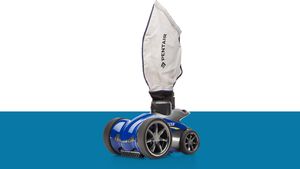
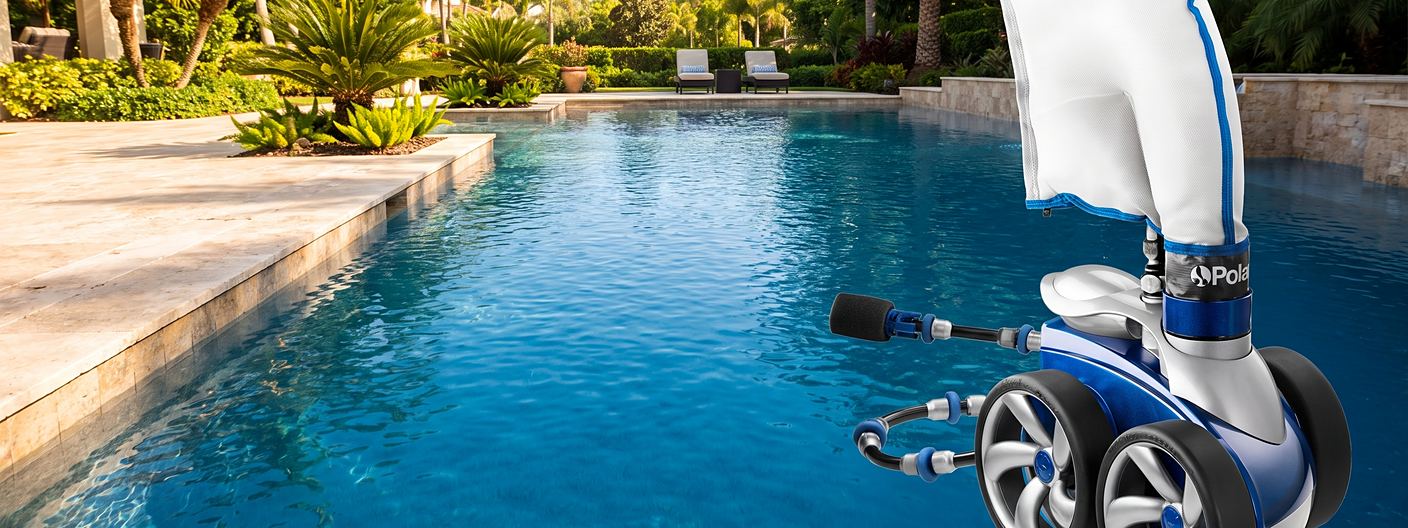
I ran the Polaris Vac-Sweep 3900 Sport in my own pool for a full month and put every bit of it on my YouTube channel. It's a pressure-side cleaner built for inground pools, and Polaris leans hard on the triple jet propulsion and that big dual-chamber SuperBag for debris. On paper it sounds like a beast. So I wanted to know one thing: does it actually earn its price tag when robotic cleaners are getting so good? Here's everything I found after living with it.
Setup and Installation: Prepare for Extra Costs and Effort
Setup is where this cleaner tested my patience first. Like most pressure-side units, the 3900 Sport needs a dedicated booster pump to run. That's a big deal. If you don't already have one plumbed in, you're buying it separately, and that cost stings before you've cleaned a single leaf. I've installed booster pumps before and I still wouldn't call it fun. If you're not comfortable with pool plumbing, you're calling in a pro. Compare that to a robotic cleaner I can drop in the water and plug in, and the gap in effort is obvious.
You get a 31-foot feed hose, which covered my pool fine and should handle most residential setups. Dialing in the right hose length so it doesn't tangle or leave dead zones took me a few tries. The assembly isn't intuitive, and those swivels that are supposed to keep the hose from twisting? They didn't always do their job for me. I spent more time fiddling with the hose during setup than I'd like to admit.
Cleaning Performance: Impressive Power, But Not Always Precision
The triple jet propulsion is the headline feature, and I'll give it this: it's got muscle. It hauls the cleaner around concrete, fiberglass, and vinyl without hesitation. But power isn't the whole story. The suction is genuinely strong, yet the cleaner wanders in a random pattern that wastes a lot of that energy. There's no smart navigation here like you'd get on a good robot. I watched it pass over the same stretch of floor three times while a corner sat untouched.
Wall climbing was hit or miss for me. It gets up the walls okay, but it doesn't always hold enough suction up there to actually grab debris. My waterline came out only half-clean most cycles, and if you're expecting a spotless finish, that's going to bug you. It also got hung up around my steps and ladder more than once, and I had to walk over and nudge it free.
Debris Collection: Large Capacity, But Not Ideal for Fine Debris
The dual-chamber SuperBag holds a serious amount of debris, and if your pool sits under trees, you'll appreciate that. I really did like how much it could swallow before I had to empty it. The catch is the mesh. It's coarse, so it grabs leaves and acorns like a champ but lets the fine stuff slip right through. Dirt, sand, pollen, that all needed extra vacuuming or skimming from me afterward. If your goal was to stop touching the pool, this bag won't get you there.
Durability of the bag is another thing I'd flag. Sun and pool chemicals take their toll fast, and mine showed wear sooner than I expected. Replacements cost money, and swapping the bag out isn't the smoothest job to remove or reattach. One more quirk I noticed: when the bag loaded up heavy with debris, it threw off the cleaner's balance and I'd sometimes find it tipped over or wedged in a corner.
Energy Efficiency: Heavy on the Power
Here's the part that hits your wallet every month. Like every pressure-side cleaner, the 3900 Sport needs your main pool pump AND the booster pump running at the same time. That's two pumps drawing power for one cleaning job. My robotic cleaners run on their own low-voltage supply, so this thing pulls noticeably more electricity. If you're watching your utility bill or trying to run a greener pool, that's a real mark against it.
Those triple jets that give it all that muscle are the same reason it drinks so much power. More and more of the pool owners I talk to want to cut their energy use, and running two pumps just to vacuum works against that. For a lot of people, the extra electricity cost cancels out whatever you gain from the strong suction and big bag.
Durability and Maintenance: Built Tough, But Not Trouble-Free
Build quality is where the 3900 Sport earns some respect back. Picking it up, it feels solid, and the materials seem ready for the beating a pool cleaner takes day after day. The all-wheel drive runs on stainless steel drive chains, which are built to last, and that's genuinely reassuring if you're thinking long-term.
That said, it comes with maintenance homework. The drive belts and chains need checking and eventually replacing to keep it running right, which eats time and money if you'd rather not think about it. All the moving parts, from the wheels to the hose swivels, want regular attention too, or they'll jam or snap on you.
On top of that, the SuperBag and the internal parts wear down and need replacing more often than I'd like. Some of those pieces aren't easy to get to, so upkeep turns into a chore, and every replacement adds to what you're spending to keep this thing alive.
Usability: Lacking in Modern Features
The power and build are there, but convenience is not. Next to the robotic cleaners I test, which give you app control, programmable cycles, and remote start, the 3900 Sport feels like it's from another decade. There's no way to customize how it cleans or check on it from your phone. In a house full of smart gear, this one just does its own thing whether you like it or not.
Little design touches don't help either. Even with the swivels, my hose still tangled, and the fat debris bag is awkward to wrangle when it's full. With no automation, you end up stepping in more than you'd want. If set-it-and-forget-it is what you're after, this isn't it.
How We Tested the Polaris Vac-Sweep 3900 Sport
I ran the 3900 Sport across two different inground pools over four weeks. One had a concrete surface and the other was vinyl-lined. I threw the usual mess at both, leaves, twigs, insects, and fine dirt, so I could see how it handled real conditions instead of a spotless test pool.
Here's what I focused on:
-
Setup and Installation: How hard and how long it took me to get it running, including the booster pump and hose adjustments.
-
Cleaning Performance: Whether it actually covered the whole pool, how it dealt with different debris, and how it handled my steps and ladder.
-
Energy Consumption: The power draw of both the main pump and the booster pump during cycles, measured against the robotic cleaners I've tested.
-
Durability and Maintenance: Build quality, how often it needed attention, and how easy worn parts were to swap.
After all that, my takeaway is a cleaner that's good in spots but can't hang with today's better robots. It wins on raw power and how much debris it holds. It loses on precision, efficiency, and just being pleasant to use.
Final Verdict: Is the Polaris Vac-Sweep 3900 Sport Worth It?
The 3900 Sport brings strong power, decent build quality, and a big debris capacity, and if your pool drowns in leaves every fall, I can see the appeal. But I can't hand-wave the downsides: the fussy setup, the heavy energy draw, the way it lets fine debris slip past, and the total lack of modern features.
If you've already got a booster pump sitting there and you want a traditional pressure-side cleaner with strong suction, the 3900 Sport can do the job. But if you care about energy efficiency, low maintenance, and something that's actually easy to live with, I'd put my money on a robotic cleaner instead.
Rating: ★★☆☆☆ (2.5/5)
The 3900 Sport has power and it has staying power, but it doesn't have the smarts or the efficiency to keep up with the latest robotic cleaners I've had in my pool.