



Polaris Vac-Sweep 65 Pressure Side Automatic Pool Cleaner Review: A Budget-Friendly Option or a Costly Compromise?
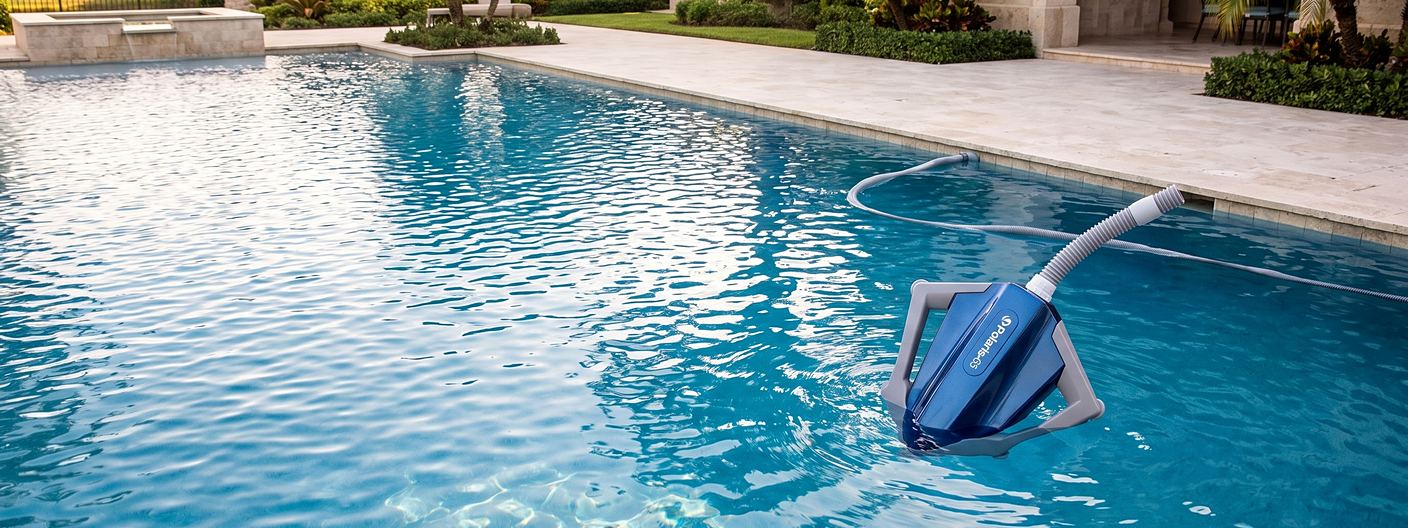
The Polaris Vac-Sweep 65 is a pressure-side automatic cleaner made specifically for above-ground vinyl pools up to 5 feet deep. It's pitched as the cheap, easy option that keeps your pool clear without draining your wallet. I wanted to know if that's true or if the low price hides some real compromises, so I put it in an above-ground pool and filmed the results. Here's how the setup, the cleaning, and the overall value shook out.
Setup and Installation: Simple, But Limited
Here's the one place the Vac-Sweep 65 has a real edge: it doesn't need a booster pump. That's a genuine win, because a booster pump is exactly the added cost and headache that turns people off pressure-side cleaners. Instead, this one screws right onto a standard 1.5-inch threaded return line, and for most pool owners that's an easy hookup.
That simplicity has a price, though. Since it runs only on your return jet for power, it doesn't have the muscle or flexibility of a cleaner with its own pump. The physical install was easy, sure. Dialing in the right water flow to get it working well was not. I had to make careful tweaks to the filtration system to keep the pressure where it needed to be, and that turned into a trial-and-error grind. It also doesn't come with extra hose for bigger pools, so you're capped at the standard 24 feet of reach.
Cleaning Performance: Inconsistent at Best
The Vac-Sweep 65 uses a simple, honestly pretty dated design. There's a float hose and a pressure-powered jet sweep that whips around the pool in a random pattern, stirring up debris and pushing it toward your filter. In theory that keeps the floor clear of dirt and leaves. In practice, the results were all over the map for me.
With light stuff like leaves and small twigs, it does an okay job. Heavier debris and fine particles like sand or algae are another story, and it left plenty behind. That random movement meant whole sections of my pool went untouched on a single pass, so I'd need to run it again to get a decent result. It also can't climb walls at all, so it's a floor-only cleaner. If you want the walls and waterline handled too, this won't do it.
The bigger headache was how often it snagged on wrinkles and seams in the vinyl liner. Time after time it wedged itself against those spots and just sat there until I walked over and freed it. A smart robot navigates around that kind of thing. The Vac-Sweep 65 has no such awareness. It stalls and waits for you.
Debris Collection and Filtration: Bare Minimum
The Vac-Sweep 65 comes with a small debris bag that clips onto the float hose. The idea is to grab bigger debris before it hits your filter and to spare your filtration system some work. Trouble is, the bag is tiny. It filled up fast on me, and in a pool with a lot of debris you'll be emptying it constantly.
The mesh is coarse too, so fine particles slip right through and drift back into the water. That meant I still had to skim and vacuum by hand to actually get the pool clean, which undercuts the whole low-maintenance pitch. Worst of all, the way the bag attaches is flimsy. Mine popped off mid-cycle more than once and dumped everything it had collected back into the pool, wiping out any progress it had made.
Energy Efficiency: Relatively Low Impact, But Inefficient Design
One of the few things going for the Vac-Sweep 65 is its low energy draw. It runs off your existing return line pressure with no booster pump, so on paper it saves you electricity. But that win gets chipped away by how inefficient it is in practice. The random pattern and weak propulsion meant I had to run it multiple times to get a clean pool, and every one of those runs kept my pool pump going longer.
So even though the cleaner itself pulls no power directly, those long cleaning cycles push your energy use up anyway. There's no programming here either, so you can't schedule it for off-peak hours the way I can with a lot of robots, and over time that scheduling is where the real savings live.
Durability and Maintenance: Frequent Upkeep Needed
The Vac-Sweep 65 is built from materials that can take pool life, but the bare-bones design still creates plenty of maintenance. The hose connections and the debris bag are the weak points. Like I said, the bag detaches easily and wears out quick, especially under sun and chlorine. Replacements cost money and, on top of that, they're a pain to track down and fit correctly.
The jet sweep assembly needs regular attention too. Debris clogged the small jets on me, which dragged down performance that was already limited, and I had to clean them out by hand. The hose tangles as well, even though it's sold as kink-resistant. Once it tangles, the cleaner loses what little range it had. With no smart tech to lean on, you're stuck watching it and correcting it, which adds to the workload instead of taking it off your plate.
Usability: Dated and Limited in Functionality
Using this thing feels like stepping back in time. It's missing pretty much everything that's standard on a modern cleaner. No remote, no app, no way to tweak or improve how it cleans. My robotic cleaners give me schedules, smart navigation, and efficient run modes. The Vac-Sweep 65 gives you on and off. That's the whole menu.
The design also doesn't account for above-ground pools with odd shapes or steps, which shrinks its usefulness further. If your pool isn't a plain circle, this cleaner will struggle to adapt. It just can't deal with complex layouts or work around obstacles, and that makes it a lot less versatile than plenty of other cleaners you can buy.
How We Tested the Polaris Vac-Sweep 65
I ran the Vac-Sweep 65 for three weeks across two different above-ground vinyl pools. One was a standard round, the other an oval with a trickier layout. I let both collect the usual mix of leaves, twigs, insects, and fine dirt so I was testing it on a real mess.
Here's what I focused on:
-
Ease of Installation: How simple it was to connect to the return line and how much adjusting it took to hold the right pressure.
-
Cleaning Performance: How well it cleared different debris, how much of the floor it covered, and how it dealt with seams and wrinkles.
-
Energy Consumption: The pool pump's run time and power use, measured against similar pressure-side and robotic cleaners.
-
Durability and Maintenance: How often it needed work, including cleaning the jets, untangling the hose, and swapping parts like the debris bag.
By the end, my verdict was clear enough: the Vac-Sweep 65 is cheap, but it falls short in the ways that matter most, especially if you want something efficient that you don't have to babysit.
Final Verdict: Is the Polaris Vac-Sweep 65 Worth Your Time?
The Vac-Sweep 65 does have a couple of things in its favor, mainly the low price and the easy install with no booster pump. But the weak cleaning, the constant upkeep, and the total absence of modern features make it a hard one to get excited about in today's market.
If you're on a tight budget and you don't mind keeping an eye on it and adjusting it yourself, the Vac-Sweep 65 can knock out light debris. But if you care about a thorough clean, efficiency, and not fussing with it every day, a robotic cleaner is the far better place to put your money.
Rating: ★★☆☆☆ (2.0/5)
The Vac-Sweep 65 looks tempting if you're counting dollars, but once you live with its limited abilities and dated design, that appeal fades fast.