



Introduction
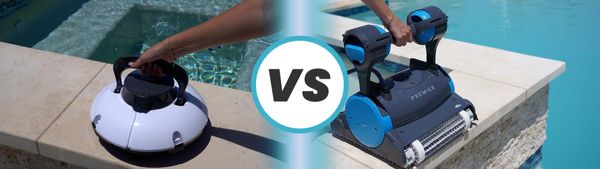
I bought both of these robots with my own money and ran them in my pool for months, so this isn't a spec-sheet comparison. It's what actually happened. On one side you've got the Aiper Seagull 600, the budget cordless option. On the other, the Dolphin Premier, which is about as loaded as robotic cleaners get. They don't really play in the same league, and I'll be honest about that the whole way through.
The Seagull 600 pulled me in with the cordless thing. No cable to untangle, drop it in, done. That's the pitch. But once I started using it every day, the cracks showed fast. Weak motor, no active brush, and a flat filter that lets more slip past than it grabs.
The Premier is a different animal. Out of the box it already feels serious: dual scrubbing brushes, the Multi-Media filtration setup, and it just gets on with the job without me babysitting it.
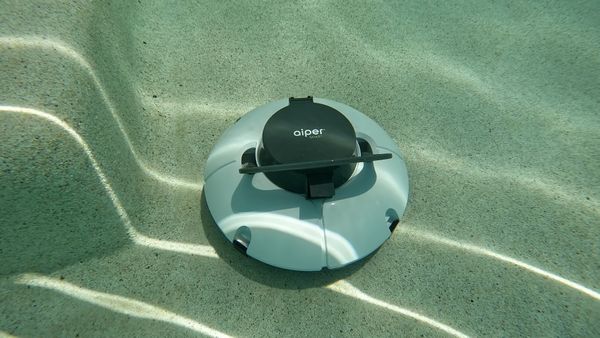
For the money, the Seagull 600 sounds tempting. But my testing kept landing on the same problem — the weak motor and lack of a real brush mean it struggles with the basics. The flat filter barely holds debris, so I ended up finishing the job by hand more than once.
"Dollar for dollar, the Premier is the one I'd actually spend money on."
The Premier sits at the other end. Its NanoFilters pull out even the fine stuff that clouds water, and the Media-Alert plus the programmable weekly timer mean you set it and forget it. That's the part that sells it once you've lived with it.
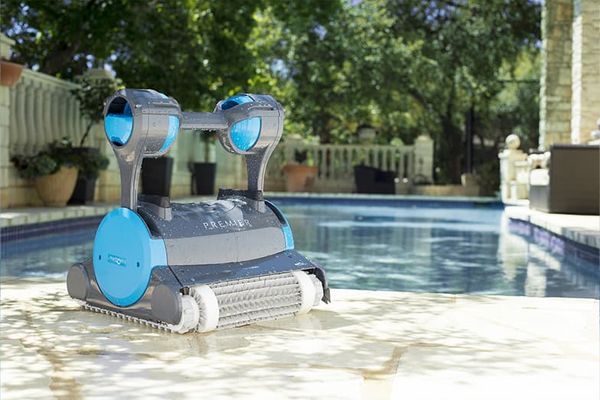
The Premier also doesn't stop at the floor. It climbs to the waterline and scrubs the grime that collects there — something the Seagull 600 can't touch. It backs all that with a three-year warranty, which you simply don't get at the entry-level price.
Here's the honest way to think about these two. If you've got a small above-ground pool, a modest budget, and you don't mind grabbing the robot to charge it, the Seagull 600 will technically do a floor pass. That's its lane. But if you've got an inground pool with walls and a waterline that actually collect grime, the Seagull 600 will leave you finishing the job by hand every time, and that gets old fast. The Premier is built for the person who wants to stop thinking about pool cleaning altogether — you set the schedule, it handles the rest, and the water stays clear.
Price is the real fork in the road here. The Seagull 600 is cheap up front, and the Premier is a serious investment. My take after living with both: the Premier's cost is easier to swallow when you factor in the three-year warranty and the fact that you're not buying nets, brushes, or a replacement unit a year later. Cheap robots have a way of costing more over time.
One more thing worth saying up front: I'm not anti-budget. Plenty of good gear costs little. The trouble with the Seagull 600 specifically is that the corners it cuts are the ones that matter most for actually cleaning a pool — the motor and the filter. Save money somewhere else, not there.
Next up, let me walk you through how I actually put these two through their paces, because that's where the real gaps show.
How We Test
Every robot I review gets the same treatment: about three months in real pools, real debris, daily cycles. No shortcuts, no lab conditions that flatter the machine. That's how I tested both the Aiper Seagull 600 and the Dolphin Premier, and it's the only way you find out what a robot is really like to live with.
I start by reading whatever the manufacturer promises, then I go try to break those promises. The Seagull 600 went straight into my above-ground test pool to see if it could handle a normal cleaning routine. The first wall I hit was battery life — it needs a full recharge after every 90-minute cycle, so it spends a big chunk of its life on the charger instead of in the water.
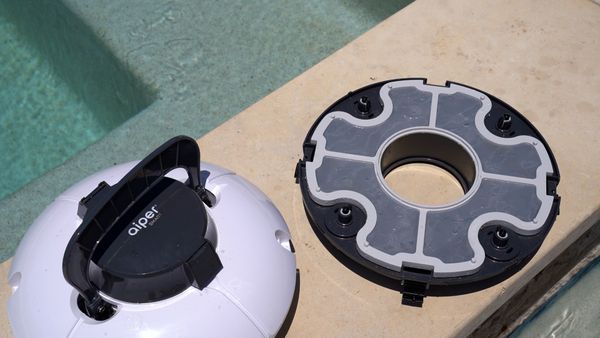
Navigation was the other early problem. With no real system guiding it, the Seagull 600 wandered, retraced its own path, and missed the corners more often than not.
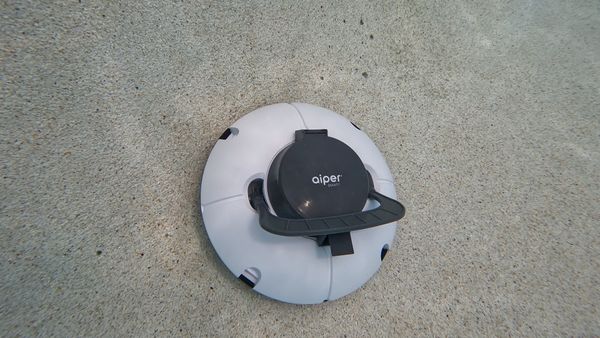
Filtration was the next test, and the flat filter let me down. It couldn't hold onto the smaller debris, which meant I was back to manual cleanup to finish what it started. Compared to something like the Premier, that's a big gap.
"The Seagull 600's filter just doesn't hold what it picks up."
I also pay attention to the stuff you only notice after weeks of ownership: how heavy the robot is to lift out wet, how fiddly the filter is to empty, whether the cable tangles, how loud it is. Those little frictions decide whether you actually run the robot or let it sit in the shed. The Seagull 600 is light, which is a genuine point in its favor, but the constant charge-and-retrieve cycle wore on me. A robot you have to babysit isn't really automatic.
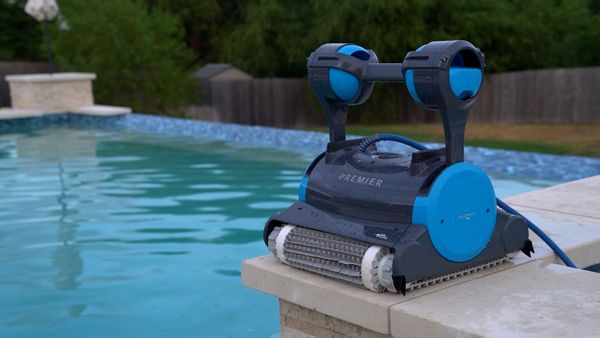
The Dolphin Premier ran the same three months and it was night and day. The dual scrubbing brushes and smart navigation covered the whole pool, including the waterline that most robots skip, and it kept the water clear without me stepping in.
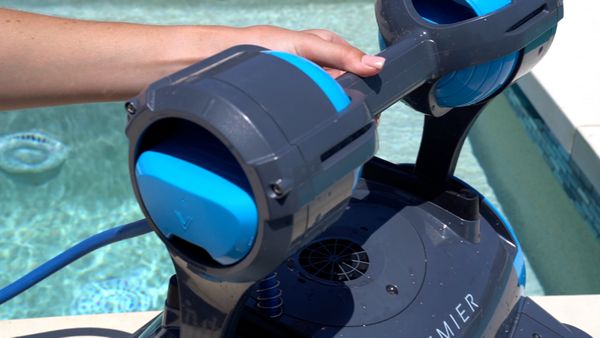
Filtration is where the Premier really pulled ahead. The Multi-Media system, NanoFilters included, grabbed everything from big leaves to fine grit. The leaf bag was a lifesaver in my pool since I've got trees nearby — fewer empties, less fuss.
A word on how I score, since it matters for reading the rest of this. I don't grade on a curve for price. A cheap robot doesn't get bonus points for being cheap — it either cleans the pool or it doesn't. That's why the Seagull 600 lands where it does. It's not that I expected miracles at its price; it's that even for what it is, the motor and filter can't keep up with a normal cleaning routine. If I'm being fair to it, the cordless convenience is real and the price is honest. But convenience doesn't matter much if the pool isn't clean at the end.
I ran both robots on the same pool, the same water chemistry, the same debris load, and I emptied and inspected the filters after every cycle. I also timed the charge-to-clean ratio on the Seagull 600 across the whole test, and it never got better — hours on the charger for a 90-minute run, every single time. The Premier just plugged in, ran its schedule, and asked nothing of me beyond an occasional filter rinse. That difference in day-to-day effort is the thing the spec sheets never capture, and it's the thing you'll feel most.
So the two robots give you completely different lives. The Seagull 600 is cheap but hands-on and covers a fraction of the pool. The Premier is a genuine set-it-and-forget-it machine that earns its higher price. If you want to see how they stack up against everything else I've tested, my best pool robots guide lays it all out.
Coverage
Coverage is where the gap between the Aiper Seagull 600 and the Dolphin Premier stops being subtle. The Seagull 600 does the pool floor and nothing else. Tiny plastic wheels and an underpowered motor mean it can't climb walls or handle much of an incline, so anything stuck on the walls or gathered at the waterline just stays there.
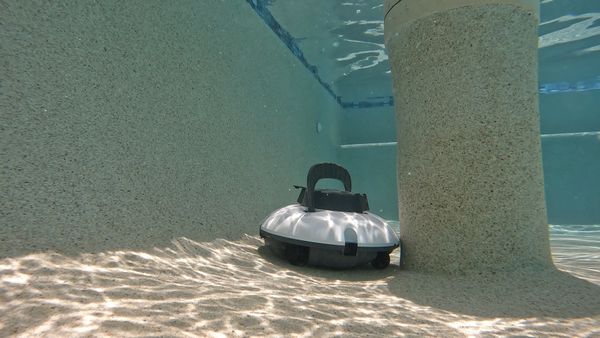
The bigger issue is there's no navigation to speak of. It wanders, gets stuck, and cleans the same patch twice while missing others entirely. That's why I only gave it a 2/5 on coverage — it's not covering much, and what it does cover isn't methodical.
"Floor-only and no plan — the Seagull 600 just can't cover a real pool."
The Dolphin Premier earned a perfect 5/5 from me, and it deserved it. It cleans the floor, climbs the walls, and scrubs the waterline. The dual brushes plus its track system keep it gripped to the surface so it doesn't slide off, and it works through the pool with a plan instead of bouncing around at random.
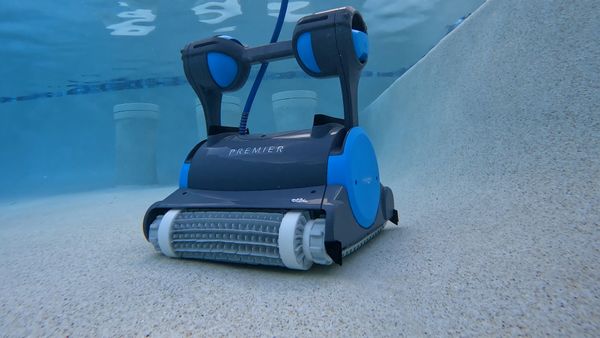
The navigation software is the difference. It maps a path, covers the whole pool, and doesn't need me hovering over it. That's what a robot is supposed to do, and the Premier actually does it.
"The Premier cleans everything the Seagull 600 leaves behind."
Put them side by side and it's not close. The Seagull 600 is stuck on the floor missing spots; the Premier gets from the floor to the waterline and back without skipping anything.
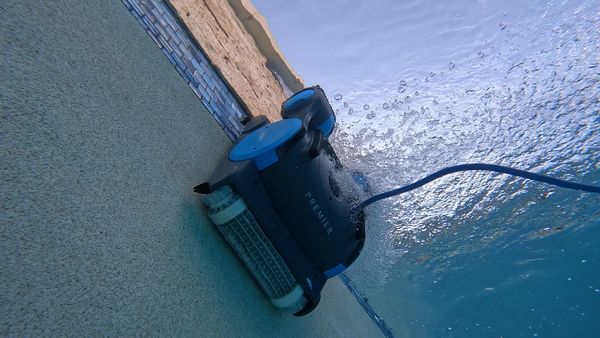
If your pool is a simple, small above-ground with flat walls and not much debris, the Seagull 600's floor-only cleaning is less of a dealbreaker. But the moment you've got a real inground pool with a waterline, steps, and slopes, that 2/5 coverage translates into a lot of manual scrubbing you thought you were paying a robot to avoid.
The Premier's climbing is the feature people underrate until they've had it. Watching it scale a wall and pin itself to the tile line, then work along the waterline where sunscreen and body oils build up, is the difference between a pool that looks clean and one that actually is.
If coverage matters to you — and it should — the Premier is the clear pick. Yes, it costs more, but you get a pool that's actually clean top to bottom instead of a floor that's half-done.
Filters
Filtration is a story of a basic filter versus a genuinely great one. The Aiper Seagull 600 runs a flat filter that struggles with fine debris and is a pain to clean. In my testing it barely held the small stuff, so I kept having to finish by hand.
The Dolphin Premier is on another level with its Multi-Media system. You get up to three filter options: standard fine filters for daily cleaning, NanoFilters for the microscopic stuff, and an oversized leaf bag for leaves and twigs.
"On filtration, the Premier isn't just better — it's a different class."
That range means it handles almost any mess. The NanoFilters are the standout — they grab the tiny particles that cloud water, and I noticed the difference in clarity within days. No manual touch-up needed, which is the whole point.
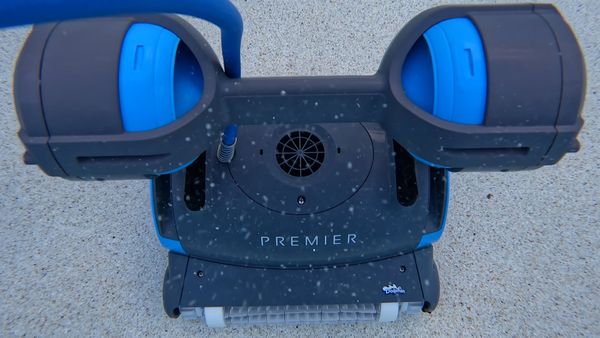
The Seagull 600's flat filter is fine for the absolute basics, but it can't match the Premier's system. If keeping your pool clean already feels like a fight, the better filter is worth every penny.
The scores make it plain: the Premier earned a 5/5 for its Multi-Media setup, the Seagull 600 landed at 2/5. That's a wide gap, and it lines up with what I saw in the water.
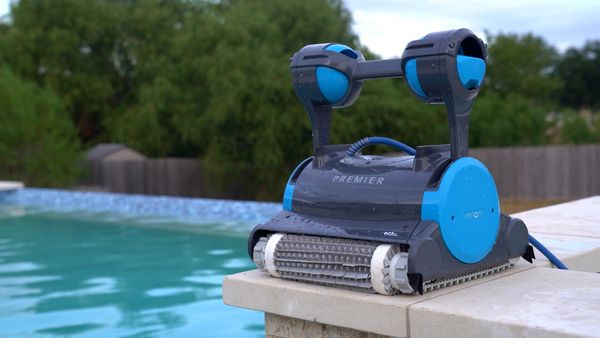
Bottom line on filters: the Dolphin Premier is well ahead of the Seagull 600. The range of filter types, especially those NanoFilters, makes it far more versatile. The Seagull 600 is cheaper, sure, but the Premier's filtration is where the value shows up.
If you want a genuinely clean pool with minimal effort from you, the Premier is the pick. The filtration alone changes how much manual work you're stuck doing.
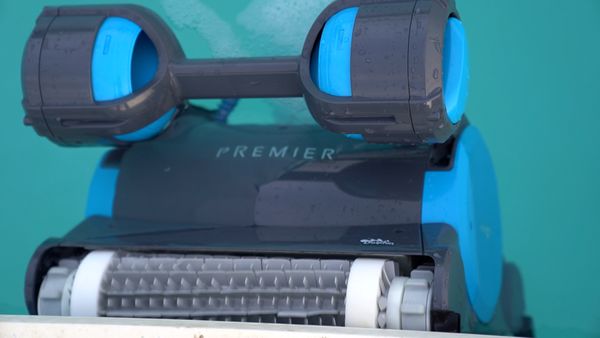
For a tight budget the Seagull 600 has its appeal, but the Dolphin Premier gives you filtration and a clean that actually justify the price. Long term, it's the smarter buy.
Feature Set
Line up the features and the two robots barely belong on the same page. The Aiper Seagull 600 leans hard on being cordless, but that one perk gets swallowed by long charge times and weak motors. Hours of charging for a 90-minute clean — that math doesn't work for daily use.
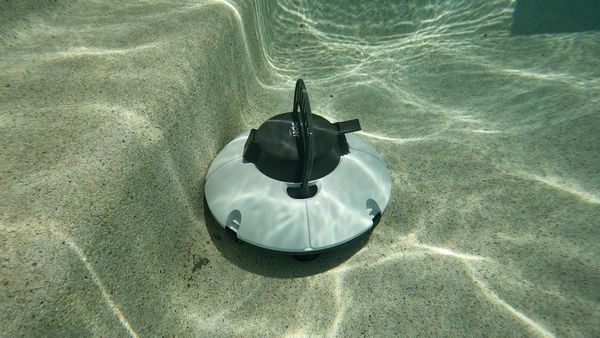
The Dolphin Premier is built to run itself. It has a programmable weekly timer so you set a schedule and walk away, plus a Media-Alert that tells you when the filter needs attention instead of leaving you to guess.
It also runs dual commercial-grade motors. They pull up to 90% less energy than old suction or pressure cleaners while giving it the muscle to scrub and climb, moving around 4500 gallons an hour for a deeper clean.
"The Premier is the closest I've come to actually forgetting I own a pool cleaner."
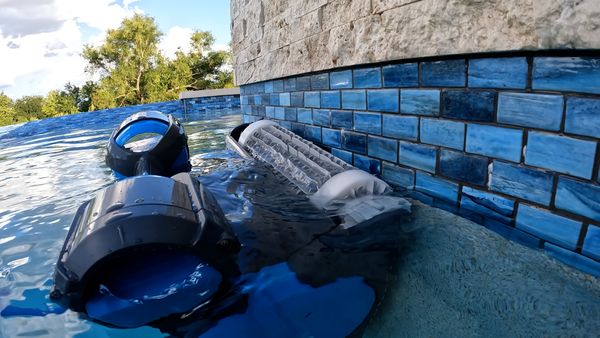
On day-to-day usability, the Aiper Seagull 600 means recharging and hauling it out for every session. The Premier's timer and Media-Alert cut nearly all of that out. Scheduling cleans and getting a heads-up on the filter is just less hassle, full stop.
The Premier also brings the Multi-Media filtration I mentioned — standard filter, NanoFilters, oversized leaf bag — so it handles fine grit up to full leaves. The Seagull 600's flat filter only manages the basics and loses the finer debris.
"The Premier's Multi-Media filtration is the feature that sold me."
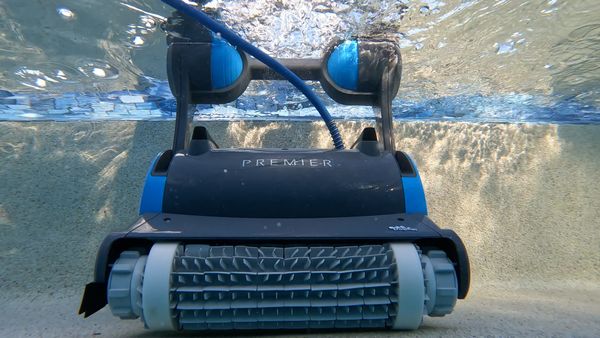
Add in the dual scrubbing brushes and that three-year warranty and the Premier stops feeling like a gadget and starts feeling like an investment in not doing pool chores.
The scores follow the same line: the Seagull 600 landed at 2/5 for its thin, underperforming feature set, while the Premier hit a near-perfect 4.7/5. That gap is the Premier's smarter functionality and how easy it is to live with.
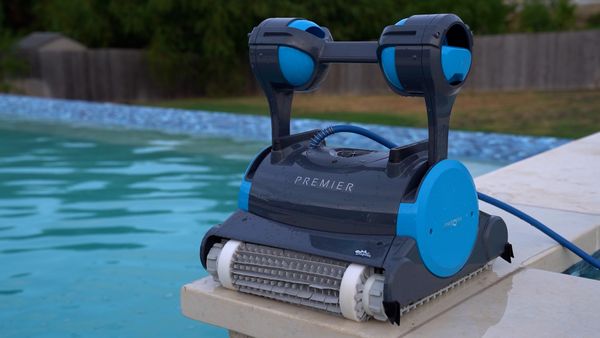
So the Aiper Seagull 600 gives you a few basics cheap, but the Dolphin Premier goes well past it. Scheduling, Media-Alert, and the filtration options mean the pool stays clean while you do nothing. For a reliable, low-effort setup, the Premier's the one.
Want more options in this tier? My best pool robots reviews cover the rest of the field.
Conclusion
Head to head, the Aiper Seagull 600 and the Dolphin Premier aren't close. The Seagull 600 lands at 4/10 overall — cheap, but it comes up short almost everywhere. Weak motor, no active brush, and it struggles with the basics of cleaning a pool.
The Dolphin Premier scores a 9.8/10. Full coverage from floor to waterline, a filtration system with NanoFilters and an oversized leaf bag, commercial-grade motors, and a design that mostly runs itself.
"This one's not a debate — the Premier wins on every measure that matters."
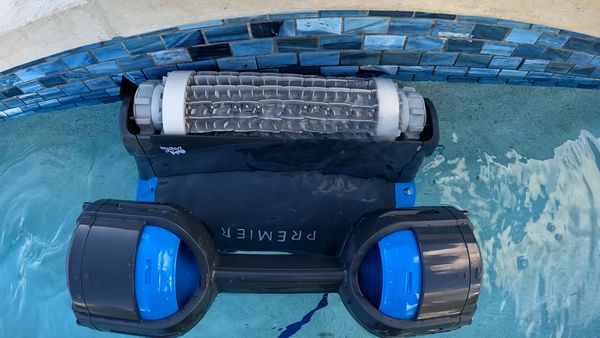
Put them side by side and the Premier is the winner, plainly. Better features, more reliable, and a filtration system that actually keeps the water clear. The Seagull 600 will catch a budget buyer's eye, but it doesn't have the efficiency or the ease of use to keep a pool clean without you helping.
If you want a robot that just works, the Dolphin Premier is the pick. If you want to shop around, the Dolphin Sigma, Dolphin Cayman, and Dolphin Escape are all solid options I'd stand behind.
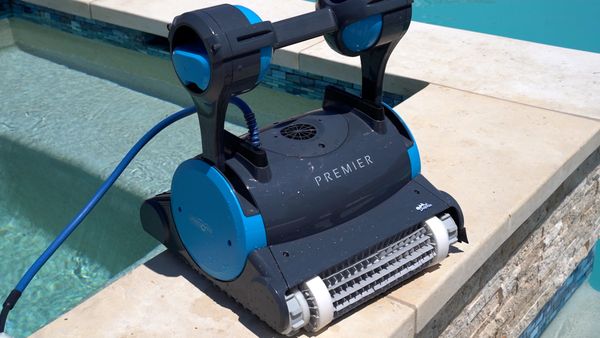
If it helps to boil it down: the Seagull 600 is a floor-skimmer with a cordless gimmick, and the Premier is a complete cleaning system. One asks for your time every day; the other gives it back. For most inground pools, that's not a close call.
I'd only steer someone to the Seagull 600 if their pool is tiny, their budget is truly fixed, and they accept they'll be finishing by hand. Everyone else is better served spending up.
Check my best pool robots reviews for the full rundown. A robot like the Premier saves you real time and effort, and honestly that's the whole reason to buy one.
Alternate Robots
The Aiper Seagull 600 and Dolphin Premier are the focus here, but a few other robots I've tested are worth a look before you decide.
Start with the Dolphin Sigma. It's a serious competitor to the Premier — commercial-grade motors, a gyroscope for navigation, and it cleans from the floor to the waterline. The NanoFilters grab the fine particles, so you get clear water without much effort.
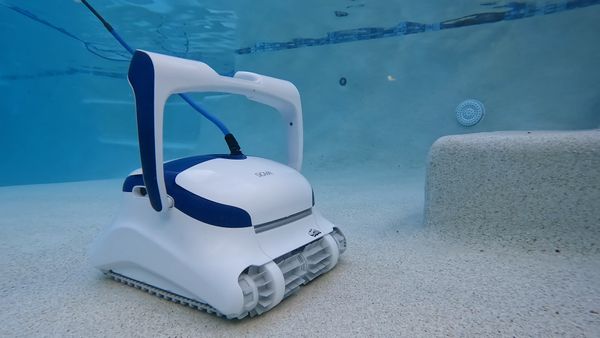
The Dolphin Quantum is another one I'd point you to. Its big XXL MaxBin and PowerJet 3D mobility make it a low-fuss cleaner, and it includes NanoFilters for the small stuff. It also cleans the waterline well, which a lot of robots can't manage.
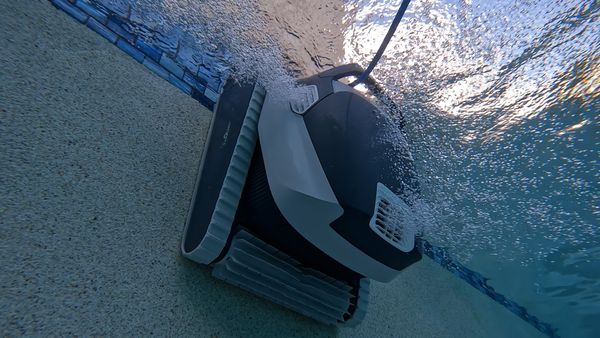
"If you want thorough, no-drama cleaning, the Quantum belongs on your list."
Finally, the Aquabot REVA is worth a mention. It cleans the waterline, connects to your phone, and its gyroscope keeps navigation precise. The dual-layer filter handles a range of debris sizes, and it does a lot for the money.
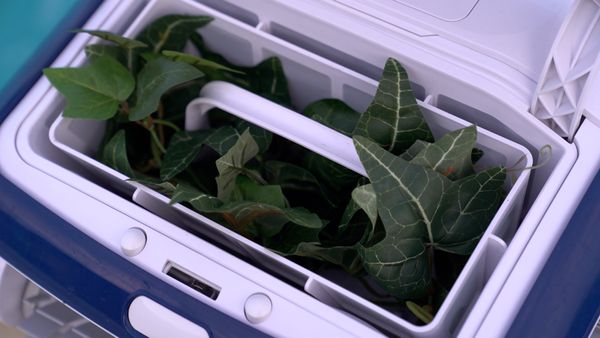
The through-line with all three of these picks is the same reason the Premier beats the Seagull 600: real motors, real filtration, and coverage that reaches past the floor. Match the robot to your pool's size and debris load and any of them will serve you far better than an entry-level unit.
The Premier is my top pick here, but the Dolphin Sigma, Dolphin Quantum, and Aquabot REVA are all strong alternatives. Each brings something different, and any of them would beat the Seagull 600 handily.