



Key Takeaways
- A dark bottom pool is defined by its interior finish — a dark plaster, pebble, quartz, or tile — not by dyed water, and that dark surface is what turns the water into a mirror.
- Dark finishes make water read deeper and more reflective, and they absorb solar heat, so the pool typically warms a few degrees faster and holds it longer than a pale one.
- The trade-off is real: dark surfaces hide algae and debris better visually but demand tighter water chemistry, since scale and a dropped water line show up more readily.
A dark bottom pool doesn't just hold water — it holds a reflection. Where a white-plaster pool reads bright and tropical, a dark finish turns the surface into a slab of moving glass that mirrors the sky, the trees, and the last light of the day. It's the finish behind almost every pool that stops you mid-scroll right now, and after building and refinishing plenty of them, we can tell you where the magic is real and where the marketing gets carried away.
What a dark bottom pool actually is
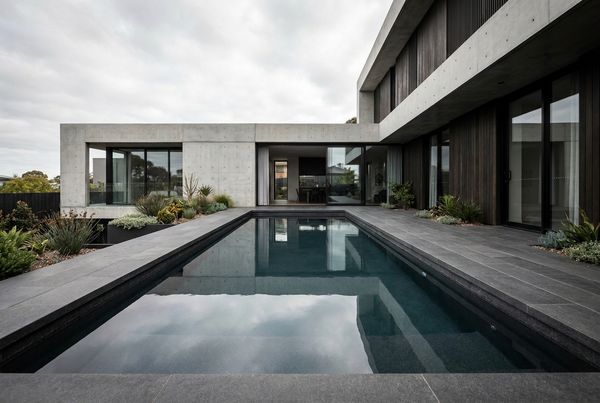
Let's clear up the most common misunderstanding first: a dark bottom pool is not filled with dark water, and nothing is dyed. What you're seeing is the interior finish — the material troweled or set onto the shell walls and floor — in a dark color. Swap a white plaster for a charcoal pebble, a graphite quartz, or a deep-blue tile, and the same clear, balanced water suddenly reads deep, moody, and reflective. The water is the same; the canvas underneath it changed.
That finish is doing all the work. Light travels down through the water, hits the dark surface, and instead of bouncing back bright and scattered the way it does off white plaster, most of it is absorbed. What comes back to your eye is a darker, more saturated color and a much stronger reflection of whatever is above the water. This is why the terms dark bottom pool and black bottom pool get used interchangeably — they describe the same idea across a spectrum of dark finishes, from soft grey to true black.
The reflective, mirror-like look
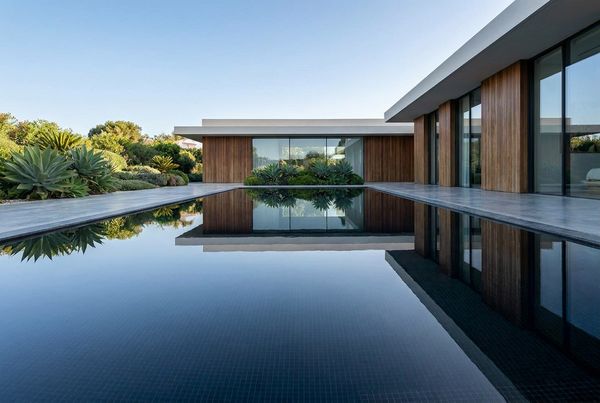
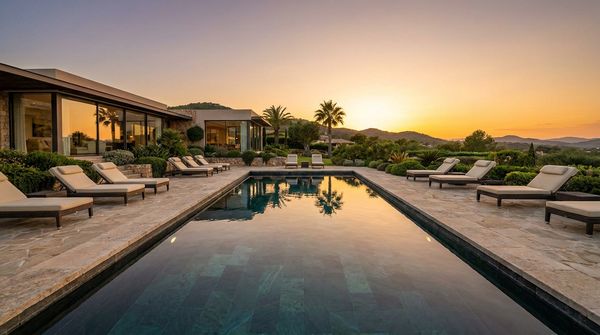
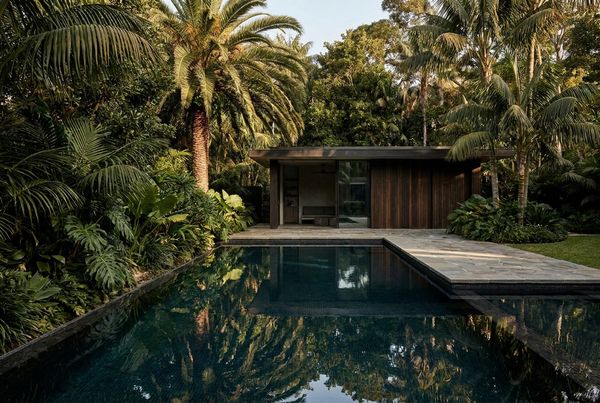
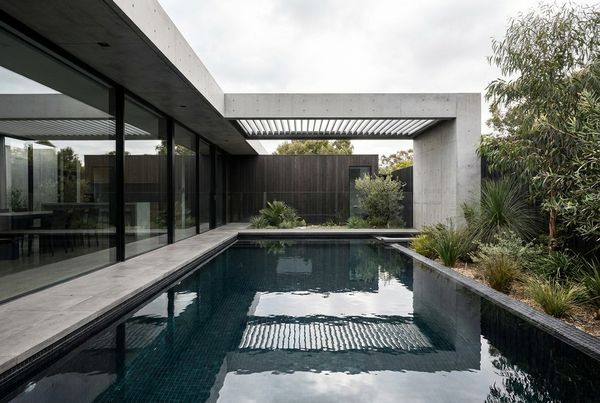
The single biggest reason people choose a dark bottom is the mirror. When the surface is calm, a dark finish turns the pool into a reflecting pool — the sky, the tree line, the architecture of the house, and at night the moon and the deck lights all appear doubled on the water. It's the same optical trick that makes a black granite countertop feel richer than a white laminate one: the darker the surface, the more it reflects and the less it reveals of its own texture.
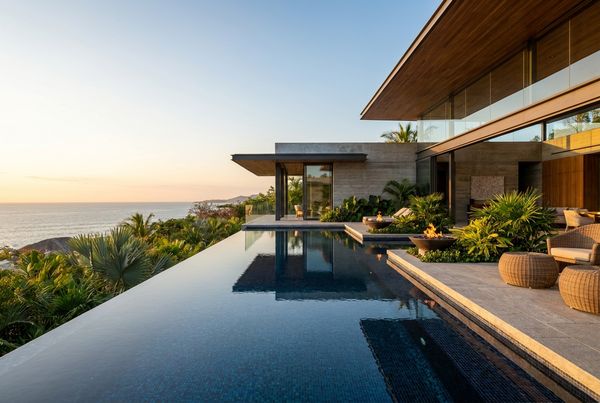
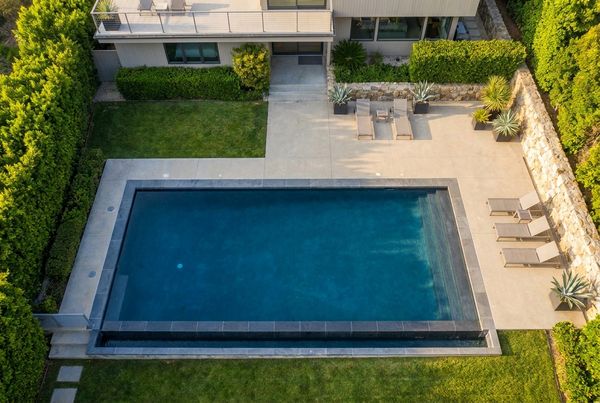
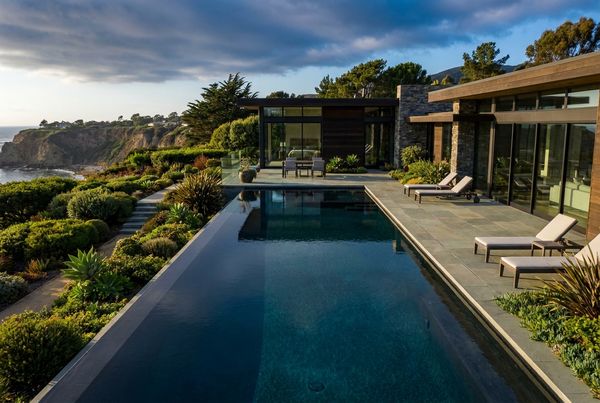
This is why dark finishes and modern architecture are such a natural match. A clean rectilinear pool with a dark interior beside a minimalist home becomes a horizontal plane of reflection that anchors the whole composition. Pair it with a water feature and you get the best of both worlds — a mirror when the water is still and a shimmering, animated surface when it's moving. The stillness is the point; the more architectural your yard, the harder a dark bottom works for you.
What we think
The reflection is worth designing for, not just hoping for. Position the pool so it mirrors something worth seeing — a specimen tree, a clean roofline, an open patch of sky — and keep a low, uncluttered edge on the viewing side. A dark bottom pointed at a jumble of fence and equipment wastes its best trick. Aim the mirror at something.
Water color: the myths and the truth
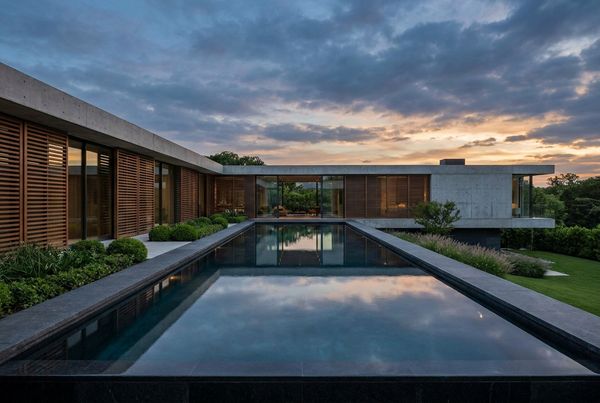
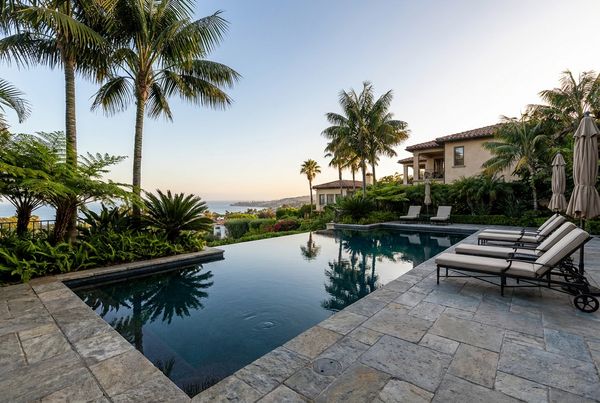
Here's where a lot of confusion lives. People assume a dark finish means dark, murky-looking water — and it doesn't. Balanced, filtered water over a dark surface is perfectly clear; it just reads as a deeper, more saturated color. The finish name is only half the story, because the color you actually see is a collaboration between the finish, the water depth, the sky, and the time of day. The same charcoal pool can look steel-blue at noon, near-black in shade, and gold-and-orange at sunset.
The other myth is that "dark bottom" always means black. In practice it's a whole family of looks, and choosing the right one is mostly about the water color you're after. Here's how the common finishes tend to read:
| Finish color | Water reads as | Solar heat gain | Reflection strength |
|---|---|---|---|
| Light grey | Soft blue-grey | Slight | Moderate |
| Charcoal / dark grey | Deep steel-blue | Noticeable | Strong |
| Midnight / dark blue | Rich sapphire | Noticeable | Strong |
| Deep green / lagoon | Emerald, natural | Noticeable | Moderate |
| True black | Near-mirror, sky-doubling | Highest | Strongest |
If you love a natural, lagoon feel, a deep green or blue-grey pebble gets you there. If you want the dramatic, architectural mirror, charcoal and true black are your finishes. There's no wrong answer — but sample the actual product wet, in your own light, before you commit, because a chip in a showroom lies about how it'll look full of water under your sky.
Do dark pools really run warmer?
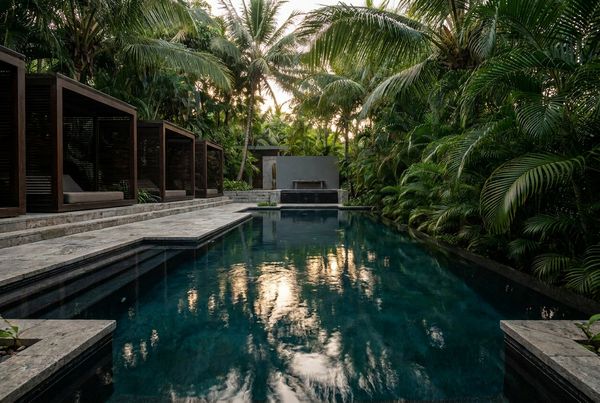
Yes — and this is one of the few dark-pool claims that's genuinely true, as long as you keep it in perspective. A dark surface absorbs more of the sun's radiation than a reflective white one, so on a sunny day a dark bottom pool warms up faster and tends to hold that warmth a little longer into the evening. In cooler or shoulder-season climates, that can meaningfully extend your comfortable swimming window without touching the heater.
But be skeptical of the big numbers you'll see thrown around. The realistic effect is on the order of a few degrees under good sun, and it depends heavily on sun exposure, climate, pool size, and how much wind and evaporation are pulling heat back out. A shaded dark pool won't magically warm itself, and a dark finish is not a replacement for a heater or a cover if you want reliable temperature control. Think of the solar gain as a welcome free bonus in most climates — a real one — rather than a headline feature you can bank on.
Choosing a dark finish: pebble, quartz, tile
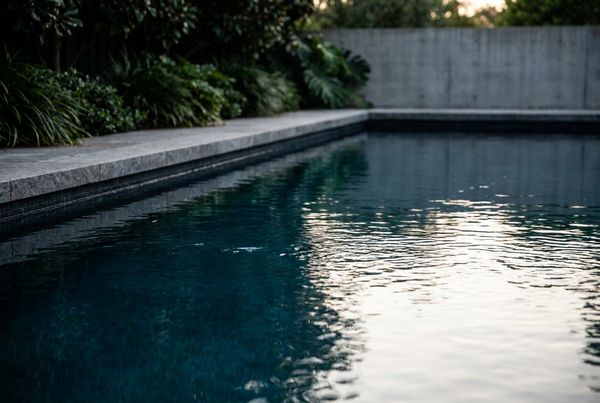
Once you've settled on going dark, the next decision is the material — and it matters as much as the color, because it drives durability, feel underfoot, and how the surface ages. These finishes are almost always applied inside a gunite shell, which gives you full freedom on color and texture that a drop-in shell can't match. Three families dominate:
- Dark pebble — the forgiving workhorse. A pebble finish mixes small stones into the plaster, so it's tough, long-lasting, and brilliant at hiding minor blemishes and mottling. Its slightly textured surface reads beautifully in dark colors and is our default recommendation for most homeowners chasing the look.
- Dark quartz — a step up in refinement. Quartz aggregate gives a smoother, denser, more uniform dark surface with excellent longevity and a cleaner, more consistent color than standard plaster. It's a great middle ground between pebble and full tile.
- Dark or all-tile — the premium ceiling. A fully tiled interior, especially in dark or glass tile, is the most reflective, most durable, and most striking of all — and the most expensive. It delivers the truest mirror and the richest color, and it's the finish behind the most jaw-dropping dark pools you've seen.
The honest pros and cons
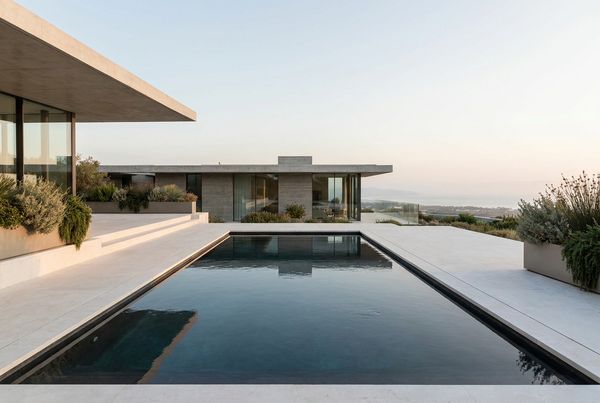
No finish is all upside, and a good designer will walk you through both columns before you sign. On the pro side: the reflective, high-end look; the modest solar heat gain; the way debris and shadows blend into the surface so the pool looks clean and inviting; and the stunning contrast a dark interior creates against pale coping, white decks, and green planting.
On the con side, the same traits cut the other way. Because dirt and early algae hide against a dark surface, you can't trust your eyes — you have to test the water on a schedule and trust the numbers, because a problem can advance before it's visible. Dark finishes also show calcium scale, mineral deposits, and a dropped water line more readily than white plaster, so keeping calcium hardness, pH, and the water level in range is what keeps the surface flawless. And in a very hot, high-sun climate, the extra heat absorption occasionally works against you, pushing an unshaded pool warmer than you'd like at peak summer. None of this is a dealbreaker — it's just the fine print of owning a dark bottom, and it rewards a slightly more attentive owner.
Pairing dark bottoms with modern design
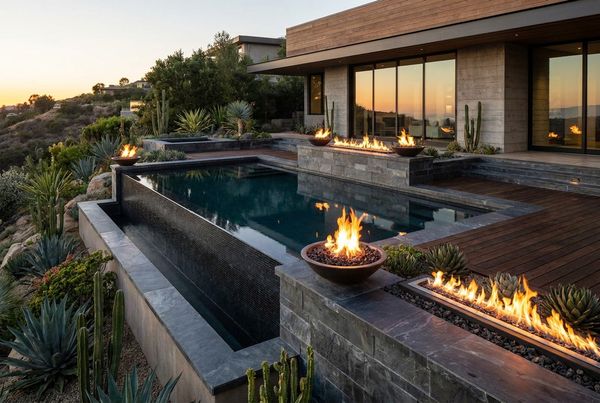
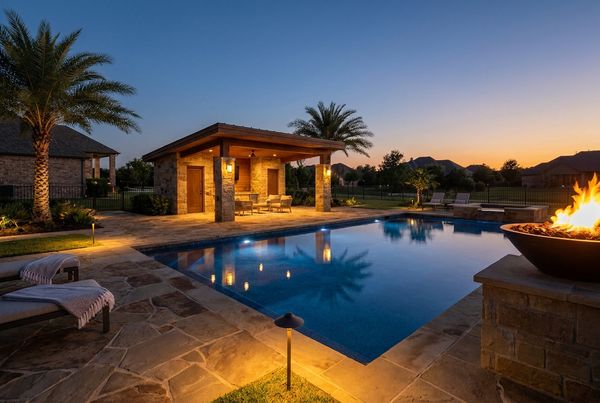
A dark bottom pool is a design multiplier — it makes the elements around it look better. The reflection amplifies fire features: a line of fire bowls or a raised fire wall doubles itself on a dark, still surface, and the contrast between the warm flame and the cool dark water is one of the most cinematic combinations in any backyard. It's why you'll see dark interiors paired with fire in nearly every high-end modern pool design.
The same goes for light. After sunset, a dark bottom becomes a black mirror, and underwater and landscape lighting reads with extraordinary depth against it — a single warm glow feels richer, and color-changing LEDs pop harder than they ever would over white plaster. Layer in clean coping, a crisp deck, and a spillover spa or a water feature for movement, and the dark interior ties the whole scene together. The look leans modern by nature, but it's flexible: soften it with a deep-green pebble and lush planting and the very same finish reads tropical and organic instead of sharp and architectural.
Caring for a dark finish without the headaches
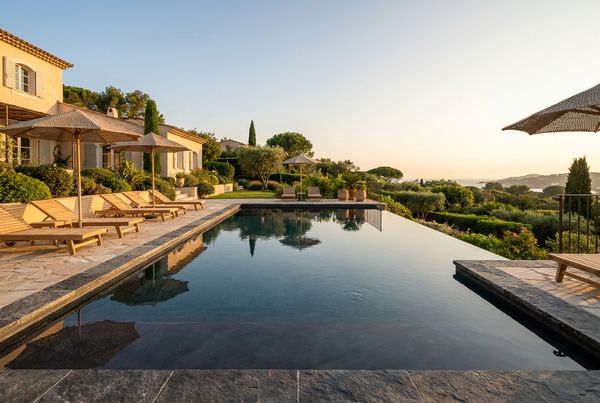
Owning a dark bottom pool isn't hard — but it's less forgiving than white plaster, and that's the honest trade for the look. The two things that show on a dark surface are mineral scale and a dropped water line. Let calcium creep up or pH swing, and you'll see a chalky film or a bathtub ring on the finish long before it would register on a pale pool. The fix isn't more work, it's steadier work: keep calcium hardness, pH, and the water level in range and the finish stays glass-like.
The one habit I insist on with dark pools is testing on a schedule rather than by eye. Because dirt and early algae blend into a dark surface, the pool can look pristine while a problem builds underneath — you have to trust the numbers, not the reflection. I test regularly with a good test kit and dose to a target with our pool chemical calculator, so I'm correcting small drifts instead of chasing big ones. If the water ever loses its clarity, that's a chemistry or circulation signal, not a finish flaw — our cloudy pool water guide runs the fixes in order.
None of this makes a dark pool high-maintenance. It's the same tasks as any pool, done with a little less slack. An owner who tests weekly and keeps the water level topped up will have a flawless dark finish for years; one who neglects it will see every lapse written on the surface.
What a dark finish adds to the budget
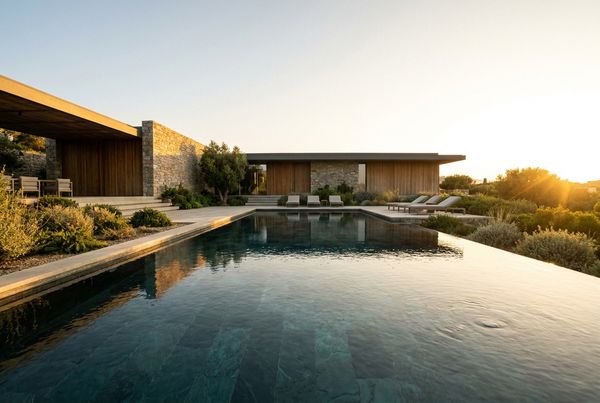
Here's a point that surprises people: going dark barely costs anything on its own. Pigment is pigment — a charcoal plaster isn't meaningfully more than a white one. What moves the budget is that the dark look tends to pull you toward a better finish to do it justice, and those upgrades are the real line item. A basic dark plaster is affordable; a dark pebble or quartz costs more and lasts longer; a fully tiled dark interior is the premium ceiling and priced accordingly.
Almost every dark bottom pool is built inside a gunite shell, because concrete gives you full freedom over color and texture that a drop-in shell can't match. That means you're already in a custom build, and the finish choice is where you decide how far to take it. For most homeowners I steer toward a quality dark pebble or quartz — you get the great majority of the black-glass drama and the solar warmth without the tile-level bill. Reserve all-tile for the hero pool where the mirror is the entire point.
If you're pricing a new build or a remodel around a dark finish, treat the finish as its own budget decision rather than a free color swap. Our inground pool cost guide breaks down where the money goes across the whole project, so you can see how much of it the interior surface actually represents — and decide whether to spend it on tile or bank it elsewhere in the yard.
Why dark finishes are winning in 2026
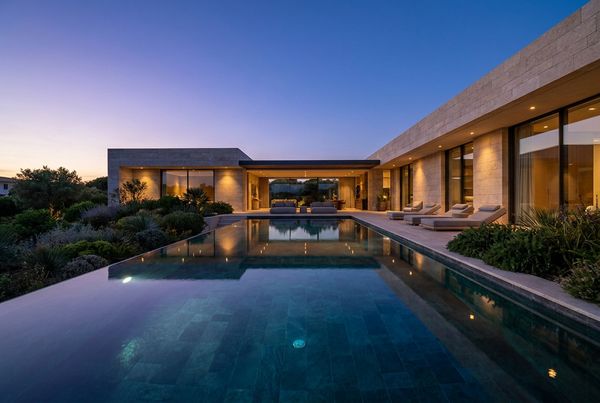
The trend has been building for years, and in 2026 the dark bottom pool is firmly in the mainstream of new builds and remodels. Part of it is the broader move toward modern, minimalist backyards — clean lines, natural materials, muted palettes — where a bright turquoise pool suddenly looks dated and a dark reflective one looks intentional. Part of it is social media, where the mirror-still, sky-doubling shot simply photographs better. And part of it is practical: homeowners like the free solar warmth and the way a dark pool reads as a sophisticated water garden rather than a plastic-blue swimming hole.
If you're building new or planning a remodel, a dark finish is one of the highest-impact, most on-trend choices you can make — provided you go in with eyes open about the chemistry discipline it asks for. Sample the finish wet, aim the reflection at something worth seeing, and let the dark surface do what it does best: disappear, and give you back the sky.
What we think
For most homeowners, the sweet spot is a quality dark pebble or quartz in charcoal or midnight blue — you get 90% of the black-glass drama and the solar warmth, with a more forgiving surface and a friendlier price than full tile. Reserve all-tile for the hero pool where the mirror is the entire point and the budget can carry it.
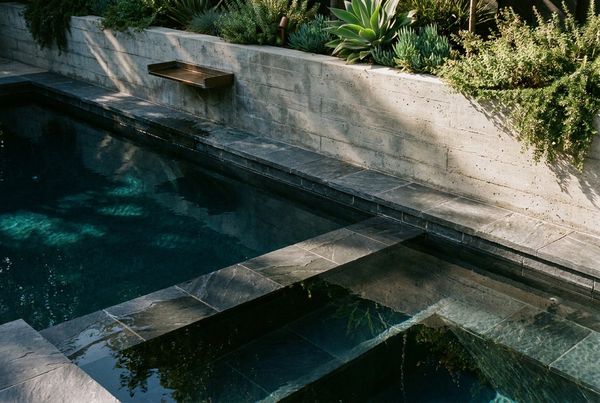
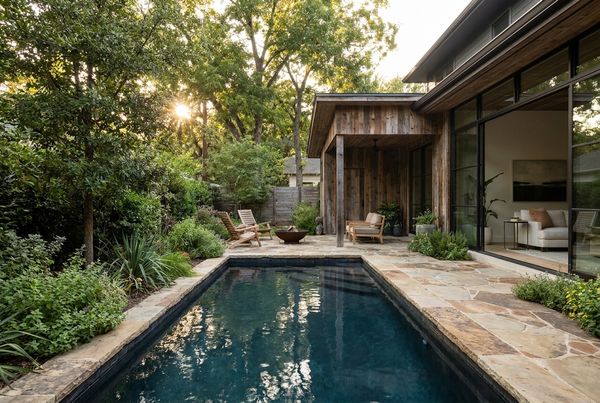
Design Gallery
7 more ideas to save — tap any photo to view full screen.

Kelly E.
Pool Design Editor, PoolPad
Kelly has spent 10+ years around residential pools — planning projects, testing gear, and documenting backyard builds for PoolPad. Each design guide is checked against current construction methods and material pricing.
Frequently Asked Questions
What is a dark bottom pool?
Do dark bottom pools make the water warmer?
What color does the water look in a dark bottom pool?
Do dark pools hide algae and dirt?
Is a dark bottom pool harder to maintain?
Which dark finish is best — pebble, quartz, or tile?
How do I keep the chemistry right in a dark bottom pool?
Does a dark bottom pool cost more to build?
Will a dark bottom pool save on heating?
Can I convert my existing pool to a dark bottom?
Ready to build your dream backyard?
Compare local, vetted pool builders and get matched with pros who can bring these designs to life.
Find a Pool Builder Near You