



Introduction
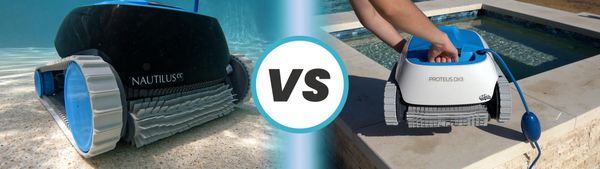
If you're weighing the Dolphin Nautilus CC against the Dolphin Proteus DX3, I've run both, and they're closer than you'd think. Both have real strengths and real gaps, and figuring out which one fits your pool comes down to a couple of specific tradeoffs. Let me walk you through them.
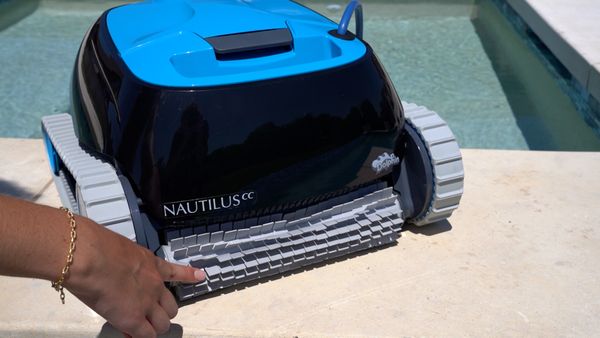
The Nautilus CC gets attention for cleaning floors and walls well, but it stumbles elsewhere. It dropped its programmable timer, and there are no NanoFilters and no waterline cleaning, which makes it feel dated next to newer models like the Dolphin Cayman.
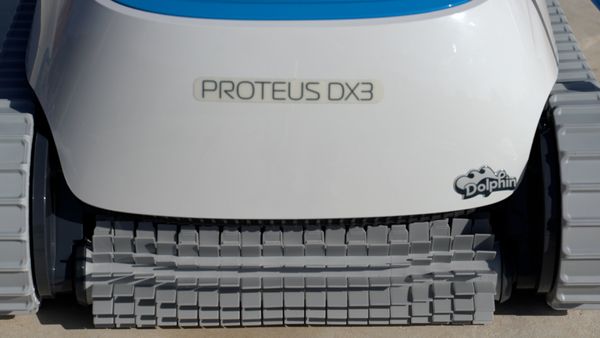
The Proteus DX3 also covers floors and walls well, and it navigates cleanly. But it's got the same holes: no NanoFilters, no waterline cleaning. The extra catch is a hidden restocking fee some sellers charge, which can turn a return into an expensive lesson.
"Both have limitations—the real question is which one is the better value"
I ran both in my own pools and watched them closely. The Nautilus CC impressed me with how thoroughly it covered the floors and walls, but no programmable timer and no waterline cleaning were the sticking points. The Proteus DX3 had the same highs and lows, plus that restocking-fee wrinkle hanging over it.
In my full reviews I go deep on each one, pool coverage, filtration, and features, so you can see exactly how they perform and pick the right one with your eyes open.
If you want more automation and the advanced cleaning these two skip, it's worth looking at something like the Dolphin Quantum or Dolphin Premier. They add waterline cleaning, multiple filter options, and better warranties, which makes them more dependable for the long haul.
The way I'd frame it before we get into the weeds: these two are more alike than different. Same 33-foot ceiling, same floor-and-wall focus, same missing waterline cleaning and no NanoFilters. So the decision really rides on small stuff, the Nautilus CC's scrubbing brush versus the DX3's timer, and whether that restocking fee scares you off. If you want either of those trade-offs handled for you, the step-up models sidestep the whole debate.
So how do I actually put these robots through their paces? Let me lay out the criteria and the testing next.
How We Test
When I test a pool cleaner, I look at a bunch of factors before I'll recommend anything. My testing usually runs three months, which is enough time to see how a robot really performs and holds up across different conditions, not just how it looks fresh out of the box.
With the Dolphin Nautilus CC, I checked coverage by watching how it worked the floors and walls of my pool. It nailed the initial setups, but the missing programmable timer and lack of NanoFilters showed up quickly. Even so, it kept up decent coverage across the whole testing window.
"Three months in the water tells you how these robots really perform and last"

I ran the Dolphin Proteus DX3 through the same three months and watched its coverage closely. I liked its vacuuming power and its solid floor-and-wall coverage. The downsides were the same story: no waterline cleaning, no NanoFilters, and that potential restocking fee lurking behind some sellers.
Beyond coverage, I dig into filtration. Both the Nautilus CC and the Proteus DX3 come with standard fine filters. They handle general debris fine, but neither has NanoFilters, so both struggle with the finer particles that leave your water looking cloudy.
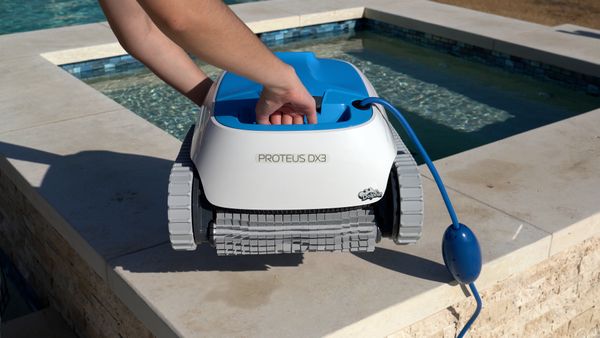
I also look hard at features and warranty. For these two, small annoyances add up, no programmable timer on the Nautilus CC, and an awkward handle on the Proteus DX3 that got old fast. Both still clean reliably, so it's not all bad, but the little things matter when you use something weekly.
"Features and warranty are what decide whether you're still happy a year later"
In my reviews I like to put the tested model up against something better. The Dolphin Cayman and Dolphin Quantum both bring advanced cleaning, better warranties, and more filter options, which makes them easy to recommend over these two.
Through all of it, I'm trying to pin down each robot's real strengths and weaknesses so my recommendation actually holds up in your backyard. A weekend test can't tell you whether a handle that's mildly annoying on day one becomes the thing you dread by month two, or whether a filter basket clogs faster than you'd like once real debris starts piling up. Three months surfaces that stuff. My detailed reviews are there to help you land on the right cleaner with the least effort on your end.
If you want more automation and the advanced features these two lack, I'd steer you toward the Dolphin Premier or the Dolphin Sigma. Both add waterline cleaning, multiple filter options, and solid warranties, which pays off over the long run.
Coverage
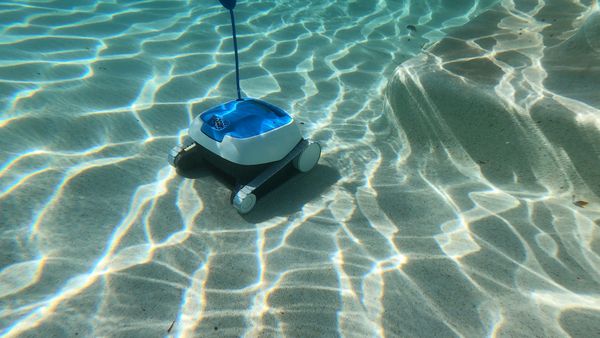
Let's talk coverage on the Dolphin Nautilus CC versus the Dolphin Proteus DX3, because this is where a lot of buyers make their call. Both clean the main surfaces well, so it's worth digging into how each one actually gets around your pool.
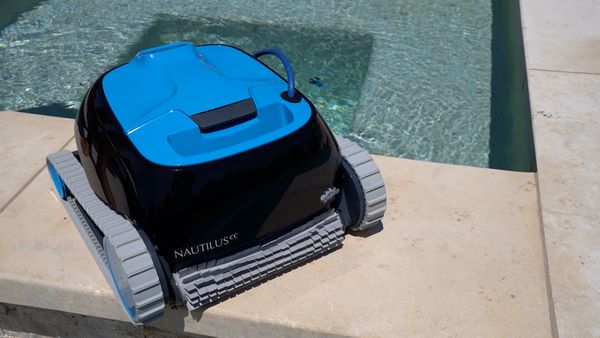
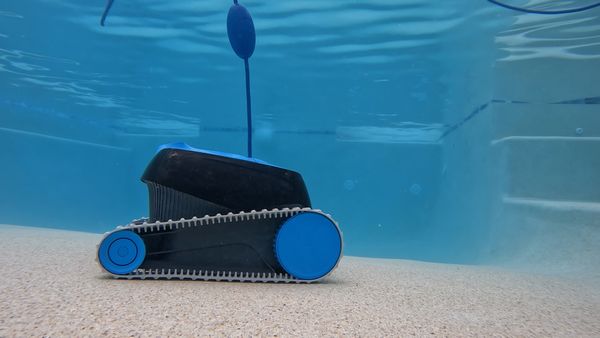
The Nautilus CC is built for floor and wall cleaning. It runs a 50ft cord, which lets it work pools up to 33 feet, so it's a good match for smaller inground and above-ground pools. It rides on tracks instead of wheels, and that grip gives it strong suction and steady cleaning. The catch is the waterline, which it just can't handle. Still, in my testing it covered the whole floor and all the walls without leaving obvious gaps.
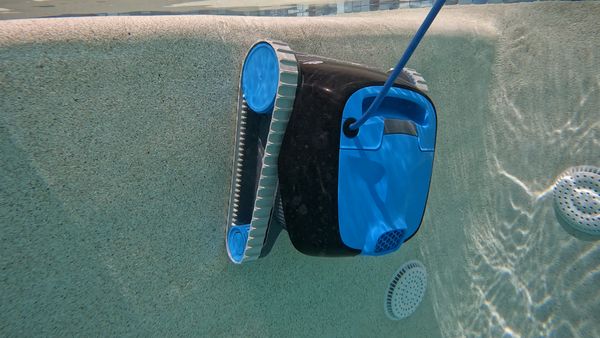
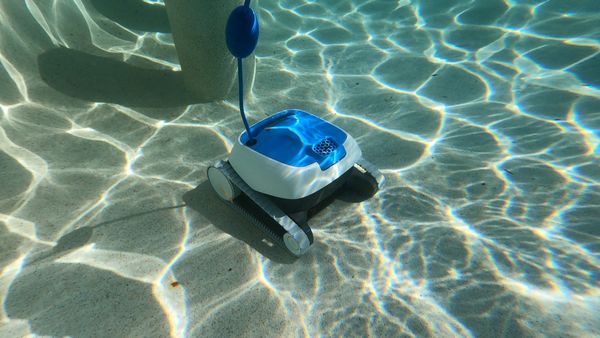
The Proteus DX3 is right there with it on floors and walls. It's also designed for inground pools up to 33 feet, same as the Nautilus CC. In my pool it moved with a clear, calculated path and covered ground efficiently. But it shares the same weakness, no waterline cleaning, which stings if you wanted a truly hands-free robot. On the floor and walls, though, it left things genuinely clean.

"Both cover floors and walls well—but neither one touches the waterline"
The Nautilus CC scored a 7 out of 10 for coverage. That's solid floor-and-wall performance, and the tracks give it great grip, but I docked it for skipping the waterline. If that's a must-have for you, there are other Dolphins that do it. I'll say this for the tracks, though: on the floor they really do bite. On slippery, algae-slicked walls or in a pool that hasn't been run in a while, that grip is what keeps the robot climbing instead of sliding back down, and it's a big reason the CC holds its own on the surfaces it can reach.
The Proteus DX3 edged ahead with an 8 for coverage. Its clean, calculated path and reliable floor-and-wall cleaning impressed me, and it stayed consistent cycle after cycle. It's held back by the same missing waterline cleaning, but its steadiness earned it the higher mark.
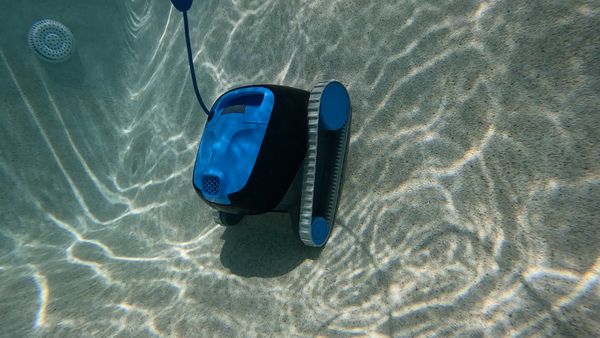
So both robots handle floors and walls reliably, and neither one deals with the waterline. The DX3 comes out slightly ahead on coverage thanks to how consistent and efficient its path is over repeated runs. That consistency is worth more than it sounds. A robot that takes a slightly different, tidy path every cycle beats one that occasionally leaves a corner untouched, because over a week those missed corners are the exact spots where algae likes to set up shop. The DX3 just didn't leave me those surprises as often.
One thing to keep in mind on both: that 33-foot ceiling is a hard limit, not a suggestion. If your pool runs longer than that, or has an unusual shape with lots of tight corners, neither of these is the right tool and you'll end up finishing spots by hand. Measure before you buy.
If you want the waterline covered too, look at something like the Dolphin Quantum or Dolphin Premier. They add waterline cleaning, multiple filters, and smarter navigation, which is worth it if you want the whole pool handled in one pass.
Filters
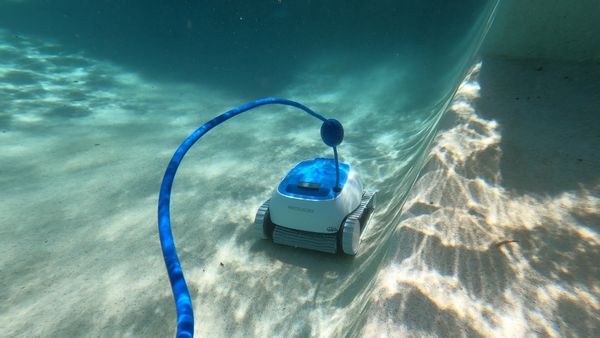
On filtration, the Dolphin Nautilus CC and the Dolphin Proteus DX3 land close together, with a couple of differences that decide it. Both run standard fine filters, but the day-to-day experience isn't identical.
The Nautilus CC's standard fine filter does a reasonable job on debris. Leaves, dirt, the everyday stuff, it handles fine. But no optional NanoFilters means it struggles with microscopic particles, and that often leaves the water looking cloudy. If a genuinely clear pool is the goal, that's a real limitation.
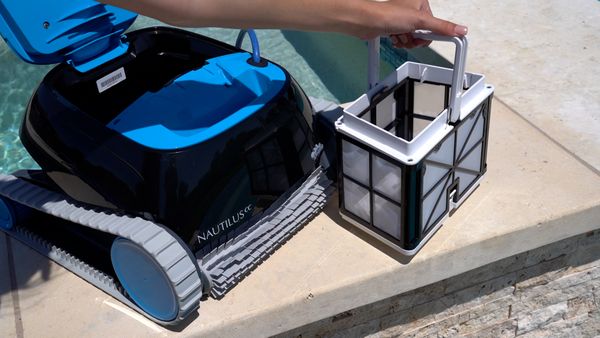
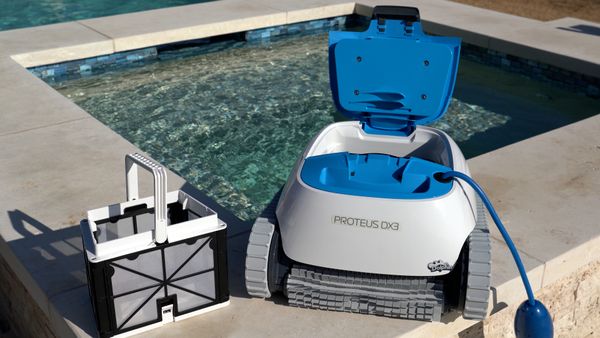
The Proteus DX3 also ships with a standard fine filter, and like the Nautilus CC it captures regular debris fine. It's got the same gap, though, no optional NanoFilters, so it fights the same losing battle with finer particles. That shared limitation is why neither one gets your water truly crystal clear on its own.
Head to head, they're basically even here. Neither has a clear filtration edge because they use similar filters and both skip the NanoFilters you'd find on higher-end models. If you've only ever run a robot with a standard basket, you might not even notice the ceiling. But once you've seen what a NanoFilter pulls out of the water, the standard basket starts to feel like it's leaving a haze behind, especially in the days right after you shock the pool or after a dust storm rolls through.
"Both filter the everyday stuff fine—it's the fine particles that trip them up"
The tiebreaker comes down to how each one works. The Nautilus CC has an active scrubbing brush, and that helps it knock loose clingy debris before it filters, so the process is a touch cleaner. The DX3 leans on strong vacuuming power to suck debris up efficiently instead.
Without NanoFilters, both are a little behind on cloudy water, which is the most common gripe I hear. You'll likely need some extra chemical treatment or a manual pass now and then to get the clarity you want.
Features tip this slightly too. Both lack NanoFilters, but the Nautilus CC's active scrubbing brush helps it grab more debris before it hits the filter. The DX3, meanwhile, is a bit awkward to handle, thanks to a handle placement plenty of owners have flagged as inconvenient.
So the scores: the Nautilus CC took a 7 on filtration, and the Proteus DX3 came in slightly lower at 6. Both would be far better with NanoFilters, but the Nautilus CC's active scrubbing brush gives it the edge. Factor in ease of use, and the Nautilus CC wins this category. It's a narrow win, not a blowout, so don't read too much into that single point. If you already own the DX3, you're not missing much on filtration by not having the CC. But if you're choosing fresh between the two and clarity matters to you, the scrubbing brush loosening debris before it filters is a small, real advantage that adds up over a season.
Feature Set
On features, the Dolphin Nautilus CC and the Dolphin Proteus DX3 split in a way that's easy to miss on a spec sheet. The DX3 edges ahead on scheduling with its weekly timer, while the Nautilus CC actually got downgraded, losing the programmable timer that used to make it a real contender.
The Nautilus CC still has a strong cleaning system covering floors and walls. Its 50ft cord lets it work pools up to 33ft, which makes it efficient for smaller inground and above-ground pools. But losing the programmable timer is a real setback, because now you're walking out to start it manually every single cycle.
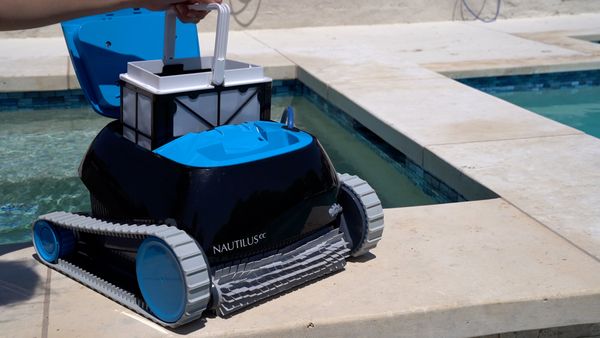
"Both clean floors and walls well—it's the advanced features they're missing"
The DX3 cleans floors and walls too, but it keeps a programmable timer. You can schedule cleanings every day, every other day, or every three days, and that automation genuinely cuts down the hands-on work. The downsides are that awkward handle and the possible hidden restocking fee, both of which chip away at the experience.
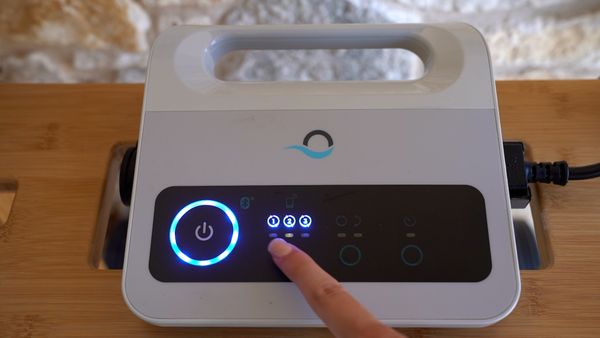
Neither one has NanoFilters, so both struggle with fine particles and leave water clarity on the table. That's a spot where they could both be a lot better. Step-up models like the Dolphin Quantum include NanoFilters and simply filter better.
The Proteus DX3 scored a 4/10 on features, mostly because of the hidden restocking fee and that awkward handle. The Nautilus CC did a bit better at 5/10, helped by its effective scrubbing brush and reliable cleaning. But the thin feature sets on both mean a more complete robot is probably the smarter buy if convenience matters to you.
So both robots clean floors and walls well, but their feature sets are thin. The Nautilus CC loses points for no programmable timer, and the DX3 has usability headaches with its handle plus the possible extra cost from hidden fees.
The restocking fee deserves one more mention because it's easy to overlook until it bites you. It isn't a feature, exactly, but it's part of the ownership math. If there's any chance you'll want to return the DX3, read the seller's fine print before you buy, because a fee on the way out can wipe out whatever you saved on the way in. That kind of hidden cost is the sort of thing a spec sheet never tells you and a long test period always does.
For a more advanced, lower-effort setup, I'd look at the Dolphin Premier or Dolphin Quantum. Both bring a fuller feature list, NanoFilters included, and much better automation.
Conclusion
Wrapping up the Dolphin Nautilus CC versus the Dolphin Proteus DX3, it's worth looking at the overall scores and the core features to see which one nudges ahead and where both leave you wanting.
The Dolphin Nautilus CC landed at 6.3/10. It cleans floors and walls decently, but the big gaps are the missing programmable timer, no NanoFilters, and no waterline cleaning. Those omissions cap both its efficiency and how convenient it is to live with.
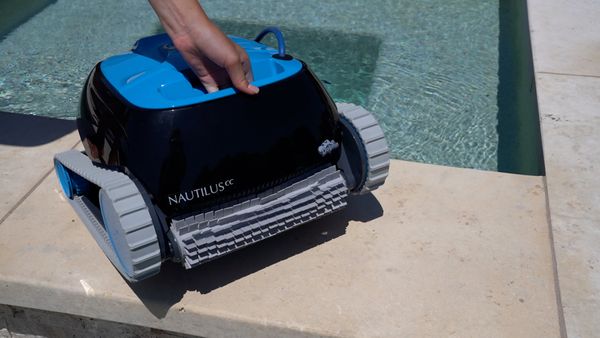
The Dolphin Proteus DX3 earned a 6/10. It vacuums strongly, cleans floors and walls well, and adds a weekly timer for scheduling. But it's held back by the same missing NanoFilters and waterline cleaning, and that hidden restocking fee can become a real cost if you ever need to send it back.
"The Proteus DX3 edges ahead on its timer, but both come up short on advanced features"
Going by the scores, both the Dolphin Nautilus CC and the Dolphin Proteus DX3 have room to grow. The Proteus DX3 takes a slight lead thanks to its scheduling, but neither one does enough to really stand out in a crowded market.
If you want more complete, automated cleaning, I'd point you toward the Dolphin Premier, the Dolphin Quantum, or the Dolphin Cayman. They bring waterline cleaning, multiple filter options, and longer warranties, which makes for a smoother, lower-effort experience.
In the end, the Nautilus CC and Proteus DX3 are both reliable, but neither is the best long-term value. If you want the more advanced tech and the more complete clean, it's worth spending up on a better model. The honest read here is that this is a matchup with no real winner, just a slight edge to the DX3 on paper. When two robots land at 6.3 and 6, the smarter question usually isn't which of these two, but whether stretching your budget a little gets you a robot you'll be happier with for years. For most people, it does.
For more of what I've tested, my page on the best robotic pool cleaners of the year has the in-depth guides and comparisons to help you pick the right one for your needs and budget.
Alternate Robots
If you're weighing alternatives to the Dolphin Nautilus CC and the Dolphin Proteus DX3, there are a few higher-rated robots I'd genuinely recommend. They clean better and add features that make them nicer to own day to day.
First up is the Dolphin Premier. It's known for excellent coverage and a serious filtration system. Unlike these two, it has Multi-Media filtration, so you can pick between standard, ultrafine, an oversized leaf bag, and a disposable debris bag depending on the mess. That flexibility means better debris capture and clearer water. It also cleans the waterline, which neither the Nautilus CC nor the DX3 can do.
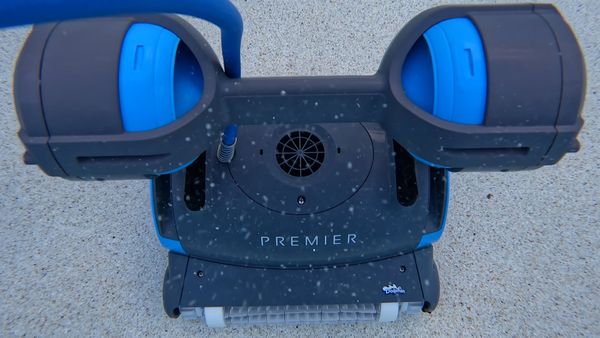
"The Premier's multi-media filtration and waterline cleaning put it in another class"
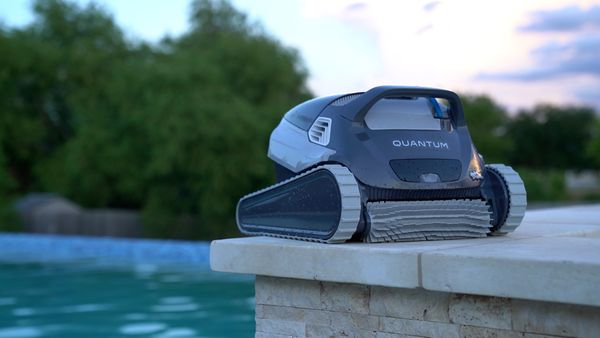
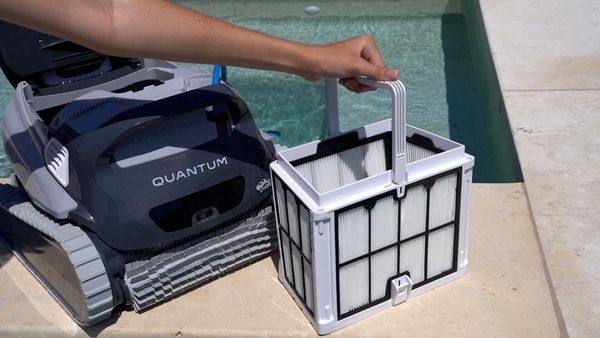
The Dolphin Quantum is another one I'd put on your list. Its NanoFilters make a real difference on water clarity by catching microscopic particles, and its PowerJet 3D mobility helps it clean the floor, walls, and waterline. The XXL MaxBin holds a lot of debris, so you're emptying it less often, and the programmable timer means you can set it and forget it.
The last one worth a look is the Dolphin Sigma. Its triple-motor setup and advanced gyroscope give it precise navigation and strong coverage. It comes with both standard and ultrafine filters for thorough debris capture, and the myDolphin app handles control and scheduling. It also carries a longer 3-year warranty, which is reassuring on a bigger purchase.
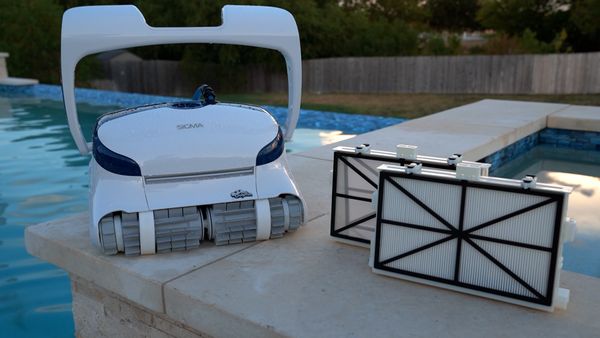
"The Sigma's triple-motor system and gyroscope deliver precise, thorough cleaning"
Bottom line: next to the Dolphin Nautilus CC and Proteus DX3, the Dolphin Premier, Dolphin Quantum, and Dolphin Sigma bring more advanced features and better overall performance. Whether you care most about multi-media filtration, NanoFilters, or smarter navigation, one of these will do the job better.
Quick way to pick among these three: if filtration flexibility is your priority, go Premier. If you want the easiest set-and-forget experience with the biggest debris bin, go Quantum. And if precise navigation on a tricky-shaped pool plus app control sounds right, the Sigma's your one. Any of the three is a genuine upgrade over the Nautilus CC and Proteus DX3, so it really comes down to which strength you value most.
For more head-to-head comparisons and reviews, check my page on the best robotic pool cleaners of the year.