



Key Takeaways
- A full glass tile pool is the top of the finish ladder — more reflective, more durable, and far more expensive than plaster, pebble, or ceramic tile, which is exactly why it reads as luxury.
- Iridescent glass pool tile is coated to shift color with the light, so the same pool glows teal at noon, sapphire in shade, and copper at sunset — an effect no plaster finish can match.
- The cost lives in two places: the tile itself and the skilled labor to set every square inch, which is why a fully tiled interior can run several times the price of a plastered pool.
If plaster is the everyday finish and pebble is the upgrade, a glass tile pool is the penthouse. It's the finish behind the pools that look less like a place to swim and more like a piece of jewelry set into the yard — surfaces that catch and throw light, shift color through the day, and read unmistakably expensive. After specifying and pricing plenty of them, we can tell you exactly where the money goes, where the magic is real, and how to get the glass tile look without remortgaging the house.
Why glass tile is the luxury tier
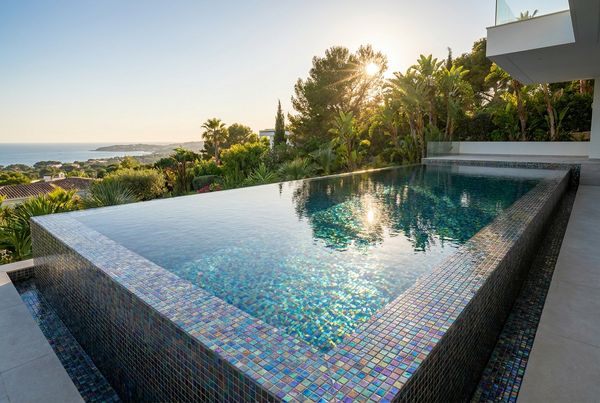
Every pool finish sits somewhere on a ladder, and glass tile is the top rung. At the bottom is plaster — affordable, everyday, and in need of periodic refinishing. Above it sits pebble, tougher and richer-looking. Above that, ceramic and porcelain tile. And at the very top is glass tile, which does something none of the others can: instead of sitting on the surface as a flat color, it lets light pass into the glass, bounce around, and come back with depth and sparkle. The result reads like gemstone rather than paint.
That optical quality is the whole reason glass tile signals luxury. Light travels through the translucent glass, reflects off the coated or colored back, and returns to your eye with a shimmer that plaster physically cannot produce. A luxury pool design uses that effect deliberately — the finish itself becomes the feature. It's also why glass tile shows up almost exclusively on high-end builds: it's the most reflective, most durable, and most expensive interior you can specify, and it looks the part.
Full glass tile vs a waterline band
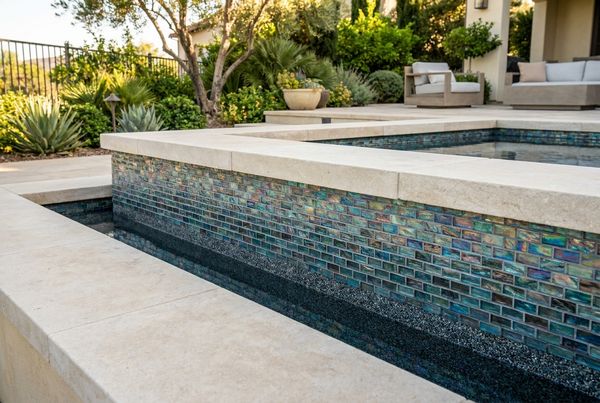
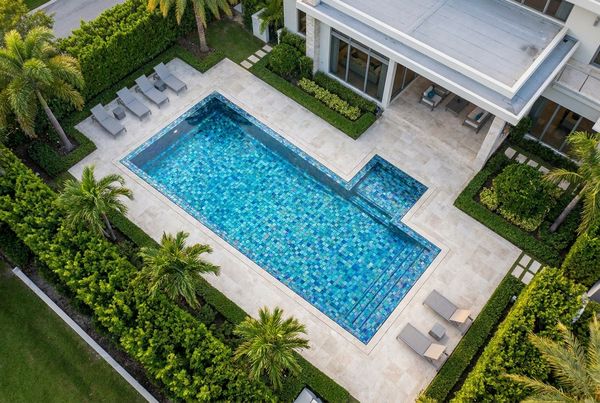
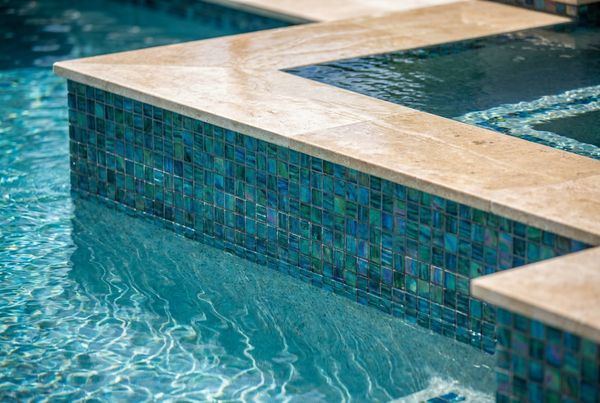
Here's the decision that shapes your whole budget: do you tile the entire interior, or just the waterline? A full glass tile pool wraps the floor, walls, steps, and benches in glass — the ultimate look, and the ultimate expense. A waterline band runs a stripe of glass tile at the water's edge, usually a foot or so tall, over a plaster or pebble interior. It's the most common way glass tile enters a pool, and for good reason.
The band isn't just a budget compromise — it's practical. The waterline is where scum, oils, and mineral scale collect, and a tiled band is far easier to wipe clean than plaster, which stains and roughens right at the line. So a glass tile band gives you the sparkle exactly where the eye lands, plus a low-maintenance surface at the pool's most vulnerable spot, for a small fraction of a full-tile price. Many owners then tile the spa and any water feature in matching glass, concentrating the luxury where it shows most. Browse our pool tile ideas to see how bands and full interiors read differently.
What we think
For the vast majority of homeowners, the smart move is a glass tile waterline band plus a fully glass-tiled spa and water feature — not a fully tiled pool. You get the shimmer at eye level, the jewel-box spa, and the easy-clean waterline for a fraction of the cost. Save the full glass interior for a true hero pool where the finish is the entire design statement.
The iridescent, color-shifting effect
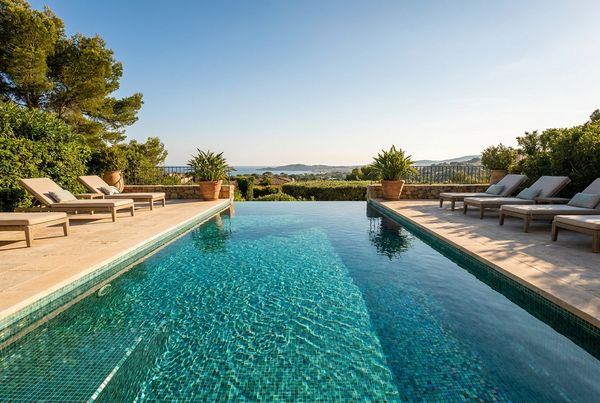
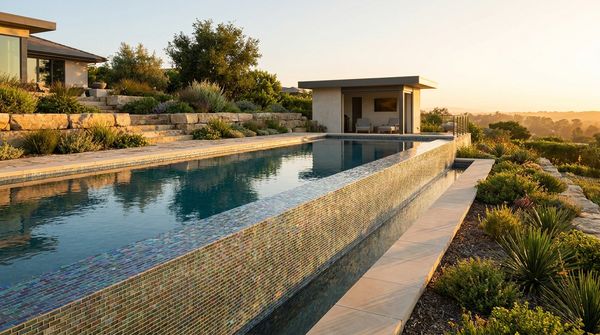
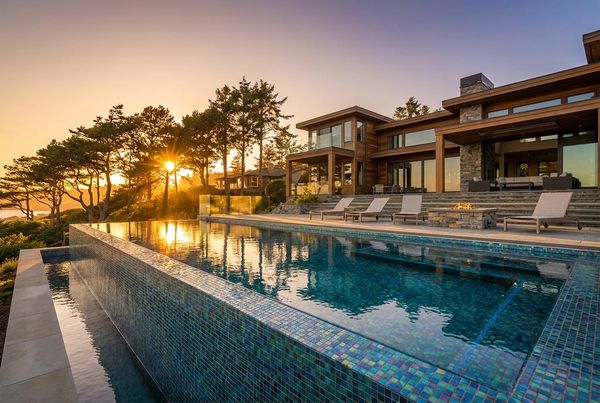
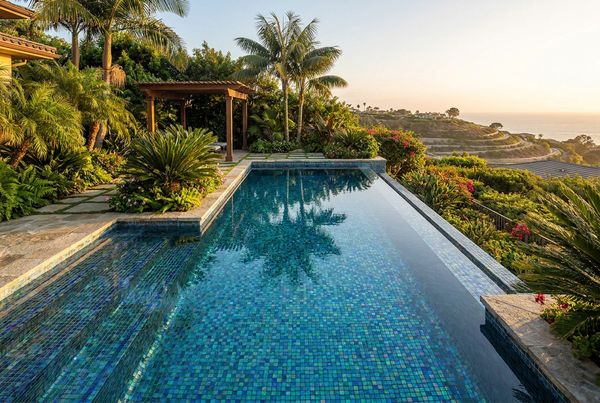
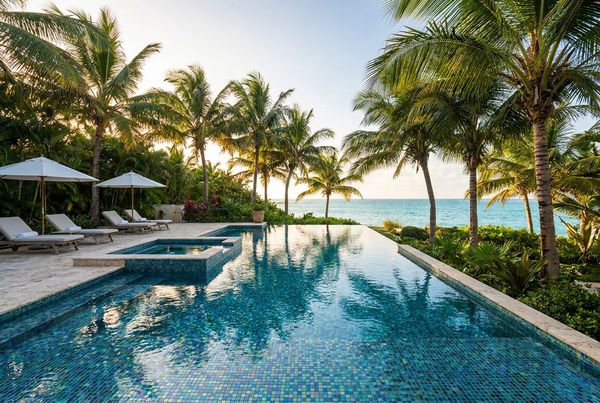
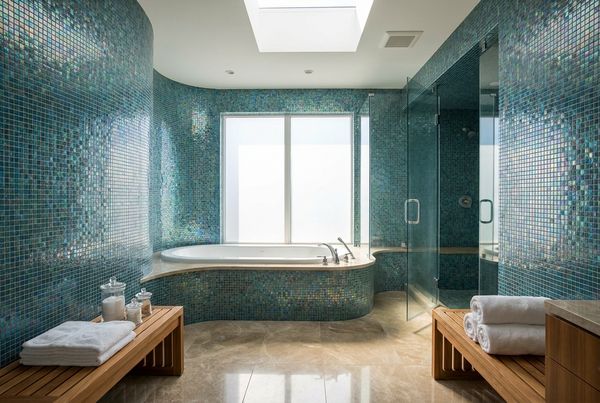
The single most seductive thing glass tile does is change color. Iridescent glass pool tile carries a thin metallic or pearlescent coating that reflects different wavelengths depending on the angle of the light and your line of sight. The practical effect is a pool that never looks the same twice: teal and jewel-bright under midday sun, deep sapphire in shade, silvery under an overcast sky, and warm copper-gold at sunset. Ripples multiply it, scattering the shift across the whole surface.
Not all glass tile is iridescent, though, and the choice sets the mood. Iridescent tile is playful, shimmering, and dynamic — the classic "wow" finish. Solid or matte glass tile reads richer and more architectural, holding one deep, saturated color the way a dark bottom pool does, without the sparkle. Blends of the two are common. Here's how the main options tend to behave:
| Glass tile type | Look | Color behavior | Best for |
|---|---|---|---|
| Iridescent | Shimmering, dynamic | Shifts through the day | Show-stopping hero pools |
| Solid / matte glass | Rich, architectural | Holds one deep color | Modern, minimalist designs |
| Dark glass (charcoal/blue) | Sleek, reflective | Near-mirror, moody | Contemporary and infinity edges |
| Blend / mosaic | Depth and variation | Mottled, natural | Organic and lagoon looks |
Whatever you're drawn to, sample the tile wet and in your own light before committing — the swatch in a showroom lies about how a coated glass will read full of water under your particular sky.
What a glass tile pool actually costs
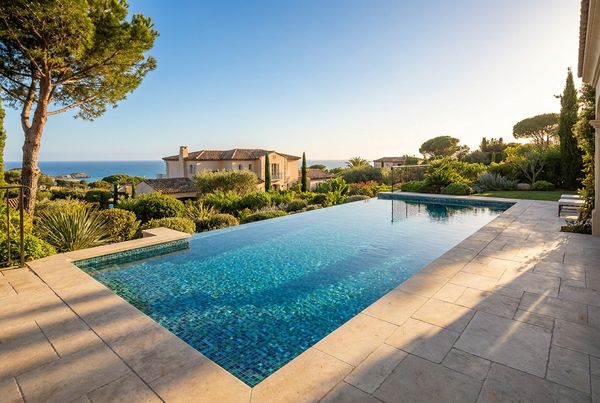
Let's talk money, because the price is the reason glass tile stays exclusive. The cost lives in two places. First, the tile itself: quality glass pool tile commonly runs anywhere from around $30 to well over $100 per square foot, versus a few dollars for plaster or ceramic. Second, and just as significant, is labor — setting glass tile is slow, exacting handwork, and it demands a crew that specializes in it, not a general plaster team.
Stack those together and the numbers climb fast. A glass tile waterline band is a modest add-on, often a few thousand dollars over a standard finish. A fully tiled interior is a different universe: because you're covering the entire shell in premium tile with premium labor, a full glass tile pool commonly runs several times the cost of a plastered pool of the same size — it's genuinely one of the biggest line items in a high-end build. When you're budgeting an entire project, our inground pool cost guide puts the finish in context against everything else.
Durability and why installation matters
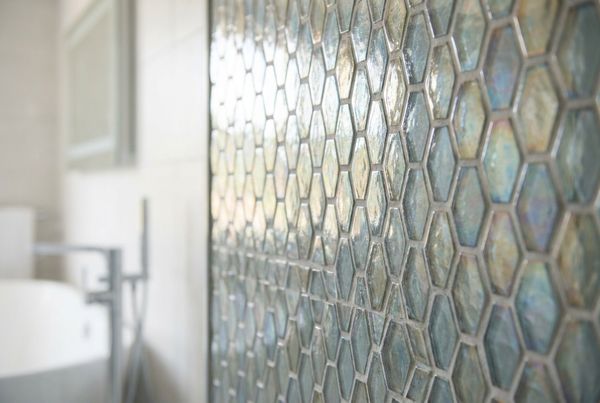
Here's the payoff that offsets the price: glass tile is the most durable finish you can put in a pool. It doesn't stain, fade, or chemically break down the way plaster does, and it never needs the replastering that a plaster pool requires every decade or so. A well-built glass tile interior can look flawless for the life of the pool. Over a long enough horizon, that longevity takes some of the sting out of the upfront cost.
But that durability is entirely conditional on installation — and this is where glass tile punishes shortcuts. Glass is unforgiving of a poor substrate, the wrong thinset, or sloppy grouting; get it wrong and tiles pop loose or the whole field telegraphs every flaw. Glass also expands and contracts with temperature differently than the shell behind it, so it demands the correct setting materials and an experienced hand. These finishes belong on a properly built gunite shell, installed by a tile crew that does glass all day. Never let the cheapest bid set your glass tile — the material is only as good as the person who sets it.
The best pairings: modern and infinity
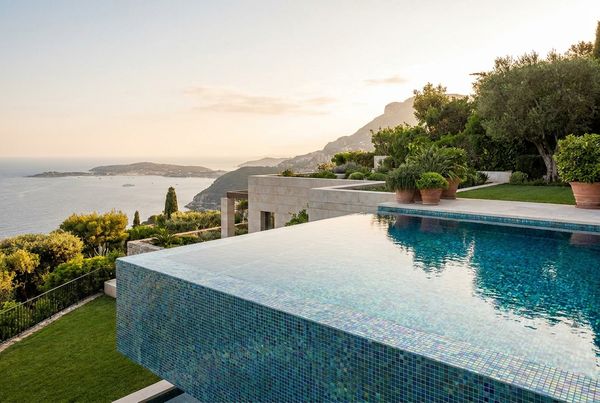
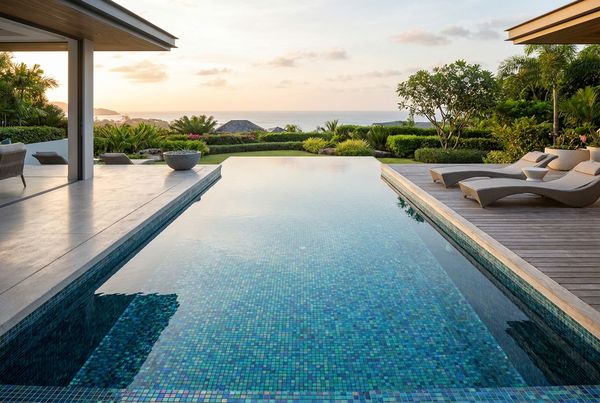
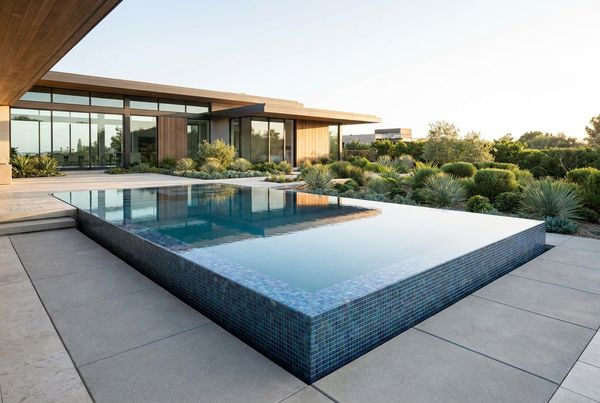
Glass tile looks best where clean design lets the finish do the talking — which is why it's the natural partner for modern and infinity pools. A modern pool design with crisp rectilinear lines and minimal ornament turns a glass interior into the hero: the shimmer becomes the decoration, and the simpler the shape, the harder the tile works. Dark or solid glass in particular gives a contemporary pool a sleek, reflective, near-mirror surface.
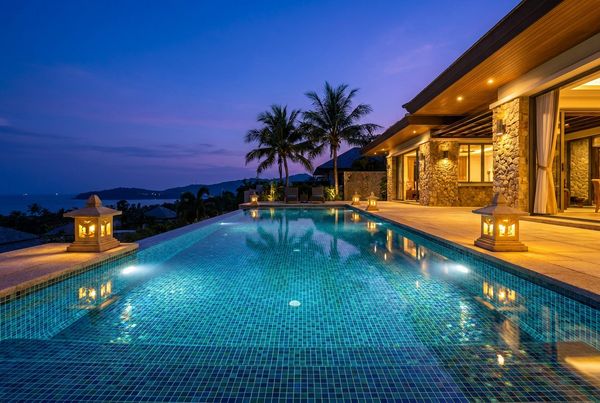
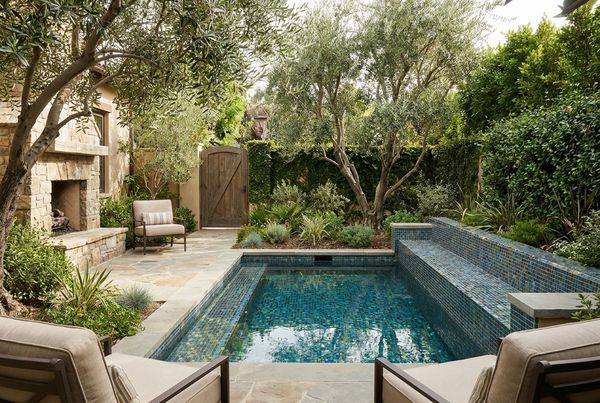
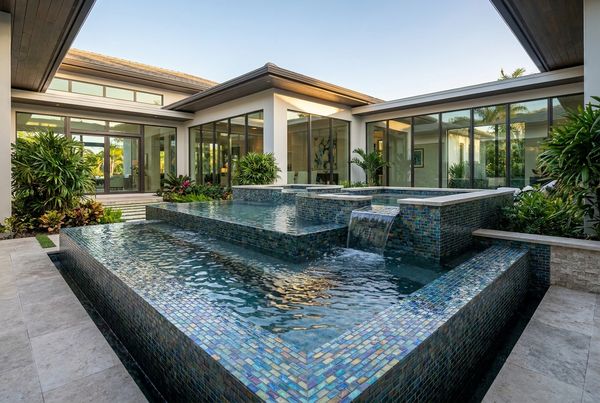
Nowhere does glass tile earn its keep more than on an infinity edge. As water sheets over a vanishing edge tiled in glass, it catches the light and glows right at the line where the pool seems to meet the horizon — the single most photographed detail in luxury pool design. Glass also transforms spas and water features: a raised spa tiled in iridescent glass becomes a glowing jewel box, and a water feature wall sheeting over glass tile shimmers in a way plaster never could. Add underwater lighting and the whole interior lights up from within after dark. If you're going to spend on glass, spend it where these moments live.
Caring for a glass tile pool
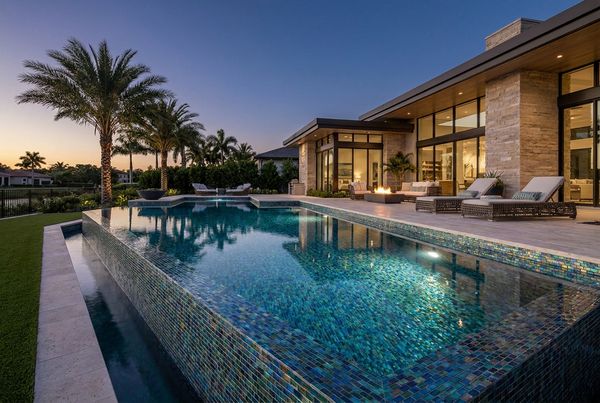
The good news is that glass tile is genuinely low-maintenance compared with plaster. The surface is nonporous, so it doesn't harbor algae or absorb stains, and it wipes clean easily. There's no replastering on the horizon, and the finish shrugs off the chemical exposure that slowly degrades other surfaces. In day-to-day terms, a glass tile pool asks less of you, not more.
The one thing glass tile does demand is balanced water chemistry — specifically at the grout. Aggressive or unbalanced water, especially low calcium or swinging pH, can erode grout lines and leave calcium scale on the tile over time. Keep calcium hardness and pH in range, keep the water level steady, and periodically wipe the waterline to head off scale before it builds. That's a routine every conscientious owner already runs; with glass tile it simply keeps the sparkle at its best. A saltwater system is fine with quality glass tile, but as with any finish, steady chemistry is what protects the grout.
Where to put glass tile for the most impact
If you're not tiling the whole interior, the question becomes: where does a little glass buy the most drama? After specifying a lot of these, my ranking is clear. The waterline comes first every time — it's at eye level, it's where scum and scale collect, and a tiled band both sparkles and wipes clean where plaster stains. Next is the spa: a raised spa tiled fully in iridescent glass becomes a glowing jewel box that anchors the whole yard, and it's a small enough surface that the premium tile barely dents the budget. Third is any water feature — a spillway or wall sheeting over glass shimmers in a way plaster never manages.
After that, look at the details that catch light and feet: steps and the sun shelf, where a glass accent reads as a designer touch, and raised bond beams or spillways on an infinity edge, where sheeting water and glass together do the most photographed thing in pool design. My rule is simple — spend glass where water moves and where the eye lands, and let a quality pebble finish or dark plaster carry the rest of the interior. You get the luxury read without the luxury invoice.
Common glass tile mistakes to avoid
Glass tile punishes shortcuts more than any other finish, so let me save you the expensive lessons. The biggest mistake is hiring on price. Glass is unforgiving of a poor substrate, the wrong thinset, or rushed grouting, and a cheap crew that does plaster all week will leave you with tiles popping loose within a season. This material belongs to installers who set glass every day — ask to see their finished, full pools, not a bathroom backsplash.
The second mistake is choosing tile dry, in a showroom. Coated glass reads completely differently wet and full of water under your own sky — the swatch that looked teal on the counter can go gray in your shade. Always sample it wet, in your light, before you commit. The third is neglecting water chemistry after the fact: aggressive or swinging water erodes grout and leaves scale on the tile, so a glass tile pool asks you to keep pH and calcium steady with a reliable test routine. And finally, don't spread a small glass budget thinly across a whole dull interior — concentrate it, per the section above, where it actually shows.
Is a glass tile pool worth it?
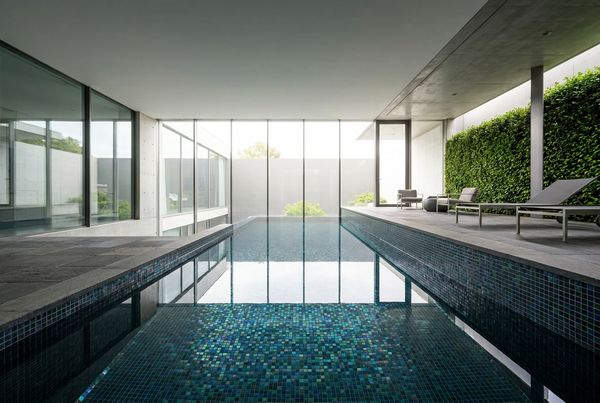
So — is it worth it? Honestly, it depends on the pool. For a hero pool where the finish is the design — a sculptural modern build, a view-grabbing infinity edge, a resort-style backyard where everything else is already dialed in — a full glass tile interior is absolutely worth it if the budget can carry it. Nothing else delivers that depth, durability, and shifting color, and on the right pool it's the detail that lifts the whole project from beautiful to breathtaking.
For most homeowners, though, the honest answer is that you don't need to tile the entire pool to get the glass tile experience. A shimmering waterline band, a glass-tiled spa, and a glass water feature concentrate the luxury exactly where the eye lands, for a small fraction of a full-interior price — and paired with a quality pebble finish or a dark plaster, the effect is still striking. Spend on glass where it shows, be honest about your budget, and let the light do the rest.
What we think
Splurge on glass tile for the waterline, the spa, and any water feature — and on a fully tiled interior only when the pool is a true showpiece and the numbers allow. Whatever you choose, put the money into the installer as much as the tile: the most beautiful glass in the world fails on a bad substrate, and the right crew is what makes a glass tile pool last a lifetime.
Design Gallery
8 more ideas to save — tap any photo to view full screen.

Kelly E.
Pool Design Editor, PoolPad
Kelly has spent 10+ years around residential pools — planning projects, testing gear, and documenting backyard builds for PoolPad. Each design guide is checked against current construction methods and material pricing.
Frequently Asked Questions
What is a glass tile pool?
Why is a glass tile pool so expensive?
What is iridescent pool tile?
Is glass tile durable in a pool?
Do I have to tile the whole pool, or just the waterline?
Is a glass tile pool worth it?
How do I clean and maintain glass tile in a pool?
Can you put glass tile in a fiberglass or vinyl pool?
Does glass tile work with a saltwater pool?
What's the best pool tile if I can't afford full glass?
Ready to build your dream backyard?
Compare local, vetted pool builders and get matched with pros who can bring these designs to life.
Find a Pool Builder Near You