



Pentair LL505PMG Kreepy Krauly Platinum Review: A Heavy-Duty Cleaner or Just Heavy on Maintenance?
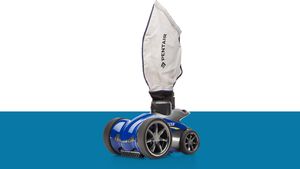
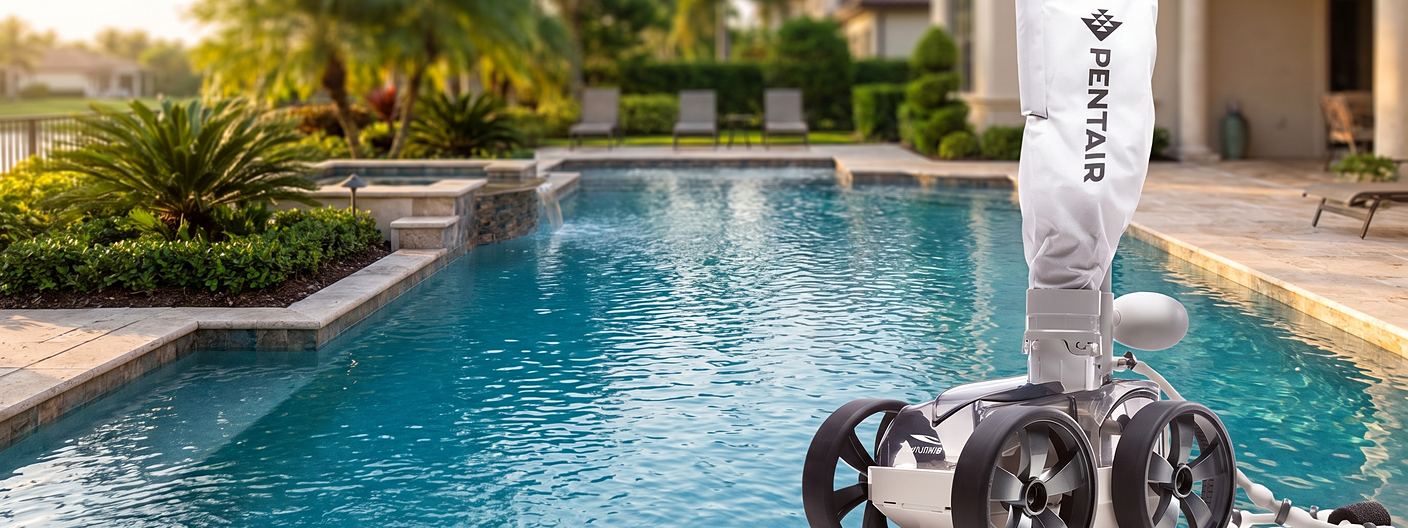
Pentair calls the LL505PMG Kreepy Krauly Platinum the most powerful pressure-side cleaner they make, built to chew through big debris loads in in-ground pools of just about any size. Four-wheel drive, dual thrust jets, a big debris bag. On paper it's the muscle car of the Kreepy Krauly line. I put one in my own pool to find out whether it actually earns the "Platinum" badge or just leans on the name. Before I get into how it ran for me, let me line it up next to the other Pentair models people always ask me about, so you can see where it fits.
Comparison: How Does the Kreepy Krauly Platinum Compare to Other Pentair Models?
Pentair Kreepy Krauly Racer vs. Pentair Platinum
The Racer is a pressure-side cleaner like the Platinum, but Pentair pitches it on speed, claiming it cleans up to 30% faster than other models. It uses four-venturi jets for extra thrust, and yeah, it does scoot across the pool. The Platinum trades that speed for power. It's got a wider intake throat and a bigger debris bag to swallow heavier loads. If you want a quick cycle, the Racer makes sense. If your pool takes on a lot of debris, I'd take the Platinum's stronger suction and bigger bag. Both need a booster pump, so you're stuck with the same energy and running-cost headaches either way.
Pentair LL505G Kreepy Krauly Legend vs. Pentair Platinum
I've tested the Legend too, and it's the cheaper pressure-side option, running a single-jet propulsion system and a three-wheel design. It moves around decently, especially in tighter corners or oddly shaped pools, but it doesn't have the suction or the debris capacity the Platinum brings. I'd point the Legend at smaller pools or ones that don't collect much, and save the Platinum for bigger pools or the ones drowning in leaves every fall. That said, they share the same two flaws: both are power-hungry because of the booster pump, and neither one has smart navigation or any programming.
Pentair Rebel Suction-Side Pool Cleaner vs. Pentair Platinum
The Rebel is a suction-side cleaner, so comparing it head-to-head with the Platinum is a little apples-to-oranges. But the big thing to know is the Rebel skips the booster pump entirely, which makes it easier on your energy bill. It can't match the Platinum's power or capacity, but it's simpler and cheaper to run, and I'd hand it to anyone who wants less equipment to fuss with. The Platinum is the heavy-duty pick, and you pay for that with higher operating costs and more upkeep.
Pentair 360048 Kreepy Krauly Automatic vs. Pentair Platinum
The 360048 Kreepy Krauly Automatic is another suction-side model, and its whole appeal is how simple it is. No booster pump. It just runs off your existing filtration system, so it sips less power. It won't tackle heavy debris the way the Platinum does, but for someone who wants a low-maintenance cleaner, it's the easier life. The Platinum hits harder, sure, but it asks for more of your time, more energy, and more money to keep running, especially in a pool that collects a lot.
Overview: The Pentair LL505PMG Kreepy Krauly Platinum Pressure-Side Pool Cleaner
Alright, now that you know how it sizes up against the rest of the Pentair family, let me walk you through what it was actually like living with the Platinum in my pool, the good and the not-so-good.
Setup and Installation: More Complex Than Convenient
Setting up the Platinum was more of a project than I'd like. Like every pressure-side cleaner I've tested, it has to have a dedicated booster pump, and that tacks on real cost and hassle before you even start. If you don't already have a booster pump in your setup, you're buying one, and there's a decent chance you're paying a pro to install it.
The setup itself meant hooking the cleaner to the booster pump, putting together the 30-foot hose, and dialing in the float positions. I've done this enough times that it wasn't a big deal for me, but if you're brand new to pool equipment, I could see it feeling intimidating and eating up an afternoon. And here's my honest gripe: Pentair says the hose is kink-resistant, but mine still wanted to tangle while I was laying it out. That got old fast.
Cleaning Performance: Powerful, But Inconsistent
This is where the Platinum shows off. That big throat intake paired with the four-wheel drive means it can gulp down everything from leaves and acorns to chunky twigs and sticks. Watching it work, I was impressed by how quickly it covered the floor, climbed the walls, and worked the steps. For a big pool, or one that gets buried in debris, it's genuinely capable.
But it's not all wins. As strong as it is on big debris, the Platinum let me down on the fine stuff. Sand, silt, pollen, that big intake throat is built for volume, not finesse, so it kept leaving those tiny particles behind and I had to go back and clean up after it. The other issue was the pattern. It wanders randomly, so I'd watch it hit one section three times over while a different patch sat untouched. The result was an uneven clean.
I did like the aggressive scrubbing brushes. They knocked loose dirt and algae off the surfaces that the suction alone would've missed. That said, they're not in the same class as the specialized brushes on the better robots I test, which give you a deeper, cleaner finish. If you're chasing a truly spotless pool, the Platinum's brute-force style will only get you so far.
Debris Collection: Large Capacity, But Not Without Drawbacks
The large-capacity debris bag is one of the Platinum's real bright spots. It holds a lot, so I wasn't running out to empty it every time I turned around. It clips onto the cleaner securely, and that extra room means it can pack away a serious pile of leaves, twigs, and other big debris before you need to deal with it.
The size cuts both ways, though. Getting the bag off and back on took both hands and a little fumbling every time. And in a really debris-heavy stretch, even a big bag fills fast, so I still ended up stopping to empty and rinse it more than I'd hoped. The mesh handles big debris well, but it's not fine enough to trap the small stuff, so those little particles just get pushed back into the water and your filtration system has to pick up the slack.
One more thing to keep in mind: the bag wears out, especially with a lot of sun and pool chemicals hitting it. You'll be buying replacements down the road, and that's a cost that keeps coming back over the life of the cleaner.
Energy Efficiency: High Power, High Cost
Let me be straight with you: the Platinum is not an energy-efficient cleaner. That booster pump it depends on pulls real power, and you feel it on your electric bill. You're running both the main pool pump and the booster at the same time, so the total draw stacks up quick. If you're trying to keep your monthly costs down or shrink your footprint, that's a genuine strike against it.
The cleaning power is real, no doubt. But when I weigh it against the energy it burns, and then stack that next to the efficient robots I run, the math gets tough. If you care about performance and running costs both, the Platinum's appetite for electricity is a downside you can't ignore.
Durability and Maintenance: Built Tough, But High Maintenance
Credit where it's due, the Platinum is built like a tank. The construction feels heavy-duty, the materials seem ready to take a beating in a harsh pool environment, and the four-wheel drive gave me reliable traction the whole time I ran it. The overall build quality is solid, and I never worried it was going to fall apart on me.
That toughness comes with a catch, though: it needs a lot of attention. The mechanical bits, the drive belts and the booster pump, want regular checks and the occasional replacement to keep running right. The debris bag needs emptying and cleaning often, and since it wears out, you're swapping it now and then too. If you were hoping for a hands-off cleaner, all that upkeep might scare you off, and I wouldn't blame you.
Usability: Powerful, But Not User-Friendly
The Platinum cleans hard, but it's not what I'd call convenient to live with. The robots I test these days come with app control, programmable cycles, and remote options. The Platinum has none of that. I had to walk out and start it, then come back and shut it off, and there's no way to tweak its pattern or set a schedule. It does what it does, and that's it.
On top of that, you're the one emptying the bag and wrangling the hose, so there's a fair amount of hands-on work baked into the design. If you're used to how easy a good robot makes things, the Platinum is going to feel dated and clunky by comparison.
Final Verdict: Is the Pentair Kreepy Krauly Platinum Worth It?
So here's my honest read after running it. The Platinum is a powerful, capable pressure-side cleaner, and it delivered for me in a big pool with a heavy debris load. But the energy it eats, the maintenance it demands, and the total lack of modern features hold it back next to the robots I test.
If you've already got a booster pump plumbed in and you just need something that can muscle through heavy debris, the Platinum is a reasonable pick. But if what you're really after is efficiency, an easy day-to-day, and less upkeep, I'd send you to a robotic cleaner without hesitation.
Rating: ★★★☆☆ (3.0/5)
The Platinum can flat-out clean, I'll give it that. But between the power it burns, the upkeep it needs, and everything it's missing compared to a modern robot, it's hard for me to get too excited about it in 2026.