



Key Takeaways
- A full pool remodel typically runs $12,000–$60,000+ in 2026; a simple resurface-and-tile refresh often lands in the $8,000–$18,000 range.
- Resurfacing, new waterline tile, and fresh coping deliver the biggest visual change per dollar — do these before adding features.
- Sequence the work: structure and finish first, features second, deck and landscaping last, so nothing gets torn up twice.
A dated pool rarely needs to be torn out — it needs a smart remodel. The right combination of a fresh interior finish, new tile, modern coping, and a feature or two can make a 20-year-old pool look like it was built this year, usually for a fraction of a new build. This guide walks through the upgrades that actually move the needle, what they cost in 2026, and the order to do them in so you never pay to tear up the same work twice.
Signs it's time to remodel
Pools tell you when they're due. The most common triggers are surface-level and cosmetic: a plaster interior that's turned rough, chalky, or blotchy; waterline tile that's cracked, calcified, or simply reads as dated; and coping or decking that's spalling, stained, or cracked. None of these are emergencies, but together they make an otherwise good pool feel tired.
The other set of triggers is functional. Rising water bills can signal cracks or failing plumbing. Equipment that's loud, inefficient, or constantly breaking down is a clear cue — an old single-speed pump alone can cost hundreds of dollars a year more to run than a modern variable-speed model. And sometimes the pool simply no longer fits your life: no shallow lounging area, no spa, lighting that quits at the water's edge. When several of these stack up at once, it's remodel time — and doing them together is far cheaper than one at a time.
The upgrades that transform a pool
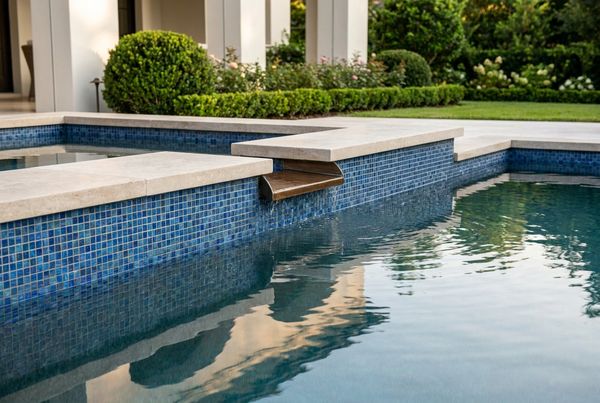
Not every upgrade delivers the same punch per dollar. In our experience the changes that most transform a pool, roughly in order of impact per dollar, are: a new interior finish, new waterline tile, fresh coping, and LED lighting. Those four are the backbone of nearly every remodel and, done together, they read as an entirely new pool.
From there, features add lifestyle rather than just looks: a tanning ledge for lounging, an attached or spillover spa, water features for sound and movement, and fire features for cool evenings. A new deck and refreshed landscaping frame the whole thing. And behind the scenes, an equipment and automation update — plus an optional saltwater conversion — quietly lowers what the pool costs to run every month. The art of a good remodel is picking the two or three of these that reinforce each other rather than trying to do all of them at half quality.
Resurfacing and a new finish
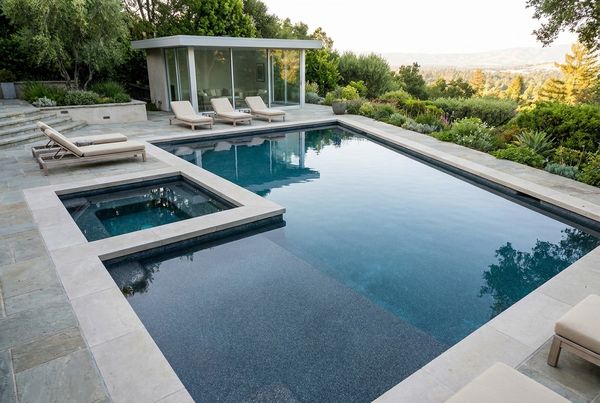
Resurfacing is the heart of most remodels because the interior finish is what you actually see when you look at the water. Standard plaster lasts roughly 7–15 years before it turns rough or blotchy; a resurface is your chance to upgrade, not just repeat. The big three options today are quartz (durable, mid-priced, a broad color range), pebble finishes (the longest-lasting at 15–25 years, with a slightly textured, natural look), and premium aggregate blends.
The most requested move in 2026 is a dark interior finish. Deep charcoal, midnight blue, and slate tones make water look reflective and lagoon-like, hide debris better, and instantly modernize an older shape — it's the closest thing to a free facelift a resurface offers. If you love that effect, our dark-bottom pool guide covers the trade-offs, including slightly warmer water and how the color shifts with depth and sky.
New tile, coping and a fresh deck
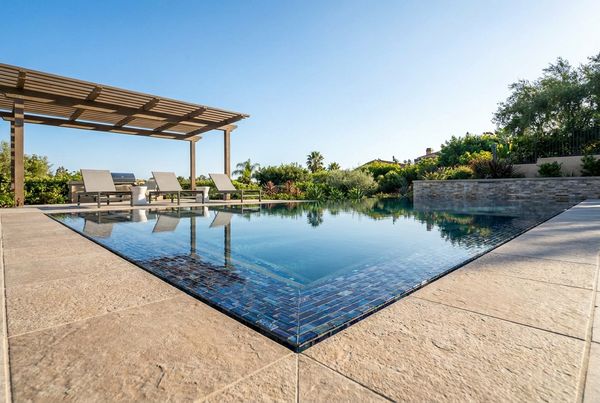
If resurfacing changes the water, tile and coping change the frame around it — and that frame is what usually dates a pool most. Swapping tired 1990s waterline tile for a modern glass, porcelain, or natural-stone band is one of the highest-impact edits available, and because the pool is already drained for resurfacing, it's the natural time to do it. Browse options in our pool tile ideas guide before you commit to a color, since tile is what your eye lands on at the waterline.
Coping — the cap around the pool's edge — is the next layer. Replacing dated bullnose brick with clean-lined travertine, poured concrete, or large-format stone modernizes the whole silhouette; our pool coping ideas guide breaks down the materials. Finally, a new or refinished deck ties it together. Whether you re-lay pavers, resurface concrete, or extend the deck to make room for lounging, coordinating the deck with the coping is what makes a remodel feel intentional rather than patched. See our pool deck ideas for materials that suit a renovation budget.
What we think
If your budget is tight, spend it on the trio that touches the water: a modern finish, new waterline tile, and fresh coping. Do those three together and add LED lighting — it's a few hundred dollars and completely changes the pool at night. That package alone makes most older pools look new. We'd hold off on big structural features like a tanning ledge unless the pool is already drained and the crew is on site, because that's when they're dramatically cheaper to add. Splurge on the finish (a pebble finish outlasts plaster by decades); skip trendy tile you'll tire of.
Adding features: ledges, spas, water and fire
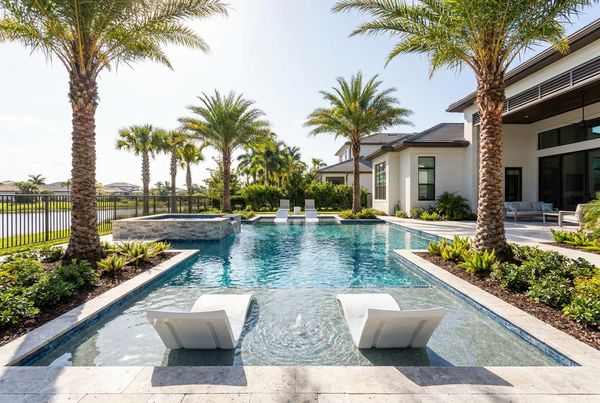
Once the surfaces are handled, features turn a refreshed pool into a different experience. The tanning ledge (or sun shelf) is the most-requested add of the moment — a shallow, wide step for lounging, kids, and lounge chairs half in the water. It's easiest to add to a gunite pool while it's already open, and it pairs naturally with bubbler jets.
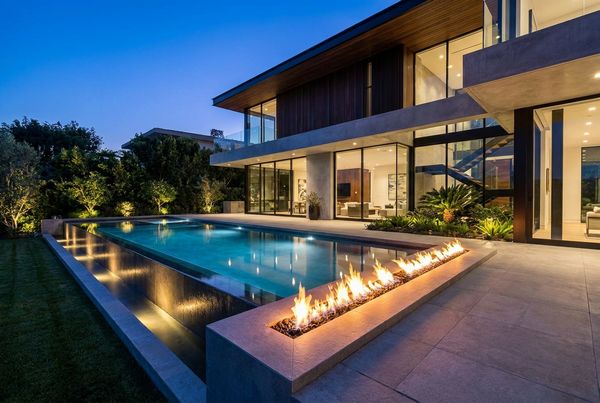
Water and fire features do the emotional work. A water feature — a sheer-descent waterfall, deck jets, or a scupper — adds sound and movement, and the simpler ones are surprisingly affordable to retrofit. On the fire side, integrated fire pit elements and fire bowls extend the season into cool evenings and give the backyard a resort feel. And a spa is the biggest lifestyle upgrade of all: an attached spillover spa turns the pool into a year-round destination, though it's also the most involved feature to retrofit.
Finally, don't overlook lighting. Swapping old incandescent pool lights for color-changing LEDs is inexpensive, dramatic, and pairs with automation you can run from your phone. It's the highest-drama, lowest-cost feature in any remodel — see our pool lighting ideas for placement.
Cost by project
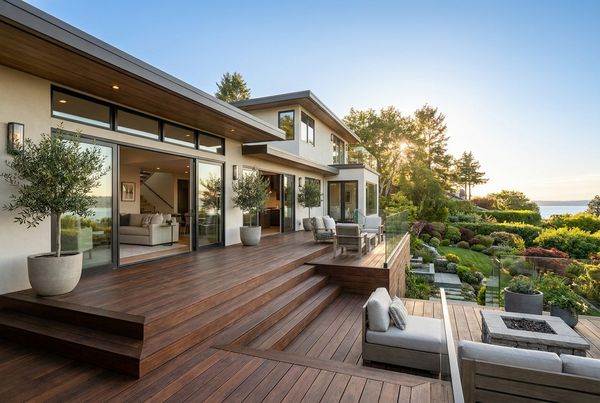
Every remodel is a menu, so budget by project rather than chasing a single number. The ranges below are realistic US 2026 ballparks; your region, pool size, and material choices move them.
| Project | Typical 2026 cost | Impact |
|---|---|---|
| Resurface / new finish | $5,000–$18,000 | Very high |
| New waterline tile | $1,500–$7,000 | Very high |
| New coping | $2,000–$8,000 | High |
| New / refinished deck | $5,000–$25,000+ | High |
| Tanning ledge (added) | $3,000–$8,000 | High |
| Attached spa (added) | $8,000–$25,000 | High |
| Water feature | $1,000–$10,000 | Medium–High |
| Fire feature | $1,500–$8,000 | Medium |
| Equipment & automation | $2,500–$8,000 | Medium (saves long-term) |
| Saltwater conversion | $1,500–$3,500 | Medium (saves long-term) |
| LED lighting | $700–$2,500 | High per dollar |
Bundled together, a simple resurface-and-tile refresh commonly lands around $8,000–$18,000, while a full remodel that adds coping, deck, features, and new equipment more often runs $25,000–$60,000+. For context on where those numbers sit relative to a new build, compare against our inground pool cost guide — a remodel is almost always a fraction of a fresh install.
Sequencing, ROI and what to do first
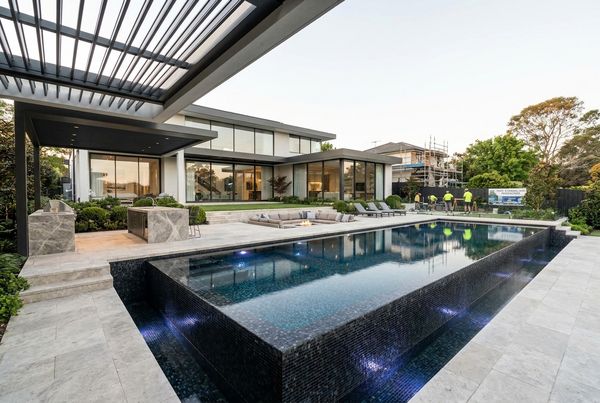
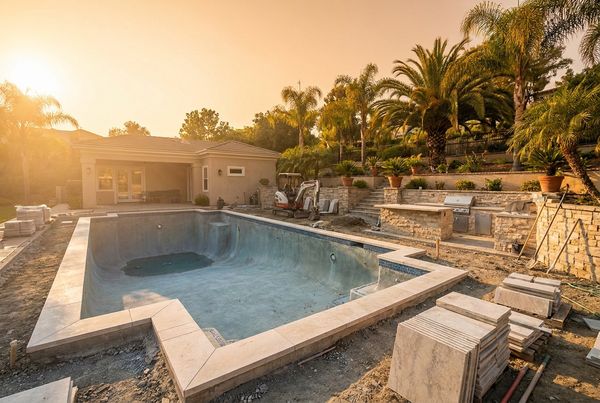
The order you do things in can save thousands. The rule: structure first, finishes second, deck and landscaping last. Anything that involves cutting into the gunite — a tanning ledge, a spa, plumbing for water features — should happen before the interior is resurfaced and before new coping and deck go down, because doing it afterward means demolishing finished work.
A sensible sequence looks like this:
- 1. Structural additions — spa, tanning ledge, any new plumbing or shell modifications.
- 2. Equipment and automation — pump, filter, heater, controls, and any saltwater conversion, done while lines are open.
- 3. Tile and interior finish — waterline tile first, then resurface.
- 4. Coping — installed to meet the new tile and finish cleanly.
- 5. Deck, lighting and landscaping — the framing layer that ties it together.
On ROI, be clear-eyed: a remodel is mostly a lifestyle and enjoyment investment, and secondarily a resale one. The upgrades that best protect resale value are the ones that make the pool look current and cost less to run — a clean modern finish, updated tile, efficient equipment — rather than highly personal features. If the whole backyard needs attention, our backyard makeover ideas guide helps you phase the pool remodel into a larger plan.
Remodel or rebuild?
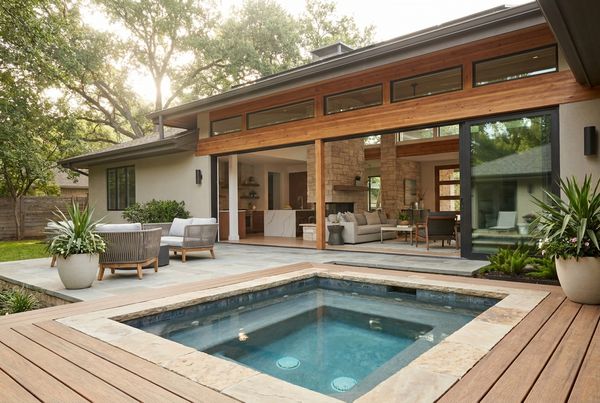
For the large majority of older pools, remodeling is the right call: the shell is structurally sound and you simply want it to look and run like a modern pool. Resurfacing, new tile and coping, updated equipment, and a feature or two get you there for far less than starting over.
Rebuilding earns its much higher cost only in specific cases: major structural cracks that keep returning, a shell that's badly undersized or the wrong shape for how you live, failing plumbing throughout, or a plan that fundamentally changes the pool's footprint. Before you default to a rebuild because the pool "looks old," get a structural opinion — cosmetic aging and structural failure look different to a pro, and the difference between them is often tens of thousands of dollars.
How to modernize a dated pool in 2026
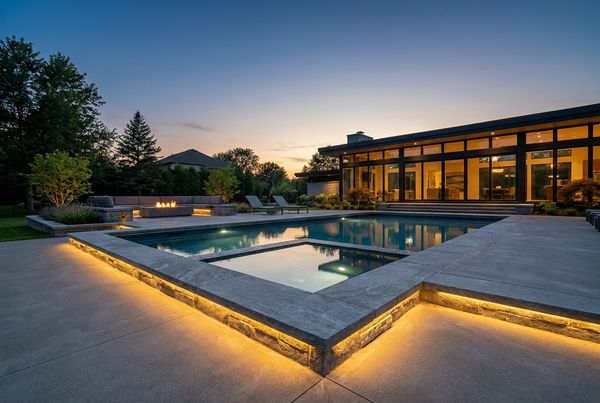
Certain moves signal "recently remodeled" instantly in 2026. Dark interior finishes and clean, softened-geometric shapes read as current, as do large-format coping and minimal, monochrome waterline tile. Adding a tanning ledge is now almost expected on a modern remodel, and a cold-plunge or plunge element is having a moment for the wellness-minded — worth a look in our plunge pool ideas if you're rethinking the layout.
On the systems side, the modern signals are quieter but matter more over time: smart automation you run from your phone, energy-efficient variable-speed equipment, and a saltwater system for softer water and less chemical fuss. Add bold LED lighting and a fire feature for resort-style evenings, and even a 25-year-old pool can feel like the newest thing on the block. Start with the finish-tile-coping trio, layer in one or two features you'll actually use, and let the equipment update pay you back every month. When you're ready, browse the rest of our pool design ideas to lock in the look before you get quotes.
The equipment upgrade that pays for itself
The least glamorous part of a remodel is the one that quietly returns money every single month: the equipment. If your pool still runs on an old single-speed pump, that motor is likely the biggest energy draw on your property after the HVAC — and swapping it for a modern variable-speed pump is often the single best-ROI move in the whole project. Running slower for longer moves the same water on a fraction of the electricity, and in many regions the utility rebates take a real bite out of the upfront cost.
While the crew has the pad open, it's the natural moment to modernize the rest: a right-sized filter, a smart timer or full automation, and — if you're on a gas heater that struggles — a pool heat pump that sips energy in mild climates. Getting the run time dialed in matters as much as the hardware; our pump run-time calculator helps you land on the hours that keep the water turning over without wasting a watt. A converted saltwater system fits here too, trading the ongoing chore of hauling and dosing chlorine for a generator that makes it on the fly. None of this changes how the pool looks, but it changes what it costs to own — and that's the part you feel for the next fifteen years.
Hiring a contractor and avoiding remodel regrets
A remodel lives or dies on the contractor, and the cheapest bid is almost never the one you want. Get at least three detailed, line-itemed quotes so you're comparing the same scope — not a full resurface against a patch job dressed up in the same language. Ask to see recent remodels in person, confirm the license and insurance, and read how they handle change orders, because on an old pool the crew almost always finds something once the water's out. A vague "we'll figure it out" is how budgets double.
The regrets I see most are avoidable. People pick a trendy tile they tire of in three years, choose an interior color from a dry sample that reads totally different underwater, or add features one at a time so the yard looks assembled rather than designed. The fix is to decide the whole plan before the first crew arrives — finish, tile, coping, features, and equipment as one coordinated scope — and to sequence it so nothing gets torn up twice. If the remodel is stretching your cash flow, financing it deliberately beats cutting corners on the structural work; our pool loan calculator helps you see what a phased or financed budget actually costs per month before you commit.
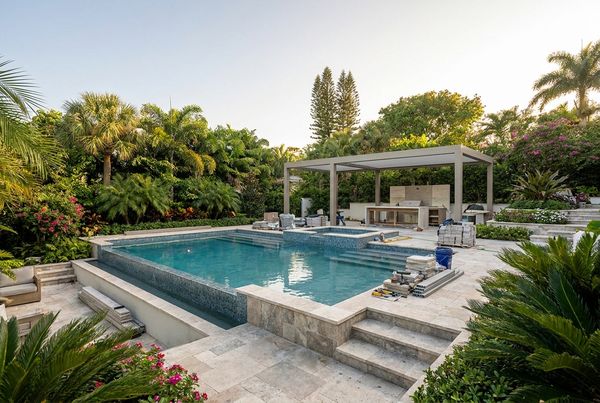
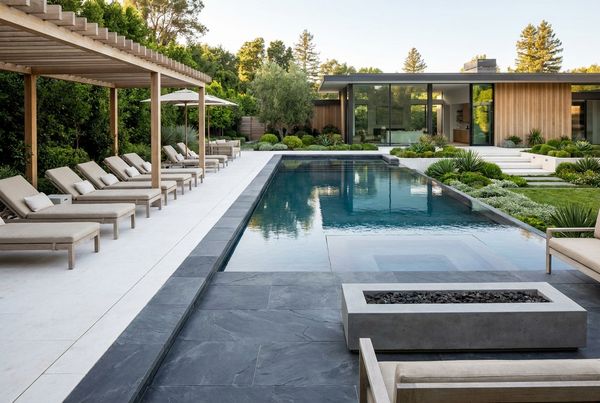
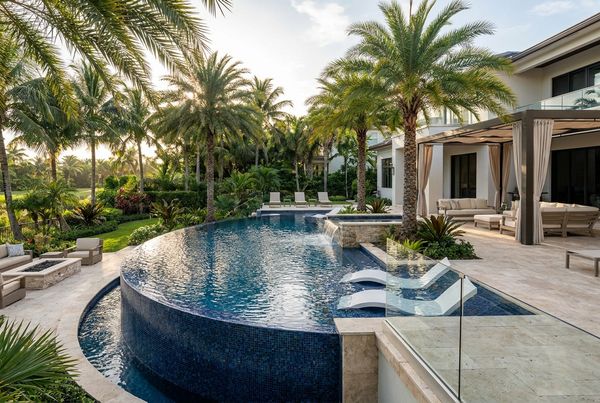
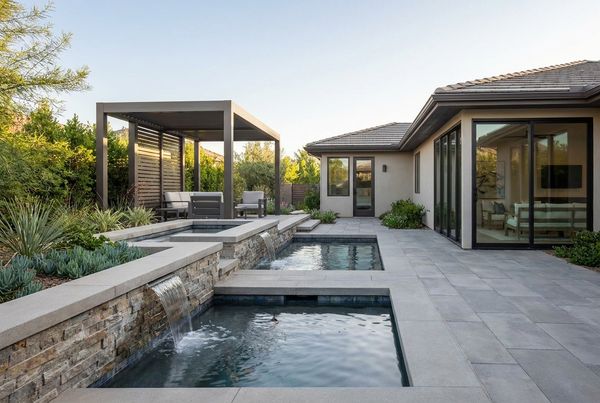
Design Gallery
7 more ideas to save — tap any photo to view full screen.

Kelly E.
Pool Design Editor, PoolPad
Kelly has spent 10+ years around residential pools — planning projects, testing gear, and documenting backyard builds for PoolPad. Each design guide is checked against current construction methods and material pricing.
Frequently Asked Questions
How much does a pool remodel cost in 2026?
How often does a pool need to be resurfaced?
Should I remodel my pool or rebuild it?
What is the best upgrade for the money in a pool remodel?
Can I convert my pool to saltwater during a remodel?
How long does a pool remodel take?
Is it worth replacing pool equipment during a remodel?
Does a pool remodel add value to my home?
How do I choose a pool remodeling contractor?
Can I finance a pool remodel?
Ready to build your dream backyard?
Compare local, vetted pool builders and get matched with pros who can bring these designs to life.
Find a Pool Builder Near You