



Key Takeaways
- A spillover spa is a raised, attached spa that shares a wall with the pool and spills water into it — one plumbing system, one seamless look.
- Shared water and heating make it far cheaper to run than a standalone hot tub, and it adds real value as permanent hardscape.
- The spillway is the star: sheet, sheer-descent, or scupper, dressed in glass tile and often flanked by fire — it's the centerpiece of most 2026 pool designs.
A spillover spa is the detail that turns a good pool into a resort. It's a raised, attached spa that shares a wall with the pool and lets heated water spill over the edge — half hot tub, half water feature, and the single most photographed element of most backyard builds. If you're pouring a pool anyway, this is the upgrade that pays you back in soaks, sound, and sheer good looks every day of the year.
What is a spillover spa?
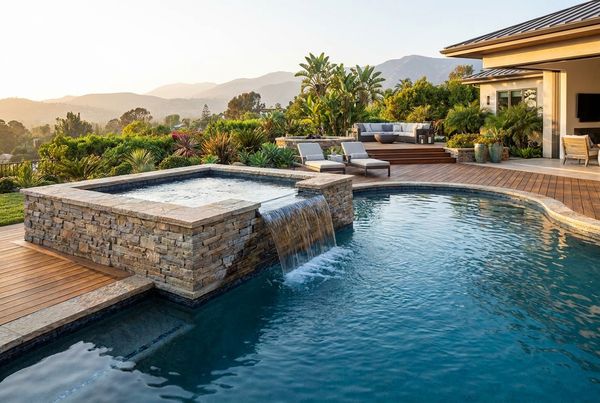
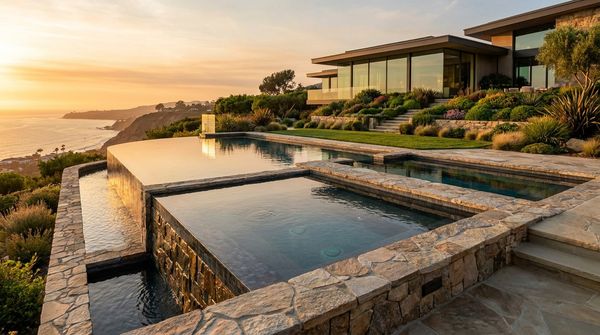
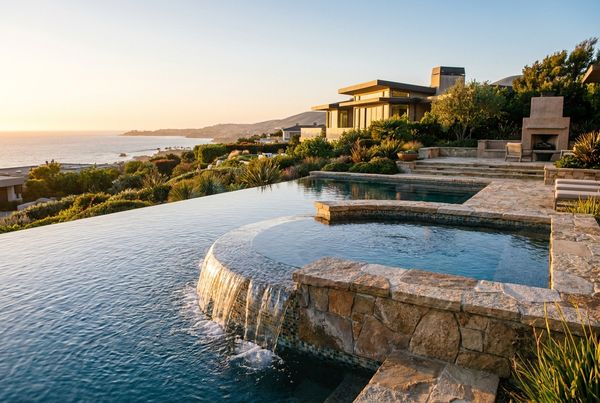
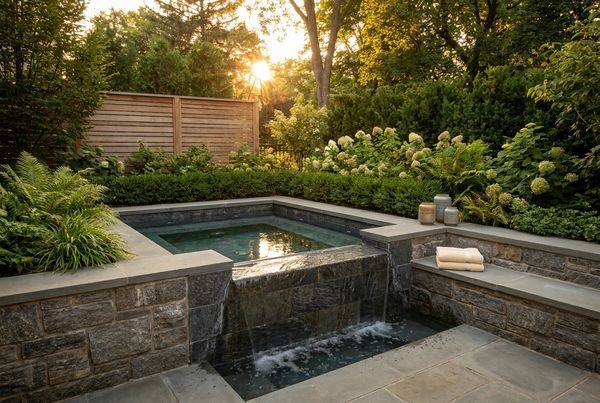
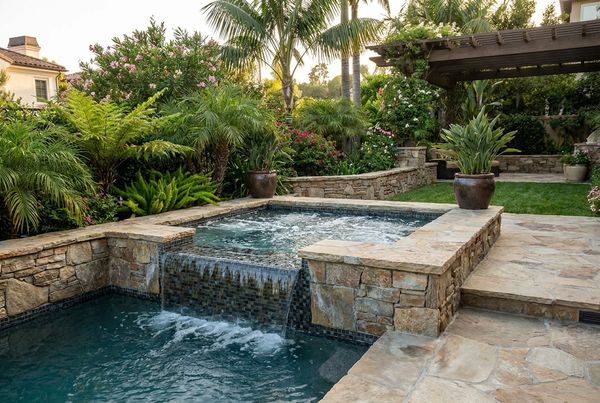
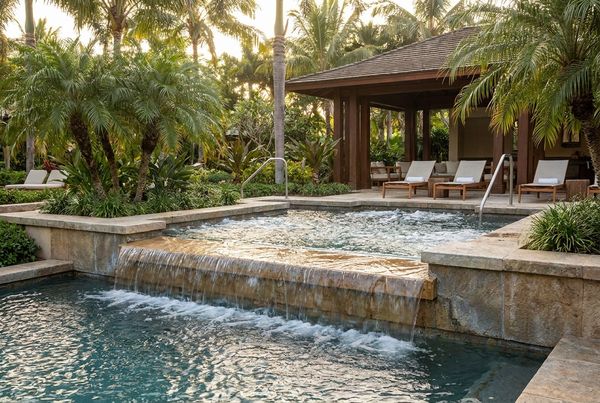
A spillover spa is a spa built onto — and usually raised above — an inground pool, sharing a common wall so that heated water flows, or "spills," over the edge into the pool. Unlike a freestanding hot tub, it's a permanent part of the pool's structure: same shell material, same plumbing, most often the same water. The spill isn't just decorative overflow — it's the mechanism that keeps the spa circulating back into the pool, and it doubles as a genuine water feature the moment the spa runs.
That dual identity is the whole appeal. Sit in it and it's a hot spa with jets. Look at it and it's a moving-water centerpiece with the calming sound of a small waterfall. Raised anywhere from a few inches to a foot or more above the pool, it also creates a visual step-down in the design, a place to perch at deck level, and a natural focal point. Most sit on a raised bond beam — the reinforced wall that both holds the spa up and forms the spillway edge. It's the difference between a pool that's a rectangle of water and a pool that feels designed. Our pool water features guide sets it against fountains, sheers, and grottos.
Spillover spa shapes
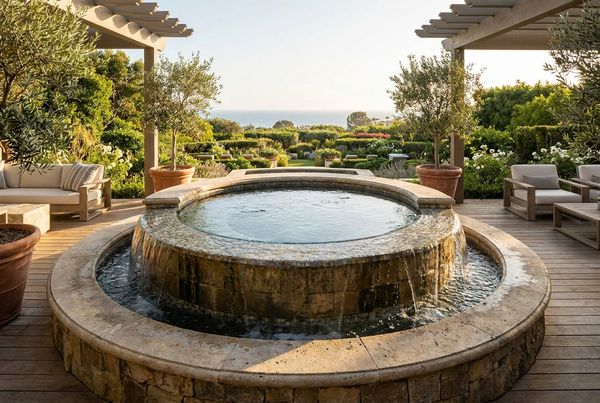
Shape sets the entire personality of a spillover spa, and there are three families worth knowing. Round spas are the traditional pick — a soft circle spilling into the pool, warm and classic, and the shape that best relaxes an otherwise rigid rectangular pool. They seat conversationally, sheet water evenly over a curved edge, and never feel severe.
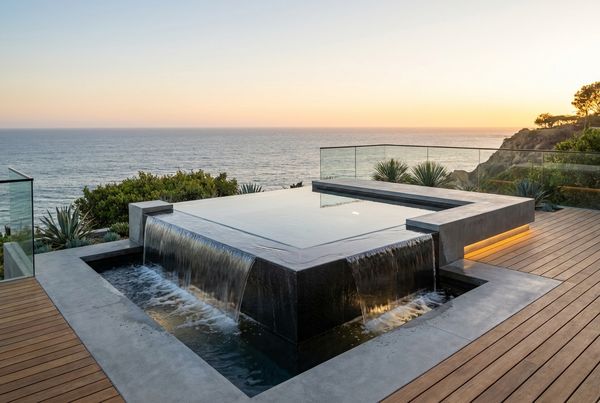
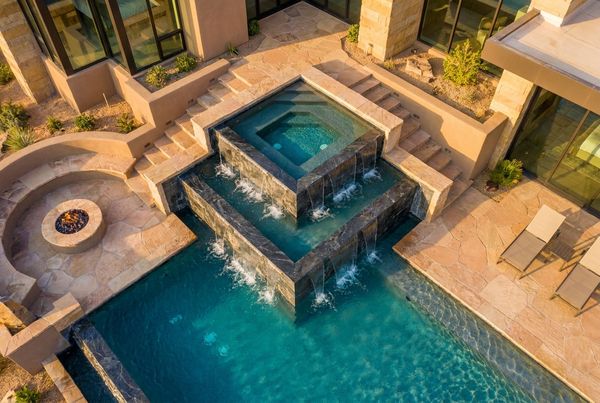
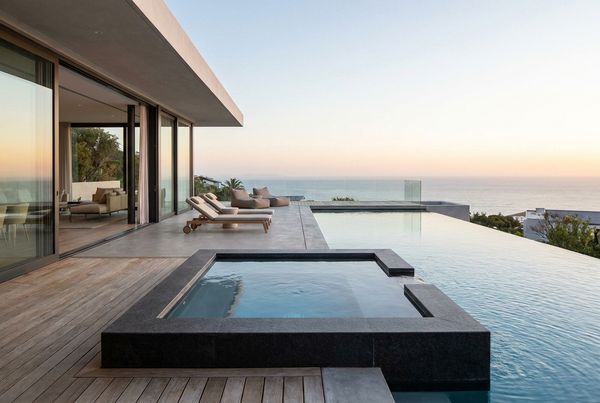
Square spas are the modern default and, in 2026, the most-requested shape we build. Clean edges, a crisp straight spillway, and tile that wraps the facing like a plinth — a square spa reads as intentional architecture rather than a bolt-on. Geometric spas — L-shapes, hexagons, rectangles tucked into a corner — go a step further, letting the spa follow the pool's own lines for a fully unified, custom look. This is where a fully custom gunite shell earns its keep, since concrete can be formed to any footprint; our gunite pools guide covers why. The right shape mostly comes down to your pool: soften a rigid rectangle with a round spa, or double down on clean lines with a square one.
What we think
If you're building a pool, build the spillover spa into the plan from day one — retrofitting a raised, attached spa later means tearing into finished hardscape and re-plumbing, at a brutal premium. Our default is a raised square spa with a glass-tile spillway face and a wide sheet spill: it looks expensive, sounds calm, and photographs beautifully. Splurge on the tile you'll stare at every day; skip an over-tall raise that turns the spa into a wall you can't see over from the deck. Get the height, the tile, and the spillway width right, and this one feature carries the whole yard.
Spillway styles: sheet vs scupper
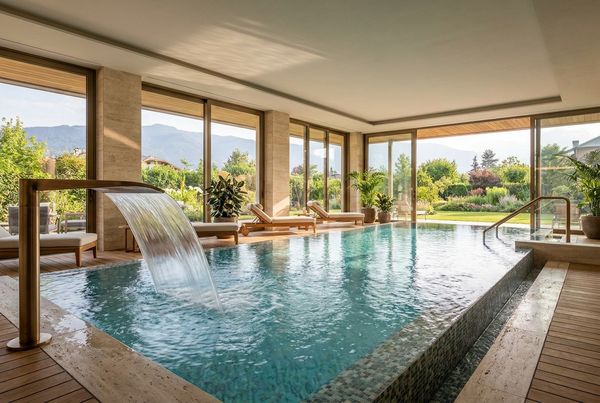
The spillway is where a spillover spa lives or dies — it sets both the look and the soundtrack. There are three styles, and choosing between them is really choosing how much water you see and hear:
- Sheet spillway. Water sheets in a thin, even film over the full width of the spa's edge — quiet, elegant, and minimal. A wide sheet is the calmest, most modern option and our most-recommended default.
- Sheer-descent. A close cousin: water launches off a formed edge as a clean, uninterrupted curtain with a small gap behind it. It reads crisp and architectural and can be lit from behind for drama.
- Scuppers. One or more spouts that arc water out from the spa wall with visible separation and more sound — think of them as small, deliberate waterfalls. They add movement and a livelier soundtrack when a silent sheet feels too subtle.
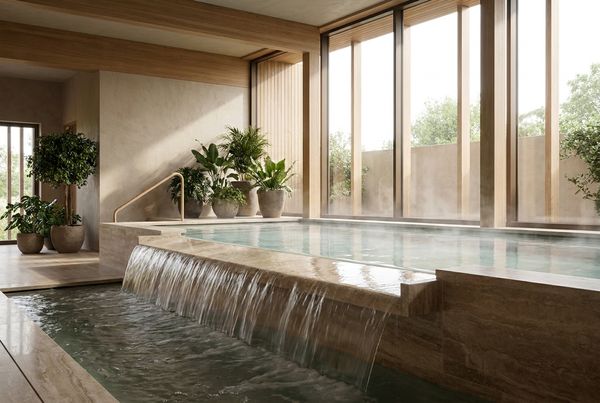
The width matters as much as the style. A wide spillway sheets a broad, quiet film — serene and contemporary. A narrow one concentrates the flow into a livelier, louder fall. Neither is wrong; it's a question of whether you want your spa to whisper or to babble. Whatever you pick, the spill runs whenever the spa circulates, so you'll live with that sound daily — worth choosing on purpose rather than by default.
Shared vs separate water & heating
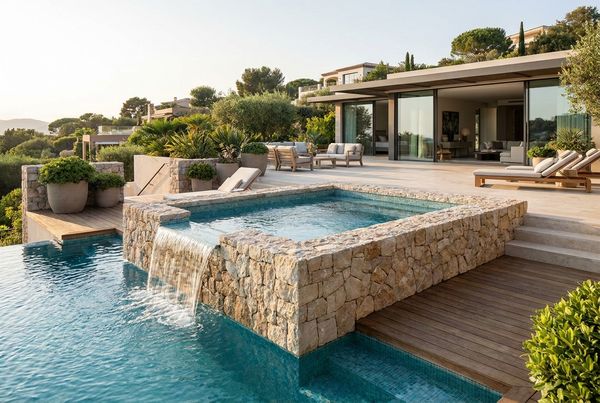
Here's the plumbing question that decides your running costs. In the common setup, the spa shares water and heating with the pool — it fills from the same body of water, heats on the same equipment, and spills back into the pool. Chemistry and temperature stay unified, the equipment pad stays simple, and you get spa heat without a second system. It's efficient, elegant, and the reason a spillover spa costs so little to run compared with a standalone tub.
The trade-off is temperature. If the spa shares water and heat with a large pool, you can't easily hold it at a hot 102°F while the pool sits cool — you'd be heating the whole pool. The fix is separate valving or a dedicated heater: automation isolates the spa loop, heats just that small volume to spa temperature on demand, then spills it back to the pool when you're done. It costs more up front but gives you a genuinely hot spa on a cool day without heating thousands of extra gallons.
| Setup | How it works | Best for |
|---|---|---|
| Shared water & heat | One system; spa spills back to pool | Simplicity, lowest cost, warm-climate use |
| Shared water, spa mode heat | Valves isolate & heat just the spa | Hot spa on demand without heating the pool |
| Dedicated spa heater | Separate heater for the spa loop | Frequent, year-round hot soaking |
Pair the setup with smart automation — heat the spa from your phone so it's ready when you walk out — and salt-chlorine or a modern sanitizer for gentle water. If you're leaning toward a body of water you'll soak in more than swim in, our spool pool guide covers the compact spa-pool hybrid that takes the idea further.
Spillover spa vs a standalone hot tub
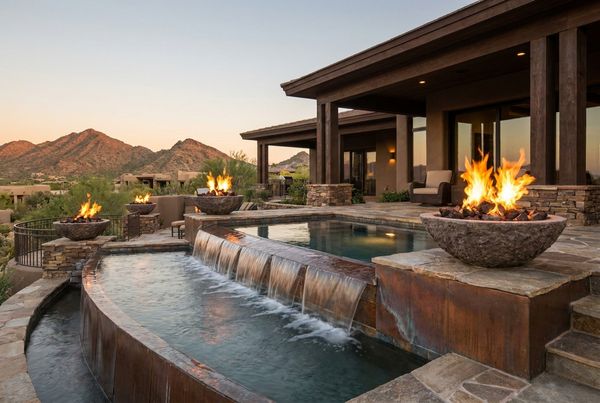
The honest comparison comes down to permanence versus flexibility. A spillover spa is integrated, elegant, adds real value as hardscape, and runs cheaply on the pool's shared equipment — but it must be built with (or into) the pool, and it isn't going anywhere. A standalone hot tub is cheaper up front, portable, addable at any time, and easy to run hotter independently — but it sits as a separate object in the yard and costs more to heat as its own little system.
| Spillover spa | Standalone hot tub | |
|---|---|---|
| Integrated look | Yes — one structure | Separate object |
| Doubles as water feature | Yes | No |
| Running cost | Low (shared equipment) | Higher (own system) |
| Up-front cost | $12k–$25k add-on | $5k–$20k |
| Add later / move | No | Yes — portable |
| Adds home value | Yes — permanent | Portable |
If you're building a pool, the spillover spa wins on nearly every axis except up-front simplicity — it's the more beautiful, better-integrated, cheaper-to-run choice. A standalone tub makes sense when there's no pool, when budget is tight, or when you want something you can add now and move later. For that route, our hot tub ideas guide goes deep; if you want jets and a swim current in one shell, our swim spa guide covers that hybrid.
Tile, fire & finish pairings
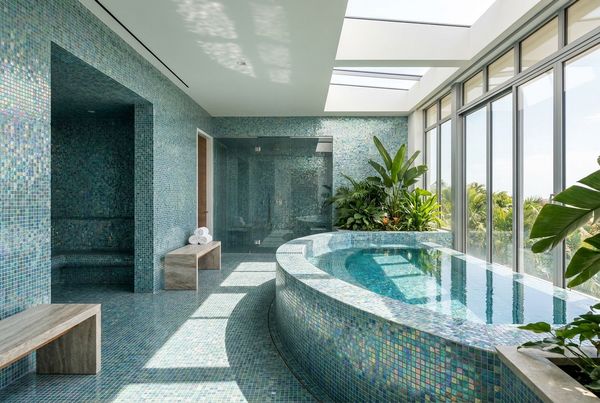
This is where a spillover spa goes from nice to jaw-dropping, and it's mostly about the surfaces the eye lands on. The spillway face — the vertical wall the water sheets over — is prime real estate for glass tile: iridescent, light-catching, and wet half the time, it's the single highest-impact upgrade you can make. A band of glass mosaic on the raised facing reads as jewelry for the pool. Our pool water features guide shows how it plays with other moving-water elements.
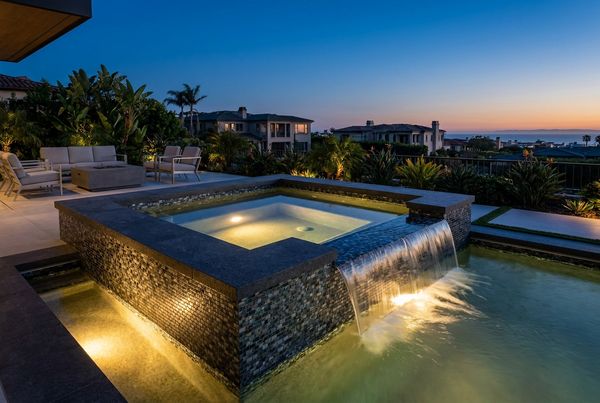
Then come the pairings that define the 2026 resort look. Fire bowls flanking the spa — or a raised fire feature on the same wall — set fire and water against each other for the most dramatic combination in backyard design. Bold LED lighting in the spa and behind the spillway turns dusk into the best hour, backlighting the falling water into a sheet of light. Dark interior finishes on the spa make it read as a still, reflective pool at rest and make the spilling water pop. And a tanning ledge or bench nearby ties the raised spa into a lounging zone rather than leaving it stranded. Layer two or three of these and the spa stops being a feature and becomes the centerpiece of a full resort-style outdoor living space.
Spillover spa costs
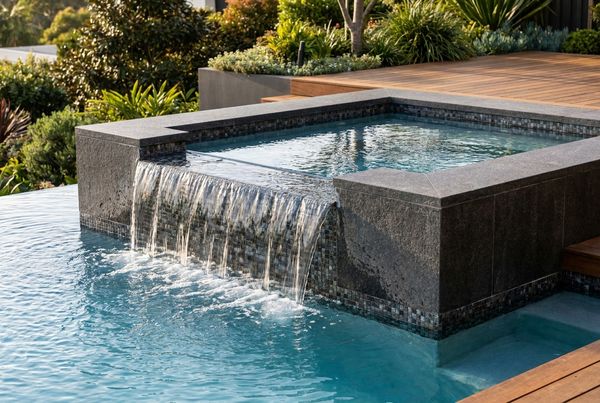
Because a spillover spa shares the pool's shell and equipment, it costs far less than its impact suggests. As an add-on to a pool build, most land between $12,000 and $25,000, with tile, fire features, and separate heating driving the top end. Here's how common setups price out:
| Setup | What you get | Add-on cost* |
|---|---|---|
| Basic shared-water spa | Raised spa, sheet spillway, shared heat | $12k–$16k |
| Glass-tile spillway spa | Above + premium glass tile facing | $15k–$20k |
| Spa + separate heat/valving | Independent spa-temp control | $18k–$24k |
| Resort spa (fire + LED + tile) | Fire bowls, bold lighting, custom tile | $22k–$32k |
*Ballpark 2026 U.S. add-on ranges over the base pool; region, materials, and access move the number. See the full cost guide.
The running cost is where it really shines: sharing the pool's plumbing and heater means no second system to power. The biggest swings are the tile (basic ceramic to premium glass mosaic), the spillway style, and whether you add fire and separate heating. If you're pricing the whole project, start with our inground pool cost guide, and note that a fully custom shape almost always means a gunite shell.
Heating and running a spillover spa
The reason a spillover spa is so cheap to run is worth understanding, because it also tells you when to spend more. In the standard shared setup, the spa and pool are one body of water on one heater, so you're not powering a separate spa system the way a standalone hot tub demands. The trade-off is that you can't hold the spa at a hot 102°F while the pool stays cool — heating the spa means heating everything. For warm-climate owners who mostly want the spill and an occasional warm dip, that's fine and it's the least expensive way to own a spa.
If you'll actually soak on cool evenings, spend on separate valving or a dedicated spa heater. Automation isolates the spa loop, heats just that small volume to full spa temperature on demand, then spills it back to the pool when you're done — a genuinely hot spa without warming thousands of extra gallons. Either way, a variable-speed pump and a smart controller make the whole thing efficient and let you heat from your phone so it's ready when you walk out. If you're mapping out how many hours the shared pump should run to keep both the pool and the spillway fed, our pool pump run time calculator gives you a realistic baseline.
Keeping the spillway looking sharp
The spillway face is the part of a spillover spa your eye lands on constantly, so it's also the part that shows neglect fastest. Because water sheets over it continuously, that tile stays wet, and wet-dry cycling at the waterline is exactly where calcium scale likes to build — a chalky white film that dulls glass tile and mineral streaks that follow the flow lines. The defense is water balance, not scrubbing: keep calcium hardness and pH in range so scale never gets a foothold. Watch those numbers with a reliable test kit, and you'll rarely need to touch the tile.
When buildup does appear, a spillway is easier to clean than a rock waterfall but still wants the right approach — a gentle tile-and-scale cleaner and a soft brush, never anything abrasive on glass mosaic. The moving water itself helps keep debris from settling, so day-to-day the spillway is low effort. The bigger picture is that a spillover spa lives inside your pool's whole care routine; the spa isn't a separate maintenance project, it's the prettiest part of the same one. For where this feature sits among the alternatives, our pool water features guide sets the spill against sheers, scuppers, and rock.
Is a spillover spa worth it?
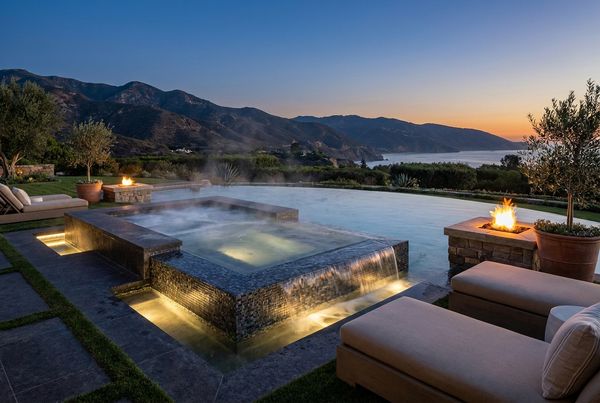
For almost anyone building an inground pool, yes — the spillover spa is one of the highest-return dollars in the whole project. You get a hot spa, a water feature, a focal point, and extra seating from a single integrated structure, all running on equipment the pool already needs. It's cheaper to run than a standalone tub, it adds permanent value, and it makes the pool look designed rather than dropped in. The only real reasons to skip it are a bare-bones budget or a pool you genuinely won't build around.
Our advice: plan it in from the start, get the height and spillway width right for the sound you want, splurge on glass tile for the face, and consider separate valving if you'll soak on cool days. Then layer in fire and good lighting so it earns its keep after dark. Find a builder who has done several — the raised bond beam, the spill level, and the plumbing are unforgiving details. Start with our pool water features guide for the feature side, and for the compact spa-forward alternative, our spool pool guide is the place to go.
Design Gallery
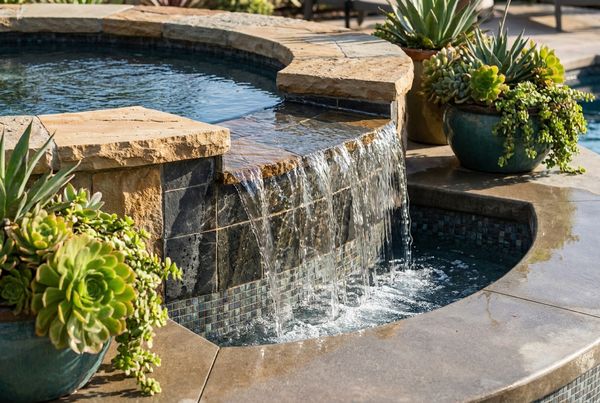
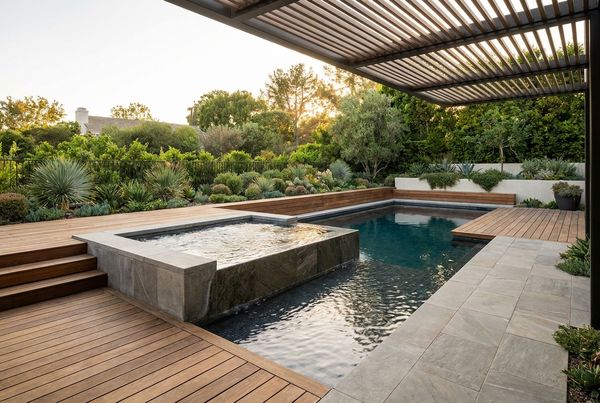
6 more ideas to save — tap any photo to view full screen.

Kelly E.
Pool Design Editor, PoolPad
Kelly has spent 10+ years around residential pools — planning projects, testing gear, and documenting backyard builds for PoolPad. Each design guide is checked against current construction methods and material pricing.
Frequently Asked Questions
What is a spillover spa?
How much does a spillover spa cost?
Do a spillover spa and pool share the same water?
Is a spillover spa better than a hot tub?
What is the spillway on a spillover spa?
Can a spillover spa be round?
How do you keep a spillover spa's water balanced?
Does a spillover spa cost a lot to run?
Should I use a saltwater system with a spillover spa?
How high should a spillover spa be raised above the pool?
Ready to build your dream backyard?
Compare local, vetted pool builders and get matched with pros who can bring these designs to life.
Find a Pool Builder Near You