



Key Takeaways
- A spool is a spa-pool combo — a compact shell (usually 10–16 ft long, 3.5–5 ft deep) that lounges like a pool and jets like a spa.
- Small volume means fast heating and low running costs; run it warm as a spa, cool as a pool, or cold for recovery.
- It's the best-value way to get a real spa-and-pool experience into a small or sloped yard.
The spool is the pool that can't decide whether it's a pool or a spa — so it's both. Small enough for a courtyard, warm enough to soak in, big enough to cool off in, and cheap enough to run year-round, it's quietly become one of the smartest buys in backyard design. If you have a tight yard and want the best of a pool and a spa in one shell, the spool is built for you.
What is a spool pool?
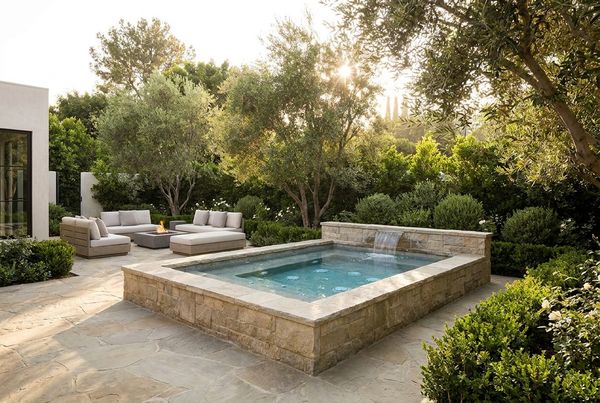
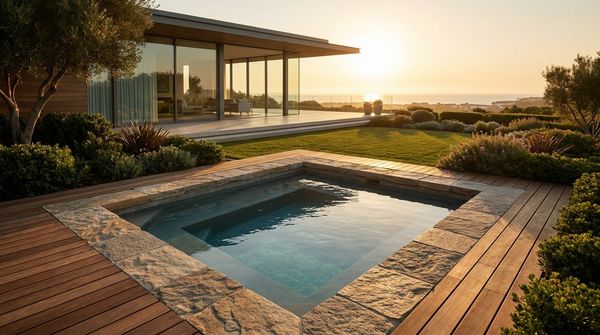
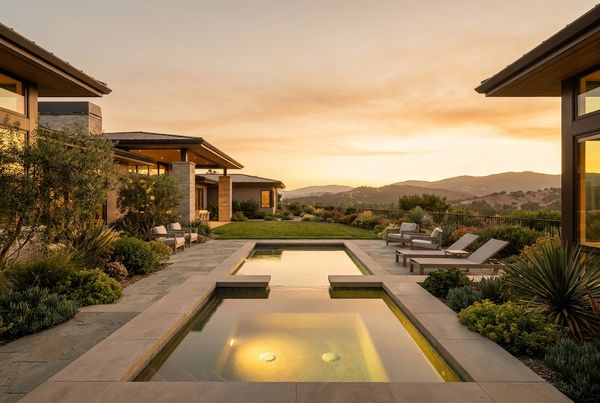
A spool — the name is simply spa plus pool — is a compact pool that behaves like both. It's small enough to be heated like a spa, with jets and a bench for hydrotherapy, but large enough to lounge, cool off, and float in like a pool. Most run 10 to 16 feet long and 3.5 to 5 feet deep, often at a single uniform depth since there's no diving and no shallow end to walk into.
That dual personality is the whole point. On a cool evening you crank the heat, fire the jets, and it's a spa. On a hot afternoon you drop the temperature, and it's a plunge pool you can actually submerge in. You'll hear the same idea called a cocktail pool or a plunge pool — the terms overlap almost completely, with "spool" leaning hardest into the spa side of the equation. Whatever the label, the appeal is identical: a real, permanent, in-ground body of water that flexes between soak and swim without the space, cost, or upkeep of a full-size pool.
Why spools are having a moment
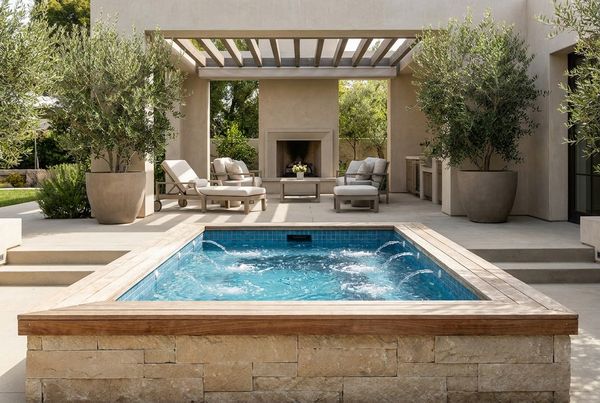
Two trends collided and the spool sat right in the middle. First, backyards shrank. New-build lots are tighter than they were a generation ago, and homeowners renovating older properties don't want to surrender the whole yard to a pool that gets heavy use three months a year. A spool asks for a fraction of the space and gives back most of the lifestyle. Second, wellness went fully mainstream — hot soaks, cold plunges, contrast therapy, daily recovery routines — and the spool is the rare vessel that can do all of it from one compact shell.
Then there's the math, which is where the spool really wins. Because it holds a small fraction of the water of a full pool, it heats fast, holds temperature cheaply, and needs a fraction of the chemicals. You can run it hot as a spa all winter, cool as a pool all summer, or cold for morning recovery — and the energy bill never balloons the way a big pool's would. It's the pool that flatters a small yard instead of overwhelming it, delivering resort-style living at a price that doesn't require a second mortgage. If you're comparing compact options generally, our small pool ideas guide sets the spool against its rivals.
What we think
For a small yard, the spool is the most versatile dollar you can spend. It replaces both a hot tub and a small pool with a single shell — and unlike a bolt-on spa, it looks intentional. Two things to lock in up front: a proper heater sized for spa temperatures (so it's genuinely usable in winter, not just a lukewarm pool), and a swim jet if there's any chance you'll want to exercise. Both are painful and expensive to retrofit. Nail those, add a bench, and you'll use a spool more days a year than any full pool we build.
Jets, benches & bubblers
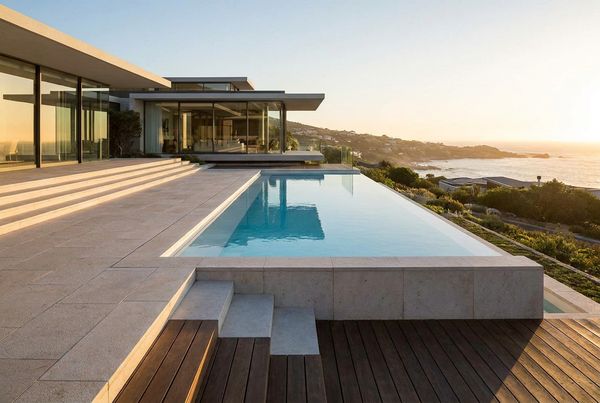
The features are what separate a spool from a glorified plunge pool. A few that consistently earn their keep:
- Spa jets. Hydrotherapy jets along the bench are the heart of a spool — this is the "spa" half of the name. Pair them with a spa-grade heater and you'll soak year-round.
- A full-length bench. A built-in bench doubles as a lounge, a step, and the seat where the jets do their work. A spool you can sit in comfortably gets used every single day.
- Bubblers. Air-driven bubblers on a shallow ledge add gentle motion, sound, and a cool perch on hot days — the most-requested add we see after the bench itself.
- A swim jet. A powerful counter-current lets you swim in place against a steady flow, turning the spool into a compact fitness pool. Decide on it before you build.
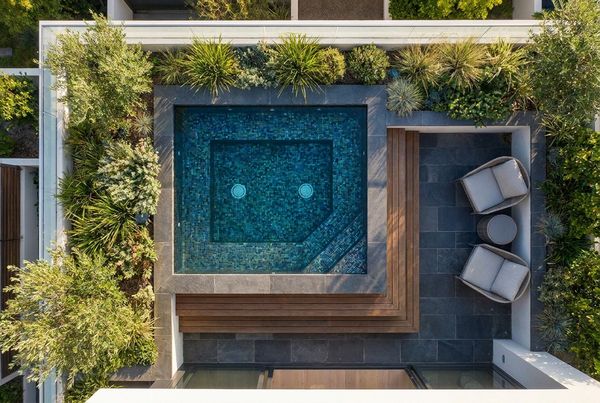
- Dark interiors. Charcoal, midnight blue, and near-black finishes look expensive and read as a reflecting pool at rest. At spool scale, a dark interior is one of the highest-impact, lowest-cost choices you can make. Our pool tile ideas guide covers what suits a small shell.
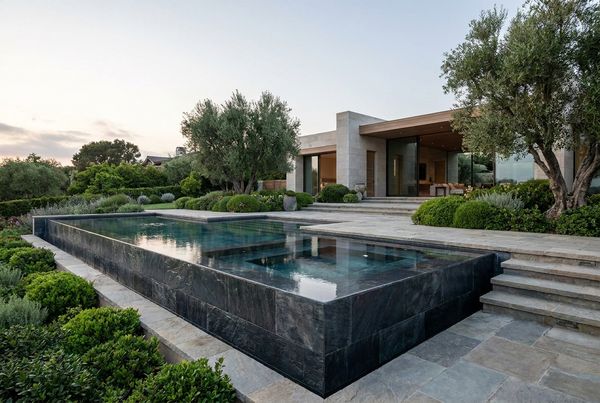
Because a spool is small, every finish reads at close range — the tile, the coping, the waterline, the lighting. That's an advantage: you can afford premium materials on a surface area that would blow the budget across a full pool. Spend where you'll see it. For feature options that suit a compact basin, our pool water features guide walks through what works.
Spool sizes & rough costs
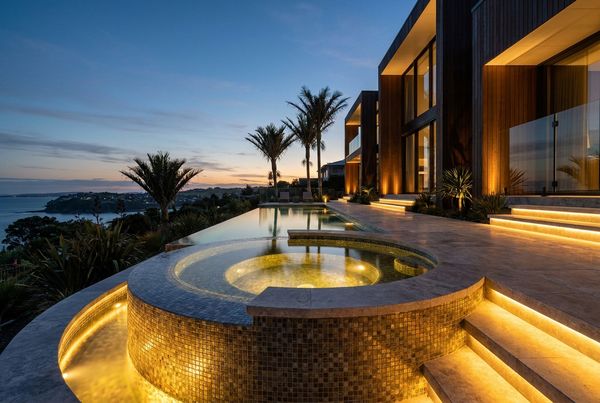
Spools are refreshingly predictable to price because there's less pool to build — but the spa side adds a heater and jets that a plain plunge might skip. Most inground spools land between $25,000 and $55,000 installed, with the biggest swings coming from shell type, finish, and whether you add a raised spa or a swim jet. Here's how the common setups stack up:
| Setup | Typical size | Installed cost* |
|---|---|---|
| Basic spool + jets | 10–14 ft x 7–9 ft | $28k–$42k |
| Spool + raised spillover spa | 12–16 ft x 8–10 ft | $38k–$55k |
| Spool + swim jet | 14–16 ft x 8–10 ft | $40k–$58k |
| Cold-plunge / wellness setup | 8–12 ft x 6–8 ft | $30k–$52k |
*Ballpark 2026 U.S. ranges; site access, materials, and region move the number. See the full cost guide.
Shell choice matters. Fiberglass spool shells are the value champion — factory-built, dropped in fast, smooth to the touch, and low-maintenance. Concrete (gunite) costs more but lets you shape a fully custom size, add a raised spa, and pick any finish. Whichever you choose, the running costs stay low: a spool's small volume means heating and chemistry cost a fraction of what a full pool demands. If you're weighing shells, start with our fiberglass pools and gunite pools guides.
Spool vs plunge vs hot tub
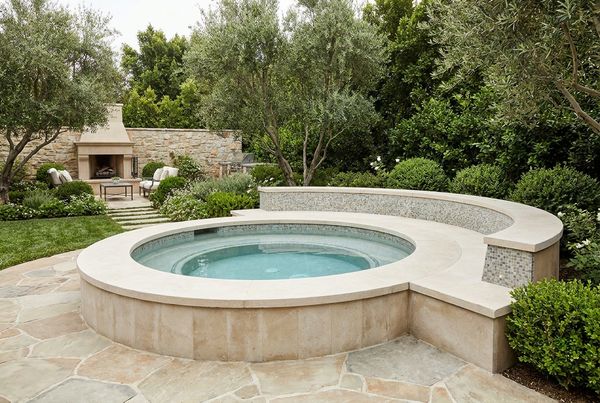
The spool sits in the sweet spot between a hot tub and a small pool, borrowing the best of each. Where does it actually win? Here's the honest comparison:
| Spool | Plunge pool | Hot tub | |
|---|---|---|---|
| Best for | Soak + cool off | Cooling off | Hot soak only |
| Room to lounge/float | Yes | Yes | No |
| Spa-temp jets | Yes | Optional | Yes |
| Cold-plunge capable | Yes (with chiller) | Yes (with chiller) | No |
| Typical cost | $28k–$55k | $25k–$50k | $5k–$20k |
| Permanent / adds value | Yes | Yes | Portable |
A hot tub is cheaper and can be portable, but it only does hot, and it never lets you cool off or float. A plunge pool cools you off beautifully but often skips the spa-grade heat and jets. The spool is the one that does both jobs from a single permanent shell — which is exactly why it's edging out the "small pool and a bolt-on spa" approach in tight yards. If a dedicated hot-soak setup is what you're really after, our hot tub ideas and spillover spa guides go deeper on that side.
Using a spool as a cold plunge
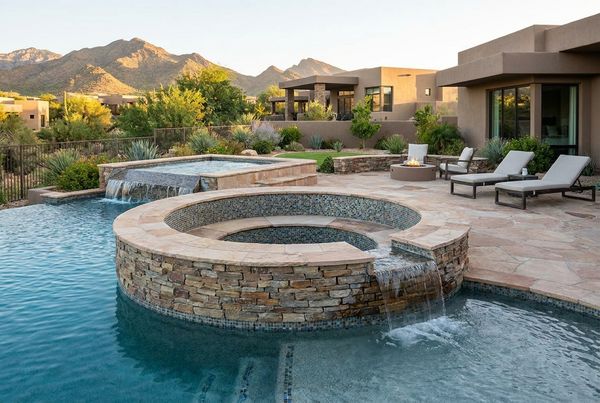
This is the feature that turned a niche pool into a phenomenon. Cold-water immersion — a few minutes in cold water for recovery, alertness, and the sheer jolt of it — went mainstream, and the spool is an ideal backyard vessel. The same small volume that keeps heating cheap also makes chilling practical: pair the spool with a chiller and you can hold cold-plunge temperatures on demand.
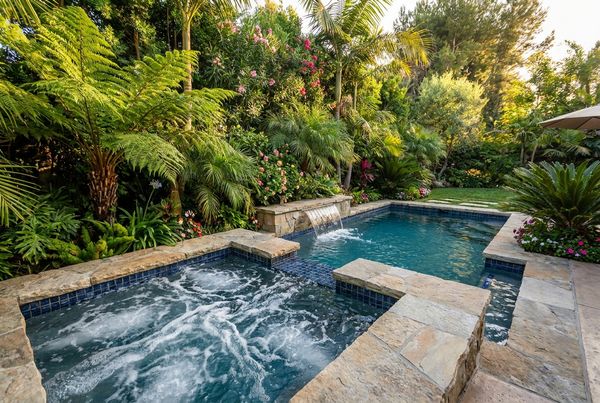
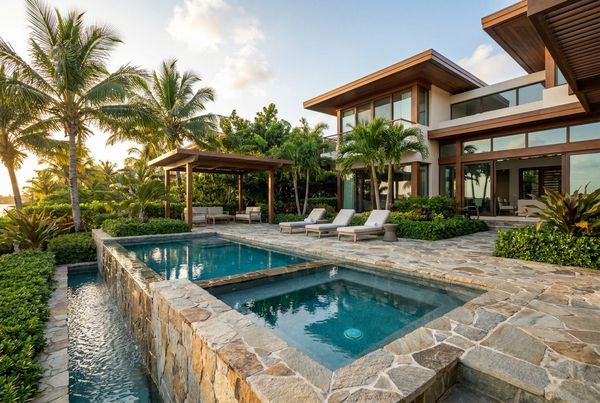
The most ambitious setups run contrast therapy — a raised warm spa spilling into a chilled spool, so you move hot-to-cold in one session without leaving the shell. You don't need the full spa-adjacent build to get there; plenty of owners simply add a chiller and run the spool cold in the mornings, warm in the evenings. That flexibility is the whole appeal: one compact basin, two completely opposite rituals — a hot-day cool-off and a cold-morning reset — from the same small pool. Our cold plunge pool guide covers the chiller-and-temperature side in detail.
Fitting a spool in a small yard
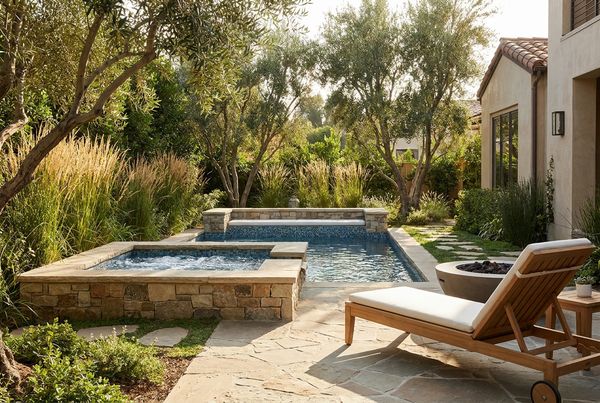
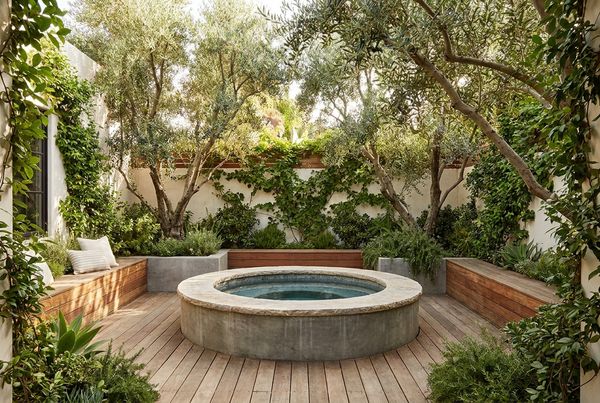
This is where the spool truly separates itself. A full pool needs open, roughly level yard; a spool needs surprisingly little. We've dropped them into side yards barely wider than the shell, tucked them against retaining walls on sloped lots, and built them into courtyards where a conventional pool was never an option. A few placement principles:
- Line it up with your best view or your privacy wall. At this size the spool becomes a focal point — orient it accordingly.
- Use vertical planting and screens. A living wall, a slatted privacy fence, or a band of dense planting hides the fence line and makes a tight lot feel like a retreat. See our pool privacy ideas.
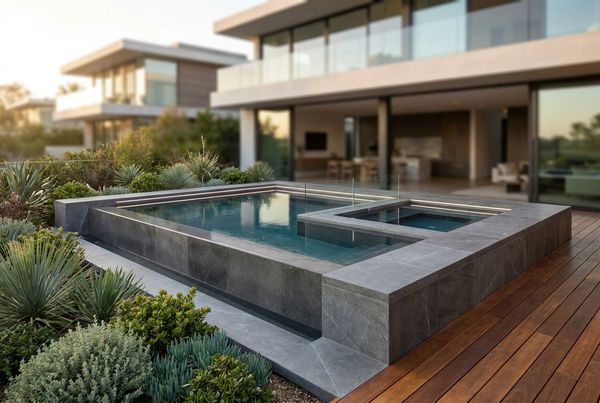
- Let raised decking solve the slope. On grade changes, a raised shell with a wood or stone deck around it is often cleaner and cheaper than excavating flat.
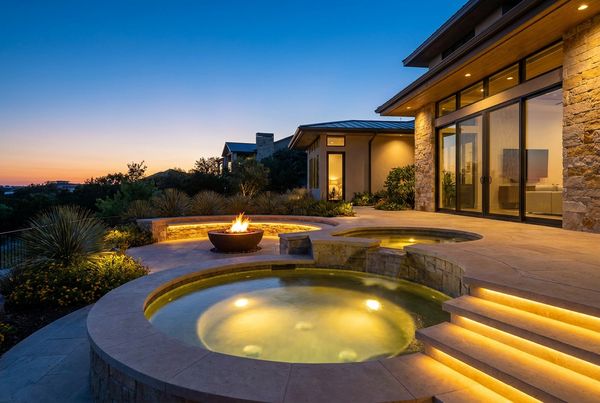
- Light it well. Waterline LEDs and a few overhead lights do more for a small yard's atmosphere than almost anything else — dusk becomes the best hour. Our pool lighting ideas guide has the details.
Because a spool runs warm, placement near the house matters more than with a plain pool — you want it close enough for a quick winter soak, not a cold march across the yard.
The running-cost math behind a spool
The number that sells people on a spool isn't the build price — it's the monthly one. A spool holds roughly 2,000 to 5,000 gallons where a full pool holds 15,000 to 30,000, and nearly every ongoing cost scales with that water. You heat a fraction of the volume, so a warm soak is cheap; you treat a fraction of the volume, so a bag of chemicals lasts and lasts; and the pump moves less water, so it runs less. That's the whole reason a spool can stay hot all winter without the heating bill of a full pool.
Small volume cuts both ways, though, and the catch is precision. A dose that would barely register in a big pool can overshoot a spool, and warm water plus heavy use can drop your sanitizer fast. The habit that keeps it easy: know your exact gallons and dose to that number. Run your dimensions through our pool volume calculator once, then use the pool chemical calculator for right-sized doses and a test kit to check often. A good cover pays for itself quickly here, holding heat and chemistry overnight on a body of water that reacts to everything faster than a full pool would.
Choosing a shell: fiberglass or gunite
Two shell types dominate spool builds, and the right pick depends on how custom you want to go. Fiberglass is the value champion for a spool: the shell arrives factory-molded, drops into the excavation in days rather than weeks, and its smooth gelcoat resists algae — a real advantage in a small volume where chemistry can swing. If your dream spool is a tidy rectangle or a standard freeform with a bench and jets, a fiberglass shell is often the fastest, cleanest route to the water.
Gunite (sprayed concrete) costs more and takes longer, but it buys you total freedom — any size, any depth, a raised spillover spa, a custom bench line, and any finish you want, including the dark tile that reads so well at spool scale. If you're adding a raised spa or shaping the spool to fit an odd corner, gunite is usually the answer; our gunite pools guide covers why custom builds lean that way. Whichever you choose, spend the finish budget on the interior — because a spool is small, the tile, coping, and waterline all read at close range, and our pool tile ideas guide shows what suits a compact shell.
Is a spool pool worth it?
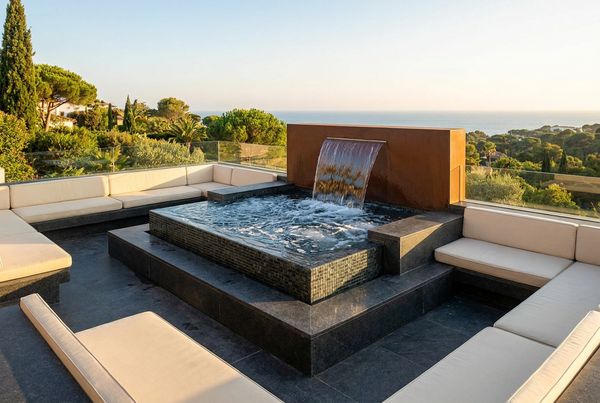
For the right yard, it's one of the best-value moves in backyard design. You get a real, permanent, in-ground pool and spa — soaking, cooling off, lounging, entertaining, and recovery — for roughly what a full pool costs to build and a fraction to run. The trade-off is honest: you can't swim laps without a swim jet, and a big family that wants room to splash will feel the size. But for couples, small families, urban lots, and anyone chasing a hot-and-cold wellness routine, the spool delivers nearly all of the lifestyle with almost none of the compromise.
Our advice: size the heater for real spa temperatures, decide on your swim jet and bench up front, spend the finish budget on the interior since it reads at close range, and don't under-light it. Then find a builder who has actually done a few — a spool is small, but the spa plumbing and the details are unforgiving. Start with our pool builder near me guide, and browse the full pool design ideas hub for inspiration before you commit.
Design Gallery
6 more ideas to save — tap any photo to view full screen.

Kelly E.
Pool Design Editor, PoolPad
Kelly has spent 10+ years around residential pools — planning projects, testing gear, and documenting backyard builds for PoolPad. Each design guide is checked against current construction methods and material pricing.
Frequently Asked Questions
What is a spool pool?
How much does a spool pool cost?
What's the difference between a spool and a plunge pool?
Can you swim in a spool?
How deep is a spool pool?
Is a spool cheaper to run than a regular pool?
How many gallons does a spool hold?
How do I keep a spool's water balanced?
What kind of heater does a spool need?
Can you run a spool year-round?
Ready to build your dream backyard?
Compare local, vetted pool builders and get matched with pros who can bring these designs to life.
Find a Pool Builder Near You