



Introduction
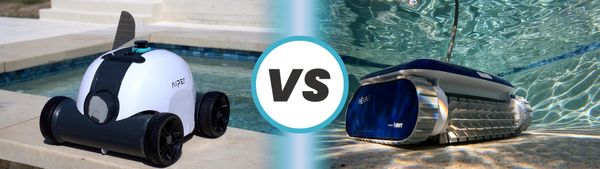
Two robots that landed on my bench for this one are the Aiper Seagull 1000 and the Aquabot REVA. Both get plenty of attention, so I bought each, tested them hard, and wrote up what I found in their own reviews. Spoiler: these two are not in the same class.
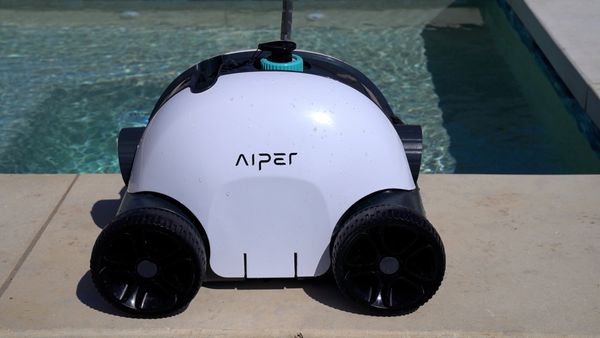
The Aiper Seagull 1000 caught my eye with its cordless design and low price. But testing exposed the cracks fast, especially on cleaning and filtration. No active brush, weak filters, and I couldn't in good conscience point most people toward it. There's more on that in my full Seagull 1000 review.
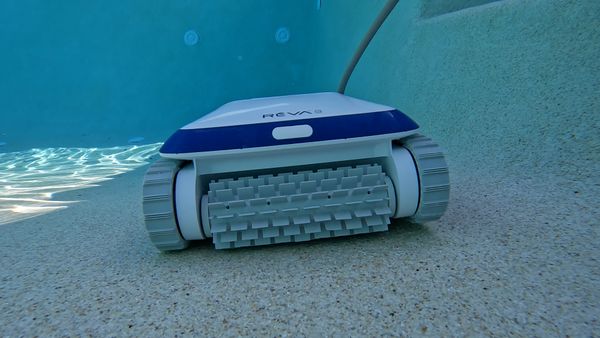
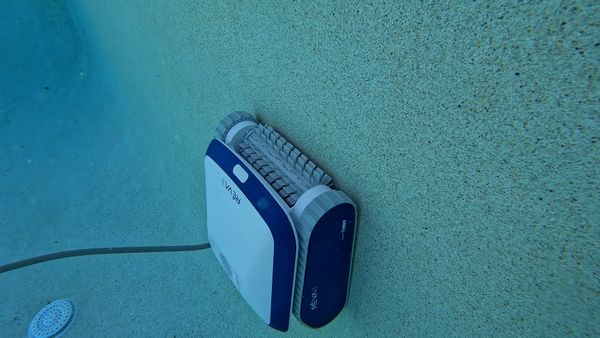
The Aquabot REVA is a completely different animal. It cleans up to the waterline, uses a gyroscope for stability and navigation, and comes with a smartphone app for control and scheduling. It doesn't have NanoFilters, but it still put in a strong performance in my testing. The full REVA review has the whole picture.
Having lived with both, my reviews are meant to give you a real read on performance, features, and whether each is worth the money. With that in hand, picking the right robot for your pool gets a lot easier.
Fair warning before you read on: this isn't a close fight. One of these is a cheap floor-crawler and the other is a full-coverage robot with app control. I'm still laying out the details section by section, because the point isn't just which one wins, it's whether the REVA's extra cost is worth it for your pool. For most people, it is.
Next up, I'll walk through exactly how I test these robots so you know my comparisons are grounded in real use.
How We Test
I test every robot for three months so what you read is based on real use, not a first impression. My focus is on pool coverage, filtration, and the feature set and warranty. Dig into those three and you get a genuine sense of how a unit performs when it's actually working in a pool.
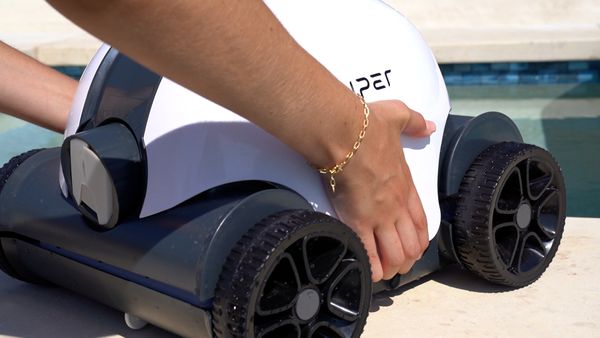
Take the Aiper Seagull 1000. Over the full test, its coverage never got past the floor. No navigation software, no real cleaning tools worth mentioning, just a small static brush and plastic wheels that held it back.
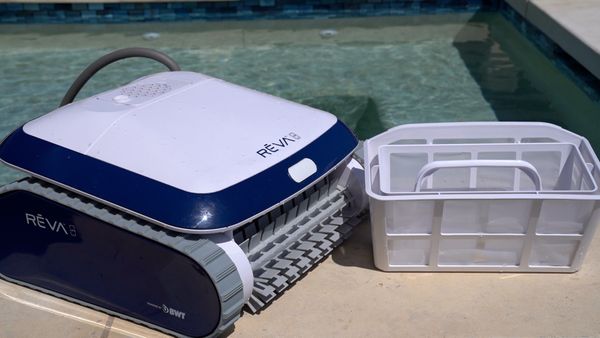
The Aquabot REVA was a different story over those three months. With gyroscopic stability and waterline cleaning, it navigated and cleaned the whole pool efficiently. That kind of full coverage is what keeps a pool actually clean and healthy.
"A robot that skips the walls is only doing half the job."
For filtration, I look at the filter type and how well it actually performs. The Seagull 1000 uses a flat, fine filter that I found weak at catching smaller debris, which capped its filtration results.
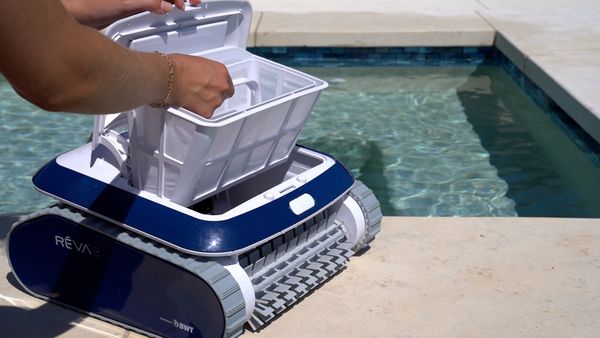
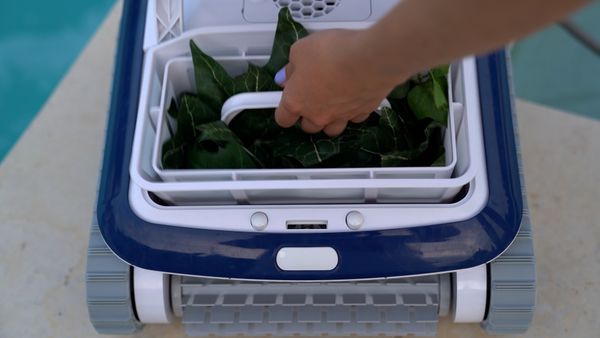
The Aquabot REVA doesn't have NanoFilters, but its dual-layer standard filter impressed me. That design catches more debris than a single-layer setup. It won't match the top-tier robots that carry NanoFilters, but it still delivers a solid clean.

I also weigh features and warranties. The Seagull 1000's cordless design looked promising until the long charge times and short battery life showed up. And its one-year warranty is thin next to robots offering more.
The Aquabot REVA, on the other hand, has a real feature set, including a smartphone app for control and scheduling, which genuinely makes life easier. Its two-year warranty added to my confidence in its durability.
Three months of hands-on testing is how I make sure these reviews are accurate and useful. By zeroing in on coverage, filtration, and features, I give you what you need to choose the right robot for your pool.
The reason I weigh warranty alongside cleaning is that a robot is a multi-season purchase, not a disposable gadget. The Seagull 1000's one year versus the REVA's two years tells you something about how long each company expects its unit to last, and my testing lined up with that expectation.
If you want a robot that's reliable and efficient, take a look at strong picks like the Dolphin Premier, Dolphin Sigma, Dolphin Cayman, and Aquabot REVA. These consistently perform in my testing and keep a pool clean and healthy.
Coverage
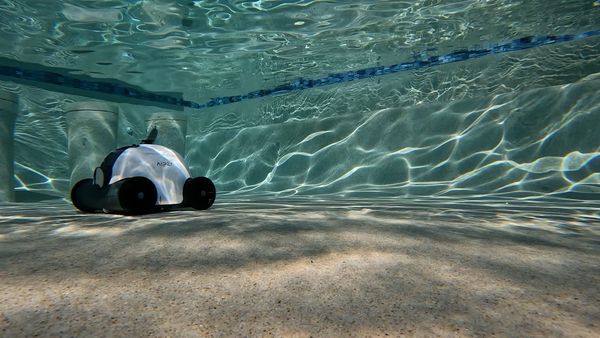
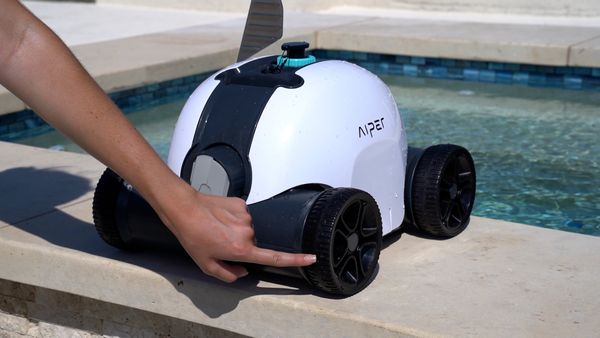
On coverage, the Aiper Seagull 1000 and the Aquabot REVA are worlds apart. The Seagull 1000 does floors and nothing else, which is a serious limitation. No navigation software, plastic wheels instead of tracks, and a small static brush leave the walls and waterline completely untouched.
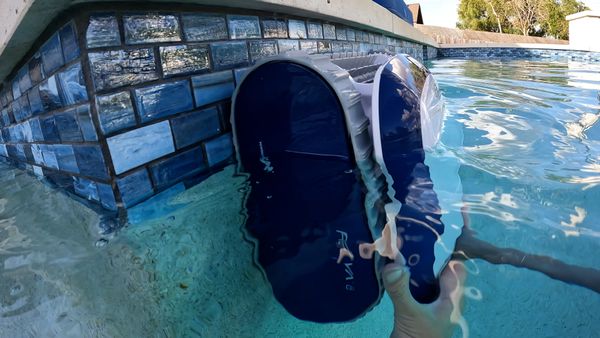
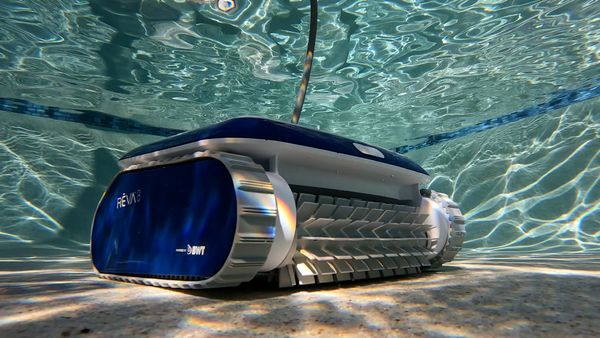
The Aquabot REVA is far more complete. It cleans the entire pool, waterline included. Its gyroscope keeps it steady and lets it clean every surface efficiently, right up to the dirtiest zone of any pool, the waterline.
"Full-pool coverage is the whole point. This is where the REVA earns its keep."
On cleaning ability, the Seagull 1000 comes up short. No active brush, poor navigation, and no way to scrub walls or the waterline means it leaves a lot behind. It rushes over debris and often leaves the floor dirty. That poor coverage earns it just 4/10 in pool coverage.
The Aquabot REVA was the opposite in testing. Its dual scrubbing brushes and rubber tracks, paired with the gyroscopic system, let it cover every corner of the pool, including hard vertical climbs and the waterline. That all-around performance earns a full 10/10 in pool coverage, and it makes for a genuinely nicer swim.
If waterline scum and wall algae are a recurring headache in your pool, this is the whole ballgame. The REVA actually parks itself at the waterline and cleans the dirtiest band of the pool, while the Seagull 1000 never leaves the floor. That single difference is what separates 'my pool looks clean' from 'I still need to brush the sides.'
Where the Seagull 1000 barely makes a dent, the Aquabot REVA cleans the whole pool, which is why it's one of the best robots you can buy right now. If you want a cleaner that does everything, robots like the Dolphin Sigma, Dolphin Premier, and the Dolphin Cayman are also worth a hard look.
Filters
The filters on the Aiper Seagull 1000 and the Aquabot REVA are night and day, and it shows in the results. The Seagull 1000 uses a flat, fine filter that honestly left me scratching my head. It couldn't reliably catch smaller particles, which put a real question mark over its filtration.
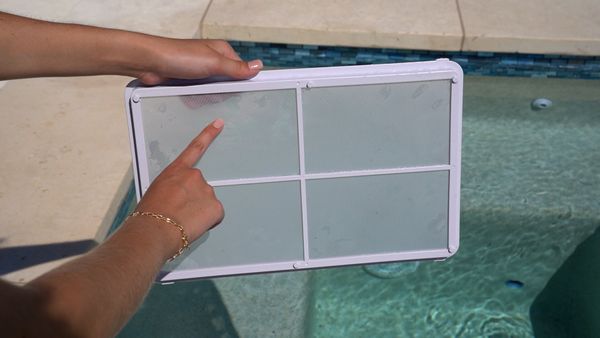
The Aquabot REVA uses a dual-layer standard filter. It's not NanoFilter territory, but it clears the Aiper's single-layer filter by a wide margin. That second layer lets the REVA catch a broader range of debris, which makes it the better choice when you want thorough filtration.
On what each one actually grabs, the Seagull 1000 keeps letting the small stuff slip through and back into the pool, so the water never really clears. The Aquabot REVA's dual-layer filter handles both large and small debris well, even if it doesn't reach the ultra-fine level of premium robots.
"Good filtration is the difference between clear water and murky water."
In my testing, the REVA's dual-layer filter pulled in leaves, twigs, and smaller debris far more effectively than the Seagull 1000. That makes it the more reliable pick if your pool throws a mix of junk at it. The water came out clearer and healthier, which is exactly what a good filter is supposed to do.
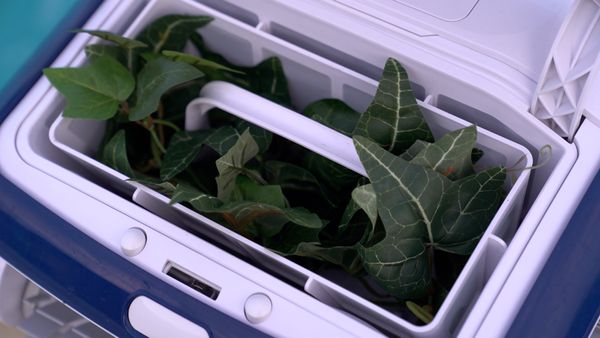
The scores make it plain. The Seagull 1000 managed a weak 2/5 in filtration, while the Aquabot REVA earned a solid 4/5 in filtration. If filtration and overall cleanliness matter to you, the REVA is the clear winner. It catches a wider range of debris and leaves the water genuinely cleaner.
Practically speaking, the REVA's second filter layer means you're not chasing fine particles back into the pool the way you are with the Aiper's single flat pane. It won't match a NanoFilter robot for the very finest stuff, but for everyday leaves, grit, and grime it's more than enough to keep the water looking right.
If you want the very best filtration, take a look at robots like the Dolphin Premier and Dolphin Quantum. Both offer advanced filter options, including NanoFilters, for even better cleaning and water clarity.
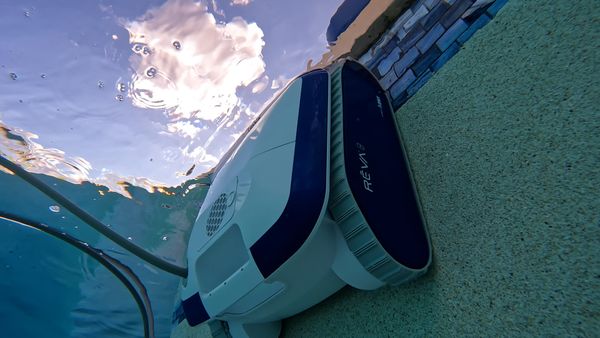
Feature Set
Comparing the feature sets of the Aiper Seagull 1000 and the Aquabot REVA, a few big differences jump out.
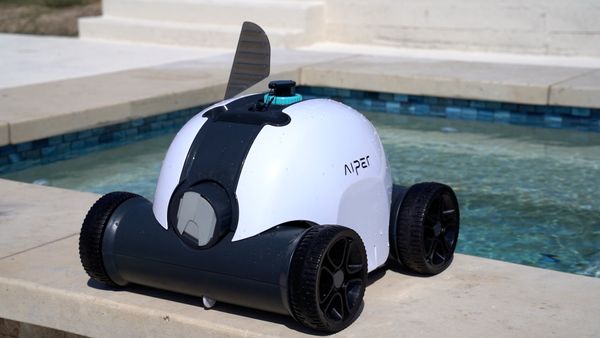
The Seagull 1000 sells itself on being cordless. At first that sounds great, no tangled cord, easy setup. But the drawbacks quickly swamp the upside. There's no navigation software, so it cleans in inefficient patterns. The single static brush and plastic wheels hold it back further. And the battery is a real weak point, giving only 90 minutes of cleaning after several hours on the charger. All of that lands it a low feature score of 2/5.
The Aquabot REVA brings a genuinely useful set of features that lift its usability and performance. The standout is the gyroscope, which improves stability and navigation and lets the REVA clean the walls and waterline properly. It also comes with a smartphone app so you can control and schedule cleanings remotely, a real win if you want a hands-off robot. That thoughtful design earned it a much higher feature score of 4.5/5.

"The right features are what turn a pool robot into a set-and-forget tool."
Day-to-day usability splits these two hard. The Seagull 1000's cordless setup sounds user-friendly, but the constant long charges chip away at the convenience. Battery limits mean interrupted cycles, more recharging, and more hands-on maintenance than you'd expect. And with no navigation, you're often stepping in to make sure it actually finished.
The Aquabot REVA is the easy one to live with. The app makes scheduling and control simple, so you can set your routine and forget it. Its dual-layer filter also needs cleaning less often than the Aiper's single-layer filter, which is one more thing off your plate.
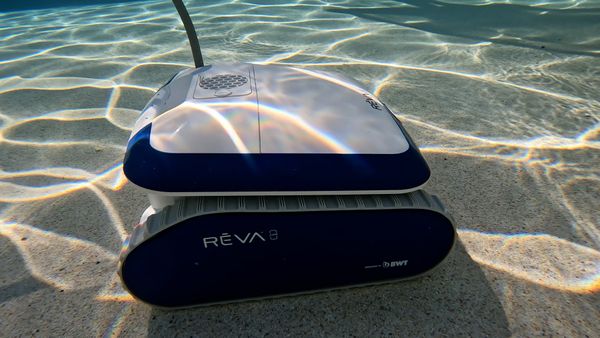
The app is easy to shrug off until you actually live with it. Being able to schedule a clean from your phone, or kick one off before a weekend, is the kind of small convenience that turns a robot into something you genuinely set and forget. The Seagull 1000 has nothing like it, so it always needs a hands-on start.
So the Seagull 1000 gives you a cordless design and not much else, coming up short on navigation, cleaning, and battery, which its low feature score reflects. The Aquabot REVA delivers a gyroscope, app control, and a dual-layer filter, and those features make it perform and handle far better. That's why the REVA is one of my top picks in the best pool cleaners of the year.
Conclusion
So where does this leave us? Both the Aiper Seagull 1000 and the Aquabot REVA have their strengths and their flaws, but they're not close. The Seagull 1000's cordless design can't make up for weak battery life, thin cleaning, and poor filtration. It scores a low 4/10 overall. Cheap, yes, but not enough robot to actually keep a pool clean.
The Aquabot REVA is a much more complete package, with a gyroscope for stability, dual-layer filtration, and app control. Those add up to a strong overall score of 9/10. Its ability to clean the whole pool, waterline and all, plus its effective filtration, make it stand out.
Head to head, the Aquabot REVA wins easily. Better coverage, better features, better overall design, and better value than the Seagull 1000. If you want effective, low-effort pool care, the REVA is the one I'd point you to.
"For real coverage and real features, the REVA is the obvious call."
If you're weighing other options for budget or specific needs, there are solid alternatives like the Dolphin Escape, Dolphin Cayman, and Dolphin Quantum. Each performs well and brings features suited to different pool cleaning needs.
The one scenario where I'd understand reaching for the Seagull 1000 is a very small, shallow above-ground pool where you truly only care about the floor and want to spend as little as possible. Even then, I'd nudge you toward saving a bit more, because the REVA's coverage and app control pay you back all season.
Both robots have a place in the market, but the Aquabot REVA is the more compelling buy. Its cleaning, its tech, and its ease of use make it a standout for anyone serious about a clean pool. For the best of the best, check my best pool robots of the year list, where the Aquabot REVA, Dolphin Premier, and Dolphin Sigma lead the pack.
Alternate Robots
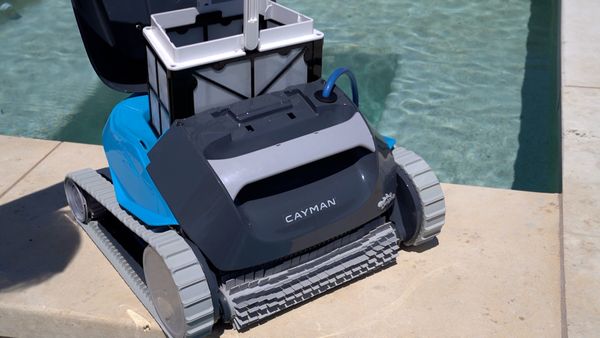
The Aiper Seagull 1000 and the Aquabot REVA each have their story, but there are other strong robots worth your attention. One that stands out is the Dolphin Cayman. It's a great value, with a weekly timer, strong cleaning, and wall climbing. That timer lets it run on autopilot, which is perfect if you'd rather not think about it.
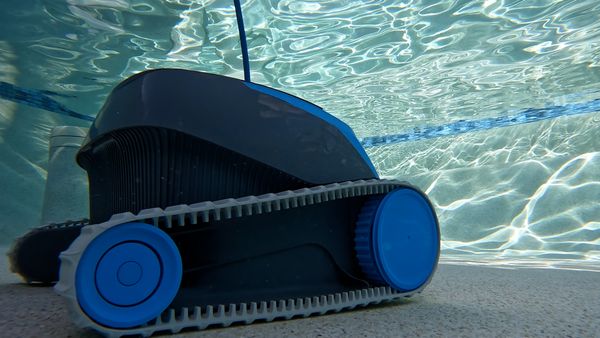
Another I'd flag is the Dolphin Escape. It's built for above-ground and smaller inground pools. With the HyperBrush and MaxBin, it cleans floors thoroughly, and Smart Nav 2.0 keeps its navigation efficient. If your priority is powerful floor cleaning, it's a serious competitor to both the Seagull 1000 and the Aquabot REVA.
"Real value plus real cleaning power is what makes these robots stand out."
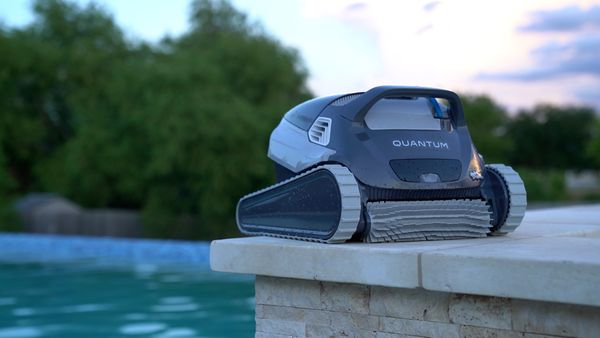
If you want advanced tech and full coverage, the Dolphin Quantum is an excellent choice. It has a larger XXL MaxBin, included NanoFilters, a weekly timer, and waterline cleaning. Its PowerJet 3D mobility and dual scrubbing brushes clean thoroughly, waterline included, which plenty of robots miss. It's one of the top-rated cleaners out there for good reason.
Think of it as matching the robot to the job: the Cayman for hands-off scheduling and strong value, the Escape for dedicated floor cleaning in smaller pools, and the Quantum when you want the whole pool including the waterline covered. Every one of them clears the bar the Seagull 1000 couldn't.
Stack these against the Seagull 1000 and Aquabot REVA and it's clear the Dolphin Cayman, Dolphin Escape, and Dolphin Quantum are strong alternatives. Each has its own strengths for different needs. Of the three, the Dolphin Cayman stands out for its automation and weekly timer, which make cleaning genuinely hands-off.