



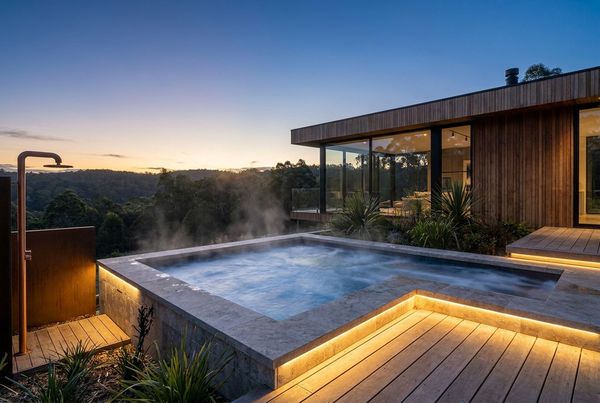
Key Takeaways
- A cold plunge pool is a small basin kept cold — usually held around 45–60°F by a chiller — for recovery, alertness, and the wellness ritual, not swimming.
- The chiller is the heart of the setup; small water volume makes chilling and filtration cheap to run compared with a full pool.
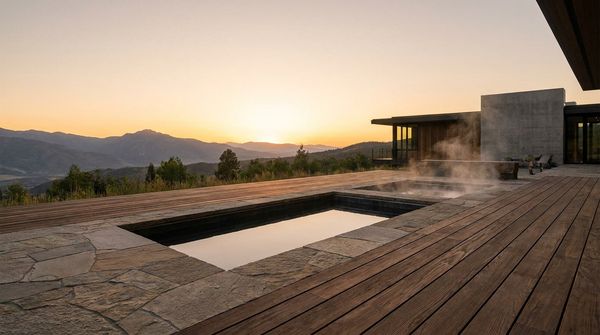
- Options run from a drop-in stainless tub to a built-in tiled or concrete plunge, often paired with a hot spa for contrast.
The cold plunge went from athlete's recovery tool to backyard fixture in the space of a couple of years. It's compact, it's ritualistic, and — thanks to affordable chillers — it's finally practical to run at home. If you're weighing a plunge for recovery and wellness rather than swimming, this is where to start.
What is a cold plunge pool?
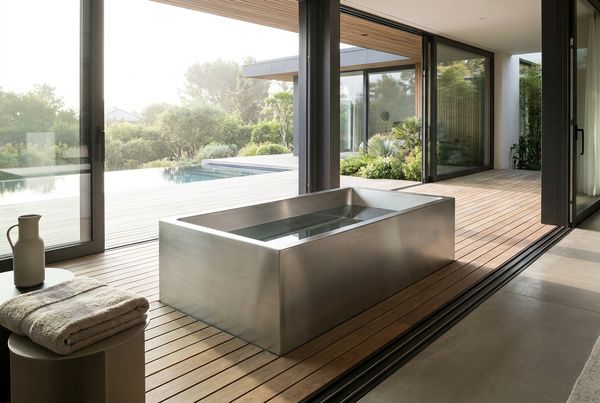
A cold plunge pool is a small basin of water kept deliberately cold — most home setups hold somewhere around 45 to 60°F — used for brief immersions rather than swimming. Think of it as the opposite of a hot tub: instead of relaxing in warm water, you step into cold water for a few minutes as part of a recovery or wellness routine, then get out. The pool itself is small, often just big enough to sit or crouch in with the water up to your shoulders.
That small size is the whole point. Because a cold plunge only needs to fit one person comfortably, it can be a standalone tub that drops onto a deck, or a built-in basin tiled or cast into your hardscape. What makes it a cold plunge rather than a cold pool is the equipment: a chiller that pulls the water down to a set temperature and holds it there. It's closely related to the warmer plunge pool and the spool — same compact footprint, different temperature and purpose.
Why cold plunges are everywhere in 2026
Two things converged. First, cold-water immersion moved firmly into the mainstream — what used to be an athlete's ice bath is now a widely discussed part of morning routines and recovery habits. We'll keep the wellness talk measured here: people report using cold plunges for recovery, alertness, and the simple discipline of the ritual, and preferences vary a lot from person to person. It's best treated as a personal wellness practice rather than a medical treatment.
Second, the technology got cheap and quiet. Purpose-built chillers for home plunges dropped in price and size, which turned a fussy, ice-hauling chore into a set-it-and-forget-it appliance. Add the same math that makes any small pool appealing — a plunge holds a tiny fraction of a full pool's water, so filtration and chilling are inexpensive to run — and the backyard cold plunge went from novelty to one of the most-requested wellness features we're asked about. It pairs naturally with a sauna or a hot spa, which only broadens the appeal.
What we think
If you're going to actually use it, buy the chiller before you buy anything pretty. The single biggest predictor of whether a cold plunge gets used is whether the water is reliably cold and clean without effort — and that comes down to the equipment, not the tile. For most people we'd start with a quality standalone stainless tub plus a good chiller, use it for a season, and only commit to a built-in tiled or concrete plunge once you know the temperature and spot you actually like. And if there's room, put it next to warmth — a sauna or a hot spa turns a cold dip into a proper ritual.
Chillers, filtration & temperature
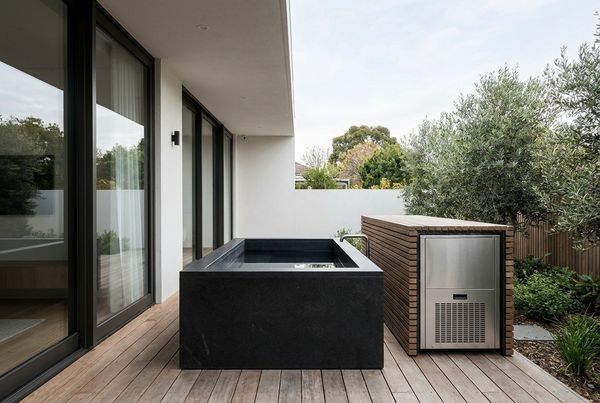
The chiller is the heart of a cold plunge. It's a small refrigeration unit that circulates the water, cools it to your setpoint, and holds it there — so instead of dumping bags of ice, you dial in a temperature and forget it. Most home chillers let you hold water anywhere from the low 40s up into spa territory, which is why a well-equipped plunge can flex between cold-morning use and a milder soak. Sizing matters: a hot climate, a larger basin, or a very low target temperature all call for a beefier unit.
Filtration and sanitation come along for the ride. A cold plunge needs the water kept clean, so most setups pair the chiller with a filter and a sanitizing method — some use ozone or UV, others a light chemical routine, and many take advantage of the cold itself, since low temperatures slow the growth that plagues warm water. Here's how the temperature bands generally shake out:
| Setting | Rough temperature | Typical use |
|---|---|---|
| Deep cold | ~45–50°F | Experienced users, short dips |
| Standard cold | ~50–55°F | The common everyday setpoint |
| Mild cold | ~55–60°F | Starting out, longer immersions |
| Cool soak | ~60–70°F | Warm-day refresh, not "cold plunge" |
*General ranges only. There's no single correct temperature — comfort and preference vary; start warmer and adjust.
Built-in vs standalone cold plunge tubs
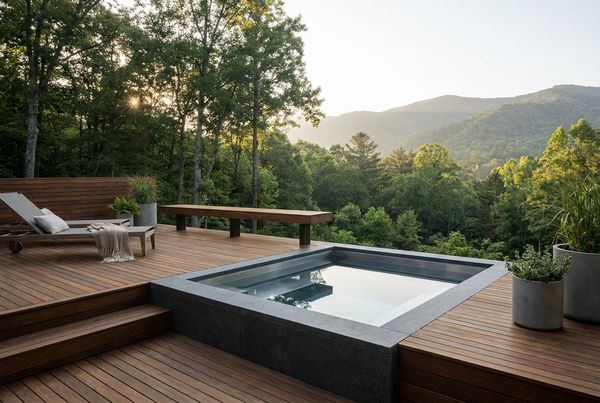
The first real decision is whether to buy a standalone tub or build a fixed-in plunge. A standalone unit — often stainless, sometimes composite or wood-clad — arrives as a finished product, sits on any solid surface, and only needs power and a chiller. It's the fast, flexible, renter-friendly path: install in an afternoon, move it if you rearrange the yard, and take it with you if you move house. The trade-off is that it always reads as an appliance sitting on the deck rather than part of the architecture.
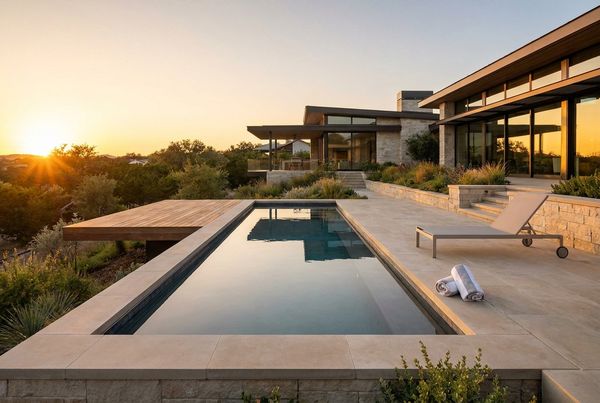
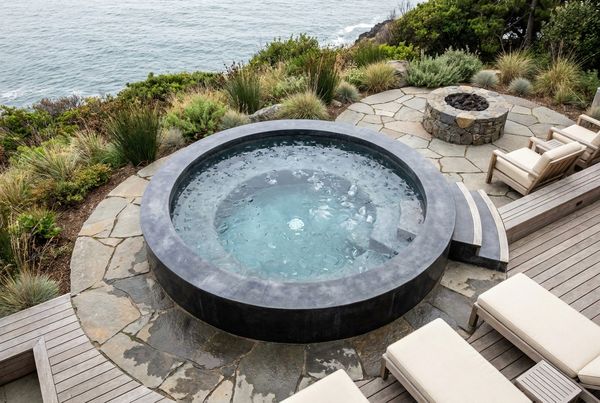
A built-in cold plunge is tiled or cast into your hardscape like a small pool or spa. It looks integrated, can be shaped and sized to the person, and pairs cleanly with a spa or a swim spa in a single water feature. The cost is higher and the commitment is permanent — you're excavating, plumbing, and finishing. Our honest guidance is to test the habit with a standalone first, then build in once you know you'll use it. The related spool pool and plunge pool guides show how a built-in compact basin can double for cold and warm use.
Pairing a cold plunge with a hot spa
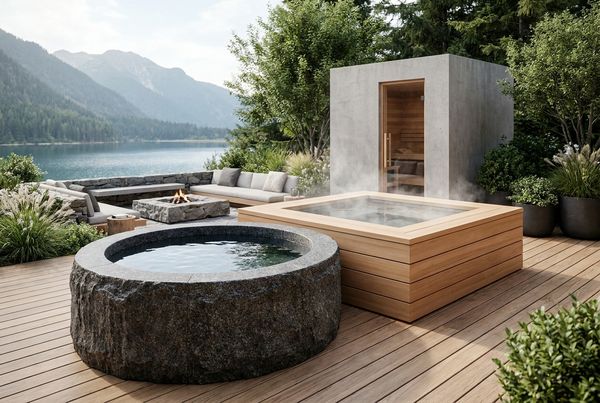
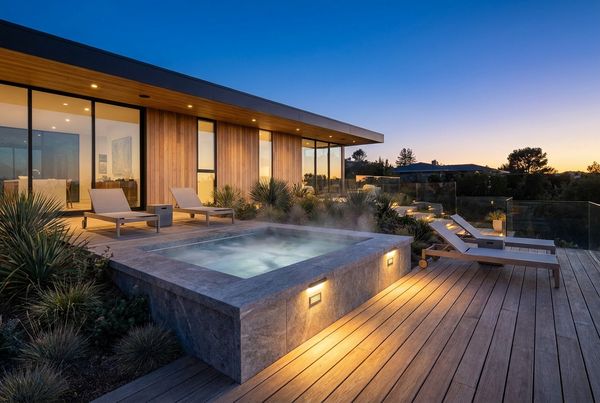
The most complete backyard wellness setup puts hot and cold side by side. Alternating between a warm spa and a cold plunge — often called contrast therapy — is a ritual a lot of owners build their whole backyard around: a few minutes warm, a short cold dip, repeat. It's an experience people genuinely enjoy, and it's driving demand for compact hot-and-cold pairings rather than a single big pool.
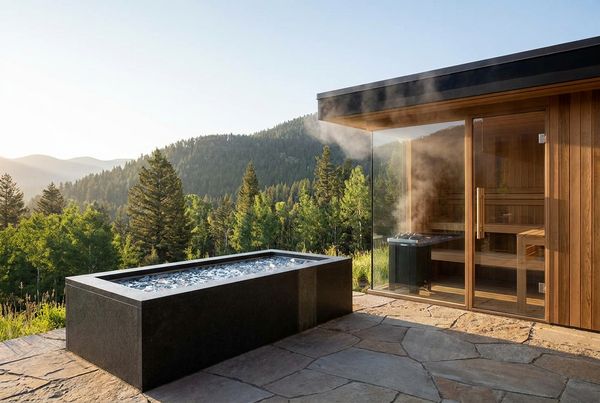
You don't need a sprawling installation to get there. A standalone cold plunge parked next to a hot tub does the job, and so does a built-in cold basin beside a spillover spa. The classic Nordic version swaps the hot spa for a sauna, with the cold plunge waiting a few steps away — a pairing that suits smaller yards beautifully. However you assemble it, the goal is easy movement between hot and cold. For the warm half of the equation, our hot tub ideas guide covers spa options that sit well beside a plunge.
Materials: stainless, tile & concrete
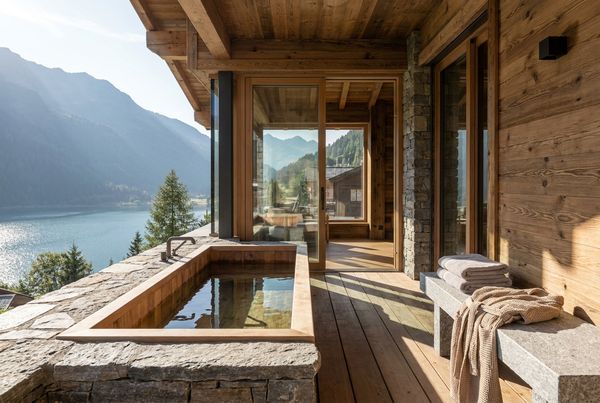
Material sets the look, the price, and the upkeep. The three you'll actually choose between:
- Stainless steel. The signature look of the standalone tub — clean, durable, easy to sanitize, and quick to install. Stainless resists the cold-and-wet cycle well and pairs naturally with the modern, minimalist aesthetic most plunges go for. Often dressed with a wood surround to soften it.
- Tile. For a built-in plunge, tile delivers the most refined result. A dark waterline or fully tiled interior makes a small basin read like a jewel box, and at plunge scale you can afford a premium tile you'd never stretch across a full pool. Explore options in our pool tile ideas guide.
- Concrete. Cast concrete (or gunite) lets you shape a fully custom built-in plunge to any size and finish, and it disappears cleanly into a modern hardscape. It's the most work and the most permanent, but also the most architectural.
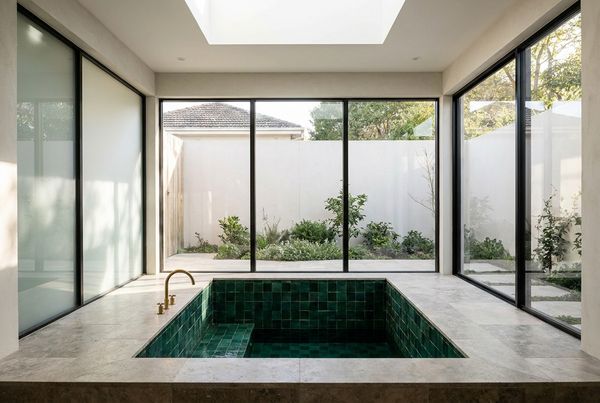
Because a cold plunge is so small, every finish reads at close range. That's a gift: you can splurge on the interior surface, the coping, and the lighting because there's so little of it. Spend where you'll see it, and keep the surrounding hardscape simple so the water stays the focus.
Cost & running cost
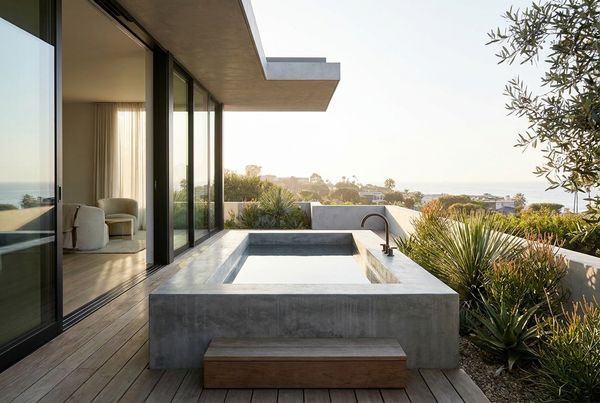
Cold plunges are refreshingly affordable next to a full pool, and the price hinges on the same fork as the design: standalone or built-in. Here's a realistic 2026 ballpark:
| Setup | What you get | Ballpark cost* |
|---|---|---|
| Standalone tub + chiller | Stainless or composite, plug-and-play | $5k–$15k |
| Premium standalone | Larger tub, wood cladding, better chiller | $12k–$20k |
| Built-in tiled or concrete plunge | Integrated basin, custom finish | $15k–$40k+ |
| Cold + hot contrast setup | Plunge paired with a spa | $25k–$60k+ |
*Ballpark 2026 U.S. ranges; site access, materials, chiller size, and region move the number. See the full cost guide.
Running cost is the pleasant surprise. Because the water volume is tiny, the chiller doesn't work nearly as hard as you'd expect, and filtration is cheap to run on so little water — many owners find the monthly electricity for a well-insulated plunge modest. An insulated cover matters here: it keeps the cold in and cuts the chiller's workload, especially in warm climates. Sanitation costs are low too, since cold water needs far fewer chemicals than a warm spa.
Keeping the water clean and safe
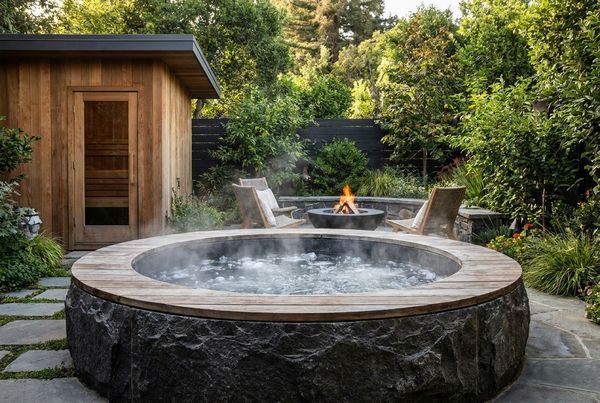
One of the quiet perks of a cold plunge is that low temperatures suppress most of what turns warm water cloudy or green, so the water care is lighter than a hot tub's. But "lighter" isn't "none." A plunge you climb into with bare skin still needs filtering and sanitizing, and the small volume means a mistake concentrates fast — a little too much of anything moves the numbers hard in a few gallons.
The setup most owners land on is a filter plus a gentle sanitizing method: ozone or UV for a low-chemical routine, or a light chemical dose for simplicity. Whichever you choose, test it. I keep a basic test kit nearby and check before I trust the water, because a small basin used daily can drift quickly. An insulated cover does double duty here — it keeps debris and sunlight out, which cuts both contamination and the sanitizer you burn through.
Two habits keep a plunge trouble-free: rinse off before you get in so you're not feeding the water body oils and sweat, and refresh the water on a sensible schedule rather than running it indefinitely. Small volume is a gift at refresh time — draining and refilling a plunge is a quick job, not the half-day chore a full pool would be.
Planning the install: pad, power, and placement
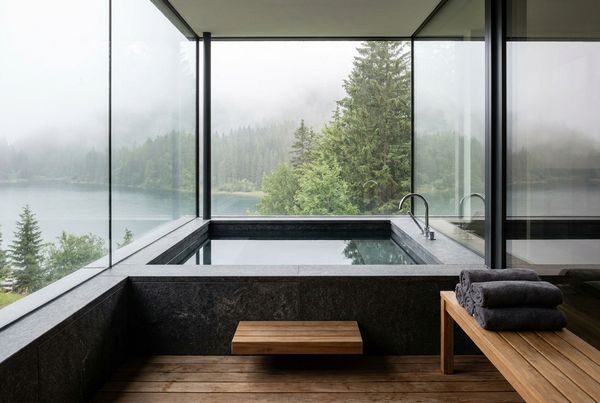
The two things people underestimate on a cold plunge are the weight and the electrical. A tub full of water is genuinely heavy, so a standalone unit needs a solid, level base — a proper deck section or a concrete pad, not a soft patch of lawn or a wobbly wood platform. A built-in plunge, tiled or cast in concrete, needs the same excavation, plumbing, and structural care as a small pool or spa, which is why I steer most first-timers to a standalone tub until they know they'll use it.
Power is the other planning item. A chiller — and any pump, ozone, or UV gear — needs a dedicated, properly rated circuit near the plunge, and anything electrical beside water calls for GFCI protection and, for a permanent install, a licensed electrician and likely a permit. Sort this out before you place the tub, not after; running a new circuit across a finished yard is far more painful than roughing it in early. If you're building a plunge alongside a spa, a spillover spa, or a swim spa, coordinate the electrical for all of it at once.
Placement is where the plunge succeeds or fails as a habit. Put it where you'll walk past it — near the door, the sauna, or the spa — because a plunge tucked at the back of the yard quietly stops getting used. Give it privacy with a screen or a band of planting, light it for the ritual, and keep the surrounding hardscape simple so the water stays the focus. Get the pad, the power, and the placement right and the rest is just deciding how cold you want it.
Fitting a cold plunge in a small yard
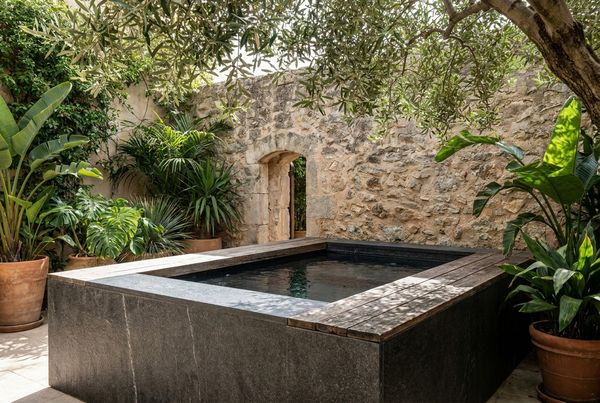
This is where the cold plunge quietly wins. It needs less space than almost any other water feature — a standalone tub can live on a deck corner, a balcony-adjacent patio, or the narrow strip beside the house where a pool was never possible. A built-in plunge tucks into a courtyard or against a wall. A few placement notes we lean on:
- Put it where you'll actually use it. A plunge you walk past every morning gets used; one hidden at the back of the yard gets forgotten. Proximity to the door, the sauna, or the spa beats a scenic-but-remote spot.
- Give it a solid, level base. Standalone tubs are heavy when full — a proper deck or pad matters more than for most furniture.
- Screen it. A slatted panel, a band of planting, or a courtyard wall buys the privacy a plunge deserves and makes a tight lot feel like a retreat.
- Light it for the ritual. Cool LED light suits the crisp mood; a warm string light nearby keeps the space inviting after dark.
For more compact layouts and how a plunge compares with other small-yard options, our small pool ideas guide is the natural next stop — and if you're weighing a warmer or dual-purpose basin, the plunge pool ideas guide sits right alongside this one.
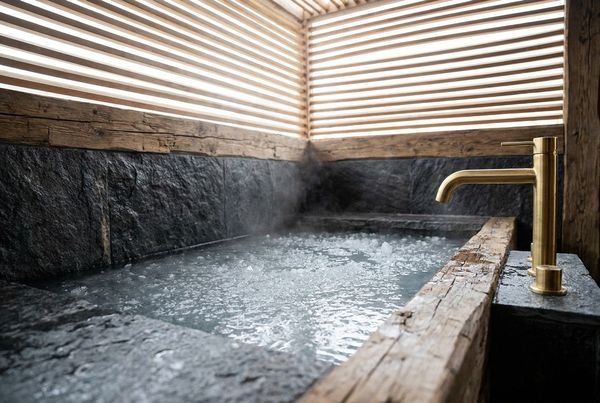
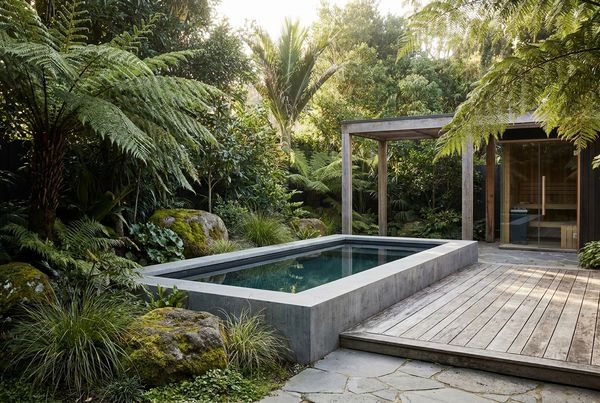
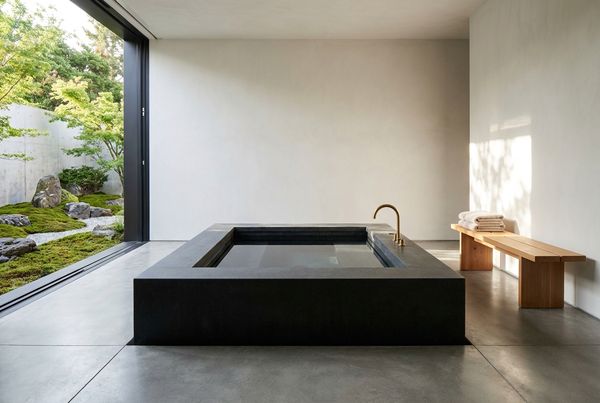
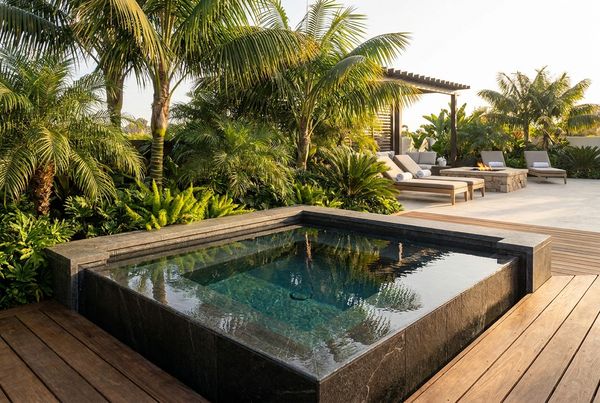
Design Gallery
6 more ideas to save — tap any photo to view full screen.

Kelly E.
Pool Design Editor, PoolPad
Kelly has spent 10+ years around residential pools — planning projects, testing gear, and documenting backyard builds for PoolPad. Each design guide is checked against current construction methods and material pricing.
Frequently Asked Questions
What is a cold plunge pool?
How cold should a cold plunge be?
Do I need a chiller for a cold plunge?
How much does a cold plunge pool cost?
Can I pair a cold plunge with a hot tub?
Is a cold plunge worth it in a small yard?
How do you keep cold plunge water clean?
Does a cold plunge use a lot of electricity?
Can I use my cold plunge as a warm soak too?
What size should a cold plunge pool be?
Ready to build your dream backyard?
Compare local, vetted pool builders and get matched with pros who can bring these designs to life.
Find a Pool Builder Near You