



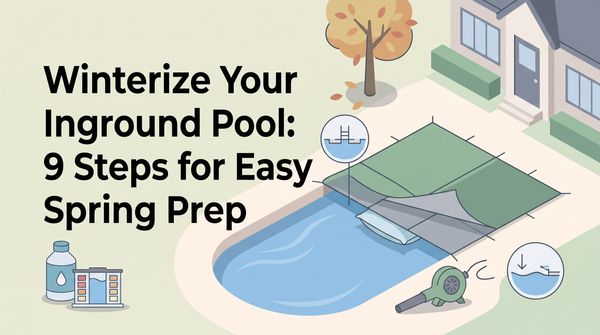
The end of summer brings more than cooler winds and shorter days. It's your signal to get your inground pool ready for winter. A careful shutdown now makes for an easy reopening once the sun comes back.
A good closing does two things: it protects your investment from rough weather, and it spares you nasty surprises in spring. When I first closed my pool, I learned the hard way that skipping a step can bite you months later. Nobody wants to peel back the cover and find cracked tiles or green water.
So I'll walk you through a simple, nine-step method that gets your pool through winter unharmed. From balancing chemicals to storing equipment, each step earns its place. By the end, you'll face the cold months already daydreaming about that first splash of the season.
Your Action Plan
- Brush and vacuum the pool until it's spotless.
- Test and balance pH, alkalinity, and calcium hardness.
- Add winterizing chemicals like shock, algaecide, and a metal remover.
- Lower the water level and blow out the plumbing lines.
- Drain and store your pump, filter, ladders, and accessories.
- Cover the pool securely and check it through the season.
Winterize Your Pool Effectively
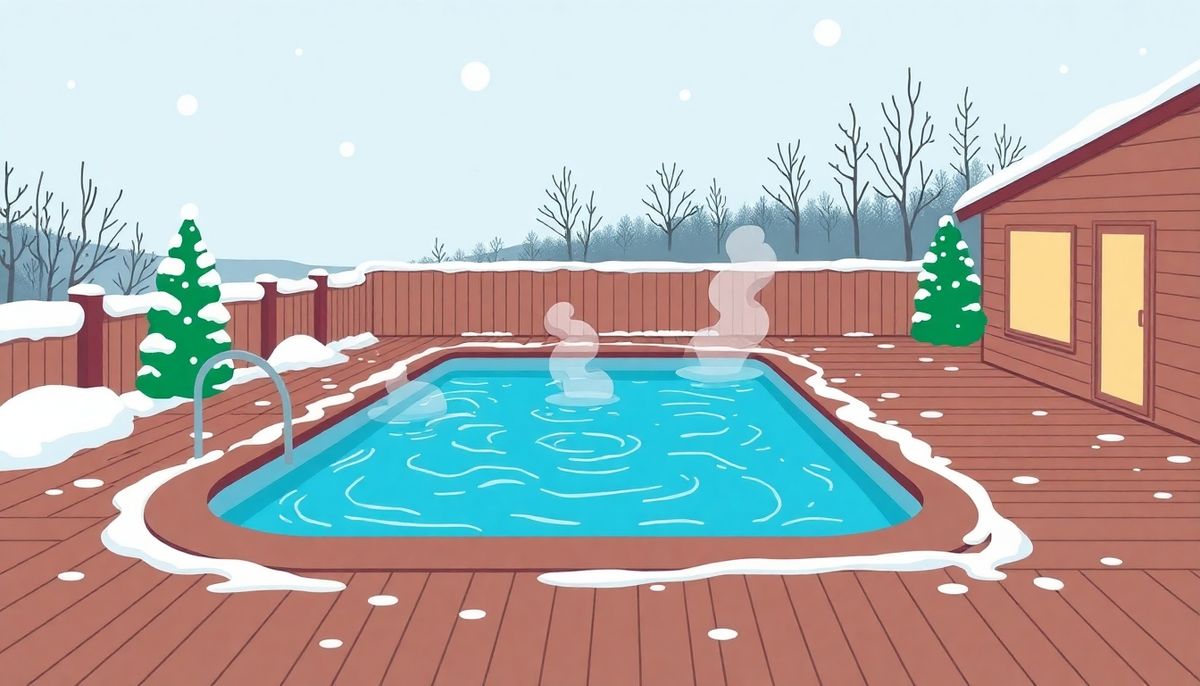
Start with a top-to-bottom clean
Once the leaves fall and the air turns crisp, clean your pool top to bottom. A friend spent a Saturday scraping algae off her walls, only to realize her pool had been quietly hosting its own tiny ecosystem. A thorough scrub now means you won't run into that in spring.
Balance the water, then lower it
Next, check your water chemistry. Balanced pH and alkalinity help fend off corrosion and scale. A winterizing kit stops algae from growing and protects against metal stains.
With the chemistry sorted, lower the water level. You're not draining the pool dry, just dropping it enough to handle winter's freeze-and-thaw cycles. Get the water below the skimmer line so freezing water can't crack anything.
Cover it securely
Finally, cover the pool. Safety cover or standard winter cover, either way, make sure it fits well. That barrier keeps debris out and stops anyone from falling in by accident. One snowy winter, a neighbor's cover caved under the snow because nobody checked on it. A quick look every few weeks avoids that.
Do all this and you're not just closing your pool. You're making sure it wakes up ready for another summer.
Clean Your Pool Thoroughly
Before anything else, give your pool a deep clean. It's the foundation of a good closing. Picture cooking in a messy kitchen: everything's slower, and small problems turn into bigger ones.
Brush every surface
Start by brushing the walls and floor, reaching every corner. This knocks loose stubborn grime and the early algae spores that slipped in unnoticed. A telescoping pole on a sturdy pool brush makes the stuck-on stuff easier to clear. Getting rid of these troublemakers now means a cleaner start next season.
Vacuum by hand
Now let the vacuum do its job, and skip the automatic cleaner here. Manual vacuuming lets you target and pull up all the debris you loosened. Pay extra attention to corners and steps, where junk piles up. After one good session, my pool needed fewer chemicals at spring reopening, which saved me time and money. Get it spotless now and you set up an easy welcome back to summer.
Balance Water Chemistry
If you want your pool to last and reopen easily, water chemistry is where the real work happens. Before you winterize, grab your test kit or take a sample to a pool store. Getting your pH, alkalinity, and calcium hardness right heads off corrosion and scale. Ignoring these levels is like skipping brushing your teeth for months; problems are bound to show up.
One year I skipped this step, itching to just throw on the cover and be done. Come spring, I met cloudy water and surfaces that had clearly seen better days.
Balanced water in the fall means clear water in the spring, so it's the single best thing you can do before the cover goes on.
Once your levels are balanced, handle the chlorine. Keep it below five parts per million (ppm) so it doesn't interfere with the other chemicals you'll add. A non-chlorine shock works best here because it acts fast, so you're not stuck waiting. You might also add a metal remover, called a sequestrant, if your water carries a lot of metal, like well water does. A sequestrant locks up those metals so they can't stain your pool's surfaces.
Protect with a Winter-Cover
When you put your pool to bed for winter, a reliable cover isn't optional. Anyone who's lifted a cover in spring only to find cloudy, algae-filled water knows how much a good one is worth.
Solid covers vs. mesh covers
Solid covers keep out debris and block the sunlight that feeds algae. They're usually tougher, but they need a pump to clear off any water that pools on top. Mesh covers let rainwater and snowmelt drain through while filtering out bigger debris. The trade-off is that you'll watch your water level more closely through the season.
One autumn I underestimated a simple tarp and some cheap weights. By mid-winter, after a bad storm, my makeshift cover was half sunk, a soggy invitation for leaves and twigs. Lesson learned: securing the cover properly with water bags or cover weights is what keeps that from happening.
The right cover and a careful install cut your workload when pool season returns. It's an upfront cost in time and money, but it pays off with clean water ready for the first dive of summer.
Prevent Algae With Proper Covering
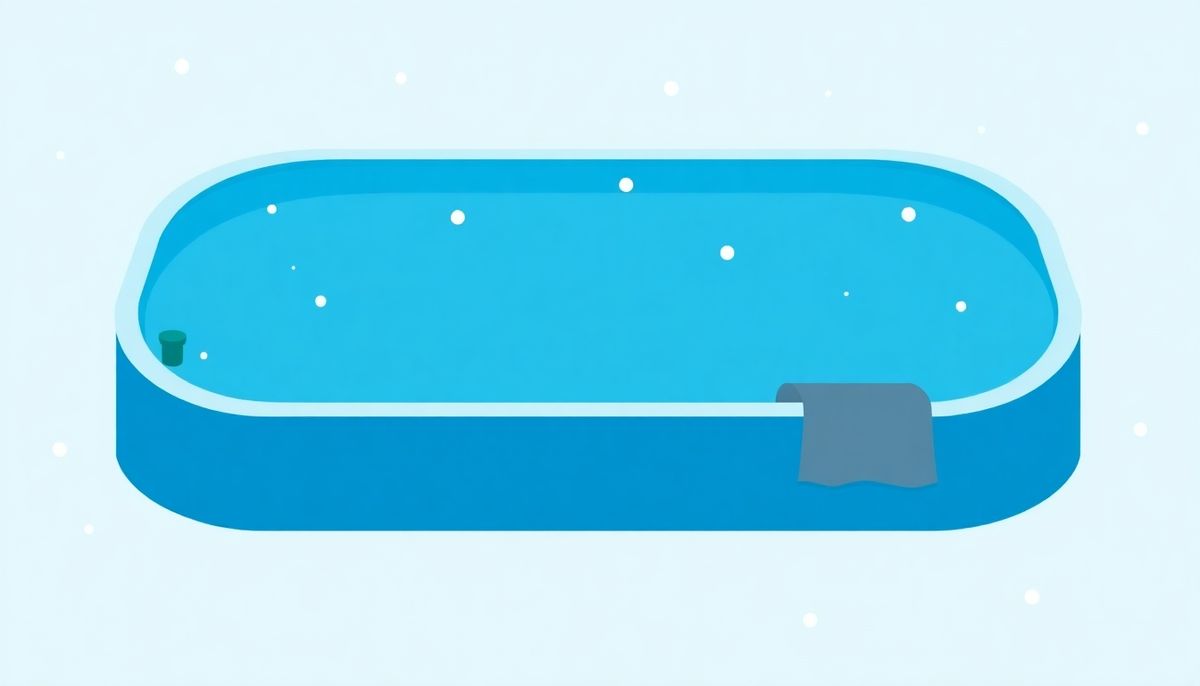
When the weather turns and the air bites, protect your pool from the cold. The cover is your first line of defense against algae, which thrives in still, neglected water. A neighbor skipped a proper cover one year and faced a swampy mess by spring. Covering your pool properly spares you that trouble.
Pick the cover that fits your setup
Solid covers keep out debris, which can rot over winter and feed algae blooms, and they block the sunlight algae needs. Mesh covers let water through, so you may want extra steps, like a winter dose of algaecide before you close.
Install it snug and check it often
Make sure the cover fits snugly, with no gaps where leaves or debris can slip in. Anchor it with water bags or cover weights so it doesn't blow loose in strong winds. Check it through the season, too. A quick sweep with a broom or a gentle rinse keeps it clean and working.
Cover your pool right, and you set up a clearer, easier start next season, skipping the fight with stubborn algae.
Ensure Effective Pool-Cover Use
Closing your pool is an investment in next year's fun, and the cover is what makes that investment pay off. Think of it as your pool's winter coat. Make sure it fits snugly, with no sagging or gaps where leaves, rainwater, or small critters can sneak in. A tight cover holds onto the chemical balance you worked to get right.
A snug, well-anchored cover keeps out debris and keeps anyone from falling in by accident.
Think about the weight of winter, too. Snow and rain pile up and can turn a flimsy cover into a dangerous load. A pool cover pump keeps water from pooling on top, which prevents tears and stretches the cover's life. Water bags or anchors along the edges lock it down further, so it stays put through whatever the season throws at it.
Check on your cover regularly. Brush off leaves and debris with a gentle broom; skip rough tools that might puncture the material. In snowy areas, a soft broom handles light snowfalls. Look after your cover through winter and you set up a smoother opening when the sun returns.
Choose Climate-Appropriate Winterizing Techniques
Closing your pool is like getting your house ready for winter: the methods you pick should match your climate. When I moved from a mild area to a colder one, I found one size doesn't fit all with winterizing. These tips should help you dodge my mistakes.
Cold climates
If your winters bring freezing temperatures, drain the pump, heater, and plumbing lines completely. Any water left behind can freeze, expand, and cause pricey cracks and leaks. For harsh, snowy conditions, a durable winter cover isn't up for debate; it keeps out debris and stops water from building up. In colder regions you'll also want a pool antifreeze rated below your local lows.
Mild climates
If you live somewhere warm like Southern California, you might skip the big drain and just run the pump daily to keep the water moving. A lighter cover may be enough, or a mesh cover that drains rainwater while keeping leaves and twigs out. In warm areas, pool enzymes help break down organic gunk and keep the water clear through winter.
Match your routine to your surroundings, and your pool comes out of its winter sleep in great shape.
Maintain Balanced Water Chemistry
Balanced water chemistry is easy to overlook when you're prepping for the off-season. A little attention now sets up a smooth reopening. Start by testing with a reliable kit and check the pH, alkalinity, and calcium hardness. Balanced, these three protect your pool surfaces from corrosion and scale.
Dial in your numbers
Adjust the pH so it sits between 7.2 and 7.6. That range keeps skin and eyes from getting irritated and helps your other chemicals work. Alkalinity should land in the 80 to 120 ppm range, acting as a buffer so your pH doesn't swing around. For calcium hardness, aim for 200 to 400 ppm to guard against etching and scaling.
Chlorine and metals
Don't overlook chlorine; it's your main defense against algae and bacteria. Lower it below five ppm before you add other winterizing chemicals, since high chlorine can neutralize those additives and make them useless. Finally, consider a metal remover (a sequestrant) if your water tends to run high in metals. This one step can stop the stubborn stains that might otherwise greet you in spring.
Balance Water Chemistry Thoroughly
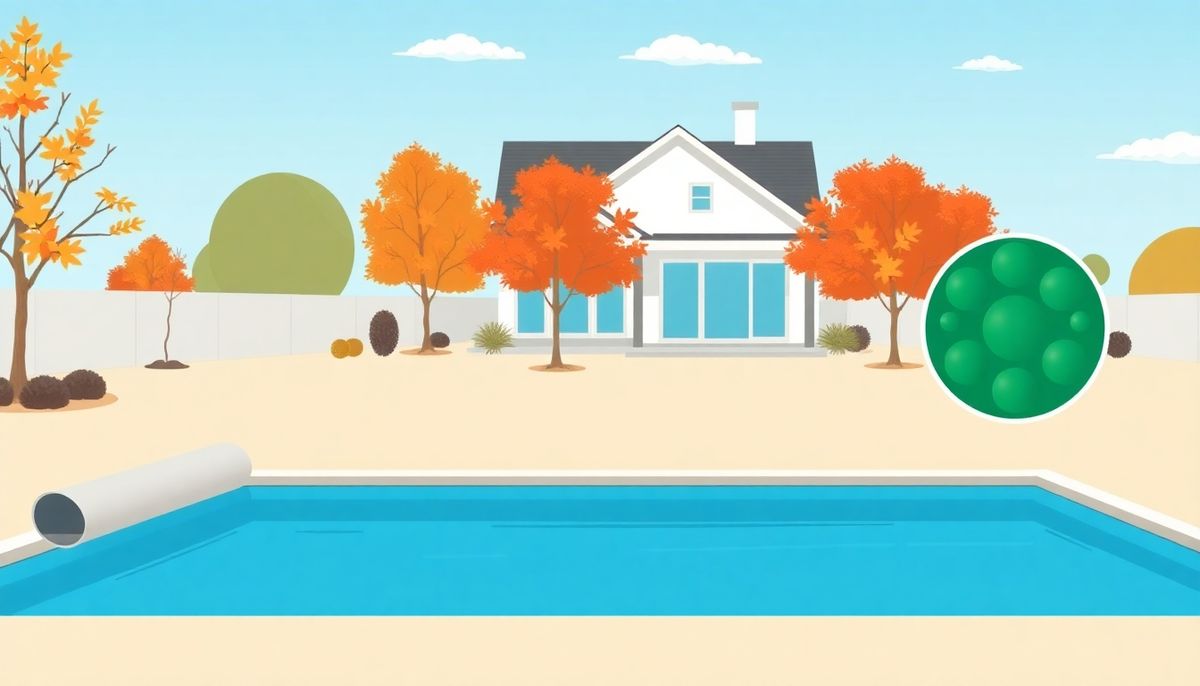
One step does more than any other to change how your pool fares over the off-season: balancing the water chemistry. It's not exciting, but it's what separates an easy spring from a frustrating one.
Start by testing the pH, alkalinity, and calcium hardness. You want these levels in range, not too high and not too low. An unbalanced pool leads to corrosion and scale that wear down surfaces and equipment. A friend once skipped this, sure it didn't matter, and paid for it with stained tiles and a hefty repair bill in spring.
Adjust your chemistry, then add a winter algaecide and a metal remover to hold off spore growth and metal staining. These additives keep algae and metals from taking hold through the colder months. Before you throw on that cover, give your water the care it deserves.
Ensure Proper Pool-Cover Installation
When cooler months arrive, wrap up your pool for its winter rest, and getting the cover on right protects everything you've done so far. First closing or seasoned pro, the cover can be the difference between clear water and a green surprise in spring.
Inspect before you install
Start by inspecting the cover closely. Check that it's free of rips and tears and that the seams are still solid. A friend ignored a small tear one year, and the cover turned into a sieve, letting in leaves and rain all winter. Patch any damage before you lay the cover across your pool.
Secure it against wind and snow
Secure the cover snugly with water tubes or weights, following the manufacturer's directions. This keeps wind from turning the cover into a sail, which can cause accidents or damage. If snow is a regular visitor where you live, get a cover pump so heavy snow or rain doesn't sag and stress the material.
Keep an eye on the cover through the colder months. A quick sweep with a broom, never sharp tools, clears off leaves or snow and keeps it in prime shape. A well-kept cover is your ticket back to sunlit swims when the warm days return.
Optimize Chemical Additives for Winter
Closing your pool isn't as simple as slapping on a cover and walking away. The real trick to an easy spring opening is how well you set up your chemical additives for winter.
Algaecide
Algae might seem harmless when the water's cold, but it's stubborn. A copper-free algaecide keeps sneaky spores from setting up camp. If your cover lets in dirt and debris, add an extra dose. This small step saves you from a swampy surprise in spring.
Metal sequestrant
If your water comes from a well, a metal remover is your best friend. It binds up the metals so they can't leave ugly stains, and it protects your pool's surfaces even while the pool sits unused.
Pool enzymes
Finally, work pool enzymes into your winter routine. These break down organic waste and cut down on scum and waterline buildup. They lighten the load on your algaecide and keep your water clearer.
The right chemical balance now means less hassle later. Dial in your winter chemistry and you'll reward yourself with a clean, ready-to-enjoy pool when the sun warms up again.
Monitor and Adjust Off-Season Water Levels
As the winter chill sets in, one often-forgotten task is keeping an eye on your pool's water level. It's a small thing that saves big headaches in spring. A friend once told me their disaster: they hadn't checked the water level all winter, and when they peeled back the cover, melting snow had turned the pool into an overflowing pond, damaging the deck and the landscaping.
A few minutes each month to check and adjust the water level can save you costly deck, liner, and structural repairs later.
To dodge that, check your level regularly through the off-season and keep it in the range your cover calls for. With a solid cover, make sure the water sits comfortably below the skimmer or tile line so rain and snowmelt can't overflow and drag in contamination.
Keeping the level steady also protects your liner or plaster from too much exposure. If the water drops too low, parts of your pool surface are left unprotected, which can lead to cracks and expensive repairs. It seems minor, but the small details make the biggest difference.
Protect Pool Equipment From Freeze
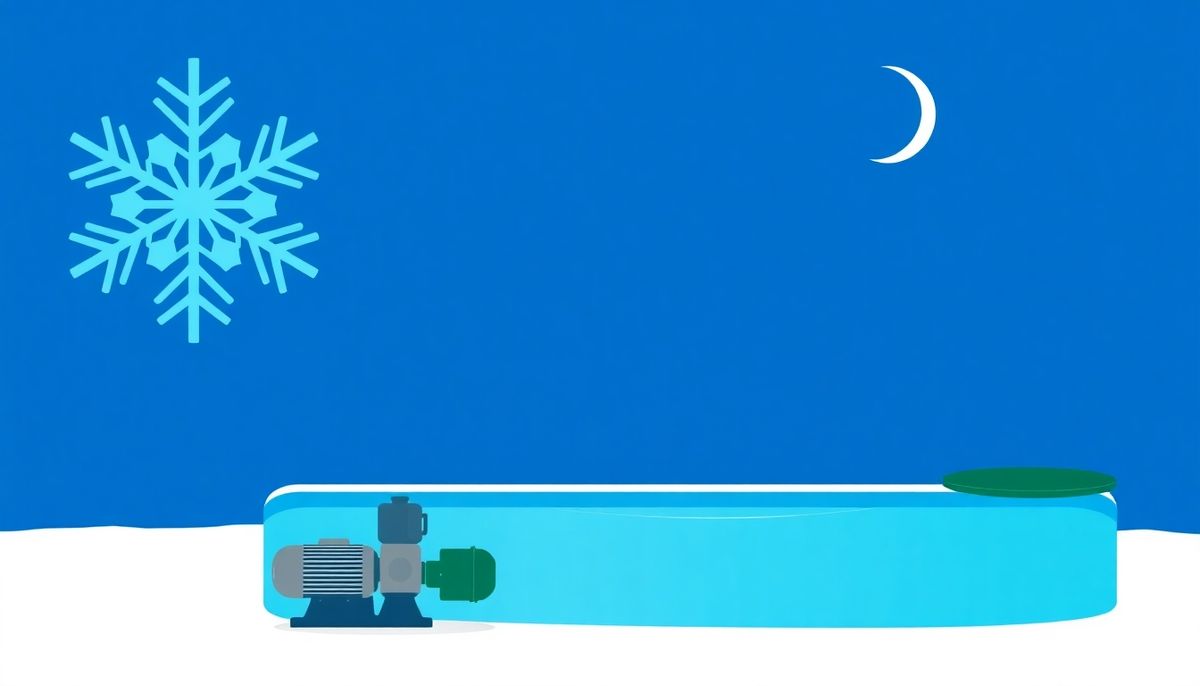
The winter chill is hardest on your pool equipment. A friend thought covering the pool was enough last year, then found a frozen, cracked pump come spring.
Drain everything that holds water
First, drain the water properly. Water left in the pump, filter, or heater can freeze, expand, and crack the parts, which means expensive repairs. Disconnect all the equipment and let it drain completely. For extra protection, use a pool-specific antifreeze in stubborn spots where water might sit. And remember, automotive antifreeze is a no-go. Stick to the non-toxic kind made for pools.
Store accessories out of the weather
Take out any accessories like ladders and skimmer baskets and store them somewhere dry. That keeps them from rusting or getting damaged over the long winter. Leaving a metal ladder out through the season is a fast way to end up with rust stains you'll spend weeks scrubbing off.
Last, use a good cover that fits snugly to keep snow and debris out. Take these steps and you protect your equipment and set up a smooth start next season.
Close Your Pool Properly
Closing an inground pool with care is what separates an easy spring from a stressful one. It's like giving your pool a well-earned rest so it's ready to shine again.
Clean, balance, cover
First, give the pool a good cleaning. Brush the walls, vacuum the floor, and skim out any lingering leaves. I once skipped this and got greeted by an algae bloom that turned opening day into an all-out scrub fest.
Next, balance the water chemistry. Get your pH, alkalinity, and calcium hardness in check to head off corrosion and scale. Skip it and you risk a stained liner and repairs that aren't cheap.
Finally, pick the right cover. A good fit keeps out debris and slows evaporation. Use water tubes to secure it and close any gaps. People overlook this, but it makes a real difference in heavy wind. Follow these steps and you'll ease into next season with almost no fuss.
Prepare for Colder Temperatures
When autumn leaves start dropping and the air turns cool, the swimming season is winding down. That shift is your cue to get your inground pool ready for the cold.
Chemistry first
Start with the water chemistry. Adjust the pH, alkalinity, and calcium hardness to the recommended levels to hold off corrosion and scale during the dormant months. It might feel dull, but it's what keeps your pool going for years.
Guard against freezing
When temperatures drop, water in your pool can freeze and expand, cracking the structure. Draining to the right level is key; a solid rule is to lower it below the skimmer. In really cold regions, blowing out the lines makes sure no water lingers in the plumbing to freeze. If you're not sure how to handle this, call in a professional.
Cover up
Finally, shield your pool with a reliable cover. A sturdy winter cover blocks debris and keeps critters out while protecting the water balance you worked to get right. A cover pump manages any water that collects on top so the cover doesn't sag. Closing your pool can feel bittersweet, but with the right steps you set up a hassle-free reopening.
Protect Pool Lines from Freezing
Winter can turn your backyard into a snowy scene, but it's also a real threat to your pool if you don't protect the plumbing. When water left in the pipes freezes, it expands and can crack the lines, leading to expensive repairs.
The whole goal here is simple: leave no water in the lines for the cold to freeze.
To do that, drain all the water from the lines with an air compressor. The compressor pushes out water hiding in the bends of the pipes. Go carefully, though, because too much pressure can damage the plumbing. If you're not confident doing it yourself, call a pool professional.
For extra protection, add a pool-specific antifreeze. This isn't the stuff you pour into your car. Pool antifreeze is non-toxic and made for swimming pool systems. Pour it into the lines after you blow them out for one more layer of defense. It's a bit of work now, but you'll thank yourself when everything's ready in spring.
Store Accessories Safely For Winter
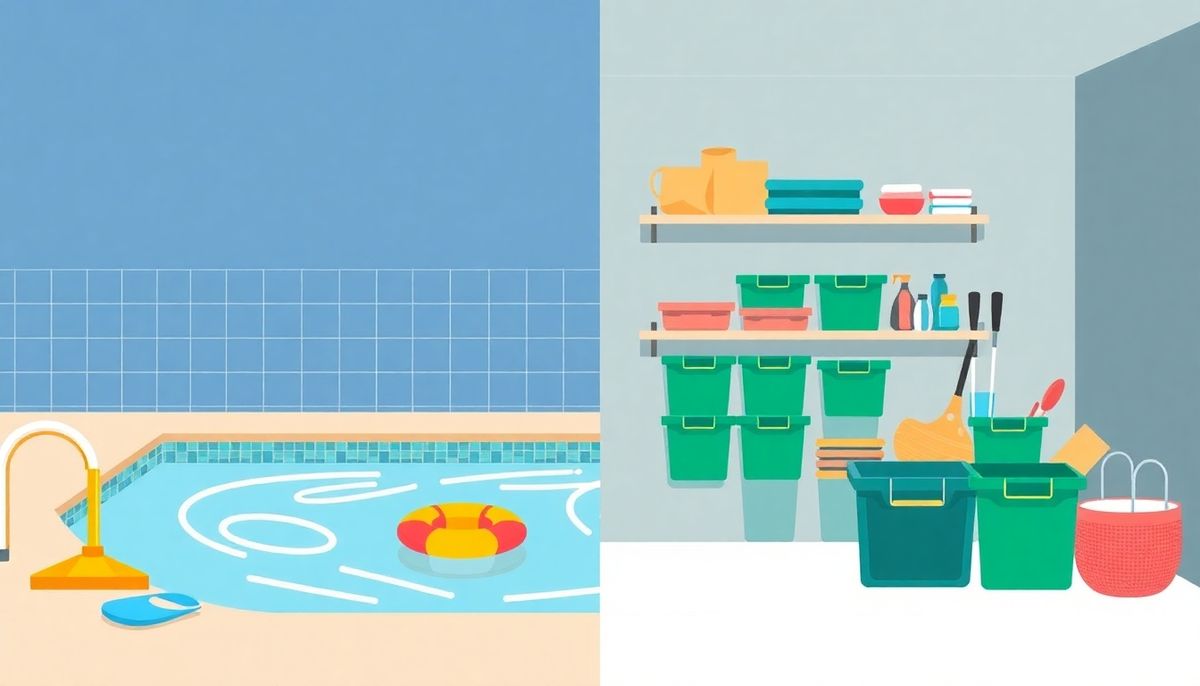
When the days grow cold, it's time to say goodbye to the pool for the season. This isn't just about stowing the cover. You also need to store your accessories so they're ready next summer.
Ladders and rails
Start with ladders and rails. A long winter outdoors corrodes these metal parts, and leaving them in place can keep your cover from fitting snugly. Once you remove them, clean them well and let them dry before tucking them into a garage or shed.
Toys, tools, and fittings
Next, turn to smaller items like pool toys, floats, and cleaning gear. These easy-to-forget accessories can turn brittle in freezing temperatures. A rinse and dry works wonders before you store them in a large, sealable bin, which keeps everything organized and dust-free.
It's also smart to remove and clean your skimmer baskets, diving boards, and any removable lighting. Put fittings and screws in labeled bags so you don't lose them. If you've got a pool vacuum or automatic cleaner, drain it well to keep mold from growing. Spend a few hours on this and you get more years out of your gear.
Clean and Prepare Pool Equipment
The tools that keep your pool clean don't get much thought, but as the season winds down, a little care makes a real difference when it's time to reopen. Cleaning and prepping your equipment now is an investment in how long your gear lasts.
Pump and filter
Start with the pump and filter. Think of all the grime they've sifted through all summer. Clean them well now and you spare yourself a nasty surprise in spring. Take apart the filter, whether it's cartridge, sand, or diatomaceous earth (D.E.), and give it a good soak or backwash. Drain the pump of any leftover water so it doesn't freeze and crack over the cold months.
Hoses and electronics
Next, the hoses and fittings. Make sure they're clean and dry before you store them, since leftover moisture can bring mildew or ice damage. Coil the hoses neatly and drop the smaller fittings in a labeled box so setup is quick next year.
Electronics like heaters and chlorinators deserve a moment, too. Cut their power, wipe off any residue, and store them indoors if you can. A little effort now means working equipment waiting for you when the pool calls again.
Conclusion
Closing your pool right takes a little effort now, but you'll thank yourself when spring arrives and everything's ready to go.
Want to get even better at this? Our free Pool School course covers everything you need to know about pool care. From basic maintenance to advanced troubleshooting, you'll learn how to:
- Save thousands on pool repairs and chemicals
- Keep your water crystal clear year-round
- Prevent and solve common pool problems
- Master water chemistry with confidence
Join over 10,000 pool owners who have already changed the way they care for their pools. Get started with our free Pool School course today!
What you need
Grab a water test kit, winterizing chemicals (shock, algaecide, and a metal sequestrant), pool antifreeze, a cover pump, and a snug winter cover to close your pool the right way.