



Key Takeaways
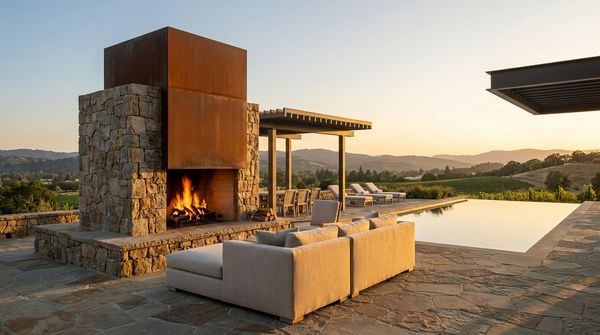
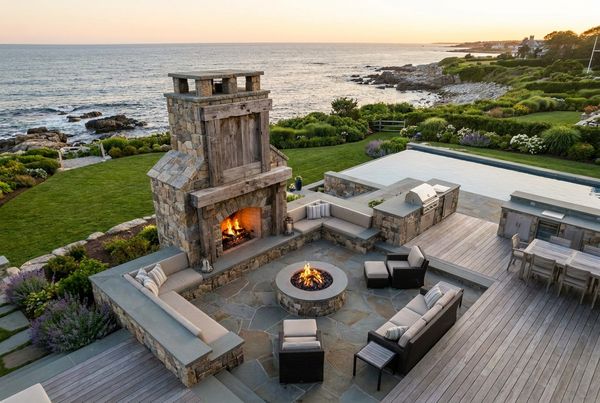
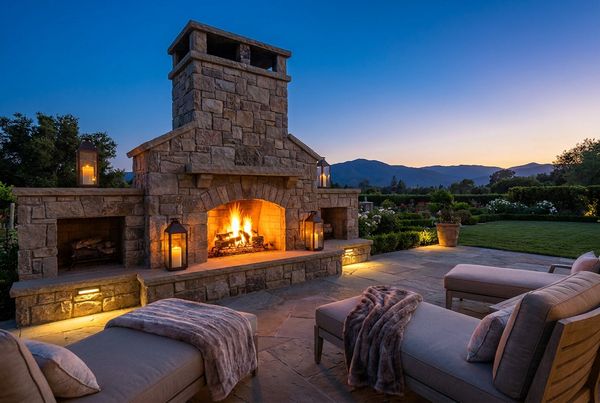
- An outdoor fireplace is the vertical fire feature — a tall masonry wall that gives a patio architecture, shelter, and a true focal point, where a fire pit stays low and social.
- Style follows your home: stacked stone and brick read traditional, modern linear and smooth stucco read contemporary. Gas is the low-effort default; wood delivers crackle and scent.
- Two-sided see-through designs and TV pairings are the fastest-growing 2026 trends — plan the gas line, flue, and wiring during construction.
An outdoor fireplace is the piece of a backyard that reads as architecture. Where a fire pit sits low and social, a fireplace stands tall — a masonry wall that anchors the patio, blocks the wind, throws a warm glow across the seating, and gives the whole space a focal point to gather around. Of all the outdoor fireplace ideas we get asked about, the best ones start with one question: do you want a design anchor, or a gathering circle? A fireplace is the anchor.
Outdoor fireplace vs. fire pit: which do you want?
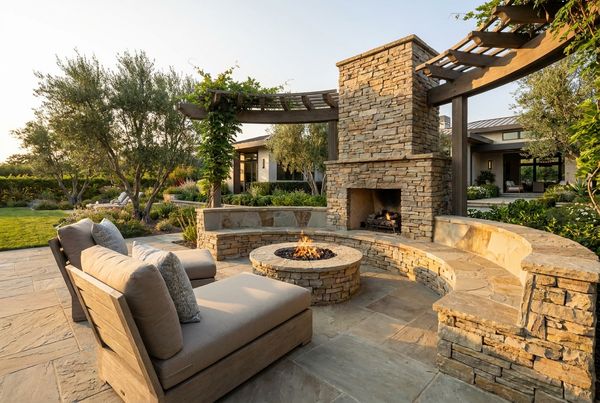
The first decision isn't style — it's whether you want a fireplace at all, or a fire pit. They solve different problems. A fireplace is vertical: a tall structure with a firebox, a chimney or flue, usually a mantel and a hearth. It defines an edge of the patio, shelters you from wind, and directs its heat and light in one direction — toward the seating. It reads as a room.
A fire pit is horizontal and open. People circle it, faces lit all around, and it disappears when it's cold. Neither is "better." If you want a design anchor that makes the space feel like an outdoor living room — and gives you a wall to hang a mantel, stack wood, or mount a TV — the fireplace wins. If you want a casual, all-directions gathering spot, go with the pit. In a generous yard, we often build both and let them do different jobs.
Fireplace styles: stacked stone, modern linear, stucco & brick
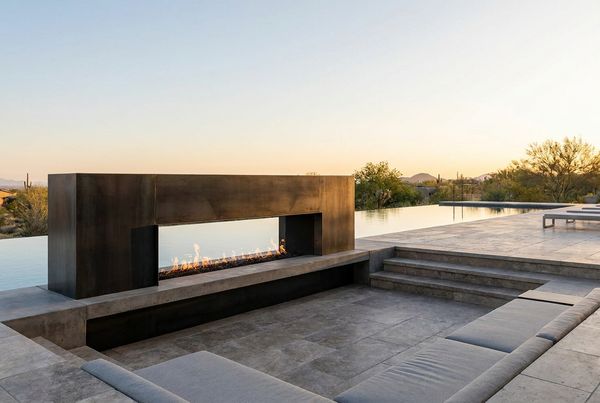
Style follows your house. The four families we build most:
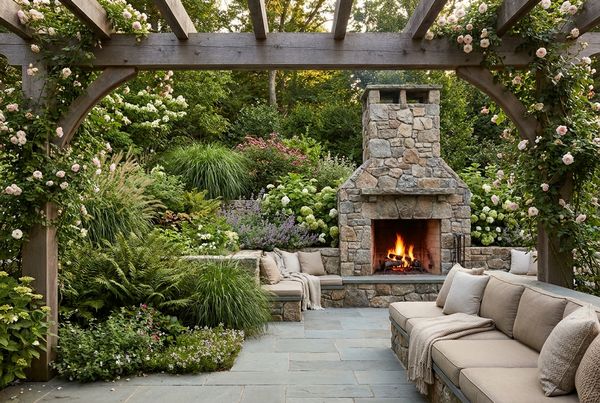
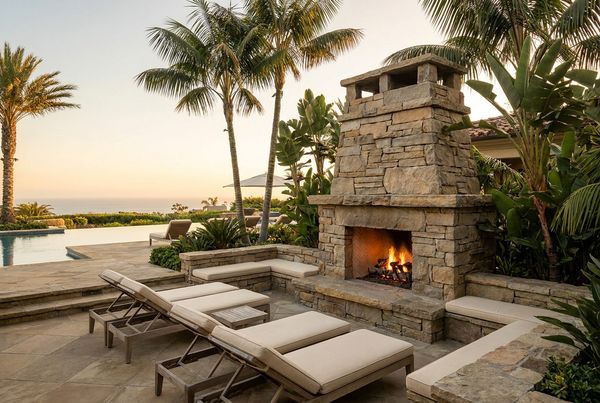
- Stacked stone — the most popular look, and for good reason. A dry-stack ledgestone or fieldstone face reads warm, textural, and timeless, and it flatters almost any home from rustic to transitional.
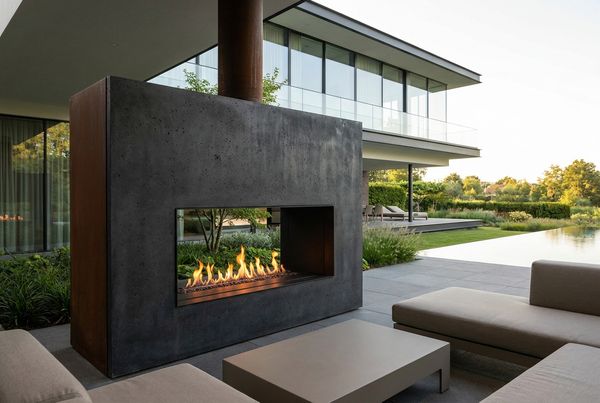
- Modern linear — a wide, low firebox in a clean rectangular surround, often clad in smooth stucco, large-format porcelain, or board-formed concrete. This is the contemporary move and it pairs beautifully with a modern patio.
- Smooth stucco — a tall, minimalist plaster wall that leans Mediterranean or modern depending on the color and cap. Clean, affordable, and a great backdrop for a Spanish or desert-style yard.
- Brick — classic and cozy, especially in a rustic or traditional backyard. A running-bond brick fireplace with a thick timber mantel is pure nostalgia done right.
Match the fireplace to your home's material and lines and it will look built-in rather than bolted-on. In 2026 we're seeing the strongest pull toward softened-geometric linear fireboxes and warm stacked stone — the two ends of the spectrum both selling well.
Gas vs. wood: how to choose
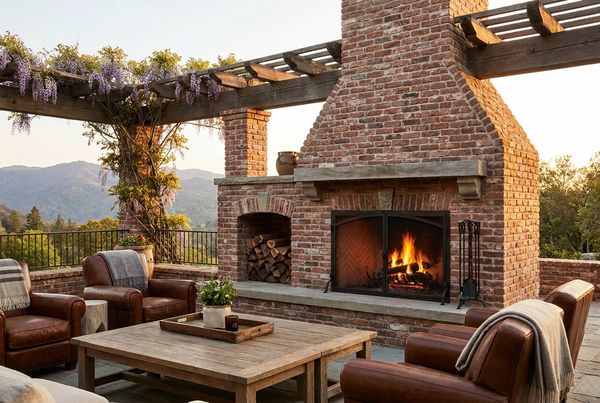
Fuel shapes everything else — placement, venting, cost, and how often you actually light it. Gas (natural gas or propane) is the modern default for most backyards: instant ignition at a switch, no smoke, no ash, effortless shut-off, and it's frequently permitted where open wood fires are restricted. Wood-burning fireplaces deliver crackle, scent, and campfire nostalgia gas can't fake — but they need a proper chimney for draft, more cleanup, and a place to keep dry wood.
| Factor | Gas (natural gas / propane) | Wood-burning |
|---|---|---|
| Ignition | Instant, switch or key | Build and light a fire |
| Smoke & ash | None | Smoke, ash, cleanup |
| Venting | Simpler flue or vent-free options | True chimney & draft required |
| Local codes | Often allowed in burn bans | Frequently restricted |
| TV pairing | Easier (less heat & smoke) | Harder near the screen |
| Ambiance | Clean, controlled flame | Crackle, scent, nostalgia |
| Best for | Modern, high-use, covered patios | Rustic, campfire ritual |
What we think
For a fireplace that gets used, we'd default to gas with a switch or remote ignition — you'll light it on a cool Tuesday you'd never bother building a wood fire for, and that's the whole point. Save wood-burning for a rustic yard where the ritual is the reason. Either way, if concrete is being poured, run the gas line and any wiring now; retrofitting into a finished patio is the expensive way to do it.
Two-sided & see-through fireplaces
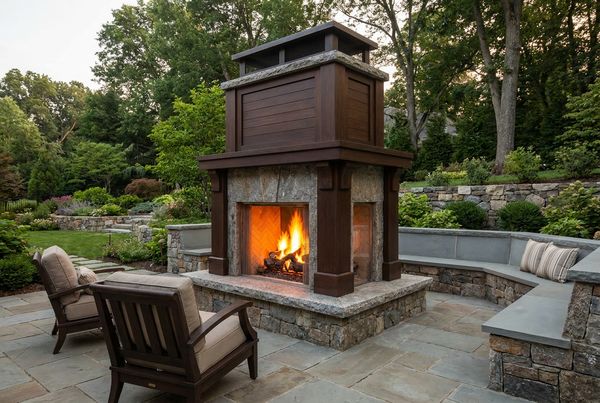
The two-sided, see-through fireplace is one of the fastest-growing outdoor fireplace ideas of 2026, and it's easy to see why. A single firebox open on both faces can divide two spaces while linking them with fire — the dining terrace on one side, the lounge on the other, or the indoor room and the covered patio sharing one hearth. You get a partition that doesn't wall anything off.
It's a more involved build than a standard single-face fireplace: the firebox, glass (if enclosed), and venting all have to be engineered for a two-sided draft, and the structure usually needs to stand free rather than lean against a wall. But as a way to define an outdoor room without closing it in, nothing else does it as elegantly. If your patio flows into the house or splits into two zones, this is the move worth the extra spend.
Pairing a fireplace with an outdoor TV
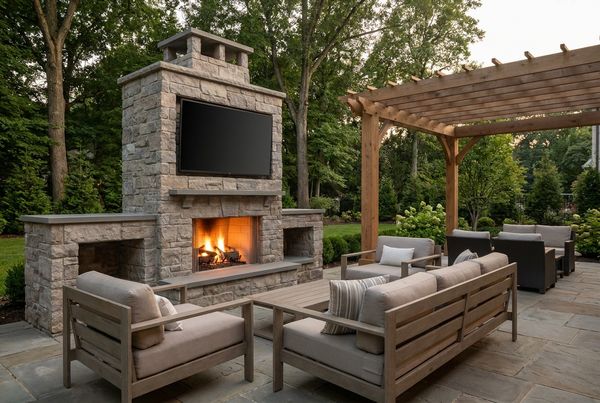
The fireplace-and-TV wall has become the default entertainment setup for covered outdoor living, and it's a genuinely great one: fire below, screen above, both aimed at the sofa. A fireplace gives you the one thing a TV needs — a tall, solid, weather-protected wall to mount on — and the combination turns a patio into a true second living room for game day and movie nights.
Do it right and it's flawless; do it wrong and you cook the electronics. Use an outdoor-rated TV, give it enough height above a heat-managed firebox (a taller mantel and a proper heat shelf help), and run power plus low-voltage wiring inside the wall during construction so nothing shows. This is another reason gas earns the nod here — less heat and no smoke drifting across the screen. Pair it with the right outdoor furniture and you've built the most-used spot in the yard.
Materials, mantels & the finishing details
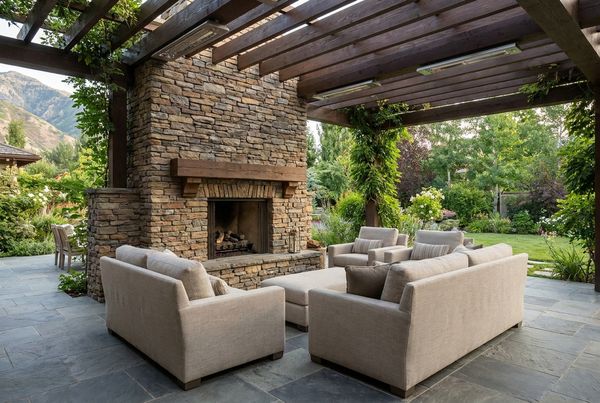
The bones of a fireplace are simple; the details are what make it look intentional. The face carries the style — stacked stone, brick, stucco, or large-format porcelain over a masonry or steel-framed core. The mantel is the signature line: a rough-sawn timber beam for warmth, a floating concrete slab for modern, or a cut-stone shelf for something classic. Keep the mantel material rated for outdoor heat and weather.
Don't skip the hearth and the cap. A raised hearth doubles as casual bench seating and lifts the firebox to a comfortable viewing height; a clean cap or chimney shroud finishes the top so the structure doesn't read unfinished against the sky. Built-in wood storage — a niche or two flanking a wood-burning firebox — is both practical and a handsome design detail. Tie the veneer and coping into your patio and hardscape materials so the fireplace feels like it grew out of the space.
Placement, clearance & codes
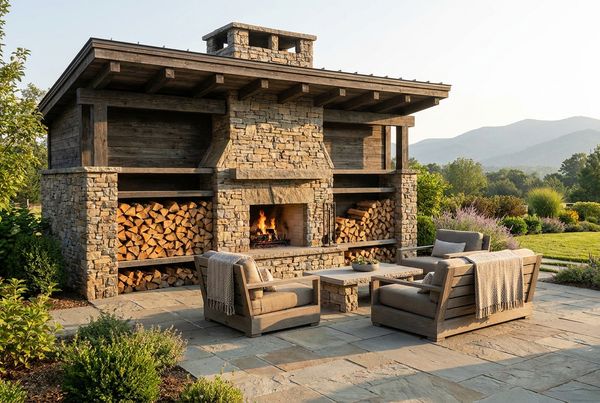
Fire is wonderful and it is also fire, so placement is where the pros earn their keep. A fireplace throws real heat and, if wood-burning, real smoke, so it wants a comfortable buffer from the house, the seating, and anything overhead — and it wants that chimney to draft cleanly away from where people sit. On a covered patio, venting is the whole ballgame: a wood-burning unit needs a chimney that clears the roofline for proper draft, and any unit needs listed clearances from the ceiling and framing. Gas units are generally easier to tuck under cover.
We won't quote setback numbers here, because they vary by unit, fuel, and jurisdiction. Always follow the manufacturer's listed clearances and your local building and fire codes, and pull the permits — those are the figures that actually govern your build, not a rule of thumb from a blog. If the fireplace shares a wall or roof with the house or a covered structure, coordinate the fireplace, chimney, and roof together during design. When in doubt, ask the licensed pro doing the install.
What an outdoor fireplace costs
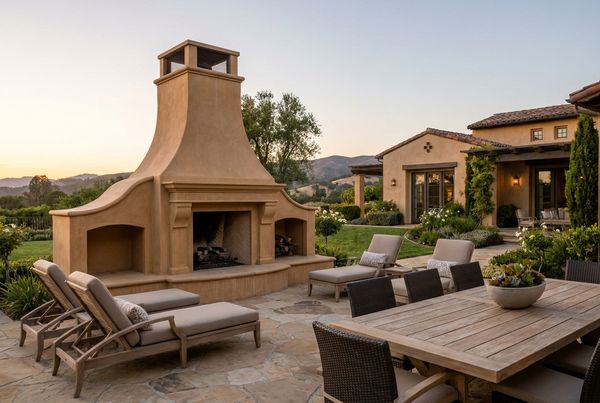
Budgets swing widely, so treat these as ballpark US 2026 ranges, not quotes. A compact prefab gas fireplace dropped onto a prepared pad can land in the low thousands. A mid-range stacked-stone or brick masonry fireplace with a mantel, hearth, and a modest chimney typically runs into the mid-five figures once veneer and labor are counted. A large custom two-sided showpiece with premium stone, a TV wall, and integrated wood storage climbs from there.
The biggest cost movers are fuel type (a wood chimney and its footing cost more than a gas vent), material (hand-set natural stone versus stucco), height and mass, and whether it's two-sided. Get itemized bids and confirm exactly what's included — the gas line, veneer, cap, footing, and permits are the line items that quietly balloon a number. If you're already investing in an outdoor kitchen or pool, folding the fireplace into that build is far cheaper than adding it later.
Using it year-round: maintenance and comfort
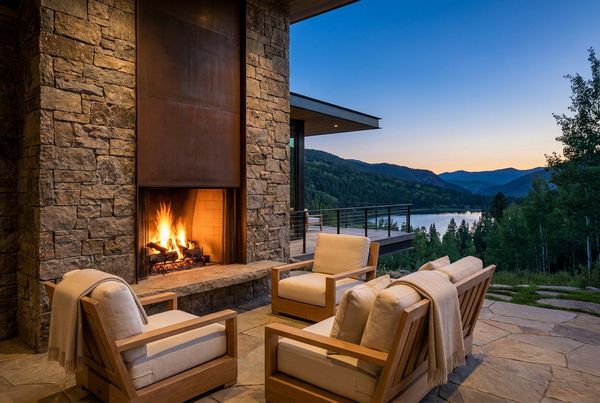
A fireplace earns its cost in the shoulder seasons — the cool spring and fall evenings when a fire pulls everyone outside long after they'd otherwise have gone in. To actually get that use, design for comfort, not just looks. Orient the seating to catch the radiant heat, keep the firebox at a height you can feel from a chair rather than tucked too low, and give the space some wind shelter; a fireplace against a wall or under a covered patio holds warmth far better than one exposed on all sides. Pair it with the right outdoor furniture in performance fabric so the seating is inviting the moment the temperature drops.
Upkeep is modest but real. A gas fireplace mostly needs the burner and any glass wiped down and an occasional check of the ignition and gas connection — one of the reasons it gets lit so much more often than wood. A wood-burning fireplace needs the firebox and chimney cleaned to keep the draft healthy and creosote in check, plus somewhere dry to store seasoned wood. Either way, sweep leaves and debris out of the firebox between uses, and cover or cap the flue in the off-season so rain and nesting animals stay out. Tie the hearth and veneer into your patio materials and the fireplace ages as gracefully as the rest of the hardscape.
How to choose the right fireplace for your yard
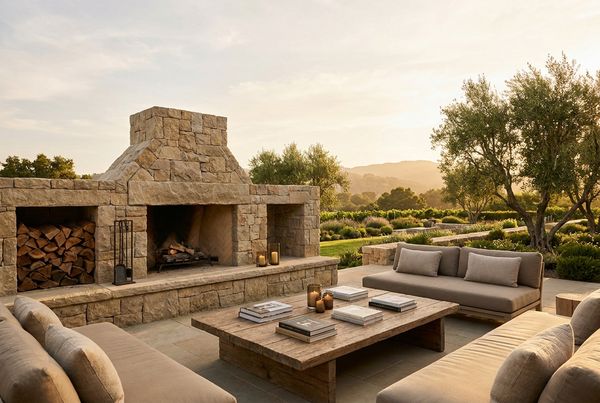
If the options feel overwhelming, narrow it with three questions. First, fireplace or fire pit? A fireplace is the vertical design anchor that gives a patio a wall and a focal point; a fire pit is the low, all-directions gathering circle. If you want a defined outdoor room, the fireplace wins. Second, gas or wood? Gas gets lit far more often because it's instant and clean, so it's the right call for most high-use patios; save wood for a rustic yard where the ritual is the reason. Third, which style matches the house? Stacked stone and brick read traditional, smooth stucco and modern linear read contemporary — match the fireplace to your home's material and lines and it looks built-in rather than bolted-on.
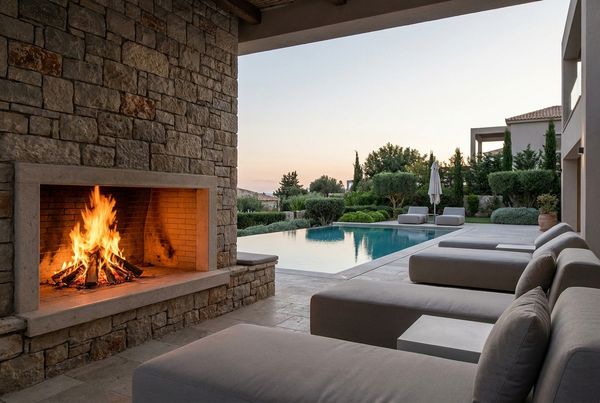
The one decision that outlasts all the others is placement, and it's where planning pays off most. Run the gas line, flue, and any TV wiring during construction — retrofitting them into finished hardscape is the expensive way to do everything. If you're already building an outdoor kitchen or a pool, folding the fireplace into that project is far cheaper than adding it later. And poolside, set it where its glow reflects across the water at night; that reflection is what turns a fire feature into the reason people stay outside.
The fireplace as a backyard focal point
What we'd build
On a budget, a gas fireplace with a stucco or stacked-stone face against the patio's back edge gives you a true focal wall for a sensible price and gets lit constantly. Building an outdoor living room? Go two-sided see-through to split lounge and dining, or run the fireplace-and-TV wall under a covered patio. Poolside, set the fireplace where its glow reflects on the water. Whatever you choose, plan the gas line, flue, and wiring during construction.
The trends worth chasing in 2026 are the ones that get the most use: modern linear fireboxes and warm stacked stone at the two ends of the style spectrum, two-sided see-through designs that carve an outdoor room out of open space, TV-and-fireplace walls for covered patios, and above all a fireplace that acts as the focal point the whole yard orients around. Set it where it reflects across the pool at night and it becomes the reason people stay outside long after the sun is gone. Round out the space with the right outdoor furniture, browse the full patio ideas hub, and when a fire pit is more your speed, compare the fire pit options too.
Design Gallery
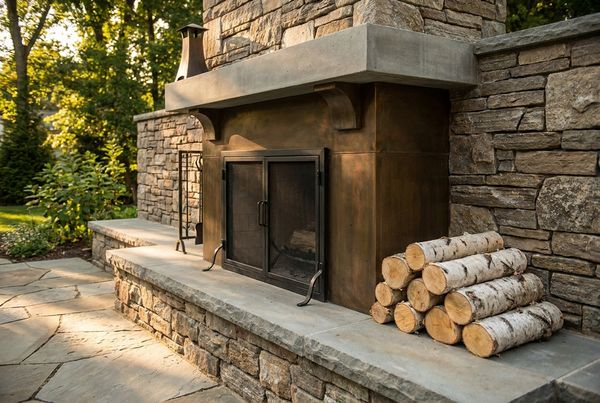
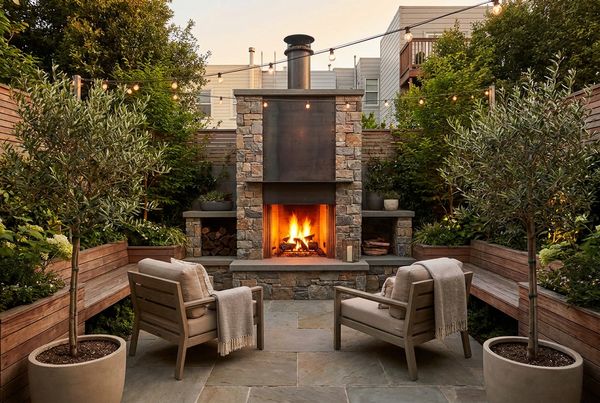
5 more ideas to save — tap any photo to view full screen.

Kelly E.
Pool Design Editor, PoolPad
Kelly has spent 10+ years around residential pools — planning projects, testing gear, and documenting backyard builds for PoolPad. Each design guide is checked against current construction methods and material pricing.
Frequently Asked Questions
Outdoor fireplace or fire pit — which should I choose?
Gas or wood-burning outdoor fireplace?
Can I mount a TV above an outdoor fireplace?
How far does an outdoor fireplace need to be from the house and other structures?
Can an outdoor fireplace go on a covered patio?
What does an outdoor fireplace cost?
How much maintenance does an outdoor fireplace need?
When is an outdoor fireplace most useful?
Can I put an outdoor fireplace next to my pool?
Ready to build your dream backyard?
Compare local, vetted pool builders and get matched with pros who can bring these designs to life.
Find a Pool Builder Near You