



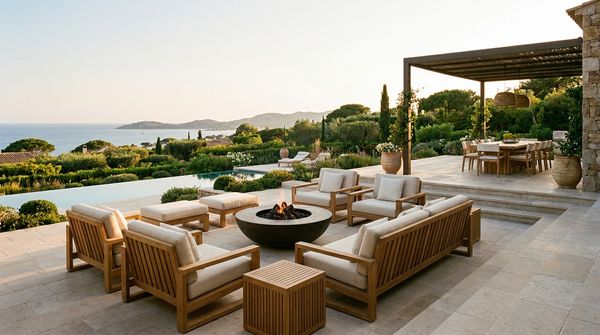
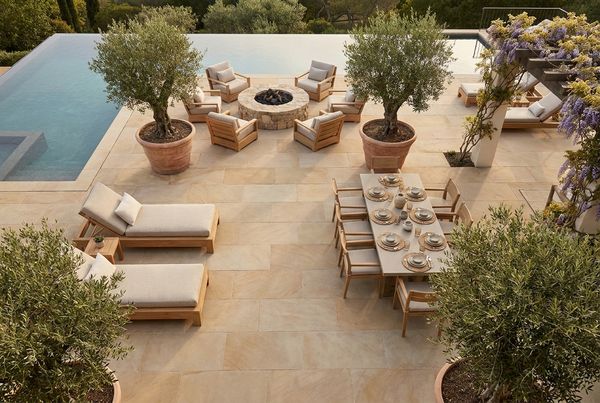
Key Takeaways
- Teak, powder-coated aluminum, HDPE and all-weather wicker are the frames that actually survive sun and chlorine; skip untreated steel and real rattan outdoors.
- Design in zones — dining, lounge, loungers and maybe a bar — so the space works from breakfast to a late-night swim.
- Performance fabrics (solution-dyed acrylic) and a plan for covers or storage are what keep furniture looking new for a decade, not a season.
Outdoor furniture is what actually turns a patio or pool deck into a place people want to be — but it also lives the hardest life of anything in your backyard, baking in UV, taking splashes of chlorinated water, and weathering every storm. Buy the wrong frame or fabric and it's faded, wobbly, and rusting within two seasons; buy right and it looks good for a decade. After years of specifying furniture for poolside builds, here's how the real options compare — and where we'd spend and save.
Zones: how to plan the layout
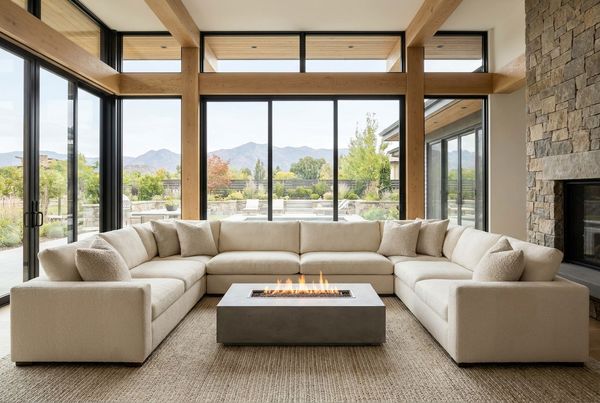
Before you shop for a single chair, decide what the space needs to do. The best outdoor furniture plans start with zones — purposeful areas that each earn their footprint — rather than a scattering of mismatched pieces. Most backyards want some mix of these:
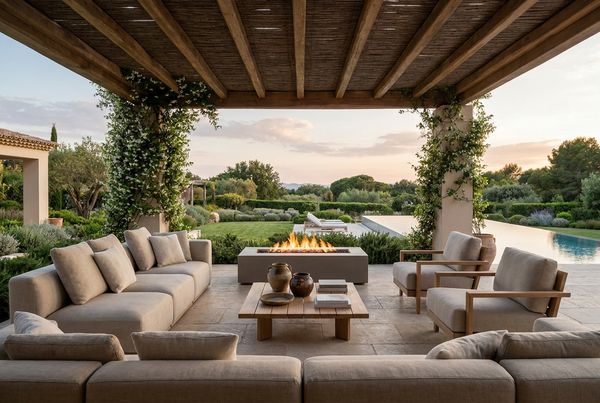
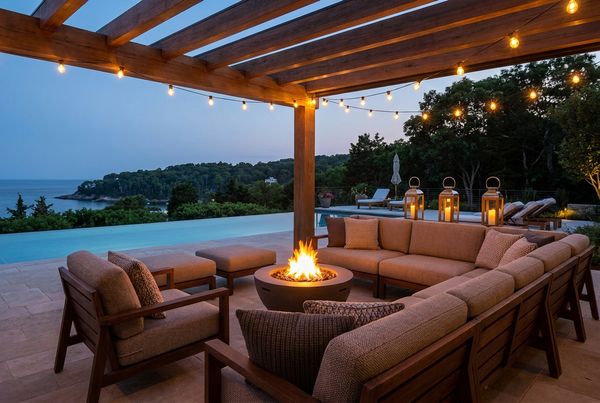
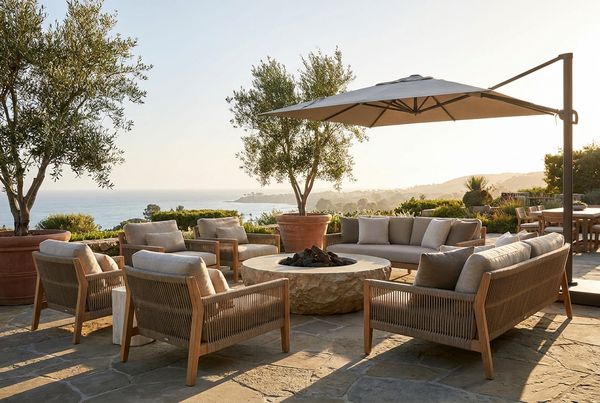
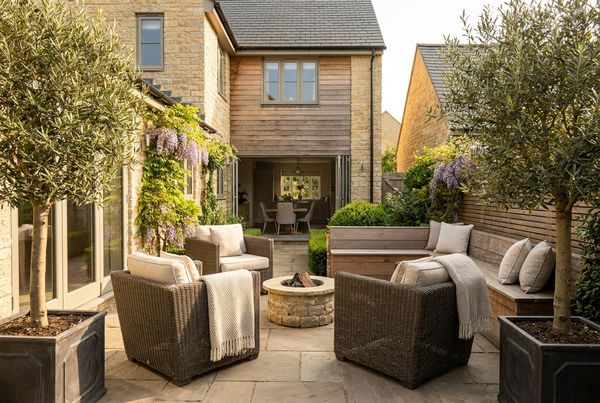
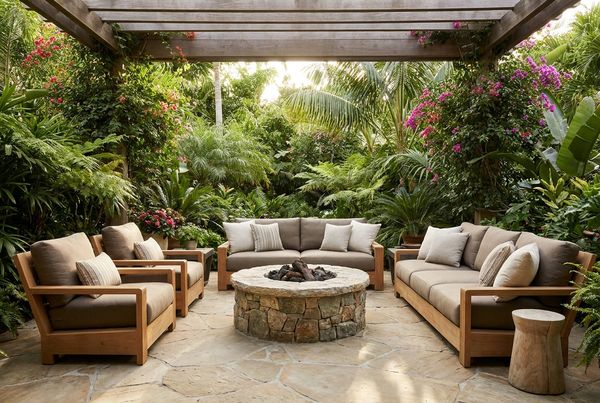
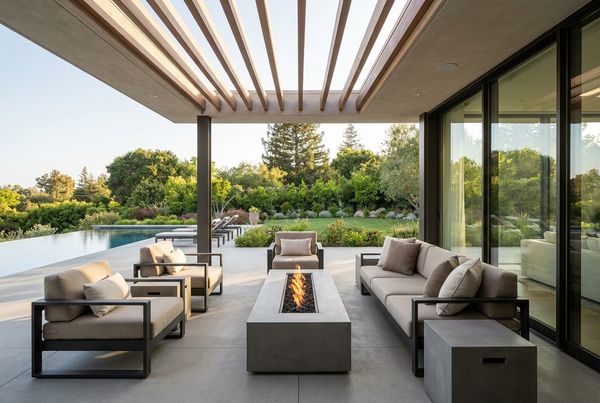
The dining zone is anchored by a table and needs the most clearance so chairs can pull out; put it near the grill or outdoor kitchen. The lounge or conversation zone is where people relax after a swim — a sectional or a pair of deep chairs around a low table or fire feature. Sun loungers line the deck for anyone who wants to actually catch the sun by the water. A bar with stools turns a counter or outdoor kitchen ledge into a social hub, and a daybed gives the pool a shaded spot to sprawl. You won't fit every zone in every yard — pick the two or three that match how you'll really use the space.
Materials that survive sun & chlorine
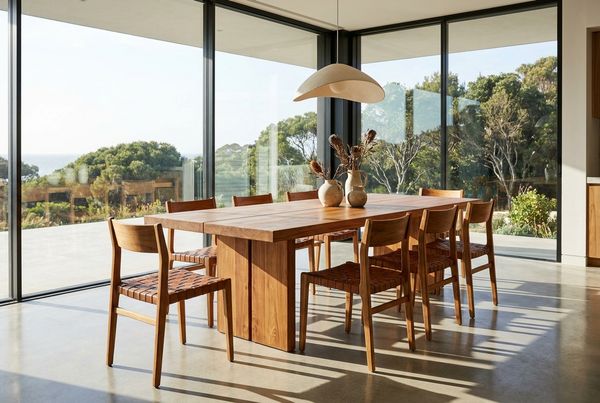
This is where most of the money — and most of the regret — lives. Outdoor furniture takes a beating from UV, moisture, and, near a pool, chlorine and salt. Four frame materials genuinely hold up; a couple of popular-looking ones do not. Here's the honest breakdown.
| Material | Look | Chlorine / sun | Upkeep | Relative cost |
|---|---|---|---|---|
| Teak | Warm, natural, timeless | Excellent | Greys unless oiled | $$$$ |
| Powder-coated aluminum | Light, modern, clean | Excellent, rust-proof | Very low | $$–$$$ |
| All-weather resin wicker | Soft, textured | Very good | Rinse occasionally | $$–$$$ |
| HDPE poly lumber | Solid, casual | Excellent, fade-proof | Nearly none | $$–$$$ |
| Untreated steel / iron | Classic, heavy | Poor — rusts fast | High | $$ |
Poolside verdict: powder-coated aluminum and HDPE handle chlorine and splashing best; teak is beautiful but greys; skip untreated steel and real rattan entirely.
How to choose the right frame material
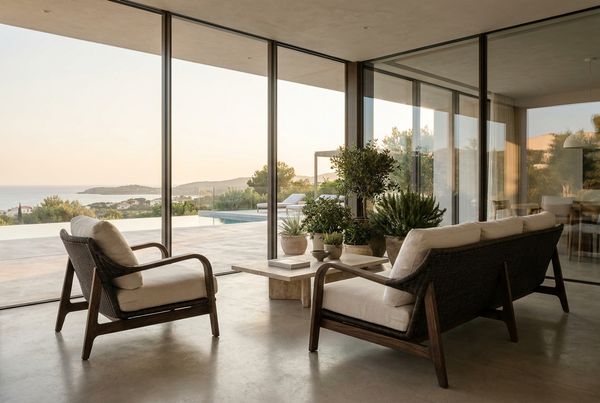
Start with your climate and how close the water is. Right at the pool's edge, powder-coated aluminum and HDPE are the safe bets — they laugh off chlorine, don't rust, and stay put through pool-day splashing. A few steps back on a covered patio, you have more freedom.
Then match the look you want. Teak is the premium natural choice: dense, oily, and rot-resistant, it weathers to a soft silver-grey (or stays honey-toned if you oil it annually). All-weather resin wicker wraps an aluminum frame in woven synthetic fibers for that relaxed, textured look without the rot of the real thing — just make sure the frame underneath is aluminum, not steel. HDPE, made from recycled poly lumber, is nearly indestructible and fade-proof, perfect for Adirondacks and casual dining.
Then weigh weight and upkeep. Aluminum is light enough to rearrange easily but can blow around in wind; teak and HDPE are heavier and stay put. Aluminum and HDPE ask essentially nothing of you; teak wants an occasional oiling only if you're chasing the golden color. And whatever you choose, avoid untreated steel or iron and real rattan near a pool — the first rusts, the second rots.
What we think
For a real poolside build, we spec powder-coated aluminum frames with solution-dyed acrylic cushions as the workhorse — rust-proof, light, and easy to live with. Then we splurge on one hero piece: a proper teak daybed, a designer sectional, or a sculptural hanging chair that gives the space personality. Skip the cheap steel "wicker" sets from the big-box store — the frame rusts inside the weave and you'll be replacing them in three summers. Spend on the frame and the fabric; those are the two things you can't fake.
Cushions & performance fabrics
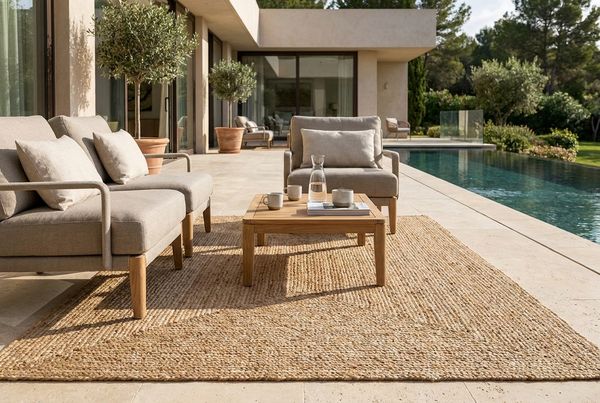
The frame is only half the story — the cushions are what fade, mildew, and stain first, and they're often what makes an old set look tired. The single most important upgrade is solution-dyed acrylic fabric (brands like Sunbrella), where the color runs all the way through the fiber. It resists UV fading, mildew, and stains far better than printed polyester, and it wipes clean with soap and water.
Look for quick-dry foam in poolside cushions so wet swimsuits aren't a problem, and consider sling seating — a taut single layer of fabric — for loungers and dining chairs right by the water, since it dries in minutes and needs no cushion at all. Whatever you pick, plan to bring cushions inside or into a deck box during storms and over winter; that alone doubles their life. An outdoor rug under the lounge grouping ties the pieces together and warms up the hardscape underfoot.
Layout, scale & traffic flow
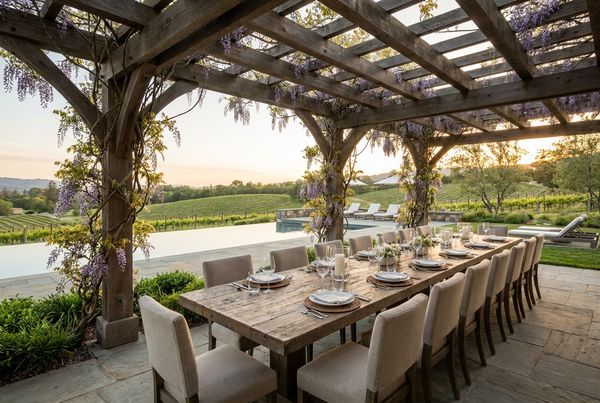
The most common furniture mistake we see isn't the wrong style — it's the wrong scale. A giant sectional swallows a small patio; a lonely bistro set floats in a big one. Measure the space first, then leave at least 3 feet of walking clearance around each grouping so nobody has to shuffle sideways past the sofa.
For a dining zone, allow room for chairs to pull all the way out — a table for six wants roughly a 12x12-foot footprint. A lounge grouping works best when every seat can reach a shared coffee table or fire feature without leaning. Orient seating toward the view — the pool, a fire feature, or the sunset — not toward the house. And put the dining and cooking zones near the outdoor kitchen so food doesn't travel far. Shade matters too: furniture under a pergola or cover gets used far more than furniture baking in the open, so plan seating where the shade actually falls.
Poolside-specific picks
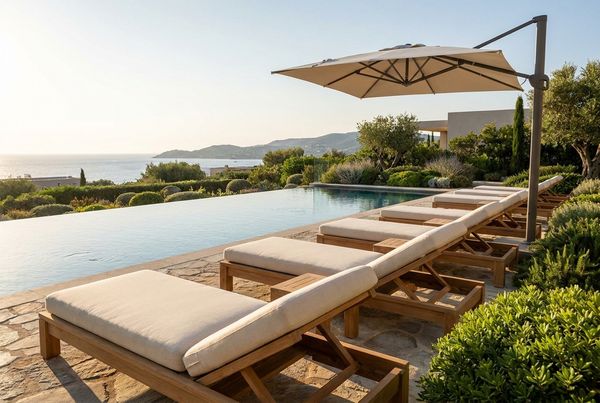
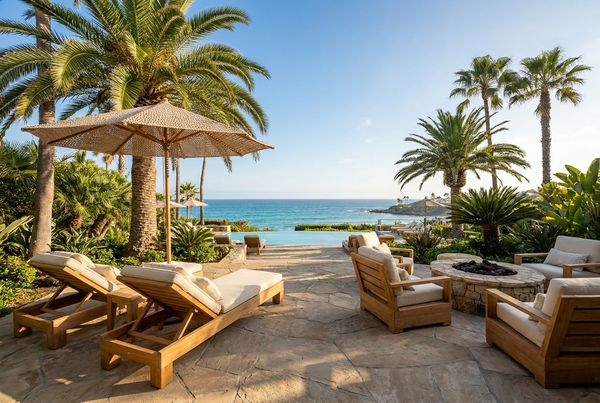
Right at the water's edge, a few pieces earn their spot every single pool day. Chaise loungers are the non-negotiable — line them along the deck in powder-coated aluminum or HDPE, ideally with a wheeled design so you can chase or dodge the sun. Look for adjustable backs and quick-dry slings or cushions.
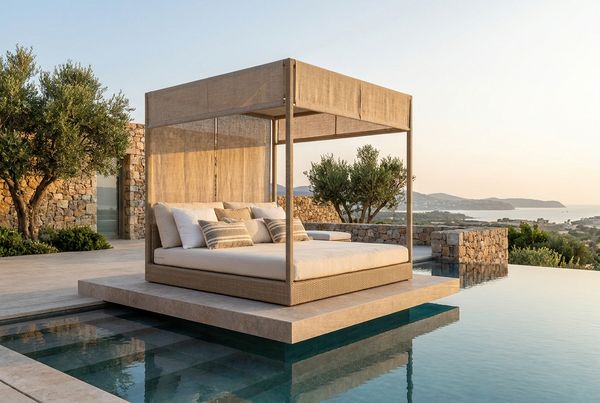
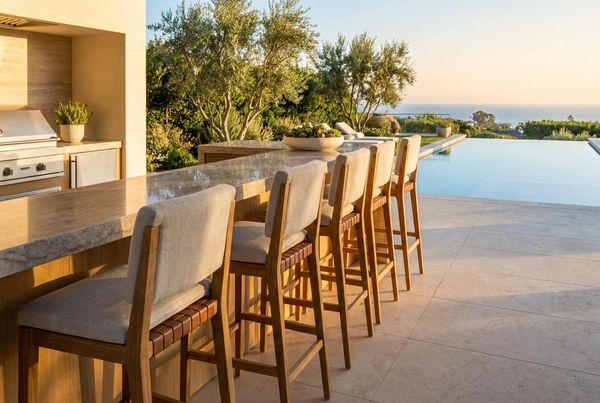
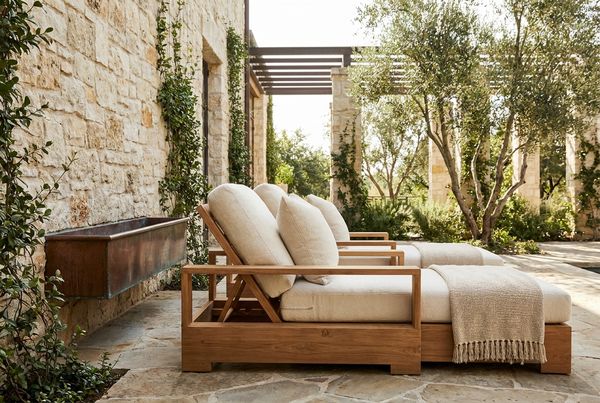
A poolside daybed — especially a canopied one — is the resort-style upgrade that instantly elevates a deck, giving swimmers a shaded place to sprawl and dry off. A bar with stools at an outdoor kitchen counter or a swim-up ledge turns the pool into a social hub; choose backless counter stools in aluminum so they tuck away and shrug off splashing. And if you have a shaded corner or a cabana, a hanging egg chair or a cluster of loungers inside it makes the perfect retreat from the midday sun.
Weatherproofing, covers & storage
The difference between furniture that lasts three years and furniture that lasts fifteen is usually not the price — it's the care. Even the toughest aluminum or HDPE frame lasts longer, and cushions last much longer, when they're protected from constant sun and standing water.
The simplest fix is shade: furniture under a covered patio, pergola, or cabana ages far more slowly than furniture in the open. Beyond that, fitted covers keep rain and debris off pieces you leave out, and a deck box or storage bench gives cushions a dry home between uses without a trek to the garage. In freezing or harsh climates, storing everything indoors over winter is the single best longevity move you can make. Aluminum and HDPE can genuinely stay out year-round; teak survives but lasts longer sheltered; cushions should always come in.
Budget vs. premium builds
You can furnish a backyard beautifully at very different price points — the trick is knowing where to save and where to spend. Here's how a budget build and a premium build typically differ.
| Element | Budget build | Premium build |
|---|---|---|
| Lounge seating | Mid-range aluminum set | Deep-seat teak or designer sectional |
| Loungers | Basic resin or sling chaises | Teak or wheeled designer loungers |
| Cushions | Printed polyester | Solution-dyed acrylic (Sunbrella) |
| Dining | Aluminum table & chairs | Teak or HDPE table, sling chairs |
| Statement piece | Umbrella & string lights | Canopied daybed or hanging chair |
Our honest advice: don't spread a stretched budget thinly across everything. A modest aluminum set with one standout piece — a real teak daybed or a sculptural hanging chair — looks far more considered than a full suite of flimsy pieces. And never skimp on the cushion fabric; performance acrylic is the upgrade you'll feel every summer. Spend where people sit and gather; save on the pieces that just fill space.
How to spot furniture that actually lasts
Two sets that look identical online can be a decade apart in real life, and the difference hides in details you can check. On frames, look for welded joints rather than bolted or screwed ones on aluminum — welds don't loosen and rattle after a season of being dragged around. On any "wicker" set, confirm the frame underneath the weave is aluminum, not steel; a steel core rusts inside the weave where you can't see it, and that's how the cheap big-box sets fail in three summers. On teak, denser, tighter-grained wood with fewer knots ages better and is worth the premium.
On cushions, the single tell is whether the fabric is solution-dyed acrylic (the color runs through the fiber) or printed polyester (the color sits on top and fades). Solution-dyed fabric like Sunbrella costs more but easily outlasts the cheaper stuff, so it's the better value over the life of the furniture. Check the zippers and foam too — quick-dry foam and rust-proof zippers are what keep poolside cushions usable after a wet swimsuit. Spend on the frame and the fabric, because those are the two things you genuinely can't upgrade later, and protect them with a plan for covers or storage as our covered patio ideas guide lays out.
Matching furniture to your pool and yard style
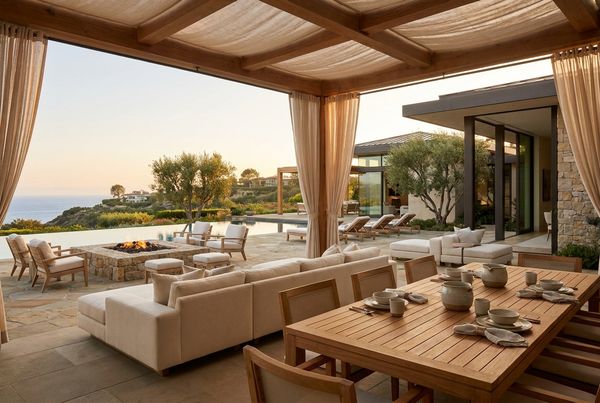
Furniture is where a lot of otherwise-considered backyards drift out of tune. The pieces should belong to the same design story as the pool, deck, and planting rather than being chosen in isolation from a sale. A modern yard wants clean-lined, low-profile pieces in aluminum or HDPE with restrained colors — the same discipline our design hub applies to the pool itself. A Mediterranean or Tuscan yard leans into teak and wrought iron with warm, earthy cushions that echo the terracotta and stone. A resort-style or tropical yard can carry all-weather wicker, canopied daybeds, and softer silhouettes.
The easiest way to keep it coherent is to pull your cushion and frame colors from materials already in the yard — the coping stone, the deck, the fireplace veneer — rather than adding a new palette. Warm neutrals, terracotta, olive, and sand are having a moment for exactly this reason: they sit quietly against most hardscape instead of fighting it. And place the furniture where the yard actually invites sitting — under a pergola, in the glow of an outdoor fireplace, or beside the pool where the loungers catch the sun. Furniture that matches the architecture and lands where people want to be is what turns a nice patio into a room.
2026 outdoor furniture trends
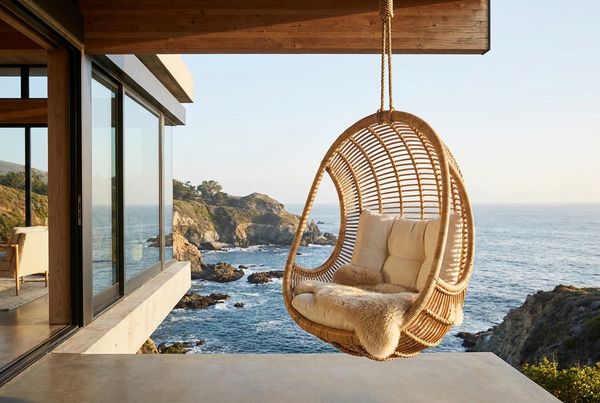
A few directions are genuinely worth following this year. Modular sectionals keep taking over — reconfigurable pieces you can rearrange for a big party or a quiet evening are the flexible heart of most lounge zones. Softened-geometric shapes — rounded arms, curved sofas, organic silhouettes — echo the same gentle curves showing up in pool design, replacing the hard right angles of the last decade.
On materials, HDPE and recycled-content frames are having a moment as buyers look for durability and sustainability in one. Earthy, warm palettes — terracotta, olive, sand, and warm neutrals — are replacing cool greys in cushions and frames. And the resort-at-home through-line ties it all together: canopied daybeds, sculptural statement chairs, fire tables wrapped in sectionals, and full outdoor rooms that make the backyard a genuine second living space. Pull a few of these together and your furniture doesn't just fill the patio — it makes the whole yard the place everyone wants to be.
Design Gallery
6 more ideas to save — tap any photo to view full screen.

Kelly E.
Pool Design Editor, PoolPad
Kelly has spent 10+ years around residential pools — planning projects, testing gear, and documenting backyard builds for PoolPad. Each design guide is checked against current construction methods and material pricing.
Frequently Asked Questions
What is the best material for outdoor furniture?
What outdoor furniture holds up best around a pool?
How much does outdoor patio furniture cost?
Do I need to cover or store my outdoor furniture in winter?
How do I choose the right size outdoor furniture for my space?
Are performance fabrics worth it for outdoor cushions?
How can I tell if outdoor furniture is good quality before buying?
How do I match outdoor furniture to my pool's style?
Where should I place outdoor furniture in the backyard?
Ready to build your dream backyard?
Compare local, vetted pool builders and get matched with pros who can bring these designs to life.
Find a Pool Builder Near You