



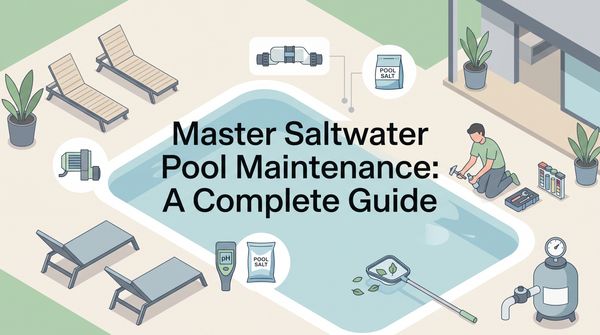
Salt water feels soft and gentle on your skin, and swimming in it is one of the real pleasures of owning a pool. I've spent plenty of afternoons floating in my own saltwater pool, and the payoff is a more natural swim, lower running costs, and far less of the itchy, red-eyed feeling you get from a heavily chlorinated pool. Keeping that water clear takes a slightly different approach, one that mixes a little science with a steady routine.
The words can sound intimidating at first. "Saltwater generator," "salinity levels" — it can feel like a foreign language. It's simpler than it looks. The whole thing comes down to keeping the right amount of salt in the water and making sure your equipment is doing its job. That means checking salinity regularly, ideally between 2,700 and 3,400 parts per million, and making sure your salt chlorinator is turning that salt into chlorine.
Saltwater pools are also more forgiving than chlorine pools when you balance chemicals. You still test pH, alkalinity, and calcium hardness on a regular basis, but it becomes second nature fast. The trick is understanding the why behind each step, not just the how. Get that down and these chores turn into quick, easy habits that keep your backyard sparkling all season.
Your Action Plan
- Test salinity and keep it between 2,700 and 3,400 PPM.
- Check pH weekly and hold it between 7.2 and 7.6.
- Keep free chlorine near 3 PPM and adjust your generator run time.
- Balance alkalinity (80-120 PPM) and calcium hardness (200-400 PPM).
- Inspect and clean the salt cell every three months.
- Check the pump, filter, and jets so water circulates evenly.
Balance Water Chemistry
The basics of saltwater chemistry
Keeping your chemistry balanced is a bit like tuning up a car — small, regular adjustments keep everything running. Your generator turns salt into chlorine for a gentler swim, but that process nudges your water off balance now and then, so regular checks keep it in line.
pH tends to creep upward in saltwater pools because of how the chlorine is made. High pH brings scale (a hard mineral crust) and cloudy water. Aim for 7.4 to 7.6, and lower it with a pH decreaser or pool acid when needed. A weekly test keeps small problems from becoming big ones.
Watch chlorine too, aiming for 3 PPM of free chlorine. Your generator should hold this steady, but double-check with a test kit. You'll occasionally boost it by hand after a pool party or heavy rain. Calcium hardness rounds out the big three: generators can add to calcium buildup, which wears down equipment, so keep hardness between 200 and 400 PPM and clean your salt cell regularly.
Test your water weekly — most saltwater problems start small and are cheap to fix if you catch them early.
Monitor Salinity Levels
Why salinity comes first
Salinity is the foundation of a saltwater pool, since it's what your chlorine production depends on. Instead of pouring in chlorine, your pool makes it from salt, so getting the salt level right is the whole ballgame.
A digital salinity tester or salt strips make checking easy, and you're aiming for 2,700 to 3,400 PPM. Most generators show a salinity reading, but testing by hand catches false readings before they cause trouble. After one stormy week I tested my pool and found the salinity had dropped low because rainwater had watered it down. A little salt fixed it — a good reminder to stay on top of things.
Heavy rain, evaporation, and added water all shift salinity. When you add salt, start small; it's far easier to add more than to pull extra out. Regular testing helps your equipment last and gives you a nicer, algae-free swim.
Balance pH and Chlorine
Keeping pH and chlorine in check
Watching pH and chlorine is one of the most important habits you can build. Making chlorine naturally pushes pH higher, so regular checks head off calcium buildup and rusting equipment.
Each week, test pH and chlorine with a liquid kit or strips, keeping free chlorine around 3 PPM. Your generator should handle it, but check by hand to catch surprises, and tweak the generator settings if chlorine drifts.
pH is the trickier one. It can climb past the ideal 7.2 to 7.6, leaving scale on surfaces and itchy skin. Bring it down with a pH decreaser or pool acid. Run time matters too — if pH keeps running high, try limiting the generator to no more than 10 hours a day.
Prevent Calcium Build-Up
Getting ahead of calcium buildup
Under that inviting surface hides a quiet troublemaker: calcium buildup. Left alone, it leaves crusty scale and can damage equipment. It usually comes from high pH and warm water, so testing and adjusting pH is your first defense. Aim for 7.2 to 7.6 to keep calcium from settling out, and a weekly check often catches a problem before it grows.
Your salt cell is a prime spot for deposits. Check it every three months. A gentle hose rinse is often enough; for stubborn scale, a diluted acid bath works well, though go easy — cleaning with chemicals too often wears the cell down over time.
Finally, keep calcium hardness between 200 and 400 PPM to cut down on scaling. Ignore hardness and you can end up paying for a pricey equipment replacement.
Manage pH Levels

pH: comfort and equipment life
Balancing pH might seem minor, but it keeps the water safe and comfortable and protects your gear. Saltwater systems run higher because of the byproducts of making chlorine, and unchecked pH means itchy skin and eyes, scale on your surfaces, and corroded equipment.
Aim for 7.2 to 7.6, and test weekly with a good liquid kit or digital meter. I've seen equipment corrode far faster than it should simply because pH was allowed to climb too high. When you adjust, reach for a pH decreaser or pool acid — muriatic acid is just standard pool acid, and lowering pH is a normal, easy part of the routine. Make small tweaks, since overcorrecting only creates new problems.
High pH is the single most common issue in saltwater pools, so keep it between 7.2 and 7.6.
#
Balance Water Chemistry
Regularly
Don't skip your regular checks
Making chlorine from salt doesn't mean you can skip chemical checks. I've seen firsthand how fast a pool turns cloudy when someone assumes the generator handles everything.
High pH shows up here again from those chlorine byproducts, so test weekly and adjust with a pH decreaser to head off scale and corrosion. Calcium collects on the salt cell, so check and clean it every few months. A hose rinse usually does it, with an occasional acid bath for stubborn crust. Steady monitoring is what keeps your water clear.
Cleaning the salt cell safely
In saltwater pools, calcium shows up as white flakes in the water or a crust on your salt cell, and it can shorten equipment life. Since generators tend to raise pH, test and adjust weekly, keeping pH between 7.2 and 7.6.
Every three months, take apart and inspect your salt cell. Rinse deposits with a garden hose, and for tougher buildup use a diluted mix of 5:1 water to acid. Always add acid to water, handle it carefully, and wear protective gear. Preventing scale is far easier than scrubbing it off later.
Test and Adjust Salinity
Setting salinity on a fresh fill
Once the pool is full, measure salinity with a digital tester. If you're below the ideal 2,700 to 3,400 PPM, add pool-grade salt at 99% purity. Sprinkle it across the deep end, brush to help it dissolve, and keep the water circulating for 24 hours so it spreads evenly.
If salinity is too high, dilute it. Drain part of the pool and top off with fresh water to lower the concentration. Always retest after any change to confirm you're back in range, so a rainstorm or splash-out doesn't quietly lead to corrosion.
Assess Salt Levels Regularly
Testing on a schedule
Checking salt is like taking your pool's pulse. The generator only makes chlorine when the salt is at the right concentration, so testing earns its keep. After a rainy week, watered-down salt can leave your generator making too little chlorine, and that shift isn't always easy to spot.
Get in the habit of testing salinity monthly, and again after heavy rain or big water changes. A digital tester gives you precise readings. While you're at it, keep an eye on calcium, alkalinity, and stabilizer too. A well-rounded routine shows you where things stand and heads off trouble before it costs you.
Monitor Salt Concentration Consistently
Keeping salt in the sweet spot
Your pool is always shaped by its surroundings: rain waters it down, evaporation concentrates it, and splash-out moves it around. Keep salinity between 2,700 and 3,400 PPM. During one scorching summer I watched a pool's salt level creep up unnoticed as water evaporated, ending in corroded equipment and swimmers with stinging eyes.
Test monthly with a digital tester or good salt strips, and act on the reading right away. Fresh water dilutes a high level, and a few more bags top up a low one. It's fine-tuning, not big dramatic changes.
Balance pH and Calcium Levels
pH and calcium together
Balancing pH and calcium is like cooking — you can't just toss things in and hope for the best. High pH, a common side effect of the generator, brings stinging eyes and scale, so test weekly with a kit or strips. After a week away, I've seen a pool turn into cloudy water with crusty scale along the tile line; fixing it took a pH decreaser and a careful eye on calcium hardness.
Calcium prevents corrosion but climbs fast and builds up in the generator, where it's easy to mistake for salt residue. Use a diluted acid solution sparingly, skip the hard scrubbing that damages sensitive parts, and inspect the cell every three months.
Maintain Generator and Salt Cell
The salt cell and generator
The salt cell and generator do the heavy lifting, turning ordinary salt into chlorine. The cell needs a watchful eye for calcium, which shows up as white, flaky deposits that hurt performance. I once noticed my chlorine dropping and found scale clogging the cell — a quarterly look heads off surprises like that.
Disconnect the generator and inspect the cell every three months. Rinse deposits with a hose, brush gently if needed, and skip hard scrubbing. For a deeper clean, mix a 5:1 water-to-acid solution and let it work for a few minutes, following the safety steps and the manufacturer's directions.
Clean Salt Cell Frequently
Make inspection a habit
Of everything on your list, the salt cell might matter most. High pH and warm water speed up calcium buildup, so check it every three months — set a reminder on your phone for the start of each season.
Turn off the system, remove the cell, and look for white, flaky deposits. A hose rinse might be enough; for stubborn buildup, a diluted water-and-acid mix usually does the trick. Wear protective gear, and don't clean with chemicals too often so the cell lasts.
Inspect your salt cell every three months — a clean cell means steady chlorine and clear water.
Inspect and Clean the Salt Cell
Deep-cleaning without wearing it out
Every three months, look at the cell's metal plates for calcium. Left alone, that layer cuts chlorine output and murks up the water. If you see white, flaky deposits clinging to the metal, it's time to clean.
Remove the cell and hose it off. For tougher residue, use a diluted acid solution — always add acid to water, never the other way around. Let it foam away the deposits for about ten minutes, then rinse well before reassembly. Chemicals help, but use them sparingly so the cell lasts.
Balance and Test Water Chemistry
The full chemistry routine
Balancing water chemistry is the core of a good swim. Your generator makes chlorine, but you still watch a few other levels.
Start with pH, which drifts up as chlorine is made. Keep it around 7.4 to 7.6 to protect your skin and keep equipment free of scale; pool acid or a pH decreaser brings it back in line.
Next come total alkalinity and calcium hardness, the quiet guardians of your water. Alkalinity buffers the pH and is best kept between 80 and 120 PPM. Calcium hardness, ideally 200 to 400 PPM, keeps corrosion and scaling away.
Last, chlorine. Your generator does most of the work, but check by hand now and then and keep it near 3 PPM for that clear look.
Monitor and Adjust Salinity Levels
How salt spreads through the water
Salt doesn't evaporate into the air; it thins out mainly through splashing, evaporation, or draining on purpose. After a heavy storm or a fresh fill, measure salinity with a digital tester and check that you're in the 2,700 to 3,400 PPM range — around 3,200 PPM is the sweet spot for most pools.
After one blustery week my pool wasn't performing right; a quick test showed rainwater had thrown off the salt. A little math, the right amount of pool-grade salt, and the clarity came back overnight. Steady circulation matters here — run the filter and pump about eight hours a day so salt mixes evenly and doesn't collect in dead spots. If readings vary around the pool, nudge the return jets to even things out.
Inspect Pool Equipment
Looking after your equipment
Your equipment runs nonstop to keep the water clear, and it needs regular checks. The salt chlorine generator is the workhorse — check it every few months for calcium, and clean off any white, flaky deposits.
Your pump and filter keep water moving so salt and chemicals spread evenly. Check regularly for leaks or odd noises, which can point to a problem brewing. A pump that isn't working right leaves stagnant water and undissolved salt that can corrode equipment or bother swimmers.
Don't overlook the small parts. A clogged skimmer slows circulation, and a misaligned return jet won't break up salt clumps. Clear the skimmer basket and aim the jets for an even flow.
Rounding out the chemistry
Your generator handles chlorine, so getting everything else in tune takes the attention. Keep pH in the 7.2 to 7.6 range — muriatic acid, which is just standard pool acid, or a pH decreaser brings it down when it climbs.
The salt cell collects calcium, so clean it every three months with a diluted acid solution, carefully of course. Alkalinity and stabilizer need monthly checks too. Keep alkalinity between 80 and 120 PPM for a steady pH buffer. Stabilizer — cyanuric acid, which acts like sunscreen for your chlorine — shields it from being burned off by the sun and ideally sits between 30 and 50 PPM.
Conclusion
None of this is about being perfect. Saltwater pool care is really just a handful of steady habits: test the water, keep your salt and pH in range, and give the salt cell a look every few months. Do that and clear water becomes the easy default, not something you fight for.
Want to go deeper? Our free Pool School course covers everything you need to know about pool care. From basic maintenance to advanced troubleshooting, you'll learn how to:
- Save thousands on pool repairs and chemicals
- Keep your water crystal clear year-round
- Prevent and solve common pool problems
- Master water chemistry with confidence
Join over 10,000 pool owners who have already transformed their pool care routine. Get started with our free Pool School course today!
What you need
Grab a digital salinity tester and a good pH and chlorine test kit, plus pool-grade salt and some pool acid for cleaning the salt cell. With those on hand, your weekly checks take just a few minutes.