



Key Takeaways
- The Mediterranean look is built from a warm, earthy palette — stucco, terracotta, gravel and stone — not bright color.
- Anchor the planting with olive and cypress trees, lavender and rosemary for a low-water, gravel-courtyard garden that ages beautifully.
- A Roman or Grecian pool shape with a spillover spa, patterned tile and a fountain completes the villa feel.
A Mediterranean backyard is the closest thing landscaping has to a time machine — it borrows from Tuscan farmhouses, Spanish courtyards and the Greek coast to build something that feels sun-soaked and centuries old on day one. Done right, it's warm, calm and almost indestructibly timeless: stucco that only looks better weathered, olive trees that shrug off drought, and a pool that reads like a villa fountain court. After years designing this style across the Sun Belt, here's how to get the look without it drifting into theme-park territory.
What defines a Mediterranean backyard
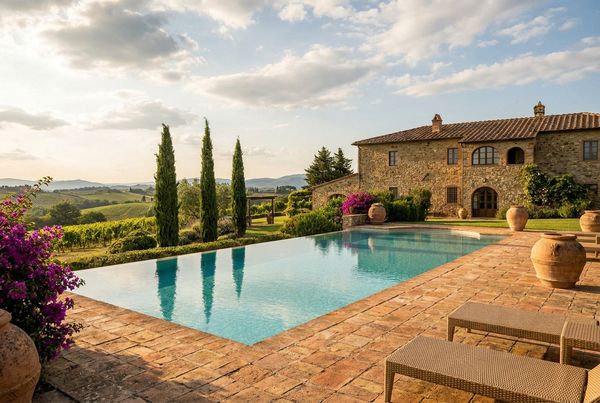
The Mediterranean style isn't one country — it's the shared language of Italy, Spain, Greece and the south of France, all of which grew up around the same climate of hot summers, mild winters and not much rain. That's why the look works so well as a backyard theme: it was designed to make heat feel gracious. The signatures are consistent no matter which coast you borrow from — textured stucco, terracotta, natural stone, gravel, wrought iron, and a warm earthy palette built from creams, rust, ochre and olive green.
What ties it all together is restraint and patina. Nothing is glossy or brand-new looking; surfaces are matte, hand-worked and meant to age. The magic is that a Mediterranean yard looks better after a few seasons, not worse. If you want a shortlist of the whole style before we dig into each piece, it comes down to five moves: warm walls, tidy drought-tolerant planting, a shaded courtyard floor, moving water, and a classically shaped pool. Nail those and the rest is detail.
Stucco walls and terracotta tones
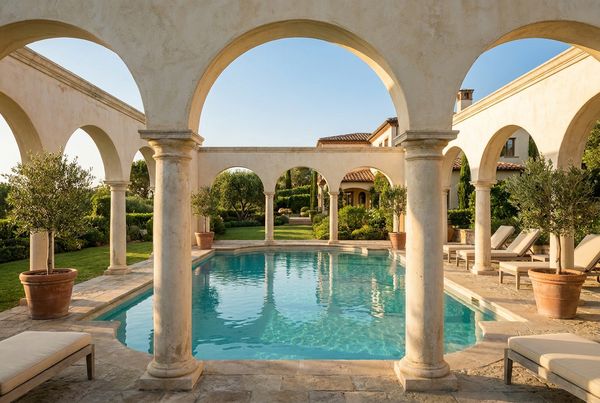
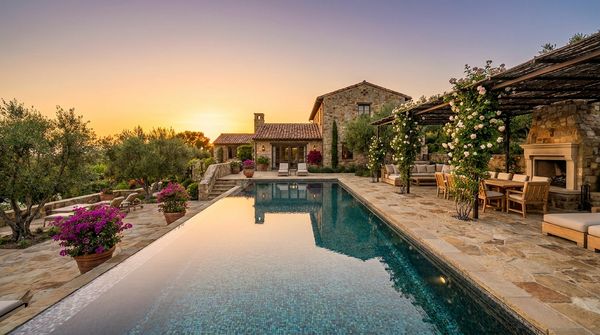
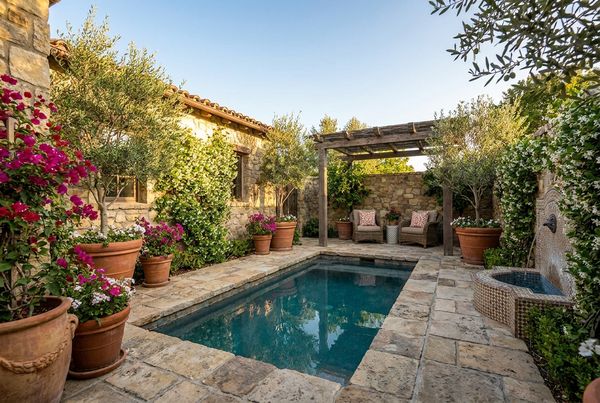
If one material carries the whole style, it's stucco. Warm, hand-troweled plaster in cream, sand or soft ochre is the backdrop everything else plays against — on boundary walls, planters, an outdoor fireplace, or a run of arches that frames the pool. Arches are the cheat code here: even a single stuccoed archway or a low colonnade instantly reads "villa" in a way a flat fence never will.
Then come the terracotta tones. Real terracotta — fired clay — shows up as roof-look accents, floor tile, and the fat "Tuscan" pots that hold your citrus and rosemary. Its rust-orange warmth is the color that separates Mediterranean from every cooler modern scheme. A few rules from the field:
- Keep the palette warm and narrow. Cream stucco, terracotta, one warm stone, one accent tile. Cool grays and stark whites tip the yard toward modern.
- Let walls do double duty. A stuccoed wall can screen a neighbor, hold a wall fountain, and back a planting bed all at once — see our pool privacy ideas for screening that stays in character.
- Texture beats sheen. Choose matte, sanded and hand-troweled finishes; anything glossy looks fake.
Olive, cypress and the Tuscan plant list
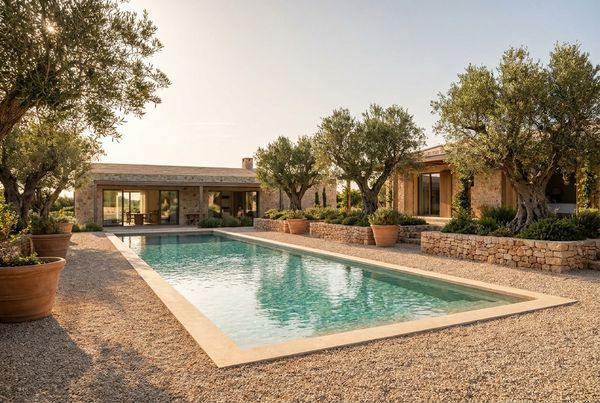
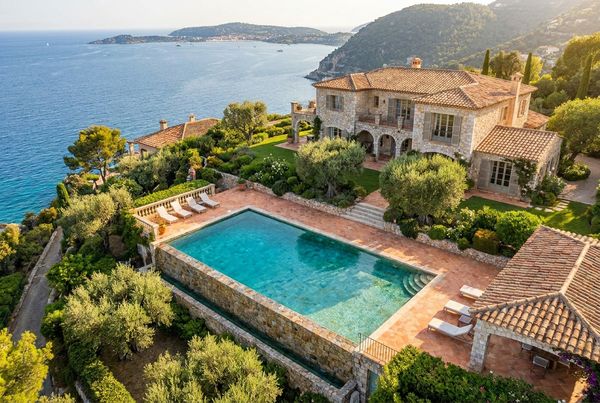
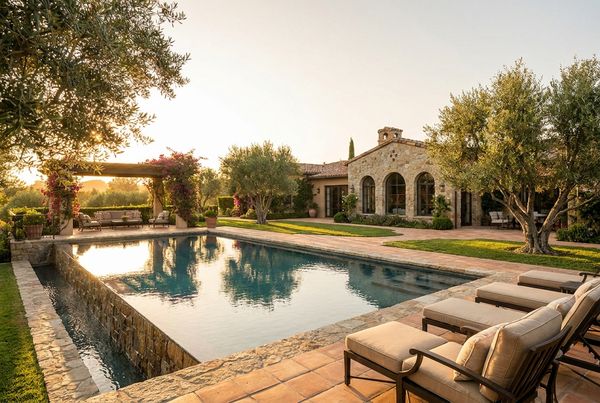
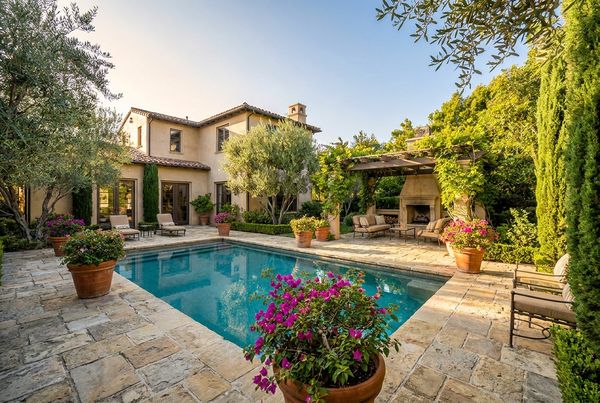
Planting is where a Mediterranean backyard either sings or collapses into a generic garden. The two anchor trees do most of the work: the olive, with its silvery-gray canopy and gnarled trunk, and the Italian cypress, those tall dark exclamation points that line every Tuscan driveway. Plant a mature multi-trunk olive as a specimen and a pair or trio of cypress for vertical rhythm and you're 80% there.
Under and around them, keep to the classic drought-tolerant, low-litter list — perfect around a pool because almost none of it drops mess into the water:
- Lavender and rosemary — fragrant, silvery, and happy in gravel.
- Dwarf citrus in terracotta pots — lemon and orange for that courtyard-orchard feel.
- Bougainvillea — the one hit of hot color, trained over a wall or pergola.
- Agapanthus, santolina and ornamental grasses — soft blue-green fillers.
Set these in gravel or decomposed-granite beds rather than lawn and hydrozone them onto drip irrigation. For the full playbook on keeping beds a safe distance off the shell, our pool landscaping ideas guide covers root distances and litter-control in depth.
What we think
If the budget is tight, spend it on one specimen olive and a run of stucco — those two moves buy more Mediterranean atmosphere than any amount of tile or furniture. Skip the temptation to over-decorate with faux-aged statuary and fake ruins; the style reads as authentic when the materials are honest and the planting is disciplined. Splurge on real stone coping and hand-painted [pool tile](/pool-tile-ideas/); skip resin urns pretending to be terracotta. And plant the olive big — a mature tree instantly makes the yard look like it's been there for decades.
Gravel courtyards and warm hardscape
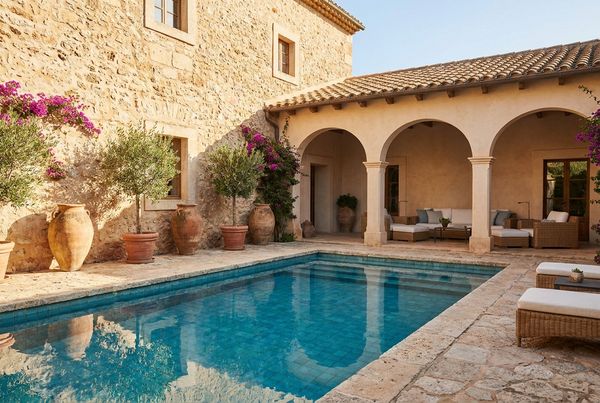
The floor of a Mediterranean backyard is rarely a slab of poured concrete — it's a courtyard. That means a mix of surfaces: crunchy decomposed granite or pea gravel for the informal walking areas, warm-toned stone or terracotta pavers where you want a solid patio, and often a hand-laid pattern near the pool. Gravel is the unsung hero: it's cheap, permeable, drains beautifully, and has exactly the informal, sun-baked character the style wants.
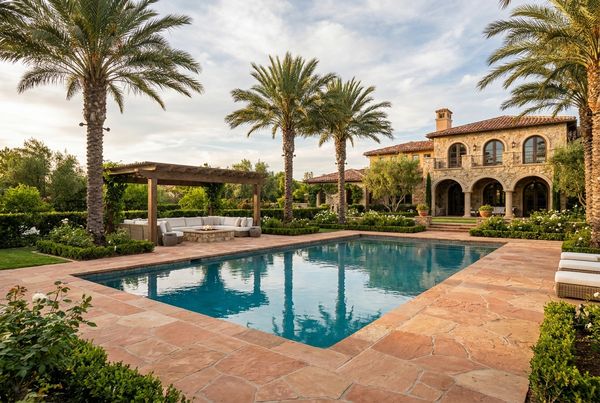
For the paved zones and the pool surround, lean into warm materials — travertine, tumbled limestone, and terracotta-look porcelain all fit. Warm travertine in particular is a Mediterranean staple: it's cool underfoot, ages to a lovely patina, and pairs perfectly with stucco. Your coping should carry the same warm story; our pool coping ideas guide walks through bullnose travertine and cut-stone edges that suit a villa pool. A few practical notes:
- Edge your gravel with steel or stone so it stays out of the pool and off the paving.
- Mind the transitions — a clean line where gravel meets pavers meets coping is what makes it read "designed" rather than "unfinished."
- Choose a warm patio material and repeat it; mixing three stones muddies the look.
Fountains, patterned tile and water
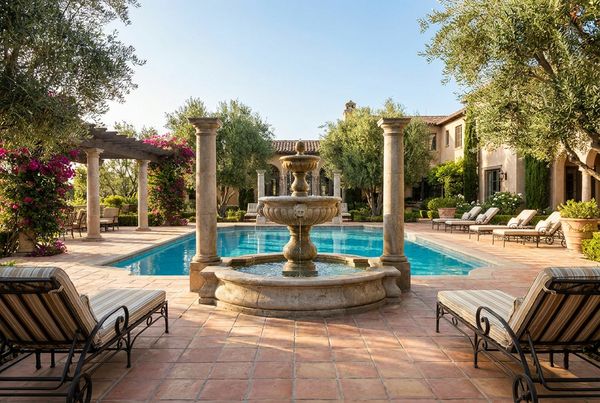
Moving water is the soul of a Mediterranean courtyard — it cools the air, masks street noise, and gives the eye a focal point. The signature piece is a tiered stone or cast fountain, but you have options: a wall fountain spilling from a stuccoed wall, a simple urn bubbler in a gravel bed, or a formal reflecting basin. The sound matters as much as the look; size it so the trickle carries across the seating area without drowning out conversation. For sizing and plumbing, our pool water features guide covers pumps, spillways and wall scuppers.
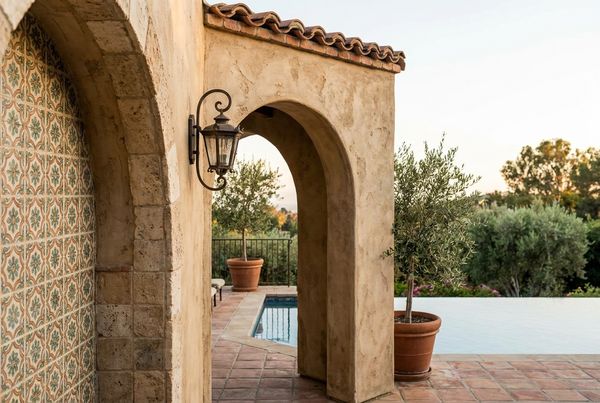
The other water-adjacent signature is patterned tile. Hand-painted Spanish or Portuguese tile — deep blues, whites and warm yellows — shows up on fountain basins, stair risers, bench seats, and as a waterline band on the pool itself. A little goes a long way; a single band of patterned tile at the waterline or on a raised spa wall delivers the whole Mediterranean signal. Our pool tile ideas roundup shows how to mix a patterned accent with a plain field tile so it stays elegant rather than busy.
The Mediterranean pool: Roman, Grecian and spillover
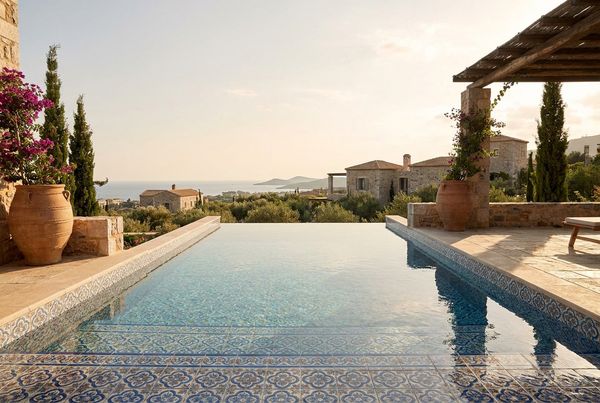
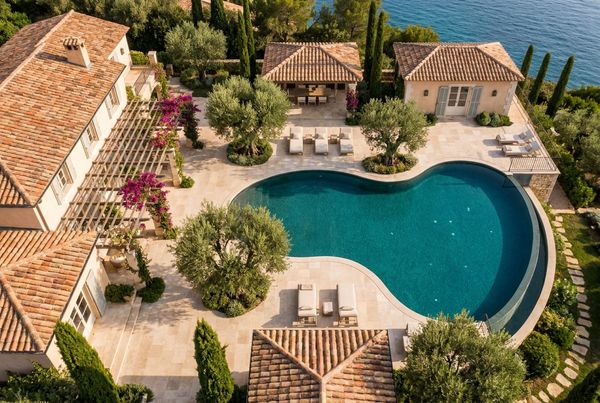
The pool itself should feel classical, not modern. Where a contemporary yard wants a stark rectangle, a Mediterranean pool wants geometry with softened, symmetrical detail — the two shapes that fit best are the Roman-end (a rectangle with one or both ends rounded into a graceful arc) and the Grecian (a rectangle with the corners cut at 45 degrees). Both feel formal and timeless without the hard-edged severity of a plain rectangle. For the full menu of forms, see our guide to pool shapes.
A few details make a pool read Mediterranean rather than generic:
- A raised spillover spa at one end, spilling a sheet of water into the pool, is the classic villa move — see our spillover spa guide for weir and plumbing detail.
- Warm interior finish — a sand, pebble-tan or medium-warm plaster keeps the water reading turquoise-green like the Med, not the cool blue of a modern pool. Our pebble pool finish options cover the warmer tones.
- Patterned waterline tile and warm stone coping tie the pool to the courtyard.
Even the 2026 trend toward tanning ledges and gentle beach entries fits here, softened into the classical shape. The point is symmetry and warmth: a Mediterranean pool should look like it belongs at the center of a courtyard, framed rather than floating in open lawn.
Wrought iron, pergolas and shade
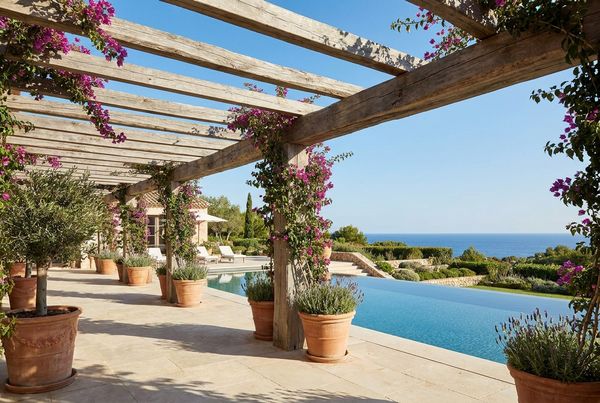
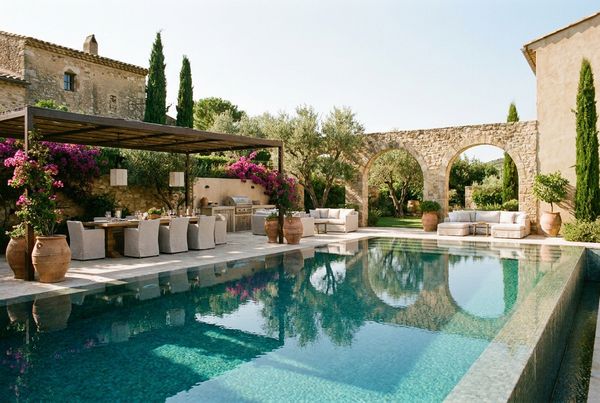
The Mediterranean climate is hot, so shade and outdoor living are built into the style rather than added on. A timber pergola — chunky, weathered beams over a dining area or lounge, often draped in wisteria, grape or bougainvillea — is almost mandatory. It gives dappled shade, defines an outdoor room, and adds the vine-covered romance the style is known for. Our pergola ideas guide covers spans, post detailing and vine choices that suit a poolside.
Wrought iron is the finishing hardware: black iron gates, railings, furniture, lanterns and hanging fixtures. It's the crisp dark line that keeps all that warm stucco and stone from feeling washed out, and it ages honestly. Combine it with terracotta pots, a few glazed Talavera accents, and warm lantern lighting and the yard comes alive after dark. For evening ambience, layer low warm 2700K fixtures — our outdoor lighting ideas guide shows how to uplight cypress and wash a stucco wall so the courtyard glows at dusk instead of going flat.
Budgeting a Mediterranean backyard
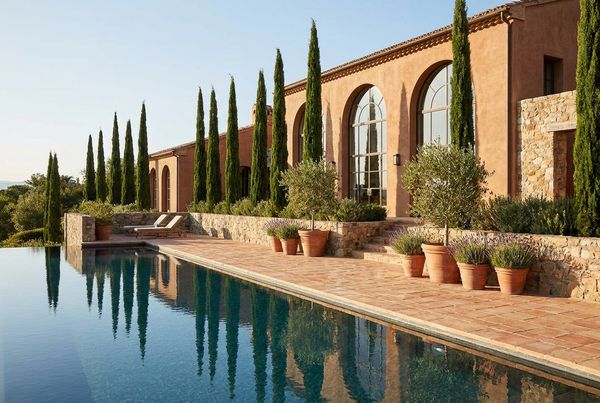
The Mediterranean style is unusually kind to a budget, because so much of its character comes from cheap, honest materials used well. Gravel and decomposed granite are among the least expensive ground surfaces you can lay, and they happen to be exactly right for the look. Stucco is affordable per square foot. A single specimen olive and a run of stuccoed wall buy more atmosphere than any amount of statuary. Where the money should go is the pool and its finishes — a classical shape, warm stone coping, and a band of hand-painted tile are what separate a true villa pool from a generic rectangle with some pots around it.
Speaking of the pool: a warm-toned interior is central to the look, and it changes how the water reads. A sand or tan pebble finish keeps the water turquoise-green like the Mediterranean rather than the cool blue of a modern pool — our pebble pool finish guide covers the warmer tones. If you're pricing a new pool for the courtyard, our inground pool cost guide gives you the ranges, and once it's built, the everyday chemistry is no different from any pool — know your volume with the pool volume calculator and dose accurately with the pool chemical calculator so that warm plaster stays clean and true.
Keeping a courtyard garden low-maintenance
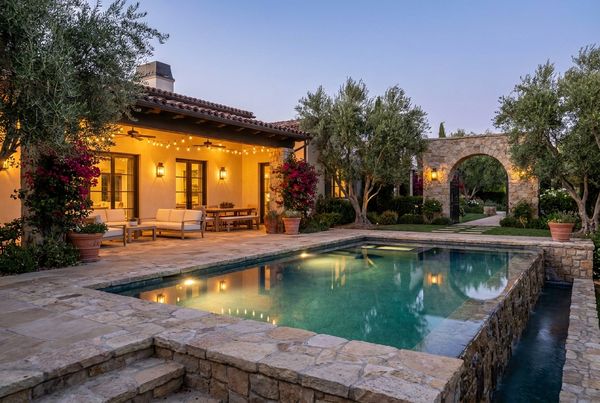
The quiet genius of a Mediterranean planting scheme is that it's built for neglect. Olive, cypress, lavender, rosemary, and ornamental grasses are all drought-tolerant and low-litter, which is exactly what you want around a pool — almost none of it drops mess into the water. Set the beds in gravel rather than lawn, put everything on drip irrigation, and hydrozone plants with similar water needs together, and you've built a garden that thrives on a fraction of the water and attention a conventional landscape demands.
A couple of maintenance details keep it that way. Edge your gravel with steel or stone so it stays out of the pool and off the paving — loose gravel migrating into the water is the single most common upkeep headache with this style. Keep beds a sensible distance off the coping so roots and debris don't reach the shell; our pool landscaping ideas guide covers root distances and litter control. And place a few plants deliberately for shade — an olive positioned to fall over the pool by afternoon cuts evaporation and makes the water more inviting. If pollen or fine debris from surrounding planting ever clouds the water in spring, our cloudy pool water guide walks through clearing it.
Does the look fit your climate?
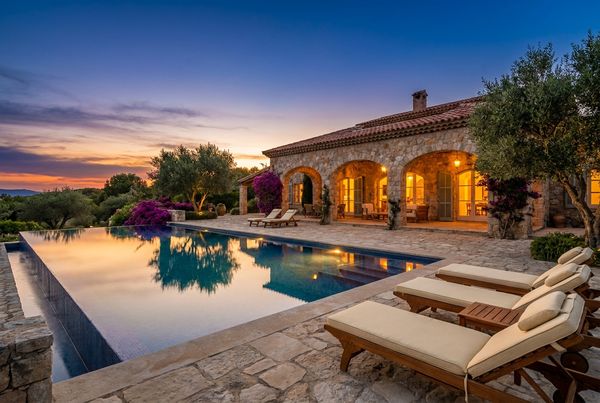
The Mediterranean style was born in a specific climate — hot dry summers, mild wet winters — which is why it feels utterly at home across California, the Southwest, Texas and Florida. In those zones the whole plant list thrives with minimal water, and the look is essentially maintenance-optional. In cooler or wetter regions you can still get there, but the plants need honest substitutions rather than a fight against the weather.
| Element | Warm/dry climate (ideal) | Cooler climate swap |
|---|---|---|
| Cypress accent | Italian cypress | Emerald arborvitae or juniper |
| Olive tree | Fruiting or fruitless olive | Potted olive, sheltered in winter |
| Citrus | In-ground dwarf lemon/orange | Container citrus, moved indoors |
| Ground surface | Decomposed granite, gravel | Gravel (fine) or terracotta porcelain |
| Terracotta | Real fired clay tile and pots | Frost-rated terracotta-look porcelain |
| Pool finish | Warm plaster or tan pebble | Same — warm tones read Mediterranean anywhere |
The key insight: the hardscape travels anywhere. Stucco, warm stone, gravel courtyards, fountains and wrought iron look Mediterranean in Ohio just as well as in Andalusia — it's only the tender plants that need frost-hardy stand-ins. Get the warm palette and the honest materials right, choose a classical pool shape with a spillover spa, and you'll have a backyard that feels like a coastal villa long after the trends have moved on. When you're ready to see how it fits the bigger picture, browse the rest of our pool design ideas and start building your own courtyard.
Design Gallery
6 more ideas to save — tap any photo to view full screen.

Kelly E.
Pool Design Editor, PoolPad
Kelly has spent 10+ years around residential pools — planning projects, testing gear, and documenting backyard builds for PoolPad. Each design guide is checked against current construction methods and material pricing.
Frequently Asked Questions
What makes a backyard look Mediterranean?
What kind of pool suits a Mediterranean or Tuscan backyard?
What plants work for a Mediterranean pool landscape?
What colors define a Mediterranean palette?
Can I get a Mediterranean look in a cooler climate?
What water features fit a Mediterranean backyard?
How much does a Mediterranean backyard cost?
Is a Mediterranean landscape low-maintenance?
What pool finish gives that warm Mediterranean water color?
Ready to build your dream backyard?
Compare local, vetted pool builders and get matched with pros who can bring these designs to life.
Find a Pool Builder Near You