



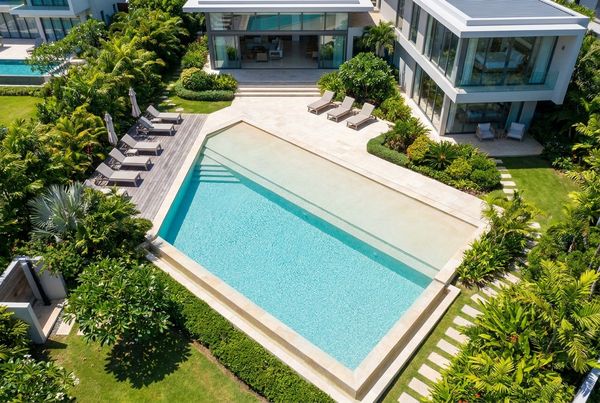
Key Takeaways
- A beach entry pool has no steps or ladder — the floor slopes gradually from the deck straight into the water, exactly like walking into the ocean.
- It's the safest, most accessible entry there is — ideal for young kids, older swimmers, and wheelchair or walker access.
- Expect to give up space and pay a premium: the gentle slope needs a long run of shallow water before the pool gets deep.
Nothing says resort quite like walking straight into a pool the way you walk into the ocean — no ladder, no steps, just a gentle slope from warm deck to cool water. That's a beach entry pool, and it's the design that turns an ordinary backyard into a permanent vacation. It's also the safest, most welcoming way in and out of a pool ever built. Here's how it works, what it costs, and how to do it right.
What is a beach entry pool?
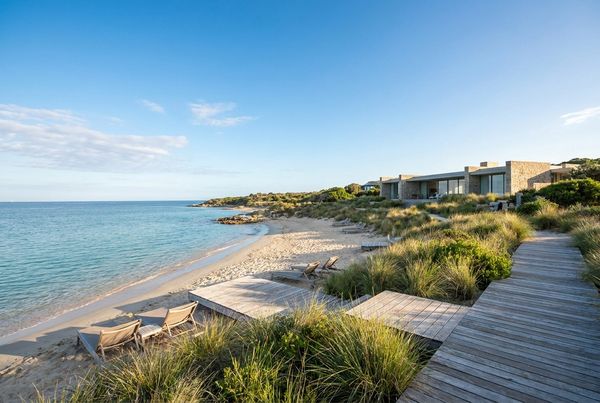
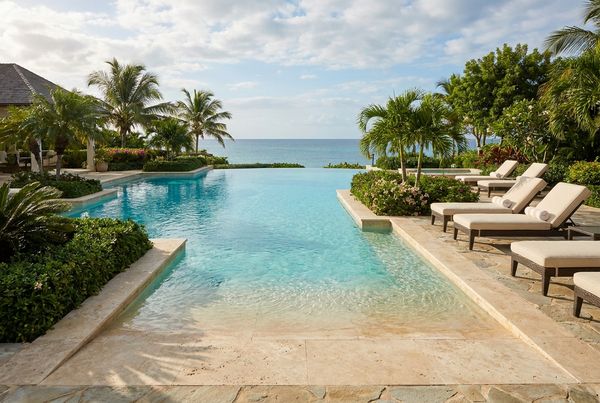
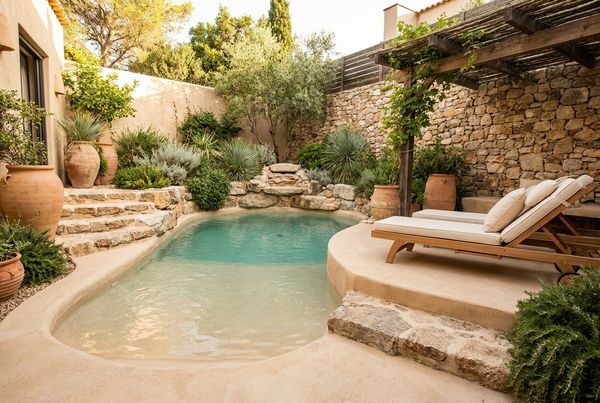
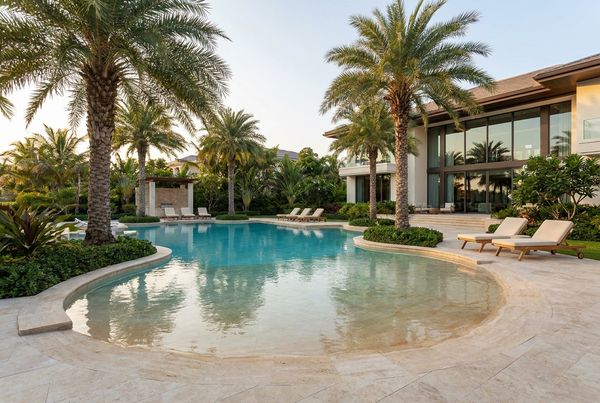
A beach entry pool has a floor that slopes gradually from deck level down into the water, with no steps and no ladder. You simply walk in — ankle-deep, then knee-deep, then swimming — exactly the way you wade into the sea. That single idea is why the design goes by so many names: zero entry, zero depth, walk-in, gradual entry, and beach entry all describe the same continuous slope.
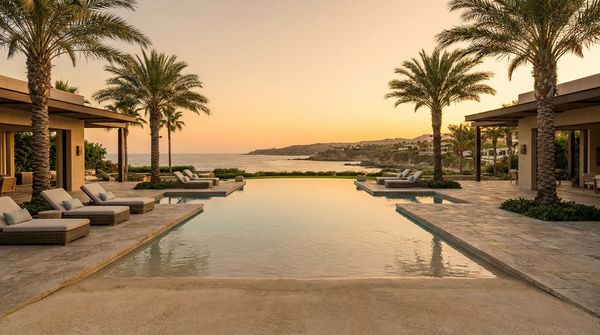
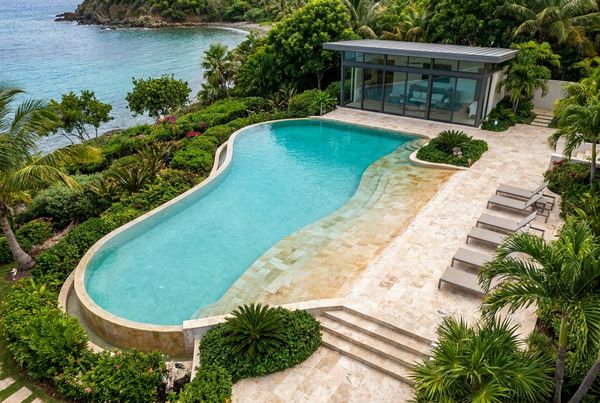
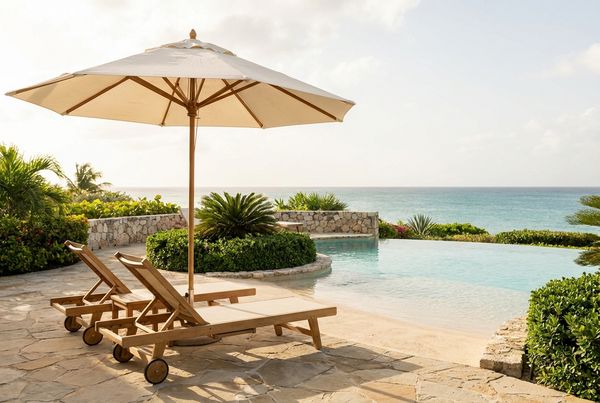
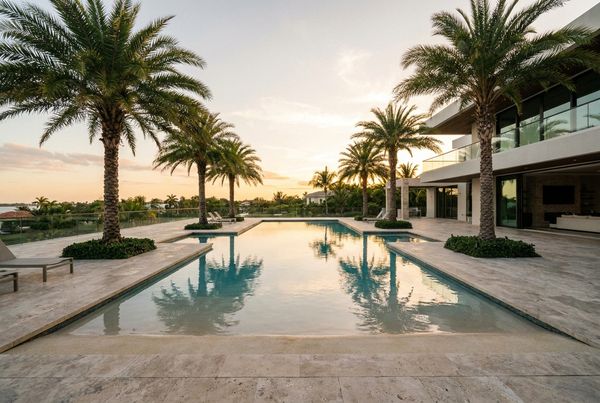
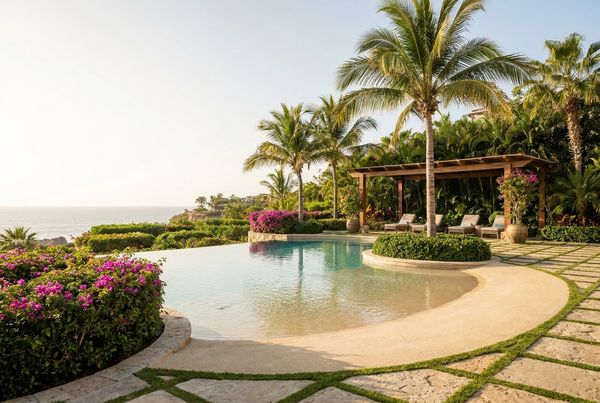
The look comes straight from resort and hotel pools, where a shallow "shoreline" invites guests to stand, wade, and lounge in a few inches of water. Bring that home and you get the same effect: a shallow shelf where kids play and adults sit half-submerged, easing down into a normal swimming depth. It's a completely different feel from a conventional pool with its hard wall and abrupt drop-off. A beach entry has an edge that dissolves into water — softer, more natural, and unmistakably resort.
Slope & space you need
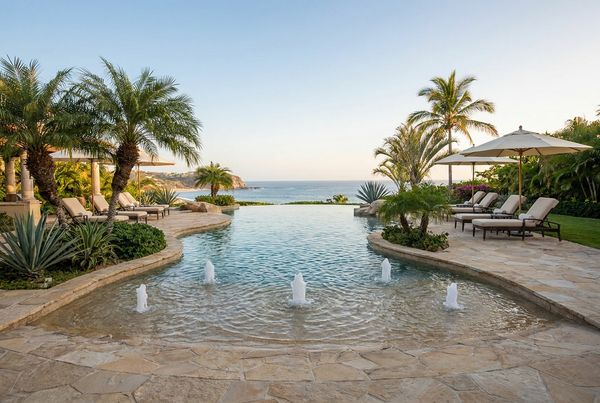
Here's the honest trade-off: a gradual slope eats yard. To feel like a real beach and stay comfortable and safe underfoot, the floor should drop roughly 1 inch for every 8 to 12 inches of length — a gentle grade of around 8 to 12 percent. That means you might travel 8 to 15 feet of pool length before the water reaches even 3 feet deep. All of that shallow run is pool surface you're building, tiling, and heating without getting any swimming depth from it.
The practical upshot: beach entry wants a medium-to-large yard. In a compact space, dedicating a third of the pool to a slow ramp usually isn't worth it. If you love the look but the lot is tight, a tanning ledge (a flat shallow shelf reached by one step) delivers most of the resort feel in a fraction of the footprint. Either way, this is a design to plan around a real site — orientation, drainage, and the length of that shallow run all matter. Our pool shapes guide is a good place to see how the walk-in edge fits different layouts.
What we think
A beach entry is one of the most beautiful and family-friendly things you can build — but only if you have the room to do it justice. Skimp on the slope to save space and you get a steep, awkward ramp that satisfies no one. Our rule: give the shallow run the length it needs, finish it in pebble for grip, and put an in-water lounger or a pair of bubblers on the shelf so that shallow zone becomes the most-used part of the whole pool. If the yard can't spare the space, build a proper tanning ledge instead and don't force it.
What a beach entry pool costs
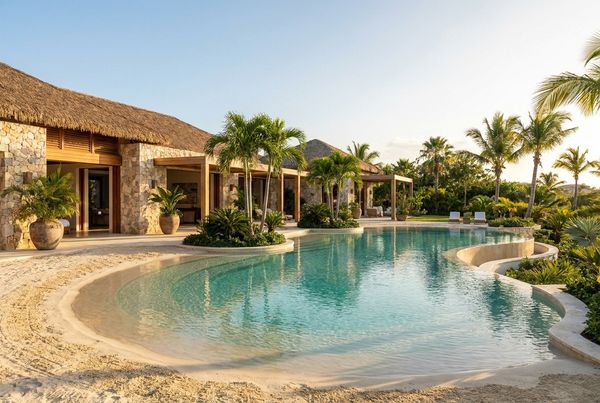
A beach entry is a custom gunite feature, so it lands at the higher end of pool pricing. The entry itself typically adds $8,000 to $20,000 over a comparable step-entry pool of the same footprint — you're paying for extra length, more shotcrete, more finish surface, and careful slope work. A complete beach entry build most often runs $70,000 to $150,000+, depending on size, finish, and features.
| Element | What drives it | Typical add / cost* |
|---|---|---|
| Beach entry premium | Extra length, surface & slope work | +$8k–$20k |
| Pebble finish upgrade | Grip + sand look on the slope | +$4k–$10k |
| Shelf bubblers | Plumbing + jets on the shallows | +$1.5k–$4k each pair |
| Full beach-entry build | Size, finish, features, site | $70k–$150k+ |
*Ballpark 2026 U.S. ranges; site access, region, and materials move the number. See the full cost guide.
Two things keep this from being a runaway cost. First, nearly every beach entry is built in gunite (concrete) because it's the only method that shapes a true custom slope — so you're already in a premium build and the entry is an incremental add, not a whole new category. Second, that shallow shelf, while it costs to build, is exactly the part your family will use most. For how the underlying shell affects the number, see our gunite pools and inground pool cost guides.
Best for kids & accessibility
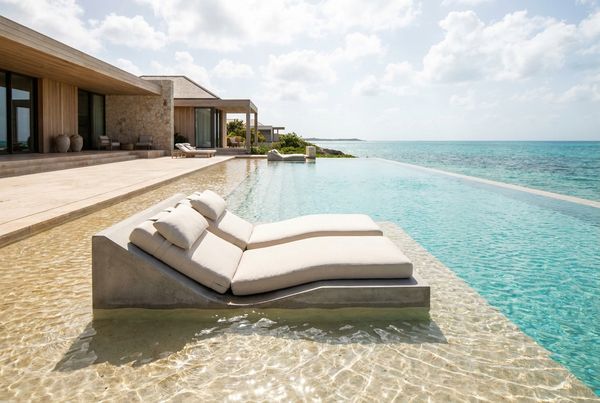
This is the beach entry's quiet superpower. There is no safer way into a pool. A conventional pool has a wall and a sudden drop; a toddler who slips goes straight into water over their head. A beach entry has none of that — the water starts at zero and deepens gradually, so a small child wades in ankle-deep and a parent can sit right beside them on the shelf, at arm's reach, half in the water themselves. It fundamentally changes how you supervise young swimmers.
It's just as valuable at the other end. A gradual slope is the most accessible entry there is — no ladder to climb, no step to negotiate. Older swimmers walk in and out with ease, and the design accommodates walkers, canes, and even wheelchair access in a way no other pool entry can. For families spanning multiple generations, or anyone planning to age in place, that matters enormously. It's why so many of the beach-entry pools we design end up being the whole family's favorite feature. Pair it with our kids pool ideas for a shallow zone built around play.
Finishes: why pebble wins
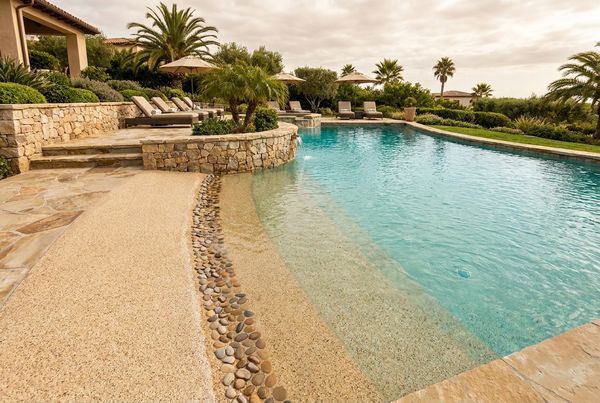
Finish choice matters more on a beach entry than on any other pool, for one simple reason: you walk on the slope while it's wet. A slick surface — smooth plaster or glassy tile — turns a gentle ramp into a slip hazard. That's exactly where pebble finishes shine. The exposed-aggregate texture gives sure, grippy footing on the wet slope, and warm pebble tones (tan, gold, sandy beige) read convincingly like real sand under the water.
Pebble also happens to be the toughest, longest-lasting interior you can buy — often 15 to 25 years versus a decade for standard plaster — which suits a surface that takes constant foot traffic. Many of the best beach entries pair a warm, sandy pebble on the shallow shelf with a darker pebble or dark-bottom finish in the deep end, so the water shades from pale shallows to deep blue exactly like a real shoreline. It's a gorgeous, natural gradient no single-color pool can match. Our pebble pool finish guide covers the color options, and dark bottom pools explains the deep-end effect.
Bubblers, loungers & water features
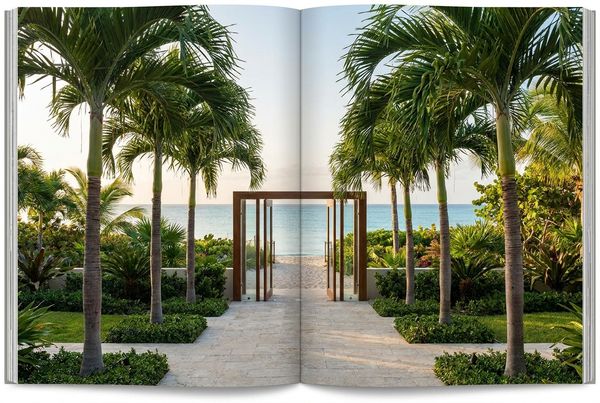
The shallow shelf is prime real estate, and the right features turn it from "the part you walk through" into the place everyone gathers. A few that consistently earn their keep:
- Bubblers. Low geysers that erupt right out of the shelf, adding motion, sound, and endless play for kids. They're the single most-requested beach-entry add-on we build — and they look magical lit at night.
- In-water loungers. Chaise-style loungers designed to sit in a few inches of water. You recline half-submerged, drink in hand, feet cooling — this is the signature beach-entry moment.
- A sun/tanning shelf. Where the slope levels briefly at 6–9 inches deep, it doubles as a flat lounging platform for chairs and umbrellas.
- Umbrella sleeves. A cored sleeve in the shelf lets you plant a large umbrella right in the water for shade over the shallows.
- A sheer descent or grotto edge. Sound and drama at the deep end balances the calm of the shallows.
Because the shelf sits at the front of the pool, features placed there become the visual centerpiece too. For the full menu of options and how they suit a shallow zone, see our pool water features guide.
Tropical & resort styling
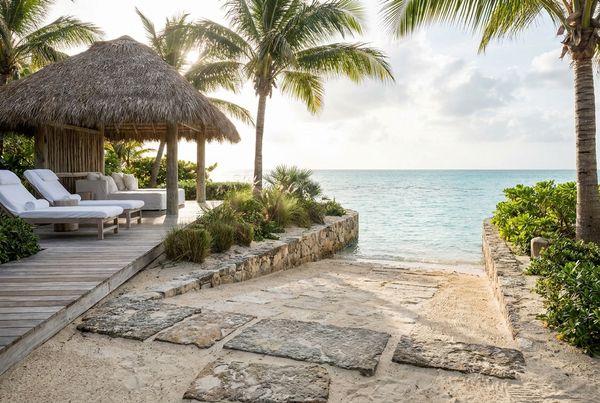
A beach entry practically begs to be styled as a resort, and the payoff for leaning in is huge. The freeform, curving shapes suit the beach look far better than hard rectangles — a lagoon-style pool with soft edges, a boulder or two, and a beach entry reads instantly like a tropical hideaway. Frame it with the right planting and the illusion is complete: palms, banana leaf, bird of paradise, and dense green borders that hide the fence line and make the whole yard feel like somewhere far away.
The details do the heavy lifting. A thatched cabana or shade structure at the water's edge, natural stone coping and boulders, warm landscape lighting washing the palms at night, and a fire feature nearby for cool evenings. The goal is a backyard that feels like a place you'd fly to. Our tropical backyard ideas guide is the natural companion here, and pool landscaping ideas covers the planting that sells the effect.
Keeping the shallow shelf clean and balanced
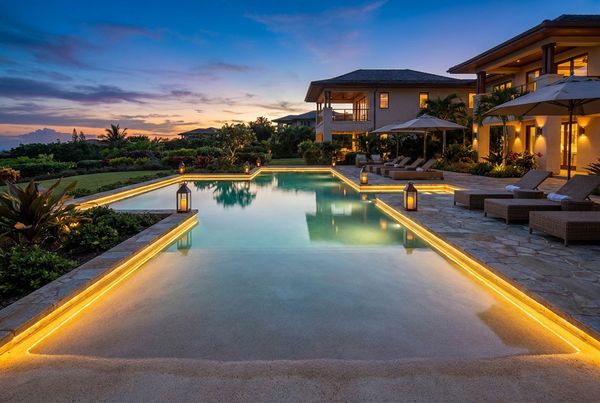
The shallow shelf is the best thing about a beach entry, and it's also the part that asks a little more of you. Shin-deep water warmed by the sun is exactly the environment algae likes, and a wide expanse of it means more surface for debris to settle on. None of this is a problem if you stay ahead of it — but a beach entry rewards a steady hand more than a forgiving deep-water pool does.
The habit that matters most is regular testing. Because the pebble finish that gives you grip also hides fine debris and early algae, you can't judge the water by looking at it. I test a couple of times a week with a proper test kit and dose to a target rather than a hunch — our pool chemical calculator takes the guesswork out once you know your volume. And that volume is worth pinning down: a beach entry holds less water than its footprint implies, so measure it properly with our pool volume calculator before you buy a single bag of shock.
For the physical cleaning, a robotic cleaner that can climb the gentle grade is worth its price on these pools — it works the shelf while you're doing something else. If the shallows ever cloud up, the cause is usually circulation or chemistry, not the design; our cloudy pool water guide runs through the fixes in order.
Heating a beach entry pool
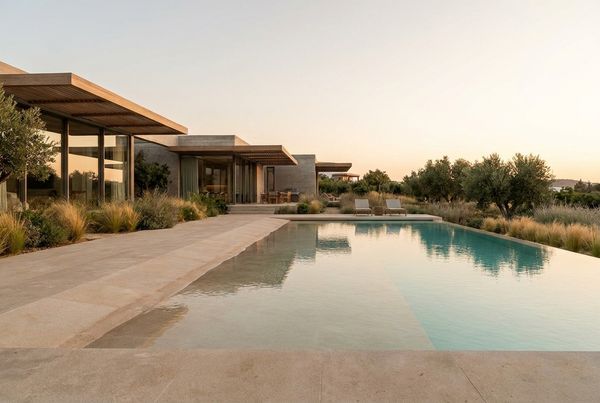
Heating deserves its own thought on a beach entry, because a broad, shallow shelf behaves differently from a compact pool. All that shallow water heats up fast in the sun — lovely on a summer afternoon — but it also sheds heat quickly at night through its large surface area. The upshot is that a beach entry can feel warmer than expected by day and cooler than expected by morning if you don't manage it.
Two things stack the odds in your favor. First, a cover is the single most effective tool for holding overnight temperature; on a large surface it saves real money on heating and slows evaporation. Second, a dark pebble deep end contributes a genuine, if modest, few degrees of free solar gain — the same effect we cover in the dark bottom pool guide, and a natural pairing with the pale sandy shelf that reads like a shoreline.
For the actual heater, size it to the real water volume rather than the footprint, and match the type to your climate and how you'll use the pool. Our how to heat a pool guide compares heat pumps, gas, and solar so you can pick the right one for a wide, shallow, heat-hungry shape like this.
2026 beach entry trends
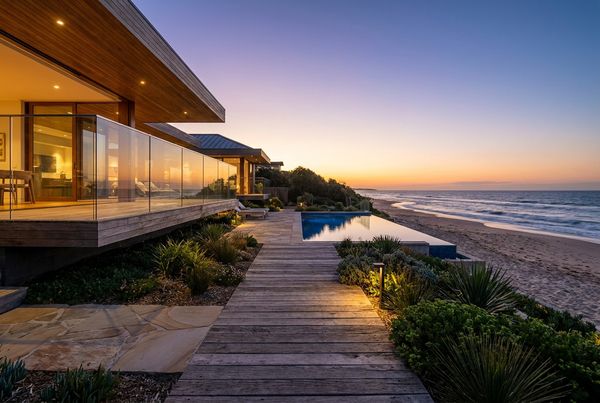
The beach entry keeps evolving, and a few directions define where it's heading in 2026. Naturalistic gradients are everywhere — pairing a pale sandy shelf with a deep dark-bottom end so the water shades like a real shoreline. In-water loungers and shelf bubblers have moved from luxury extra to near-standard on the projects we design; buyers now expect the shallow zone to be a destination, not just an entry. And lit shallows — LEDs washing the pebble shelf so it glows like a tide pool at dusk — are one of the most-requested upgrades of the year.
Two more worth watching. First, hybrid entries, where a modern, linear beach slope meets an infinity or vanishing edge, marrying the soft walk-in front with sharp architectural drama at the far side. Second, wellness shallows — using that warm, shin-deep shelf as a place to wade, cool off, and unwind, blurring the line between pool and spa. For more on the modern-versus-natural direction, browse our luxury pool designs and the full pool design ideas hub before you commit. Whatever direction you take, the beach entry's core appeal never changes: a pool you walk into like the ocean, right in your own backyard.
Design Gallery
6 more ideas to save — tap any photo to view full screen.

Kelly E.
Pool Design Editor, PoolPad
Kelly has spent 10+ years around residential pools — planning projects, testing gear, and documenting backyard builds for PoolPad. Each design guide is checked against current construction methods and material pricing.
Frequently Asked Questions
What is a beach entry pool?
How much does a beach entry pool cost?
Do beach entry pools take up more room?
Are beach entry pools good for kids?
What's the best finish for a beach entry pool?
What's the difference between a beach entry and a tanning ledge?
Is a beach entry pool harder to keep clean?
How do I heat a beach entry pool efficiently?
How much water does a beach entry pool hold?
Can you add a beach entry to an existing pool?
Ready to build your dream backyard?
Compare local, vetted pool builders and get matched with pros who can bring these designs to life.
Find a Pool Builder Near You