
Colorado · Gunite & Concrete Pool Builders · Updated 2026
Any shape, any depth, any feature: 11 gunite pool builders across Colorado, ranked by rating and review count, with what a gunite pool costs to build in Colorado this year. City lists cover 10 Colorado markets.
The order uses a weighted mix of customer rating and review count; open a city below for the full local list. Confirm current credentials, availability and scope directly.
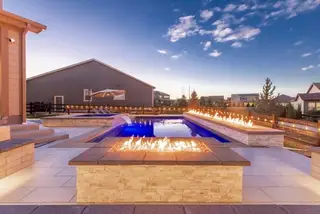
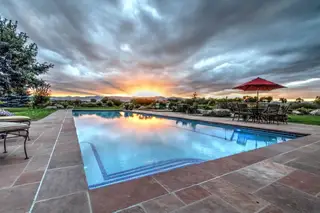
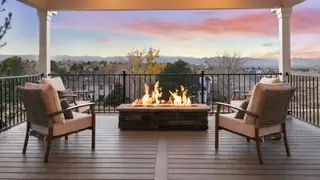
Choose a local list for customer ratings, review counts, 2026 prices and the questions to ask. Cities are sorted by listed company count.
A mid-size gunite pool (about 16×32) with a standard plaster finish in Colorado typically runs $86,500–$138,000. Spas, premium finishes, features and decking are where custom pools climb from there:
| Job | Typical Colorado price |
|---|---|
| Small gunite pool (about 12×24), plaster finish | $63,000–$92,000 |
| Mid-size gunite pool (about 16×32) | $86,500–$138,000 |
| Large or elaborate custom pool | $138,000–$287,500+ |
| Attached gunite spa with spillover | $17,500–$40,500 |
| Pebble or quartz finish upgrade | $6,000–$14,000 |
| Tanning ledge or beach entry | $3,500–$9,000 |
| Water features, lighting, fire bowls | $2,500–$17,500 |
| Decking and coping | $9,000–$28,500 |
| Rock or hard-dig excavation allowance | $3,500–$17,500 |
| Permits, engineering, soils report | $900–$4,600 |
Colorado pricing is above the national baseline used for these estimates, mainly on labor and permitting. Gunite bids vary more than any other pool type because every element is custom — compare the shell thickness, steel schedule, finish, feature and equipment lines, not just the bottom number.
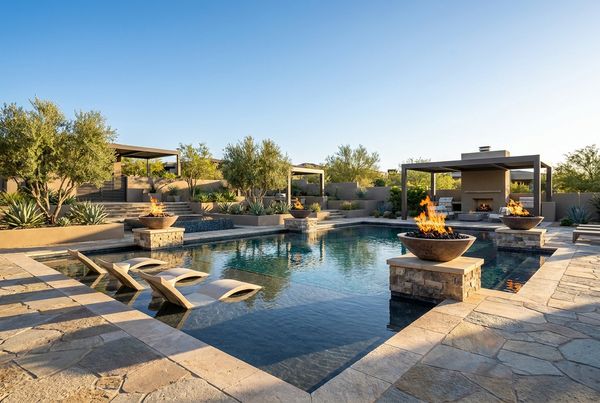

Spas, ledges, benches, lighting niches and water features are cheapest when they are shot into the shell — adding them later means cutting concrete.
PoolPad tracks 11 gunite pool builders across Colorado, with city lists for 10 markets. PoolPad orders the list with a weighted score that combines customer rating and review count, so a long track record counts for more than a handful of scores.
Expansive bentonite clay is the Colorado headline: it swells dramatically with moisture, so soils reports, structural engineering, and sometimes pier systems aren't upsells — they're how shells survive. Freeze-thaw cycling drives deck and plumbing specs, and hail shapes equipment placement. Gunite with mountain-view terraces leads the high end; fiberglass grows fast for install speed. Heaters and automatic covers are standard, and integrated hot tubs earn their keep ten months a year.
The largest listed markets are Denver (11 companies), Arvada (10 companies), Aurora (10 companies).
Ask for the shell engineering and the gunite crew's track record, read the structural, finish and equipment warranties separately, and compare at least three itemized bids for the same design. Colorado licenses contractors at the city and county level (Denver-metro jurisdictions each run their own programs) — verify local licensing and insurance, and confirm the electrician on the equipment permit. Pool permits and residential-code barrier requirements run through your municipality; HOA review is near-universal in newer developments.
A mid-size gunite pool with a plaster finish in Colorado, CO typically runs $86,500–$138,000; small pools run $63,000–$92,000 and large custom designs $138,000–$287,500+. An attached spa adds $17,500–$40,500, a pebble or quartz finish $6,000–$14,000, and decking $9,000–$28,500. Colorado pricing is above the national baseline used for these estimates, mainly on labor and permitting.
Both are concrete sprayed over a steel cage. Gunite is a dry mix with water added at the nozzle; shotcrete is wet-mixed concrete pumped through the hose. Each produces a strong shell when applied by a good crew — the nozzleman's skill, the mix design and proper curing matter more than which method is used. Ask which your builder uses and what thickness is specified.
Plan on eight to sixteen weeks from excavation to swimming: dig and steel in the first week or two, the shell shot and cured for about four weeks, then tile, coping, plumbing, equipment, decking and finally the plaster and fill. Permits add two to eight weeks before the dig. Freezing weather pauses shell and plaster work, so most builds are scheduled for the warm months.
The concrete shell can last 50 years or more. The plaster finish lasts about 10 to 15 years (quartz and pebble 15 to 20 or more), waterline tile and coping 15 to 25 years, and equipment 8 to 15 years. Balanced water, especially calcium hardness and pH, is what protects the finish.
The outdoor season in Colorado runs late May through mid-September — about 4 months unheated. A full professional winterization each fall protects plumbing and equipment through the freeze, and spring openings cluster into the same few weeks. Late May through mid-September, with intense high-altitude UV and cool nights that make heaters standard. Sunny winter days tempt, but hard freezes rule — full winterization is the norm.
Rock N Roll Pools, LLC has the highest customer rating on this Colorado list at 5 stars across 4 reviews. Integrity Pool Builders has the largest review count (99 reviews at 4.9 stars). PoolPad orders the list with a weighted score that combines customer rating and review count, so a long track record counts for more than a handful of scores.
Usually, for the same size: the shell is built on site, the finish is a separate trade, and custom features add up. The gap narrows for large pools and designs with spas and ledges, where fiberglass models are limited. Over 20 years a gunite pool also needs at least one resurfacing, which is part of its true cost.
Colorado licenses contractors at the city and county level (Denver-metro jurisdictions each run their own programs) — verify local licensing and insurance, and confirm the electrician on the equipment permit. Pool permits and residential-code barrier requirements run through your municipality; HOA review is near-universal in newer developments.
If your property is near a state line, check the neighboring directories too.
Claim your free PoolPad listing, check gunite among the pool types you build, and show Colorado homeowners planning a custom pool what you construct.