



Key Takeaways
- A cabana is a shaded outdoor room, not a building — usually open or curtained, it sits lighter (and cheaper) than a fully enclosed pool house.
- Decide the job first: shade lounge, bar, changing room, or all three. The use dictates the size, the plumbing, and whether you enclose it.
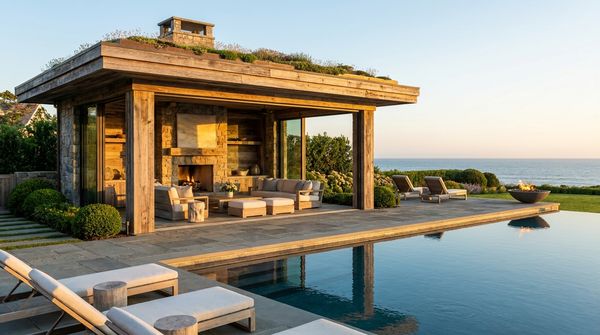
- Site the cabana to frame the pool and the sunset — the whole point is the view back across the water.
A pool cabana is the difference between a backyard you look at and one you live in. It's a shaded room at the water's edge — somewhere to lounge out of the midday sun, mix a drink, dry off, or watch the game while the kids swim. Done right, it turns an ordinary poolside into a resort you never have to check out of. The best cabana ideas all start with one question: what job is it doing?
Cabana vs pool house vs pergola
These three get used interchangeably, but they're different animals — and picking the right one saves you money and regret. A cabana is a lightweight shade room, usually open or curtained, built to lounge in beside the water. A pergola is a shade frame — posts and an open or louvered roof — that shelters a seating or dining zone without walls. A pool house is a proper enclosed building with walls, doors, and often a bathroom, kitchenette, or changing room.
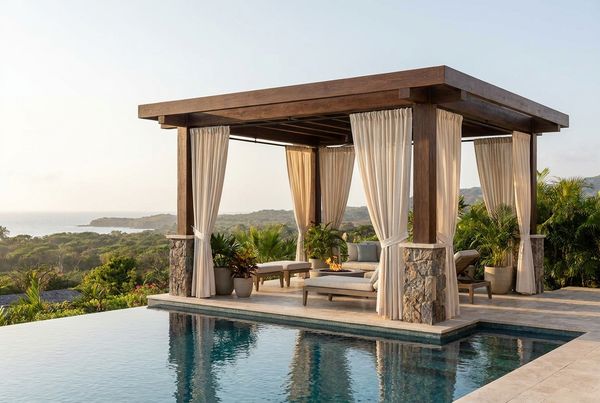
Think of it as a spectrum of enclosure and cost. A pergola is the most open and the least expensive; a pool house is the most finished and the most involved; a cabana sits in the sweet spot between them. If you want a shaded destination by the water without the price and permitting of a full building, the cabana is almost always the answer. Many of our favorite builds blur the line — a cabana with one enclosed wall for storage, or a pergola dressed with curtains until it reads as a cabana.
Modern, tropical and curtained styles
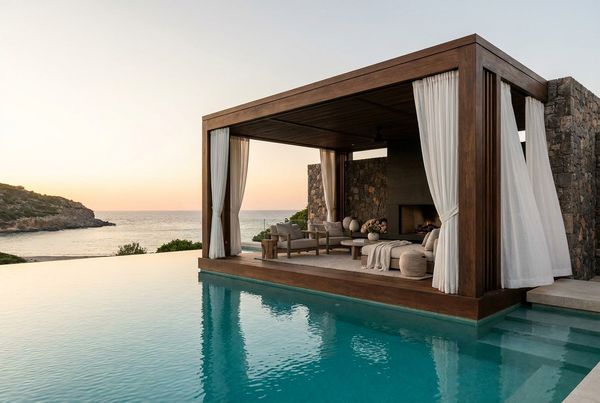
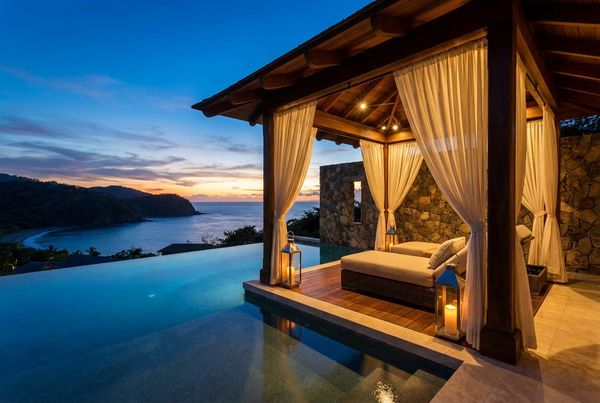
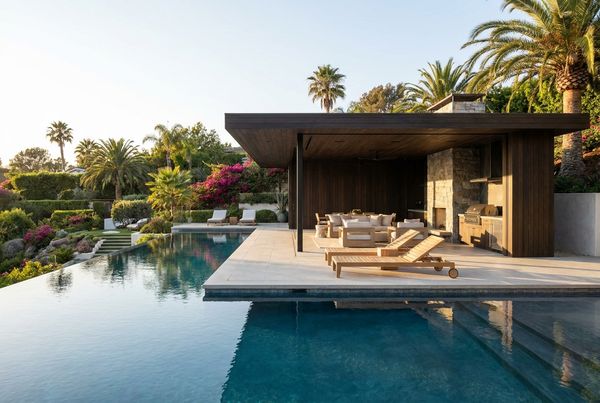
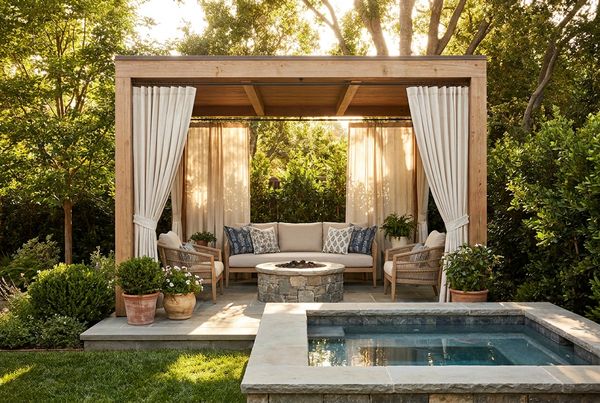
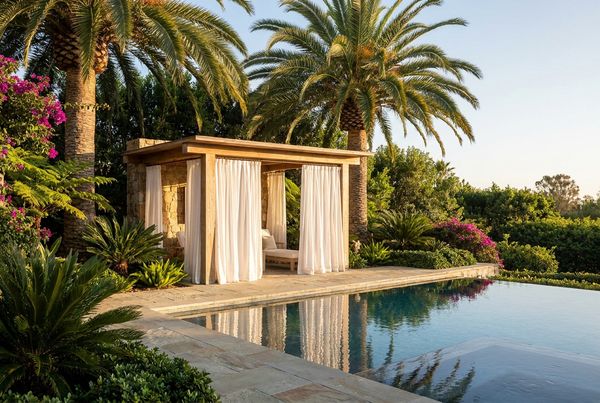
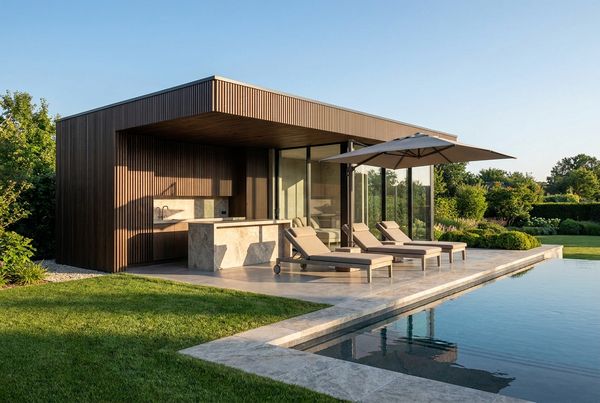
Cabana style sets the tone for the whole backyard, so match it to your pool and your house. Three looks dominate right now. The modern cabana is all clean lines — a flat or low mono-pitch roof, slim posts, and crisp white sheer curtains on a track. It suits a modern pool design and a softened-geometric backyard, and the drapes do the heavy lifting: pull them for shade and privacy, tie them back for the view.
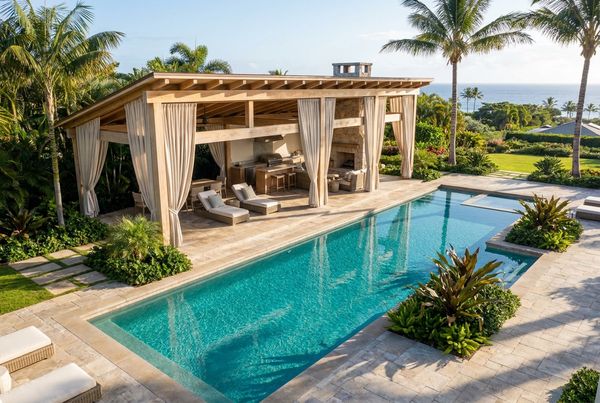
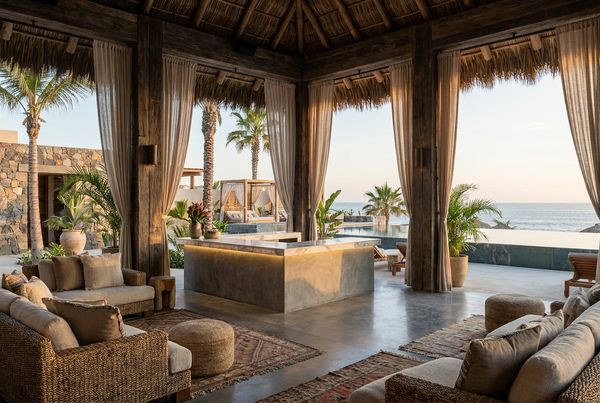
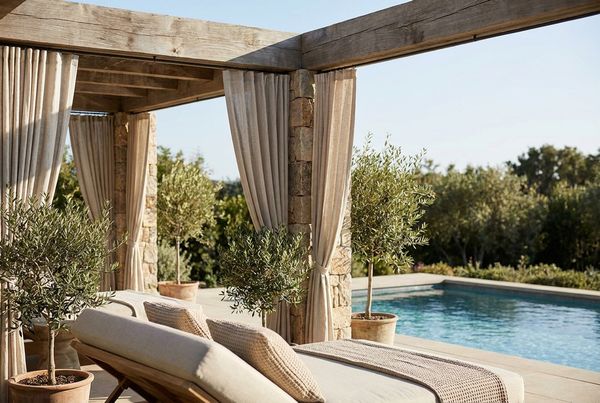
The tropical cabana leans the other way: a thatched or timber roof, natural textures, and lush planting crowding the edges. Paired with a tropical backyard, it feels like a beach resort thousands of miles from home. Thatch (real or the durable synthetic kind) throws deep, cool shade and reads unmistakably as vacation. The curtained cabana is less a separate style than a move you layer onto either — sheer drapes on all four sides that billow in the breeze and close down to a private cocoon. It's the single detail that makes guests feel like they've arrived somewhere.
What to put inside your cabana
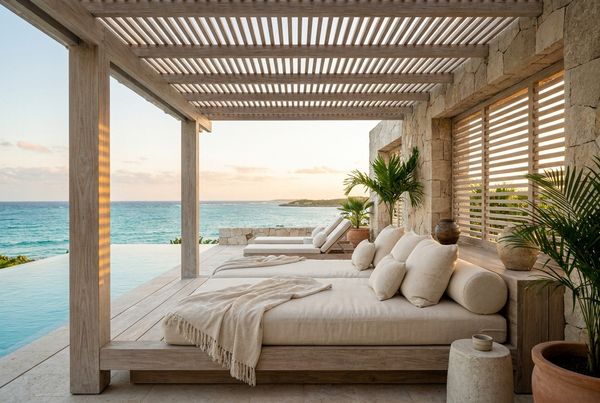
This is where a cabana earns its footprint. At minimum, give it a shaded lounge — a daybed or a low sectional and a slow-turning fan is the classic resort setup, and for a lot of people it's the whole point. From there, the add-ons stack up fast depending on how you entertain.
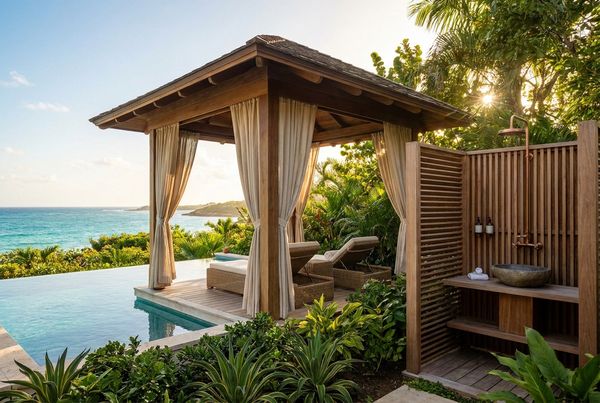
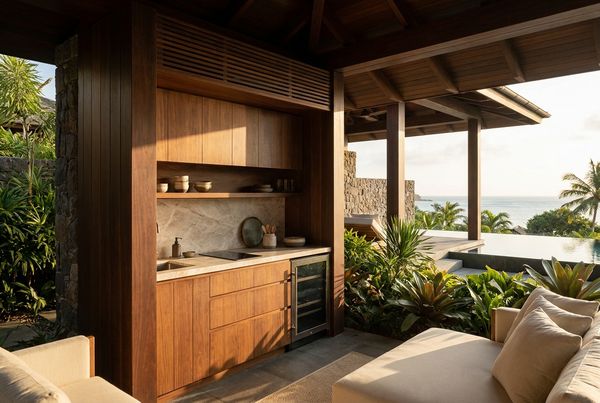
A bar or kitchenette turns the cabana into an entertaining hub so nobody's trekking to the house for drinks. A mounted, weatherproof TV makes it a game-day and movie-night spot — cover it or recess it out of direct sun. A tucked-away changing area keeps wet suits and towels out of the house. And an outdoor shower off the back is the unsung hero: a quick rinse strips chlorine and sunscreen before anyone tracks it inside. You don't need all of these, but you should decide up front, because each one dictates plumbing and wiring you'll want roughed in from day one. Furnish it with proper outdoor furniture rated for sun and splash, not patio castoffs.
What we think
If we could add only one thing beyond the daybed, it's the outdoor shower — it's cheap next to a bar or a TV, and it does more for daily livability than either. The splurge worth making is the plumbing and electrical rough-in: run a water line, a drain, and two or three weatherproof outlets before you build, even if the bar and shower come later. Retrofitting those means opening up a finished wall, and it never looks as clean. Skip the enclosed changing room unless you genuinely lack a nearby bathroom — an open cabana with a curtain does the job for a fraction of the cost.
Open or enclosed?
The open-versus-enclosed call shapes both the feel and the budget. An open cabana — shade roof, no walls, maybe curtains — stays airy, keeps the connection to the water, and costs far less. It's the right choice for most poolside settings, and it dodges a lot of the permitting that walls and windows trigger.
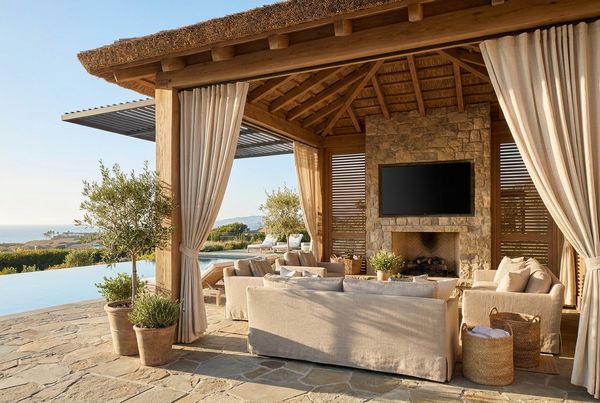
You enclose a wall or two when you need something specific: privacy from a neighbor, a windbreak on an exposed lot, or a lockable space for a TV, a mini-fridge, and towels. The smart move is partial enclosure — solid the back and one side, leave the pool-facing side open or curtained. That gives you storage and shelter without turning the cabana into a shed. Retractable curtains or motorized screens are the flexible middle ground: open for the breeze, closed for privacy or a low-angle sun. Wrap the enclosed side into your pool privacy plan so it reads as one design rather than a bolt-on.
Cabana materials compared
Near a pool, materials fight chlorine, splash, and UV every day, so durability matters more than it does elsewhere in the yard. Here's how the common structural choices compare.
| Material | Durability | Maintenance | Look & feel |
|---|---|---|---|
| Powder-coated aluminum | Excellent — rust-proof, salt-safe | Very low — occasional rinse | Clean, modern, engineered |
| Cedar / timber | Good with care | Higher — reseal every 1–3 yrs | Warm, natural, resort-like |
| Thatch (synthetic) | Very good | Low — occasional check | Tropical, textured, vacation |
| Stucco / masonry (enclosed) | Excellent | Low | Solid, permanent, pool-house feel |
Aluminum is the low-fuss default for modern cabanas and carries curtain tracks and lighting cleanly. Cedar and timber win on warmth if you'll keep up the sealing. Synthetic thatch delivers the tropical look with a fraction of real thatch's upkeep. For roofing textiles and curtains, insist on solution-dyed, outdoor-rated fabric — anything less fades and mildews within a season by the water.
Siting the cabana for the view
Placement is what separates a cabana that gets used from one that gets ignored. The whole point is the view back across the water, so site it at the far end of the pool from the house. From there it reads as a destination, catches the reflection of the pool at night, and — if you orient it right — frames the sunset from the daybed.
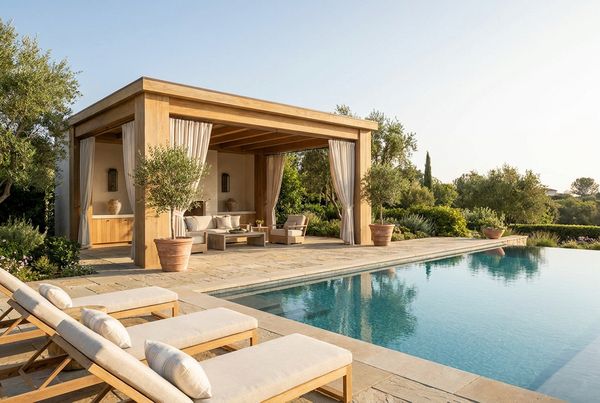
Track the sun for a full day before you commit. You want the cabana's open side facing the pool and, ideally, the evening light, with the solid or planted side taking the harshest afternoon heat. Keep the sightline to the water clear so you can watch kids swim from the lounge — a cabana you can't supervise the pool from is a design miss. Mind the practical limits too: pool-barrier setbacks, property lines, and any pool fence requirements dictate how close you can build. Get the footprint right on paper first; moving footings later is expensive.
Lighting your cabana at dusk
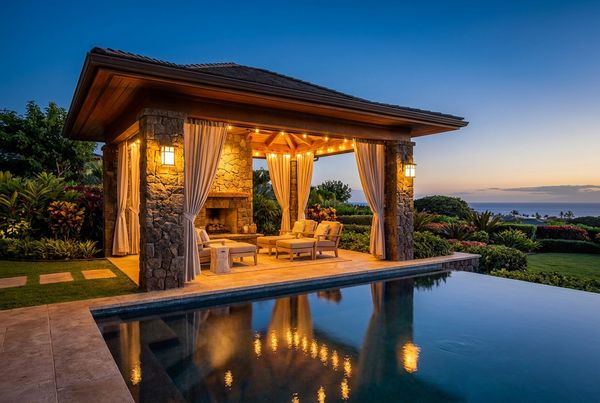
A cabana earns its keep after dark, and lighting is what carries it there. Layer it: warm, low downlighting or recessed ceiling lights for the lounge, a dimmable wall or pendant fixture over the bar, and discreet path or step lights so the walk from the house is safe. The 2026 look leans warm and soft — no glare bombs — with a wash of bold LED color you can dial up for a party.
Put it all on smart controls and a couple of scenes — "dinner" and "party" — so the whole zone shifts with a tap. Tie the cabana lighting into your broader pool lighting and landscape plan so the backyard reads as one composition rather than a string of separate fixtures. As always, rough in the wiring during the build; retrofitting fixtures into finished beams and walls rarely looks as clean, and it costs more.
What a pool cabana costs
Budget swings hard with size, materials, and how finished you go. A simple open cabana or curtained shade structure often lands around $5,000–$15,000 installed for a modest footprint. A more finished cabana with a bar, TV, fan, and lighting runs roughly $15,000–$40,000. A large partially enclosed cabana with plumbing — an outdoor shower, a real kitchenette — climbs past that and starts brushing up against pool house territory.
Those are ballpark 2026 ranges, not quotes — footings, engineering, permits, and site access all move the number. If you're building the cabana alongside a new pool or a wider backyard project, fold it into one scope so the trades, wiring, and drainage get coordinated. A good pool builder can price the cabana as part of the outdoor room rather than a separate job.
Permits, setbacks, and what to settle on paper
Before the fun part, get the boring part right, because it dictates what you can build and where. Whether a cabana needs a permit turns on size and what's in it — a small open shade structure may slip under a threshold, but anything with a roof over a certain footprint, running water, or wiring generally needs a permit and inspection. Enclose a wall or add a shower and you've almost certainly crossed that line. Check local codes before you commit to a design, not after.
Setbacks are the other constraint people trip over. Pool-barrier codes, property lines, and any pool fence requirements dictate how close to the water and the lot edge you can build, and they can quietly rule out the exact spot you had in mind. Sort this on paper first — moving footings after they're poured is expensive and demoralizing.
The plumbing and electrical rough-in is the decision I'd never leave to "later." If there's any chance of a bar, a kitchenette, or an outdoor shower down the road, run a water line, a drain, and two or three weatherproof outlets during the build. Tie the electrical into your broader pool lighting plan so it's all one coordinated design. Retrofitting any of it means opening up a finished wall, and it never looks as clean as doing it once, up front.
Climate fit and keeping a cabana looking new
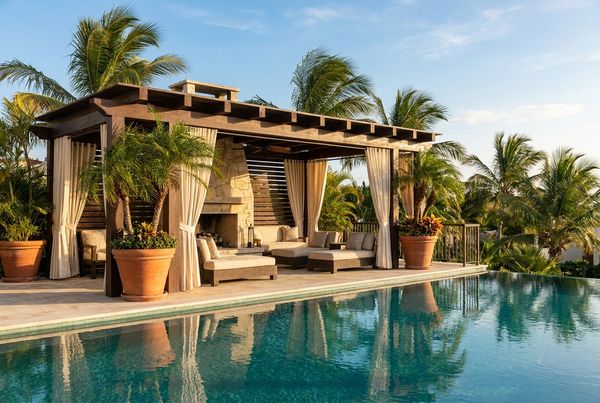
A cabana lives outdoors full-time, so let your climate steer the build as much as the look. On an exposed or windy lot, a fully open cabana can be unusable at the wrong hour — that's the argument for partial enclosure or motorized screens that close down against wind and low-angle sun and roll away when you don't need them. In a hot, sunny climate, a thatched or timber roof throws deeper, cooler shade than a thin flat cover, and orienting the solid or planted side toward the harshest afternoon heat keeps the lounge comfortable.
Materials near a pool fight chlorine, splash, and UV every single day, so durability matters more here than elsewhere in the yard. Powder-coated aluminum shrugs off salt and chlorine with almost no upkeep; cedar and timber reward you with warmth but want resealing every year or few; synthetic thatch delivers the tropical look without real thatch's fuss. Whatever the frame, insist on solution-dyed, outdoor-rated fabric for the curtains and cushions — anything less fades and mildews within a season by the water.
The upkeep itself is light if you choose well: rinse salt and chlorine spray off surfaces now and then, wash or shade the fabric, and reseal wood on schedule. Keeping the pool water balanced helps everything nearby age slower, so a routine check with a test kit protects the cabana as much as the swimmers. Get the materials and the fabric right at the start and the cabana keeps reading as a resort, not a weathered lean-to, a decade in.
What we think
If you have the space at the far end of the pool, a curtained cabana with a daybed, a fan, and an outdoor shower is the outdoor-living upgrade with the least regret. It's lighter and cheaper than a pool house, it captures the view, and it's the detail that makes the whole backyard feel like a resort.
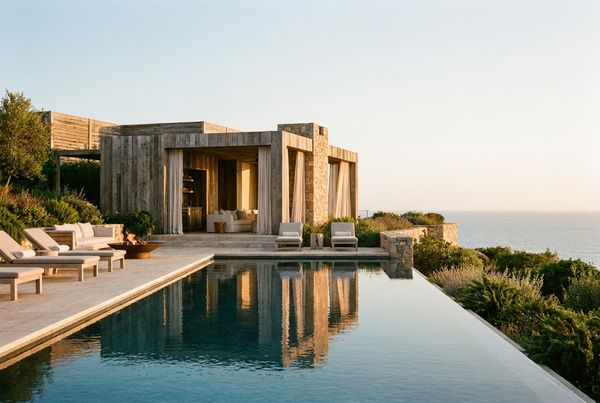
Whatever you build, follow three rules: decide the job before the size, rough in the plumbing and wiring up front, and site it for the view back across the water. Pair the cabana with the right outdoor furniture, lean into a tropical backyard feel if it suits your climate, and you've got a genuine outdoor room. More inspiration lives in the luxury pool designs gallery.
Design Gallery
6 more ideas to save — tap any photo to view full screen.

Kelly E.
Pool Design Editor, PoolPad
Kelly has spent 10+ years around residential pools — planning projects, testing gear, and documenting backyard builds for PoolPad. Each design guide is checked against current construction methods and material pricing.
Frequently Asked Questions
What is the difference between a pool cabana and a pool house?
Do you need a permit to build a pool cabana?
How much does a pool cabana cost?
Should a pool cabana be open or enclosed?
What should I put inside a pool cabana?
Where should I place a pool cabana?
What is the best material for a pool cabana?
How do I keep a pool cabana from weathering?
Should I run plumbing and electrical to my cabana?
Ready to build your dream backyard?
Compare local, vetted pool builders and get matched with pros who can bring these designs to life.
Find a Pool Builder Near You