
Virginia · Plunge & Small Pool Builders · Updated 2026
21 plunge pool builders across Virginia — plunge pools, cocktail pools, spools and compact fiberglass shells — ordered by customer rating and review count, with 2026 installed prices for small-yard pools. 7 are listed as specialists for this work; the rest are fiberglass pool installers that routinely handle it. City lists cover 11 Virginia markets.
The order uses a weighted mix of customer rating and review count; open a city below for the full local list. Confirm current credentials, availability and scope directly.
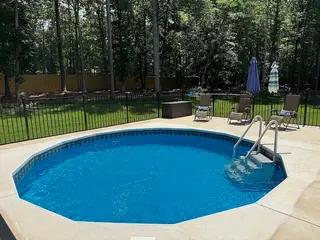
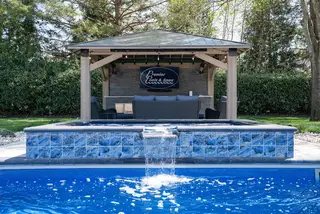
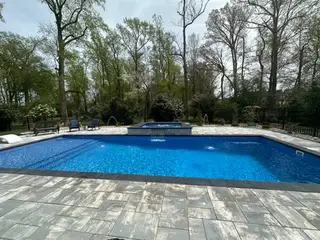
Companies in the second group install fiberglass pools; most manufacturers offer plunge and cocktail shells — ask which small models they carry and whether they build custom gunite plunges too.
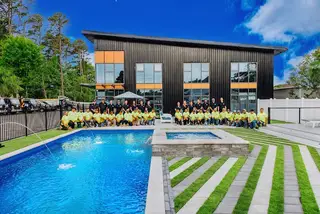
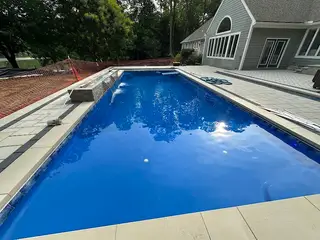
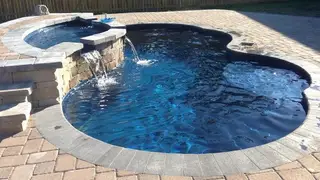
Choose a local list for customer ratings, review counts, 2026 prices and the questions to ask. Cities are sorted by listed company count.
Installed in Virginia, a fiberglass plunge pool typically runs $37,000–$63,000 and a custom gunite plunge or spool $52,500–$94,500 — the small footprint saves on excavation and finish, but the equipment pad costs about the same as a full-size pool:
| Job | Typical Virginia price |
|---|---|
| Precast concrete plunge pool, installed | $31,500–$58,000 |
| Fiberglass plunge pool, installed | $37,000–$63,000 |
| Custom gunite plunge pool | $52,500–$94,500 |
| Spool (spa + pool) with jets and heater | $63,000–$115,500 |
| Heater (year-round use) | $3,200–$8,400 |
| Chiller (cold plunge) | $4,200–$9,500 |
| Swim jets or resistance current | $5,500–$12,500 |
| Decking and coping | $4,000–$12,500 |
| Permits and inspections | $500–$3,200 |
Virginia pricing is close to the national baseline used for these estimates. A plunge pool is not half the price of a full pool — the pump, filter, heater, electrical and permits are the same — but it fits where nothing else will and costs far less to heat and maintain.
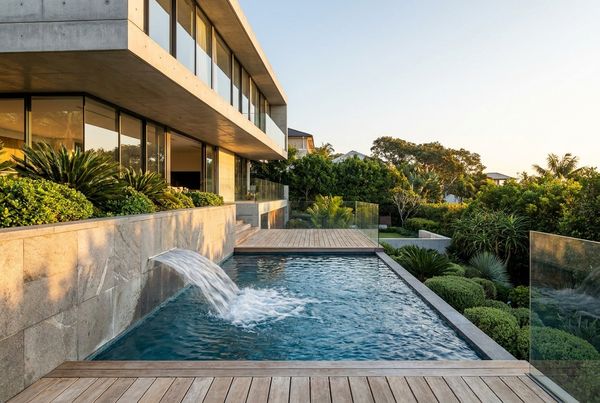
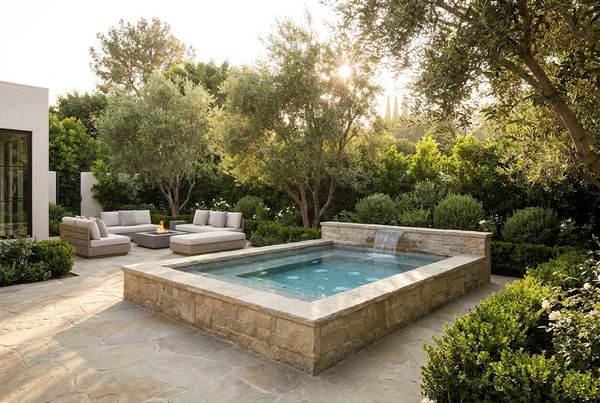
A heater on a 4,000-gallon pool costs little to run — it is the difference between a plunge pool used eight months a year and one used eight weeks.
PoolPad tracks 21 plunge pool builders across Virginia, with city lists for 11 markets. PoolPad orders the list with a weighted score that combines customer rating and review count, so a long track record counts for more than a handful of scores.
Gunite with spas and paver surrounds leads NoVa and Richmond's high end; vinyl liner remains the statewide value pick, with fiberglass surging in the suburbs. Salt systems and heat pumps are mainstream everywhere. Smaller lots and higher construction costs have made plunge pools, cocktail pools and spools the fastest-growing pool type — a heated 8×16 pool costs a fraction to run and fits a courtyard.
The largest listed markets are Virginia Beach (9 companies), Chesapeake (7 companies), Hampton (7 companies).
Measure the access route first — a crane over the house changes the budget. Decide on heat, jets and a bench up front, since they drive the equipment. Then compare a fiberglass model against a custom gunite price for the same footprint. Virginia licenses contractors through DPOR with classes tied to project size — verify the license class and insurance. County and city permitting covers pool, electrical, and the residential code's barrier requirements (fences, gates, alarms where applicable), and Chesapeake Bay-area lots can add environmental review. HOA approval is a near-universal step in NoVa.
Installed in Virginia, VA, a fiberglass plunge pool typically runs $37,000–$63,000, a precast concrete plunge $31,500–$58,000 and a custom gunite plunge $52,500–$94,500. A spool with jets and a heater runs $63,000–$115,500. Decking adds $4,000–$12,500 and a heater $3,200–$8,400. Virginia pricing is close to the national baseline used for these estimates.
Most are 7 to 10 feet wide, 12 to 20 feet long and 4 to 6 feet deep with a flat floor — about 2,000 to 6,000 gallons versus 15,000 to 25,000 for a typical family pool. Cocktail pools add benches and a tanning shelf; spools are often 8×14 to 10×20 with spa jets.
You can cool off, float, soak and exercise in place; laps need a swim-jet or resistance-current system, which many plunge and spool builders install. For actual lap swimming a narrow lap pool of 30 feet or more is the better fit.
Much cheaper: a third or less of the water means a smaller pump, far less chemical use and a heater that brings the pool to temperature in an hour or two. Many owners here keep a plunge pool heated through the shoulder seasons and close it only in deep winter.
The outdoor season in Virginia runs May through late September — about 5 months unheated. A full professional winterization each fall protects plumbing and equipment through the freeze, and spring openings cluster into the same few weeks. May through late September with humid mid-summers; Hampton Roads stretches a bit longer, the mountains a bit shorter. Winters freeze statewide, and a full close remains the standard of care everywhere but the mildest coastal pockets.
Billy's Pool Services has the highest customer rating on this Virginia list at 5 stars across 46 reviews. Solid Structures has the largest review count (220 reviews at 4.7 stars). PoolPad orders the list with a weighted score that combines customer rating and review count, so a long track record counts for more than a handful of scores.
In most cities yes — any pool more than 18 to 24 inches deep needs a permit, electrical inspection and a barrier, regardless of footprint. Setbacks from property lines and the house decide where a small pool can go. Virginia licenses contractors through DPOR with classes tied to project size — verify the license class and insurance. County and city permitting covers pool, electrical, and the residential code's barrier requirements (fences, gates, alarms where applicable), and Chesapeake Bay-area lots can add environmental review. HOA approval is a near-universal step in NoVa.
A fiberglass or precast plunge pool is often swimmable one to three weeks after excavation; a custom gunite plunge takes six to ten weeks because the shell has to cure before the finish. Permits add time up front, and the deck follows the pool.
If your property is near a state line, check the neighboring directories too.
Claim your free PoolPad listing, check plunge and small pools among the pool types you build, and show Virginia homeowners with a small yard what fits.