



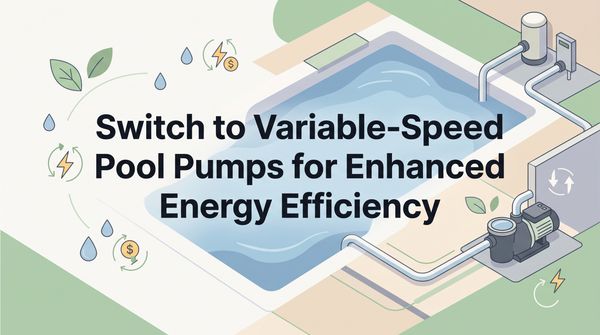
On a hot summer afternoon, few things sound better than slipping into a cool, sparkling pool. Behind that refreshing water sits the quiet workhorse of pool care: the pump. Standard pumps do their job reliably, but they often burn through more energy than they should. A variable-speed pool pump keeps your water looking great and cuts your energy costs at the same time.
Last summer my neighbor told me how switching to a variable-speed pump changed his electricity bill. His old single-speed model ran flat out the whole time it was on. The new one adjusts its speed to match what the pool actually needs, so it runs quieter and uses a fraction of the power.
That flexibility is the whole point. A traditional pump runs at full throttle all the time. A variable-speed pump slows down for jobs that don't need much muscle, like everyday filtration. That's easier on the motor, which lasts longer, and easier on your wallet. When you buy one, you're setting your pool up to run more efficiently for years.
Your Action Plan
- Check whether your state requires a variable-speed pump.
- Look up rebates from your utility and the U.S. Department of Energy.
- Choose a drop-in model that fits your existing plumbing.
- Program speeds for filtration, water features, and off-peak hours.
- Run the pump at low speed during off-peak times to cut costs.
Discover Energy-Saving Benefits

Switching to a variable-speed pump is like turning off the lights in rooms you're not using. Traditional pumps run at one relentless speed. A variable-speed model lets you fine-tune how hard it works, so basic filtration runs slow and cheap. Some owners cut their pool's energy use by as much as 80 percent, and because the pump is so quiet at low speed, you don't trade your peace for those savings. Check with your local utility, too, since many hand out rebates for the switch.
Many owners earn back what they spent on a variable-speed pump in under two years through lower electricity bills alone.
Explore Financial Incentives
The sticker price can look steep, but incentives shrink it fast. Utility rebates, plus state and federal energy-efficiency tax credits, all reward the move to efficient gear. Your power company might refund a good chunk of the cost, and refunds of a few hundred dollars are common. Some states also require efficient pool equipment, so upgrading keeps you within the rules and can open the door to extra perks. A quick call to your state energy office, or a look at the U.S. Department of Energy's site, shows what you qualify for.
Maximize Energy Efficiency
A variable-speed pump does a lot for your pool and your budget. Start with the quiet. Where a single-speed pump pulls full power no matter the task, this one matches its speed to the job, so it works at a low hum instead of a roar. The upfront cost is higher, but lower bills soon outrun it, often within a couple of years. And using less energy means a lighter footprint. Quieter mornings, smaller bills, and less waste make a strong case for the switch.
Enjoy Quiet Operation
Why low RPM means low noise
Quiet by the pool feels like a small luxury, and a variable-speed pump gives it back. The trick is low RPM. Running slower cuts energy use and turns the motor's roar into a gentle hum. You can host a backyard get-together where people chat without shouting over the equipment, or enjoy the water at dawn without a racket. Even birds and other wildlife are less likely to be startled off. Many pumps also shift speeds automatically for each task, so performance stays sharp and the yard stays calm.
Maximize Pool Efficiency

A pool should be an escape, not a chore, and a variable-speed pump helps keep it that way. The quiet is the first thing you'll notice, with no more drone from the old single-speed. Beyond the calm, many owners recover their cost within a couple of years through lower bills, because the pump matches its speed to the task, from gentle filtration to a lively waterfall. In some states these pumps are required, so you meet the rules and dodge fines at once. With programmable settings, your routine mostly runs itself.
Upgrade to Variable-Speed Pumps
The upfront cost might give you pause, but the payoff is big and long-lasting: a lower energy bill and a quieter, more efficient pool. The pump matches its power to the task, whether that's gentle filtration or a heavy cleaning session. Rebates make the deal better, and some states require the upgrade, so the right equipment keeps you compliant without fuss. Installation is rarely a headache, either. Many models drop into your existing setup and use simple digital controls almost anyone can figure out.
Leverage Energy-Saving Features
Program it once and forget it
A quiet, efficient machine can reshape your daily routine. Built-in timers let you set specific times for each job, so filtration and water features each run at the right speed and energy gets used only when it's needed. In cooler months you can run the pump at low speed for longer stretches and keep the water clean without the heavy cost. The easy digital panel takes the guesswork out. Many pumps also include a sleep function that drops output during off-peak hours, so you save while the neighborhood sleeps.
Explore Incentives and Rebates
Cutting energy bills isn't the only reward; incentives and rebates are waiting to be found. Many utilities know efficiency matters and will pay you to adopt it, often through rebates on variable-speed pumps. That kind of help makes the upfront cost much easier to swallow. It pays to look. Local utility websites usually list current programs, and the U.S. Department of Energy's site is a solid place to find incentives in your state. A little homework before you buy can turn a plain expense into a smart investment.
Upgrade for Legal Compliance

Staying on the right side of the law
Sometimes an upgrade is about staying legal, not just staying comfortable. Variable-speed pumps meet efficiency standards that several regions now require, which is worth knowing if you're running an older single-speed model. California, for one, requires pool owners to move from single-speed to variable-speed or dual-speed pumps. Ignore it and you could face fines or noncompliance notices, both a bigger hassle than simply upgrading. On the upside, utilities often pair these rules with rebates, and a local pool pro can point you to them.
In states like California, an old single-speed pump isn't just costly to run; it can put you out of compliance with the law.
Ensure State Law Compliance
State rules on pool equipment can feel like a patchwork. In recent years several states have gotten serious about efficiency and now require the switch from single-speed to variable-speed pumps. It's part of a broader push toward responsible energy use, so it's smart to understand the rules before you buy anything. California requires variable-speed pumps for home and commercial pools alike, and other states are following. Check your state's energy codes or ask a local pool professional, who can also flag the rebates that soften the upfront cost.
Maximize Energy-Efficiency Rebates
How to track down rebates
Rebates can really help your wallet, and grabbing them takes only a little homework. Start with your local utility's website; most have a section for rebates on energy-efficient appliances. Refunds around $300 are common, which eases the cost and shortens your payback time. The U.S. Department of Energy's site lists state and federal programs, and it's worth checking for seasonal promotions, since utilities sometimes raise their incentives during peak demand to take pressure off the grid. Every dollar back shortens the time it takes to earn your money back.
Before you buy, spend ten minutes on your utility's website; a rebate could cover a quarter of the pump's price.
Simplify Installation and Operation
Older single-speed pumps can feel like they need an engineering degree to install. Modern variable-speed models are built as drop-in replacements, so the switch is often just unbolting the old one and securing the new one. That keeps downtime low. The motor sits in a sealed enclosure that naturally muffles the sound, so your evenings aren't broken up by roaring machinery. Installation usually takes less than an afternoon, and the digital control panel is clear enough to set and forget. Many models also adjust their speed automatically through the day, slow for filtration and faster for a party.
Enjoy Quieter Pool Operations

A calmer backyard
Equipment noise can turn into a real nuisance, especially on quiet evenings when a single-speed pump keeps humming. A variable-speed pump changes that. Running at lower RPM saves energy and drops the noise sharply, so you can host a late gathering without a pump roaring in the background. Many are also built with sealed, fan-cooled motors that muffle sound and hold up longer. You keep your pool clean without disturbing your own peace or your neighbors'.
Maximize Energy Savings
Efficiency is the quiet strength of a variable-speed pump. Where single-speed pumps guzzle power, these sip it, matching their pace to what the pool needs. During calm stretches of filtration they run slow and cut energy use sharply. That lowers your bill, and many utilities add rebates on top, with refunds of a couple hundred dollars not unusual. You can push savings further with automation, scheduling low-energy runs during off-peak hours when electricity is cheaper. Together those habits keep the water clean and the cost down.
Several states have rolled out efficiency rules, and pool owners feel them directly. In California, Arizona, or Florida, the law may require you to swap an old single-speed pump for a variable-speed model. It's not just red tape; the goal is to cut energy use, which helps your wallet and the planet. Compliance has an upside, too. Utilities often pair these rules with rebates that can cover a solid share of the pump's price. A quick chat with a local pool pro or a look at your utility's website clears up both the law and the incentives.
Automate for Optimal Performance
Let the pump run itself
Automation turns pool management into something you barely think about. Set the pump once and it runs each task exactly when needed. For a spur-of-the-moment poolside dinner, schedule the jets and lights to fit the mood while the pump hums along at an energy-saving speed. For maintenance, set it to speed up for deep cleaning and slow down during normal filtration; that balance protects the equipment and keeps energy in check. From simple smartphone controls to full smart-home setups, the technology keeps getting better, and you wake up to a clean pool without lifting a finger.
Automation means you can set your pump once and let it clean, circulate, and save power on its own schedule.
Simplify with Built-In Automation
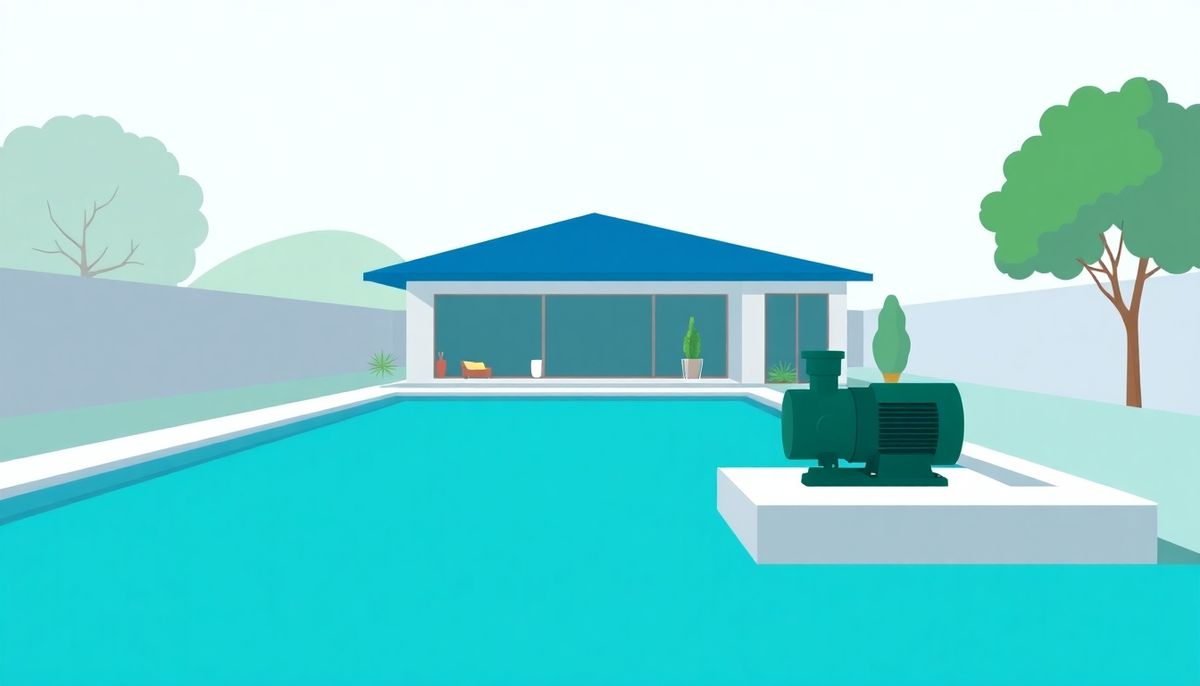
Owning a pool can bury you in small tasks. A variable-speed pump with automation lightens that load while keeping energy use low. Instead of constant checking, you get an easy digital panel and programmable speeds you can tailor, low for filtering and higher for a waterfall. The pump auto-adjusts to the task, so the water stays clean without your help, and running slower avoids needless strain that shortens a pump's life. What you really get back is time: hours by the water instead of hours fiddling with settings.
A variable-speed pump is a smart step toward lower bills, and fine-tuning its schedule saves the most. Run it at low speed during off-peak hours and you cut costs without leaving the water any less clean, since most utilities charge less then. Pair that with any rebates your provider or the U.S. Department of Energy lists. Programming helps, too. Set precise speeds for each job, and some pumps adjust automatically. Learn your pool's own needs, since size, plumbing, and how often you swim all shape the most efficient settings.
Simplify Pool Maintenance
Keeping a pool clean shouldn't eat your weekends. A variable-speed pump makes maintenance simple: you set the pace and let the pump handle the rest. It knows how much power each task needs, running a gentle cycle for filtration and a stronger flow for a waterfall, all on its own. No more guesswork. Running slower, it uses less energy while still circulating the water well, which trims your bill and extends the life of your filter. And because it's so quiet, your backyard stays a retreat instead of a source of clatter.
Leverage Financial Incentives
Incentives can be the final nudge toward a variable-speed pump. Beyond lower bills, utility rebates and tax credits wait for those ready to switch. Some states chasing efficiency goals offer tax credits for sustainable appliances, pool pumps included, which trims your tax bill on top of any rebate. Sorting through it all is easier than it sounds. Your utility's website usually explains the programs and how to apply, and the U.S. Department of Energy's site lists more. Claiming these perks makes good financial sense and shrinks your footprint at the same time.
Conclusion

Upgrading your pump is just one way to take the headache out of pool care. Do the homework on rebates, pick a model that drops into your setup, and let the automation handle the day-to-day. You'll spend less, listen to less noise, and get more time in the water.
Want to get comfortable with the rest of pool care? Our free Pool School course covers everything from basic upkeep to tricky troubleshooting. You'll learn how to:
- Save thousands on repairs and chemicals
- Keep your water clear year-round
- Prevent and solve common pool problems
- Handle water chemistry with confidence
Join over 10,000 pool owners who've already changed their routine. Get started with our free Pool School course today!
What you need
Start with a variable-speed pump that fits your plumbing, plus the digital timer and any utility rebate paperwork to make the switch pay off.